Wednesday, June 10, 2009

Improving your products with Attribute Listing

As we all know, creative inspiration sometimes requires a jump start, particularly when a deadline looms. In a previous post, I described how the SCAMPER technique acts as a creative trigger for ideas. SCAMPER, of course, is only one creative thinking tool in a treasure chest filled with idea-generating techniques. Another useful tool for creative inspiration is Attribute Listing.

Back in the 1930s, Attribute Listing was devised to develop new and/or improved products from existing or known products by breaking them down into their characteristic parts, or attributes, listing individual elements that fit these attributes, and then combining selected elements from some of the attributes in new ways. In the industrial world, for example, a manufacturer might decide to develop a new pen that stands out from its competitors. Some of the attributes of a typical pen might be said to be style, color, ink delivery method, comfort, and type of ink. By identifying specific styles, colors, ink delivery methods, elements of comfort, and types of ink, and then combining the best ideas from each of these attributes, it is possible to develop a new and improved pen. The same is true when a fashion designer develops a new bag, whose attributes might be said to be material (fabric, leather, synthetic), hardware (buckle, button, snap, handle), intended use (book bag, evening bag, laptop bag), and style (formal, sporty, classic, playful). By listing specific possibilities for each attribute of a bag, and then selecting and combining the most appealing ideas, a designer produces a new bag.

Attribute Listing is chiefly a creative thinking tool that is designed to be used in a limited way—to improve upon a pre-existing idea or product. However, the possibilities for improvement of an idea or product are endless. To apply the Attribute Listing technique, follow this five-step plan:

  1. Identify your goal, i.e., what idea or product do you want to improve?
  2. Identify 4 to 8 attributes, or characteristics, of this idea or product. There are no right or wrong answers here; you determine the attributes you want to analyze.
  3. List as many specific ideas for each attribute as you can. Resist the urge to reject ideas; write them down without analyzing them.
  4. Go back through your list of attributes, and circle the best ideas for each one. This is, of course, subjective.
  5. Consider how you might combine the best ideas.
Let’s take a look at how you can use Attribute Listing. If I want to develop an Etsy “Treasury,” a showcase of Etsy products that I believe is special in some way, Attribute Listing provides me with an endless array of ideas. Typical attributes of a Treasury could include theme, style, audience, technique and material. By listing the first ideas that come to mind for each attribute, I will have the start of an Attribute List that I can use to develop a Treasury:

Theme: color, ecological, industrial, nature, floral, toys, songs, books, indoor, outdoor, tools
Style: modern, Western, vintage, Victorian, medieval, eclectic
Audience: adult, women, men, children, teen, baby
Technique: crochet, collage, beadweaving, felting, knitting, metalwork, glassblowing, painting, encaustic, woodworking, sewing, macrame, Scherenschnitte
Material: yarn, fabric, feathers, beads, buttons, paper, glass, wood, metal, plastic

For the purpose of this exercise, I will select the following elements from each Attribute to create a Treasury:

Theme: floral
Style: eclectic
Audience: women
Technique: showcase multiple techniques
Material: showcase multiple materials

Finally, below is a blog-style Treasury of BBEST artists’ floral creations I could develop from the attributes I have listed. Try this yourself the next time you want to create a special Treasury, or to improve upon an idea or product you already have. Creative thinking tools such as Attribute Listing or the previously-described SCAMPER are situation-driven techniques. In other words, much as you would use a hammer and not a block of wood to drive a nail into a board, ideally you can select the right creative thinking tool for the inspirational challenge you are facing.


© 2009 Judy Nolan. All rights reserved. Please note that the images in this post are owned by the artists and may not be used without permission. Simultaneously published at http://sparklines.blogspot.com.

Thursday, June 4, 2009

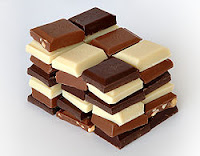
CHOCOLATE -- Food of the Gods!

If you have followed the BBEST thread regularly, you may have noticed that we talk a great deal about one of our favorite subjects…chocolate. I would guess that not a day goes by without some mention of chocolate. Kisses, M&M's, cookies, truffles, bars, cakes, fudge, brownies, ice cream, it’s a regular thing. We all share a love for that wonderful stuff. But chocolate is not only decadent and delicious and dreamy and soothing to the soul, it’s actually GOOD for you!
Chocolate comes from the seed of the tropical cacao tree, Theobroma cacao. Theobroma means literally “food of the gods.” Cacao is native to tropical South America, grown in the lowlands, and has been cultivated for at least 3000 years. Its earliest documented use was around 1100 BC, when Mayan and Aztec peoples made it into a beverage of ground cacao seeds, which have an intense bitter taste. That first chocolate drink was nothing like modern cocoa. It was very bitter. Kudos to the person, whoever that may be, who came up with the idea of adding sugar!


The seeds of the cacao tree must be fermented to develop the flavor. After they are fermented, the beans are dried, cleaned and roasted, and the shell is removed. The remaining “nibs” of cacao are ground and liquefied, producing pure chocolate in fluid form. This is referred to as chocolate liquor. The liquor is further processed into two components: cocoa solids and cocoa butter. Pure, unsweetened chocolate contains primarily cocoa solids and cocoa butter in varying proportions. Chocolate most commonly comes in dark, milk and white varieties.
Milk chocolate is sweet chocolate (sugar added) that contains milk powder or condensed milk. The dark variety has the greatest percentage of cocoa solids. White chocolate? It’s not really chocolate. It has no cocoa solids in it at all!

The makers of chocolate bars, truffles, eggs, drops, wafers and kisses are numerous. Just consider chocolate manufacturers in the U.S., and Hershey, Godiva, Ghirardelli and Whitman come to mind. Who doesn’t have fond memories of the wonderful Whitman’s Sampler? They even put a "map" on the inside of the lid to show you exactly where to find your favorite! That yellow box was a favorite of ours on holidays, and particularly on Valentine’s Day. My brothers and I would rush to get “first dibs” on the chocolate-covered cherries, the chocolate-covered caramels and the chocolate-covered marshmallows. Our parents had rather more esoteric tastes and didn’t mind so much, as long as we three didn’t eat the whole box!

Having tasted chocolate from many different domestic manufacturers, I truly think that each has its own signature flavor. My favorite happens to be Ghirardelli dark chocolate. It has a rich, fruity, smoky flavor unlike any of the others. I visited their chocolate factory when I traveled to San Francisco. A close second favorite has to be Godiva. I won’t even begin to compare Ghirardelli, Godiva or any other domestic chocolate to the chocolate made in Europe, particularly Belgian chocolate, as I have not had enough experience in this area, but I understand that it is “to die for.” It is all truly a matter of taste.


Chocolate is such a big part of our lives: Valentine’s Day, Easter, Hallowe’en, other holidays like Christmas, Hanukkah, New Year’s, and any day when the sun comes up or goes down!


There’s nothing more wonderful than a mug of hot cocoa after traipsing through the snow to find a Christmas tree, building a snowman, or after a day on the ski slopes!


But I think that perhaps the most fabulous invention of all is the chocolate fountain. An endless river of flowing chocolate. For strawberry-dipping, ice-cream coating, or finger-licking! Pure heaven!


Now, here’s the very good news: Researchers have found that chocolate is good for you. It is believed to keep high blood pressure down, your blood flowing and your heart healthy. It contains flavinoids which are powerful anti-oxidants. Anti-oxidants protect the body from aging caused by free radicals, which can cause damage that leads to heart disease. Dark chocolate contains a large number of antioxidants, nearly 8 times the number found in strawberries.

The action of flavinoids in keeping platelets in the blood from sticking together and clogging arteries is equal to that of aspirin. So flavinoid-rich cocoa and chocolate reduce the blood’s ability to clot and thus reduce the risk of stroke and heart attack. Dark chocolate, since it contains a higher percentage of cocoa solids, is higher in flavinoids.

Other studies have shown that chocolate contains several bioactive compounds that promote alertness, lessen pain and promote well-being. Some of these compounds include theobromine, caffeine, tyramine and phenylethylamine, which are stimulants; tryptophan, an essential amino acid which lessens anxiety by producing serotonin; and endorphins, which are the body’s natural opiates, and which reduce sensitivity to pain.

So don’t feel bad about consuming chocolate. It’s very good for you. A small bar of dark chocolate every day can keep your heart and cardiovascular system running well by lowering your blood pressure and lowering cholesterol. Dark chocolate has been shown to reduce LDL cholesterol (the bad cholesterol) by up to 10 percent. Consuming a small bar (or truffle!) every day will reduce stress, keep you calm and promote a feeling of well-being.

So let’s get healthy. Here are a few recipes that are easy to do and will not only please your palate but your cardiovascular system as well.
ENJOY!


(1) Chocolatey Mochaccino
Ingredients:
1/4C hot milk
1/4C hot, strong coffee
2-3 Tablespoons Hershey’s Special Dark syrup
Whipped cream


Directions:
Stir together hot milk, hot coffee and chocolate syrup in large mug or cup. Top with whipped cream. Serve immediately. One serving.

(2) Ganache Dark Fudgy Brownies
Ingredients:
3/4C Hershey’s cocoa
1/2t baking soda
2/3C butter or margarine, melted and divided
1/2C boiling water
2C sugar
2 eggs
1 1/3C all-purpose flour
1t vanilla extract
1/4t salt
1C Hershey’s semi-sweet chocolate chips, divided
CHOCOLATE GANACHE (recipe below)
Fresh strawberries

Directions:
Heat oven to 350 F. Grease 13x9x2 inch baking pan.
Stir together cocoa and baking soda in large bowl; stir in 1/3C butter. Add boiling water, stir until mixture thickens. Stir in sugar, eggs and remaining 1/3C butter, stir until smooth. Add flour, vanilla and salt; blend completely. Stir in 1C chocolate chips. Pour into prepared pan.
Bake 35-40 minutes, or until brownies begin to pull away from sides of pan. Cool completely in pan on wire rack.
Prepare Chocolate Ganache. Pour over brownies. Refrigerate 20-30 minutes. Cut into 3-inch squares; cut squares diagonally in half to form a triangle shape. Garnish with fresh strawberries. Makes 12 brownies.

CHOCOLATE GANACHE: Place 2C (12-ounce package) Hershey’s semi-sweet chocolate chips and 1C whipping cream into microwave-safe bowl. Microwave at medium power (50%) for 30 seconds. Stir. If necessary, microwave an additional 30 seconds or until chocolate is melted and mixture is smooth when stirred. Makes about 2C ganache.

This third recipe is absolutely delicious. I made it once, and it served about 200 people because it is SO rich that you have to cut it into very tiny squares. If you decide to try the recipe, do so at your own peril, for all of the wonderful benefits of chocolate are completely cancelled out by the butter, sugar and eggs!


(3) Mississippi Mud Cake


Directions:
Cream 1 lb. butter, 4C sugar, 1C cocoa. Add 8 eggs, one at a time, beating well after each one.
Add 2 teaspoons vanilla, 1 teaspoon baking powder.
Add gradually: 3C flour, 2C flaked cocoanut, 2C nuts (pieces)
Bake at 350 F in an 11" x 15" greased pan for about 40 minutes, or until a silver knife comes out clean.


Frost with the following recipe:
2/3C cocoa
2 boxes powdered Confectioner's sugar
3/4C milk
2 teaspoons vanilla
Combine and beat until smooth.


Monday, June 1, 2009

Hickory Dickory……

Remember the nursery rhyme?

Your white slatted wooden armchair sits in the corner by the bay window of the nursery. The blinds have been lowered to stop the bright sun’s rays from streaming into the room too much. Now! Your little one has become restless in their cot so you pick him up (or her!) to cuddle and soak up that wonderful ‘baby’ smell of talcum powder. As you make yourself comfortable in your nursery chair with your precious bundle you remember a nursery rhyme from your childhood.

The origins and history are unknown but the first publication date for this nursery rhyme is 1744. It is thought that the rhyme originated to encourage little ones to learn about clocks and time; another thought is that is derived from the North American Indian word ‘pawcohiccora’ which is an oily milk like liquid that is pressed from pounded hickory buts. The word ‘Pohickory’ was contained in a list of Virginia trees published in 1653. The word ‘Pohickory’ was then shortened to ‘hickory’.

The origins of the word ‘dock’ come from a species of plant we all know. Whenever we find a nettle plant there will always be a dock plant nearby the leaves of which we use for its healing properties to relieve the sting of the nettle.

Isn’t interesting to search the history and origins of something so familiar to all of us?

Anyway, back to where we were!

As your little one gazes up to you, softly you begin to sing…

Hickory dickory dock!
The mouse ran up the clock
The clock struck one
The mouse ran down….
Hickory dickory dock!
Tick tock, tick tock.

Hickory dickory dock!
The mouse ran up the clock
The clock struck two
The mouse said, ‘Boo’
Hickory dickory dock!
Tick tock, tick tock.

Whilst the warm rays of the sun shielded by the blinds throw their glow over you and your precious one let’s wander around Etsy.com and the BBEST team to see what we can find!

image

Hickory Dickory Dock giclee print by Winborg Design

This print would look delightful in the nursery, especially framed to match the nursery colours.


image


Hickory Dickory Dock cross stitch set by Celestes Babies

Imagine completing this lovely sampler style piece of work and framing it. It would be so unique and lovely!


image


Happy Times – quilted fabric postcard by Attack of the Vintage

A quilted postcard that can be used as a picture for the nursery too with all its fun characters.


image

Personalised knit baby blanket by Blazing Needles

What could be more precious that a personalised blanket to tuck around whilst singing a nursery rhyme?


image


Stork and Baby vintage necklace/bookmark by Joonwalk

This is such a cute nursery image from the 1930s era.


image


Burb pad and drool bib set by Scottie Acres Boutique

Just the set to use when baby is teething or being burped!


There were many more products I could have chosen to adorn the nursery. It is so important to create a welcoming, stimulating and happy environment that will leave a lasting impression on your little one… and, you!