From Chattanooga-Hamilton Department of Health: Our community has recently experienced illnesses linked to the consumption of unpasteurized (“raw”) milk. Several children have become seriously ill after exposure to E. coli bacteria that can produce Shiga toxin — a toxin that may cause severe complications, including kidney failure.

Young children are especially vulnerable. In past local cases, infants required hospitalization, and at least one child required prolonged medical care due to kidney injury.

Raw milk can contain harmful bacteria, even when produced by well-intentioned and conscientious farmers. Cows naturally carry bacteria, and despite careful handling, contamination can occur. Pasteurization — the process of briefly heating milk to kill harmful organisms — was introduced in the late 1800s and dramatically reduced childhood deaths from foodborne illness. It remains one of the most effective and simple public health protections we have.

Families want the best and most natural options for their children. However, it is important to understand that “natural” does not always mean “safe,” especially for infants, young children, pregnant women, older adults, and individuals with weakened immune systems.

There are many safe and nutritious dairy and non-dairy options available that do not carry the same risk.

If you have questions about raw milk or other health concerns, we encourage you to speak with your physician or pediatrician. Your healthcare providers are here to listen, discuss your concerns, and help you make informed decisions based on credible medical evidence. Read more at http://www.cdc.gov/…/research-anthology-raw-milk.html

Community health policies affect all of us. If you have concerns about food safety laws in our area, you can respectfully share your thoughts with your elected officials. Find you representatives at wapp.capitol.tn.gov/Apps/fml/lookup. Civic engagement is an important part of maintaining public health protections.

Thank you for continuing to place your trust in the physicians and healthcare professionals of Hamilton County. Our shared goal is the health and safety of every child and family in our community.

Both Cheese and Raw Milk implicated.

Since the last update on March 15, 2026, 2 additional illnesses have been reported from California. A total of 9 people infected with the outbreak strain of E. coli have been reported from 3 states – California 7, Florida 1 and Texas 1.

Illnesses started on dates ranging from September 1, 2025, to February 20, 2026. Of 8 people with information available, 3 have been hospitalized and 1 person developed hemolytic uremic syndrome, a serious condition that can cause kidney failure. No deaths have been reported. Over half of the illnesses are in children under five (5) years old.

State and local public health officials are interviewing people or their caregivers about the foods they ate in the week before they got sick. Of the 8 people interviewed, all 8 (100%) in this outbreak reported consuming or being served unpasteurized milk or cheese. This percentage was significantly higher than the 6.4% of respondents who reported eating any raw or unpasteurized milk or cheese in the FoodNet Population Survey, a survey that helps estimate how often people eat various foods linked to diarrheal illness. This difference suggests that people in this outbreak got sick from eating raw dairy products.

Of the 8 people interviewed, 7 had brand information available. One person drank raw milk but didn’t know the brand. Of the 7 people interviewed who knew a brand, 7 (100%) reported Raw Farm brand dairy products. In 2026, 5 people reported consuming or being served Raw Farm brand raw cheddar cheese. In 2025, 2 sick people reported consuming Raw Farm brand raw milk.

FDA has initiated an onsite inspection at RAW FARM, LLC in coordination with state partners. To date, FDA is not aware of any positive E. coli tests in RAW FARM-brand raw cheddar cheese products from this time period. FDA will update this advisory should additional information become available. 

Prior Outbreaks and/or Recalls

DateProductContaminantRecall/Illnesses
September 2006Raw MilkE. coli O157:H7Six ill, two with Hemolytic Uremic Syndrome 
September 2007Raw CreamListeria monocytogenesRecall Issued
December 2007Raw MilkCampylobacterEight Illnesses 
September 2008Raw CreamCampylobacterRecall Issued
November 2011Raw MilkE. coli O157:H7Five ill, three with Hemolytic Uremic Syndrome
May 2012Raw Milk/CreamCampylobacter10 Illnesses 
October 2015Raw MilkCampylobacterRecall Issued
January 2016Raw MilkE. coli O157:H7Nine ill, two with Hemolytic Uremic Syndrome
May 2023Raw MilkCampylobacterRecall Issued
August 2023Unpasteurized Cheese SalmonellaRecall Issued
December 2023Raw MilkSalmonella19 Illnesses
October 2024Raw MilkSalmonella171 Illnesses
December 2024Unpasteurized CheeseE. coli O157:H711 illnesses

A bit over a month ago, I was set to testify before the House and Senate Safe Food Caucus in D.C.. Instead, the night before I had a heart attack. I am fine. I got great care at Howard University Hospital and have made a complete recovery – although changing a few habits going forward.

I had been asked to share some thoughts on the infant formula industry’s inability to make sure that such a critical food item is safe. As I sit here on this Sunday afternoon I am puzzled how we can spend countless billions on yet another unnecessary war and even more billions on AI and robots to make most of us irrelevant and we cannot make infant food safer? Here is some of what I wanted to discuss. I am sure there are other ideas – I would love to hear them.

Infant formula has until recently been considered low risk for C. botulinum (and, then there are other pathogens – Cronobacter sakazakiiSalmonella and recently, Bacillus cereus of concern).

The recent C. botulinum outbreak and the mixed picture you get from looking at the multitude of WGS sequences on NCBI indicates that infant formula might be riskier. We need a new risk assessment of C. botulinum (and other pathogens) in infant formula and its constituent ingredients and how to control the pathogens in powdered infant formula (PIF). For C. botulinum we need more information about:

How often is infant formula and its constituents contaminated with C. botulinum spores?

Do we detect the pathogen when we need to? We need to assess if the current methods are good enough (sensitive enough)?

How often is a product contaminated with more than one strain of C. botulinum (multiple WGS profiles)? How many isolates (colonies on a plate) from each sample should be sequenced to detect all contaminants?

Should we routinely culture infant formula from cases of infant botulism when the child has been fed such a product? (I highly suspect that infant formula is causing many more cases of infant botulism than we know of at the moment).  

How do we best control C. botulinum spores in infant formula. We need studies on methods to control C. botulinummore efficiently in infant formula.

Do we need new regulations and redefined best practices for the production of infant formula and detecting and culturing the organism from product, environment and patients? 

Perhaps as a start:

Fund a risk assessment on the prevalence of C. botulinum spores, Cronobacter sakazakiiSalmonella and Bacillus cereus and sulfite reducing clostridia (as indicators) in:

            a.         raw milk

            b.         pasteurized milk

            c.         dairy powders – including whole milk powder, whey powder, whey protein concentrates, whey protein hydrolysates, nonfat dry milk, skim milk powder 

A specific risk assessment on the prevalence of C. botulinum spores and sulfite reducing clostridia in Powdered infant formula

Risk assessment on the prevalence of C. botulinum spores in minimally processed (non-retort thermally processed) commercial baby foods fed to children <1 year of age

Risk assessment on the prevalence of C. botulinum spores in low moisture infant first foods (puffs, cereals (rice and oatmeal), peanut butter, etc.)

Processing strategies to minimize spores in PIF – investigate technologies to reduce spores in infant foods while maintaining nutritional standards

Impact of farming practices on the incidence of C. botulinum spores in milk 

            a.         Prevalence of C. botulinum spores in silage, bedding, etc., at the farm

            b.         Milk collection on organic vs. conventional dairy farms

Improved resources for the tracking and following up of Infant Botulism cases to determine the source of botulism outbreaks

Bottomline for control of spores in powdered infant formula (PIF) either they destroy all the spores or reformulate to lower the incidence of spores in PIF (at least down to where it was prior to the addition of whole milk powder into the formulations of PIF). Because PIF is fed to infants from Day 1 it should be commercially sterile. Leave it up to the companies to determine how to make PIF commercially sterile. At the very least I would suggest that until a study is conducted to show the prevalence of C. botulinum spores in whole milk powder and a risk assessment is conducted, any formulation that contains whole milk powder should not enter into commerce.

Well said!

The recent investigation into the Salmonella Saintpaul outbreak, which sickened 56 people across the United States, has officially been closed by the FDA and CDC. 

While public health officials confirmed that mangoes were the definitive source of the illnesses, the investigation concluded only after the affected fruit was past its shelf life and no longer available for sale. 

This timing has allowed the National Mango Board (NMB) to maintain a conspicuous silence on the matter, a move that critics and food safety advocates suggest prioritizes brand protection over consumer transparency. 

Despite the confirmed link between the outbreak and the fruit, the NMB has yet to issue a formal statement or provide the “radical transparency” often demanded by the public when retail products lead to hospitalizations.  

The NMB’s current lack of response stands in stark contrast to its handling of the 2012 Salmonella Braenderup outbreak, where the organization was forced to navigate the FDA’s “high-risk” designation for mangoes. During that crisis, the board actively communicated with growers and retailers, even as they grappled with the logistical “mess” of using Price Look-Up (PLU) codes for recalls. Today, the strategy appears to have shifted toward a quiet closure of the books. 

With the FDA declining to name the specific brands or suppliers involved in this latest Saintpaul episode—citing that the risk to the public has passed—the industry has been granted a reprieve from public accountability, leaving consumers in the dark about whose mangoes were responsible for the 56 confirmed cases.  

As the industry moves forward, the silence from the National Mango Board raises significant concerns regarding the efficacy of current food safety protocols and the commitment to industry-wide improvements. 

Without a public acknowledgment or a detailed analysis of how the Salmonella Saintpaul contamination occurred, the opportunity to prevent future occurrences is being squandered. 

For an organization that prides itself on promoting the health benefits and safety of mangoes, the decision to remain silent during a documented outbreak serves as a sobering reminder of the friction between market promotion and public health responsibility.

Will Cavan, Publisher, Mango World Magazine

Potentially Contaminated Infant Formula Still on Market

S.C. Department of Agriculture Urges Businesses, Food Banks to Check Facilities for Recalled ByHeart Product

COLUMBIA – Following notice from the U.S. Food and Drug Administration that a recalled infant formula is still being found for sale around the country, the South Carolina Department of Agriculture is urging retailers, food banks, and food surplus outlets to check their facilities for the product.

All batches of ByHeart Whole Nutrition Infant Formula were recalled last fall due to potential contamination by Clostridium botulinum. Twenty-eight confirmed cases and 20 probable cases of infant botulism, a serious bacterial illness, were linked to the product.

Despite the recall, regulators in other states have recently found the product on shelves at surplus and distressed food sellers, including discount, salvage, or outlet stores.

Any retailer or distributor that finds either the recalled ByHeart formula or outdated infant products as part of their supply should immediately remove and destroy it.

Consumers should also be on the lookout for ByHeart Whole Nutrition Infant Formula. If you find the recalled formula in your home, throw it away. If you find it at a store or food bank, please notify the South Carolina Department of Agriculture by sending an email to scdarapidalert@scda.sc.gov.

WASHINGTON – Today, U.S. Representative Rosa DeLauro (CT-03) and U.S. Representatives Sanford D. Bishop Jr. (GA-02), Jan Schakowsky (IL-09), Chellie Pingree (ME-01), André Carson (IN-07), Alma Adams (NC-12), Mike Quigley (IL-05), Seth Moulton (MA-06), Grace Meng (NY-06), Mark Takano (CA-39) – Members of the Food Safety Caucus – released a joint statement following reports of E. coli contamination linked to cheddar cheese made from raw milk by Raw Farm. Raw Farm is the largest producer of raw dairy in the United States. Secretary Robert F. Kennedy Jr. is a longtime customer of Raw Farm. 

At least seven people in three states, including three young children, have been sickened by E. coli contamination linked to Raw Farm’s cheese. The Food and Drug Administration (FDA) has determined the cheese to be the “likely source” of the outbreak. The FDA can force a recall if a company refuses to voluntarily recall unsafe food. Raw Farms has, to date, refused FDA’s voluntary recall recommendation.

“The FDA recommended that Raw Farm voluntarily remove its raw cheese products from sale after they determined it was the likely source of an ongoing E. coli outbreak,” the Members said. “Raw Farm refused. We have one message for Raw Farm and FDA: get it off the shelves – now. 

“Two people have been hospitalized because of this outbreak, with several more falling ill. More than half of the illnesses were in children aged 3 or younger. This cannot stand. If Raw Farm refuses to take unsafe products off the market, FDA must use its mandatory recall authority and take them to court. A company should not be able to flatly refuse a recall recommendation. That puts consumers health at risk to protect the profits of a corporation.

“FDA must act so consumers are not subject to the whims of corporations that would put their profits over public health. And if mandatory authority needs to be strengthened, the Food Safety Caucus stands ready to tackle this issue at FDA’s request.

“Secretary Kennedy’s connection to Raw Farm and FDA’s lack of action here raise serious questions. At bare minimum, this is a potentially concerning conflict of interest. At worst, Secretary Kennedy is once again playing dangerous games with American’s health. ”

According to the FDA, for the outbreak of Salmonella Saintpaul sickening 56 – not reported how many states, hospitalizations or deaths (ref #1353) – linked to mango, FDA’s investigation has closed. Based on CDC’s epidemiological investigation, ill people reported eating mangoes before becoming sick. CDC, FDA, and state and local partners conducted epidemiologic and traceback investigations and confirmed mangoes as the source of this outbreak. At the time investigators had enough information to confirm mangoes as the source, the outbreak was over, and the mangoes were past shelf life and not available for sale. This outbreak is over, and there is no ongoing risk to public health.

Honestly, I get it. If the FDA, CDC and local and state health authorities cannot identify a product that caused an outbreak and/or identify a specific chain of supply of the tainted product, I do not have an issue with them withholding that information.

However, if public health can identify a product and the supply chain, the public should be told even if “the product is past its shelf life and not available for sale.” Setting aside the novel notion of “radical transparency,” consumers should know whose mango sent them or their kid to the hospital. Perhaps if the public knew and stopped buying the product – or, held them accountable (yes, lawsuits) – then that the producer might stop producing or importing product that was tainted?

Hmm, that is called knowledge and the free market. Again, so much for “Radical Transparency.”

The FDA and CDC, in collaboration with state and local partners, investigated illnesses in a multistate outbreak of Salmonella Typhimurium and Salmonella Newport infections linked to recalled dietary supplements containing moringa leaf powder.  

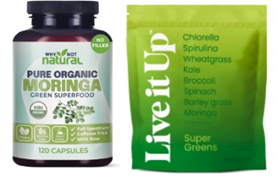
As of March 17, 2026, CDC reported a total of 97 people from 32 states that have been infected with one of the outbreak strains of Salmonella. Of the 67 people interviewed, 59 (88%) reported eating a product containing moringa leaf powder, including 55 who reported Live it Up-brand Super Greens supplement powders only, 3 who reported Why Not Natural moringa powder capsules only, and 1 person who reported consuming both products. There were 26 hospitalizations, and no deaths have been reported.

The products linked to illnesses in this outbreak have a long shelf life. FDA is reminding consumers and retailers to not eat, sell, or serve recalled Why Not Natural Pure Organic Moringa Green Superfood capsules (lot # A25G051 and expiration date 07/2028) or recalled Live it Up-brand Super Greens dietary supplement powder (original or wild berry flavor) with expiration dates from 08/2026 to 01/2028. Consumers should throw these products away and may request a refund by contacting the respective company. Retailers should discontinue sales of recalled product.  

As part of this investigation, FDA and state partners collected product and ingredient samples for analysis. Sample analysis detected the outbreak strains of SalmonellaTyphimurium or Newport in six samples.

  • FDA detected the outbreak strain of Salmonella Newport in two moringa leaf powder ingredient samples and the outbreak strain of Salmonella Typhimurium in one opened product sample of Why Not Natural Pure Organic Moringa Green Superfood capsules.
  • Three state partners detected the outbreak strain of Salmonella Typhimurium in three state samples.
    • The Illinois Department of Public Health and the Wisconsin Department of Health Services each detected the outbreak strain in opened Live it Up-brand Super Greens product samples.
    • The Minnesota Departments of Agriculture and Health detected the outbreak strain of Salmonella in an unopened Live it Up-brand Super Greens product sample.

Sampled products contaminated with Salmonella have been recalled and should no longer be for sale. Consumers should check their homes for recalled products and throw these products away. FDA’s outbreak investigation is complete.

Lawsuits:

https://www.marlerblog.com/files/2026/03/1-Sampietro-Complaint.pdf

https://www.marlerblog.com/files/2026/03/1-Rusich-Complaint.pdf

Illnesses confirmed: Alabama 1, Delaware 1, Maine 1, Missouri 1, North Carolina 1, North Dakota 1, New Jersey 1, Oklahoma 1, Pennsylvania 1, Tennessee 1, Texas 1, Utah 1, Washington 1, California 2, Iowa 2, Michigan 2, Nebraska 2, South Carolina 2, Virginia 2, Vermont 2, Connecticut 3, Massachusetts 3, Minnesota 3, Illinois 4, Kentucky 4, Ohio 4, New York 5, Wisconsin 12.

As of January 29, 2026, 65 people infected with one of the outbreak strains of Salmonella have been reported from 28 states. Illnesses started on dates ranging from August 22, 2025, to January 11, 2026. Of 55 people with information available, 14 have been hospitalized. No deaths have been reported.

Public health officials in Illinois collected and tested open samples from a sick person’s Live it Up Super Greens powder. Analysis of WGS data confirmed the Salmonella identified in the powder is the outbreak strain of Salmonella Typhimurium.

FDA’s traceback investigation revealed a common manufacturer between Live it Up Super Greens supplement powder and Why Not Natural Pure Organic Moringa Green Superfood capsules. FDA is working with the firms to determine a root cause of the contamination and whether additional products that may be affected.

On January 14, 2026, the company informed FDA that they would initiate a voluntary recall. CDC is advising people not to eat, sell, or serve recalled Live it Up brand super greens supplement powders.

On January 20, 2026, Superfoods, Inc. expanded their recall to include nationwide distribution of Live it Up Super Greens product including Puerto Rico, Guam, and the Virgin Islands, as well as international distribution to consumers in the United Kingdom.

On January 28, 2026, Why Not Natural recalled Why Not Natural Pure Organic Moringa Green Superfood capsules with lot # A25G051 and expiration date of 07/2028.

Salmonella:  Marler Clark, The Food Safety Law Firm, is the nation’s leading law firm representing victims of Salmonella outbreaks. The Salmonella lawyers of Marler Clark have represented thousands of victims of Salmonella and other foodborne illness outbreaks and have recovered over $900 million for clients.  Marler Clark is the only law firm in the nation with a practice focused exclusively on foodborne illness litigation.  Our Salmonella lawyers have litigated Salmonella cases stemming from outbreaks traced to a variety of foods, such as cantaloupe, tomatoes, ground turkey, salami, sprouts, cereal, peanut butter, and food served in restaurants.  The law firm has brought Salmonella lawsuits against such companies as Cargill, ConAgra, Peanut Corporation of America, Sheetz, Taco Bell, Subway and Wal-Mart.  

If you or a family member became ill with a Salmonella infection, including Reactive Arthritis or Irritable bowel syndrome (IBS), after consuming food and you’re interested in pursuing a legal claim, contact the Marler Clark Salmonella attorneys for a free case evaluation.

Additional Resources:

COMPLAINT: 2024 Outbreak of E. coli Associated with Raw Farms, LLC Raw Milk Cheese

  1. CDC, public health and regulatory officials in several states, and the U.S. Food and Drug Administration (FDA), are collecting different types of data to investigate a multistate outbreak of E. coli O157:H7 infections. Epidemiologic data show that Raw Farm brand raw cheddar cheese is making people in this outbreak sick.
  2. Since the last update, one new illness and one new state were reported. One sick person in New Jersey reported eating raw cheddar cheese during travel to Colorado in the week before they got sick. As of February 28, 2024, a total of 11 people infected with the outbreak strain of E. coli have been reported from 5 states – New Jersey, Texas, Colorado, Utah and California. Illnesses started on dates ranging from October 18, 2023, to February 5, 2024. Of 11 people with information available, 5 have been hospitalized and 2 developed hemolytic uremic syndrome, a serious condition that can cause kidney failure. No deaths have been reported.
  • State and local public health officials are interviewing people about the foods they ate in the week before they got sick. Of the 9 people interviewed, 7 (78%) specifically reported eating Raw Farm brand raw cheddar cheese. This percentage was significantly higher than the 4.9% of respondents who reported eating any raw milk cheese in the FoodNet Population Survey—a survey that helps estimate how often people eat various foods linked to diarrheal illness. This difference suggests that people in this outbreak got sick from eating Raw Farm brand raw cheddar cheese.
  • Public health investigators are using the PulseNet system to identify illnesses that may be part of this outbreak. CDC PulseNet manages a national database of DNA fingerprints of bacteria that cause foodborne illnesses. DNA fingerprinting is performed on bacteria using a method called whole genome sequencing (WGS). WGS showed that bacteria from all sick people’s samples are closely related genetically. This suggests that people in this outbreak got sick from the same food.
  • Officials in California, Colorado, and Utah collected various Raw Farm products for testing including raw milk, raw butter, raw cheddar cheese, and raw kefir. So far, no samples have tested positive for E. coli. Additional testing is ongoing.
  • On February 26, 2024, Raw Farm brand withdrew their recall. However, CDC continues to advise people not to eat, sell, or serve Raw Farm brand raw cheddar cheese while the investigation is ongoing.

Previous Raw Farm, LLC Recalls and Outbreaks

  • Since September 2006, Raw Farm, LLC, formerly known as Organic Pastures Dairy Company (“OPDC”), has issued multiple recalls of unpasteurized milk products, and been linked to multiple outbreaks as outlined below. 
  • The following table shows Raw Farm’s previous history with contaminated products: 
DateProductContaminantRecall/Illnesses
September 2006Raw MilkE. coli O157:H7Six ill, two with Hemolytic Uremic Syndrome 
September 2007Raw CreamListeria monocytogenesRecall Issued
December 2007Raw MilkCampylobacterEight Illnesses 
September 2008Raw CreamCampylobacterRecall Issued
November 2011Raw MilkE. coli O157:H7Five ill, three with Hemolytic Uremic Syndrome
May 2012Raw Milk/CreamCampylobacter10 Illnesses 
October 2015Raw MilkCampylobacterRecall Issued
January 2016Raw MilkE. coli O157:H7Nine ill, two with Hemolytic Uremic Syndrome
May 2023Raw MilkCampylobacterRecall Issued
August 2023Unpasteurized Cheese SalmonellaRecall Issued
December 2023Raw MilkSalmonella19 Illnesses

William “Bill” Marler has been a food safety lawyer and advocate since the 1993 Jack-in-the-Box E. coli Outbreak which was chronicled in the book, “Poisoned” and in the recent Emmy Award winning Netflix documentary by the same name. Bill work has been profiled in the New Yorker, “A Bug in the System;” the Seattle Times, “30 years after the deadly E. coli outbreak, A Seattle attorney still fights for food safety;” the Washington Post, “He helped make burgers safer, Now he is fighting food poisoning again;” and several others. 

Dozens of times a year Bill speaks to industry and government throughout the United States, Canada, Europe, Africa, China and Australia on why it is important to prevent foodborne illnesses.  He is also a frequent commentator on food litigation and food safety on Marler Blog. Bill is also the publisher of Food Safety News.

E. coli:  Marler Clark, The Food Safety Law Firm, is the nation’s leading law firm representing victims of E. coli outbreaks and hemolytic uremic syndrome (HUS). The E. coli lawyers of Marler Clark have represented thousands of victims of E. coli and other foodborne illness infections and have recovered over $900 million for clients. Marler Clark is the only law firm in the nation with a practice focused exclusively on foodborne illness litigation.  Our E. coli lawyers have litigated E. coli and HUS cases stemming from outbreaks traced to ground beef, raw milk, lettuce, spinach, sprouts, and other food products.  The law firm has brought E. coli lawsuits against such companies as Jack in the Box, Dole, ConAgra, Cargill, and Jimmy John’s.  We have proudly represented such victims as Brianne KinerStephanie Smith and Linda Rivera.

If you or a family member became ill with an E. coli infection or HUS after consuming food and you’re interested in pursuing a legal claim, contact the Marler Clark E. coli attorneys for a free case evaluation.

Additional Resources: