Thoughts for Good Friday and the creation of a ‘doing’ Good-all day on Jane Goodall’s birthday.

Wishing everyone a happy time at this special time of year. In Spain today is ‘Viernes Santo’, Holy Thursday and the whole week has been holy and holidays for the Spanish. Our local campsite is full and the processions for Semana Santa almost over. Easter Sunday is a day of rest and family time here.

Palm Sunday procession in Aracena.

Today’s post will be a celebration of all that brings us together and concerns for some key women I spoke about a year ago at a Quaker conference.

Spring has also burst more into blossom and birdsong. So here are some of my flowers from ‘gentle gardening’. This is a concept I heard explain in a writing group and was beautifully described through the prompt of happiness. For me most of my work here at Navasola is hard but satisfying but for these flowers to arrive I just buried some bulbs quickly last November before leaving. Nothing dug down to eat them so a gentle surprise. Tulips galore and narcissus. Plus more wilder blossoms are now out too around Navasola.

Let’s start today with the holiness and although I am not religious in any conventional sense and for Quakers there is no calendar of holy events. Every day is holy. For me holiness, wholeness, sense of community is in the silence we can keep when we meet together and also the sense of silence being close to nature. The book below I am reading and the Ted Talk is about the value of bringing silent time into our lives. Pico Iyer spends time in a Franciscan retreat in the beauty of the Sur coastline but with the dangers of wildfires.

Below is the Ted Talk link

https://youtu.be/inmCDWsAW4g?si=YgJsJpM08psOLshE

I found this quote below when looking through for meditations and responses to todays meaning for Christians. There is so much suffering at the moment and I’m not sure about going back over 100 years this refers to the Pope’s message in 1917, the year my mother was born and what a world she was born into. But many of her years were spent in peacetime but there was always the reality of how fascism destroys lives. War is not holy. We were not a religious family but we were close to some catholic families and friends and believed in creating a peaceful world.

This, after all, has been the Church’s line for over 100 years, since August 1, 1917, when Pope Benedict XV refused to bless the armies, defined the war being fought as an “useless slaughter,” and urged the leaders of the belligerent nations to reach a just and lasting peace through negotiation, respect for international law, the return of occupied territories, restoration of free movement, and disarmament to free resources to be invested in the common good and development.’

Fr. Patton: Good Friday meditations are not to judge, but to inspire change – Vatican News

My thoughts go to all Palestinians and Israelis as there has not been any just and peaceful solution for over 70 years. But today I am thinking of Palestinian Christians and their lives and in particular Jean Zaru. She is a Palestinian Quaker I spoke about whose whole life has been under occupation in Ramallah on the West Bank. Her work on non-violence within the community and her inner strength from Quaker values and silence has been lifelong.

I also spoke about Jane Goodall who as a scientist with her studies of chimpanzees changed the way our societies considered animals and intelligence. She died on tour in the USA last year aged 91.

Today is Jane Goodall’s birthday and the Institute she founded is creating April 3rd as Jane Goodall day as a way to commemorate her life and ideas. Her book a ‘Reason for Hope’ explored her life and ideas. The parts I found interesting were her spiritual awareness and a sense of the universal and what connects us all as humanity and being a part of nature. However, her wisdom is also in community action and connecting with people to create the change needed. She knew this was the path needed to protect nature.

https://janegoodall.org/home/goodallday

The idea is to try and do good all day! Hopefully my post will contribute to this and sharing! All images of Jane Goodall are courtesy of her foundation and shared for spreading her ideas.

I also spoke about some key Iranian women and have been following the situation there for a long time. Narges Mohammadi has been in prison there for being a human rights lawyer and in opposition to the regime’s death penalty for political prisoners. Surely in the 21st Century there should not be executions of those in opposition to a government.

The recent news is that she is ill and needs hospital treatment urgently. Her two children now in their 20s live inFrance and my thoughts go out to them and hope that they will one day be able to see their mother.

My talk on Women’s Activism and Spirituality is published in the Quaker Universalist pamphlet but think I can soon put a pdf of it on this blog if anyone is interested.

The book I am reading at the moment is called ‘Care of the Soul’ by Thomas More. It was on my shelf for a long time and I was drawn in by the interpretations of Greek myths. In many ways the book is about going deeper than just the ego wishing to improve or be cured but this also links to caring for the world. It is about how we deal with the darker sides of our own natures and those of others. Thomas More retells the story of Narcissus and interpretes this in a way that our own ego can be hard, we fall in love with a reflection, but that is soft, flowing, not hard. And when we realise this we can lose that hardness, drown that ego and become part of nature. Connect fully with life. Flower!

Well at least I return to my nature focus. Wishing you all a happy, well connected time of wholeness and healing.

Narcissus and Buddha in my gentle garden

Wishing you all the strength needed and hope for healing in a world of too much suffering.

International Women’s Day – Women for Peace

I am choosing Margaret Fell as a woman for me to write about on International Women’s Day. She was born in 1614 but her words resonate in this world of war being created in 2026. She is known as one of the key founders of The Religious Society of Friends or Quakers as more well known now. Quakers began with her work and leadership with George Fox in Lancashire in the North of England. It was a time of the English Civil War 1642 to 1651 and of many people questioning the religious establishment of the day and wanting more authentic , close to God, Christianity. Central to the Quaker approach then as now is equality. There were to be no priests, women and men were equal, and in worship fewer words and more silent being in the presence of God.

Quakers do not abide by having a creed. Each person is on their own spiritual journey for understanding but supported by their weekly Quaker meetings and Friends. There are Quakers in the USA and with significant figures such as the founder of Pennsylvania and Lucretia Mott and involvement in the abolition of slavery. There are four testimonies to key ways of acting in the world. Peace, Equality, Truth and Simplicity/Sustainability.

In June 1660 Margaret Fell delivered to Charles II a paper directed to the king and both houses of parliament making clear the corporate testimony of Friends against all strife and wars’:

We are a people that follow after those things that make for peace, love and unity; it is our desire that others’ feet may walk in the same, and do deny and bear our testimony against all strife, and wars, and contentions that come from the lusts that war in the members, that war in the soul, which we wait for, and watch for in all people, and love and desire the good of all… Treason, treachery, and false dealing we do utterly deny; false dealing, surmising, or plotting against any creature upon the face of the earth, and speak the truth in plainness, and singleness of heart.

or plotting against any creature upon the face of the earth

These words stood out for me today when this was read out at our online Quaker meeting. ‘Any creature’. I have been meaning to write some Sub Stack posts that examine Green values and a response to current political onslaughts on many countries, some peaceful, some authoritarian. And now we have the disruption and display of weapons raining down in the Middle East. This all moves too fast for me as I was going to write about Greenland, the Arctic under the title ‘The Polar Bear in the Room’.

There is so little mention of the potential of climate change to disrupt the world as we know it. But this is already disrupting the world of the many other creatures we share this planet with. Let’s just take the ocean.

Birds without borders

The ocean is becoming more acidic because the ocean is kindly absorbing a lot of the carbon dioxide that we humans are creating. This acidification is now exceeding any stable amount. For many marine ecosystems this is becoming a threat to life and in particular will affect shellfish first.

Global warming is causing the Arctic to no longer have sea ice in the summer. Glaciers are melting. The Mediterranean sea is said to be suffering a 9 month of the year heat wave. Ocean temperatures are rising. Marine life is suffering. These are facts. All of this does threaten the stability of life that humans have known over the past 10,000 years.

Ria Formosa, between Cabanas and Fabrica

So why at this crisis point in the functioning of planetary ecosystems do we need to create more suffering through attempts at regime change, use of weapons and military that add to the carbon crisis.

All the other creatures of the world need to have their say in this too. The ocean is suffering, loss of ecosystems, fish, coral reefs and the equilibrium needed. Intense weather increases and all creatures suffer from the extremes whether drought or flooding. The natural world can be our solution but we need to take care and we need to help prevent carbon emissions; not sky rocket them into the air.

Acts of war are a threat to all of the creatures of this world. Crimes against humanity and crimes against nature. Peaceful negotiation can take time but I think it was Churchill who said – while talking goes on there is hope of resolutions.

‘Meeting jaw to jaw is better than war

Well, we will all have some answers to why we have entered yet another disruptive and violent time so I will close with this. A book I have been reading which is very informative of our current ‘developed’ societies is ‘The Spirit Level’. This book is also central to understanding Green values and the reasons why more equal societies are better for both the rich and the poor.

The Spirit Level (2009) – Equality Trust

As this current war shows we all get caught up and suffer from the impacts. We live in a very unequal world. It would be better to address this than play politics with the weapons of war.

The latest book and one I will read soon is this one.

The Inner Level: How More Equal Societies Reduce Stress, Restore Sanity and Improve Everyone’s Well-Being: Wilkinson, Richard, Pickett, Kate: 9780525561224: Amazon.com: Books

The role of good governments is to look after their people, and create better societies where both humans and nature can flourish.

I think this brings me back to the inner values needed and the ability to stand strong against the inequalities and injustices we are seeing in our own societies as well as different parts of the world.

Hoping all is going well for you and stay safe, stay strong.

Hope for renewal. New land in the Azores.

Birdsong and Water Blessings

Where has February gone? For me I have been in lots of places within the UK. A London jackdaw at my favourite birdplace reminds me of the northern jackdaw colonies I live near when in the UK. My phone managed my best ever jackdaw photo as the bird perches waiting for fish bits at the otter enclosure at the Barnes Wetland Centre.

In the midlands we watch the Beekeeper of Aleppo on the Nottingham stage. First this was a book and I hastily took it from my long overdue to be read shelf and was absorbed in the psychological displacement of fleeing a war zone as well as the physical loss of loved ones and a well loved environment where they kept bees.

Buff tailed bumblebee

Onto the North East we visit a Tyne side beach with the Sunderland port in the background. A mix of greys, light blues and rock pools. The North sea stretching out, a shallow sea and one that is under so much pressure. A UK supermarket makes the headlines that they will no longer sell mackerel from this north east region as its being overfished. Well, they can’t anymore as the closure of the fishery happened 6 months ago because of the dramatic decline in numbers and the species could not reproduce sufficiently to allow for more to be taken. There is too much pressure to legally overfish and push the quotas to the limits. The result though, no more of that species in that area. If I manage to write on substack I will have a focus on ocean nature issues. At present I volunteer on Marine and Coastal policy work for strategies to allow for the return to a healthy and abundant ocean.

Arriving back in the Sierra Aracena we come a different route. Below are the Pyrenean mountains covered in snow. Later the country has sunshine glistening on thin ribbons of rivulets, ponds all flowing into big rivers and reservoirs. These look more earthy coloured water. I guess a lot of sediment flowing down too because of heavy continuous rain.

We must have crossed the Spanish meseta, where so many of the mighty and long Iberian rivers flow from. My intention for this Spring will be to follow the Guadiana river from source to sea. However, not just yet it seems. There has been so much rainfall especially in the south of Spain in Andalucia that many roads are not passable due to water, landslides and subsidence. There are still some towns and villages cut off and others where folk were evacuated and not all able to return. There is a high cost to this rain and flooding with so much damage to infrastructure and houses.

Grazelema suffered 500ml in 24 hours. This town and natural park is famous for its diversity of nature, particularly for botanists. Its climate is usually wetter than most of Andalucia and therefore is a distinctly different mediterranean region.

These tiny flowers were seen near the well in the very damp ground.
Small wild daffodil, hooped daffodil,

The cost of more extreme weather due to the heating up of the oceans and climatic changes is adding up the insurance costs here in Spain.

Back in our home in the Sierra Aracena, the coldest winter was recorded in the last 10 years and since September the rainfall level is back to that recorded in the years prior to the drought – 1000 mm but over 6 months. This is now more than last year when I wrote about how much rain we had in February 2025.

On our land in the lowest valley area we not only have a stream running into an over flowing pond but a wetland. Also around the well it is almost up to the top and boggy.

And the birds are singing. There are the regulars – robin/ petit rojo and lots of blackcaps. But I walk to the gate and see the Iberian green woodpecker that seems to laugh out its call of danger. High above me in the spindly pyrenean oak grove the laughing call warns of the intruder, me. The humans are back. The wild boar will be catching on too and as their ploughing has got nearer to the house and garden lets hope soon and they keep themselves further away.
Green woodpecker from pexel library. Note the Iberian one has less black around the eye and too quick and elusive for me to photo.

Of the birds I have heard there has been an interesting range – the nightingale, treecreeper, song thrush, greenfinch, and mainly the blue tit. Where are the others in that family I wonder; the great tit, crested and long tailed ones?

robin in huerta
baby robin

On my walk up the hill of the valley side I look out for where the dead boar lay. A massive beast came to its end by some large badger holes last November. One walk to check on it then was too difficult because of the smell. Nothing seemed to be eating this rotting carcass and there were too many branches in dense woodland for the vultures to land.

Hope it was not one of these little uns but could have been a yearling.
Wild boar demise and badger sett not far from here.

This time I expect to see some remains, bones, a skull perhaps. We had found a skull a year or two ago in the valley area. But there was nothing. Totally gone. Where? How? Now, I had my path back. But the badger holes looked filled in. There are quite a few badger setts, entrances, signs of latrines too on this side of the valley. These ones were now no longer in use. I guess the badgers didn’t like the smell too and seemed not at first to tackle the rotting carcass.

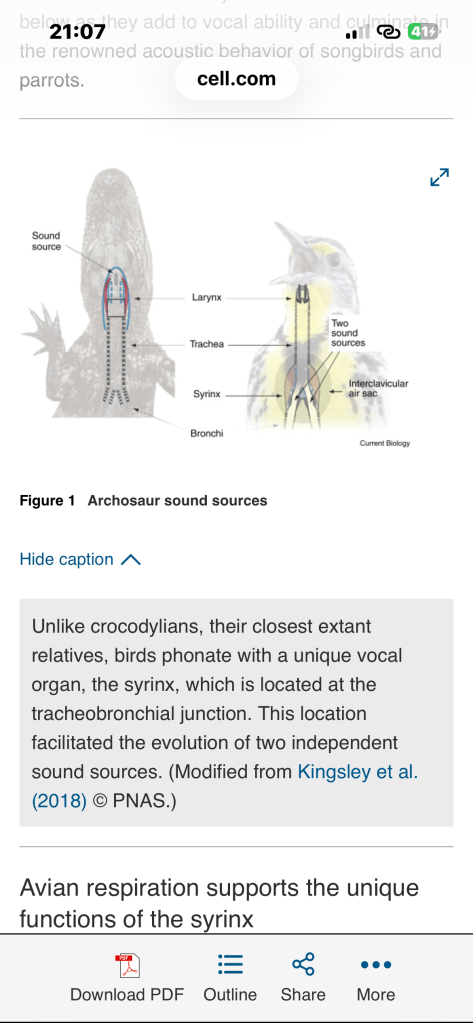
Let’s get back to bird song. We need a lighter note or two. How did these amazing feathered beings develop their song instruments. I was listening to David Attenborough’s book ‘The Life of Birds’. So birdsong and the syrinx / pipes of birds began to put the whole picture together for me.
The evolution of the syrinx in birds is still causing a lot of study as in the above article. Dinosaurs, flying ones, birds, reptiles. How did the syrinx evolve in birds?

Birds have evolved a different voicebox to other animals and this is situated further within their bodies just above the two bronchi. Some say their voices emanate from their hearts but scientifically it is much closer to their lungs. The lungs are already well adapted for flight and on the syrinxes there are tiny muscles which move and the air can pass through and sounds made very easily but in a two way flow too!

Female singer with super high notes in a renaissance music recital.

Some of the sounds are songs which are learnt and distinctive to each species. Perhaps this song complexity came later but the other sounds such as calls came first. These can be made while flying and are very much a communication tool for survival and the importance for some of belonging to a flock: Finding each other and flying together.

However it seems the males have more of the song repertoire for helping them stand out as a very viable suitor or displaying their strong genetic heritage for reproduction and survival of the species.

We might like to believe birds sing for joy so let’s not totally lose that to scientific understanding. Perhaps these are songs for the future, songs of hope being passed down the generations, songs of love and desire!

Or

Spring is coming! Choose me!

Here’s hoping for everyone the signs of hope are beginning to sing out around you.

Today 28 th February is Dia de Andalucía. In 1980 in a referendum, not long after the death of Franco, Andalucía became a self governing province. And so this day is a public holiday.

Finally the sun is out after all the rain and terrible floods in Andalucía this winter. The whole of the Sierra Aracena is full of visitors enjoying walks or like us some music.

Día de Andalucía flags flying from the ayuntamiento/ town hall.

We visited the village/ pueblo of Alajár today for the Renaissance Festival. The Andalusian province flags were flying too. A young woman with a beautifully angelic voice singing renaissance music in the church in Alajár. A reminder of how our voices were our first instruments. And did we learn to sing because we listened to the birds and tried to copy them!

My next project is to take us all an A to Z tour of the villages of the Sierra Aracena. I will begin with those beginning with A

Alajár – first

Almonaster- a favourite

Aracena – our main town

Aroche -the furthest west and closest to the Portuguese border.

Life at Navasola: 14 Years Off-Grid in Nature and 14th Blogversary

Although my main focus for this blog is my nature journey looking back I realise I have posted some views of the house and the building project. Here are some snatches from the past 14 years of blogging and living at our Navasola home.

picture of navasola
A view of the house November 2013

The top part of the house on 3 levels originally was rebuilt into two levels with a higher roof. We lived in that part while the lower levels of the house were rebuilt and by some different builders who were very efficient and finished as below in early 2014. Planning permission is strict in a natural park so we had to keep to exactly the original shape.

House 2014

The house in 2014 with some major new and well insulated walls and roof had new windows and another chestnut door fitted. But we were still without electricity and were waiting for the solar panels. Inside the house we fitted a wood burning stove from China which would heat hot water and a tank to hold the hot water.

We live down a rather bumpy track and the lorry would not go any further so left the solar panels here. We had to carry them one by one down to the house.

Chinese stove to heat water installed

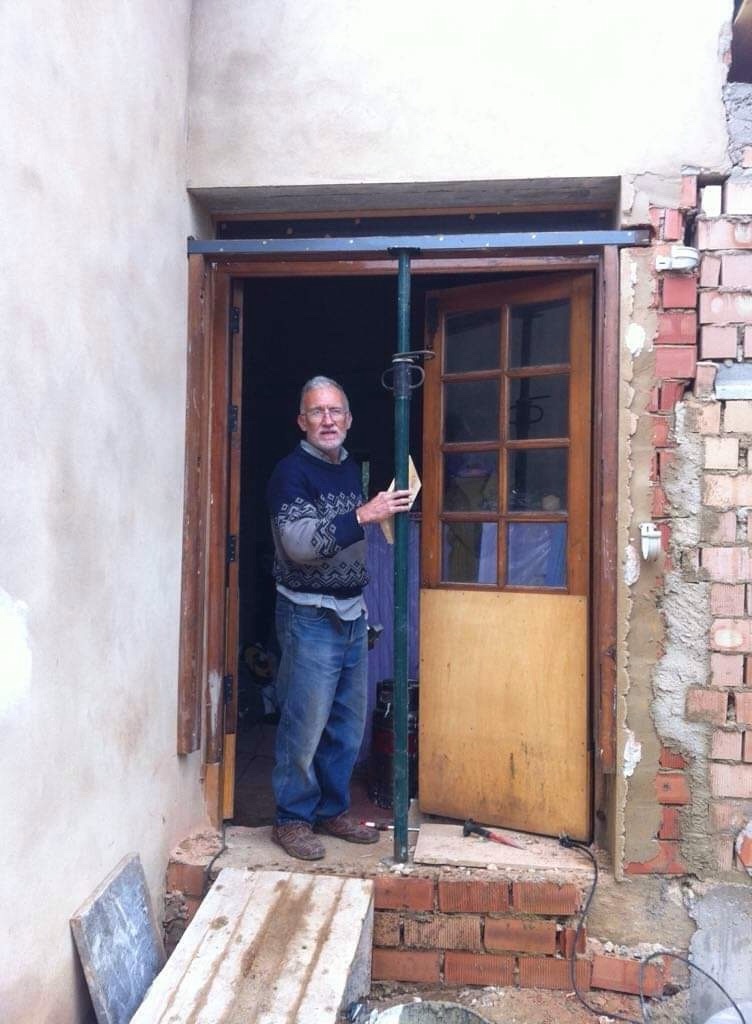
Our life at Navasola is ‘off grid’. We decided on solar power rather than the bureaucracy of trying to get electricity cables to our house. We have our own well and plenty of fallen branches for heating. The old chestnut trees seem to suffer in the stronger winds that we now have. But it is branches and not a whole tree that comes down.

Here are some of the usual photos from living at Navasola and enjoying the sunshine, the green, the plant life and of course there has to be rain. This part of the Sierra Aracena should get lots of rainfall in the winter and Spring but we did have over five years with less rainfall than normal. Climate change is evident here and the summers are getting much hotter too.

Some of the hard work over the years. I have tended to work on the land and hubby on the house. But we have also had help.

From extending the old doors to make them fit to getting onto the roof for the solar installation. And some years later giving the panels a clean because sometimes we get all this red Sahara dust falling.

My nature journey keeps evolving and is very much in the sea now as I support a marine and coastal policy working group. This does take up much time, mental and creative space but I have learnt a lot about the way we humans impact the ocean and how the ocean supports life on this amazing planet. I think I should write about this as the biodiversity is amazing but I don’t go to sea so this is mostly second hand info and very few photos. We did have a couple of wonderful trips to the Azores and that was very interesting with insights into fishing and the new whale watching economy and a rough trip out to see sperm whales off Faial.

Holy boat not at sea

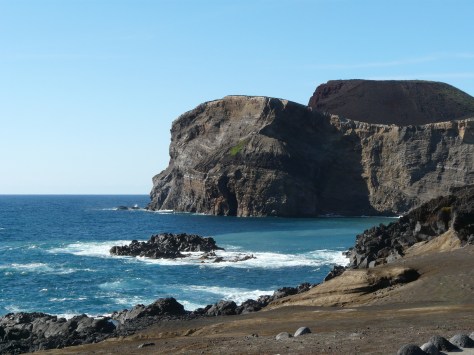
Azores in 2018

Wave watching not whale watching

Our other coastal spot is the Eastern Algarve and the wonderful natural dunes of the National Park the Ria Formosa.

This January is not just Blogversary for me but a Happy and significant Big Birthday to my fellow adventurer.

San Miguel in the Azores

El Pozuelo ancient dolmens from early Iberian settlements.

Fearless in taking our old car Jud down many a bumpy track.

Hopefully we can continue with our ‘roads’ less travelled as we always look to be ‘off the beaten track’!

Thank you to all my followers and for connecting and commenting over the years.

Epiphany. Jan 6th. Wise Men and Women. Blue Jays.

Wishing all of you the very best for 2026 and hoping we all see improvements in the world around us.

This morning I heard from a Quaker friend in Uvira, Democratic Republic of the Congo. Sounds of bullets. Banks Closed. Lives lost. Food Scarce. Borders Closed. No Way Out. But still some infrastructure. He joined us yesterday for our group’s intention for peace and healing but connection was poor and we couldn’t hear him. Conflict minerals mined for our phones has created so much violence in this region. And now taken over by rebels with support from elsewhere. Forgotten in a world where peace building is emptier than it has ever been. A peaceful world needs just solutions.

Where are the Wise Men?

If in Spain, last night we would have visited some of the processions of the Three Kings. Los Reyes. I have posts about this and this marks the end of the Nativity season.

I am not sure I want to use the word Kings now as I prefer that they were wise men and it seems there were possibly more than three and women too.

However, today in Spain this is the last feast day after the busy evening of preparing for these processions and giving presents to the local children. Each village will celebrate as a community together for this.

Famous Higuera Processions of the Three Kings. First comes the Star

Today, January 6 th will be more peaceful, a family day in Spain. Yes, another day off. Then all the lights come down from the streets and we all face a cold January.

Epiphany is a special event when the baby Jesus blessed with the spirit of God is revealed to the world. It also takes on a meaning of sudden revelation in literature or even a turning point. January 6 h was also the due date of my second child and if she arrived I might have named her Epiphany. Wisely, she waited a few more days but still got the offering of that day’s saint. Whatever possessed me as I am not Catholic or conventionally religious but back in the 90s I felt the need for something more spiritual for a child being born into a chaotic world.

This morning I have a very deep, peaceful and inspiring meditation and I realise that today is that very spiritual day. Epiphany. I have been overwhelmed with looking at policies and strategies to improve the marine environment and am again ‘fished out’. Like the fish, I feel the spiral of decline. The meditation renews me and settles me into a calmer frame of mind. I can do this!

By chance this morning, instead of doom scrolling, I read on my kindle part of a book by Eva Meijar. She writes fiction and non- fiction and is very strong on presenting the point of view of nature and animals. I have several of her books now as these were recommended by Natalie Bennett, author of Change Everything. This one is about community assemblies. It seems in New England this happens and helps build involvement in local governance. And also was very often part of indigenous cultures. Here, in Old England, everyday we seem to have a government out of tune with its citizens. Are these assemblies a way to rebuild trust and create better governance?

This book also brings me full circle back to my own writing. There is a concept of the ‘parliament of all things’ which I read about and offered a short story to in a competition in 2016. Eva Meijar mentions this. This short story was the beginning of my novel Navaselva and inspiration for my idea of the Meetings of the Many. These meetings are a possibility for all the non human species but sadly humans had lost the capacity to listen and understand and were now the Outsiders without any sense of the damage they were inflicting on the natural world.

This morning gave me inspiration to write more and to continue my Navaselva series into a third one with a journey eastwards. The sequel – Navaselva North should be out in early 2026. I also have some other plans too and must get the Quaker nature poetry anthology together from the workshops I ran.

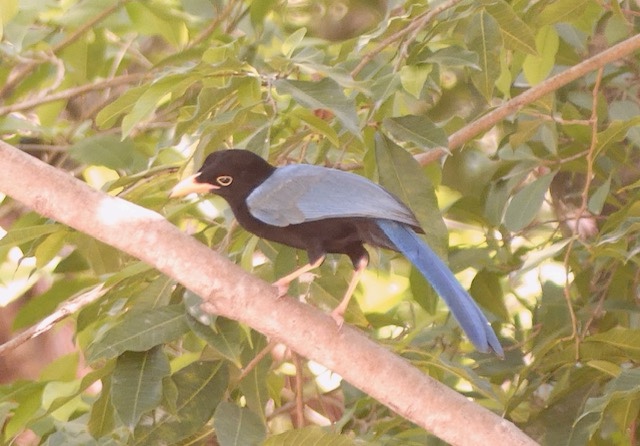
I sent a poem for Christmas to some close friends. So I will bring you all part of this poem I am still working on. My friend, the artist Ruth Koenigsberger was asked to paint a blue jay on gold leaf for an American friend. She posted it to the States. I have also wondered about why there are so many more birds with lots of blue feathers in the United States. Was this evolution and migration? Did pinkish European jays fly across? Or did this happen millennia ago when all was one continent? This gave food for thought for some of my naturalist friends. Any ideas please comment. And any photos of blue feathered birds too?

Yucatan Blue Jay – own photo 2023

Blue Jay

Radiating iridescence

Sun chances on a flight of feathers

Evolving and revolving

Muted pink from overcast skies

Under the blue skies of heaven

Changes.

Blue jay

Painted on gold leaf arrives 

In that New World,

Safely wrapped in record time,

To meet with oh so many different Blue birds.

To listen in to the song of 

Robins with blue breasts,

Cerulean warblers,

Lazuli and indigo buntings

Blue mocking birds, 

Bluebirds of the east and west.

Blue jays from scrub to stellar

Chattering comfort to all

Painted by a greater light.

Tidings of great joy.

I wish everyone all the best for 2026. The year has begun with tensions and for many fear. We can only continue to offer the olive branch, uphold justice and peace. And do our best for this incredible and wonderful natural world.

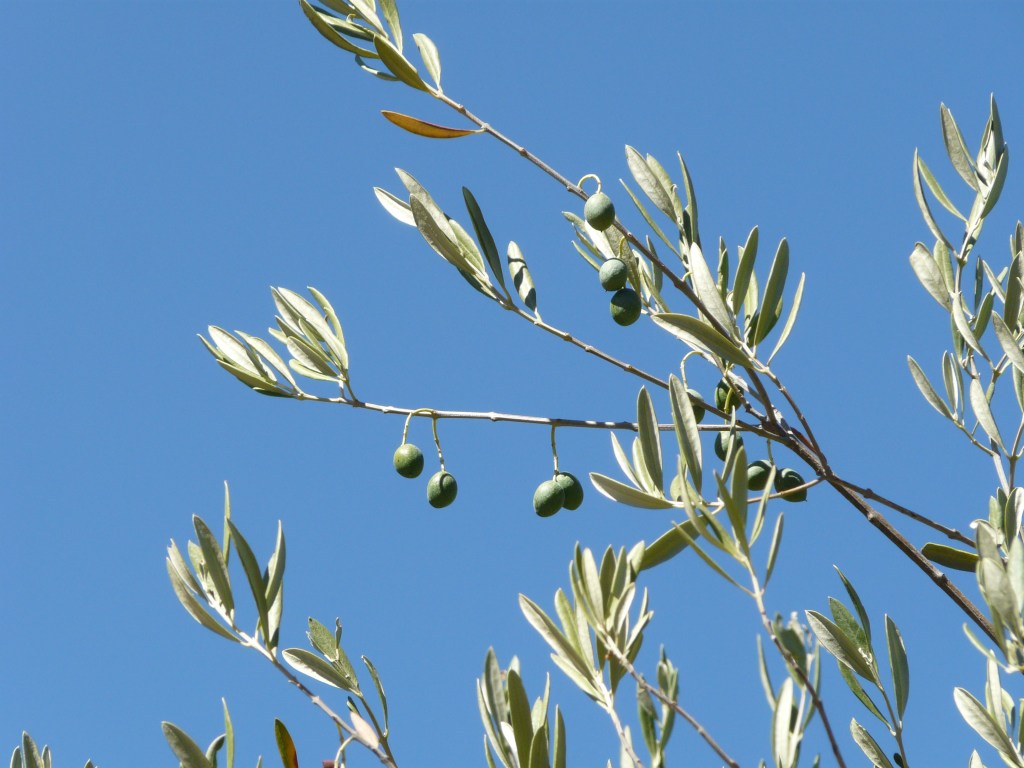
olive leaves dancing
There should be some olives later

Books by Eva Meijar

Sea Now by Eva Meijer (translated by Anne Thompson Melo)

Bird Cottage Bird Cottage. London: Pushkin, 2018, ISBN 978-1782273936. 2019, ISBN 9781782273950. Translated from the Dutch by Antoinette Fawcett.

Multispecies Assemblies. Vermont: VINE Press, 2025.

When Animals Speak: Toward an Interspecies Democracy. New York: New York University Press, 2019. ISBN 97

Change Everything by Natalie Bennett

https://www.worldofbooks.com/en-gb/products/change-everything-book-natalie-bennett-9781800183025?

To the Biodiversity of Being Bird

I was searching for my poem ‘To the Diversity of Birds’ on my lap top and to no avail. So, reluctantly and with little faith I searched my Jetpack app. And there it was and so quickly from 2016. I now realise this was inspired by Dverse poets. On linking with the link below from 2016 I find the current prompt with a focus on animals. So I feel I must join in. I also wonder if anyone knows or can link me to the original prompt by Abhra.

I think this one fits best with the prompt Menagerie with a focus on the deeper nature of animals and our own more surface thinking. There is also some wonderful art. https://dversepoets.com/2023/04/04/dverse-poetics-menagerie/

However, so sorry not to join a live session of this amazing poetry community on Saturday but I will be reading the poem at a similar time at the publishers of my book ‘Navaselva, the Call of the Wild Valley’ annual event in London.( Hence the search!)

On finding the original post I realise how much some of the Dverse prompts have contributed to my novel writing as well as my attempts at poetry. 2016 was the year I really began the novel and a post near this one was for me completing 36000 words!

From a post for Dverse in 2016

Another really interesting   Dverse poetry prompt I cannot ignore. It’s worth following the link to where Abhra tells us about a famous Bengali poet and quotes some beautiful lines about the kind of bird he might like to be reborn as.

These words came to me in the early hours as the birds began to sing. Although today I should be working outside in the sun and gathering wood I cannot resist having fun with this. It’s a tribute to all the birds with the hope that they may survive the cold, the long journeys, human interference, and be with us as truly wild ones.

If I was reborn I would like to be a bird in the Navasola valley. They seem quite happy here, with plenty of food to eat. But which one ?

To the Biodiversity of Birds

I would love to be

A bee eater, glorious gold blue green.

But maybe not with such decline

In numbers with a risky journey South

And far too few bees to eat.

I am not a risk taker.

Or could I be a darting swift

Flying fast round village spires

Screaming to the God inside.

I fear I cannot go so fast.

To go with the warblers and the swallows south

On African plains would be a dream.

Guided by the distant stars.

But migrant birds in current climes

Travel with joy but suffer loss.

I do not want so much grief.

An owl gliding through the night

Silent flight now that I’d like.

But I would miss the sun.

A stork is not I think the best

Bringing babes frogs to the high up nest.

I think from that I need a rest!

So perhaps a resident is what I should be

A Mrs brown blackbird, or robin dear.

With sludgey worms slugging down my throat.

Perhaps that’s not quite my cup of tea.

A tiny wren with cracking voice

Varied tits with varying tails.

Winter cold small body fails

I like a fire to keep me warm.

The goldfinch flies with such glitter

A song so pretty but here so often caught

Put in a cage , no place for wings to flutter.

I like to be free.

From gliding vultures high above

Eagles with their boots on, ravens, jays.

Living on corpses to the end of my days.

I cannot change my vegetarian ways.

The woodpecker too noisy with the wood

I prefer some silence and some song.

Ah, there’s a bird I surely could be

When it’s cold it goes by the sea

Hovering high notes sung with joy

Up and down in perfect pitch.

A singing voice I have not had.

So I will be the lark

And sing and sing and sing.

Join in with Dverse Poets at this link and discover many inspiring prompts too. https://dversepoets.com/

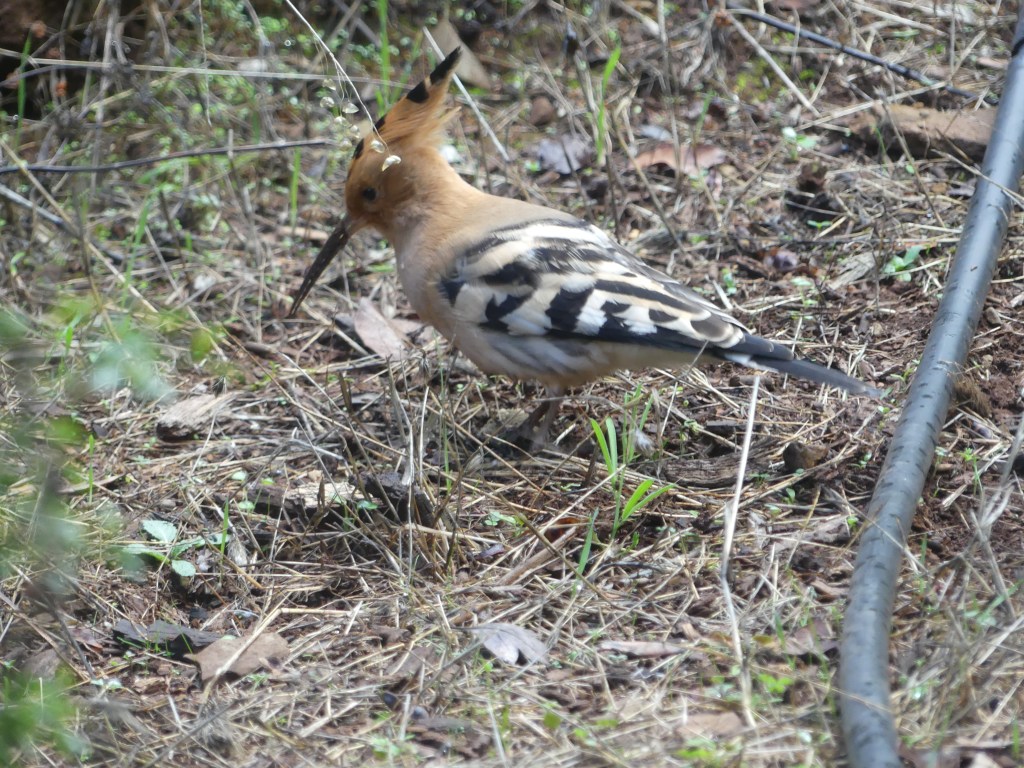
Here are some photographs of some of the birds named in the poem plus the hoopoe who I wish to star in some short stories based on the Navaselva series. But first, the sequel to Navaselva 1 will be out in 2026 and with some more illustrations by Ruth Koenigsberger.

Owl painting for Ruth’s exhibition – Featured image is her drawing of the bee eater for my books.

www.navasolanature.wordpress.com

Navaselva, The Call of the Wild Valley : Wright, Georgina, Koenigsberger, Ruth: Amazon.co.uk: Books

November Shadows

It is that time of year when not only the shadows get longer but the years add up to begin another significant decade. Among the celebrations comes grey skies and thunderous rain when in Spain so no chance of shadows until the sun comes out. We manage a final walk up our hill before returning to the UK for more family celebrations. Well at least up that hill I am the tallest I will ever be. It must be something to do with the slope rather than me!

So here are some shadow squares for Becky B and her wonderful inspiration. Some of these span the divide between Spain and the UK. And show the mix of mud, autumn, song and dance. It’s only when the sun comes out do we get the shadows. So let’s be thankful for shadows. And thank you sun and thank the skies for more rain. Our pond is now full.

https://thesquaresofb.com/2025/11/13/shadow-square-13/

It is almost the end of November but do check out the squares of Becky B and some of the wonderful photos of other contributors.

There should be a November poem but I have run out of time and focus.

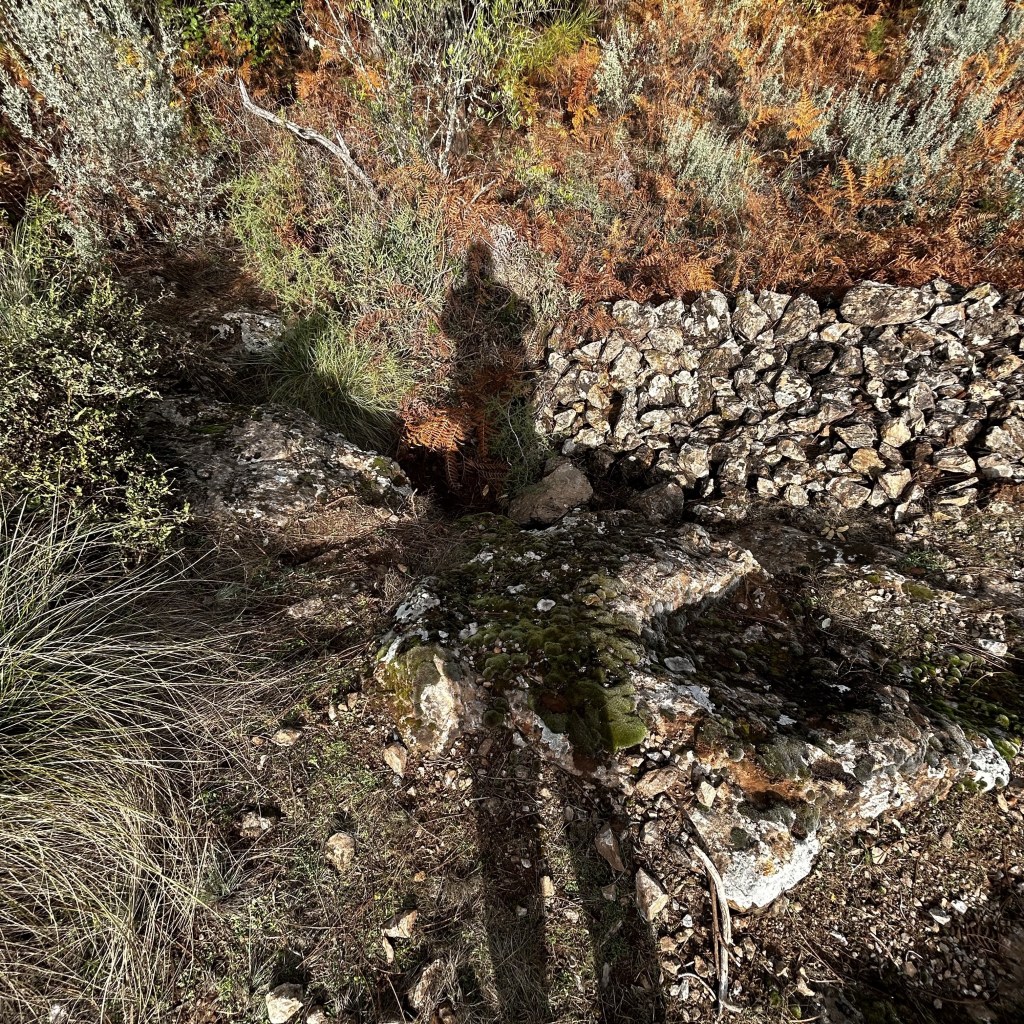
From the top of the hill at Navasola. Think the slope down distorts my legs and the tallness is the long shadow of November not me!
Back by the Pennines in sunny Marple.
Down the track to the house where we all got soaked to the bone by drenching rain in a thunder storm. 5 days later after no reception and a track very difficult to get out of.
Text book clouds to shadow in the underside! Autumn colours in the Sierra.

Singing with alegría in the Sierra. Francisca Lopez y Jesus

Dancing the years away in the UK

Thank you to all the friends, family who came to my celebrations and thank you to all those WordPress folk who over the year are more friends than followers.

Bird Place for Autumn on Cabanas Beach

Do join us with your Autumn #birdplace with links in the comments. This post is set along the nature reserve of the ria Formosa in the eastern Algarve, Portugal.

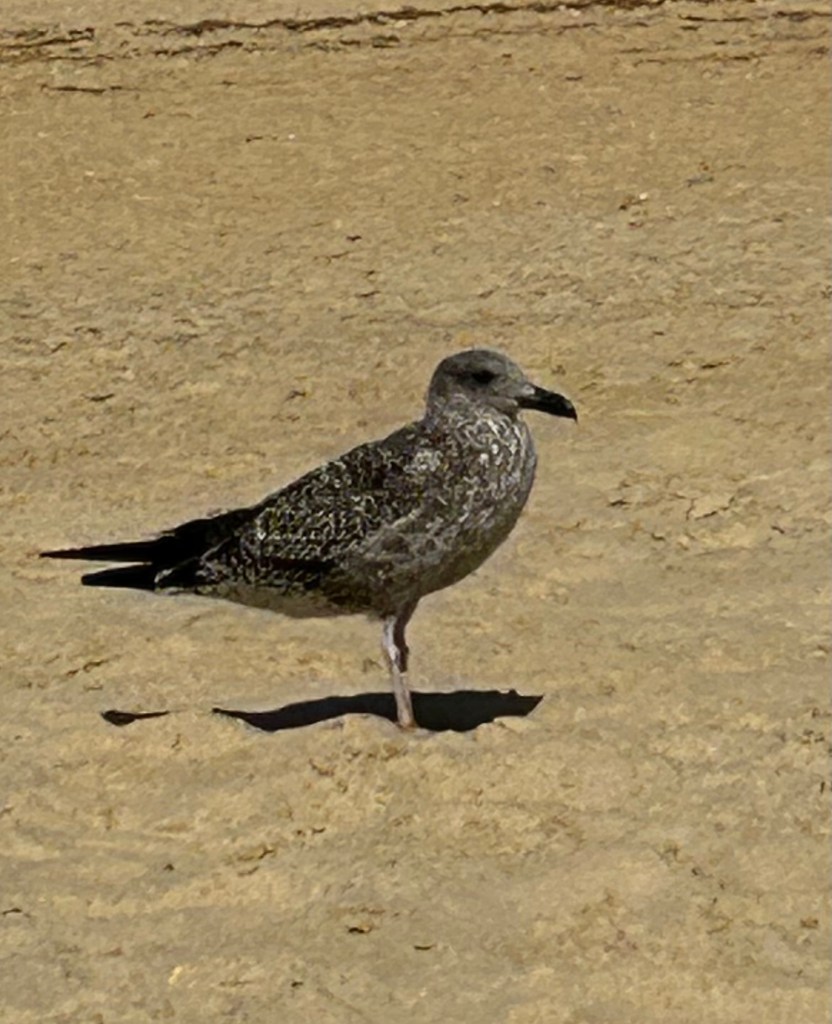
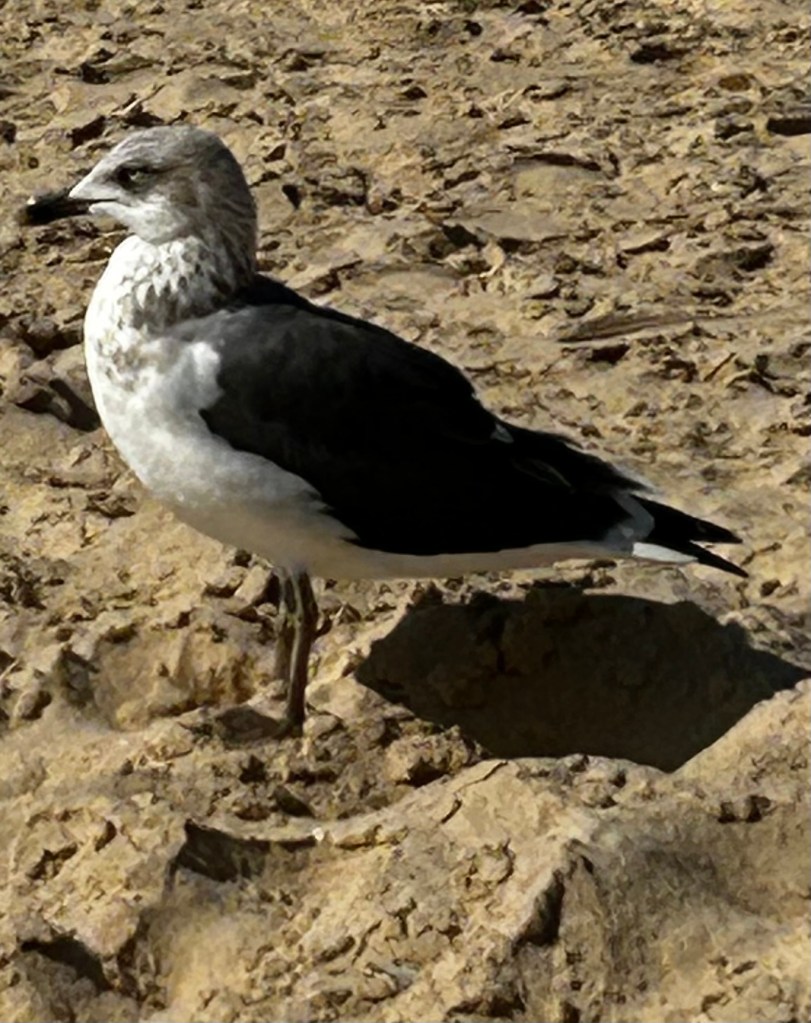
So I finally get on Cabanas Beach in October. The weather is warm but the waves were challenging. However, we seemed to have our own personal sea birds coming very close by to our towels and sunshade. Or we were on one young fellow’s territory. I assume a ‘he’ but I could be wrong. However, with the feather colours this may have been one of the youngest on the frontline of the beach and with pinkish legs.

What is this bird contemplating?

Close by there are some tiny sanderlings and our ‘baby’ seems to tolerate these quite well unlike the approach of any other gulls. The older ones try to enter the space when food is about.

So, with my bird hat on I start to wonder about these gulls here. They are spaced out rather like the few humans on the beach. There are many different types of gulls and some consider it an affront for gulls to be called seagulls. The word can undermine their incredible biodiversity but also the fact that many gulls and other sea birds are facing dramatic declines in numbers. And some species far more than others.

At present, we think the bird owning our beach spot is a lesser black backed gull of under a year old. Herring gulls are seen around here but are bigger. We cannot go far into the sea today as the yellow flag is flying. So we paddle on the edge for a while and watch a ‘Baywatch’ drama unfold. Yellow flag means stay in your depth. But there was a man swimming quite a way out. The lifeguards whistled to call him in and then one had to go out and bring him in. He was quite a young hero and the other man foolish. The waves were strong and the tide going out.

We then sit and enjoy these birds who came incredibly close. All the photos are from my phone as I decided to leave my camera and it’s good zoom behind in the UK! But I am quite pleased and although I took a lot of photos, some were better than I thought and many ‘moved’ like a video and the sea moved too. WordPress cannot do this but for me it was great to see the movements again of these birds and I have not yet deleted the many I took.

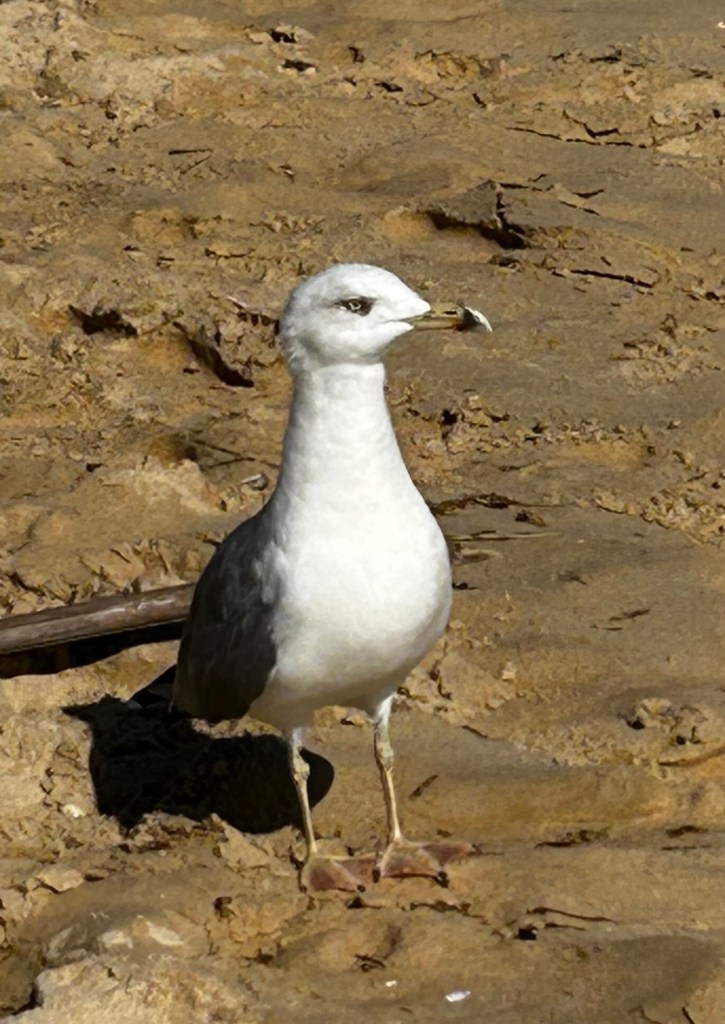
The one above is gaining more white plumage so older than the baby. This one is the more daring adolescent and ventures closer when I throw bits of an apple core. However, the gulls did not pester for food and I was not going to share my ultra processed crisps. Well, these would not be healthy for young birds and could create problems that humans suffer from too. But I munch on.

Below are photos of an adult and one that is nearly an adult. Possibly almost 4 years old.

Almost mature lesser black backed gull about 3 plus years old.

Gulls can get a bad press for stealing chips and ice cream at the great British seaside but these ones on the Algarve were quite well mannered and a joy to observe. I even got this photo on the phone.

On researching the stages of plumage of young gulls I came across these photos and seems these are available for educational purposes.

Lesser black backed gull or Larus fuscus.

This is from the Crossley ID guide and available it seems to share, of the lesser black backed gull and below that for the little birds seen, the sanderling.

I think this seems to show the changes in plumage the young gulls go through. And the legs seem to change colour. Now I ask why. And why does it take four years to reach full maturity with beautiful white and a back of grey/black. Perhaps then they become fully a bird of the sea and without any sandy brown land camoflage.

Sanderlings or Calidris alba

Below are the sanderlings from the Crossley ID guide.

So, with the sanderlings near by I think these were also young ones. It seems sanderling comes from the old English sand plough. These tiny birds do seem to dig up the sand and I came across an amazing fact as to how much marine life is buried in that sand. Courtesy and thanks to Wikipedia, always so good with nature knowledge.

‘In the spring, when much breeding activity is taking place in the benthiccommunity, there may be as many as 4000 invertebrates per square metre, but their average size is smaller than later in the year. The birds appear to rush madly around at the edge of the surf, but in reality they are maximising their chances of catching as many prey animals as possible when they are at their most vulnerable near the surface’

September and October has been a very busy month for me with a special wedding, grandkids birthdays and lots of visits to some very special places in the UK. One was an amazing walk for Restless Jo to the cathedral cavern in the Lake District. Or perhaps it was more being rather lost on the route back!

https://restlessjo.me/tag/portugal/

Hopefully I can get back to catching up again with you all.

Please join us if you have any bird places for Autumn and that definitely has to include November now so please link up in the comments. #birdplace Great habitats for birds are really important so no worries if you do not quite capture the birds but where they love to live or holiday!

Here is Sarah’s link to bird place and in the Arctic with lots of different sea birds. Well worth a visit and less cold and windy than going there.

https://www.toonsarah-travels.blog/arctic-diary-five-alkefjellet-and-the-hinolpen-strait/

If you can there is also ‘bird of the week’ with IJ Khanewala. An amazing record of birds there.

https://anotherglobaleater.wordpress.com/2025/10/28/barn-swallow-birds-of-the-week-invitation-cxl/

Bird Places of the Summer #Birdplace

It has been hard to choose one bird place or have the time this year for one a month. The places birds need are important for their survival so I have chosen three bird places for the summer months. Please join with any of yours. Let’s keep the summer around a little bit longer! Photos not so important but do share the habitats your birds like in the summer. However, I love to see good places for birds from all around the world whatever the weather or season. #Birdplace and put a connection in the comments.

The Sierra Aracena.

The Sierra Aracena where we live has a great variety of birdlife. There is a lot of woodland but also rocky hill tops with eagles and vultures and more open dehesa countryside where there is grassland between fewer trees and which make good hunting grounds for birds of prey. This area is home to rare black vultures near Aroche in the western end of the mountains and griffon vultures that can be seen between the town of Aracena and the open lands around the main reservoir to the north. There are also sightings of booted eagles, buzzards, kites both red and black. We may have spotted the black shouldered kite this year.

This summer through the hot afternoons we have had the joy to see many young birds at our water bowl outside the house. Families of long tailed tits, great tits and blue tits with the ever present and fearless cheeky young robin daring to come close to our feet.

In the skies the bee-eaters gathered and I managed to watch some circling round one of the chestnut fields and over some tall cork trees. We could hear them almost everyday but it was hard to spot where. On going into the vegetable plot I could see some high up on a stag end of a tall chestnut. I watched for a while and three would launch off from this branch and then return to it.

Their sounds are very conversational and this does not seem to get in the way of catching insects high above the trees. One fact is that they can spot a bee or insect from 60 metres. Watching, I did not see them dive down to the ground but they mainly kept above tree height. At times they camouflaged so well with the blue sky and were too far away for my camera to take a picture. I just watched.

Other birds around have caught our attention through the Merlin app. Greenfinches, chiff chaffs, chaffinches. The woodpeckers are ever busy and the tawny owl in the evening. One argument we have with the colourful jays is their quarrelsome behaviour over the apples on the trees. No wonder we never get any but nor do they take all. They just pecked at the small unripe apples, and most of these apples just fall to the ground. Here, I think it was probably the blackbirds that finished them off.

With all the rain there were a lot of apples. My neighbour and the artist Ruth was having the same problem. She would rush out with a pan making loud noises but this did not bother them. They just stopped the noise so she did not know they were there. We have no idea if they were the same jays or another family group on the other side of the hill that separates our houses.

For more soothing sounds we have been listening to the turtle dove cooing or tur tur turring away. ‘Tortola’ in Spanish is the dove’s name and the Latin ‘turtur’ echoed the sounds and this is nothing to do with the turtles of the ocean. Possibly it just ended up being spelt the same in English.

However, I am not very happy with the new EU regulation allowing for the hunting/shooting of turtle doves on this western flyway. As migratory doves they overwinter in Africa and return to breed in all parts of Europe. However, their numbers declined so drastically that hunting was prohibited but with the exception of Malta where shooting was allowed to continue and up in the spring when doves were returning to breed.

So the success of stopping the shooting has brought an increase in numbers in Spain, France, Germany, Denmark . However, on the Eastern flyway there is still a decline in numbers because not many of the countries enforced the regulations not to shoot.

The numbers are estimated to have increased by 615000 and so now there may be 2 million. Still a million less than some years ago when it was realised there was this loss of population. So why, bring back the shooting, even though the rules will be for fewer birds.

The Middlewood Way

This is an excellent avenue for bird habitats. Tall trees have grown up along the disused railway line which is now a footpath. I managed to hear chiff chaffs in the summer and see a thrush. On either side beyond the trees are open fields and a golf course where there will be plenty of opportunities to look for worms, insects and more. One field was beautifully full of buttercups and lots of pollinators. Near the house are the coal tits, nuthatches and great tits. There is also a large colony of jackdaws. They seem to be in great numbers but are another threatened bird.

The Wetland Centre, Martin Mere

I have wanted to take my grandchildren to Martin Mere for a while but it is an hours journey up the M6 to just below Preston. It certainly is full of meres which are like lakes or wetland ponds with reeds. In the winter the Whooper and Bewick swans come here from Greenland, Svalbard and other Arctic places, along with lots of geese.

In the summer it is quieter but with the resident collection of flamingos and many other rare birds it still makes an interesting visit. However, I always feel sorry for the European white storks kept here. For me they are a wild bird, and not under as much threat as some. They may have reduced their range so do not usually breed in the UK anymore. There are some exceptions in the south e.g. at the Knepp Rewilding Project. We think the storks look miserable as their wings are clipped and they can’t get high up on a tree or a pole to nest but also have a look out. There were some trumpeter swans with a young one and these seemed more content. It is such a conundrum on conserving rare birds for breeding but also to have a collection to ‘entertain’ and educate the public. This charity is world famous for saving wetlands and reintroducing rare species.

It was a lovely day out with the grandkids. Hopefully we will go again when the swans begin to arrive in late October.

Please do join me with any of your favourite summer bird places. Link through the comments and #birdplace I will enjoy visiting your blog and will collate all links for reference at the end of the year.

Martinmere’s theme this year was the dragonfly trail which started with this giant one and unfortunately or fortunately was the only one we saw on a cloudy day with some showers. It did not take flight.

Dragonfly sculpture at Martin Mere wetlands of the Wildfowl and Wetlands Trust WWT for their summer dragonfly trail.

Exploring Navasola: Nature Writing and Haibun Reflections

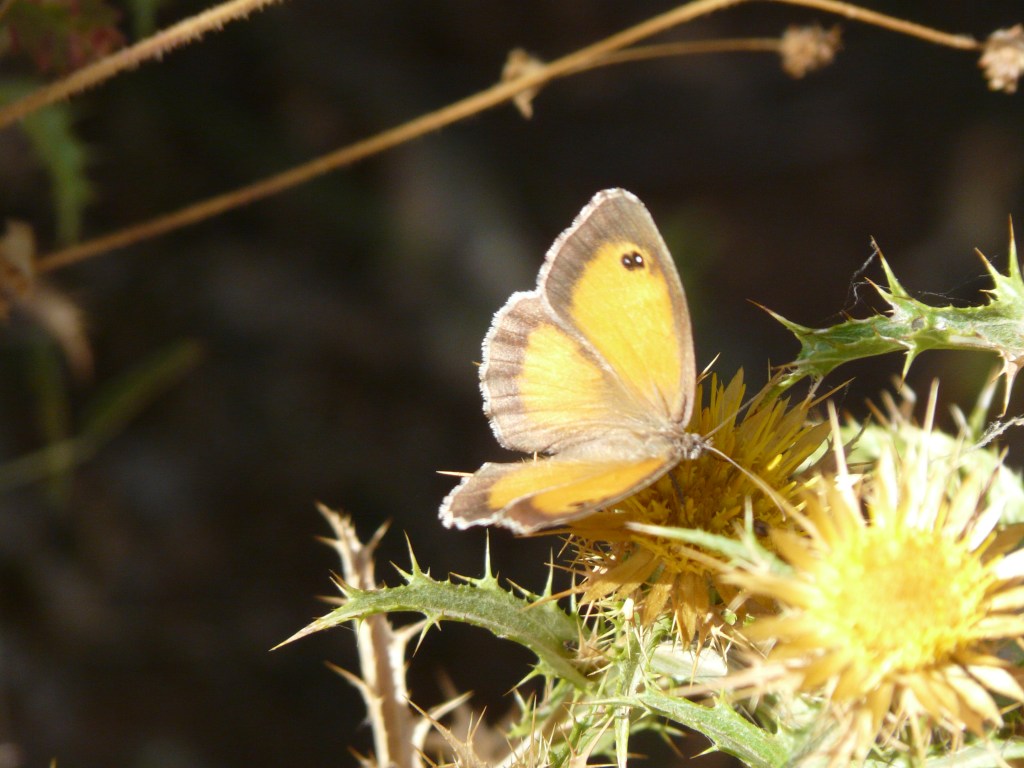
I wanted to return to more writing about nature and this July and August at Navasola provides many opportunities for observation and reflection on the natural world. There is the search for one of my favourite large butterflies and the desire to identify the most common butterfly I have seen flying in the woodland areas. With a large dot when resting it has been driving me dotty. So too has the need to clear parts of the finca for mosaics and potential fire prevention. But I have also had fun exploring areas I have never wandered in before.

I am also thinking about the haibun form for nature writing . Within the nature writing workshops I have been facilitating I thought this form might help structure nature observations and reflections into several parts which then ends with a haiku.

Haibun are from the tradition of Basho in Japan and can be short prose, different parts, usually written in present tense for immediacy. A haiku with a natural image ends this prose and should complement not repeat. One pointer is to also involve self reflection. It seems it is also possible to add more haiku too. Haibun lend themselves to memoir but nature writing can also involve the writer, their life and reflections.

Dverse poets also lead on Haibun prompts particularly on Mondays. This is a link to one of them https://dversepoets.com/2025/08/04/haibun-monday-8-4-25-silver/


A Nature Haibun

Exploring Navasola, our finca in the Sierra Aracena in August

Cutting through into the Cool of the Woods
I need to keep on walking even in this heat. I beat a path through a darker piece of woodland or more machete like use shears for the knotted barbed network of the sarsaparilla* or the extended new tough arms of thorny bramble. I still like to explore and have never been this way before. A dead olive branch dried out high above my head steers me away from that route this time. I note to come back with help and electric saw. The woods beyond that olive are lovely dark but am not
sure how deep or if that dead branch will fall. I shear myself another way and find a rocky edge to climb up, the shears are now my stick. Keeping close to the edge there is space to move forward, a drop one side and dense thorny thicket the other, in front through a veil of the lovely barbed sarsaparilla there is a clearing, a secret space of grass behind a wall with rocks to sit on, if only I can get through. Someone has been this way before. I look down and see the small dark pellets. Deer. They are here but I never see them, unlike the baby boar the other day.

Sudden glimpse into
Wild worlds where baby boar snouts
Snuffle through hot earth

The veil of sarsaparilla, bramble and ivy to cut through


The secret grassy clearing and the shears resting!
Looking over a wall on the side of the hill down into a neighbour’s field, becoming overgrown but still grassy.

The Dark Madroño Wood

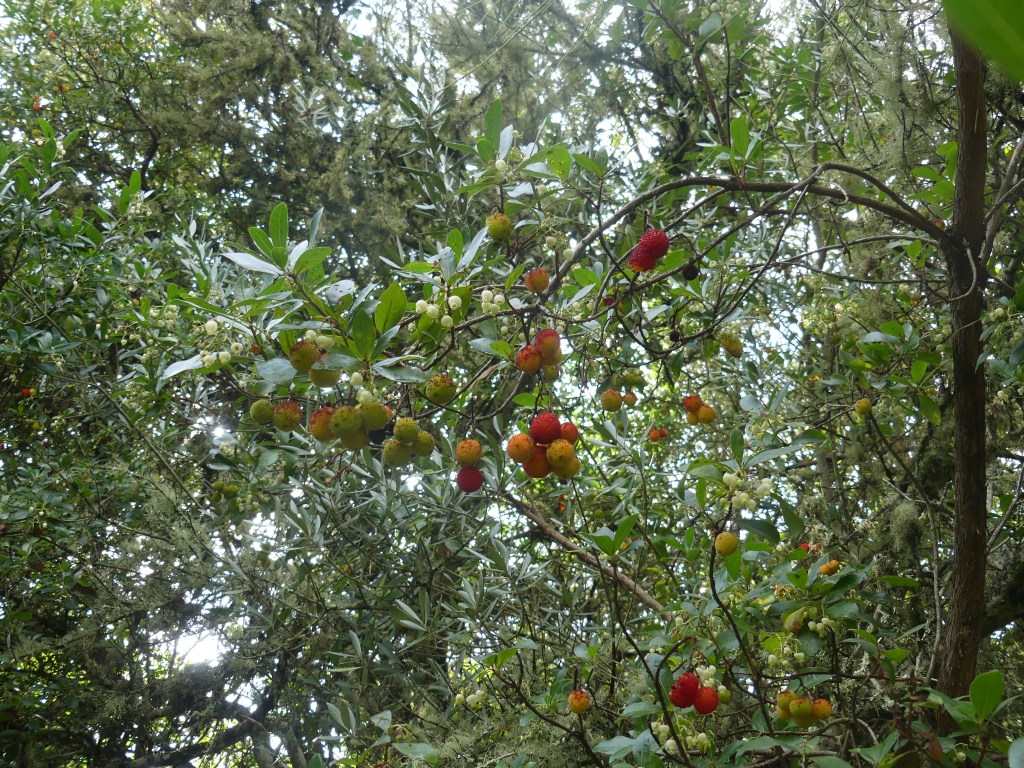
Finally through into the clearing I see the broken down wall into a once grassy field at a much lower level. The deer and maybe the wild boar too come this way and have clattered down dislodging large stones from a once strong man made wall. From here I can make my way into the dark wood. Nothing seems to grow under the trees here. All the trunks, branches weave the oddest of routes but are aiming for the sunlit canopy above. The shapes seem to flow up, down and entwine with each other in odd ways. The trunks and branches do not grow wide but stretch out long and high. I can go under the curved branches and the dead twiggy bits of earlier years growth just break brittle away. This is the madrono wood. They have taken over from the gracious olives, once tended carefully in a rather dry rocky grove. Some wild hawthorns are fighting for a role here too. Tiny ones beneath my feet and some longer leggy ones reaching up to grow between the glossy green madrono leaves. I prefer to call them their Spanish name. Strawberry tree seems to undermine that they are tough trees with evergreen leaves, white flowers and strawberry coloured gritty berries.( Uneatable really and not even nice in a jam, but some make madrono liquer) Here the arbutus unedo, madrono or strawberry tree grows wild and is protected here.

Madroño flowers and fruit can be seen at the same time but the fruit is from the flowers a year ago

Where have all the butterflies gone?

But where is the butterfly that lays her eggs on the leaves of this determined tree. I have not seen any sign of the large and striking two tailed pasha. Surely with so many trees for her strange caterpillar to live on there should be plenty of her kind here. There are madroño throughout Navasola but we have never seen these alien looking large and fat horned caterpillars, ugly but capable of chewing up the glossy tough madroño leaves. And the chrysalis too hanging from these trees, some waiting through the winter months to emerge in spring into those large winged beauties. Where are these most distinguished, emperor like pashas of the east. In their glory I once saw one on the urine of my golden retriever dog. A beauty with disgusting taste but for her or him there are essential minerals to absorb so she or he must bless the dog and fox for what they leave behind. This butterfly has a spot in my novel at the Meeting of the Many and I have a short story about her with the strange little genet for younger children. So two tailed pashas where are you? Don’t disappear on me. I see the dotted speckled and meadow browns frolicking together,** the contrasting grayling, just right for camouflaging with the rocks, but rests on me. Inside the house the large Rosie underwing moth takes up residence. The flowers are few now. The yellow ones have gone, cleopatras, brimstone, and clouded yellows, now, nowhere to be seen.


Butterflies with dots
Dart within dark shaded woods
Scorched leaves frame hot sun

But what has happened to the two tailed pashas? They should be here now. I have been walking the woods and I do not see them there. They are like small birds as they flutter around but without the desire to hide behind leaves you can easily spot them flying. I wonder why there are so few of everything these days. And then closer by to the house and human rubbish…
Throw away scraps draw
close Pasha with putrid smells
Breathless I see joy

Two tailed pasha on young walnut tree

Wings wide flash bright tones
Beat warm air through old gnarled trees
Lay eggs on cool leaves

Well it has been a bit of an experiment and still finding the new editor for Word Press very clunky with layout and inserting photos. But hope you have enjoyed a wander with me around our finca Navasola.

Thanks for joining me, reading and sharing during this hot sunny season. I hope everyone has managed a vacation or a good break in these troublesome times. I really appreciate everyone’s comments and will try to visit all your fascinating blogs very soon.

*sarsaparilla or zarzaparilla with very barbed thorns growing along the ground and climbing up trees creating quite a barbed network. Very red berries and parts of the plant used in herbal remedies too. Not really a native but established a few hundred years ago. Potential reversed colonisation. https://es.wikipedia.org/wiki/Smilax_aspera

**And from the archives! To be honest the one I keep seeing now looks lighter so think it is meadow brown but likes being in the cool of the woods.

Nature needs Nurture