
We read in Sunday’s gospel about how the Lord and the Apostles took an unusual route to Jerusalem. Galilean Jews, like Jesus and the Apostles, usually crossed to the east side of the Jordan River to travel south by a safer and more welcoming road. In other words, pilgrims from Galilee generally took the long way.
Because the straight way passed through Samaria, the lands occupied by the remnants of the northern tribes of the Hebrew people. Nearly 1,000 years of history had passed since all the children of Jacob had been united. The northern tribes had never accepted Jerusalem as a capital or site for the Temple. And the northern tribes had interbred with the Assyrians. Hence the use of ‘Samaritan’ as a term of opprobrium among Jews.
But for His own mysterious reasons, the Lord decided on this particular trip to take the more direct route, straight through Samaria. Which meant risking harsh treatment and rejection at the hands of the unsympathetic natives.
I think maybe we can relate to the emotions that the Apostles experienced when the Samaritans mistreated them. It hurts when the natives mistreat you, when you are a stranger and a sojourner in a land that is not your own.
 As we read, the Lord would have none of the Apostles’ angry reaction. He insisted that everyone stay focused on the one thing necessary: to keep moving toward the goal.
Now, maybe we Catholics are just silly idealists on the subject of immigration. After all, in church, we exercise no border controls at all. All of us seek ‘asylum’ in church. Every baptized person belongs, no exceptions. And any un-baptized person can join our church by receiving Holy Baptism. There are no other criteria. Our Lord commanded His Church to embrace all nations. Every human being needs Jesus Christ, so our doors must stand open to every human being.
As you know, we read the same Sunday readings every three years. So let’s look back over the past six years, and see where we have come as a nation, when it comes to strangers and sojourners entering our lands–like Jesus and the Apostles entering Samaria.
Six summers ago, the US Congress labored long and hard on “immigration reform.” A lot of people spent a lot of energy to try to find a solution to the problem of immigrants living in the shadows here in America, unprotected by our laws. Many of us here had high hopes; the Catholic Church in the USA had high hopes for a good compromise. But the immigration-reform compromise never even came up for a full Congressional vote.
Then, three summers ago, the last time we read this reading about Jesus and the Apostles getting rejected by the Samaritans, we Americans were getting ready for a presidential election the following fall. We were struggling as a nation to decide what kind of future we wanted for ourselves.

Would we continue to welcome immigrants? Would we treat the immigrants already here more fairly and protect them by law from abuse and exploitation? Would we Americans continue to see ourselves as a nation that has enjoyed extraordinary blessings–which therefore imposes a duty upon us to help others? A duty to keep our doors open, and to rejoice in the gifts that immigrants bring to America.
Now, it’s three years later, and we read this gospel passage again. We have to face the ugly fact. We chose the other path. We look back over the past six years, and we see a stunning transformation. We have become like the Samaritans who refused to welcome the pilgrims on the way to Jerusalem. I would say that we have lost ourselves as a nation; we have forgotten who we really are, when it comes to welcoming immigrants.
But before we get all depressed about our political situation, let’s put the whole business in perspective. Let’s remember why we frequent the church. Namely, to commune with the mysteries of our faith. And the mysteries of our faith teach us an important fact: Here on earth, none of us have a lasting city.
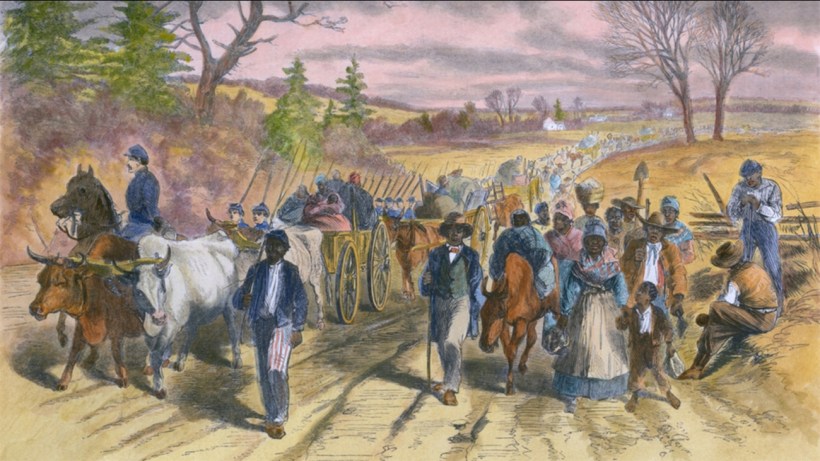
A whirlwind carried the prophet Elijah from this world up to heaven. Our Savior, when He walked the earth, had no home in which to lay His head. Christ revealed to us what our life here really is: a pilgrimage. An arduous journey toward a goal. All Americans are immigrants, to be sure. But even more so: All Christians are emigrants. We are on our way somewhere else. The Church makes Her way forward as a caravan of migrants, on the way to heaven.
We do not see our destination. We believe in it. Why can’t we see it? Why can’t we see the heavenly Jerusalem? Because it is invisible? No. The angels know how brightly that city shines—a million times more splendid than the Manhattan skyline on a starry night.
We can’t see the heavenly homeland now because our eyes do not possess adequate seeing power. Our minds, which see by faith—our minds perceive reality more comprehensively than our eyes. That is, provided we live by the Spirit and not by the flesh.
Let’s pray that we will always love our neighbors with pure hearts. And that we will welcome strangers–since that’s the distressing disguise in which Jesus comes to us. In the heavenly Jerusalem, chaste and true love of God and neighbor is the very light and air by which everyone sees and breathes. May we always serve that love, as we make our way as migrants, pilgrims, towards the Kingdom of God.




 So: our pope may very well have convicted McCarrick on false testimony. Which would mean that: McCarrick Monster isn’t exactly real. Just a convenient scapegoat among the many, many episcopal mafiosi–who pretty much all suck equally, in reality.


 God made the cosmos out of nothing, after all–by an act of creation so powerful that we cannot imagine it. We cannot imagine God making everything out of nothing. We cannot imagine nothing. But that is what He did: make the universe out of nothing.




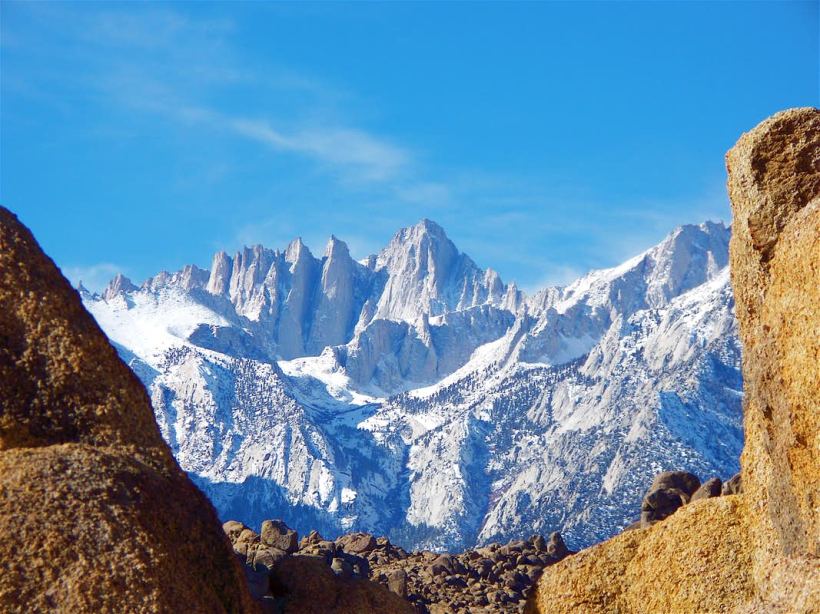
 The Creator has made us little less than a god. We are like Him. I have recently grown obsessed with a plan to climb Mount Whitney, in California, the tallest peak in the continental US. Someday I will do it. But that’s actually nothing compared to the spiritual nature that every human being has. By seeking the truth and loving what is good, we human beings—wherever we find ourselves—we stand on the mountaintop of the world, knowing God and loving Him above all things, and loving our neighbors for His sake. And yet… We carry on like ignorant sinners.
 Doesn’t it make sense that the kings and queens of this little realm would know the great Master of the higher kingdom not by seeing Him with the same eyes we use to see cantaloupes and beach umbrellas, but by finding Him in the dark, secret core of our souls?
 Unseen truths of faith. We believe the fundamental facts of our lives; we do not see them. We believe in the final consummation of the world, the coming of Christ the Judge, eternal glory for the just, and eternal damnation for the unjust.
 We, however, are not food for any other creature. No—we are the ultimate fruit of the earth. We are the reason why the earth exists. God cultivates us to bear our fruit once and for all. Our springtime is the eternal day, when everything is fulfilled, time is complete, the devil is altogether subdued, and eternal glory fills the earth. The fruit of the human race will be ripe when the new Jerusalem descends like a bride from heaven, and God is all-in-all.
 Father Mark White Blog