


Our next-door neighbors have lived in their home since 1972. They’ve survived floods, hurricanes, and more power outages than either of them can count. When Hurricane Beryl knocked out power across the Houston area in the summer of 2024, they had nothing — no generator, no power station, no backup plan. Just two people in their 80s sitting in a house that was heating up by the hour.
We’ve been neighbors for twelve years. I had no idea just how unprepared until I knocked on their door on Day Two and found them sweating in the dark. We loaned them our Jackery power station and our portable generator to, at least, give them enough power for lights, fans, and to keep their fridge running.
That’s the thing about long-term power outages. Most people have survived plenty of short ones, a few hours here, maybe overnight once, and they figure they know what to expect. They’ve got flashlights. Maybe some candles. A drawer full of batteries. That feels like enough until it isn’t.
Eleven days without grid power after Hurricane Beryl taught me that preparation isn’t about the first few hours. It’s about Day Three, Day Five, Day Nine — when the ice is gone, the neighbors are getting desperate, and the mental exhaustion of sleeping badly in the heat starts wearing everyone down.
My husband Stephen is a Texas Master Electrician with generator certifications, and even with a whole-home generator and a battery backup system keeping our AC running, we saw things in our neighborhood that caught us off guard.
This article is what I wish every one of my neighbors had read before Beryl hit. Not a basic checklist. There are plenty of those. This is the real-world guide to preparing for a power outage that lasts days or weeks, written by someone who has lived through several of them in one of the hottest cities in America.
Some of the links in this post may contain affiliate links for your convenience. As an Amazon Associate, I may earn a small commission from qualifying purchases without any increase in price to you.
Updated and completely rewritten in April 2025, incorporating first-hand experience from multiple extended power outages including Hurricane Beryl.
In This Article
- Why Most People Think They’re Ready (But Aren’t)
- Your Power Backup Layers: Building a System That Actually Works
- Food and Water: The First 72 Hours vs. Week Two
- Staying Comfortable: Heat and Cold
- Security and Neighbors: The Part Nobody Talks About
- Medications, Medical Devices, and Special Needs
- Before the Next Outage: Your Action List
- Frequently Asked Questions
- Final Thoughts
- Get Your FREE Family Power Outage Survival Handbook!
Why Most People Think They’re Ready (But Aren’t)
Here’s a scenario that played out all over Houston during Beryl — and in neighborhoods across the Midwest after a 2012 derecho, and in Seattle after a winter blizzard, and in Yuma after a powerful summer storm.
A prepared person, someone who owns a generator and has some supplies on hand, gets through Day One just fine. Day Two is uncomfortable but manageable. By Day Five, they’re running low on water, the generator noise has made them a target for increasingly demanding neighbors, and the cumulative exhaustion of bad sleep and relentless heat has everyone snapping at each other.
The gap isn’t having all the gear. It’s thinking, non-stop, about how you’re going to manage the generator, the freezer, do you keep the fans on all night or not, when do you decide to leave or stick it out?
None of these questions can be answered by just having all the equipment. They’re answered by having thought through multiple scenarios before they happen — by considering what you’ll do on Day Five of an outage, not just Day One.
Most power outage prep advice stops at the basics — flashlights, batteries, a few days of food and water. That’s fine for a six-hour outage, which is what most outages are. But extended outages, the ones caused by major hurricanes, ice storms, or widespread grid damage, don’t follow the same rules. They stretch into territory most people have never mentally rehearsed.
Here’s what tends to catch even experienced preppers off guard:
They underestimate water. One gallon per person per day is the advice on virtually every survival and government website. It may sound like a lot until you’re on Day Four and you’ve only had sponge baths, if that. Water boil orders frequently accompany extended outages, which means your tap water isn’t safe either. One of my readers who went nine days without power made this painfully clear. By Day Five, he was down to four cases of bottled water after sharing generously with neighbors who hadn’t prepared at all.
They don’t account for the security problem. Running a generator in a neighborhood where no one else has power puts a giant target on your house. You’re the only house with lights. Your generator is the only sound for three blocks. Neighbors who were friendly on Day One start showing up with requests that feel less like asking and more like expecting by Day Six. This is not a theoretical scenario. It happens in virtually every extended outage, and almost nobody thinks about it ahead of time.
They prepare for inconvenience, not duration. There’s a mental shift that happens around Day Four or Five of an outage that nobody warns you about. The novelty is gone. What seemed like a bit of an adventure at first is now non-stop irritation and inconvenience. You’re not sleeping well. You’re hot or cold depending on the season. Small irritations feel enormous.
One reader who went eleven days without power in the summer described the feeling perfectly. By Day Seven he was tired of cold showers, tired of the generator noise, tired of neighbors’ complaints, and just sick and tired of being sick and tired. That’s not a gear problem. That’s a duration problem, and the only preparation for it is knowing it’s coming.
They skip the transfer switch. A generator sitting in the garage feels like preparation. But without a proper transfer switch (installed by an electrician), you can’t power your water heater, and after three days of conserving hot water carefully, cold showers become the new normal. Stephen sees this constantly. People who own generators but haven’t connected them properly to handle the things that actually matter during an extended outage.
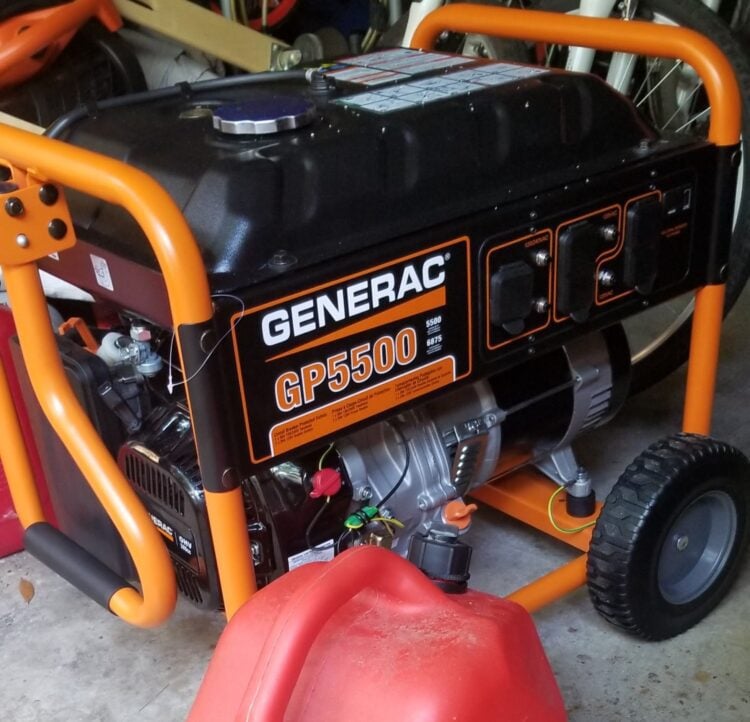
When we had to rely on our portable Generac during the Big Texas Freeze in 2020, once Stephen hooked it up directly to our electric panel, it was the same as if we had a home Generac.
Understanding these gaps is the first step. The rest of this article fills them in.
Your Power Backup Layers: Building a System That Actually Works
Most people think about backup power in binary terms — either you have a generator or you don’t. What Stephen and I have learned, both from his electrical expertise and from living through multiple extended outages, is that backup power works best as a layered system. Each layer serves a different purpose, covers different scenarios, and connects to the next.
Here’s how to think about it from the ground up.
Layer 1: Power Banks This is where everyone should start, and frankly where I started years ago. A power bank is a small portable battery that charges your phone, tablet, and USB devices. It fits in a purse, costs very little, and solves the most immediate problem most people face in any outage — a dead phone. I still remember the mild panic of watching my phone hit 2% on a road trip with no charger in sight. That experience sent me straight to Amazon for my first power bank, and I’ve never been without one since.
During the long Beryl outage, some people sat in their cars just so they could charge their phones, not as a way to play Bejeweled, but as a way to stay in touch, check the latest reports from the electric company, and stay up to date with news.
For outages, keep at least two fully charged power banks on hand. One for you, one for whoever else is in the house. Check them monthly to make sure they’re fully charged.
Layer 2: Small Power Stations A power station is the bigger sibling of a power bank. It has standard AC outlets, multiple port options, and enough capacity to run a laptop, router, CPAP machine, fan, or small appliance. It’s quiet, safe to use indoors, and requires no fuel.
For most outages, lasting less than six hours or so, a good power station is genuinely all you need. No generator noise, no exhaust concerns, no fuel storage. Just plug in what matters and wait for the power to come back.
Add two or more large solar panels, and you have a system that can continue to run indefinitely.
This is also the right solution for elderly neighbors or family members who need to keep a medical device running but aren’t in a position to manage a generator. Our neighbors, the ones who had nothing when Beryl hit, would have been infinitely better off with a single, good-sized power station and a charged phone than sitting in a darkening house with nothing.
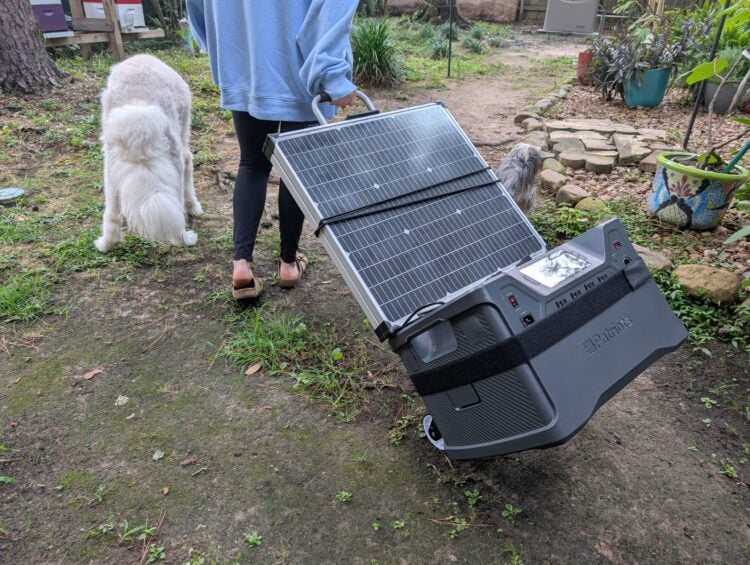
Layer 3: Portable Generator When the outage extends past a day or two, or when you need to run larger appliances like a full-size refrigerator, window AC unit, sump pump, and so on, a portable generator is the next layer. This is what most prepared households have, and it’s a significant upgrade from nothing. It saved our necks during that Texas freeze as well as a 5-day outage caused by a derecho in May, 2024.
A few things Stephen wants every generator owner to know:
- Fuel storage is not optional. When Beryl hit Houston, gas stations were either closed or had lines stretching two blocks. If you don’t have fuel stored before the outage starts, you may not be able to get it afterward.
- Generator placement matters more than most people realize. As one reader discovered during a nine-day outage after a Midwest derecho, running a generator in a dark neighborhood makes your house impossible to miss. The noise carries. The lights show through the curtains. If you live in an area where you think twice before walking the block at night, then think carefully about placement and light management before you need to.
- A portable generator without a proper transfer switch is a significant limitation. Without one, you can’t power hardwired systems like your water heater. After three days of carefully conserving hot water, cold showers become your new normal, and that’s entirely preventable.
Layer 4: Whole-Home Standby Generator A standby generator is permanently installed, runs on natural gas or propane, and kicks on automatically when the power goes out. You don’t have to do anything. The lights flicker, the generator starts, and life continues close to normally within seconds.
This is Stephen’s area of expertise, and his assessment is straightforward — a standby generator is the right investment for households with medical equipment, elderly family members, or anyone in a climate where extended heat or cold becomes dangerous without climate control.
It’s not cheap, but neither is losing a chest freezer full of beef from your local rancher or having a medical emergency due to intense cold or heat or medical equipment that doesn’t work.
The transfer switch is built into a standby system, which means everything in your house can be powered properly, including the water heater that portable generator owners often overlook.
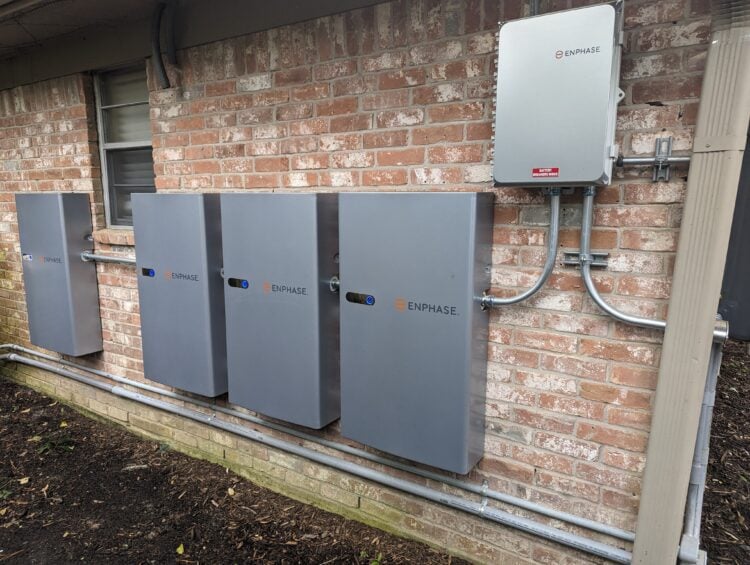
Layer 5: Home Battery System This is the newest layer for most households, and the one we rely on most heavily in our home. Our Enphase battery system works in tandem with our generator in a cycle that Stephen designed specifically for extended outages. When grid power goes out, we switch to the batteries. When they drop to 20%, the generator kicks on, powering the house and recharging the batteries simultaneously. When the batteries hit 100% again, we switch back to battery power and the generator rests. The cycle continues as long as needed.
The practical result is that our generator runs far less than it would otherwise. Less fuel consumed, less noise, less wear on the equipment. During Beryl, this system meant our house stayed cool and functional for eleven days without the constant roar of a generator announcing our preparedness to the entire neighborhood.
A home battery system paired with solar panels can also recharge during the day, reducing or eliminating generator dependence entirely depending on your power needs and the weather. It’s the most resilient setup available for a residential home, and the cost has dropped significantly in recent years.
The Honest Summary
You don’t need all five layers. Most households are well served by layers one through three: power banks, a power station, and a portable generator with fuel stored and a transfer switch properly installed. Layers four and five are for households with specific needs or the budget and commitment to build a fully resilient system.
Start where you are. Add the next layer when you can. The worst outcome is having nothing when the outage hits Day Three.
Food and Water: The First 72 Hours vs. Week Two
Water and food feel like the obvious prep categories, and they are — but most people dramatically underestimate how quickly both become complicated in an extended outage. Here’s how to think through both in layers, just like the power system.
Water First, Always
The standard recommendation is one gallon per person per day. That sounds like a lot until you do the math for a family of four over two weeks, and then it sounds like a small mountain of storage. Start with a realistic minimum, two weeks for your household and two gallons per person per day, and build from there.
But storage numbers aren’t the whole story. Two things happen in extended outages that most people don’t anticipate.
First, you will share. It’s human nature, and a lot of us wouldn’t have it any other way. But sharing without a plan means you can find yourself down to four cases of bottled water by Day Five when you started with ten, because neighbors showed up daily and it felt wrong to say no. Decide ahead of time how much of your water supply is available for sharing and how much is protected for your household. That’s not a selfish decision. It’s a responsible one, especially if the outage stretches into Week Two.
Second, your tap water may not be safe. Water boil orders routinely accompany extended outages because water treatment plants and pumping stations lose power just like everything else. This is not a rare scenario. It happened across the Houston area during Beryl and it happened during the Midwest derecho that knocked out power for nine days across three states. If you’re counting on tap water as your backup, that backup may not be there.
And here’s the detail that genuinely alarms people when they hear it for the first time: sewer systems can fail too. Pump stations that move sewage through the system require electricity. Without backup power, sewage backs up. During that same Midwest outage, the fire department went door to door on day five handing out fliers warning residents about potential sewage backup and requesting minimal use of bathroom facilities. Nobody had prepared for that. Nobody ever does.
Store water. Rotate it. Have more than you think you need.
Food: The Refrigerator and Freezer Math
The FDA guideline is straightforward: a refrigerator keeps food safely cold for about four hours if you keep the door closed. A full freezer holds for 24 to 48 hours. A half-full freezer, closer to 24.
This means the clock starts the moment the power goes out, and your first food decision needs to happen within the first hour or two, not Day Two when you’re already behind.
Here’s what to do immediately:
- Stop opening the refrigerator. Every time you open it you lose cold air that you cannot get back.
- Identify what in the refrigerator needs to be eaten or cooked in the next few hours: dairy, meat, anything perishable that won’t survive.
- Fire up the grill or propane camp stove and cook that meat before it’s a loss. During the nine-day Midwest outage, our reader did exactly this on day three broke out the pork steaks and brats, cooked on the grill, and invited neighbors over. Good use of food that would have gone bad, good community building, and one less thing to worry about.
- Move items you want to protect into a cooler with ice or ice packs if you have it.
Your freezer is your most valuable food asset in an extended outage and the one most worth protecting with backup power. We buy beef directly from a local rancher, a full chest freezer represents a significant investment that I’m not willing to lose to a four-day outage. A small power station or the battery-inverter setup described in the quiet freezer article can keep that freezer running almost indefinitely on very little power, especially if it has the solar panels option.
Cooking Without Power
There are lots of options when it comes to cooking without power — all non-electric.
Cook outside when you can during the hot times of the year. It keeps heat out of the house, which matters enormously when your indoor temperature is already climbing. If you have a power station of 1500 watts or larger, you’ll be able to use some of your smaller cooking appliances, such as a rice cooker or a HotLogic.
Know which of your stored food requires no cooking at all. When it’s 95 degrees outside and the propane is running low, peanut butter on crackers is a perfectly good meal.
Week Two Is a Different Problem
The first 72 hours of an outage is mostly about protecting what you already have: keeping the freezer cold, using up refrigerator perishables, managing water carefully. Week Two is about what you actually have stored for the long term.
This is where your emergency food pantry does the work. Non-perishables, canned goods, freeze-dried food — the food storage content on this site exists precisely for this scenario. If you haven’t thought through your two-week food supply yet, that’s the natural next step after you finish this article.
Staying Comfortable: Heat and Cold
Comfort is not a luxury in an extended outage. It’s a safety issue and a mental health issue, and it degrades faster than most people expect. By Day Four or Day Five, physical discomfort stops being an inconvenience and starts being the thing that makes everything else harder — decision-making, patience, sleep, relationships.
The strategies are different depending on the season, so we’ll treat them separately.
Summer Outages: The Heat Is the Emergency
I’m writing this as a Houston resident, which means I’m writing from the deep end of the pool, figuratively speaking. Houston summer heat is not the kind of heat you wait out. It’s the kind that sends people to the hospital, that killed dozens of people during Beryl, and that turns a house without AC into a genuinely dangerous environment for the elderly, the very young, and anyone with health conditions.
Here’s what the heat math looks like in practice. During the nine-day Midwest derecho outage one of our readers documented, it was 98 degrees outside on Day One and the house peaked at 89 degrees inside even with fans running. He described trying to sleep as miserable. The house didn’t hit its daily low temperature until just before sunrise, giving everyone maybe two hours of marginally better sleep before the cycle started again. By Day Six he was getting up at 5 a.m. not because he wanted to but because the heat made real sleep impossible. That cumulative sleep deprivation made everything harder.
A few strategies that actually help:
Work with the temperature cycle, not against it. Outside temperatures drop overnight and rise through the day. Open windows and doors in the evening once the outside air is cooler than the inside air, run fans to pull that cooler air through the house, then close everything up in the morning before the outside temperature climbs past your indoor temperature. You’re essentially using your house as a thermal mass — charging it with cool air at night and insulating it against the heat during the day. It won’t feel like air conditioning. It will feel meaningfully better than doing nothing, and having a couple battery-powered fans can help.
Minimize heat sources inside the house. Every appliance running generates heat. During the nine-day Midwest outage, our reader noted that the refrigerator, freezer, coffee pot, and TV all contributed to indoor heat even with fans running. If you’re managing heat, be selective about what you run and when.
Know when to leave. This is the decision most people resist making until too late. If you have elderly family members, young children, anyone with heart or respiratory conditions, or if indoor temperatures are climbing past the mid-80s with no relief in sight, leaving is the right call. A motel room, a family member’s house, a cooling center. These are not admissions of failure. They are the correct decision. During Beryl, many of our neighbors left by Day Three. There’s no shame in it.
During the days of the Beryl outage, one young mom posted in a Facebook group that, in order to stay cool, she and her young children were having to drive around in their car because it had AC.
The generator noise and security tradeoff. If you’re running a generator and you’re the only house on the block doing so, you’ve made yourself visible in a way that has real consequences. We’ll cover this in detail in the security section, but the short version is this: manage your light footprint at night, think carefully about generator placement, and have a plan for how you’ll handle neighbors before they start knocking.
During the days following Hurricane Katrina, theft of portable generators became a real problem.
Winter Outages: Cold Kills Quietly
Cold is a different kind of danger than heat. It tends to creep up slowly, and the consequences of underestimating it are severe. A reader who documented surviving a winter blizzard that knocked out power across the Seattle area described the particular psychological weight of a winter outage — the darkness arriving early, the house cooling steadily through the night, the uncertainty of not knowing when warmth would return.
We experienced this during the Texas freeze for a couple of days. There didn’t seem to be enough blankets in the house to stay warm, and believe me, I have a blanket collection few people can top! We kept the fireplace stoked at its highest levels — and it still wasn’t enough.
The core strategy for a winter outage is consolidation. Stop trying to heat the whole house and focus everything on one room.
Choose a room that’s small, interior if possible, and has a door you can close. Ideally it connects to a bathroom. Move sleeping supplies, food, water, entertainment, and light sources into that room. Body heat from everyone in the household concentrated in a small space makes a big difference. A tent set up inside that room creates an additional layer of insulation, and it sounds extreme until you’re on Night Three of a winter outage and you’re willing to try anything.
A few additional strategies:
Layer at the skin level first. Thermal base layers, wool socks, a good sleeping bag rated below your expected indoor temperature. Warm clothing is your most reliable and immediate heat source and your first defense against the cold.
Have an indoor-safe heat source. Options include a propane indoor-safe heater, a wood stove if you have one, or a fireplace. Know ahead of time what you have and how to use it safely. Carbon monoxide is the hidden danger in winter outages. People die every year from running generators, grills, or camp stoves indoors or too close to an open window or vent. Whatever heat source you use, make sure it’s rated for indoor use and that you have a battery-powered carbon monoxide detector running.
Protect your pipes. In a hard freeze, pipes can burst within hours of the heat going off in vulnerable areas of the house. Know where your main water shutoff is. Keep cabinet doors under sinks open to allow any residual heat to reach pipes. In extreme cold, let faucets drip slightly to keep water moving.
Insulate your windows. Heavy curtains, blankets tacked over windows, even bubble wrap — anything that adds a layer between the glass and the room helps retain heat. The Seattle reader noted that this made a noticeable difference during multi-day cold.
Fortunately, there are many strategies to help you stay warm during a winter-time power outage. Choose a few, make sure you have the supplies and gear, and think ahead to what a five or six day outage might mean.
The Universal Rule for Both Seasons
Whether it’s summer or winter, the single most important thing you can do for comfort in an extended outage is protect your sleep. Everything gets harder without it — patience, decision-making, relationships, physical resilience. The cumulative sleep debt of Day Five, Day Six, Day Seven is what breaks people down, not the outage itself.
Invest in whatever makes sleep possible for your household. In summer that means fans, light-blocking curtains, and timing your coolest hours. In winter it means sleeping bags, consolidated sleeping spaces, and staying dry. Treat sleep as a prep category, not an afterthought.
Security and Neighbors: The Part Nobody Talks About
This is the section you won’t find on Ready.gov or the Red Cross checklist. It doesn’t fit neatly into a preparedness pamphlet because it involves the uncomfortable reality of what can happen to community dynamics when resources become scarce and stress accumulates over days rather than hours.
It needs to be said plainly: your neighbors are not your enemy. Most people in most extended outages remain decent, cooperative, and genuinely helpful to each other. That young mom I mentioned what was keeping her kids cool in the car? People in town offered their homes and churches reached out to make sure they had a safe place to stay cool.
But the social dynamics of an extended outage are real, they escalate predictably, and if you haven’t thought about them ahead of time you will be caught off guard by Day Five or Six in ways that feel deeply uncomfortable.
The Generator Problem
Running a generator when no one else on your block has power is one of the most common and least-discussed vulnerabilities in extended outage prep.
Think about what it looks like from the outside. Every other house is dark and silent. Yours has lights visible through the curtains and a generator running loud enough to hear from the street. You have just announced to your entire neighborhood, and anyone driving through, that you have power, which means you probably have food, water, ice, and a functioning refrigerator and air conditioning or heat.
During the nine-day Midwest outage, our reader described the moment he and his wife returned from a drive on Day Two and saw their subdivision from the outside for the first time. Every house was completely dark and silent except theirs, which he described as looking like Christmas. He said it gave him a gut-wrenching knot in his stomach. They went inside, closed the curtains, and repositioned the lights. The generator noise was harder to address, but the visual footprint was something they could manage — just in case.
This is not paranoia. This is pattern recognition. People who are hot, tired, worried about their families, and have been without power for several days think differently than they did on Day One. Most will remain decent. Some will become demanding. A small number may become aggressive. You cannot know in advance which neighbors fall into which category, and you don’t want to find out under pressure.
A few pratical tips to keep in mind:
Think about generator placement before the outage. Is there a fence, outbuilding, or natural barrier that reduces sound and provides some protection from theft? Is there a way to secure it? A generator in a side yard behind a fence is meaningfully less audible than one in a front driveway. Keep in mind that investing in a larger power station might mean there’s no noise at all, and it’s always kept indoors.
Manage your light footprint at night. Blackout curtains, repositioned lamps, anything that reduces the contrast between your house and your neighbors’ houses. You don’t need to go dark. You need to not look like the only lit house on the block.
A battery system like ours changes this equation entirely. Because our Enphase system cycles between batteries and generator, our generator runs far less than a conventional setup. Less runtime means less noise, less fuel consumption, and a significantly lower profile in the neighborhood.
The Neighbor Dynamic
Here’s the progression that plays out in virtually every extended outage involving a significant number of unprepared households, and it’s worth knowing in advance.
Day One and Day Two: Neighbors are friendly, slightly embarrassed about not being prepared, appreciative of anything you share. Interactions feel normal.
Day Three and Day Four: Requests become more frequent. The same people come back. Gratitude starts to feel less genuine and more transactional. You begin rationing your own supplies more carefully.
Day Five and Day Six: Some neighbors stop asking and start assuming. One reader documented a neighbor who asked when the next batch of ice would be ready, not whether there would be more, but when. The entitlement in that phrasing is striking. He had been giving away ice from his ice cube trays around the clock. By Day Six people were getting more demanding rather than more appreciative.
Day Seven and beyond: In the most difficult extended outages, formerly decent people begin to behave in ways that would have been unthinkable on Day One. This is not a character judgment but stress, fear, sleep deprivation, and desperation expressing themselves in people who have no framework for what they’re experiencing. It is also a predictable outcome that you can prepare for.
How to Navigate This Without Becoming Either a Target or a Hermit
The goal isn’t to hide from your neighbors or refuse all help. Community resilience is a real thing, and we saw this in the days following Hurricane Harvey when the level of support and cooperation were the greatest positive force I’d ever seen. People who work together genuinely do better in extended outages.
A few principles:
Decide your sharing limits before you need them. How much water, food, or generator power are you willing to share? Make these decisions with your household in advance so you’re not making them under pressure at the door on Day Four.
Don’t advertise what you have. There’s a difference between being a good neighbor and giving the neighborhood a full inventory of your supplies. Appropriate discretion is not dishonesty.
Be the neighbor who checks in rather than waits to be found. Proactively checking on elderly or vulnerable neighbors lets you offer what you’ve decided to offer and maintain goodwill without opening the door to unlimited requests.
Have a polite but firm response ready. Something like “We’re really stretched ourselves but let me see what we can spare” or refer them to a church who is offering help. This is honest and closes the door to escalating demands without creating conflict.
Medications, Medical Devices, and Special Needs
This is an important prep before the next power outage because an outage affects pharmacies, doctors offices, hospitals, and medical facilities.
Refrigerated medications like insulin have a limited window, typically 24 to 48 hours unrefrigerated, though this varies by medication. Talk to your doctor or pharmacist now about what your specific medications can tolerate and what your backup plan should be. A small power station can keep a mini-fridge running for surprisingly long on very little power.
Power-dependent medical devices CPAP machines, nebulizers, home oxygen concentrators — these all need a dedicated power solution. A power station sized appropriately for the device’s wattage is the right answer for most households. Don’t wait until the power goes out to figure out what your device needs if you have medically vulnerable loved ones.
Elderly family members and neighbors are the most vulnerable population in any extended outage, particularly in heat. Our next-door neighbors, both in their 80s, no backup power of any kind, are the reason this section exists. Check on them early. Don’t wait for them to ask.
Pets and livestock need water, food, and even medications just like people do. Factor them into your water and food storage math. They’re also vulnerable to heat and cold.
Before the Next Outage: Your Action List
This is the part worth saving. Go through it once, handle each item, and you’ll be genuinely prepared rather than just feeling prepared.
Water
- Store a minimum of one (two is better) gallon per person per day for two weeks. Don’t forget pets
- Have a water filtration method as a backup in case there’s boil notice –a Berkey, LifeStraw, or similar
- Know whether your area is prone to water boil orders during outages and have a plan in place to deal with it.
Power
- Own at least one fully charged power bank. Two is better.
- Add a power station sized for your most critical devices.
- If you have a portable generator, install a proper transfer switch.
- Store enough fuel for at least five to seven days of generator runtime.
- Recharge power banks as needed so they are always fully charged.
Food
- Keep a manual can opener in your kitchen drawer, not your emergency kit.
- Have at least two weeks of non-perishable food that requires minimal cooking.
- Know the fridge and freezer timeline: four hours and 24 to 48 hours respectively. Have a plan for Day One perishables
- Store a propane camp stove and extra canisters for outdoor cooking — or have other ways to cook food without power.
Comfort and Safety
- Put a flashlight in every room, not all in one box in the basement. Have at least two extra sets of batteries per flashlight.
- Have blackout curtains or heavy blankets available for light management at night and to help keep cold drafts out in the winter.
- Own a battery-powered carbon monoxide detector.
- Keep small bills on hand. Cash only is the rule at most open businesses during extended outages when ATM and debit/credit card machines don’t work.
Medical
- Talk to your doctor about your refrigerated medications before an outage hits.
- Know the wattage requirements of any power-dependent medical devices.
- Have a power solution sized for those devices ready to go.
Neighbors
- Check on elderly or vulnerable neighbors early on Day One, not Day Four
- Decide your sharing limits with your household before you need them.
- Have a polite but firm response ready for escalating requests.
Frequently Asked Questions
Most outages last less than six hours. But major weather events, like hurricanes, ice storms, and derechos, can knock out power for days or weeks across wide areas. The 2024 Hurricane Beryl outage left parts of Houston without power for nearly two weeks. Plan for longer than you think you’ll need.
Stop opening the refrigerator. Charge your devices immediately if you have battery backup. Assess your fuel situation if you have a generator. Check on elderly or vulnerable neighbors. The decisions you make in the first hour protect your options for the days ahead.
One gallon per person per day is the standard recommendation, but I recommend two. For a two-week outage that’s 28 gallons per person, more than most households store. Factor in pets and the likelihood that you’ll share with neighbors, and store accordingly.
Keep the door closed. A full freezer holds temperature for 24 to 48 hours. After that, backup power is your best option. A power station or battery-inverter setup can run a chest freezer on very little power for extended periods. Dry ice is another option if you can get it before the outage or in the early hours.
Never. Generators produce carbon monoxide, a colorless odorless gas that kills quickly in enclosed spaces. Run your generator outdoors, at least 20 feet from windows and doors, and have a battery-powered carbon monoxide detector inside the house.
Eat refrigerator perishables first — meat, dairy, ice cream, anything that won’t survive more than a few hours without cold. Cook what you can on Day One before it’s a loss. Then move on to freezer items if backup power fails. Non-perishables and pantry staples are your Week Two food supply. Save them for when you actually need them.
If you have elderly family members, young children, or anyone with medical conditions affected by heat or cold, leave earlier than you think you need to. Indoor temperatures above 90 degrees in summer or dropping toward freezing in winter are dangerous faster than most people realize. A motel room or family member’s house is always the right call over a dangerous indoor environment.
Final Thoughts
A power outage that lasts eleven days, which is what Hurricane Beryl delivered to parts of Houston in the summer of 2024, is not a theoretical scenario. It happened to us. It happened to our neighbors, including the couple next door who have lived in their home since 1972 and had nothing when the power went out.
The difference between an extended outage being a serious inconvenience and a genuine crisis usually comes down to decisions made weeks or months before the outage ever happens. Water stored. Fuel on hand. A transfer switch installed. A power station charged and ready. A conversation with your doctor about your medications. A decision made in advance about how much you’re willing to share and how you’ll handle the neighbor who stops asking and starts demanding by Day Six.
None of this requires a bunker or a five-figure investment. It requires thinking further ahead than most people do, past the first night, past the flashlights and candles, all the way to Day Nine when the ice is gone and everyone is tired and the power company still hasn’t given you a timeline.
That’s what this article is for. Start with the action list. Add one layer at a time. And if you want a complete, printable guide to power outage preparedness for every scenario and every season, the Family Power Outage Survival Handbook has everything in one place.
This article provides some great advice and tips! I’m very thankful that I was raised in the country my entire life. I can honestly say I have never in my life owned a dishwasher, electric can opener, coffee maker, cell phone, or even a blender. I only use cast iron to cook on and I grow, dehydrate and can my own food. I have never been real comfortable with technology. Oddly enough, the first time I had ever used a computer in my life was when I was 23 because I was married to my husband and he had 2 of them. He had to teach me how to use the internet and how to work a computer whatsoever. I think about how foreign technology was to me then and now I think the internet will be the most difficult thing for me to give up. I get almost all of my information online and stay in touch with friends and family with the internet.
I agree in this day and age of instant gratification it’s hard to be without phone, internet, tv when the power is out. However for us there are bigger issues, like not having water because we’re on a well. I can’t have a gas stove because there are no gas lines where we live. This is why I firmly believe its important to look at many available options and practice using them so you know what you’re doing when there is truly a problem.
We are on a well and my landlords have a couple hand pumps on stand-by should the need arise. And he knows how to install and use them.
One thing I’m realizing, from this article and another I read a little while ago, is that I need to buy some screening for the windows here, as there are no screens on any of them and great big bugs, mice, rats, and other predators outside that could easily come in open windows with no screens. In fact, have to admit I find this amusing NOW, when we had a power outage for about 24 hours after a near by tornado a couple years ago, I learned a good lesson about leaving the back door open to let air in. I have several dogs who I thought were pretty good watch dogs. When we woke up the next morning did not notice much difference at first, until Mr Monk, a large white barn cat, got up to walk back out. He had wandered in during the night and none of us had noticed. If he came in unnoticed, a skunk, racoon, or damn near anything else could have as well. He has now joined the family permanently, but did teach me a good lesson when he decided to check us out.
Also I had bought a cot that I figured I could use on the patio if necessary. BUT since then have seen several snakes on the patio, including one rattlesnake. Not all that sure I would sleep very well, knowing I might find a snake in bed with me. I have come to where I can co-exist with the non-poisonous snakes so long as they keep their distance, but the rattlesnakes do freak me out. Have now killed two of them in my yard, one right next to the front door. And that is in only three years. Landlords say they used to have more of a problem but they took in emus which are very effective in killing rattlesnakes. They also have guinea fowl, which are excellent at killing bugs. Most people in this area have a hard time controlling fleas and ticks, and tick fever is epidemic, but I very seldom find any of my pets, thanks to the guinea fowl. They also have free range chickens, ducks and geese and when any one wants fresh eggs, you can just pick one up nearly anywhere, except for nests with sitting mamas. You just break them in a separate bowl before tossing into something else, to make sure they are good. (The duck eggs are better than chicken eggs in my opinion.) I have also bought some of those really cheap kiddie wading pools at Wallie World, which I use for the ducks to swim in, to cool off the Great Pyrenees, and one on standby for me to cool off in should the power go out on one of these ungodly hot summer days. Today the heat index was 106, and not expected to go below 90 until way after midnight tonight. Would have been miserable without the AC, and sitting in that pool, with shorts and a tee shirt on, in the shade would be a really nice way to cool off. Also have bought a couple battery operated misting fans which really do work. And several battery operated fans, and lots and lots of batteries and rechargeable batteries and small solar units to use to recharge the batteries. I have bought battery operated clocks, old fashioned outdoor thermometers (which work indoors as well, of course), a couple old fashioned watches that use the old hand winding mechanisms. Much of the battery operated items are stored in homemade Faraday cages, made out of Behran’s trash cans, lined with cardboard or bubblewrap and sealed with aluminum tape, mostly bought off Amazon.
Oh, and I got the idea for putting up battery operated clocks and small items like that from an article I read awhile back here on Survival Mom. For possible use after an EMP attack. Have a couple small generators and have done as was also suggested, put aside a few electric items that would be hard to do without, trying to find the smallest of each which would use the least amount of power and take the least amount of storage space. Four cup coffee maker, small electric skillet, extra lamp stands, without the lamp covers, lots and lots of light bulbs. Have a 5000 BTU AC that could be used to keep one small bedroom cool on the hottest days, during the day if needed. Just long enough to keep from dying of heat stroke. Hopefully.
Andigrif, you could install an LP tank and then you would be able to use a gas range. I think almost all gas ranges can be converted over to propane now. That is what we do. We live out in the middle of the woods, and there are no natural gas lines out this far. We have a 500gal tank (for range, water heater, and furnace) but it doesn’t have to be that big. My sister has a 100gal tank that sits on the other side of her living room wall to run her gas fireplace in the winter. You have options, although it may cost some money upfront.
You can access internet through ham radio. The power needs are considerably less (can use battery backup or a ‘power pack’, like the ones used to start a dead battery). Search NOW to find where the local radio groups meet (there are 3/4 million of us in the US alone), and learn how to get a license. It’s the single most important prep I’ve done.
“This is why I firmly believe its important to look at many available options and practice using them so you know what you’re doing when there is truly a problem.”
That’s the key – finding solutions to your problems NOW before it becomes a problem.
As for a lack of gas/water during a worst case scenario, or SHFT, many of us will be experiencing the same problems whether we are in town, or out in the country. I will actually be addressing those issues in my next article, Savvy City Survivalist.
Great article! As a mom of two elementary school children (7 and 9), I find it important to raise them as independent of power as possible: they do not watch television, they go outside and play in the daytime, they play board games, cards, etc for entertainment, we keep a library of children’s books and classics ( real books with real pages) and the children read every day, their toys do not require any source of power just imagination, they write pen pal letters, thank you cards and love notes to grandma on a regular basis. While we enjoy listening to music, they also sing and play instruments…often putting on “shows”.
The children help with meal preparation and clean up, chores based on their ability and plant and harvest in our garden/ orchard.
Power outages ( especially at night) are a fun opportunity for flashlight tag, glow stick baths , shadow puppet theatre and snuggling with a good book. Often, the children are disappointed when the power returns!
Helen Ruth’s comments got me to thinking of a phrase I heard somewhere once, “Proactive -not – reactive.”.
Thank you so much!
Great post! If you camp, not ‘glamp’, you are already ‘prepared’ for power outages. Short term, especially with littles, you make it a game of camping. While my grandson is way too tied to the electronics IMHO, he can still spend hours amusing himself with legos, cars, sidewalk chalk, and so on…
When the power is out here from storms or whatever, I switch gears and organize stuff-all sorts of things, drawers, cupboards, out of season clothing, my prepper stuff, and when the power comes back on, I’m ahead of the game.
I am a 69 y/o woman with multiple health problems. IF I can stay in my home I will be ok. I can quite a bit and have no problem cooking on a camp stove. I have a dishwasher but usually wash dishes by hand. It will be a problem for clothes washing but I have no doubt I can do it. My problems are stockpiling meds. Today’s insurance companies won’t let you get your prescriptions ahead. and the cost without insurance is too prohibitive. How do other seniors manage this. I feel that we will probably be the first to go when TSHIF.
You are absolutely right Claudia. A huge concern. Alternative medicine is the only route. Medicines treat the symtoms-not the problem. The more I study the more amazed at how different the pain can be from the problem. A neighbor had terrible bouts with her gal bladder-at least that’s what the doctors narrowed it down to. She had her gal bladder removed and the problem still persisted. Through alternative medine she had her back alligned, no more problems-each vertibrae is “connected’ to something in our body. I can give example after example. Energy work, foot zoning, what ever route you choose. The body can be fixed. God bless ps- my son is a doctor and western medicine does have it’s place.
Good advice to get somebody killed.
If “alternative medicine” worked, it would be called medicine. Medicine does not solely treat symptoms; that’s hogwash spread by quacks from the 1800s.
@ Claudia. Yes, it CAN be difficult finding ways to get ‘ahead’ on Rx’s, but it can be done. Rx’s can be ordered when you still have 5 days worth…so I just remove 5 pills and put them in an empty container for the same meds, then re-order when I have 1 or 2 pills left. They will refill as long as you have a valid Rx for it from your Dr.
You can ask your Dr. for a 1 time refill on a SECOND Rx, giving you 1 months worth.
If your Rx is not expensive, pay out of pocket for it.
Contact your insurance and ask for a 1 month refill because you are going out of town …
Find an online pharmacy ( I’m in Oregon, just bought an Rx in Canada for pennies on the dollar for the same meds and got 84 for less than half what I pay here: that is my stockup Rx to be mixed in with current normal pharmacy meds) Try PolarMeds.com Your Dr will need to give them a prescription for the meds, as they DO require a valid prescription.
There ARE ways to bulk up Rx’s, you just have to get creative to get them.
@Steven: Respectfully disagree. It is a FACT that prescriptions only treat SYMPTOMS. (look at the info that comes with your Rx. It SAYS it TREATS SYMPTOMS). Dr’s and Pharmacies want to make MONEY. If Rx’s CURED illness, they would dry up the Dr’s and Pharmacies money.
Although ‘Alternative” medicine takes much longer, your body won’t become used to it and won’t stop working. There is NO chance of a virus or bacteria becoming immune to herbs and such by building up an immunity to them, unlike with chemicals and drugs.
Where do you think “modern medicine” got the idea from for the drugs they manufacture out of chemicals? They got it from HERBS used in the past by our grandparents and beyond. Aspirin comes from willow bark, metformin comes from Goats Rue, also Berberine acts and helps T2Diabetics as does NAC, a supplement. (AND a handful more herbs that help with insulin resistance and T2D. I KNOW from research and use!)
There are MANY other similar herbal “alternatives” that are proven, by “modern medicine” taking these herbs and making them synthetically.
There are solar powered chargers for devices, such as the Kindle, cell phones, tablet and laptop computers. For computers, you won’t be able to connect to the internet, but you will be able to use previously saved information (e.g., books, articles, recipes, etc) and local apps. For severe power outages you might also not be able to connect cell phones to a cellular network; however, again you would be able to use information and apps previously stored on the phone.
Antique treadle sewing machines are still available and are run without electricity. I know of one fellow who converted a brand new straight stitch only sewing machine to a treadle.
Washing clothes without power? No problem.
I originally purchased this to wash the grandkids clothes at our off grid recreation property (aka retreat). Before taking it to the property, I thought I should give it a test workout. With a 5 gallon bucket and a little elbow grease it worked great. I bought a second one, to keep at home and I now use it to prewash things that are exceptionally dirty before putting them in the washing machine.
https://www.amazon.com/Breathing-Mobile-Washer-Classic-Construction/
Can’t recommend it enough.
Yes, we ARE much too dependent on the power grid and electronics. I wish I could give up my cell phone, but it is the only way my children will communicate with me, via texting. SOMEtimes they will email, but that is all. Yes, when it all HTF, they’ll have to find other ways to communicate if the US mail system is still in place. But for now, cell phone and computer are the ONLY ways I have to keep in touch with them and my grandsons.
I prefer BOOKS over kindle and will NOT go a kindle route, and have hundreds of books on all kinds of topics. Self help, self sufficiency, fiction, crafts, gardening, preserving, cookbooks, etc.. I am a bit addicted to watching movies, but have all of my own DVD’s and several portable players that run on batteries. I actually don’t have a TV, or one that will get any reception, so I’m not hooked into cable, or satellite. Not even any local stations as I live too far to get anything..so I just watch my DVD’s. I have small propane heaters, battery and solar lights, several types of stoves to cook on that require no electricity. Many appliances that do not need electricity. (I think I have 5 or 6 ways to make coffee without power!) I do need to get a hand pump for my well though.
Refrigeration will be tricky, and I’m in the process of either canning or freeze drying my frozen foods…I lost over $1500. in frozen meat when a freezer went out and I didn’t notice for several days in the summer. So I’m inclined to use it as a short term storage and find other options for my meat.
I have lived with long term power outages for over 20 years. Each time, I figure something else out that is needed to get me through with relative comfort. Definitely a work in progress!!