Archive | Uncategorized RSS feed for this section

Cocktails for a Cold Winter’s Eve

2 Jan

ImageI’ve never been much of a bartender aside from basics like gin and tonic or a Bloody Mary that has way more horseradish than any normal person would want but the resurgence of the cocktail culture has motivated me to give it a try. While some of the cocktails at our local bars seem more like the random experiments of a hipster mad scientist or an excuse to use as many unfamiliar words in a sentence as humanly possible, I do appreciate the creativity of many of them. I also really appreciate the fact that I can easily find something that leans more toward bitter or smoky than sweet. I cannot stand sugary drinks. In college, one of our favorite bars gave away free toys, such a plastic lizard on a keychain that would stick out its tongue when you squeezed its belly, but only with its signature tiki drinks. I spent more time than was healthy convincing the bartenders to make exceptions for my gin and tonics or scotch and sodas so I could add to my collection of useless junk without suffering the indignity of fruit juice mingling with my liquor. I’ve recently had a couple of cocktails that I felt I could reasonably approximate at home, without going to the extreme of creating a shrub, bitters, tincture or anything else that sounds like it’s better enjoyed when produced by someone else. The first was a twist on a French 75 that I had at Bar Cesar in Oakland. They call their drink a Holiday Sparkler and it was a tart and refreshing mix of gin, pomegranate juice, creme de cassis, lemon and cava. The second was a drink called Fire in the Orchard, which is actually something my husband and mom got at Husk in Charleston, SC but something I wished I’d ordered. I don’t quite remember what went in it but it involved apple and something brown and smoky. Both of these drinks involve fruit juice, which usually is banned from my cocktails, but they bear no resemblance to a Cosmo, Screwdriver or anything in the punch domain so I’ve made a happy exception. The third drink I’ve added to my repertoire is a hot toddy. I started drinking a version of the hot toddy when we lived in Cyprus. A friend of our swore that raki, mixed with lemon juice, honey and hot water was the best cure for a cold. I’m not sure how medicinal it was but it tasted better than Nyquil and had pretty much the same effect.

The Shana Tova (my take on the Holiday Sparkler)

I’m calling this the Shana Tova because Holiday Sparkler is an inane and frou-frou name for a delicious drink (sorry Cesar). Shana Tova is Hebrew for “Happy New Year” and is the traditional greeting for Rosh Hashanah, the Jewish New Year. Pomegranates are also traditional for Rosh Hashanah–it’s said that there are as many seeds in a pomegranate as their are mitzvot (commandments). Although I made this for the regular New Year, it would be just as appropriate for Rosh Hashanah and would probably make services a lot more fun.

Ingredients:

  • 1 oz. gin
  • 1 oz. pomegranate juice
  • 1/2 oz. creme de cassis
  • Squeeze of lemon
  • Cava, champagne or sparkling wine

Mix the gin, pomegranate juice, creme de cassis and lemon in a flute and top with cava or sparkling wine.

Oaktown Apple Juice

This is my attempt to recreate the flavors of the Fire in the Orchard cocktail I stole sips of in Charleston. It’s probably nowhere close but it’s pretty damn tasty and looks good in one of our neglected brandy snifters (a spur of the moment wedding registry add and inhabitant of the back corner of our kitchen cabinet).

Ingredients

  • 1 oz. smoky Scotch (such as Laphroaig)
  • 1 oz. applejack or Calvados
  • 2 teaspoons maple syrup
  • Dash bitters
  • 3 oz. chilled apple juice or cider

Fill a cocktail shaker with ice, add all ingredients and stir, then strain into a brandy snifter or glass of your choice (I’m not too picky about these things). Or just be lazy and mix it all in the glass–I promise it’ll still be good.

Temescal Toddy

Hot toddies are usually made with honey but after we ran out, I tried one with maple syrup. This is equally as good with honey though. Hot toddies are perfect on a chilly evening, when you have a cold, or on New Year’s morning when you want to chase away the cobwebs but still achieve all-important hydration.

Ingredients

  • 1 1/2 oz. bourbon (you could also use another type of whisky or brandy)
  • 1 tbsp. maple syrup
  • 1/2 oz. lemon juice
  • 8 oz. hot water

Mix the bourbon, maple syrup and lemon in a glass or a mug, add your hot water and stir.


Image


Date Night In: Sweet Potato, Blue Cheese and Tatsoi Pizza

12 Nov

It was Saturday night. We were hungry, having missed lunch, and in the mood for a special dinner. Monday through Friday mean pasta, salad, a quick stir-fry—the weekend calls for something a bit more, something that can take a little longer without resulting in a midnight dinner (great for vacation in Spain, not so great for the American workweek).

The meal had two stipulations: it had to be made at home, using primarily things we already had in the house, and it had to involve blue cheese. The first stipulation was a result of an overextended restaurant budget mainly but not entirely due to our recent trip to Charleston, and the second was a result of an impending expiration date. One should never let good cheese go to waste.

Our arsenal included the aforementioned blue cheese, a small bag of baby sweet potatoes and two bunches of tatsoi. All of them were at the “use it or lose it” stage.  I had first tried tatsoi, an Asian green similar to spinach, the week prior in Charleston. When I saw it at the farmers’ market two days after our return, the veggie nerd in me had to have it. The tatsoi’s original destination was a stir-fry, but somehow tatsoi and sweet potato stir-fry with a blue cheese sauce did not sound entirely appetizing, even if I could try to pass it off as French-Asian fusion.

Having finally purchased a pizza stone and realizing that yes, it really does make a better crust, we decided on pizza. We could slice the sweet potatoes paper thin using the mandolin we’ve been afraid to un-sheath, caramelize some onions, sauté the tatsoi and finish it all off with crumbled blue cheese. We bought a bag of whole wheat pizza dough from Trader Joe’s to save time and I grabbed some rosemary to round it out. Mission nearly accomplished. We had only two things standing in our way: 1) could we use the mandolin without a trip to the emergency room and 2) does tatsoi go with sweet potatoes and blue cheese? It seemed like it would but having only tried it once, I really had no idea.

The mandolin was a bit tricky with baby sweet potatoes but Ben managed it well with no blood and only a bit of cursing. I stood on the sidelines offering helpful hints gleaned from the instruction pamphlet and within a few minutes, our sweet potato slices were roasting in the oven with a bit of olive oil and fresh rosemary. As for the tatsoi, I decided to go with leaves only and saved the stems for a future stir-fry. I sautéed up some garlic chips first and after setting them aside, I added a bit more oil to the pan, toasted some chilli flakes and tossed in the tatsoi leaves for a brief wilt.   We started the pizza with just some olive oil, rosemary and sea salt to get a nice, crisp crust and then added the toppings for the second half of cooking. In addition to the greens, roasted sweet potatoes and cheese, we included caramelized red onions for additional sweetness and depth of flavor. This also helped to balance out the strong blue cheese.

In the end, the mission was accomplished. We wound up with a sweet, savory and incredibly flavorful pie—definitely worthy of a Saturday night.  Sweet potatoes, tatsoi and blue cheese do indeed go together and the mandolin was worth the effort. Keeping the slices super thin helped keep the pizza light and also cut down on roasting time. If you don’t have a mandolin, just slice the sweet potatoes as thinly as possible and keep them in the oven a bit longer if needed.  Can’t find tatsoi? Try another green like spinach, chard, or kale.  Hate blue cheese? Fontina would probably be great or just go with mozzarella. When it comes to a kitchen-sink pizza, the possibilities are endless.

Ingredients:

  • 1 bag pre-made pizza dough (we used the whole wheat dough from Trader Joes—you could also make your own)
  • 4-5 baby sweet potatoes, peeled and sliced paper thin
  • Few sprigs rosemary, minced
  • Few cloves garlic, cut into thick slices
  • ½ large red onion, sliced into rings (you could also use yellow onion or shallots)
  • 2 bunches tatsoi, leaves only, roughly chopped (save the stems for something else)
  • Chili flakes
  •  ½ wedge blue cheese, crumbled (we used a Point Reyes blue)
  •  Olive oil
  •  Salt & pepper

Directions

  1. Toss the sweet potatoes with some olive oil and rosemary and roast at about 400 degrees until browned and cooked through, about 20 minutes. Pull out of the oven and season with salt and pepper.
  2. Set potatoes aside and turn heat up to 450. Put your pizza stone in to heat up.
  3. Saute the red onion in olive oil over low heat, stirring occasionally, until the onions are completely soft and brown; set aside.
  4. Heat some olive oil on medium-high heat and briefly sauté the garlic chips until just lightly golden—do not let them brown past this point. Remove the garlic from the pan and set aside.
  5. Add a bit more oil to the pan and add chili flake to taste (I added a healthy sprinkle). Toast for about 30 seconds and add the tatsoi.
  6. Cook just long enough to let the tatsoi wilt—this will be less than a minute. Season with salt and pepper and set aside.
  7. Roll out your dough and place onto a pizza pan, sprinkled with a bit of cornmeal. Lightly coat the dough with olive oil and sprinkle with salt and rosemary.
  8. Cook the pizza about 10 minutes until it’s lightly golden and then pull out to add the toppings.
  9. Add the sweet potatoes, onions, tatsoi, garlic and blue cheese and put the pizza back in the oven for another seven minutes or so until the pizza is fully golden and the cheese has melted.

Kale Two Ways

22 Oct

Is kale the new spinach? Can kale cure all of your health woes, give you the strength of Superman (or Wonder Woman) and paint your house, all at the same time? Will drinking a kale smoothie every morning rid your body of toxins and send you on the path to greater enlightenment? According to the latest foodie news, all of this is possible though I caution against kale smoothies or any drink bearing resemblance to the slime that floats up from the bottom of lakes to ensnare unsuspecting swimmers’ feet. If you’re feeling sluggish in the morning and need a vegetable boost in your beverage, a Bloody Mary is a far better idea. I promise that enlightenment will be yours. However, if you find yourself staring at a bunch of kale and a) wondering if it’s really all it’s cracked up to be and b) if there’s a way to prepare kale that doesn’t involve your blender or a wheat grass supplement, the answer is yes, and put the blender down and/or walk away from the juice bar. Besides being packed full of nutrients, kale is delicious and like most leafy greens, versatile and easy to prepare. It’s also filling and unlike greens like chard and spinach, does not cook down to nothingness in a matter of moments. Kale is always a go-to for me and with the (admittedly slow in the Bay Area) advent of fall, it’s been showing up on my table even more. Kale is abundant in cooler months and it’s rich flavor and slightly chewy texture make it an excellent partner for other fall flavors, such as apples.

Here are two easy recipes I created this month. The first was my inaugural attempt at a brown rice risotto. The end result was delicious though I will probably keep tinkering with the recipe to find the easiest path to the right risotto texture. The second is a super quick salad–perfect after a long day when you don’t feel like making an effort in the kitchen but are trying to resist the lure of takeout. Usually I let kale salads marinate in an acidic dressing for an hour or so to soften up the leaves but if you have a nice tender bunch of kale (as we did) you can skip that step.

Kale and Apple Brown Rice Risotto

This risotto was definitely a bit chewier than when I’ve used white arborio rice but it still had the creamy texture you’d expect. In addition to being healthier (and less coma-inducing), the nutty flavor of the brown rice paired well with the fall flavors. We happened to have cashew cream in the house from a vegan soup experiment but you could always replace it with butter.

Ingredients:

1 bunch kale, cut into ribbons (I used dinosaur kale)

1 box (or 4 cups) light vegetable broth (such as Imagine’s No-Chicken Broth) heated
1 cup short-grain brown rice
1 big apple, cubed
3 cloves garlic, minced
1/2 c shredded Gruyere
1 onion, minced
1/3 c nut cream (I used cashew–could do butter instead)
Few sprigs thyme
1/3 c walnuts, chopped and toasted
1/3 c dry white wine
2 tbsp olive oil (more as needed)
Walnut oil and chives, to garnish
Preparation:
1) Heat the olive oil in a heavy-bottomed pan on medium-low heat
2) Add the onion and saute until it’s softened and translucent
3) Season with salt and pepper
4) Add the garlic and cook for 30 seconds, being careful not to let the garlic burn
5) Add the rice and the time and stir to coat with the onion, garlic and oil
6) Add the wine and cook, stirring constantly, until the wine evaporates
7) Add about half the hot broth, in increments, stirring constantly and letting each addition of broth be incorporated before you add the next
8) Midway through this process, add the kale, cover the pot and let the kale wilt; this will take about 5 minutes
9) Add the remaining broth, lower the heat to a simmer, cover and cook 30 minutes or until rice is tender
10) Five minutes before the rice is done, add the cubed apple
11) When the rice is done, add the nut cream (or butter) and cheese, cover and let the mixture sit off the heat for 3 minutes
12) Add the nuts and stir to incorporate and season with salt and pepper as needed
13) Serve, garnishing each portion with a drizzle of walnut oil and a sprinkling of chives
Kale, Apple and Trout Salad
Salad Ingredients:
1 bunch kale, cut into ribbons
2 treviso radicchio, cut into strips
1 crisp, tart apple (such as Granny Smith), cubed
1 filet smoked trout, flaked
2 hard-boiled eggs, cut into quarters
1/3 c. walnuts, toasted and chopped
Dressing Ingredients:
Juice of one lemon
1 tbsp mustard
1-2 tbsp champagne vinegar (any wine or sherry vinegar would work)
Mix of olive and walnut oil, to taste (I prefer a dressing heavier on acid than oil)
Salt and pepper
Preparation:
1) Toss the kale and radicchio together and dress with 2/3 of the dressing
2) Let the salad sit about 30 minutes, if possible
3) Add the apples, walnuts and trout and toss with the remaining dressing, reserving a bit to drizzle on top
4) Plate the salad and top with the quartered eggs, drizzle with the reserved dressing and garnish with freshly ground pepper

Turnips Part Deux: This Time It’s Delicious

17 Jun

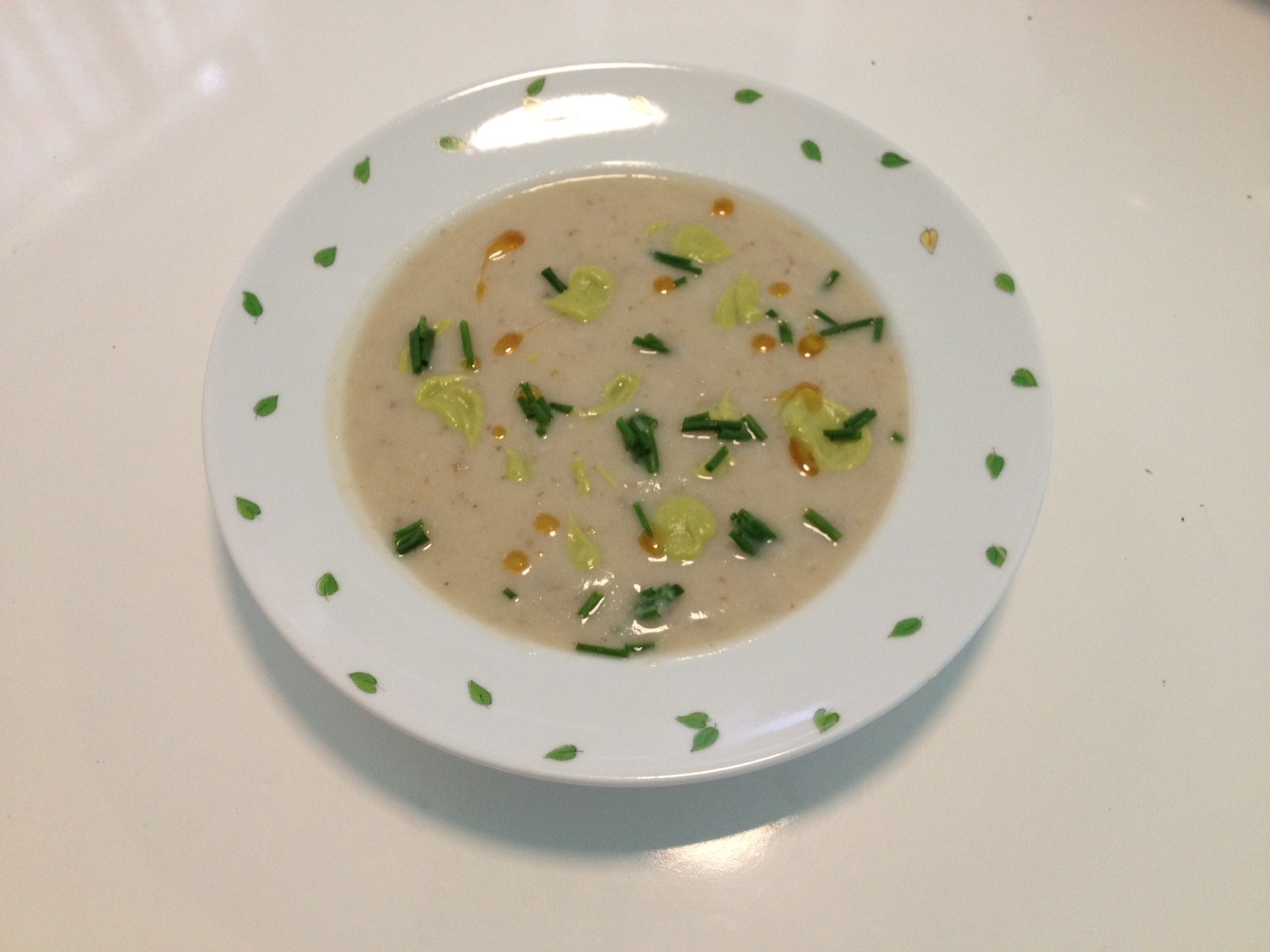
It’s odd, yet also fitting, that a turnip would awake me from my blogging slumber. The last time I posted, I triumphantly shared a tale of conquering the wild turnip, pureeing it into a healthy and tasty soup. But I wasn’t convinced. The color was a bit too brown and the taste was good but not “I can’t wait to make this again” good. Mainly I was happy to 1) have the turnips out of the house and 2) have created something that was farther toward the palatable side of the scale than the garbage disposal side.  When turnips made another appearance in our CSA (community supported agriculture) box, I, perhaps subconsciously, nudged them toward the back of the fridge. Turnips are hearty; there was no need to deal with them right away. Two weeks passed and another box arrived on our doorstep, brimming with vegetable surprises. And turnips. More turnips. Now I had five plump turnips staring me in the face, daring me to let them go bad. I spent the next few days brainstorming.  Soup seemed like the best option.  Soup is a forgiving canvas. There’s always something you can do–add a new flavor, add some water, add a topping–to recover from a misstep.   Once I had decided upon soup, my mind wandered east. My last turnip soup, while flavorful, just wasn’t that exciting.  It needed something to pump it up, something that would turn my turnip ambivalence to turnip appreciation.  After considering Indian curry and Thai curry, I continued east until I landed in Japan.  Turnips can have a sweet, delicate flavor and Japanese food is also delicately flavored.  It seemed like a good match. Plus, I could use miso and bonito to add a savory counterbalance and keep the soup firmly out of the sweet zone that root vegetables can often move into.  Finally, it gave me something to do with the small bag of fava beans we also received in the box–not enough to use as the main component in a dish but perfect to inhabit a wasabi puree garnish.

The result? A tasty turnip soup that I would happily make again.  Unlike the past two years, it seems that we’ll actually have a real summer so I don’t know when I’ll see turnips again. But when they come, I’ll be ready.

Turnip Miso Soup with Wasabi Puree

Broth
8 c light vegetable broth (you can use a box but look for one that’s lighter, more in the vein of a chicken stock)
1/3 heaping cup white miso
Handful bonito
Fish sauce to taste

Soup
Broth
5 turnips, peeled and cubed
1 small head cauliflower, cut into small chunks
Thumb sized piece of ginger, minced
One white onion, diced
4 cloves garlic, minced
1 tbsp canola oil
3/4 c silken tofu
Few tablespoons mirin
2 tsp rice vinegar
Additional fish sauce to taste
Salt & freshly ground pepper, to taste

Wasabi Puree
1/2 c shelled fava beans
1 tsp canola oil
1 spring onion
3 cloves garlic
Water
Few tablespoons silken tofu
Dash rice wine vinegar
Big squeeze wasabi paste (I used the prepared wasabi in the tube; you could also mix your own from powder)

Chives and sesame oil to garnish
Make the Broth
1) Bring broth to boil
2) Add bonito
3) Turn off heat and steep 5 min and then strain
4) Mix miso with bit of water and add to broth
5) Add few dashes of fish sauce to taste and season with fresh pepper (add salt as well if you think it needs it, though fish sauce is quite salty)
6) Set broth aside

Make the Soup
1) Sauté ginger, garlic and onion in 1 tbsp canola oil til softened
2) Add cubed turnips and chopped cauliflower
3) Season with salt and pepper
4) Add broth, bring to boil
5) Lower to simmer and let cook 30 min
6) Take the soup off the heat and let it cool a bit, then puree it in a blender with the silken tofu
7) Put back in pot, season with mirin, rice wine vinegar, fish sauce, salt and pepper

Make the Wasabi Puree
1) Sauté garlic and onion in 1 tsp canola oil
2) When softened, add the shelled fava beans and stir to coat
3)Add a bit of water, cover and simmer 10 min
4) Uncover and simmer 10 more min; add more water if needed
5) Take off heat and purée with wasabi, tofu and dash rice wine vinegar
6) Season with salt and pepper

Top soup with dollops of fava bean purée, chives and bit of sesame oil

Note: Fava beans only show up in the spring so you could try something else for the puree in other season. I think avocado would be good as long as you add some liquid so it’s thin enough–if you wind up with a guacamole-like texture, it will sink to the bottom of your soup.

The Tale of Too Many Turnips

3 Jan

It’s the last night of our three-day New Year’s weekend and we decided earlier this afternoon that wanted to cook something fun–something that would allow us to hang around the kitchen, drinking wine (or even better yet, leftover champagne) and listening to Underground Garage on Sirius, all while purporting to be productive. The fridge was overflowing so I was sure there would be something exciting within. What I found was a lot of turnips. Three bunches to be exact–turnips that had survived our last CSA box and turnips that showed up in our latest shipment on Friday. The husband loves turnips and was excited by this turn of events. I don’t dislike turnips but I wasn’t nearly as intrigued as I would have been by a hidden stash of wild mushrooms or even a big bunch of kale (crazy, I know). We also had a bunch of potatoes (russet potatoes, small yellow-fleshed potatoes and red potatoes) courtesy of both our CSA box and overzealous Chanukah shopping, some giant leeks (CSA) and a plethora of yellow onions (again, Chanukah shopping). The answer to our turnip bounty or predicament, depending on who you asked, seemed to be soup. The onions would provide a good balance to the sweetness of the turnips and the potatoes, some heft and creaminess, helped along by some goat milk. The goat milk appeared as the result of a dinner party bread pudding and also needed a home. We would have way too much soup for two people but the leftovers could sustain us through a long week of being attached to our desks. And the best thing about soup is that it’s extremely conducive to drinking leftover champagne, half of bottle of which happened to be in the fridge, nestled alongside the turnips. Here’s what resulted from our holiday soup-venture:

Four Onion and Turnip Soup

  • 1 tablespoon butter
  • 4 cups mixed leeks, shallots and yellow onions, diced
  • 3 heaping cups peeled and cubed turnips
  • 3 heaping cups cubed yellow-fleshed potatoes (we didn’t peel ours but you may want to for a more appealing soup color)
  • 4 cups vegetable broth (add more broth and/or water if needed)
  • 1/2 cup dry white wine
  • 1 cup milk (I used goat)
  • Salt and pepper to taste
  • 2 small bunches green onions, chopped
  • 1 handful of fennel fronds, chopped
  1. Heat the butter and oil in a soup pot over low to medium heat until the butter starts to foam
  2. Add the mixed onions, shallots and leeks and cook, stirring often, until the onion mix is softened but not browned
  3. Season the onion mix and then add the turnips and potatoes, stirring to coat them with the onions, olive oil and butter
  4. Cook the veggie mix for about 5 minutes and then add the broth and the wine
  5. Bring the soup to boil and then turn down to a simmer
  6. Cook the soup until the vegetables are soft and you can easily squish a potato on the side of the pot with your spoon (this will take about 30-45 minutes, depending on how young and tender your veggies are)
  7. Using a blender, puree the soup with the milk (if you have an immersion blender you can do this right in the pot–just be sure to take it off the heat first)
  8. Return the soup to the pot if you’ve used a blender and season to taste; reheat gently if necessary
  9. Heat the additional two teaspoons of olive oil (extra virgin is preferable) in a small saucepan
  10. Add the green onions and fennel fronds and saute just until they soften, then season to taste
  11. Serve the soup topped with the green onion/fennel garnish

p.s. If you’re feeling ambitious and/or too lazy to go to the store (as in my case), try making this easy oat and herb bread to go along with your soup. It comes from my first-ever and still-beloved vegetarian cookbook, Quick Vegetarian Pleasures by Jeanne Lemlin, and it’s yummy, healthy (especially if you sub in whole wheat pastry flour for the white flour) and pretty much impossible to screw up.

Herb Oat Bread from Quick Vegetarian Pleasures

  • 1 1/4 cup rolled oats
  • 1 cup unbleached flour (I replaced this with whole wheat pastry flour)
  • 1/4 cup whole wheat flour (I used 1/4 cup unbleached flour–you could probably use all whole wheat pastry flour)
  • 2 teaspoons baking powder
  • 1/2 teaspoon baking soda
  • 3/4 teaspoon salt
  • 1/2 teaspoon dried basil
  • 1/2 teaspoon dried oregano
  • 1/2 teaspoon dried dill
  • 1/8 teaspoon crumbed dried rosemary
  • Note: I had various fresh herbs (sage, rosemary, thyme, basil) leftover from holiday cooking so I used about a handful of minced fresh herbs instead
  • 1/4 cup vegetable oil
  • 1/4 cup honey
  • 1 1/4 cups plain low-fat yogurt
  • 2 large eggs, beaten
  1. Preheat the oven to 375 F; butter and flour a 9×5 inch loaf pan (I used parchment paper instead)
  2. Place the oats in a blender or food processor and grind until almost powdery; pour into a large bowl and mix in the flours, baking powder, baking soda, salt and herbs
  3. In a small saucepan, combine the oil and honey and heat until just blended; remove from the heat and stir in the yogurt and beaten eggs
  4. Pour in the flour mixture and stir until just evenly moistened (do not over-beat); scrape into the prepared pan
  5. Bake 40 minutes or until a knife inserted in the center of the bread comes out clean (if the top of the bread begins to darken before it finishes cooking, lay a sheet of foil over the top of the pan and bake until done)
  6. Cool on a wire rack 10 minutes before removing from the pan; cool completely before slicing

Heirloom Tomatoes Get a Kick from Curry

25 Jul

A few weeks ago, heirloom tomatoes appeared in our Friday “Farm Fresh to You” veggie box. Usually this would be a happy surprise but given that it was the middle of June and I had yet to see tomatoes make an appearance at the farmer’s market, I was a bit suspicious.  While I love tomatoes, out-of-season tomatoes join peas and zucchini at the top of my produce sh**t list.  Yes, I realize that peas are beloved the world over and zucchini, according to many, many restaurants is beloved by every vegetarian ever to turn their nose up at a steak, but they both make me extremely unhappy. This is also the case with out-of-season tomatoes. Their mealy texture and bland flavor have ruined many a salad and bruschetta.  The tomatoes in question, red-orange with stripes, appeared fat and juicy and when I cut into them, they didn’t appear as if a vampire had sucked the red life out of them.  After some consideration, I decided that while I wasn’t ready to spring for some fancy mozzarella and do my first caprese salad of the season, I would give them a shot in a fresh tomato soup. And just in case the flavor was lacking, I’d be ready with some spice to save the day.

I have to give it to the farm–the tomatoes were good. And they played quite nicely in the pot with some ginger, chilies, curry powder and red lentils.  The result was a fast, easy, healthy and yummy dinner–probably one of my favorite things I’ve made this summer.


Curried Heirloom Tomato Soup

8 medium tomatoes, preferably heirloom (mine were red, orangey, stripey ones), peeled and chopped, juices reserved
1 large sweet onion (or yellow or white), chopped
1 large (2″ x 2″) piece fresh ginger, peeled and chopped
1 Thai chili, seeds removed and finely chopped
Few cloves garlic, minced
Small handful cilantro stems, minced
1 c red lentils
4 c light veggie broth or water
1 tbsp curry powder
1 tbsp canola oil
1 heaping tsp mustard seeds
1/2 tsp fenugreek seeds
Pinch asafetida (optional)
Fresh cilantro, minced

1) In a food processor, blitz onion, ginger, garlic, chili and cilantro stems until minced, almost a paste.

2) Heat 1 tbsp canola oil over med high and add onion mixture, cooking about 10 minutes.

3) Add tomatoes with their juices and lentils, stir to coat with the onion mixture and cook one minute.

4) Add broth and curry powder, bring to boil.

5) After the soup comes to boil, turn down to simmer and cook, partly covered, for about 20 minutes or until lentils are soft.

6) Make the spice oil: heat 1 tbsp canola oil in skillet. When hot, add mustard seeds, fenugreek and asafetida and heat until mustard seeds begin to pop, taking care not to burn the spices. Add to soup and take off the heat.

7) Garnish each bowl with minced cilantro and serve.

p.s. I didn’t have any yogurt, but that could make a nice garnish as well.

Corn Salad a la Rue Chifflet

10 Jul

Fourteen years ago, I spent my junior year abroad at the Universite de Franche Comte, in Besancon, France. While my year in Besancon lacked the wonder of my post-freshman year summer in Paris–where every turn around a corner produced another postcard moment of some monument or some cafe scene that I’d ogled in history books and travel magazines–it gave me a glimpse into everyday life in France. That was the year that I fell in love with the idea of visiting a city, any city, and just wandering, taking the time to get to know its random neighborhoods and absorb its vibe.  Travel can be shallow, ticking off famous sites on the checklist and at the end, winding up with a bunch of photos of old buildings, churches and columns that you can no longer identify (Europe has  A LOT of Roman ruins). Immersion means that you may return home wishing you’d had the time to visit X, Y, Z but that you also come back with memories that focus more on the essence of a place than of its transportation system.

One way my friends and immersed ourselves in the local life was by hosting dinners. When we weren’t terrorizing the poor neighbors with our loud parties, we would explore the local markets–the green grocer downstairs, the boulangerie next door, the corner market with its ample supply of affordable and drinkable Cotes du Rhone–and then cram into my tiny kitchen and create a delicious mess.

Between classes or on days following dinner parties or parties of the sort that terrorized the aforementioned neighbors, cooking was the last thing on my mind. I just wanted something quick, cheap, easy and healthy. Usually, that involved some combination of corn, mustard, tuna and chickpeas. Besancon is about 45 minutes from Dijon, home of the famous mustard. Our grocery store featured a giant wall of mustard and I quickly fell in love with it, the stronger, the better. For some reason–perhaps a French thing or perhaps a broke college student thing–I also ate a lot of canned corn.  Corn, mixed with mustard and some red wine vinegar, became a go-to lunch. Sometimes tuna joined the party and if I was getting fancy, some onion and tomato would go in as well.

This week, we got three fat ears of corn in our CSA (community supported agriculture) box. That, combined with the presence of a shiny new jar of strong French Dijon in my refrigerator led to a strong craving for my corn and mustard concoction from my days on Rue Chifflet. Here’s my interpretation, classed up a bit for an adult audience:

Corn Salad a La Rue Chifflet (influenced by Oakland)

Dressing:

1 1/2 tbsp Dijon mustard
3 tbsp red wine vinegar
Juice of 1/2 lemon
1 small bunch chives, minced
Salt and pepper to taste
2 tbsp extra virgin olive oil

Note: I realize this is a lot more acid than oil. I prefer it that way as I like strong flavors but you could decrease the mustard, vinegar and/or lemon or increase the olive oil if you prefer a milder dressing.

Salad:

3 big ears corn, boiled 5 min, kernels removed
1/3 c Vidalia or red onion, blanched a couple of minutes if you want to take the bite out, and diced
9 oz cherry, grape or strawberry tomatoes, halved if cherry or grape, quartered if strawberry
1 can tuna packed in olive oil (I recommend you spring for a good quality tuna if possible)
1 ball fresh mozzarella, diced
1 handful fresh basil, cut in ribbons

To serve:

4- 5 c baby argula, dressed with a little olive oil, salt and pepper
1) Mix the dressing ingredients in a large bowl, starting with the acidic ingredients (mustard, vinegar, lemon) and seasonings, then adding the chives, and finally drizzling in the olive oil.

2) Prepare the salad ingredients and toss all but the basil with the dressing. Refrigerate for an hour, if time allows, to let the flavors blend. If you don’t have time, it will still be good eaten straight away.

3) About 15 minutes before serving, add the basil. If you add it too early, the basil will wilt.

4) To serve, toss the arugula with a bit of olive oil, salt and pepper. Mound the arugula on a plate and top with the tuna and corn salad.

This is  great with some crusty bread–baguette or otherwise–and a glass of white wine.

Cooking Class: India via Oakland

30 May

Every few months, my friend Dana asks that we do a cooking class together. I have no teaching credentials–cooking or otherwise–but I enjoy cooking, Dana enjoys cooking with me and my husband (and sometimes another friend) enjoy showing up for the grand finale: eating. Everyone leaves happy and my student is good about cleaning along the way. Cooking class has no particular structure; it usually involves drinking wine and making something Dana wouldn’t usually tackle at home. Sometimes I remember to throw in an instructional tidbit, such as: add garlic after the onions have been cooking for a bit so you don’t burn the hell out of your garlic and have to throw the whole thing out. Other times I just focus on that delicate balance of making sure the wine drinking doesn’t get in the way of injury-free chopping. Either way, we get a good dinner at the end and no one can argue with that.

Sometimes Dana has special requests but our last class was chef’s choice.  I had a cauliflower on its last legs from our CSA box and a yearning to try a chickpea date masala recipe I saw in the New York Times Magazine last fall, so I landed on Indian. I didn’t go for any particular region–really it was more of my interpretation of Indian though I did plan to follow the chickpea recipe faithfully and that came from an Indian restaurant in Vancouver. I am not remotely Indian–not even a teeny-tiny bit. I am Romanian/Polish Jewish on my mother’s side (think: kugel, babka, parts of the animal I think even meat-eaters would be grossed out by) and pilgrim (from the not-so-spicy lands of Holland, England and Scotland) on my father’s side.  True, Romanian cooking is a bit more colorful and if I really stretched, I could attribute my affinity for eggplant to my heritage, but bottom line: mustard seeds and chilies do not run through my blood.

Family history aside, I did grow up in a house of adventurous eaters and my parents broke free of the shackles of calf’s foot jelly and pot roast to expose us to the spice and color of more interesting (in my perspective) cuisines. Indian was high on our list, particularly after I stopped eating meat and fish  in 1993 in Eastern Pennsylvania. Eastern PA in the early 90s was not veggie friendly. It was all about meat, meat and more meat, and maybe some potatoes. Pig stomach dinners sold out in a flash. School sports banquets featured delicacies like salad with bacon dressing, filling (bread mixed with mashed potatoes) and as mentioned,  and lots and lots of meat. Lest I sound too harsh on the Pennsylvania Dutch cuisine, I will admit here in public that I love gefilte fish. I can’t honestly say that gefilte fish is any more sophisticated or delicious than filling but it’s a holiday thing and it’s really pretty good with a ton of horseradish. But I digress. Point is: I was a vegetarian in a land of pork and my savior was the Indian restaurant. Along with the Lebanese restaurant we sometimes frequented, it was the one place where I was guaranteed to find more than salad.

Although I’ve loved to eat Indian since that time, for years I was afraid to cook it.  It was a bit mysterious and intimidating and I thought it was better to just go out and have it done right. But given how veggie friendly it is, I decided at some point that I had to dive in. I took baby steps, starting with lentil dishes and have been gingerly exploring new territory. Sometimes I’ll use recipes and other times, I’ll just use some Indian spices and make things that while are likely not authentic, work for me.

For our cooking class the other week, I chose:

  • Indian-Spiced Cauliflower Soup–completely made up
  • Chickpea Date Masala–taken from an Indian restaurant and presumably authentic
  • Spinach with Ginger & Garlic–just a slight Indian twist on standard sauteed greens
  • Curry Rice Krispie Treats–taken from a cocktail book and completely unauthentic but also completely addictive

Indian-Spiced Cauliflower Soup (i.e. how to get rid of a cauliflower on its last legs)

Note:  Despite still being intimidated by Indian cooking, I am now the proud owner of several Indian cookbooks. I often see recipes call for asafetida and when I finally saw it in a spice shop, I was thrilled and immediately bought a bag and then nearly as immediately, forgot where I saw it used and what I was meant to do with it.  Apparently it adds an onion-like flavor and it seemed appropriate here but I think you could easily leave it out. This serves about 4-6 people.

1 head cauliflower, chopped into small pieces

1 onion, diced

2-inch piece of ginger, peeled and minced

1-2 green chilies, minced

Few cloves garlic, minced (vary depending on how much you like garlic)

1 tsp mustard seeds

2 tsp ground cumin

2 tsp ground coriander

Pinch asafetida

4 c light veggie broth (I used Imagine’s No-Chicken Broth)

1 can coconut milk

Salt to taste

1/2 cup cilantro, roughly choped

Juice of 1/2 lemon

1) Saute chopped onion and mustard seeds until onion is golden

2) Add garlic, ginger and green chilies and  saute for 1-2 minutes (be careful not to burn the garlic)

3) Add cumin,coriander and asteofedia and a pinch of salt, toast slightly

4) Add cauliflower and coat with spices, cook about 1 minute

5) Add broth and coconut milk, simmer, covered for 25 minutes or until cauliflower is soft

6) Blend soup with an immersion blender or in a standing blender

7) Season with salt and add lemon juice and cilantro.

Make ahead if possible–it will taste better.

Chickpeas in Star Anise and Date Masala

This recipe was published in the New York Times Magazine last November. It comes from Vij’s Restaurant in Vancouver, BC. It serves about six.

3 15-ounce cans chickpeas (or 11/2 cups dried chickpeas, soaked overnight and cooked)

2 black cardamom pods

13cup neutral cooking oil, like canola

1 medium-large Spanish onion, peeled and chopped

6 cloves garlic, peeled and minced

2 1/2tablespoons tomato paste

9 dried dates, pitted and chopped

4 tsp ground cumin

2 tsp kosher salt

1 tsp ground cayenne, or to taste

1 tsp freshly ground black pepper, or to taste

2 whole star anise, or 13 tsp ground

1)  Drain the chickpeas and set aside in a nonreactive bowl.

2) With a knife, lightly crack the cardamom pods. Peel the shell to release the seeds and collect them in a small bowl. Discard the shells. With a rolling pin or a mortar and pestle, crush the seeds (you can leave them whole if you don’t mind biting into them) and set aside.

3) In a medium pot set over medium-high heat, heat the oil until it begins to shimmer. Add the onions and sauté for 8 to 10 minutes, until they have softened and started to brown. Stir in the garlic and sauté for a minute or so, until it, too, has softened. Reduce heat to medium and stir in the tomato paste. Add the cardamom and all remaining ingredients and sauté for 2 or 3 minutes.

4) Add the chickpeas and 1/2 cup or more of water, enough to make them less than dry. Heat the mixture, stirring occasionally to incorporate the flavors, and keep warm until serving.

Eat Your Greens (with Chilies Ginger)

In my opinion, there’s no better accompaniment to a meal than a big bowl of sauteed dark leafy greens (think spinach, chard, kale, broccoli rabe, etc). Greens can go American, Italian, Asian, Indian, Middle Eastern… you name it. Plus, they’re quick, easy and healthy.  For our Indian-inspired meal, I added mustard seeds, chilies and ginger. This can serve 4-6 on the side or you could eat the whole thing by yourself if you really want to be big and strong.

2 lbs spinach (I used baby spinach here but you could use regular spinach or substitute another green)

1 thumb sized piece ginger, minced

2-3 garlic cloves, minced

1 green chili, minced

1 tsp mustard seeds

1 tbsp canola oil

Juice of 1/2 lemon

1/2 tbsp butter

Salt to taste

1) Heat canola oil over medium-high heat in a large skillet and when hot, add the mustard seeds

2) Once the mustard seeds start popping, add the garlic, ginger and chilies

3) Saute your aromatics for about 1 minute and then add the spinach, in batches

4) Turn the spinach until it’s coated with the oil and aromatics and cook until just wilted

5) Add the lemon, butter and salt to taste

Curried Rice Krispie Treats

I got this recipe from a Food and Wine compilation book of the best cocktails and bar snacks of 2008. I’d always wanted to make these Rice Krispie treats but never got around to it. The only problem with these is that despite living in the Bay Area and being confident of being able to find vegetarian marshmallows (since you can find veggie bacon, veggie kielbasa, vegan mac and cheese, etc), I came up short handed. Admittedly we only went to one store so next time, I’ll broaden my search.

3 tbsp butter

4 c. mini marshmallows

1 tbsp curry powder (recipe says  mild; I used the Madras curry powder I had in the house and it was great)

6 c. Rice Krispies

1/2 c. salted sunflower kernels

1) Butter or spray a 9 x 13 x 2 inch pan and set aside

2) Melt the butter in a large saucepan (a wok also works)

3) Add the marshmallows and stir until melted

4) Stir the curry powder into the melted marshmallows

5) Add the Rice Krispies and sunflower kernels and stir well

6) Press the mixture into the pan and cool until firm

Tuna Floats in an Endive Boat

15 May

Last week was a long one. Going the store after work for dinner ingredients seemed about as enticing as forgoing my evening at home for another round of meetings.  Lucky for our bank account, my frequent inability to face a checkout line leads us to what we should be doing: eating what’s already in the house. This dilemma is what weaned me off  a reliance on recipes in the first place.  What we have in the house doesn’t always naturally go together but that’s part of the fun of it. It’s like being on that British cooking show where two hapless home cooks show up with a bag of items they tend to buy at the store and two equally hapless chefs have to battle it out by creating easy, tasty dinners combining ingredients like zucchini, potato chips and mayonnaise.  Zucchini knows not to darken my door so that wasn’t an issue for us but we did have a lovely package of endives from our CSA (community supported agriculture) box that had to be used. Expensive and threatening to wilt, they stared us down, taunting us with their ability to turn bad the following day and leave us with the visual of our CSA dollars floating away never to be seen again.

It’s not like endive is that hard to use. It makes a great salad, it’s great for dips and there’s an amazing looking braised endive and grape recipe in one of my new cookbooks that I’m dying to try. But I didn’t have grapes and we weren’t in the mood to make more than one thing as it was already creeping past 8 pm. That’s when canned tuna and our fairly impressive selection of condiments came to the recipe.  The result: an Asian twist on tuna salad, floating merrily in endive boats.

Tuna Floats in an Endive Boat

Note: We served this as our main course for a post-workout dinner but it could serve 4 as a light meal.

Two cans water-packed tuna

1 small cucumber, diced (You could also use celery–it’s just nice to have something crunchy)

1 1/2 red bell pepper, diced

1/4 white onion, diced

Handful cilantro, chopped (Cilantro haters could try parsley instead)

Small handful toasted walnuts, chopped

Three endives, leaves separated

Dressing

2 tbsp Schezuan  marinade (If you don’t have this, add soy, chili, garlic, ginger and some extra vinegar to your dressing. It won’t be quite the same but it’ll work)

Splash rice wine vinegar

1 tbsp dark sesame oil

1tbsp canola oil

1) Mix your dressing ingredients in a large bowl

2) Add your tuna and chopped veggies and mix well

3) Fold int he walnuts and cilantro

4) Scoop into endive leaves or if you’re lazy, as we were, serve the tuna with the endive leaves on the side and let your diners do their own scooping

Broccolini Meets Its Match in a Three-Round Date

8 May

One of my favorite commercials on TV is the one about the Olive Garden cooking school in Tuscany. I don’t have anything against Olive Garden and lest I come off like a foodie snob, I understand the appeal of chain restaurants like the Olive Garden and know that many towns are not as blessed with cheap, delicious dining options as is Oakland. There are also many expensive, delicious options but the point is that you can eat well, in a place where someone else serves you and cleans up, without selling all of your worldly possessions. So I get it: if you want to go out for a decent and reasonable meal, especially if you want to take your kids out and find a place that will both satisfy them and allow them to behave as children often do, than a place like the Olive Garden is likely high on your list. But really–a cooking school in Tuscany? One reason that the Olive Garden doesn’t break the bank is likely because the chefs are not trained at an exclusive villa by the finest Italian chefs. Not to mention the atmosphere. After having seen enough cooking reality shows to rot my brain for the next 50 years, I highly doubt that cooking school involves smiling white-hatted chefs stirring a vast pot of what appears to be glue and lifting it to their noses for ecstatic whiffs. My guess? Cooking school involves yelling, bloody thumbs, heaps of onions and tears. This is why I write a cooking blog instead of going to cooking school and let my husband deal with the onion chopping. But I digress. My point is not really to pound on poor Olive Garden but rather to point out that Italian food can be quick, easy, delicious and even economical when made inside your own Olive Garden cooking school. To save money, I suggest that you ask your cooking partner to fashion their own chef’s toque out of a pillowcase rather than buying your own. It won’t quite be like the commercial but you’ll get the general atmosphere.

In today’s installment, we’ll focus on pasta.  Pasta can certainly be elegant but on Friday night, after a long week at work and recovering from vacation over-spending, we wanted cheap and easy. I promised Ben a date night dinner so pasta was not the only thing on the menu. A date night calls for appetizers and dessert. Sadly for him, he was the waiter doing the serving and the dishwasher cleaning up. But in return, he got plenty of free wine.

To Start: Salmon Goes Swimming on a Baguette
I will admit that smoked salmon and watercress don’t necessarily fall into the “cheap” category but with both ingredients, a little goes a long way and the leftovers are great mixed into your morning eggs.

Smoked salmon, cut into bite-sized pieces

Watercress, roughly chopped (just enough to use as a garnish)

A bit of lemon juice, olive oil, salt and pepper to dress the watercress

Softened butter

Baguette, cut into small slivers (depending on how many people you’re serving, you may have leftover baguette to have alongside your eggs the next day)

This couldn’t be easier. Dress your watercress and set aside. Spread a bit of butter on each baguette slice, top with a piece of salmon and pile a bit of watercress on top of that.  If you have some Prosecco, this is even better.

To Continue: Broccolini Meets Its Match

Broccoli and anchovies are a match made in culinary heaven. Try this, even if you don’t like anchovies. I promise that it’s good. It doesn’t taste fishy–the anchovies just amp up the flavors of all of their friends in the pan. Also, if you don’t have broccolini, regular broccoli works just fine.

Bunch broccolini (for two people as a main course, I used three small bunches), chopped in one-inch pieces

Few baby cipollini onions (or shallots or one small regular onion), chopped

3-4 garlic cloves (or less if you don’t love garlic as much as I do), minced

2-3 dried red chilies, crumbled (or use a few good shakes of chili flakes)

1/3 cup+ (enough to keep the veggies saucy) veggie stock

1 tin anchovies

Olive oil, as much or little as you want, as long as you have enough to saute your veggies

Salt & pepper to taste

Dried long pasta of your choice, such as spaghetti, linguine, buccatini, etc

Reserved pasta water

To garnish:

Fresh grated parmesan

Bread crumbs, preferably Panko, toasted with a bit of olive oil, salt, pepper and dried chili

1) Boil water in a large stock pot (do not skimp on water!) and when it comes to a boil, salt it generously

2) Depending on how long your pasta needs to cook, put it in immediately or while your veggies are cooking. You’ll want to pull it out about two minutes early with your reserved pasta cooking water to add to your veggies.

3) Get your sauce started by heating your olive oil in a large pan over medium heat.

4) Add your garlic, onions and dried chilies and saute until the garlic and onions are golden but not brown.

5) Add your anchovies and mash with a spoon until they melt into the onions and garlic

6) Add the broccolini and toss to combine with the other ingredients. Once the broccolini is coated, add the veggie stock and cook until the broccolini is tender but not mushy and still nice and green. If the mixture gets dry, add more stock.

7) Two minutes before the pasta is done, drain it, reserving a cup or so of the cooking water, and add the pasta to the pan with your broccolini mix. Pour in enough pasta water to create a sauce and cook for two minutes, until the sauce has thickened and the pasta is coated. Season to taste, remembering that both the anchovies and cooking water have contributed salt. Top with cheese and toasted breadcrumbs.

A Cheesy Side of Strawberries

This ridiculously easy dessert is inspired (practically stolen, really) from a Naked Chef cookbook. I only make it in the spring, when strawberries are at their best.

About 1/2-2/3 cup of ricotta cheese (more if you’re serving more people)

About 1/3-1/2 cup of soft goat cheese

Splash vanilla

Zest of one lemon

2 tablespoons or so of sugar, to taste

1 basket strawberries, quartered

Splash of balsamic vinegar

Few grinds of black pepper

1) Mix the cheeses, lemon zest, 1 tbsp sugar and vanilla in a bowl. Set aside.

2) Mix the strawberries, remaining sugar, balsamic and pepper in another bowl. Set aside for at least one hour.

3) For each serving, take a big dollop of the cheese mixture and top with the strawberries. Throw some fresh mint on top if you’re so inclined.

Design a site like this with WordPress.com
Get started