Archaeology and Art History of Southeast Asia Programme
This website is part of the Archaeology and Art History of Southeast Asia Programme (AAHP) created by the Temasek History Research Centre of the ISEAS – Yusof Ishak Institute, Singapore.
The AAHP is a webinar series with a focus on the pre-Modern to the Modern periods, covering topics from major Southeast Asian land and maritime civilisations over the last 1000 years.
The programme is designed for undergraduates engaged in Southeast Asia art history and archaeology curriculum as well as junior college or polytechnic students with interests in heritage and history. The series is also appropriate for educators and members of the public.
-
Angkor
-
Bagan
-
Mrauk-U
-
Đại Việt
-
Ayutthaya
-
Spice Islands
-
Malacca
-
Ceramics
-
Architecture
-
Relief Sculpture
-
Textile
-
Bronze Sculpture
-
Islamic Art
-
Mosque Architecture
-
Malay Illustrated Manuscripts


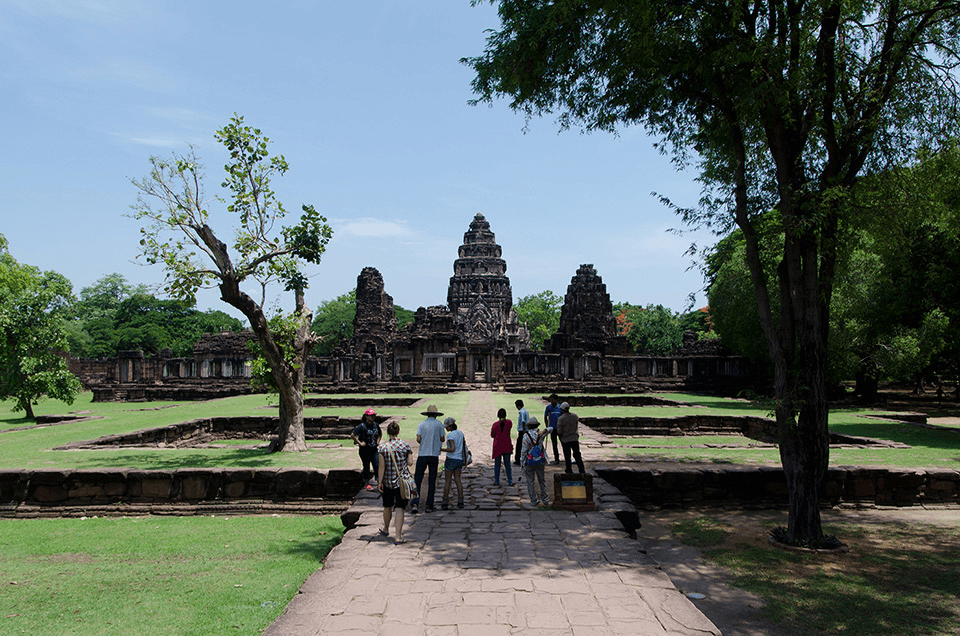
Angkor (802-1431 AD)
Click for Webinar | Resources | Booklet
According to inscriptions, the Khmer Empire, known as Angkor, was founded in the early 9th century by King Jayavarman II. This kingdom, mostly centered around the foothills of the Kulen mountain in present-day Siem Reap, featured a large urbanized area – one of the largest in the preindustrial world. The kingdom’s many monarchs built impressive temple complexes, mostly Shaivite, but some Vaishnavite and Buddhist, as well as a sophisticated water management system involving canals, levees, moats, and ponds. From this urban core, roads connected to other provincial centers, some located in present-day Thailand and Laos..


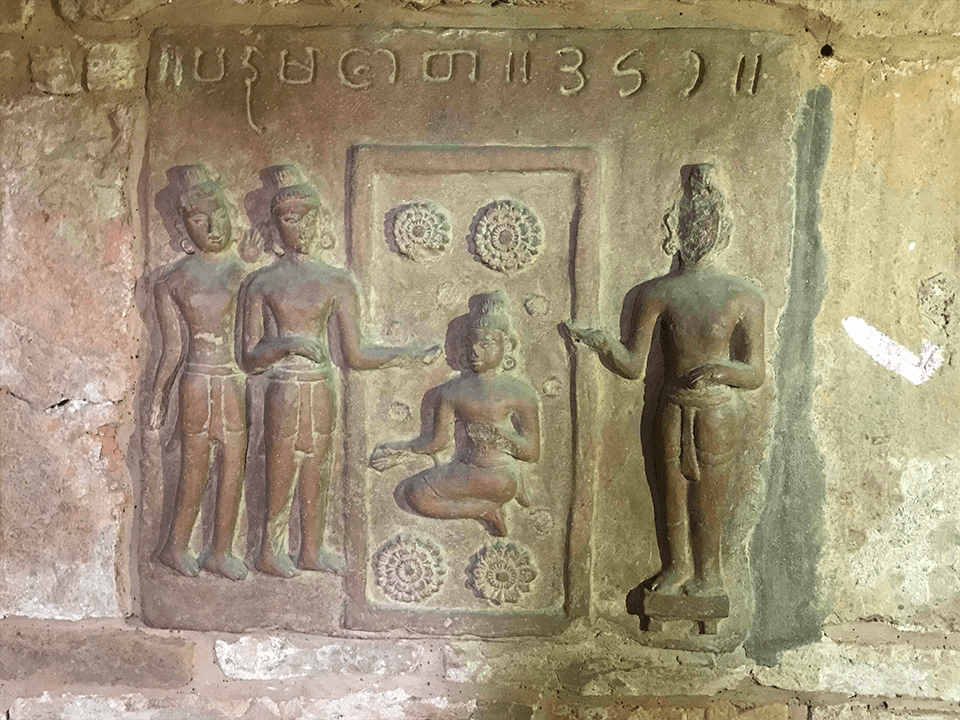
Bagan (849-1297 AD)
Click for Webinar | Resources | Booklet
The ancient capital of Bagan is located on the eastern bank of the Irrawaddy River in the central dry zone of Myanmar. It is the most touristic and significant pilgrimage site in Myanmar because of its over 3,000 Buddhist monuments. It is believed that Bagan was founded in the 9th century AD and reached its peak in the 11th to 13th centuries AD. At least 400 of these temples have mural paintings still surviving, which depict various Buddhist stories involving deities and the lives of the Buddha.


Mrauk-U (1430-1784 AD)
Click for Webinar | Resources | Booklet
Mrauk-U was the last capital city of the Kingdom of Mrauk-U, the westernmost kingdom of Southeast Asia, which lasted from 1430 to 1784 AD. It is located in a region known as Arakan, in the valleys of the Kaladan and Laymro rivers on the eastern shore of the Bay of Bengal. Arakan was first mentioned in the 2nd century as Argyre in Ptolemy’s geography, appearing again as Argentia (the Latinized version of Argyre) in early Medieval maps. Later accounts used the terms Aracan or Arakan. This region was traditionally cut off from the rest of the kingdoms in Myanmar because of the Arakan mountains and was more directly influenced by the Bengal Sultanate to the west.


Đại Việt (1054-1804 AD)
Click for Webinar | Resources | Booklet
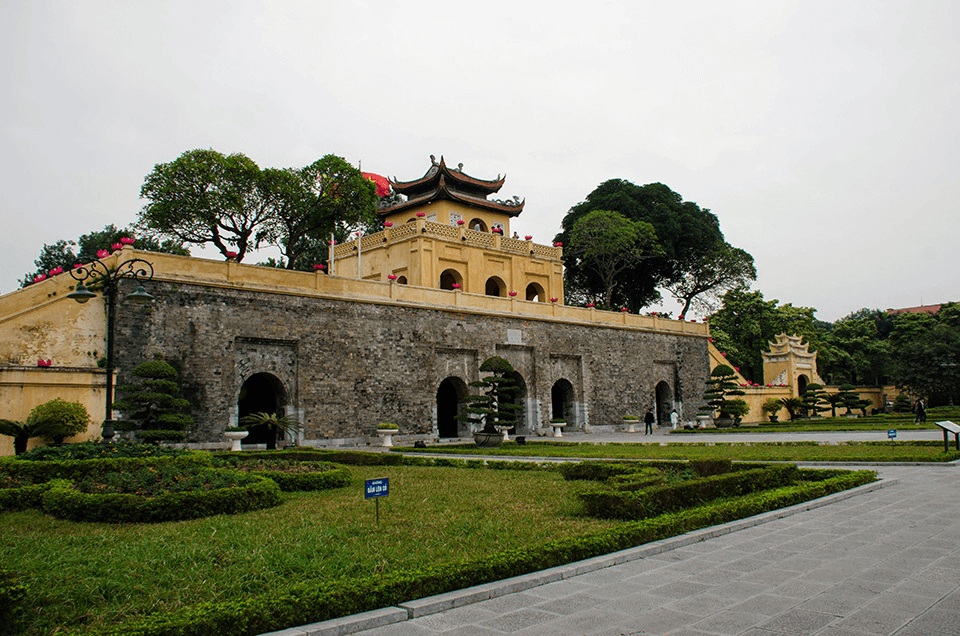
The Vietnamese kingdom of Đại Việt, or the Great Viet, began in the 10th century in the Red River Valley of present-day northern Vietnam. An invasion from the neighbouring Southern Han state left the region in turmoil as local warlords fought to claim supremacy. By the second half of the tenth century, a capital was established in Hoa Lu (present-day Ninh Binh province), but in 1009 this capital moved to present-day Hanoi and was named Thang Long by Ly Thai To, the first emperor of the Ly Dynasty. For the next nine centuries, Đại Việt would be ruled by eight dynasties, expanding along the coast to eventually absorb the Chams in the south, while successfully repelling invasions from China in the north.


Ayutthaya (1351-1767 AD)
Click for Webinar | Resources | Booklet
The Kingdom of Ayutthaya emerged as a dynastic urban centre founded by Ramathibodi I (U-Thong), who was most likely descended from political unions between several regional dynastic houses that ruled the Lower Chao Phraya delta before the 14th century. Early Ayutthayan governance, urban design, and technological foundations were taken from these early states, which were largely based around decentralized leagues of cities. By the 15th century, the Ayutthaya territories had expanded by absorbing neighboring kingdoms, necessitating a system of bureaucracy with appointed governors and ministries. Ayutthaya was famously cosmopolitan, and by the 17th century had permanent settlements for foreigners such as the Armenians, Mons, Laotians, Chams, Malays, Chinese, Japanese, Portuguese, and Persians.


The Spice Islands ((1257–1914 AD, Ternate) and (1450–1967 AD, Tidore))
Click for Webinar I Resources I Booklet
The Spice Islands (Maluku, or the Moluccas) are a small group of islands in Indonesia, located between Celebes and New Guinea. They include the largest island, Halmahera, as well as Seram, Buru, Ambon, Ternate, Tidore, and the Aru and Kai island groups. This archipelago was known for being the largest producer of mace, nutmeg, cloves, and pepper in the world, precious commodities traded globally. The rival sultanates of Ternate and Tidore wrestled for control over the spice trade, at times aligning with opposite factions of Europeans who sought to control the spice trade themselves.


Malacca (1400-1511 AD)
Click for Webinar | Resources | Booklet
The Sultanate of Malacca was one of the many maritime polities that thrived in maritime Southeast Asia. During its peak, it existed as a collection of various coastal polities with its center situated at the tributary of the Malacca River. The territorial, economic, and political power of Malacca gradually expanded from the year 1400 until its eventual demise in 1511. The Sultanate of Malacca is often regarded as the benchmark for the peak of Malay cultural, political, and economic achievement and remains a central part of Malay historical consciousness, despite the presence of earlier polities such as Ancient Kedah and Langkasuka. This is probably due to the lack of historical accounts for the predecessor polities, while numerous Malay, Chinese, and Portuguese accounts provide detailed descriptions of the court customs, political and administrative system, as well as the names and genealogy of Malaccan rulers and nobles.


Ceramics (Bagan)
Click for Webinar I Resources I Booklet
Locally innovative ceramic traditions emerged during the first millennium CE with unique technological attributes such as types of clay, methods of production, and firing. These included elaborately decorated earthenware with combed, impressed, and applied decoration, as well as architectural and sculptural reliefs. Glaze technologies flourished during the 11th to 13th centuries for domestic and export markets in northern Vietnam, Thailand, and Myanmar. Underglaze cobalt blue painted decoration developed in Vietnam was exported throughout the region during the ‘Ming Gap’ (14th-15th centuries). Porcelain donations of ceramics also served as merit-making objects, as can still be seen in Thai and Burmese temples and pagoda museums.

Ananda Temple, Bagan, Myanmar. (Photo: Heidi Tan)
Ceramics (Gowa)
Click for Webinar I Resources I Booklet
Locally innovative ceramic traditions emerged during the first millennium CE with unique technological attributes such as types of clay, methods of production, and firing. These included elaborately decorated earthenware with combed, impressed, and applied decoration, as well as architectural and sculptural reliefs. Glaze technologies flourished during the 11th to 13th centuries for domestic and export markets in northern Vietnam, Thailand, and Myanmar. Underglaze cobalt blue painted decoration developed in Vietnam was exported throughout the region during the ‘Ming Gap’ (14th-15th centuries). Porcelain donations of ceramics also served as merit-making objects, as can still be seen in Thai and Burmese temples and pagoda museums.

Ceramics (Sukothai)
Click for Webinar I Resources I Booklet
Locally innovative ceramic traditions emerged during the first millennium CE with unique technological attributes such as types of clay, methods of production, and firing. These included elaborately decorated earthenware with combed, impressed, and applied decoration, as well as architectural and sculptural reliefs. Glaze technologies flourished during the 11th to 13th centuries for domestic and export markets in northern Vietnam, Thailand, and Myanmar. Underglaze cobalt blue painted decoration developed in Vietnam was exported throughout the region during the ‘Ming Gap’ (14th-15th centuries). Porcelain donations of ceramics also served as merit-making objects, as can still be seen in Thai and Burmese temples and pagoda museums.

Hindu and Buddhist Architecture (Moulmein)
Click for Webinar I Resources I Booklet
Indianisation and indigenisation of Hindu and Buddhist architecture occurred as a long-time-span phenomenon that contributed to shaping Southeast Asia’s landmark monuments in both Continental and Island Southeast Asia. Temples in the region were never strict imitations of their Indian counterparts. On the contrary, they presented many variations. They were also the result of reinterpretations and the expression of local knowledge. These variations also depended on the materials available locally. As Buddhism dwindled in India, the localisation phenomenon increased in Southeast Asia. This so-called “indigenisation” period saw the construction of some of the most prominent buildings and architectural styles from the 10th to the 16th century, known to this day in Asia.

Hindu and Buddhist Architecture (Mandalay)
Click for Webinar I Resources I Booklet
Indianisation and indigenisation of Hindu and Buddhist architecture occurred as a long-time-span phenomenon that contributed to shaping Southeast Asia’s landmark monuments in both Continental and Island Southeast Asia. Temples in the region were never strict imitations of their Indian counterparts. On the contrary, they presented many variations. They were also the result of reinterpretations and the expression of local knowledge. These variations also depended on the materials available locally. As Buddhism dwindled in India, the localisation phenomenon increased in Southeast Asia. This so-called “indigenisation” period saw the construction of some of the most prominent buildings and architectural styles from the 10th to the 16th century, known to this day in Asia.

Hindu and Buddhist Architecture (Maha Rosei)
Click for Webinar I Resources I Booklet
Indianisation and indigenisation of Hindu and Buddhist architecture occurred as a long-time-span phenomenon that contributed to shaping Southeast Asia’s landmark monuments in both Continental and Island Southeast Asia. Temples in the region were never strict imitations of their Indian counterparts. On the contrary, they presented many variations. They were also the result of reinterpretations and the expression of local knowledge. These variations also depended on the materials available locally. As Buddhism dwindled in India, the localisation phenomenon increased in Southeast Asia. This so-called “indigenisation” period saw the construction of some of the most prominent buildings and architectural styles from the 10th to the 16th century, known to this day in Asia.

Reliefs Sculpture (Yogyakarta)
Click for Webinar I Resources I Booklet
Most reliefs are found on architectural surfaces in Southeast Asia, where they were used with coloured stucco plaster. These reliefs contain historical information, such as sculpting methods and artisanal organisation among expert craftsmen, some specialising in flora, others in objects, architecture, or human figures. Social hierarchy as well as the position of women in society are also reflected in some reliefs through subtle arrangement of scenery, the use of proportions, and objects such as jewellery. Thanks to reliefs, experts are also able to better understand local narratives not otherwise informed by textual sources, such as the early existence of a localised version of the Indian epic Ramayana dating from as early as the 8th century.


Textile Depiction in Sculpture (Yogyakarta)
Click for Webinar I Resources I Booklet
Sculpted representations are an exceptionally rich source of information, given the scarcity of textual and material evidence from the early period. The most common types of textile traditions in the region are Warp and Weft Ikat, Songket, and Batik. There is a great variety and ubiquity of Southeast Asian motifs, with some motifs circulating through various media such as textiles, ceramics, architectural decor, and furniture. Textiles are a precious source of information on the dynamism of the Spice Route trade network between China and India. The textile trade in Southeast Asia demonstrates that the region was connected to polities and production centres as far as the Middle East.

(Photo: Sofia Sundstrom)

Textile Depiction in Sculpture (Mojokerto)
Click for Webinar I Resources I Booklet
Sculpted representations are an exceptionally rich source of information, given the scarcity of textual and material evidence from the early period. The most common types of textile traditions in the region are Warp and Weft Ikat, Songket, and Batik. There is a great variety and ubiquity of Southeast Asian motifs, with some motifs circulating through various media such as textiles, ceramics, architectural decor, and furniture. Textiles are a precious source of information on the dynamism of the Spice Route trade network between China and India. The textile trade in Southeast Asia demonstrates that the region was connected to polities and production centres as far as the Middle East.

Bronze Sculpture (Kediri)
Click for Webinar I Resources I Booklet
Bronze was used to produce sacred and ritual art objects since the prehistoric period in Southeast Asia, with Buddhist and Hindu bronze sculpture starting to be made from the 6th century onwards. Bronze images evidence interregional exchanges with India and China through an analysis of their style and geographical distribution. The function of large bronze statues (from Java, Cambodia, and the Thai-Malay Peninsula) differed from that of smaller statues, preserved in larger numbers in the region. Among the most intriguing types of Javanese bronzes, which can be found in Indonesian collections as well as in Europe and the US, is the 10th-century “Nganjuk type,” found in East Java.


Islamic Art (Mindanao)
Click for Webinar I Resources I Booklet
About one-quarter of the world’s Muslim population is settled in Southeast Asia, mainly in Indonesia, Malaysia, and Brunei. Muslim minorities can also be found in Singapore, Cambodia, Myanmar, Thailand, and the Philippines, making up just under half of the region’s population. The earliest traces of Islamisation in the region date to the 13th century, and with this came unique artistic expressions dedicated to the new faith, often contrasting with art forms from the rest of the Islamic world. Not only were ritual and liturgical accessories created, but also ceremonial and scientific objects, mostly artifacts excluded from the traditional Islamic art narrative. These unique art forms can be found in textiles, metalwork, woodcarving, and manuscripts, mainly from countries across Island Southeast Asia.

Islamic Art (Lombok)
Click for Webinar I Resources I Booklet
About one-quarter of the world’s Muslim population is settled in Southeast Asia, mainly in Indonesia, Malaysia, and Brunei. Muslim minorities can also be found in Singapore, Cambodia, Myanmar, Thailand, and the Philippines, making up just under half of the region’s population. The earliest traces of Islamisation in the region date to the 13th century, and with this came unique artistic expressions dedicated to the new faith, often contrasting with art forms from the rest of the Islamic world. Not only were ritual and liturgical accessories created, but also ceremonial and scientific objects, mostly artifacts excluded from the traditional Islamic art narrative. These unique art forms can be found in textiles, metalwork, woodcarving, and manuscripts, mainly from countries across Island Southeast Asia.


Islamic Art (Terengganu)
Click for Webinar I Resources I Booklet
About one-quarter of the world’s Muslim population is settled in Southeast Asia, mainly in Indonesia, Malaysia, and Brunei. Muslim minorities can also be found in Singapore, Cambodia, Myanmar, Thailand, and the Philippines, making up just under half of the region’s population. The earliest traces of Islamisation in the region date to the 13th century, and with this came unique artistic expressions dedicated to the new faith, often contrasting with art forms from the rest of the Islamic world. Not only were ritual and liturgical accessories created, but also ceremonial and scientific objects, mostly artifacts excluded from the traditional Islamic art narrative. These unique art forms can be found in textiles, metalwork, woodcarving, and manuscripts, mainly from countries across Island Southeast Asia.

Mosques Architecture (Terengganu)
Click for Webinar I Resources I Booklet
Mosque building developed early on in maritime Southeast Asia, leaving behind a heritage that has mostly escaped Islamic art and architecture surveys. Architectural variations of mosques in Southeast Asia are greater than usually thought, and wood is not the only material used to build mosques. In Java, Sumatra and Southern Palembang alone, this great diversity is seen from the various forms, numbers, and functions of roofs, walls and platforms. Despite these variations, some permanent architectural features, possibly inherited from the Hindu-Buddhist period, can be found throughout the region. The rich typology of mosques in Southeast Asia bears witness to trans-local circulations and the recombination of knowledge.

Mosques Architecture (Narathiwat)
Click for Webinar I Resources I Booklet
Mosque building developed early on in maritime Southeast Asia, leaving behind a heritage that has mostly escaped Islamic art and architecture surveys. Architectural variations of mosques in Southeast Asia are greater than usually thought, and wood is not the only material used to build mosques. In Java, Sumatra and Southern Palembang alone, this great diversity is seen from the various forms, numbers, and functions of roofs, walls and platforms. Despite these variations, some permanent architectural features, possibly inherited from the Hindu-Buddhist period, can be found throughout the region. The rich typology of mosques in Southeast Asia bears witness to trans-local circulations and the recombination of knowledge.

Mosques Architecture (Padang)
Click for Webinar I Resources I Booklet
Mosque building developed early on in maritime Southeast Asia, leaving behind a heritage that has mostly escaped Islamic art and architecture surveys. Architectural variations of mosques in Southeast Asia are greater than usually thought, and wood is not the only material used to build mosques. In Java, Sumatra and Southern Palembang alone, this great diversity is seen from the various forms, numbers, and functions of roofs, walls and platforms. Despite these variations, some permanent architectural features, possibly inherited from the Hindu-Buddhist period, can be found throughout the region. The rich typology of mosques in Southeast Asia bears witness to trans-local circulations and the recombination of knowledge.

Mosques Architecture (Banten)
Click for Webinar I Resources I Booklet
Mosque building developed early on in maritime Southeast Asia, leaving behind a heritage that has mostly escaped Islamic art and architecture surveys. Architectural variations of mosques in Southeast Asia are greater than usually thought, and wood is not the only material used to build mosques. In Java, Sumatra and Southern Palembang alone, this great diversity is seen from the various forms, numbers, and functions of roofs, walls and platforms. Despite these variations, some permanent architectural features, possibly inherited from the Hindu-Buddhist period, can be found throughout the region. The rich typology of mosques in Southeast Asia bears witness to trans-local circulations and the recombination of knowledge.

Malay Illustrated Manuscripts (Kuala Lumpur)
Click for Webinar I Resources I Booklet
Early manuscripts are very rare in the region due to the perishable nature of the materials used (palm leaves, tree bark, paper, etc.). Although the illustrations and decoration in Malay manuscripts may combine subjects and motifs inspired from other regions, they have found unique expressions in the Malay world. Among the characteristic artistic features are the prevalence of floral and vegetal motifs, a limited use of perspective and shading, a specific palette of colours, as well as distinct local iconographic elements. Magic and divination manuscripts, common in the region, hold numerous fascinating illustrations and diagrams serving different purposes.


