
Greta Garbo as Marie Waleska in Conquest
Last week I ran across a book on my shelf I’ve been meaning to read for a while. It’s about a storied London restaurant that saw the toast of the town reign at its tables for nearly 100 years.

Savoy, London 1907
Fame’s heady vapors gilded the atmosphere of many 19th and 20th century establishments –– it is no wonder that so many dishes have been named after the glorious patrons who provided the glow (and free press). Association with such luminaries gave the restaurants something to crow about and kept their rooms full of happy gawking patrons.
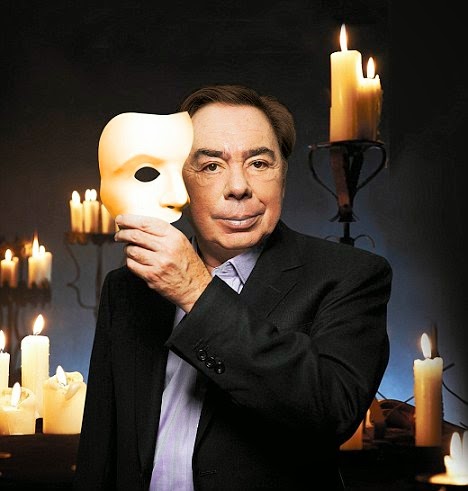
Andrew Lloyd Webber

One of the things I found amusing was that even chefs like Escoffier double dipped with their named recipes. When I saw the ingredients for Sole Waleska it struck a bit of a chord. Sure enough, Sole Verdi is pretty much Sole Waleska with pasta.
I guess a lobster, truffles and cheese sauce combination reminded Escoffier of famous composers and infamous countesses.

Marie Waleska (1786-1817)
First things first –– who was Waleska?
Marie Waleska was known for one thing, she was the mistress of Napoleon from 1806 -10. Marie was married in 1805 to Athenasius, Count Colonna-Walewski at 19, when he was nearly 80. Their son was thought to be illegitimate (born the same year they were married) and the marriage merely one of convenience to give the old man an heir and cover-up Marie’s transgression. She hooked up with Napoleon only a year after her marriage.
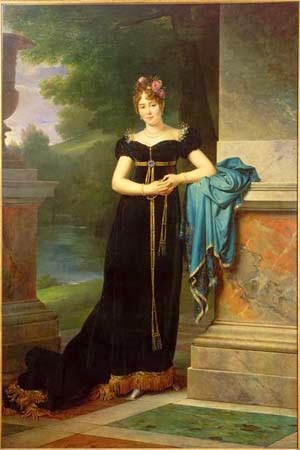
Walewska by François Gérard
Much has been made about the affair. Her purported memoirs asserted that she was doing it for King and country to capture Napoleon’s affection so completely that he would help to free Poland from the influence of Prussia, the Hapsburgs and Russia.
This romanticized view has been fairly thoroughly repudiated, although the splendid Garbo film, Conquest, paints a tragic love story with Marie a sacrificing heroine –– a story befitting a Garbo vehicle, accuracy be damned.

Greta Garbo as Marie Waleska in Conquest
Aside from illegitimate offspring, Napoleon’s Imperial orbit left many named dishes in its wake –– from the multi-layered pastry Napoleon, to the Belle Helene (a pear and chocolate confection that is out of this world) to Chicken Marengo (with egg and tomato, made on the battlefield for Napoleon who cared not a whit for food), as well as dishes named after his military heroes – like a Marshal Ney (a froth of a dessert with meringue, vanilla custard and marzipan) and of course, Sole Waleska.
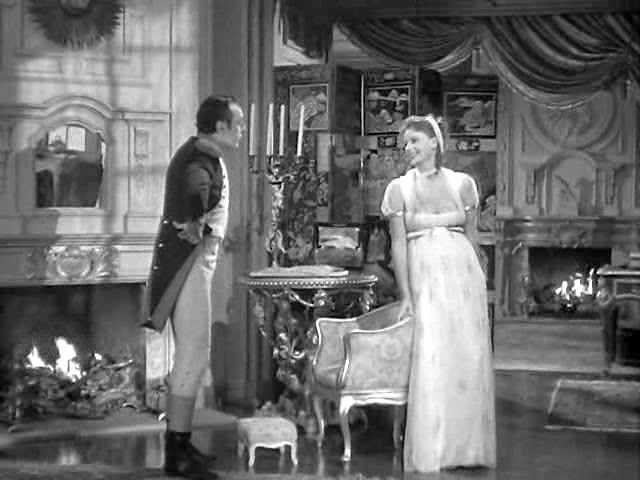
Greta Garbo as Waleska and Charles Boyer as Napoleon in Conquest
I am not sure when Filets of Sole Waleska first was served. It seems to begin showing up at the end of the 19th century.

Perhaps the popular Frédéric Masson 1897 biography of the countess renewed interest in the beautiful heroine and inspired chefs to name a luxury dish after a fabled Napoleonic mistress. It appears in Escoffier’s 1903 masterpiece, Le Guide culinaire and in turn of the century menus (the inspiration for writing this was mention of the dish as part of a 1898 menu at Café Royal in London for the critic of the Pall Mall Gazette (also on the menu, noisette d’agneau Lavallière, haricots verts à l’Anglaise, parfait de foie-gras and caille en cocotte).
One taste and you see why it was used by a restaurant to impress its patrons and honor a famous beauty. There is something in a name after all.
One taste and you see why it was used by a restaurant to impress its patrons and honor a famous beauty. There is something in a name after all.

Recipe from Escoffier’s Le Guide culinaire

Sole Walewska for 2
1 m. lobster tail or 2 small, cut from the shell
1 T D'Artagnan truffle butter or butter
2 large filets of sole or flounder or 4 smaller ones
1 cup fish fumet (stock)
1 T lemon juice
Mornay sauce (use what the recipe below makes)
slices of truffles (optional, but D'Artagnan has some lovely ones)
Heat oven to 350º. Gently sauté the lobster tail for a few minutes. Lay the sole topped with lobster tail in a buttered baking dish. Pour the fumet and lemon over it and warm slightly on top of stove. Place, covered in foil, in the oven for 10 minutes. Remove from the oven, and pour off the liquids. Preheat broiler. Then reduce the liquids till thickened. Add the reduced fumet to the Mornay. You can leave the tails whole or slice a large one in 2, lengthwise. Pour Mornay over the fish and broil till lightly colored.
Mornay Sauce
1 c béchamel
¼c fish reserved fumet
½ c grated Parmesan
½ c grated Gruyere
Add the fumet to the béchamel and reduce a little. Add the Parmesan and gruyere and stir till smooth.
Béchamel
1 c milk
1 small shallot, sliced
1 clove
2 T D'Artagnan truffle butter if possible or butter
1 ½ T flour
Heat the milk and simmer while you melt the butter. Add the flour to the butter and stir over low heat till all bubbly. Do not let it brown. Strain the milk. Pour the hot milk slowly into the flour mixture, stirring all the while over a medium heat till all the milk is used and the sauce is thickened. Add the cheeses and set aside.

1 m. lobster tail or 2 small, cut from the shell
1 T D'Artagnan truffle butter or butter
2 large filets of sole or flounder or 4 smaller ones
1 cup fish fumet (stock)
1 T lemon juice
Mornay sauce (use what the recipe below makes)
slices of truffles (optional, but D'Artagnan has some lovely ones)
Heat oven to 350º. Gently sauté the lobster tail for a few minutes. Lay the sole topped with lobster tail in a buttered baking dish. Pour the fumet and lemon over it and warm slightly on top of stove. Place, covered in foil, in the oven for 10 minutes. Remove from the oven, and pour off the liquids. Preheat broiler. Then reduce the liquids till thickened. Add the reduced fumet to the Mornay. You can leave the tails whole or slice a large one in 2, lengthwise. Pour Mornay over the fish and broil till lightly colored.
Mornay Sauce
1 c béchamel
¼c fish reserved fumet
½ c grated Parmesan
½ c grated Gruyere
Add the fumet to the béchamel and reduce a little. Add the Parmesan and gruyere and stir till smooth.
Béchamel
1 c milk
1 small shallot, sliced
1 clove
2 T D'Artagnan truffle butter if possible or butter
1 ½ T flour
Heat the milk and simmer while you melt the butter. Add the flour to the butter and stir over low heat till all bubbly. Do not let it brown. Strain the milk. Pour the hot milk slowly into the flour mixture, stirring all the while over a medium heat till all the milk is used and the sauce is thickened. Add the cheeses and set aside.


