Tag Archives: Georgia Monuments

Haitian Monument, 2009, Savannah

A bronze monument depicting Haitian soldiers, known as 'Les Chasseurs Volontaires de Saint Domingue', commemorating their service during the American Revolution, set in Franklin Square.
Les Chasseurs Volontaires de Saint Domingue, one of Savannah’s newest monuments, and one of its most significant acknowledgements of the city’s early Black history

The enthralling Haitian monument in Franklin Square, also known as “Les Chasseurs Volontaires de Saint Domingue”, is one of the most imposing in the city and one of the newest. It is the work of the late sculptor, James Mastin and commemorates the service of a regiment of Haitian soldiers who fought for the colonists during the American Revolution. It was installed in 2007 and the last statue added in 2009.

A granite monument in Franklin Square commemorating the Haitian soldiers known as 'Les Chasseurs Volontaires de Saint Domingue' who fought in the American Revolution, featuring sculptures of soldiers and inscriptions detailing their contributions.
A general view of the monument from the east

The octagonal base of the monument contains text on each panel:

(West face)
In its fourth year, the American Revolution had become an international conflict. Rebelling American Colonies and their French allies attempted to capture Savannah from the British in 1779. Haitian soldiers of African descent were part of the Allied forces. Following the battle, many of these Haitians were diverted to other military duties, returning to their homes years later, if at all. Several veterans of the campaign became leaders of the movement that made Haiti the second nation in the Western Hemisphere to throw off the yoke of European colonialism.

(Southwest face)
Although hundreds of other “Chasseurs Volontaires” remain anonymous today, a number of them are documented and listed below.
Pierre Astrel; Louis Jacques Beavais; Jean-Baptiste Mars Belley; Martial Besse; Guillaume Bleck; Pierre Cange; Jean- Baptiste Chavannes; Henri Christophe; Pierre Faubert; Laurent Férou; Jean-Louis Froumentaine; Barthélemy-Médor Icard; Gédéon Jourdan; Jean-Pierre Lambert; Jean-Baptiste Léveillé Christophe Mornet; Pierre Obas; Luc-Vincent Oliver; Pierre Pinchinat; Jean Piverger; Andre Riguad; Césaire Savary; Pierre Tessier; Jérome Thoby; Jean-Louis Villate

We Honor All Of Their Collective Sacrifices, Known And Unknown.

(South face)
Acknowledging the deeds of “Les Chasseurs Volontaires de Saint Domingue” at Savannah, American Secretary Of State Cordell Hull dedicated a commemorative plaque on April 25, 1944, at the Cathedral in Saint Marc, Haiti, with these words:
“Nous Payons Aujourd’hui Tribut Au Courage Et à L’Espirit des Volontaires Haitiens de 1779 Qui Risquèrent Leurs Vies Pour La Cause de La Liberté Dans Les Amériques.”
“Today we pay tribute to the courage and spirit of those Haitian Volunteers who in 1779, risked their lives in the cause of American Liberty.”

(Southeast face)
In the Battle of Savannah on October 9, 1779, “Les Chasseurs Volontaires de Saint Domingue,” our forefathers, fought alongside the American Army of General Benjamin Lincoln. Distinguishing themselves by their bravery, as part of the reserve, they provided cover during the retreat of American and French Allies, saving many lives by deterring a fierce counter attack of defending British troops.

(East face)
In the fall of 1779, over 500 “Chasseurs Volontaires” sailed from Saint Domingue, the modern island of Haiti. soldiers of African descent, “Les Chasseurs Volontaires de Saint Domingue,” left their families to participate in the Georgia Campaign, under French commander Charles Henri d’Estaing.

(Northeast face)
The drummer represents young Henri Christophe, who participated in the October 9, 1779 Battle of Savannah. Christophe later became a leader in the struggle for Haitian Independence from French colonial rule, ending in 1804. A commander of the Haitian army, he became King of Haiti, being among the first heads of state of African descent in the Western Hemisphere.

(North face)
The largest unit of soldiers of African descent who fought in the American Revolution was the brave “Les Chasseurs Volontaires de Saint Domingue” from Haiti. This regiment consisted of free men who volunteered for a campaign to capture Savannah from the British in 1779. Their sacrifice reminds us that men of African descent were also present on many other battlefields during the Revolution.

(Northwest face)
A Project of the Haitian American Historical Society, 2001- 2007:
Board of Directors
(List of 13 members)

A bronze statue of a Haitian drummer from the monument 'Les Chasseurs Volontaires de Saint Domingue', depicting him playing a drum in a military uniform with trees in the background.
The young drummer represents Henri Christophe, who participated in the Battle of Savannah and went on to become King of Haiti.

Savannah Historic District, National Historic Landmark
Catholic Cemetery, 1853, Savannah

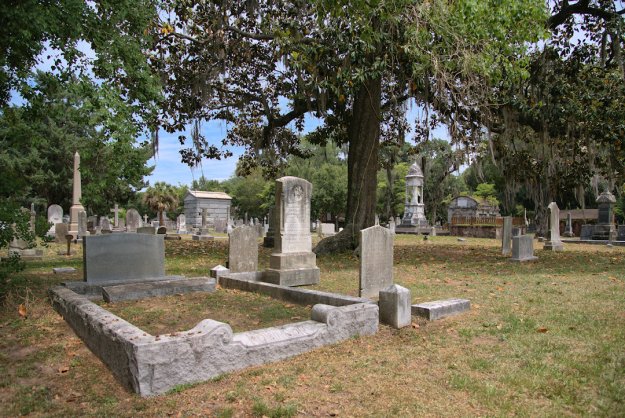
Savannah’s Catholic Cemetery was established by Bishop Francis Xavier Gartland (1805-1854) in 1853 when local politicians denied the congregation’s request for a specially consecrated section in Laurel Grove. An eight-acre purchase on the grounds of the former Rhinehart Plantation was the genesis of this large park-like necropolis. Many remains first buried in Colonial Park were re-interred here, which explains the memorials which predate the existence of the Catholic Cemetery. Surprisingly, this property is not listed on the National Register of Historic Places. While Bonaventure, Colonial Park, and the Laurel Grove cemeteries get scores of visitors, the Catholic Cemetery is often overlooked.

After the surrender of Savannah to General Sherman’s troops on 23 November 1864, Union soldiers encamped here for a time and are known to have desecrated graves. Some of these were restored in 1867 after pleas by Bishop Augustin Verot to President Andrew Johnson and Secretary of War Edwin M. Stanton. Several additions have expanded the cemetery over the years.

The memorials and monuments depicted here are presented in no particular order, and I will add more images in the future.

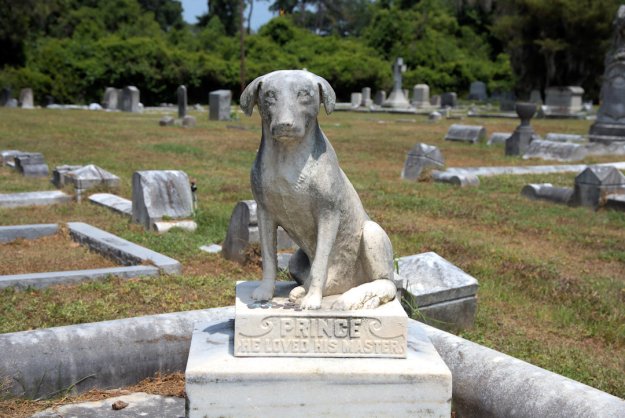
Prince – He loved his master

It’s rare to see pets buried in human cemeteries. Prince, a beloved companion of Patrick Hagan (1843-1912), is one of the most sought-out and photographed monuments in the Catholic Cemetery.

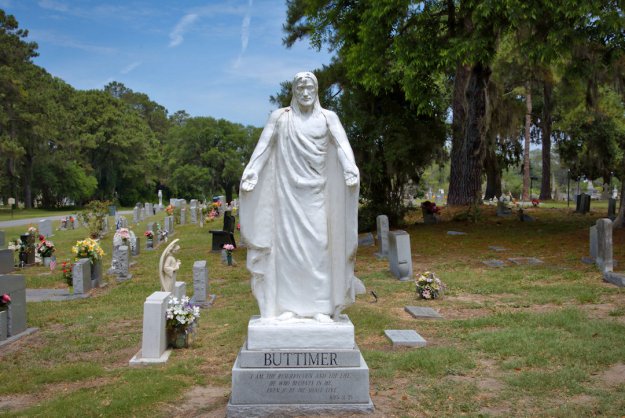
This depiction of a welcoming Christ graces a Buttimer family plot and is located near the cemetery entrance.

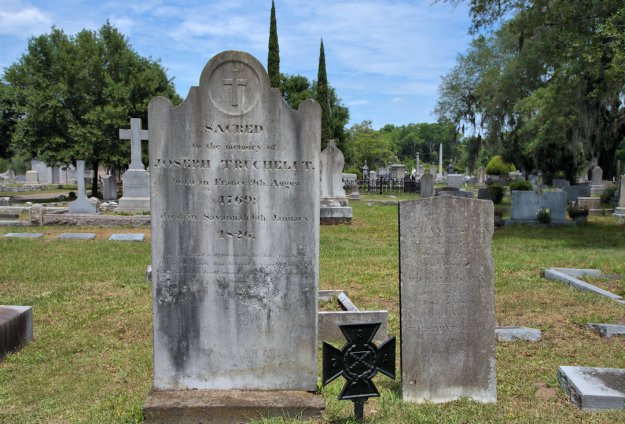
Joseph Truchelut (1769-1826)

This is one of two memorials for Joseph Truchelut, a native of Rehon, France. He was originally buried in Colonial Park and re-interred here in the 1850s.

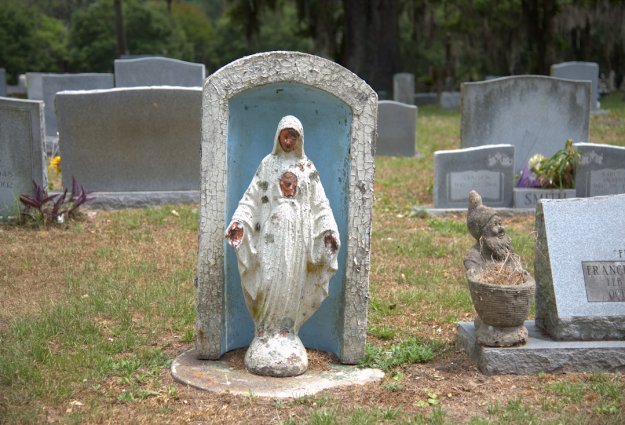
Kennedy family

This grotto, the only vernacular memorial I found in the Catholic Cemetery, is located beside the grave of Frank Kennedy.

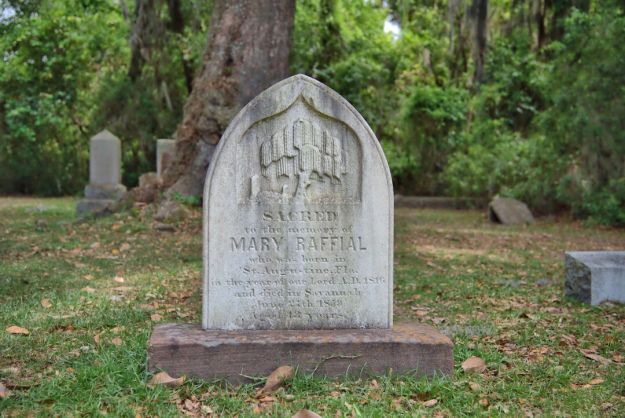
Mary Raffial (1816-1859)

Mary Raffial was born in St. Augustine and died in Savannah in 1859. The willow seen on her headstone was a common theme in Victorian funerary art, representing sorrow and the acceptance of loss.

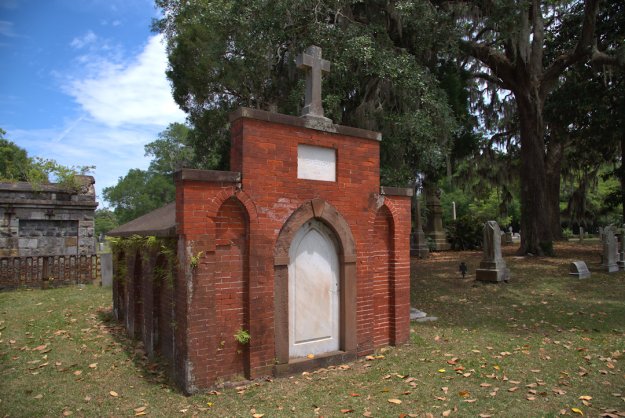
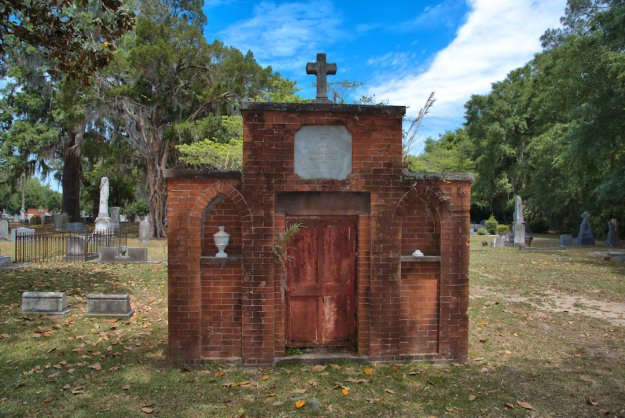
Hugh Cullens (unknown-1861) & family

This was the Hugh Cullens family vault. Cullens was a native of Ireland. Brick mausoleums of this design were popular in mid-19th century Savannah.

John Cass (1807-1859) & family

John Cass was an Irish immigrant. His obituary in the Savannah Morning News noted: “…Mr. Cass was, at the time of his death, the proprietor of the City Hotel, and Vice President of the Hibernian Society. His remains were followed to the grave…by the Chatham Artillery, members of the Hibernian Society, and a large concourse of citizens.”

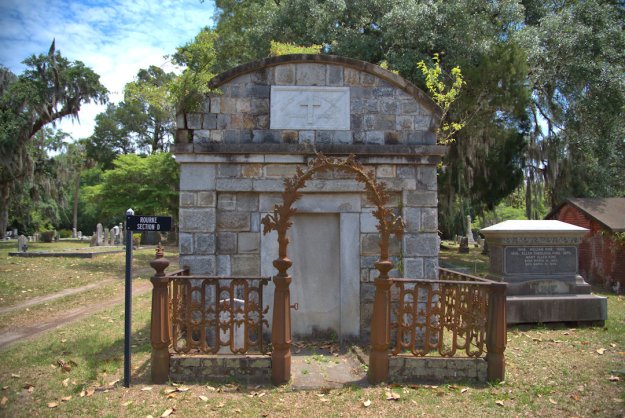
James Monahan (unknown-1879) & family

This is another typical 19th-century mausoleum design found in various Savannah cemeteries, with stacked granite and marble trim. Mr. Monahan was a private in Olmstead’s 1st Georgia Infantry during the Civil War.

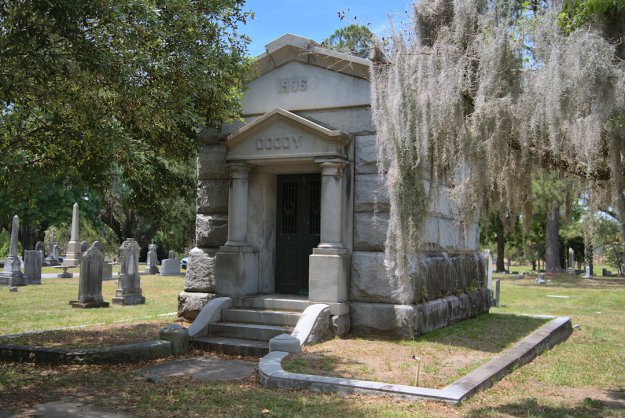
William Doody (1818-1873) & family

This mausoleum was installed in 1906. William Doody was an Irish immigrant.

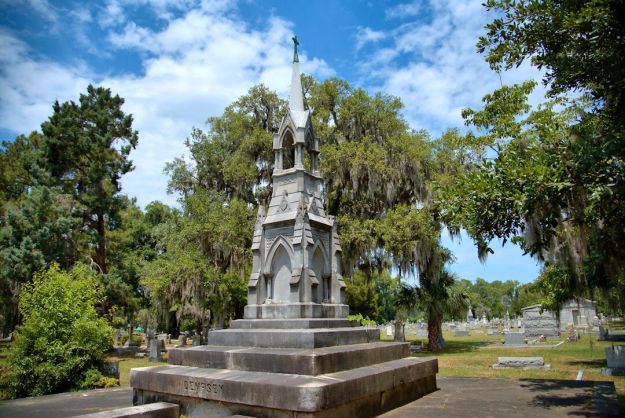
Dempsey family

This Gothic Steeple monument is unique in the Catholic Cemetery, though the style can be found in other historic Savannah locations.

John Rourke, Sr. (1837-1932) & family

John Rourke, Sr., immigrated to America from County Wicklow, Ireland. His wife, Johanna Reedy Rourke (1845-1940), was from County Limerick.

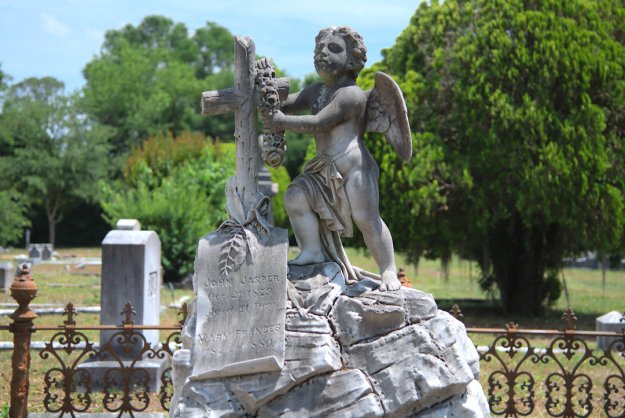
John Jasper Rourke (1879-1879) & Mary Frances Rourke (1874-1880)

A cherub and cross mark the final resting place of two of John and Johanna Rourke’s children.
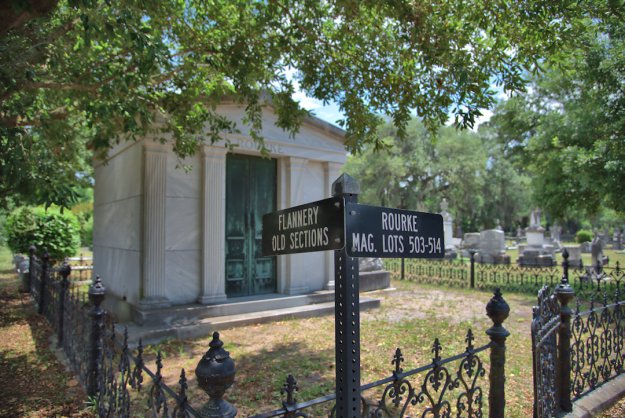
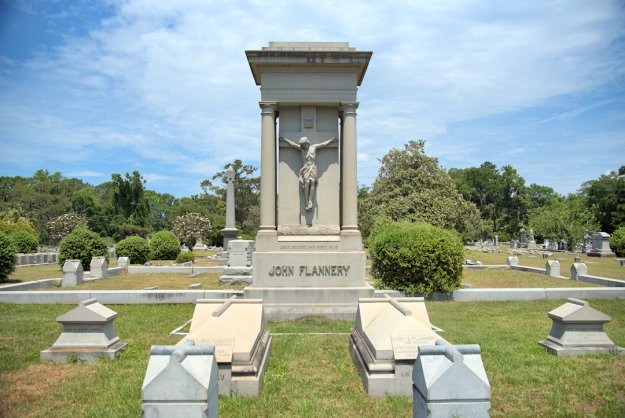
Capt. John Flannery (1835-1910) & family

John Flannery was an Irish immigrant, born in Nenagh, County Tipperary, who became one of the most prominent citizens of Savannah. The captain of the Irish Jasper Greens, he was beloved by his fellow soldiers and remained active in commemorations and parades honoring their service well into old age. He organized and served as president of the Southern Bank, which later merged with the Citizens Bank to become the Citizens and Southern Bank (C&S).

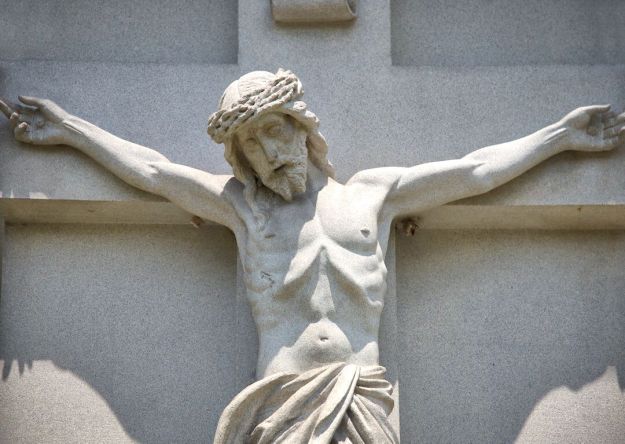
Capt. John Flannery monument (detail)

His monumental memorial, featuring a depiction of the crucified Christ, is among the most notable in the Catholic Cemetery.

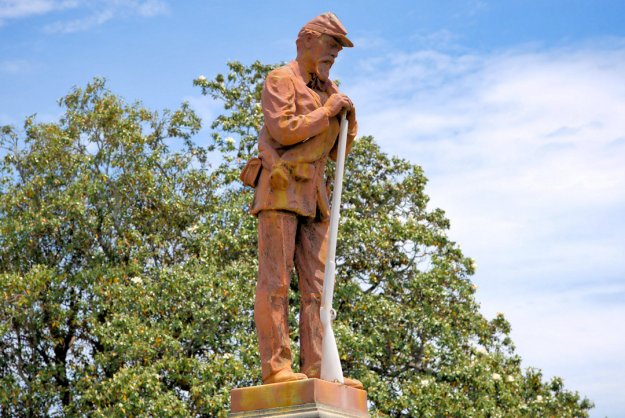
Irish Jasper Greens monument (detail)


This Confederate soldier, standing atop a much taller base, memorializes the 28 members of the Irish Jasper Greens who died during the Civil War. It was erected in 1910.

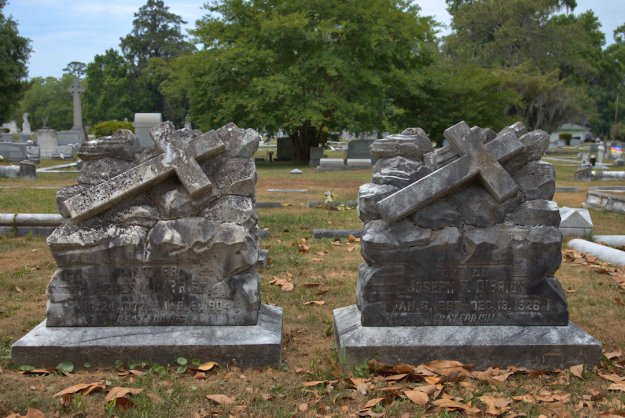
Joseph Francis O’Brien (1867-1928) and Agnes L. Fitzgerald O’Brien (1872-1904)

These cross memorials are quite impressive, and larger than they appear in the photograph.

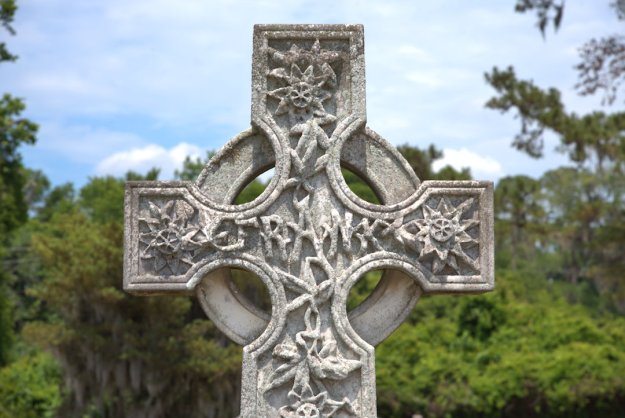
Francis James “Frank” Bohan (1871-1900)

This Celtic cross features the name “Frank” at the center.

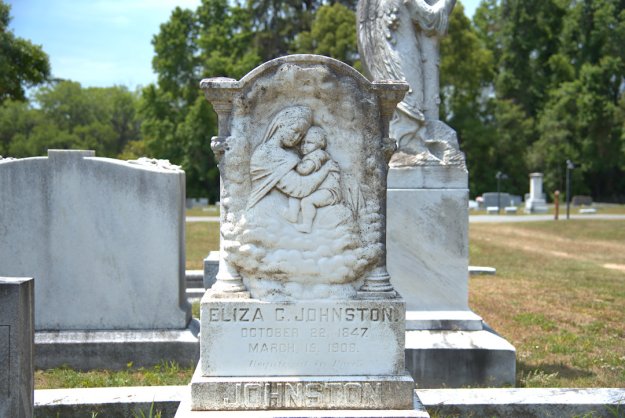
Eliza C. Brown Johnston (1847-1908)

A memorial published on the anniversary of Mrs. Johnston’s death in the Savannah Morning News on 15 March 1909 noted: “…Mrs. Johnston worked as a trained nurse under Dr. James B. Read for twenty-four years and, before the era of the professional trained nurse, was considered the best nurse that Savannah could boast of. She was noted for her many deeds of charity and cared as tenderly for those who could give no reward as if they were the wealthiest in the land…” Mrs. Johnston was a native of Charleston.

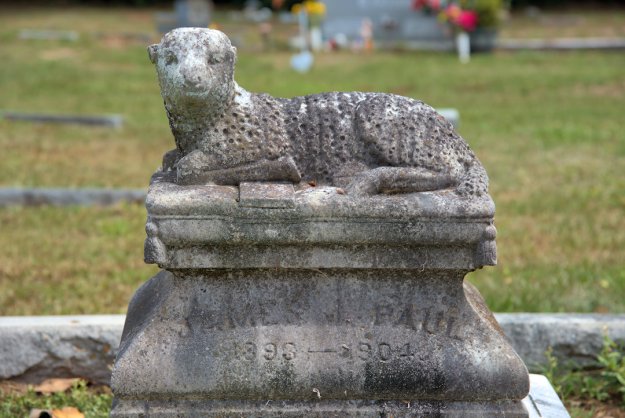
James J. Paul (1893-1904)

The lamb is a typical symbol on the graves of children. This memorial was created by Savannah’s most accomplished monument maker, John Walz.

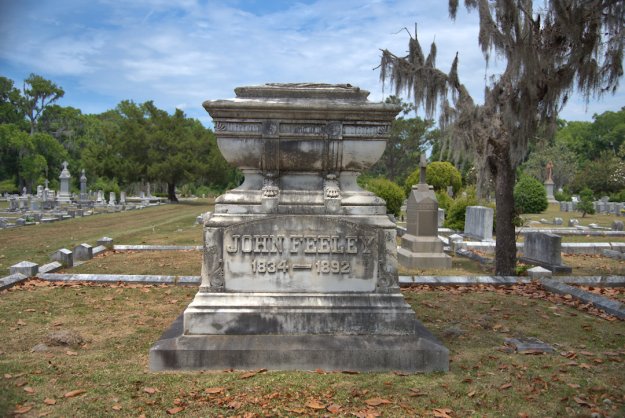
John Feeley (1834-1892)

This sarcophagus-style memorial features elements of the Egyptian Revival.

Natalie Caroline Bettelini Maggioni (1854-1915)

Mrs. Maggioni was a Swiss immigrant of Italian ancestry. Her memorial is quite beautiful.

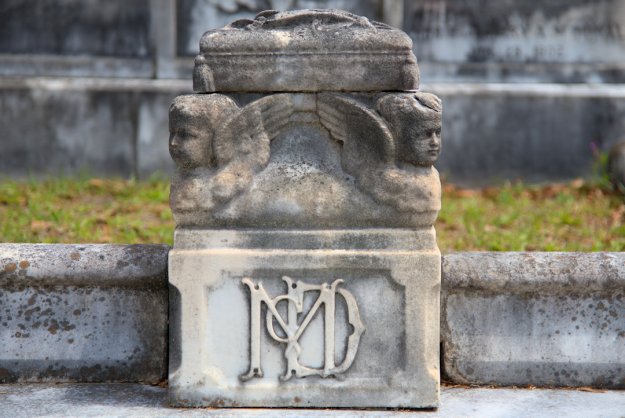
Drury-McDonald Memorial with John Waltz cherubs

Those familiar with Savannah cemeteries are likely aware of the work of John Walz. He is perhaps best known for his cherubs.

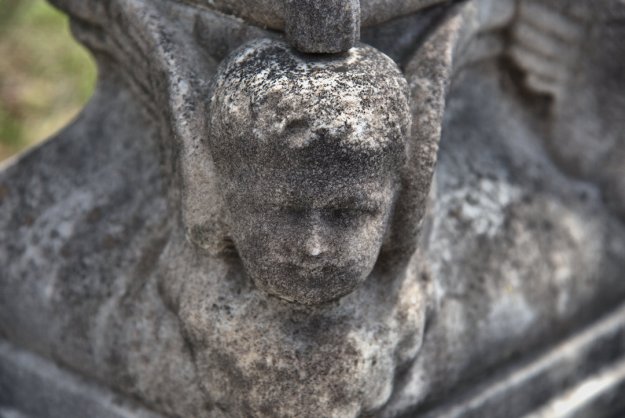
Drury-McDonald Memorial with John Waltz cherubs

These cherubs are often located at the corners of small pillar stones and are quite distinctive.

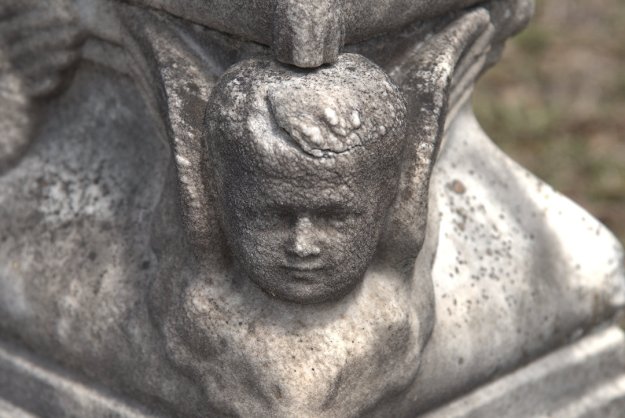
Drury-McDonald Memorial with John Waltz cherubs

They survive in various conditions.

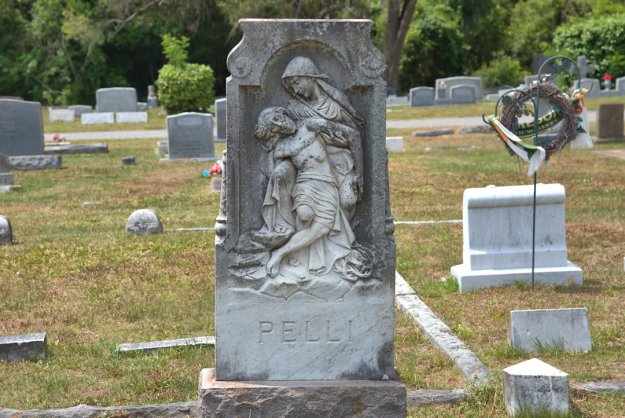
Joseph Pelli (1844-1913) & family

This memorial features a depiction of the Pietà.

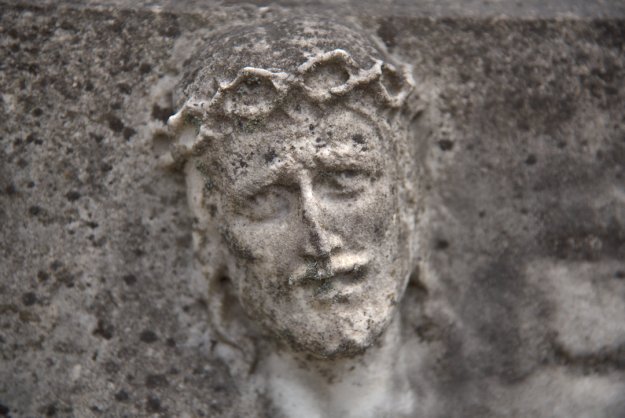
Fogarty family plot

Christ depicted with the Crown of Thorns is but a small part of this memorial, but quite poignant.

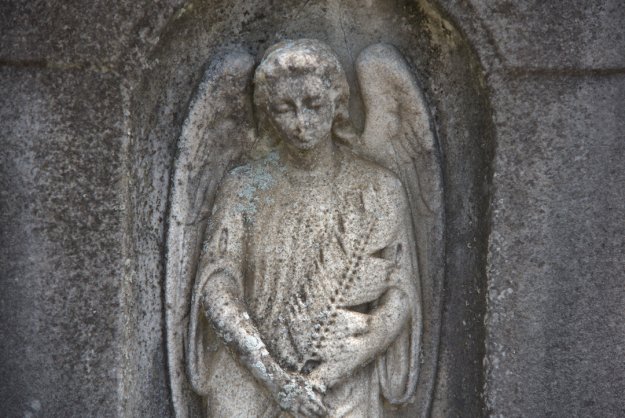
Lula Margaret Smith (1861-1897)

The angel in a grotto adorning the gravesite of Lula Margaret Smith was created by John Walz.

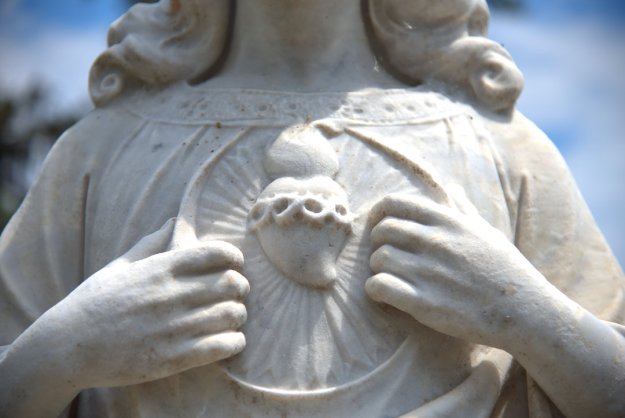
Katie Walker McGuire (1865-1954)

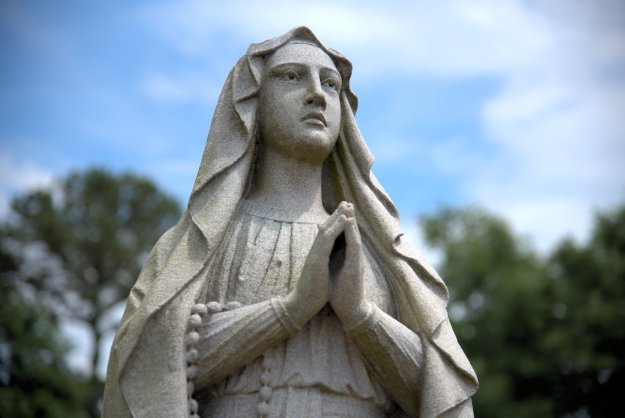
The Sacred Heart of Jesus is one of the most common symbols in Catholic iconography and is often depicted as pierced or flaming, surrounded by thorns.

Chenube Indian Village Monument, 1936, Parrott

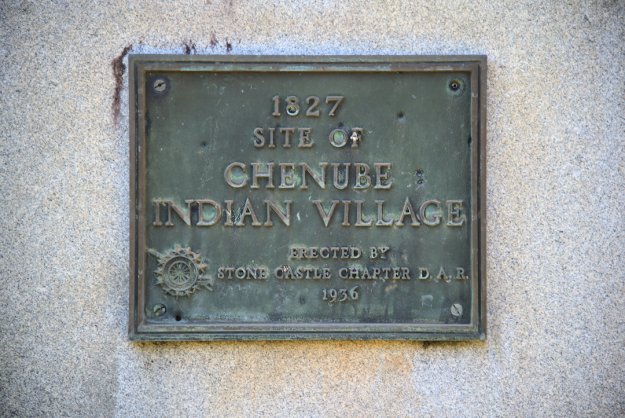
This granite and bronze monument is located just south of Parrott, but you’d be hard-pressed to find it unless you were really looking. The bronze plaque is pockmarked with bullet holes and access is via a very small culvert off a busy highway. I had to pull a few weeds away just to get the photographs.

It was erected by the Stone Castle Chapter of the Daughters of the American Revolution in 1936, which was 99 years after the date of 1827 given for the existence of the village.

Information on Chenube is scarce, but it is linked permanently with the history of Parrott. According to a genealogy page focused on the Parrott family, “In 1834 James purchased 815 acres of land in what was then Randolph County and was called by the Indian village name Chenube...” An 1887 issue of the Dawson News referred to the community as Chenubia.

The indigenous people of the area were under constant threat by the growing numbers of White settlers taking over their lands. On 27 July 1836, the Battle of Echowaynochaway Creek, the last known engagement between the Creek people and the Randolph County settlers took place nearby. Three White men and eighteen Creek died in the engagement.

Few Monument, 1849, Oxford

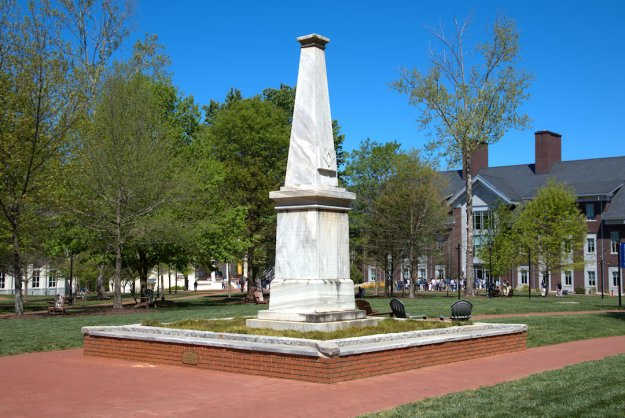
The oldest and most prominent monument on the quad of the Oxford campus is this obelisk, presumably of Georgia marble, erected in 1849 in memory of the school’s first president, Ignatius Alonso Few (1789-1845), by the Phi Gamma and Few Societies and the Grand Masonic Lodge of Georgia. Few was the founding director of the Georgia Conference [Methodist] Manual Labor School, predecessor to Emory College, and the first president of Emory College.

Oxford Historic District, National Register of Historic Places

Roberta, Georgia

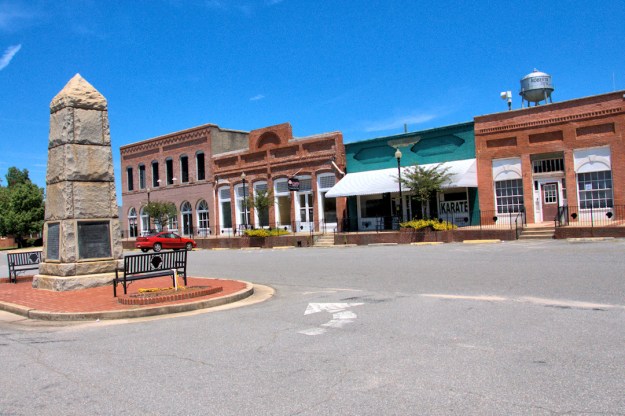
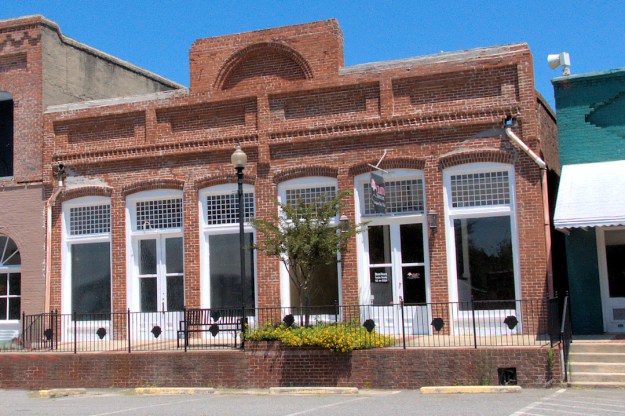
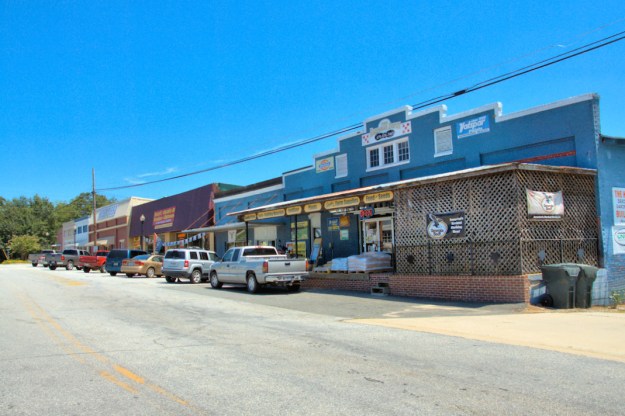
Wright Avenue, the heart of downtown Roberta. The Benjamin Hawkins monument is in the foreground. The two-story building at left was the Crawford County Bank and the Bank of Roberta from 1900-1928 and the post office from 1929-1962.

When the Atlanta & Florida Railway bypassed Knoxville in 1888, opting to build a depot about a mile away, the settlement of Roberta began. It was originally known as New Knoxville, after the county seat. When Hiram David McCrary (1847-1912) and James Mathews gave the right of way for the railroad, McCrary, who was also an active entrepreneur, was allowed to choose a name for it. He chose Roberta, in honor of his daughter*. *-Mattie Roberta McCrary Champion (1881-1977)

General Store, circa 1890s. In 1922, it became the R. E. Bankston Store.

The old Bankston Store is a great example of restoration. It’s located adjacent to the bank/post office building.

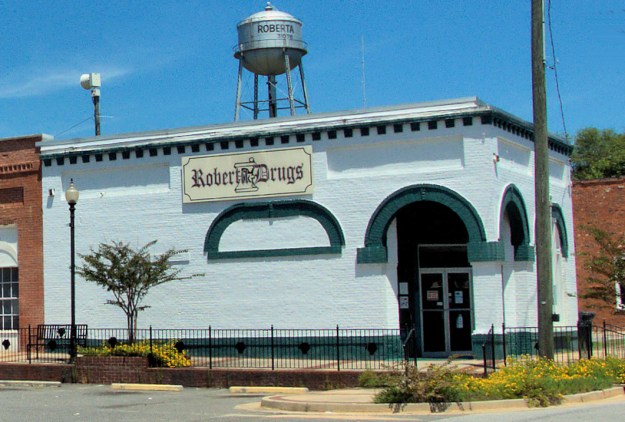
Roberta Drugs (I found the photo). This is the oldest operating business in Roberta.

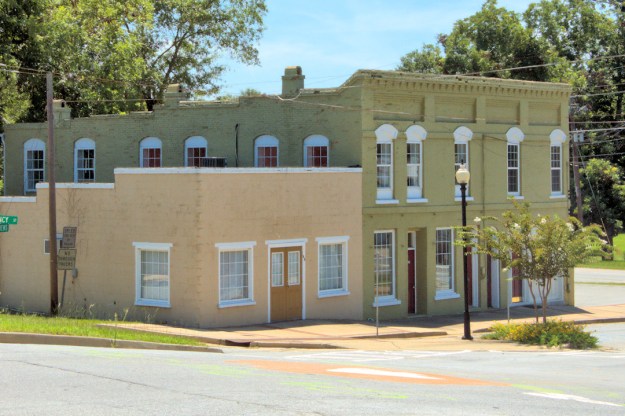
The corner entrance was a popular commercial style in the early 20th century.

East Agency Street, named for the Creek Agency headquartered here in the days of Benjamin Hawkins.

I made these photos a few years ago, so some of these business have been repainted. For a small town, Roberta does a good job of maintaining its historic commercial structures and still uses them all, as best I can see. I don’t encounter that in many places.

West Agency Street

Roberta Historic District, National Register of Historic Places

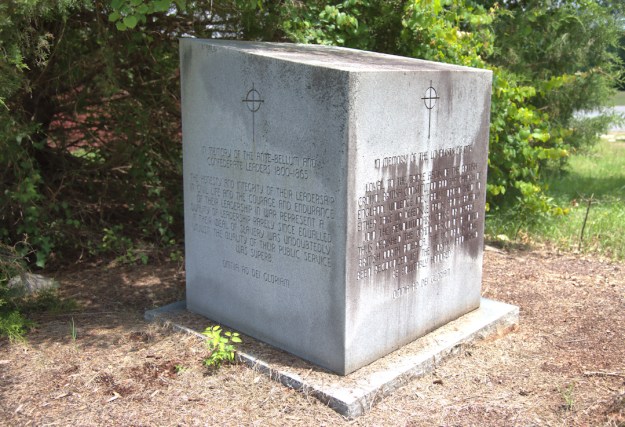
Danburg Monolith

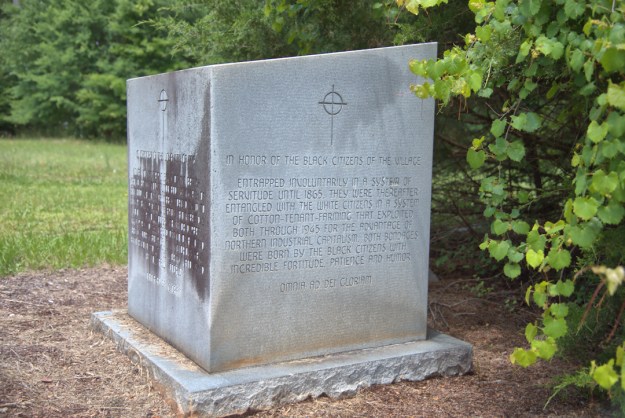
This monolith of Elberton Blue Granite is located near the crossroads in Danburg. It’s a fairly unusual monument considering its progressive views on African-Americans. I think it’s a great landmark.

TOP: The Village of Danburg was settled circa 1825 by Samuel Danforth of Vermont and Massachusetts at this intersection of two important trade routes, the Augusta Road into North Georgia and the Abbeville, S.C. Milledgeville GA Road. The original name of the village was Danforthtown. Amongst the families settling early in the village were the Andersons, Danforths, McLendons, Reabs, Shumates, Stathams, Suttons, Waltons and Wheatleys. They quickly created an atmosphere of education and cultural refinement, and the village was long a noted regional social center. This memorial to honor the village is erected to the Glory of God and in memory of Walter Lee Sutton 1863-1947 by his obedient grandsons WLC CDS JSS CES, Jr

FRONT: In Memory of the Loyalists of 1776– Loyal to the triple aegis of the British Crown, British Constitution and the Church of England, violence inevitably forced them to either take up defensive arms, faintheartedly join the Revolutionary cause or depart. The victorious have been recognized; let the worthy vanquished be equitably honored.-Omnia Ad Dei Gloriam

LEFT: In Memory of the Ante-Bellum & Confederate Leaders 1800-1865-The honesty and integrity of their leadership in civil life and the courage and endurance of their leadership in war represent a quality of leadership rarely since equaled. If their ideal of slavery was undoubtedly unjust, the quality of their public service was superb.-Omnia Ad Dei Gloriam

BACK: In Memory of the Veterans of the 1914-1918 War and the 1939-1945 War-Twice in this century men from the village went with American contingents to the assistance of Great Britain, our Motherland and her ally France, both engaged in a deadly struggle with Prussian militarism – Hitlerism. The sacrifices of these countries which gave us time to arm ourselves and of our men who served leave future generations yet deeply indebted.-In Memory of the Veterans of the 1950-1953 Korean War and the 1965-1973 Vietnam War-Our debts to these veterans are equally vast, for their sacrifices were too often undervalued by the public at the very time they were being made. Omnia Ad Del Gloriam

RIGHT: In Honor of the Black Citizens of the VillageEntrapped involuntarily in a system of servitude until 1865, they were thereafter entangled with the white citizens in a system of cotton-tenant-farming that exploited both through 1945 for the advantage of northern industrial capitalism. Both bondages were born by the black citizens with incredible fortitude, patience, and humor.-Omnia Ad Dei Gloriam

Peanut Monument, 1954, Blakely

A monument to the peanut might seem strange, but not so in Early County, which is one of the leading producers of this valuable crop in the entire state, with over 100 million pounds harvested in 2021. Located on the northeast lawn of the courthouse, it reads: The people of Early County, the largest peanut producing center in the world, have erected this monument in tribute to the peanut, which is so largely responsible for our growth and prosperity. Not only has it contributed to the higher living standards of the people engaged in its producing, manufacturing and marketing, but has also become important to the better health of the people of the world, as it is the source of some of our most nutritious and beneficial foods.

Peanuts remain central to the economy of Southwest Georgia.

Blakely Court Square Historic District, National Register of Historic Places

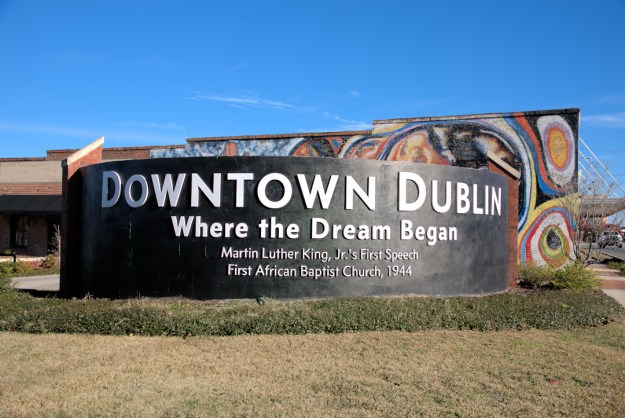
Martin Luther King, Jr. Monument Park, Dublin

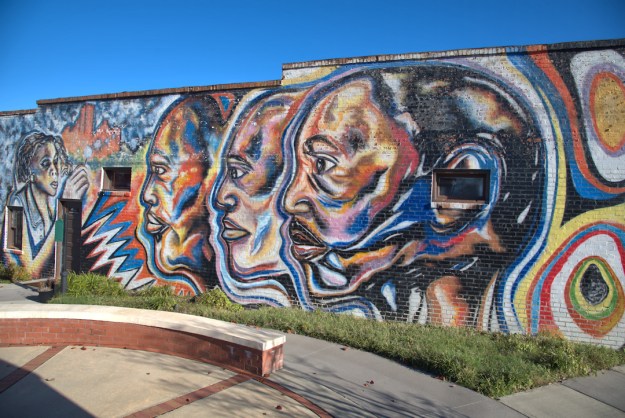
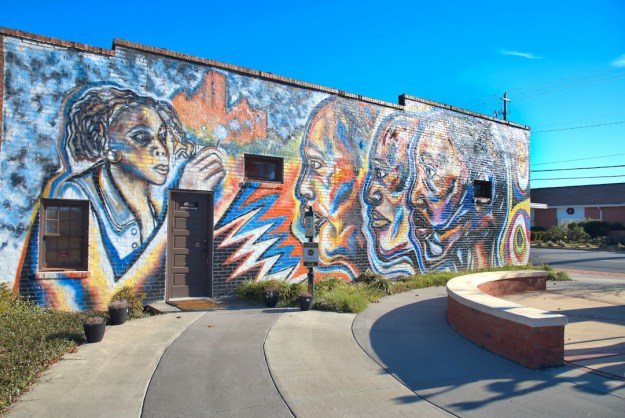
This mural, completed in 2018, imagines a young girl’s hope for a better tomorrow and is the highlight of Martin Luther King, Jr. Monument Park, at the gateway to downtown Dublin.

Located across from the First African Baptist Church, it honors Dr. King’s first speech and the roots of the Civil Rights movement that sprung from it. It is the work of Atlanta artist Corey Barksdale.

It’s a small park, but packs a lot of history and art into the space. An audio program can be activated, telling the story of King’s important visit to Dublin.

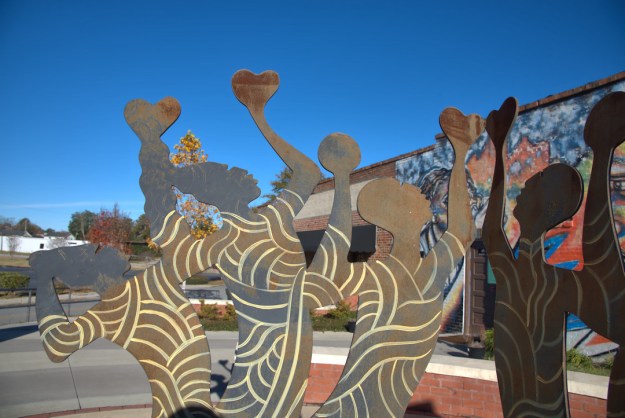
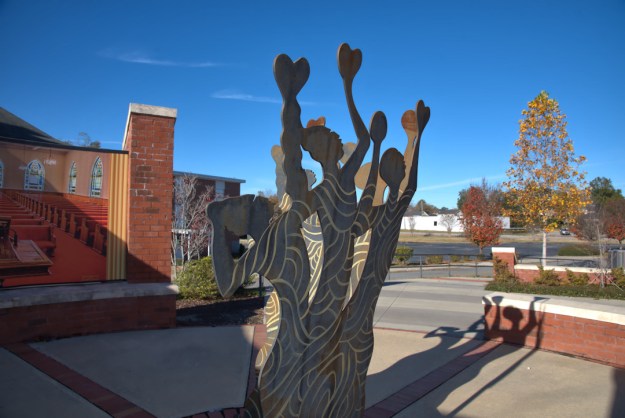
A beautiful sculpture by Mr. Barksdale, Freedom Ascension, is also located in the park.

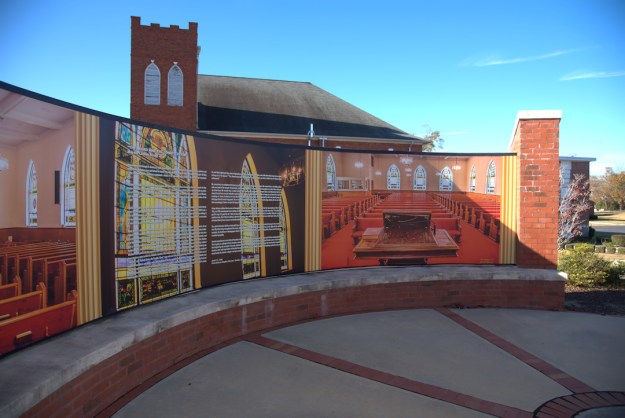
A nice photo mural by Randall Gearhart features the interior of the church.

In addition to the work in the park, a sculpture by Dublin resident Juan Lleras honoring the architecture of First African Baptist Church and hopeful for a new generation to carry Dr. King’s legacy forward, is located across the street in the churchyard.

Footsteps of Dr. Martin Luther King, Jr. Trail

Monuments at Chickamauga & Chattanooga National Military Park, Catoosa County

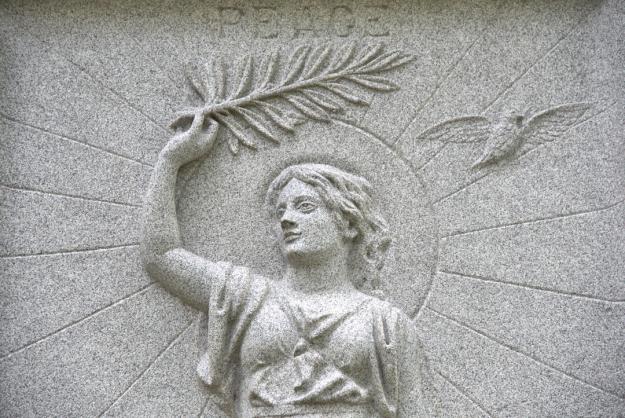
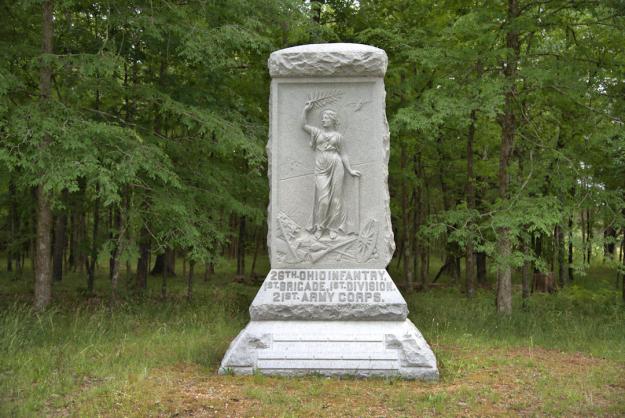
Detail of 26th Ohio Infantry Monument [Peace Monument]

There are over 500 monuments and markers within the Chickamauga & Chattanooga National Military Park, the majority of which were placed between 1890-1910. This is a very small sampling of them and in no particular order or preference. It would take several days to document them all. Text from the monuments or accompanying markers is included, as well as the dates they were erected. These monuments represent the greatest collection of public sculpture in Georgia and even someone with little interest in the Civil War should appreciate them from an aesthetic perspective.

26th Ohio Infantry, 1st Brigade, 1st Division. 21st Army Corps. (Erected 1894 by the State of Ohio)

This Regiment, Lieutenant Colonel William H. Young commanding, occupied a position at Lee and Gordon’s Mills from the afternoon of September 18th, 1863, till about 3:00 P.M. September 19th, when it was ordered at double quick to this position. It went into action at this place about 4:00 P.M. and continued in action the line alternately advancing and receding, till about 6:00 P.M.
September 20th, it first occupied a position near the Brotherton House till about 11:00 A.M. when it was ordered with the Division to the left at double quick. While executing this movement by the flank, it was struck by the advancing enemy and forced to the ridge near the Vidito Place. It there rallied and fought until it lost connection with the rest of the Army and finally retired to Rossville.
Number Engaged, Commissioned Officers 23: Enlisted Men 354: Loss, Killed, Officers 5: Enlisted Men 23: Wounded, Officers 6: Enlisted Men 133: Captured or Missing 45: Aggregate 212: Most of this occurred on the 19th.

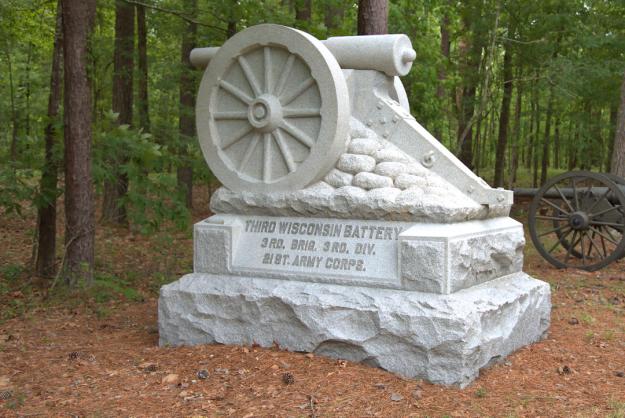
Third Wisconsin Battery. 3rd [Barnes’s] Brig. 3rd [Van Cleve’s] Div. 21st Army Corps. (Erected 1890 by the State of Wisconsin)

About 1:30 p.m. the battery with Barnes’ Brigade moved from the line near Lee and Gordon’s Mill to this position. By order of Major Mendenhall the battery came into position on the right of the 2nd Minnesota Battery, southeast of the Viniard house. The battery fired until a battery on the left was captured by the Confederates, when it limbered up and returned to this position, opened fire on the woods filled with the enemy, checking his advance. The brigade having been driven back rallied and took position on each flank of the battery. From this position the battery opened a very effective enfilade fire on the enemy in the Viniard cornfield. This position was retained with slight changes until 2 a.m. of the 20th.

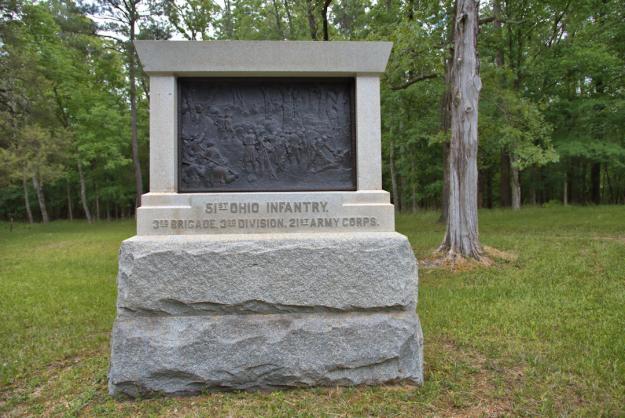
51st Ohio Infantry. 3rd Brigade. 3rd Division. 21st Army Corps (Erected 1894 by the State of Ohio)

September 18th, 1863, this Regiment, Colonel Richard W. McClain commanding, was under fire of the enemy at Class’ Mill. At 5:00 P.M. ordered to a position about one half mile north of Lee and Gordon’s Mills, where we lay on our arms all night.

September 19th, about 3:00 P.M. became heavily engaged in the timber southeast of this point and near Hall House, the engagement lasting till about 6:00 P.M. when being overpowered, were forced to retire.

September 20th, marched to the extreme left of our line, charged and drove the enemy at 10:30 A.M. and occupied a position near General Baird’s left until the Union troops were ordered to retire to Rossville. In consequence of this retirement without notice, to this Regiment, it became involved with the enemy and part of it was captured.

Loss, killed 8; wounded 35; captured or missing 55; total 98. Organized at Camp Meigs, Ohio, October 3d, 1861. Mustered out October 3d, 1865, at Victoria, Texas, by Captain William Nicholas, Commissary of Musters.

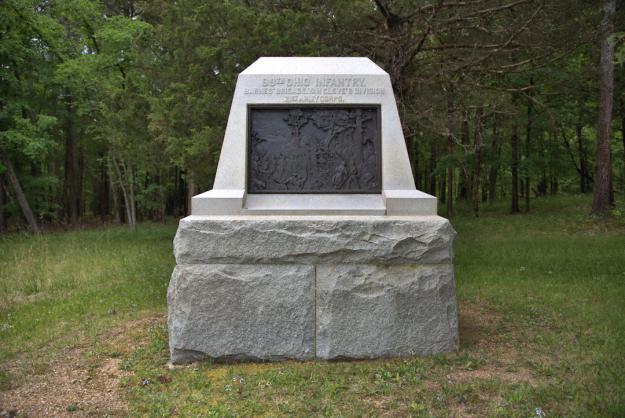
99th Ohio Infantry. Barnes’ Brigade, Van Cleve’s Division. 21st Army Corps. (Erected 1894 by the State of Ohio)

This regiment, Colonel Peter T. Swaine commanding, moved with the brigade into action September 19, 1863, at 3:30 P.M., advancing in an easterly direction from this point, through a dense woods; was attacked by a superior force on front and flank; after a spirited battle, lasting till near 5:30 P.M. was forced to retire, which was done in good order.

September 20, at 10:30 A.M. engaged the enemy near General Baird’s left, at the north end of Kelly’s Field, maintaining position there until the Army retired to Rossville at night.

Loss, killed 3; wounded 30; captured or missing 24; total 57.

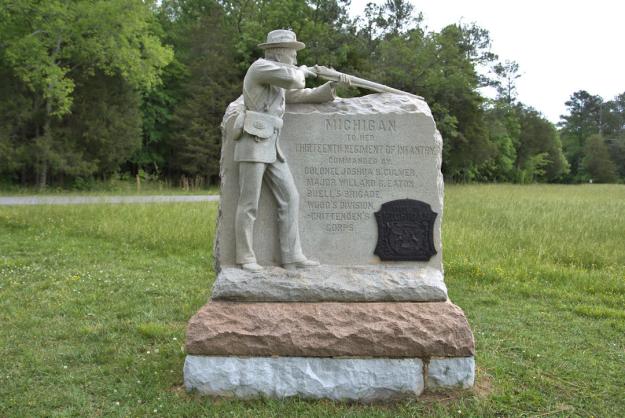
13th Michigan Infantry. Buell’s Brigade, Wood’s Division, Crittenden’s Corps. (Erected 1895 by the State of Michigan)

This monument marks the position where the regiment performed its most important service.

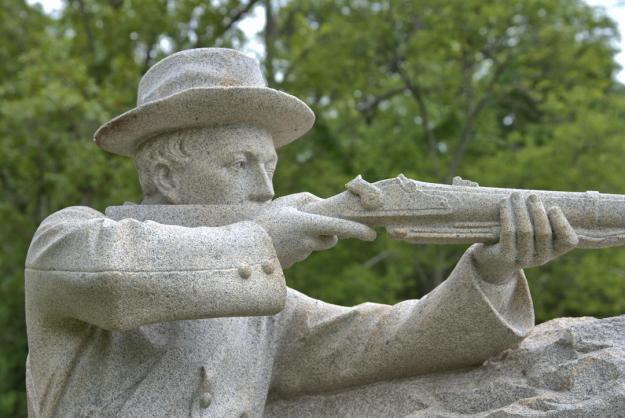
Detail of 13th Michigan Infantry Monument

Sept. 19th, 1863. Casualties: Engaged 217. Killed 14. Wounded 68. Missing 25. Total Loss 107. On the 18th of September 1863 the regiment occupied a position near Lee and Gordon’s Mill on the 19th at 2:30 PM, moved to this position where it was engaged until dark on the 20th. Moved with its brigade to the left, where it was engaged near the right flank of the army until night closed the battle.
Detail of 58th Indiana Infantry Monument

58th Indiana Infantry. 1st Brigade-Buell. 1st Division-Wood. 21st Corps-Crittenden. (Erected 1897 by the State of Indiana)

This Regiment formed line of battle about 2:40 p.m., September 19th, charged the enemy, driving him from Viniard House across and east of LaFayette Road, and reformed on line with this monument, where a severe engagement ensued, with very heavy loss during the afternoon. Morning of September 20th went into position at Brotherton Farm and was soon hotly engaged. Moved at 11 a.m. with its Brigade to the left, and became involved in the break at the center. A considerable portion of the Regiment rallied on Snodgrass Hill and remained till the close of the battle. Loss in battle: Killed 16; wounded and missing 155.

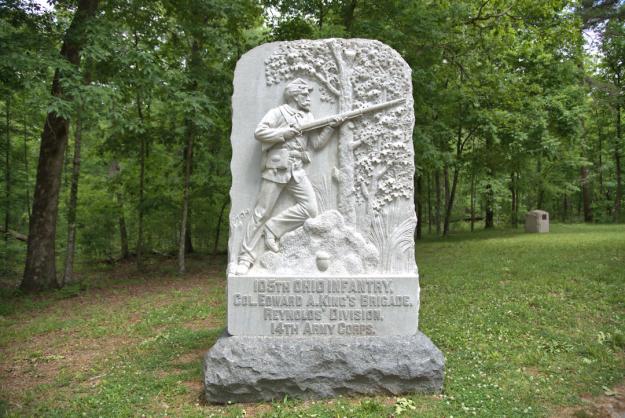
105th Ohio Infantry, Col. Edward A. King’s Brigade, Reynolds Division, 14th Army Corps. (Erected 1894 by the State of Ohio)

September 19th, 1863, from about 3:00 P.M. to 4:30 P.M. this Regiment, Major George I. Perkins commanding, was engaged about 600 yards East of the Brotherton House. The success of the enemy at that time on that part of the line compelled it to retire, and it was rallied and reformed in this position, which it also occupied on the 20th, till about 1:00 P.M., when the retirement of Brannan’s Division to Snodgrass Hill made it necessary to take a more refused position facing South.

Loss, Killed 3: Wounded 41: Captured or Missing 26: Total 70.

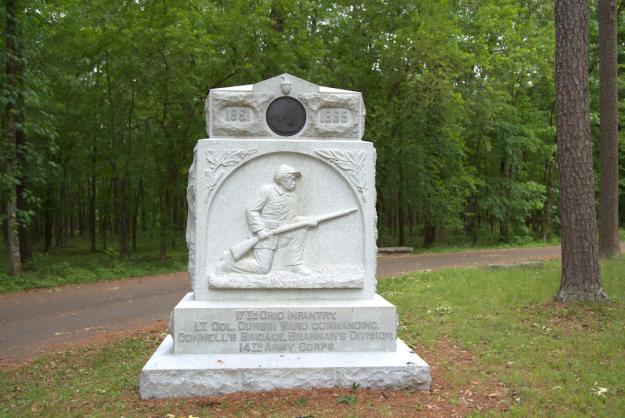
17th Ohio Infantry. Lt. Col. Durbin Ward Commanding. Connell’s Brigade, Brannan’s Division. 14th Army Corps. (Erected 1894 by the State of Ohio)

September 19th, 1863, from about 10:00 A.M. to 11:00 A.M. the Regiment was engaged on the right of Van Derveer’s Brigade, about one mile east of the Lafayette road, and a few hundred yards south of the Reed’s bridge road.

September 20th, was in the first line of battle in this position until 12:00 noon when General Wood’s Division vacated the line on its right, then being assailed in front and on the its right flank, was driven beyond the range of hills west of here and became separated from the left of the Army. Later in the day Lieutenant Colonel Ward was wounded. The command thereafter devolved on Major Butterfield. A detachment of the Regiment rallied on Snodgrass Hill and fought till the Army retired at night. Loss, killed 16: wounded 114: captured or missing 21: total 151.

Chickamauga & Chattanooga National Military Park + National Register of Historic Places
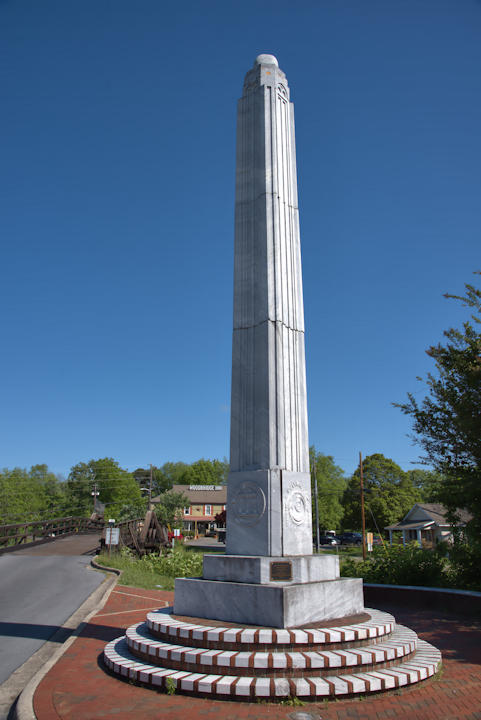
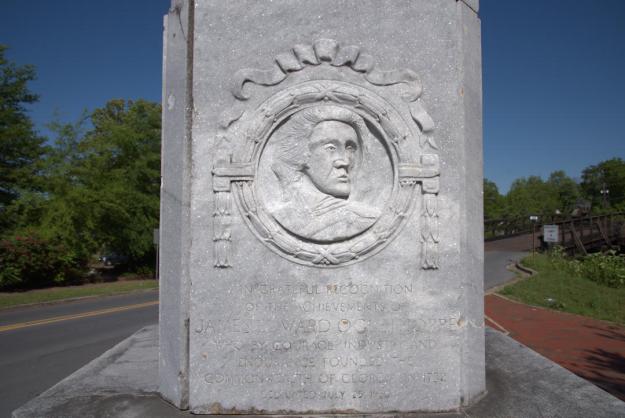
Oglethorpe Monument, 1930, Jasper

This 38-foot obelisk was designed and dedicated by Sam Tate in 1930, 10 miles east of Jasper on Mount Oglethorpe (Grassy Knob), with Governor Lamartine Hardman in attendance. [The mountain was officially renamed Mount Oglethorpe at this time, as well]. It was carved by James Watt of locally quarried Cherokee marble. Georgia’s bicentennial in 1933 brought out many tributes to Oglethorpe but the Pickens County monument is one of the nicest. It stood on Mount Oglethorpe until 1958 and was restored and moved to this location across from the old Pickens County Jail in 1999.