
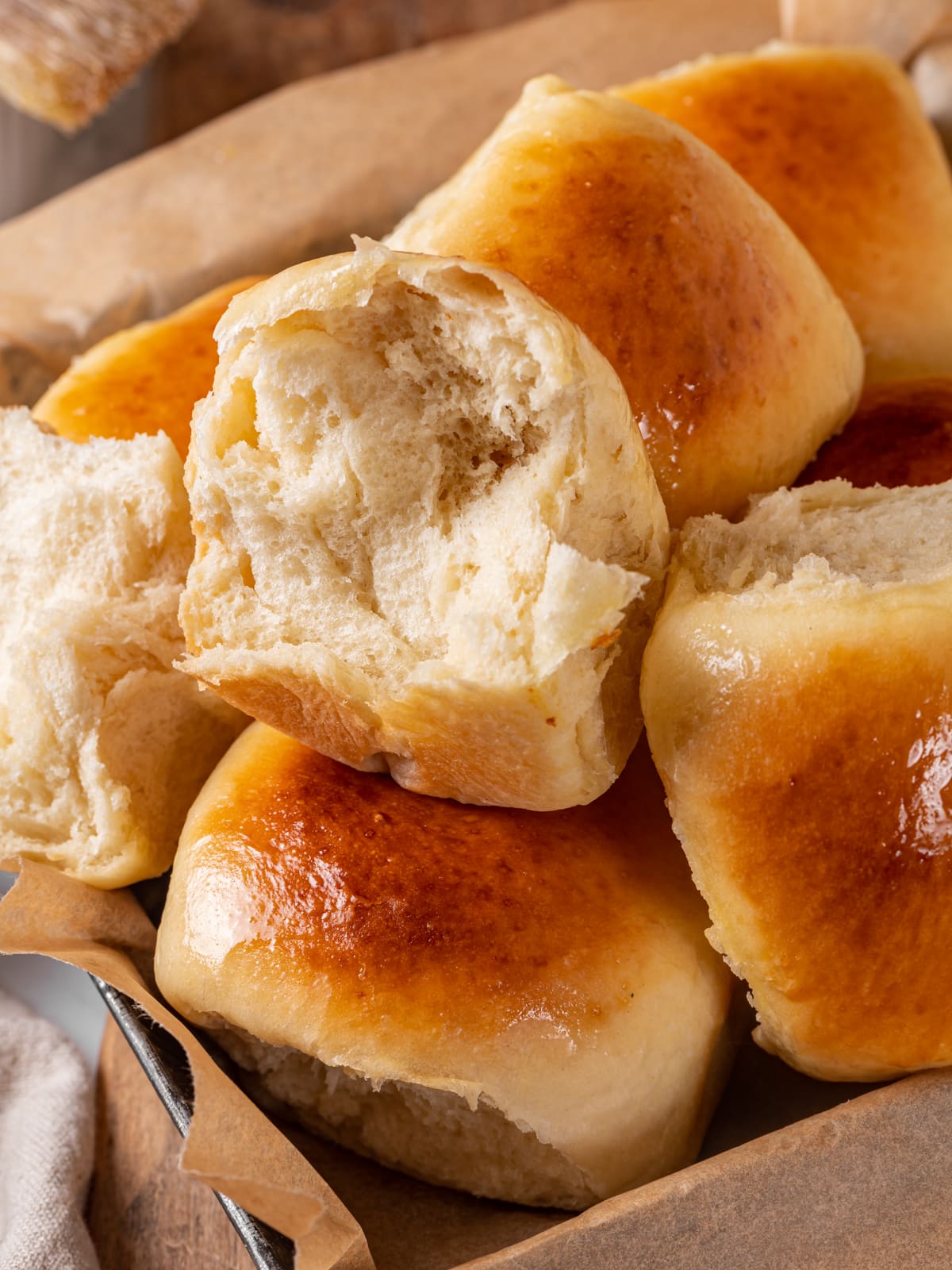
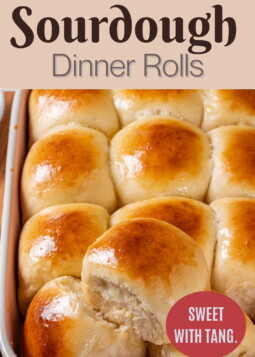
Soft, fluffy, slightly sweet sourdough dinner rolls that are ready in just 2 ½ hours. These pillowy dinner rolls will quickly become a family favorite!
A Quick Look At The Recipe
This is a brief summary of the recipe. Jump to the recipe to get the full details.
Prep Time
20 minutes
Cook Time
25 minutes
Proof
1 hour 45 minutes
Total Time
2 hours 30 minutes
Servings
12 rolls
Difficulty
Includes multiple easy steps; shaping requires a bit of practice.
Calories *
210 kcal per serving
Technique
Mix dough in a stand mixer, knead to develop gluten, shape into rolls, proof, and bake.
Flavor Profile
Soft, tender, slightly sweet rolls with a gentle tang and a rich buttery finish.
* Based on nutrition panel
“I kept saving my sourdough discard without really knowing what to make until I came across your sourdough discard recipes post. I’ve been making these rolls and the crackers on repeat! I love that I can use a whole cup of old discard to make fluffy rolls in a few hours! My nephews adore them. ” ⭐⭐⭐⭐⭐
Lauren
Why You Will Love This
- A soft, pillowy texture: The combination of sourdough discard and instant yeast give these rolls an airy, tender crumb that rivals bakery-style dinner rolls.
- Slightly sweet, subtly tangy flavor. The sugar enhances the natural sweetness while the sourdough discard adds a gentle tang.
- A recipe that works with any discard. I found that when additional commercial yeast is added, the age or activity level of your sourdough starter really doesn’t matter; you can use whatever you have on hand.
- Perfect for any meal or occasion. Serve them warm, brushed with butter, alongside soup, or use them for sliders; these rolls are versatile, irresistible and easy for any level baker.
Table of Contents
Soft, pillowy, and subtly tangy, these 2 hour sourdough dinner rolls are the perfect addition to any meal, from a simple weeknight dinner to a festive holiday spread. They’re delightfully fluffy with a tender crumb and a slightly sweet undertone, reminiscent of Hawaiian Rolls, but made with the wholesome tang of sourdough discard.
Whether your sourdough starter is active, recently fed, or a few weeks old from the fridge, these rolls are forgiving and adaptable. Transform your discard into soft, fluffy rolls. This same adaptability makes recipes like my sourdough discard bagels and sourdough discard crackers so reliable, no matter what stage your discard is in.
Ingredients & Substitutions
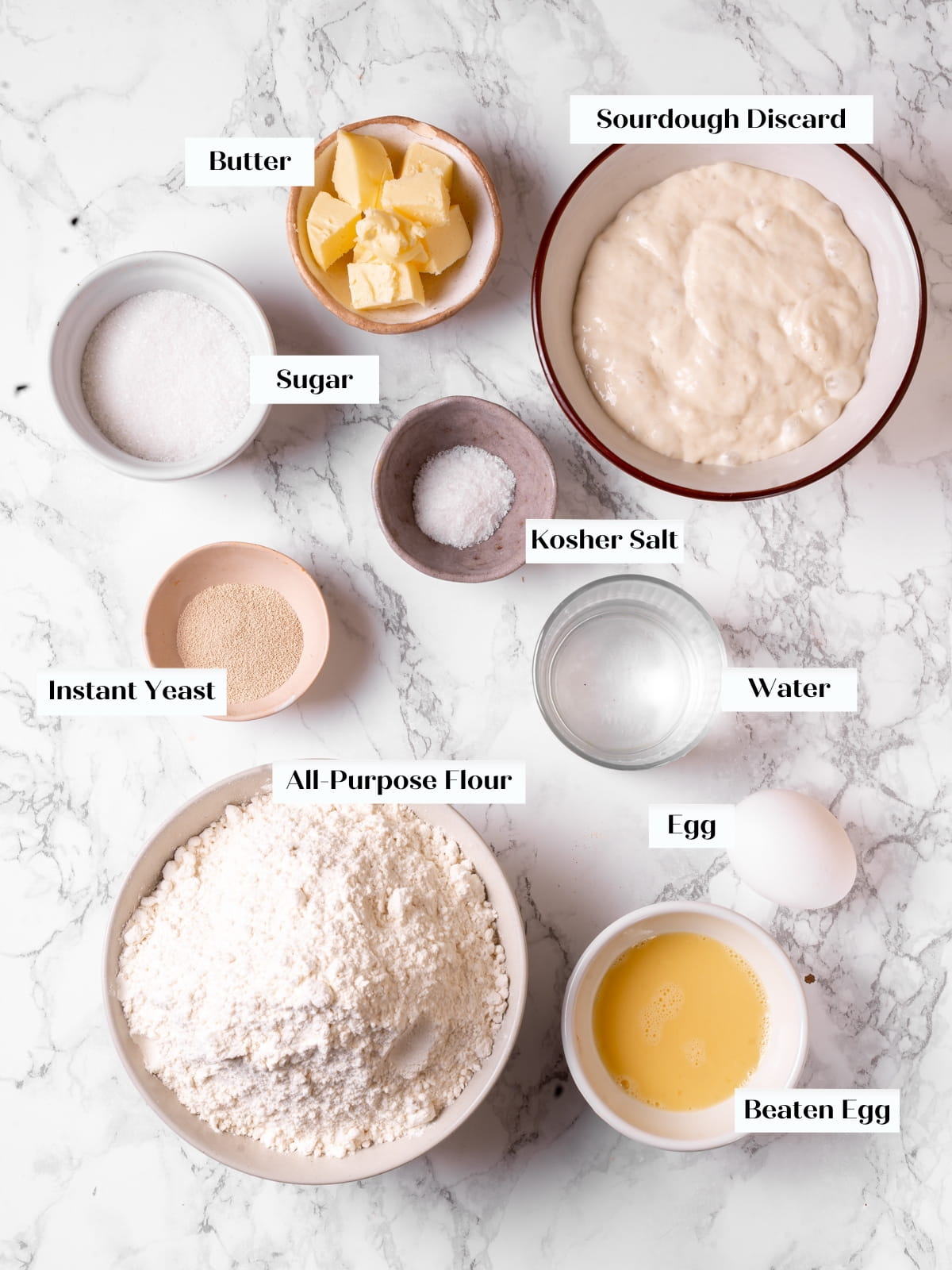
- Instant Yeast: Instant yeast or dry active yeast provide reliable rise when combined with sourdough discard in this sourdough bread recipe. You can choose to skip the instant yeast entirely if you’re using active starter that was fed within 24–36 hours. In that case, allow the dough to proof for about 5 hours.
- Sourdough Starter: You will need sourdough discard (of any age) from an active sourdough starter for this recipe. If you need a refresher, I walk you through how to feed sourdough starter in this post and dive deep into discard in my ultimate guide for sourdough discard! If you’re out of starter, check out my dinner rolls recipe in the meantime.
- All-Purpose Flour: Flour provides the gluten framework that gives structure and strength to the enriched dough, allowing it to trap gas and rise properly. You could substitute with bread flour, but I prefer the soft, tenderness of these rolls when made with all-purpose flour.
- Granulated Sugar: Adds a touch of sweetness to balance the tangy sourdough, feeds the yeast to support fermentation and rise, and helps the rolls stay soft and fluffy for up to a week.
- Unsalted Butter: Butter enriches the dough by adding fat, which shortens gluten strands slightly to create a softer, more tender crumb. It also contributes flavor and helps retain moisture, keeping the rolls soft after baking.
- Eggs: Eggs add structure, moisture, and fat to the dinner rolls, enriching the dough and contributing to a tender, flavorful crumb. Egg wash produces a glossy, golden finish on the rolls.
- Kosher Salt: Enhances flavor and balances sweetness; reduce slightly if using table salt.
See the recipe card for full information on ingredients and quantities.
Professional Tips for Soft Sourdough Dinner Rolls
- Starter Measurement Matters: The volume of sourdough discard can vary dramatically depending on its age and activity level, which is why I recommend using a kitchen scale to ensure accuracy. These variations can throw off your dough hydration, so using a kitchen scale ensures consistent results every time. For example, a sourdough discard fed the day before and kept at room temperature measured about 200 grams per cup, while an old, completely deflated starter that had been sitting in the fridge for weeks came in at 265 grams per cup.
- Rolls made without additional yeast require a longer final proof of around 5 hours. While they aren’t quite as fluffy as those made with instant yeast, the flavor is absolutely delightful.
- Flour your hands not your work surface or the dough. The dough may be slightly sticky, which is normal and helps create a soft, supple roll. Feel confident in your dough! Just a little flour on your hands is all you need.
How to Make Sourdough Dinner Rolls
Make the dough:
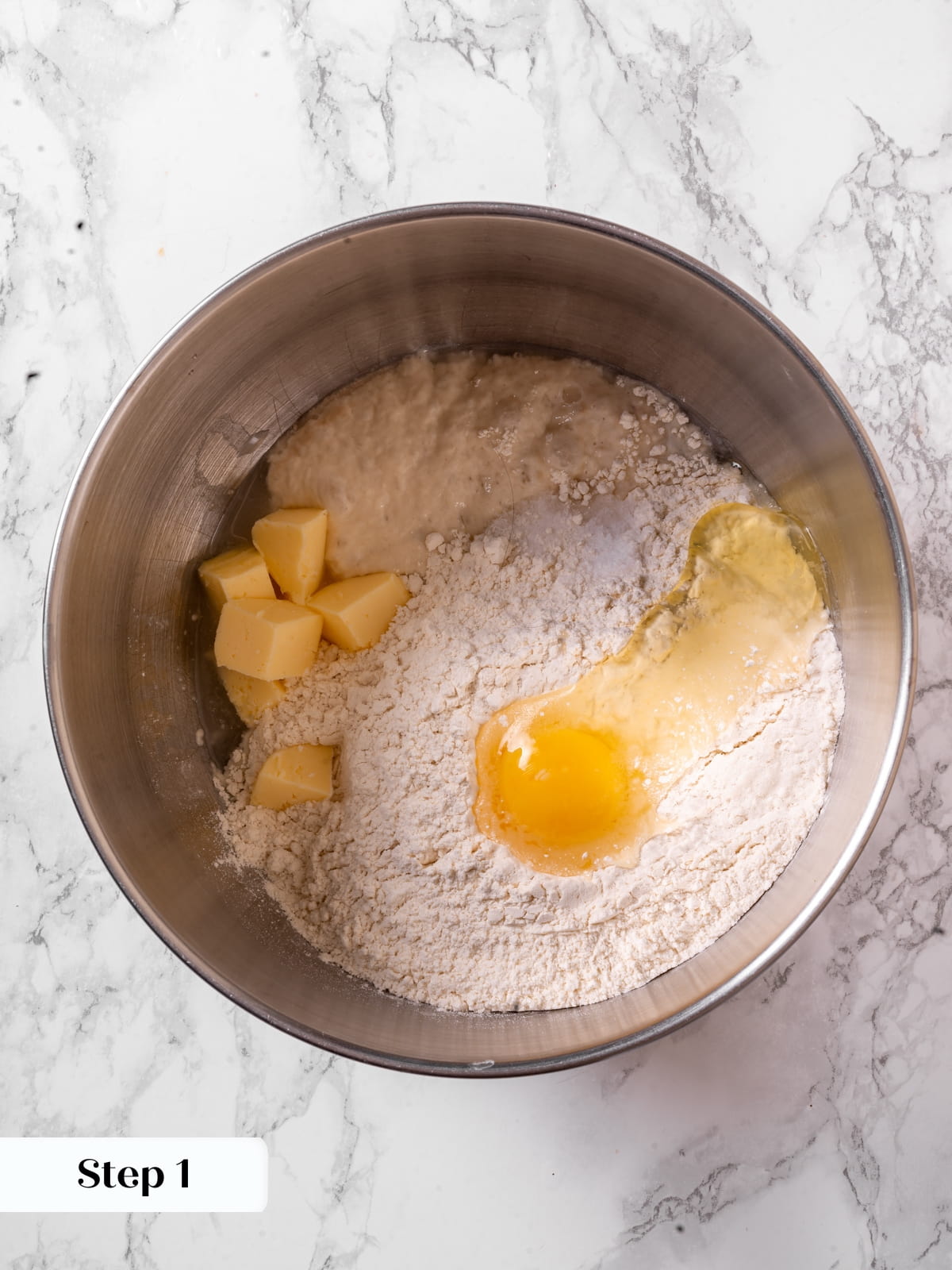
Step 1: Combine the ingredients. In the bowl of a stand mixer fitted with the dough hook attachment, combine the instant yeast, water, sugar, sourdough discard, all-purpose flour, salt, cubed butter, and egg. Mix on low speed until the ingredients come together into a rough, homogenous dough (photo 1).
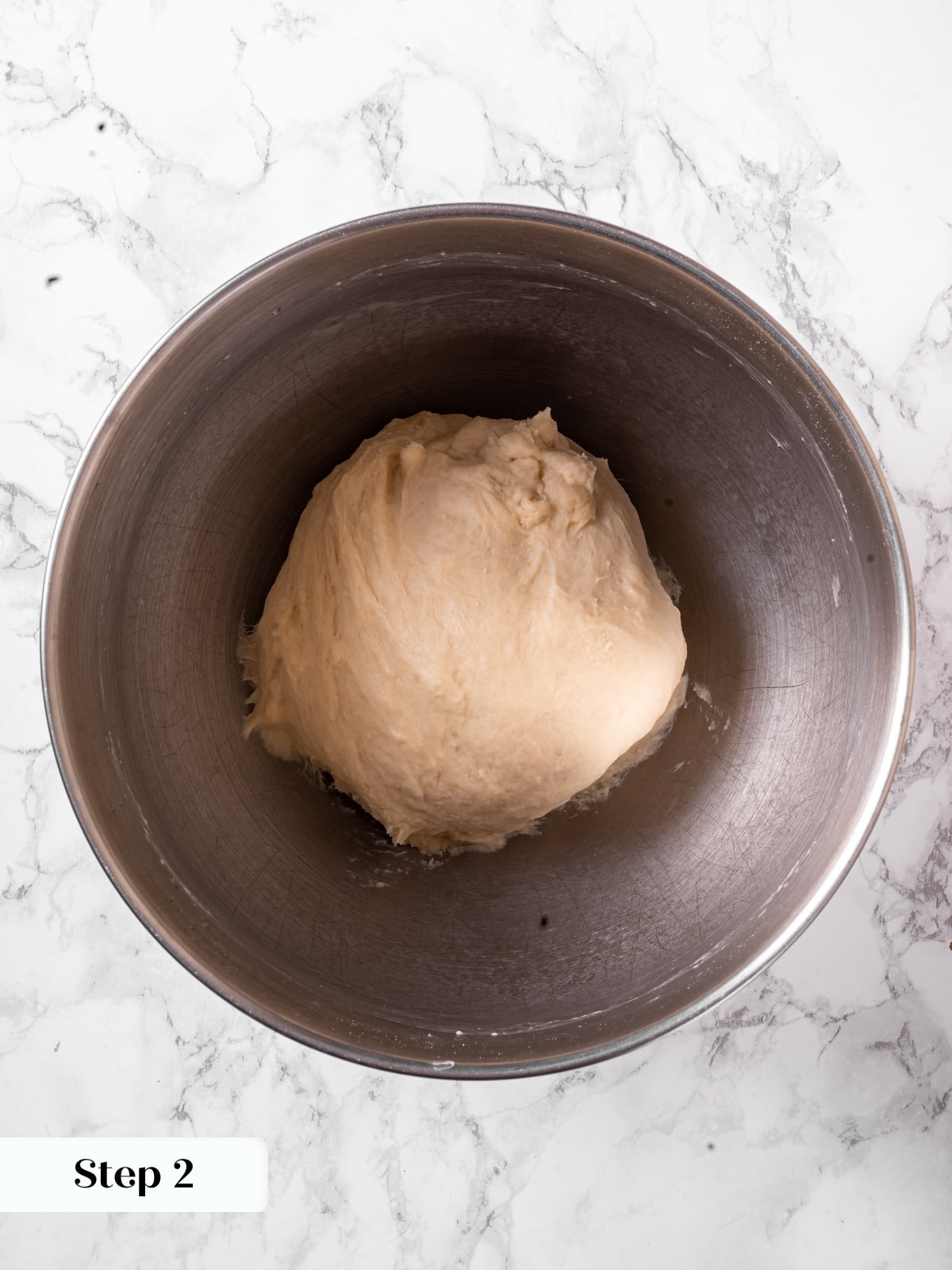
Step 2: Increase to medium speed and knead for about 4 minutes. This helps develop the gluten (photo 2).
To check if the dough is ready, perform a windowpane test: pinch off a small piece and stretch it gently, if it forms a thin, translucent sheet without tearing, it’s ready. Alternatively, look for a smooth, soft dough that pulls away cleanly from the sides of the bowl.
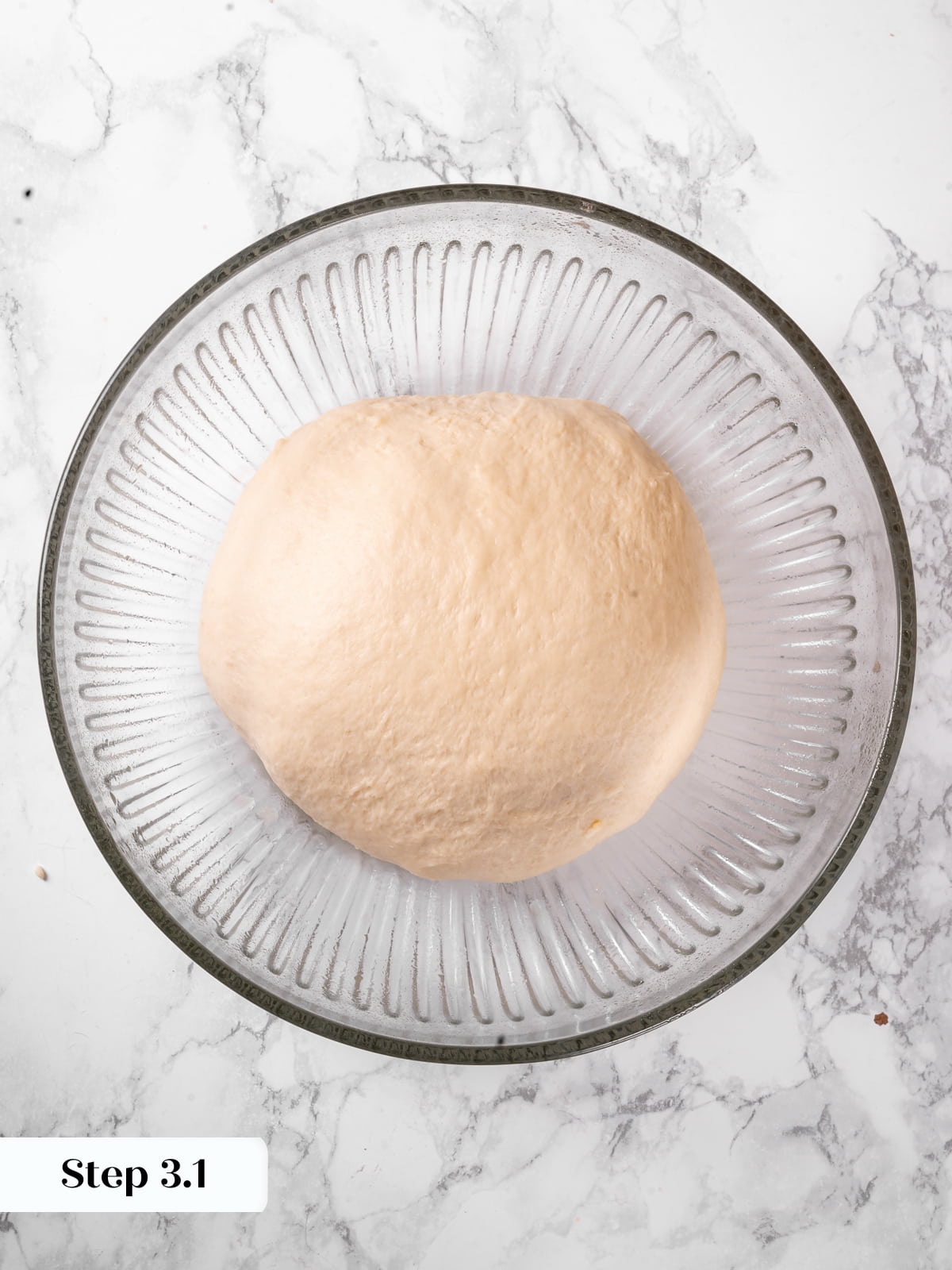
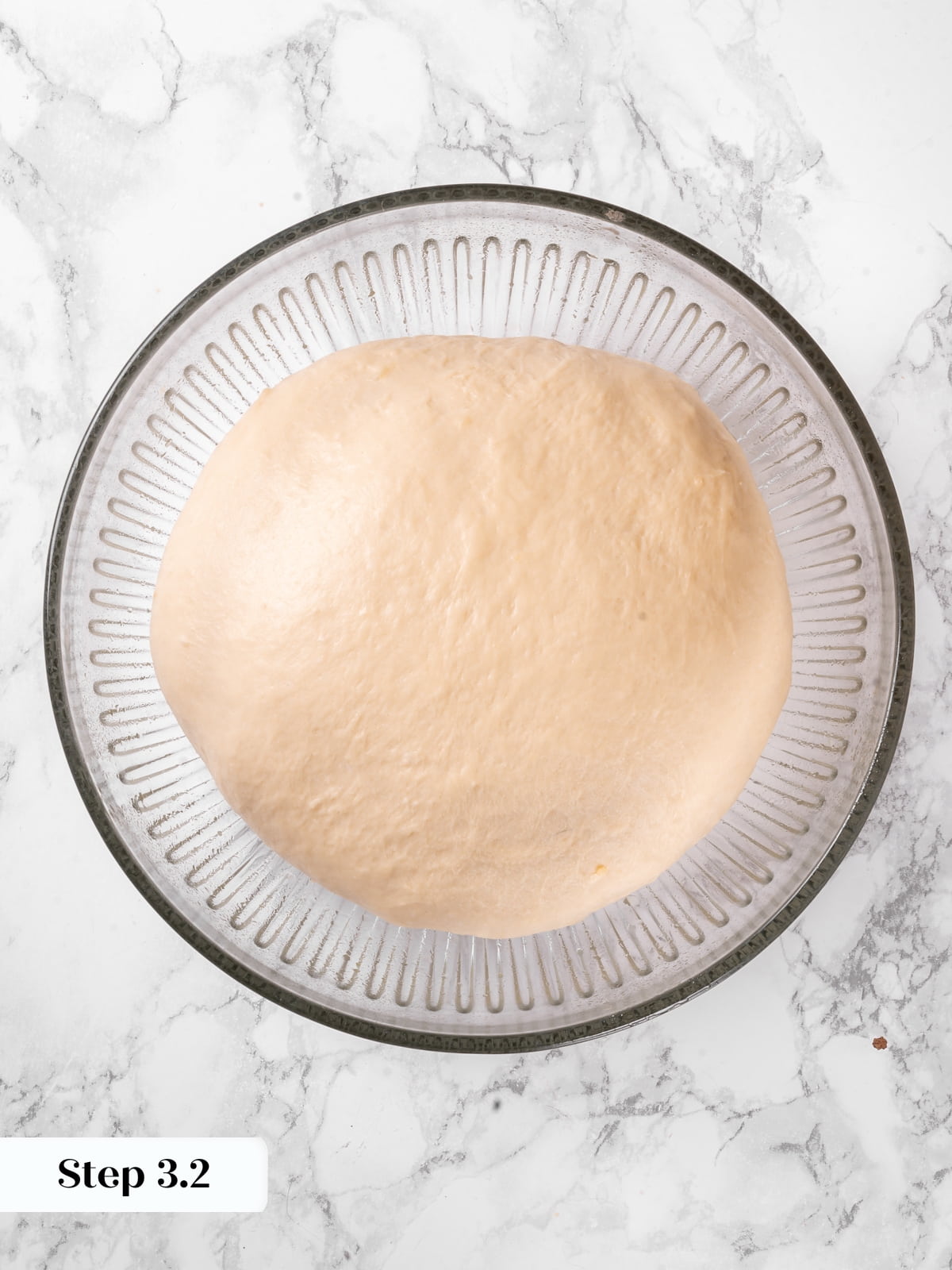
Step 3: Bulk proof. Lightly oil or spray a medium bowl with non-stick spray. Scrape the dough into the bowl, lightly oil the top, cover with plastic wrap or a tea towel, and let the dough rise in a warm spot for about 45 minutes, or until doubled in size (photo 3 & 4).
Divide and Shape the Rolls
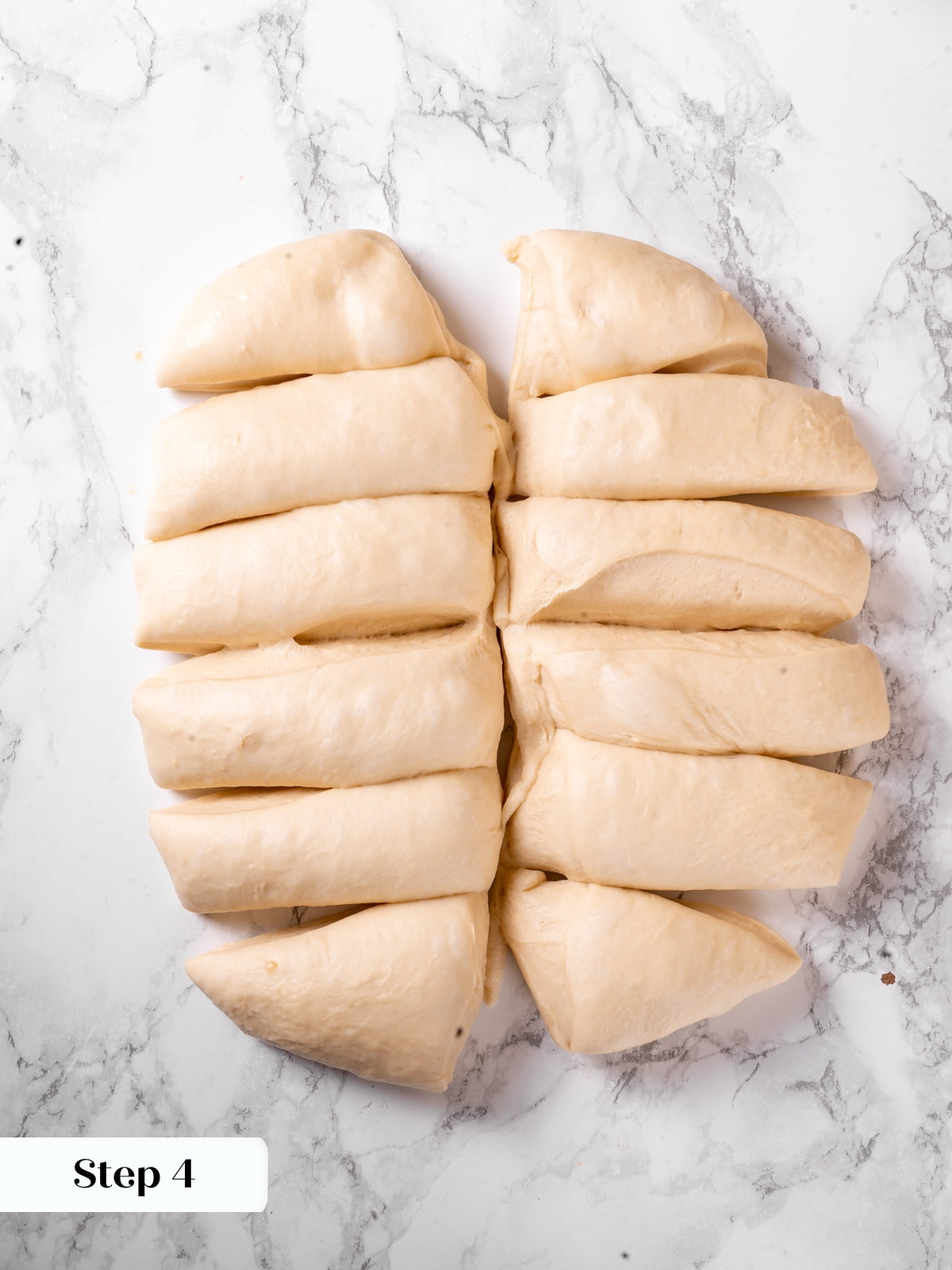

Step 4: Portion the dough. Once risen, divide the dough into 12 equal pieces (about 78 g each) using a knife or bench scraper (photo 5).
Step 5: Prepare the baking dish. Grease a 9 x 13-inch baking dish or pan with non-stick spray or softened butter before shaping the rolls.
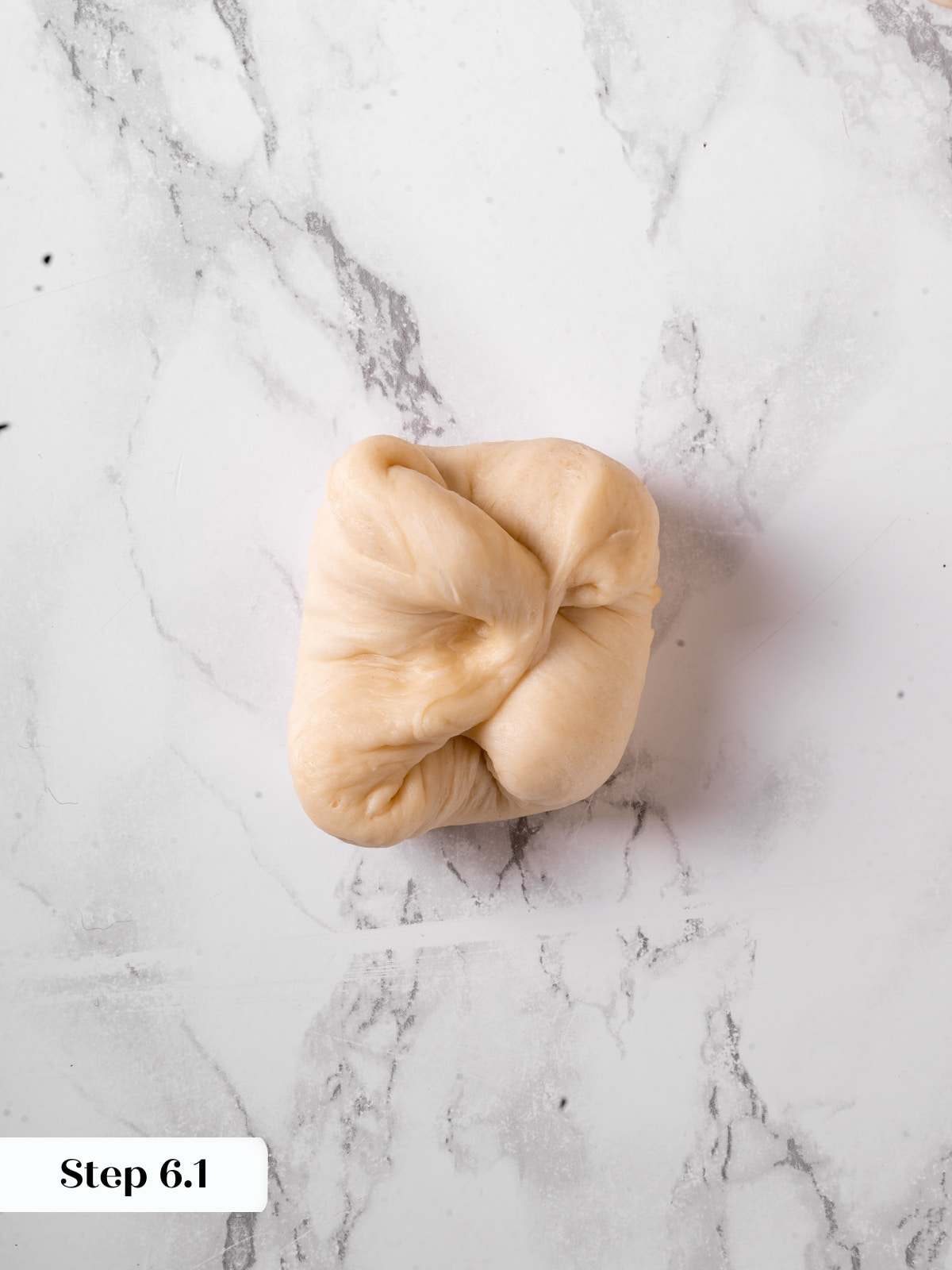
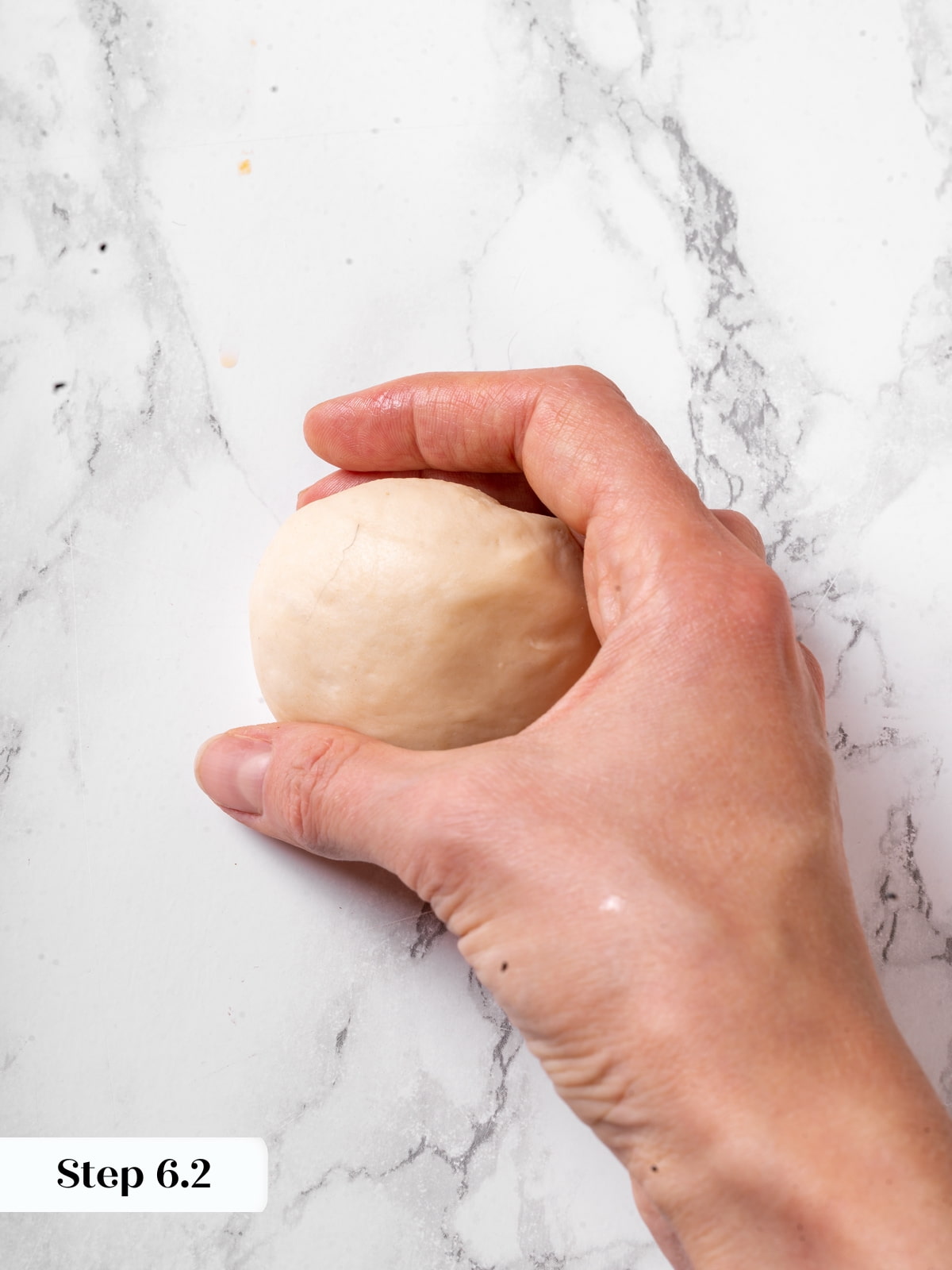
Step 6: Shape into smooth dough balls. Working with one piece of dough at a time, shape each roll by folding the edges into the center, then place it seam-side down on the counter. Using your thumb and fingers, roll it with a gentle push-and-pull motion to form a tight, smooth ball. Let the dough stick slightly to the counter to help tension the surface but work quickly to prevent it from sticking too much (photos 6 & 7).
Step 7: Second rise. Place the shaped rolls into the prepared baking dish. Cover with plastic wrap and proof in a warm spot for about 1 hour, until tripled in size and light to the touch (photos 8 & 9).
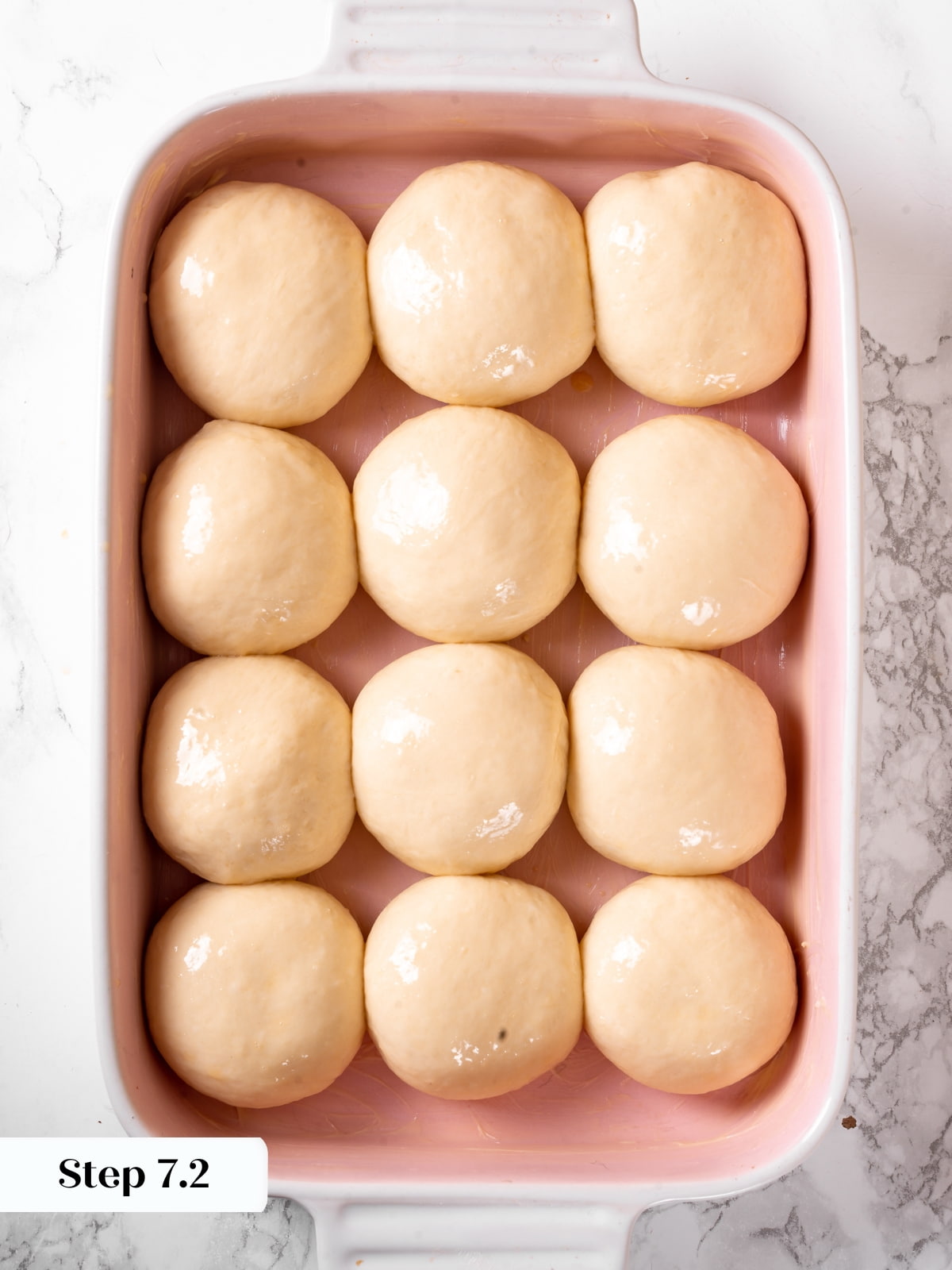
The rolls are ready to bake when they spring back slowly when gently poked with a finger. If they feel dense, give them more time.
Bake the Rolls
Step 8: Preheat the oven to 350°F (175°C) using the conventional (no-fan) setting.
Step 9: Brush the tops with a beaten egg for a golden finish. Avoid letting the egg wash drip down the sides or pool in the pan.
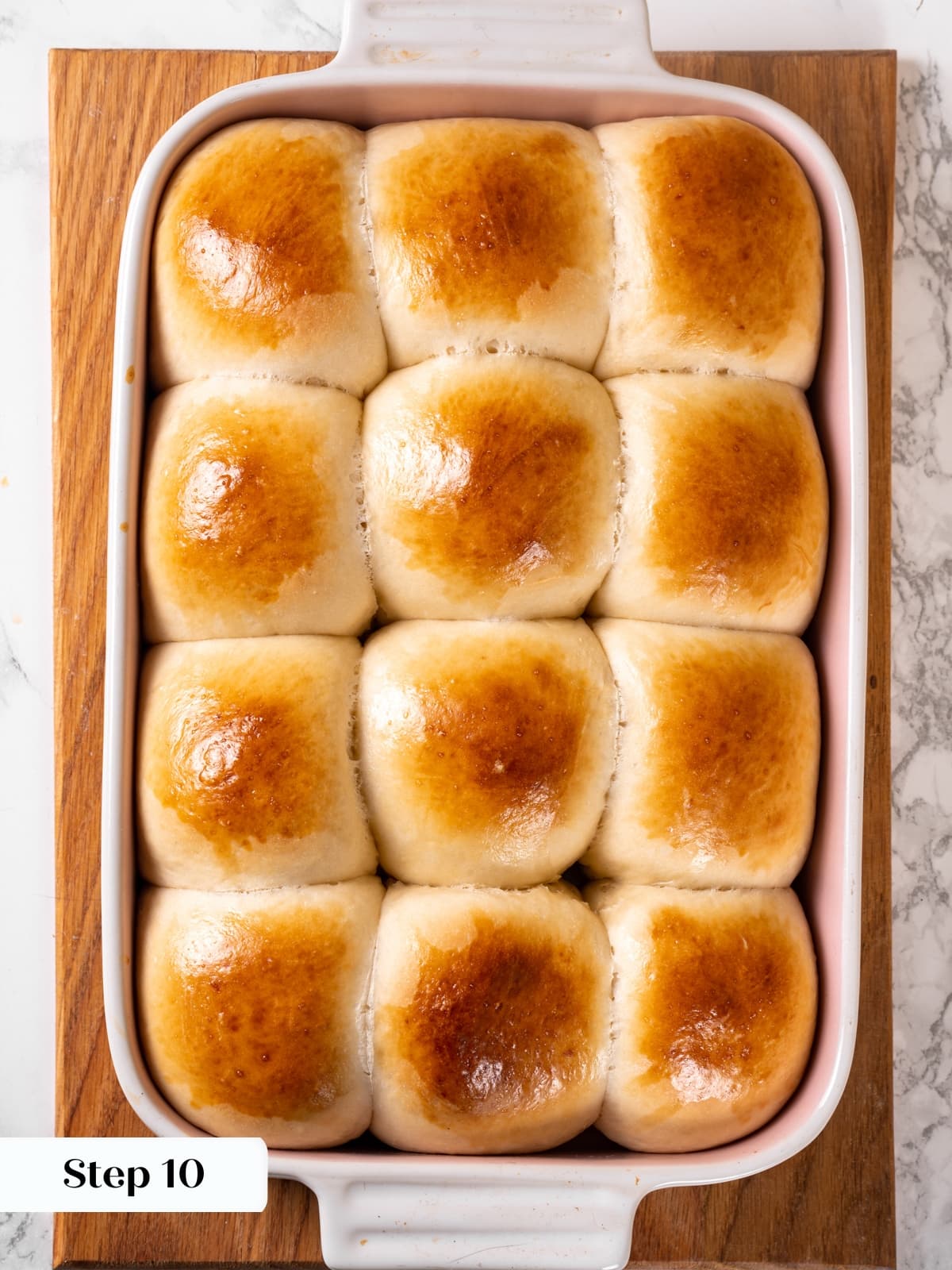
Step 10: Bake for 20–25 minutes, until golden brown. For accuracy, check the internal temperature with an instant-read thermometer; enriched dough should reach 185°F (85°C) (photo 10).
These rolls don’t brown as deeply on top, which can trick you into baking them too long. Take them out once they’re lightly golden for the best soft, tender texture.
Finish and Serve
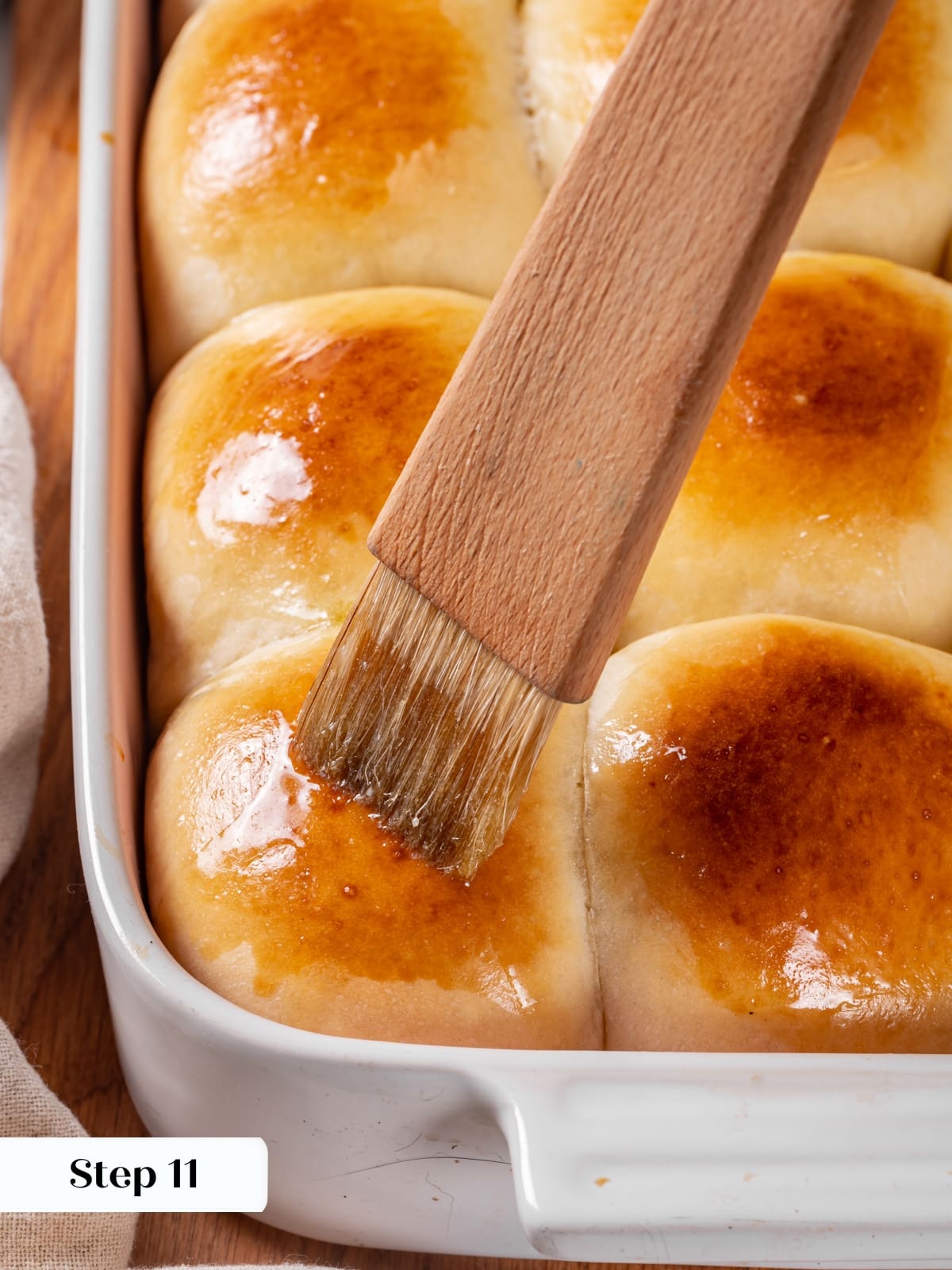
Step 11: Remove from the oven and immediately brush the tops with melted butter (photo 11).
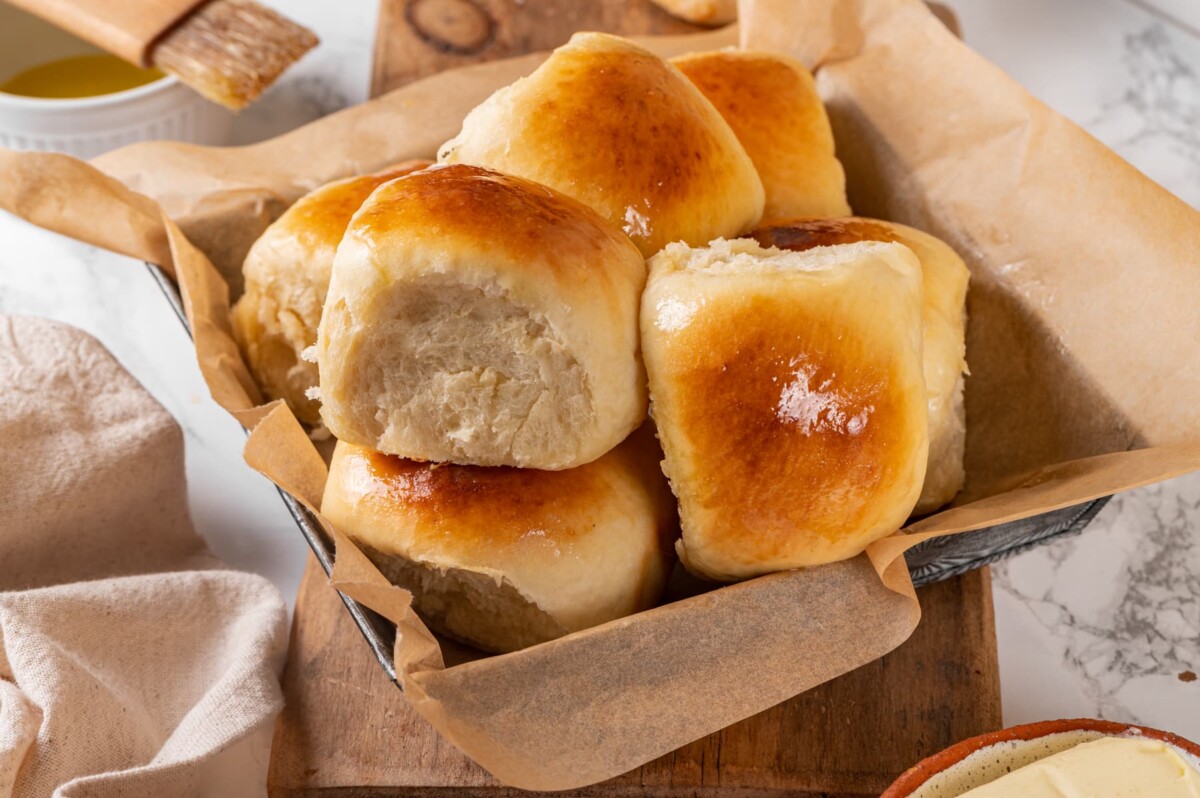
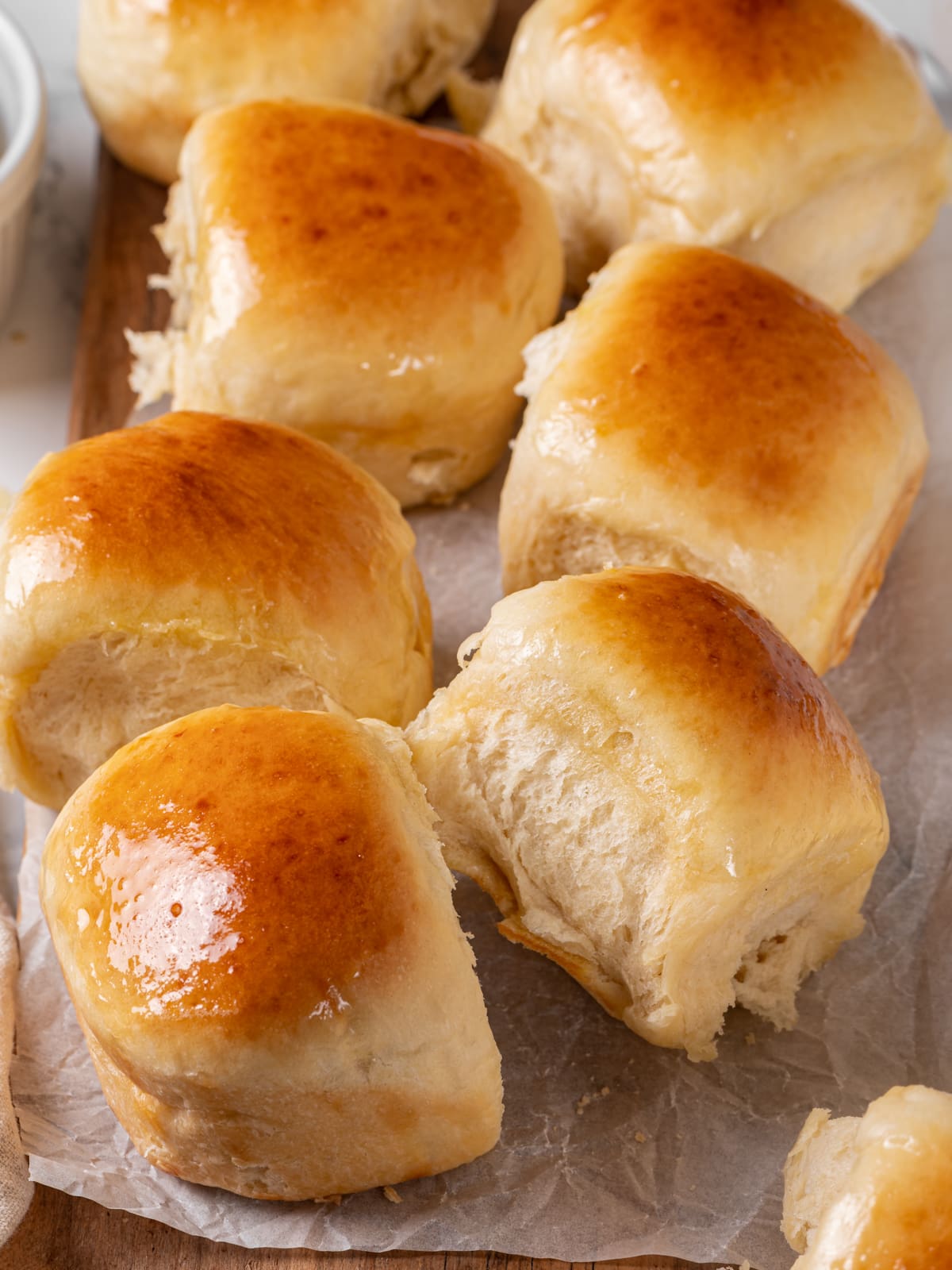
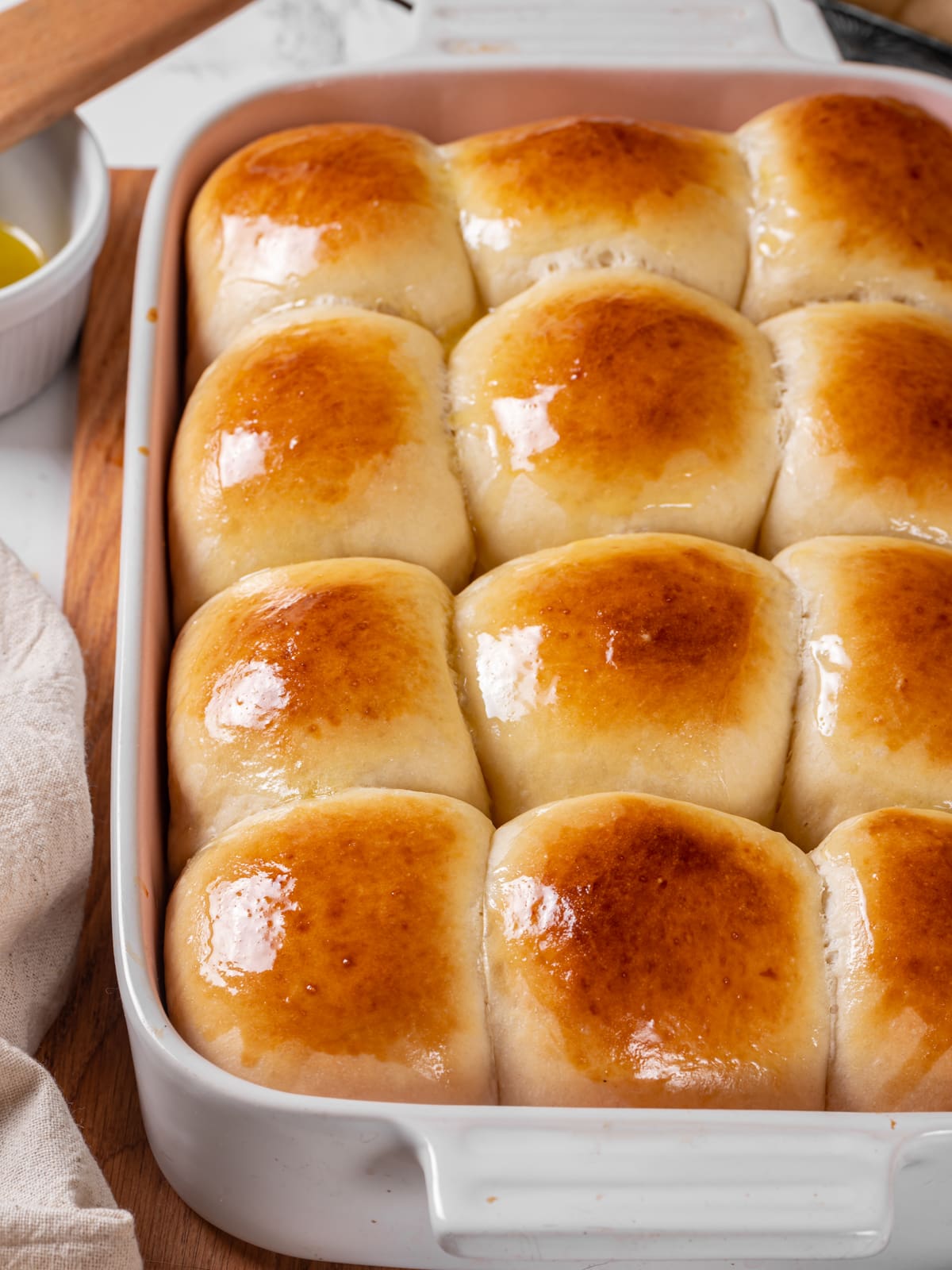
Step 12: Serve warm. Enjoy these homemade sourdough rolls slightly warm or at room temperature (photo 12).
Recipe FAQs
Let the rolls cool completely, then store them in an airtight container or zip-top bag at room temperature for up to 5 days. Avoid the fridge, as it speeds up staling. For longer storage, wrap the rolls tightly and freeze for up to 2 months. Thaw at room temperature, then warm in the oven at 350°F / 175°C briefly.
Serve hot rolls brushed with melted butter, for the best flavor and texture. Enjoy them plain or split for sliders. They pair beautifully with soups, roasted meats, salads, and spreads like garlic, honey or maple butter.
I am a pastry chef, not a registered dietitian or nutritionist, but my opinion is that these rolls still have all the processed flour, a little sugar and a bit of butter as regular rolls, so they are not any more good for you than homemade dinner rolls. Though homemade bread is healthier for you than store-bought bread.
Recommended Rolls Recipes
Yeast Breads
Yeast Breads
Rolls & Biscuits
Rolls & Biscuits
If you enjoyed this recipe, please leave a star rating and let me know how it goes in the comments below! I love hearing from you and your comments make my day!
Sourdough Dinner Rolls
Ingredients
- 2 ¼ teaspoons instant yeast
- ½ cup water
- ¼ cup granulated sugar
- 1 cup sourdough discard, see notes on volume measurements
- 3 ¼ cups all-purpose flour
- 1 teaspoon kosher salt
- ¼ cup unsalted butter, cubed
- 1 whole egg, for dough
- 1 large egg, beaten for egg wash
Instructions
- In the bowl of a stand mixer, combine the instant yeast, water, sugar, sourdough discard, all-purpose flour, salt, cubed butter, and egg. There is no need to warm the liquid before combining unless blooming dry active yeast.
- Attach the dough hook and mix on low speed until the ingredients come together into a rough, homogenous dough.
- Increase the speed to medium and knead for about 4 minutes to develop the gluten. To check if the dough is ready, use a windowpane test by pinching off a small piece and gently stretching it. If it forms a thin, translucent sheet without tearing, the gluten has developed properly or simply look for a smooth, soft dough that pulls away cleanly from the sides of the bowl.
- Lightly oil or spray a medium bowl with non-stick spray and transfer the dough into it. Lightly oil the top of the dough, cover and allow to bulk proof for about 45 minutes, or until it has doubled in size. This rising time will vary based on the temperature of your kitchen.
- Divide the dough into 12 equal pieces, about 78 g each, using a knife or a bench scraper.
- Grease a 9 x 13-inch baking dish or pan with non-stick spray or softened butter before you begin shaping the rolls.
- Working with one piece of dough at a time, shape each roll by folding the edges into the center, then place the seam-side down on the counter and roll quickly between your thumb and other fingers. The goal is to create a push and pull motion that gently tightens the roll into a ball. To do this, don’t let the dough roll around in your hand. Push the dough away from you using your thumb, then sweep it back toward you with your other fingers, and repeat. Make sure to work quickly to prevent the dough from sticking excessively to your hands or the counter. Allowing it to stick just a little to the counter will actually help you form a nice, tight roll.
- Place it in the baking dish and repeat with the remaining rolls. Cover with plastic wrap and proof in a warm spot for an hour until they are tripled in size and feel light and airy when gently touched with your finger.
- Meanwhile, preheat the oven to 350ºF using the conventional setting without a fan.
- Before baking, you can brush the tops with a well-beaten egg. Egg wash will give the rolls a shiny, golden finish. Be careful not to let it run down the sides of the dish or pool.
- Bake rolls in a preheated oven for 20-25 minutes until they are golden brown. You can also test with an instant-read thermometer. This is an enriched dough so it should read 185ºF.
- Remove from the oven and brush the top of the rolls with melted butter.
- Serve slightly warm or at room temperature.
Notes
Nutrition
Nutrition information is automatically calculated, so should only be used as an approximation.
 Like this recipe? Rate & comment below!
Before You Go
I hope you enjoyed this recipe for soft sourdough rolls try my whole wheat sourdough rolls next! Peruse all our sourdough recipes or find a new side dish in my rolls and biscuit recipes!






Could this recipe be doubled, or would the rolls not rise properly? I would love to make these for Easter but one dozen won’t be enough for our crowd. 🙂
Hi Shelley! Yes, you can absolutely double it. The rise won’t be affected as long as you give the dough enough space and time. Just divide between two 9×13 pans (or bake in batches). Happy Easter baking! ~gvd team
The combination of sourdough discard and instant yeast is such a brilliant way to get all the flavor without waiting all day for bread. Brushing them with melted butter straight out of the oven put them completely over the top, and my family finished the entire pan!
I kept saving my sourdough discard without really knowing what to make until I came across your sourdough discard recipes post. I’ve been making these rolls and the crackers on repeat! I love that I can use a whole cup of old discard to make fluffy rolls in a few hours! My nephews adore them.