
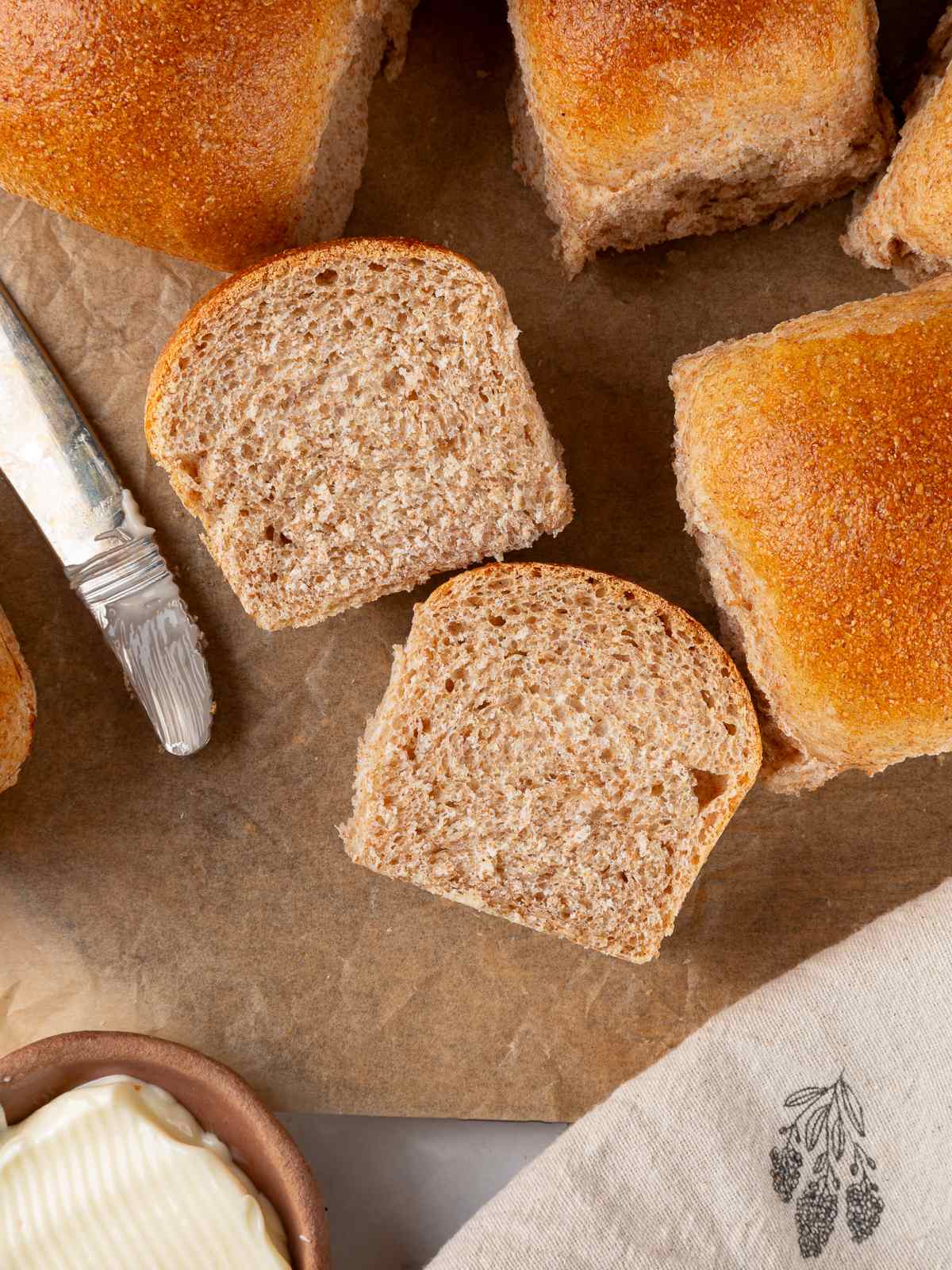
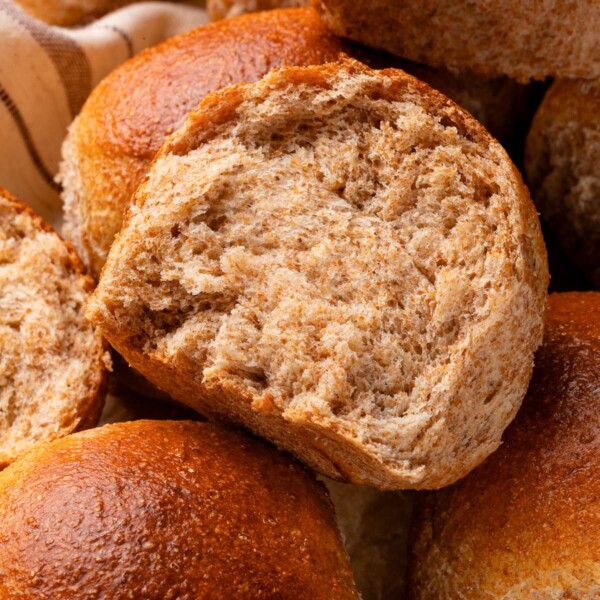
These whole wheat sourdough rolls are soft, fluffy, and ready in just 2.5 hours—even with 100% whole wheat flour. They bake up soft, golden, and easy to pull apart! If you already love my whole wheat dinner rolls, this version adds a mild sourdough tang.

A Quick Look At The Recipe
This is a brief summary of the recipe. Jump to the recipe to get the full details.
Prep Time
20 minutes
Cook Time
20 minutes
Proof/Rest Time
1 hour 50 minutes
Total Time
2 hours 30 minutes
Servings
12 Rolls
Difficulty
Intermediate
Calories *
190 kcal per serving
Technique
Straight dough method: mix, knead, proof twice, bake
Flavor Profile
Soft, nutty, mildly tangy, lightly sweet.
* Based on nutrition panel
“I was worried the whole wheat flour would make these heavy, but the crumb was genuinely light and pulled apart beautifully. The dough felt a little stiff after mixing but smoothed right out after a few minutes of kneading, just like you said it would.” ⭐⭐⭐⭐⭐
Lauren
Why You Will Love This Recipe
- Light and fluffy, not dense. Most whole wheat rolls are dense. These are soft with a light, springy crumb. The discard and yeast work together to keep them soft even with whole wheat flour!
- A great use for discard. This recipe uses a full cup (265g) of sourdough discard. If you are looking for more ways to put discard to work, The Ultimate Guide to Sourdough Discard Recipes has plenty of options beyond bread.
- Ready in about 2.5 hours. Instant yeast does the heavy lifting here, so there is no overnight proofing or long fermentation. The discard adds that mild sourdough flavor!
- Stays soft longer than standard whole wheat rolls. The sourdough in the dough helps extend the shelf life and keeps the crumb tender the next day.
Whole wheat rolls are often heavy and dry. I wanted to change that. After testing these over and over, I landed on a version that surprises people on the first bite. I’m a firm believer that whole wheat rolls like these and my whole wheat biscuits should still be soft—and these prove it!
These rolls are sturdy enough for soup or a holiday spread, but soft enough to eat plain with butter. If you already love my whole wheat dinner rolls, this sourdough version is a natural next step. I usually grab one straight from the pan before they even cool.
Ingredients & Substitutions
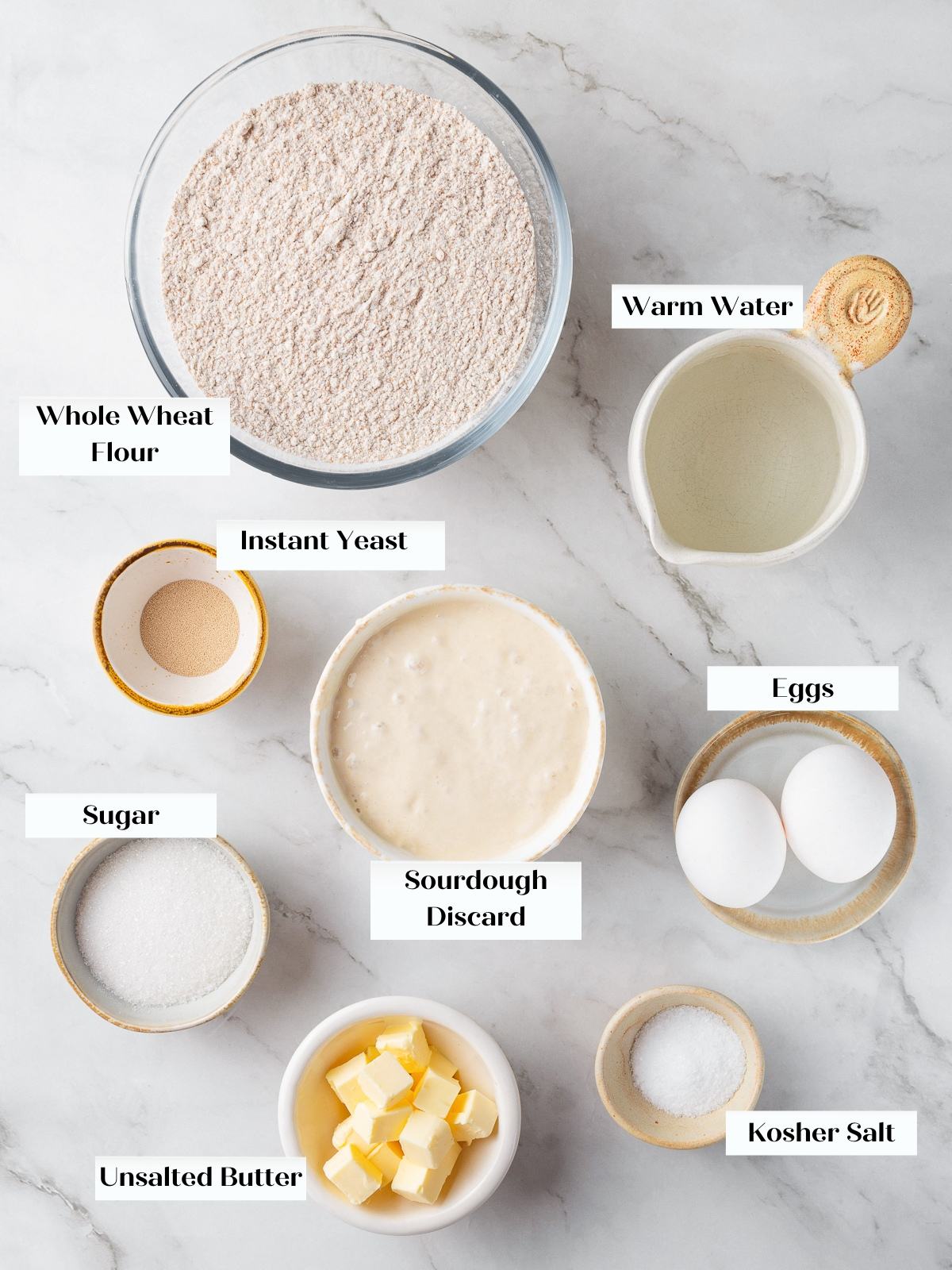
- Whole Wheat Flour: Gives the rolls a nutty flavor and hearty structure. Whole wheat flour takes longer to absorb liquid, so the dough may feel stiff at first. Resist adding more liquid—it will smooth out as you knead. If you enjoy baking with whole wheat, my whole wheat sourdough bread uses it in a similar way.
- Sourdough Discard: Adds mild tang and keeps the rolls soft longer. The age of the discard doesn’t matter much here, since instant yeast carries the leavening. That said, active starter rises a bit faster. Active starter is airy, while cold discard is dense—so they measure differently. Use a kitchen scale and measure by weight. That’s about 1 1/2 cups for active starter or recently fed discard versus 1 cup of flat discard.
- Instant Yeast: Instant yeast is the primary leavening agent in this recipe and what keeps the timeline at 2.5 hours. It goes directly into the dough without dissolving first. The same instant yeast approach works in my sourdough discard pizza Dough if you want another quick-rise discard recipe in your rotation.
- Warm Water: Warm water helps activate the yeast and brings the dough together. Aim for water that feels warm but not hot to the touch, around 100 to 110°F.
- Granulated Sugar: Sugar tenderizes the dough and promotes a golden brown crust during baking. Without it, the rolls would brown less evenly and have a slightly tougher crumb.
- Kosher Salt: Salt controls fermentation and sharpens the overall flavor. Do not skip it, and do not substitute table salt at a 1:1 ratio since table salt is denser.
- Unsalted Butter: Butter adds richness and keeps the crumb tender. If you use salted butter, reduce the added kosher salt slightly to compensate.
- Egg (for dough): One egg goes into the dough itself and contributes to a soft, enriched crumb. This is what separates these from a lean whole wheat bread.
- Egg (for egg wash): A second egg, brushed on before baking gives the rolls a shiny, golden finish. Brush lightly and do not let it pool at the sides of the pan.
Variations for Whole Wheat Sourdough Rolls
- Honey Instead of Sugar: Swap the granulated sugar for an equal weight of honey (like my whole wheat bread). The rolls take on a subtle floral sweetness and stay soft for an extra day.
- Herb and Garlic Rolls: Mix 1 teaspoon of garlic powder and 2 teaspoons of dried herbs (rosemary, thyme, or a mix) directly into the dough with the other dry ingredients. The whole wheat flavor stands up well to bold additions like these or make them into pesto pull apart rolls!
- Seeded Tops: After brushing with egg wash, sprinkle sesame seeds, poppy seeds, or everything bagel seasoning over the tops before baking like my brioche buns. It adds texture and a little visual interest without changing the dough itself.
Professional Tips for Perfect Whole Wheat Sourdough Rolls
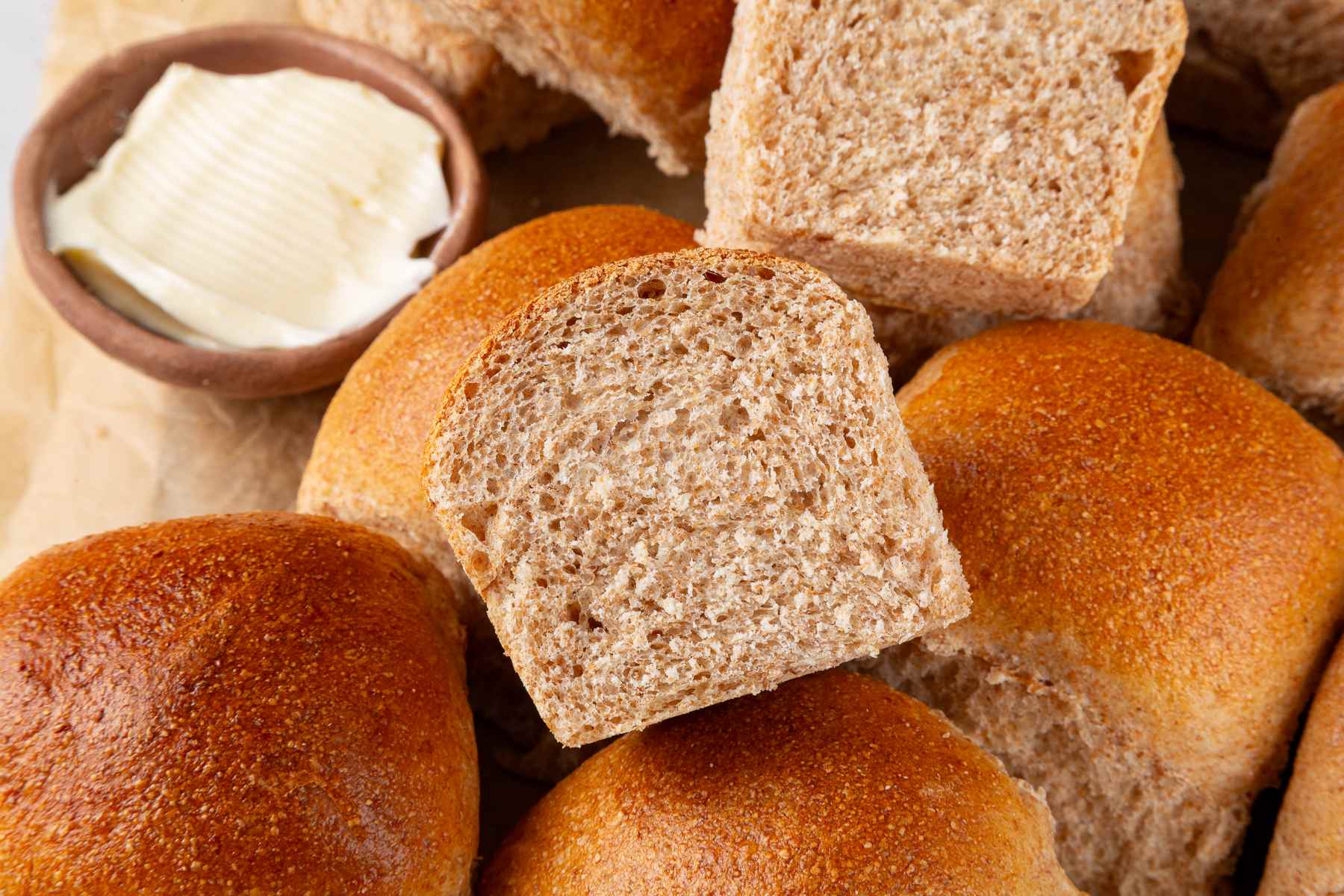
- Don’t rely on time alone. These rolls were tested in a proof box set to 100°F. Your kitchen probably isn’t 100°F—and that’s okay. The rolls should visibly triple in size, crest over the edge of the pan, and feel light and airy when you press them gently with a fingertip.
- Stop kneading at a rough windowpane, not a perfect one. The windowpane test just means the dough stretches thin without breaking. But, whole wheat dough will never pull as clean a pane as a white sandwich bread dough. A slightly rough, translucent stretch is exactly right here. I use the same approach for my Sourdough Dinner Rolls, which also builds gluten quickly on medium speed.
- Do not overbake. The two main failure points for 100% whole wheat rolls are underproofing and overbaking, and overbaking is the easier one to miss. Pull the rolls at 20 minutes when they are a deep golden brown, or when an instant-read thermometer reads 185°F. They will look like they could use another minute or two, but they cannot.
- Shape with confidence, even when the seam does not disappear. Fold the edges into the center, flip seam-side down, then use a push-pull motion between your thumb and fingers to tighten the ball without letting it roll loose in your hand. The seam won’t fully close. That’s normal for whole wheat.
How to Make Whole Wheat Sourdough Rolls
Use these instructions to make soft, springy whole wheat rolls with a mild sourdough flavor and a golden, pull-apart top. Further details and measurements can be found in the recipe card below.
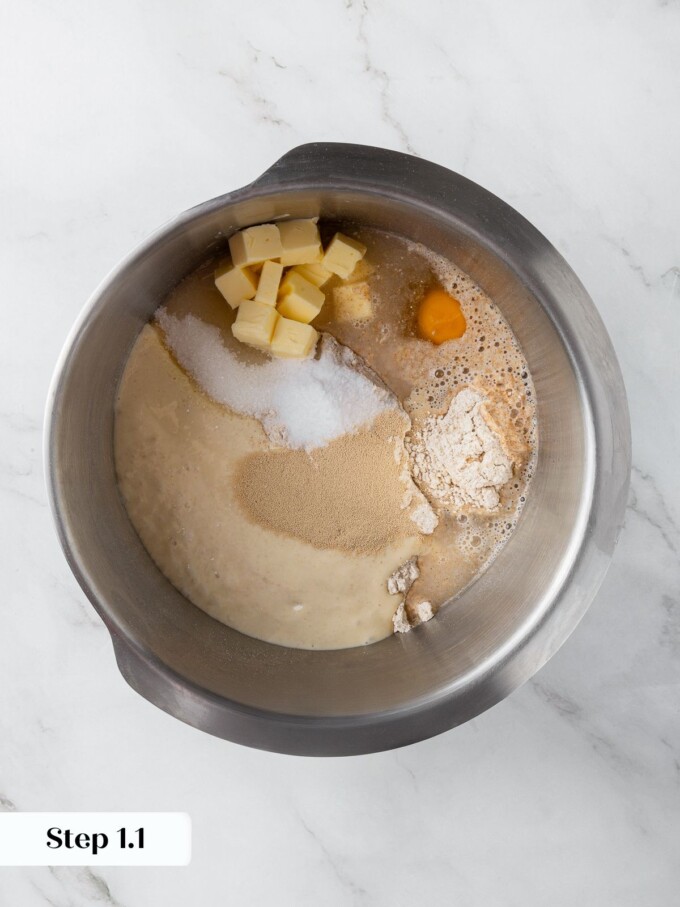
Step 1: Combine the Ingredients. Add all the ingredients to the bowl of a stand mixer fitted with the dough hook: whole wheat flour, sourdough discard, instant yeast, warm water, sugar, salt, cubed butter, and the egg for the dough (photo 1). Mix on low until incorporated with a few butter pieces remaining. The dough will look rough and shaggy (photo 2).
Tip: When doing the straight dough mixing method (adding everything at once) I add the flour first so everything mixes evenly.
Step 2: Develop the Gluten. Increase the mixer to medium speed and knead for 3 to 4 minutes, until the dough pulls a rough windowpane. The dough will feel slightly tacky and pull away from the sides of the bowl. Whole wheat dough will feel stiffer than usual—that’s expected.
Full disclosure: I’ve made my dinner roll recipes so many times that I just set a timer for 4 minutes and skip testing.
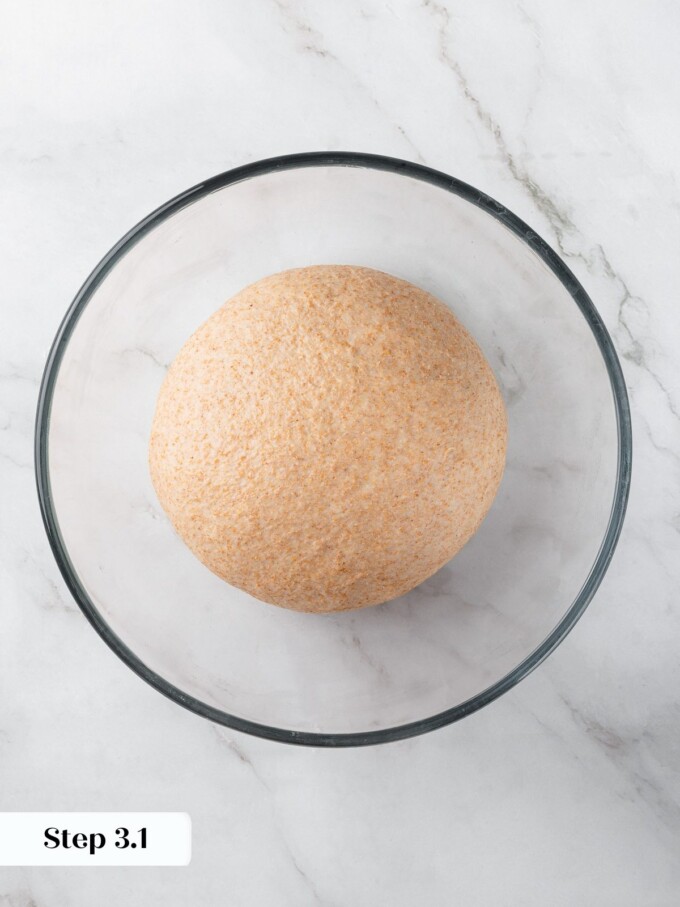
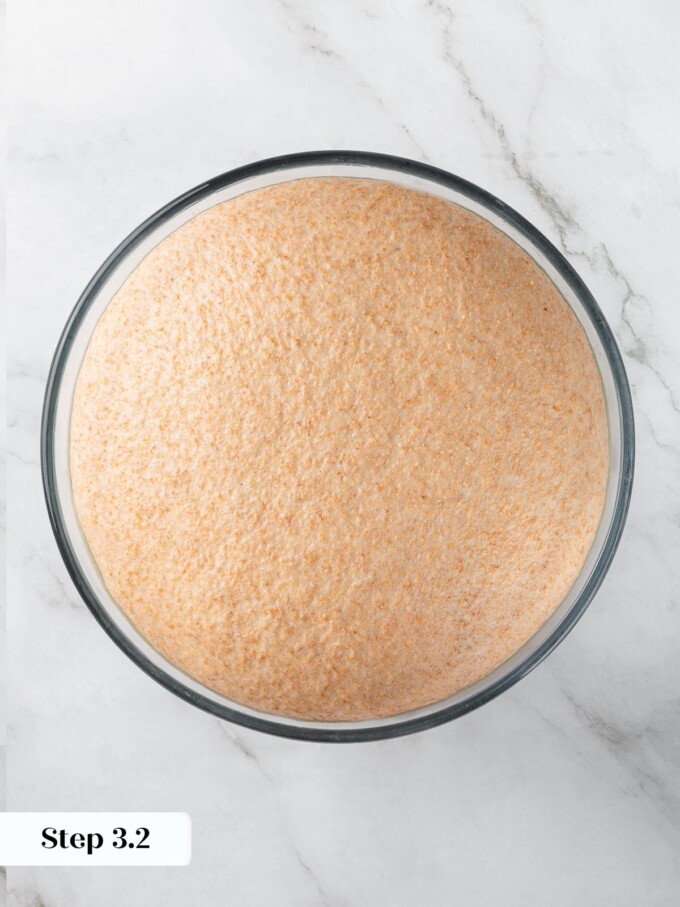
Step 3: Transfer and First Proof. Scrape the dough into a large bowl sprayed with non-stick cooking spray or lightly coated in a neutral oil (photo 3). Cover and set in a warm spot to proof for 45 minutes to an hour, or until the dough has visibly doubled and feels light and airy when gently pressed. For a 100% whole wheat dough like this one, plan closer to 90 minutes in a warm location (photo 4).
I tested these rolls using a proof box set to 100ºF, so my timing is very controlled. If you are proofing at room temperature, go by feel rather than the clock. The dough should be doubled, lighter, and spring back slowly when pressed.

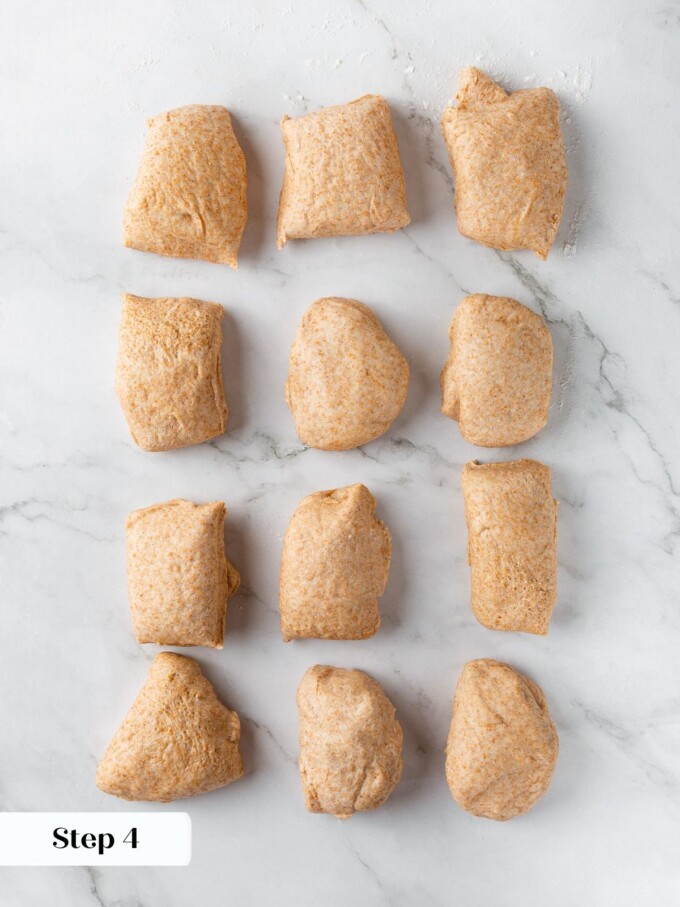
Step 4: Prepare the Pan and Divide. Spray a 9×13 inch baking dish with non-stick cooking spray or grease it with softened butter. Turn the proofed dough out onto a lightly floured work surface and divide it into 12 pieces, approximately 85g each (photo 5). A bench scraper helps here!
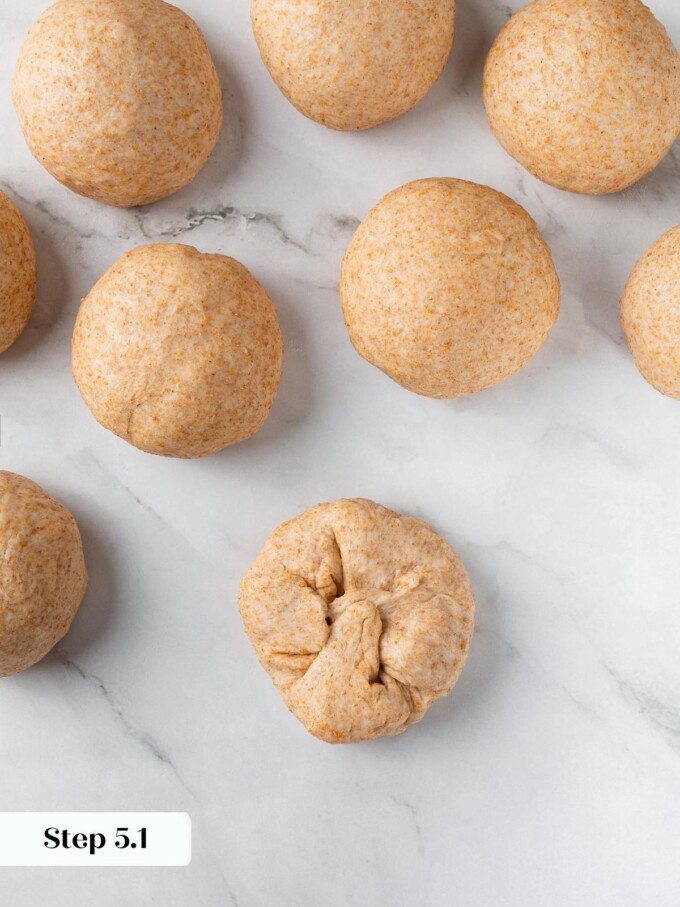
Step 5: Shape the Rolls. Shape each piece into a roll by folding each edge into the center, then flipping it seam-side down on the countertop. Roll it quickly between your thumb and fingers using a push/pull motion that gently tightens the dough into a ball. The key is not letting the dough actually roll freely in your hand. Push it away from you with your thumb, then pull it back in a sweeping motion, and repeat until the surface feels taut and smooth (photo 6).
The center hole will not fully disappear with whole wheat dough when shaping, unlike with an all-purpose flour dinner roll. That is completely normal, so do not keep working the dough trying to fix it.
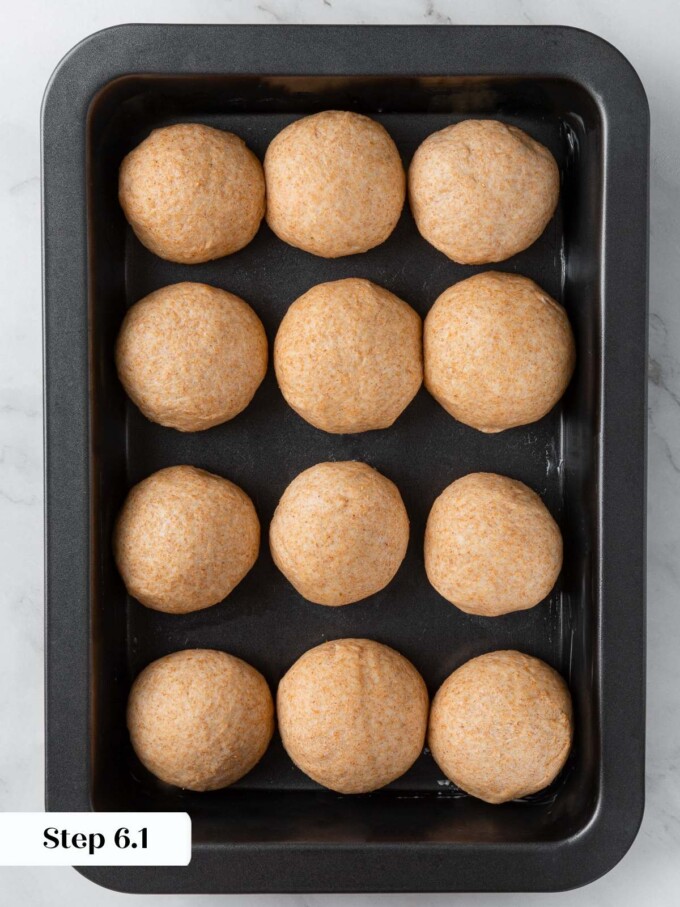
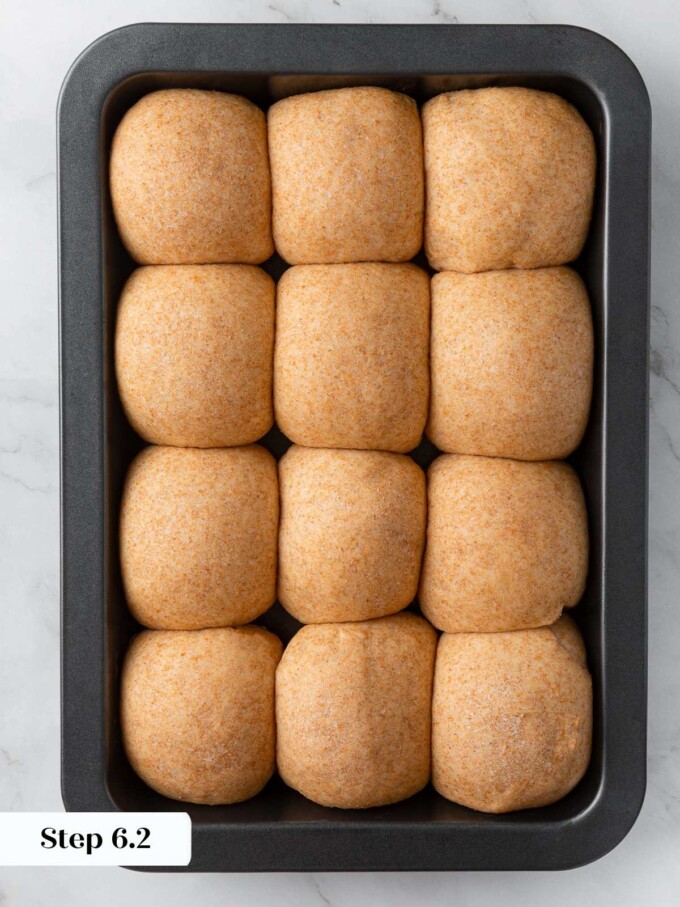
Step 6: Second Proof. Place each shaped roll into the prepared baking dish and cover loosely with plastic wrap (photo 7). Proof in a warm spot for about an hour, until the rolls triple, crest over the dish, and feel light when pressed (photo 8). While the rolls proof, preheat the oven to 350ºF conventional (no fan).
This is the step most bakers rush. These rolls need to triple, not just double. If they have not crested above the rim of the pan and still feel dense when pressed, give them more time. Under-proofed rolls bake up tight and heavy.
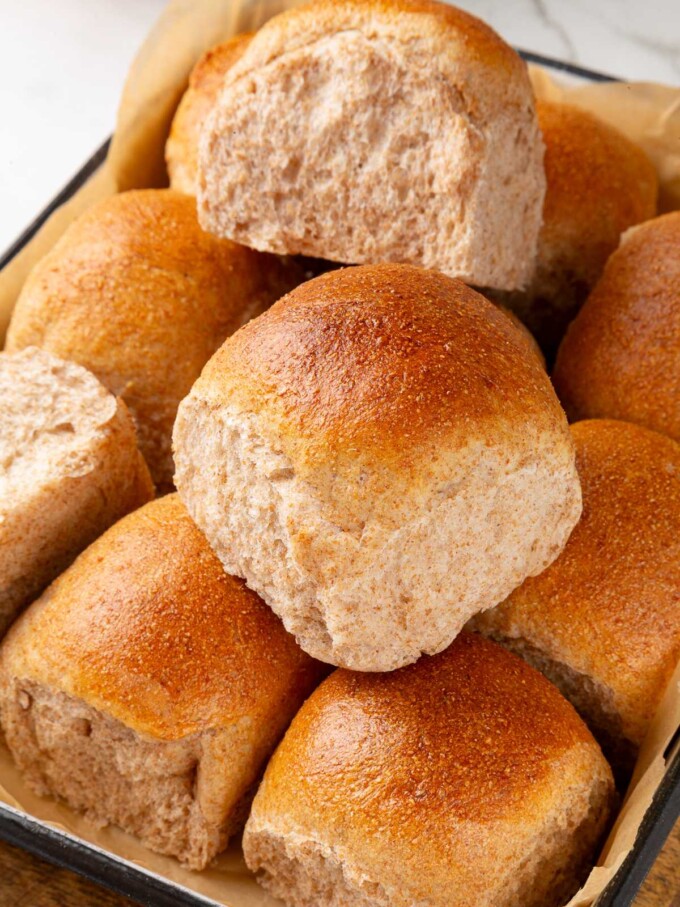
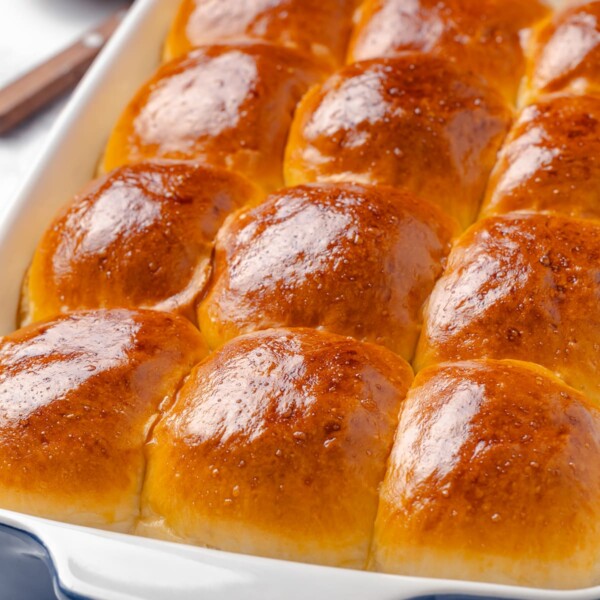
Step 7: Egg Wash and Bake. Beat the remaining egg well and brush it gently over the tops of the rolls (photo 9). Don’t let the egg wash run down the sides or pool between rolls. Bake for 20 minutes, until the tops are a deep golden brown (photo 10). If you want to double-check doneness, an instant-read thermometer inserted into the center of a roll should read 185ºF. Pull them from the oven as soon as they hit that color and temperature. These rolls dry out quickly if overbaked.
Step 8: Let the rolls rest in the pan for a few minutes before serving (photo 11). Serve slightly warm while the crumb is soft and pull-apart.


Recipe FAQs
Store the rolls at room temperature in an airtight container or zip-top bag for up to 3 days. To reheat, wrap a roll in a damp paper towel and microwave for 15 to 20 seconds. For longer storage, freeze baked rolls in an airtight bag for up to 3 months and thaw at room temperature before reheating.
Yes. The easiest approach is to bake the rolls fully, let them cool completely, and freeze them. When you are ready to serve, thaw at room temperature and warm in a 300°F oven for about 8 to 10 minutes. They come out tasting nearly fresh-baked. Perfect for holidays or busy weeks!
Underproofing is the most common reason these rolls turn out dense. The rolls need to visibly triple in size during the second proof, crest over the edge of the pan, and feel light and airy when you press them gently with a fingertip. If they spring back quickly, they need more time.
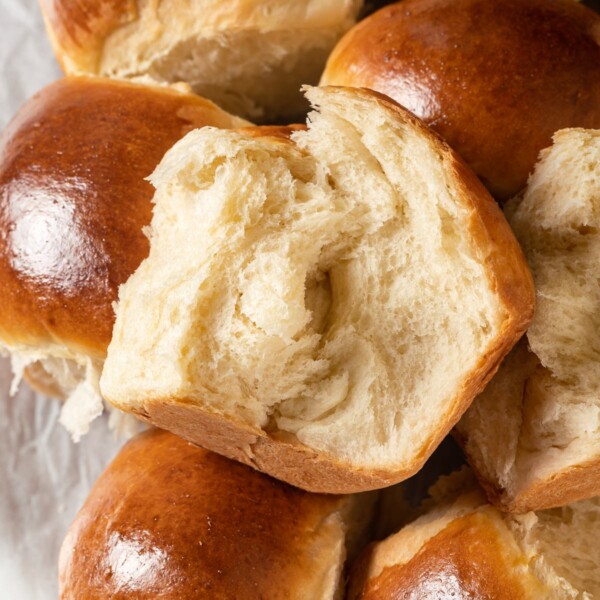
Both are soft and springy with a pull-apart crumb. The sourdough version has a mild tangy note that the plain version does not, and the discard helps the rolls stay soft a day longer. The butter and sugar are a little less pronounced here because the whole wheat flavor is stronger overall, so they taste slightly more hearty. If you are curious about a loaf-form version using a comparable flavor profile, my sourdough sandwich bread is worth a look.
You can, but the sourdough discard measurement is the one place where volume is genuinely unreliable. Active starter is airy and light while flat, refrigerated discard is dense, so 1 cup of each weighs very differently. If you do not have a scale, use about 1 1/2 cups for active or recently fed starter and 1 cup for flat discard. For everything else, the volume measurements in the recipe are consistent enough to work, though a scale will always give you more predictable results.
Recommended Rolls Recipes

Rolls & Biscuits
Sourdough
Rolls & Biscuits
Rolls & Biscuits
If you enjoyed this recipe, please leave a star rating and let me know how it goes in the comments below! I love hearing from you and your comments make my day!
Whole Wheat Sourdough Rolls
Ingredients
- 3 cups whole wheat flour
- 1 cup sourdough discard
- 2 ¼ teaspoons instant yeast
- ¾ cup warm water
- ¼ cup granulated sugar
- 2 teaspoons kosher salt
- ¼ cup unsalted butter, cubed
- 1 large egg, for dough
- 1 large egg, for egg wash
Instructions
- Add whole wheat flour to the bowl of a stand mixer fitted with the hook attachment, then add the sourdough discard, instant yeast, warm water, sugar, salt, cubed butter, and egg.
- Mix on low speed until all ingredients are incorporated and only a few butter pieces remain.
- Increase to medium speed and knead for 3 to 4 minutes, until the dough pulls a rough windowpane (stretches thin without tearing).
- Scrape the dough into a lightly oiled bowl, cover, and proof in a warm spot for 45 to 90 minutes until visibly doubled and airy to the touch.
- Spray a 9×13 inch baking dish with non-stick spray or grease with softened butter.
- Turn the dough onto a lightly floured surface and divide into 12 pieces, approximately 85g each.
- Shape each piece by folding the edges into the center, flipping seam-side down, then using a push/pull motion between your thumb and fingers to tighten the dough into a smooth ball. Don’t let it roll freely in your hand.
- Place rolls in the prepared dish, cover with plastic wrap, and proof in a warm spot for about 1 hour until tripled in size, cresting over the edge of the dish, and light and airy when gently pressed.
- Preheat the oven to 350ºF conventional (no fan).
- Brush tops gently with beaten egg wash, keeping it off the sides of the dish so it does not pool.
- Bake for 20 minutes until deep golden brown, or until an instant-read thermometer inserted into the center reads 185ºF.
- Serve slightly warm or at room temperature.
Notes
Shaping: The center seam will not fully close on whole wheat dough the way it does with white flour rolls. Focus on tightening, not a perfect seam.
Measuring: Use a kitchen scale to measure the sourdough discard. Use exactly 265g. Without a scale, use 1 cup of flat discard or 1 ½ cups of active or recently fed starter.
Storage: Store at room temperature up to 3 days. Freeze for up to 3 months. Reheat individual rolls in the microwave for 20 to 30 seconds or warm in a 300ºF oven for 10 minutes.
Nutrition
Nutrition information is automatically calculated, so should only be used as an approximation.
 Like this recipe? Rate & comment below!
Before You Go
If these whole wheat sourdough rolls hit the spot, there is plenty more where they came from. Browse our yeast bread recipes, sourdough recipes, or sourdough discard recipes for more to try!



I was worried the whole wheat flour would make these heavy, but the crumb was genuinely light and pulled apart beautifully. The dough felt a little stiff after mixing but smoothed right out after a few minutes of kneading, just like you said it would.