Showing posts with label Feijoa. Show all posts

Monday, April 25, 2022

Feijoa cake


👩🏻‍🍳about 20 feijoas, 3 eggs, 200 g sugar, 80 g butter, melted (I used salted butter, if you use normal butter add a pinch of salt to the mixture), 200 g self raising flour and a drop of pure vanilla essence. 

Cut the feijoas in two halves and remove the flesh with a teaspoon. Set aside. Beat the eggs and sugar first until the mixture is pale yellow, then add the butter and, little by little the flour. End with vanilla. Stop beating and fold in the feijoas. Pour into a greased or lined baking tin (20cm is good) and bake at 180℃ for about 45 mins (until a toothpick inserted into the centre of the cake comes out clean). Tip upside-down on a serving plate while still hot, the feijoas tend to go to the bottom so I keep the cake upside down to have them at the top. Dust with icing sugar and let it cool down completely before serving (so that the base of the cake will flatten nicely). Yum with cream or mascarpone!

Also, did you know that you can eat feijoa flowers too? Find out more here


Photos and Recipes by Alessandra Zecchini ©


Sunday, April 24, 2022

Green smoothie with feijoas... and more flowers from the garden


Like most people in New Zealand I am loaded with feijoa this April. A good way to use them is in smoothies, and this is a particularly good one: feijoa, banana, spinach leaves and coconut water. Quantities to taste!


And now some flowers from the garden for my Pinterest board!


  Photos and Recipes by Alessandra Zecchini ©

Saturday, April 21, 2018

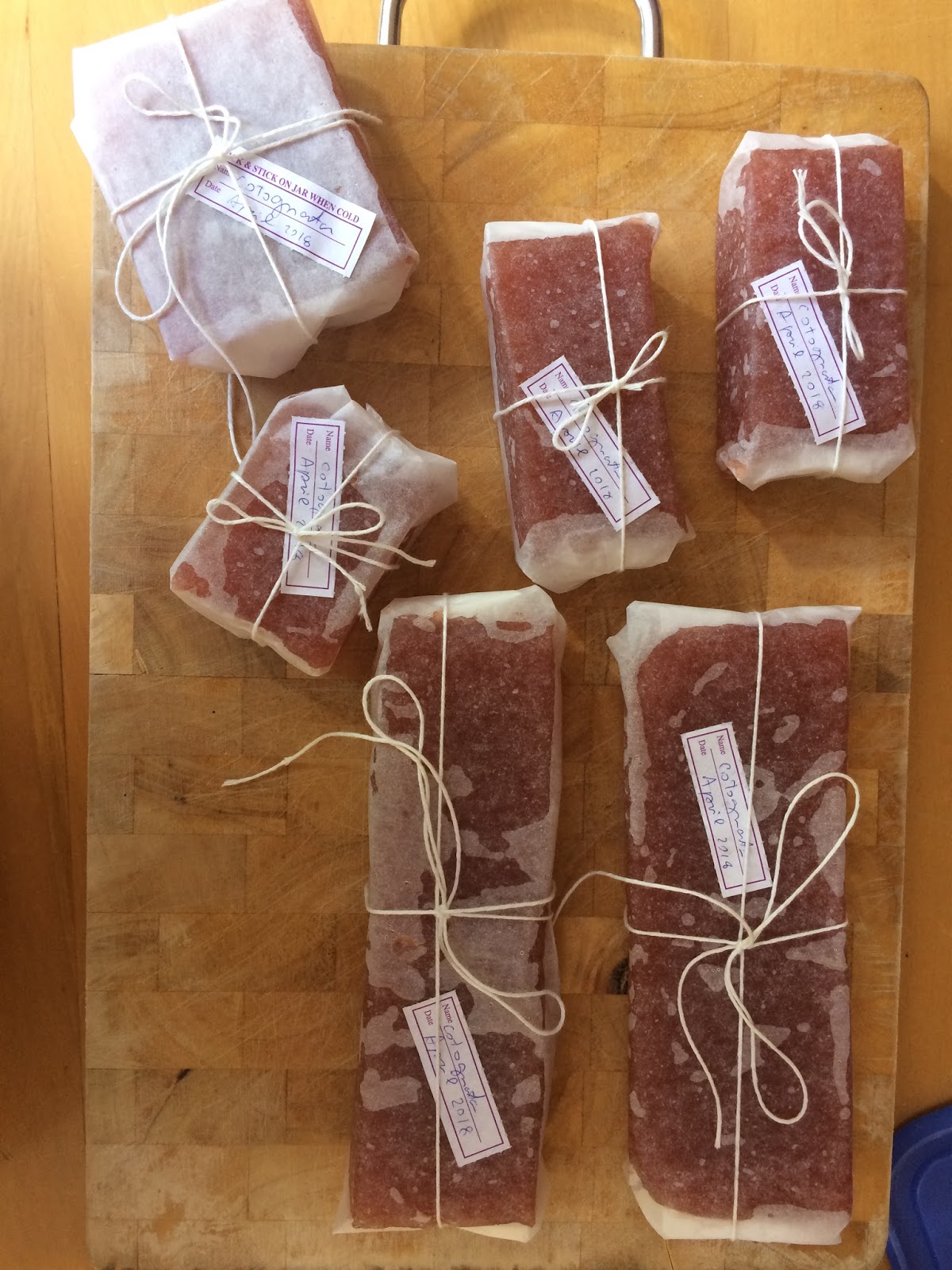
Autumn preserves: quince paste, feijoa paste and fig jam, all good with cheese!


It is Autumn and there is great produce around, in particular I like quinces, which I can find at the local orchard in Oratia (Dragicevich and Sons, in West Coast Rd). I usually make jelly (recipe here) or paste, the paste needs less sugar and you get more out of it, although the cooking process is quite long. 


Wash the quinces, quarter and then remove the centre but not the skin. Cook with a bit of water until soft then blend. Add 60% of weight in sugar and a pinch of citric acid, and then bring to the boil, and boil, boil and boil until quite thick, stirring most of the time (ideally all the time, but I took breaks away from the heat!!). Then pour into a mould or a rectangular container.


Let the paste set for a few days, then cut and wrap in baking paper.


This year I had quite a few feijoas in the garden, so I though of doing the same. In the past I made jam (recipe here) and it was so solid that I realised that it had been a mistake to put it into jars: feijoas are like guava and guava makes a paste similar to quince paste, great for cheese too!

So I followed the same steps as for the quinces, but instead of removing the core I removed the skins with a knife. If you want to use the skins for something else you can try this feijoa cordial.


 Finally, the fig trees have a few figs, not big and as soon as they ripen the birds eat them, so the only thing I can do is to pick them when they are still green, not so good for eating fresh, but good for jam. 

Boil them first for five minutes then discard the water and scum (from the white sap that comes out), cut them into two and put them back in the pot, once again with 60% sugar, and a little water. 


 The figs should mush easily while boiling, if you keep stirring them with a wooden spoon, but if you want to keep a few whole remove them from the pot before mashing the rest, and add them back during the last 5-10 minutes. This jam went into jars, it looks great, but I have the feeling that it will also be quite hard (I added some pectine - jam setting mix) and probably next year I will end up making fig paste instead of jam!


 Photos and Recipes by Alessandra Zecchini ©


Saturday, April 4, 2015

Feijoa and Spirulina smoothie


Finally I have some feijoas in the garden!


They are perfect for breakfast, and if you want a Vegan-glutenfree-sugarfree-raw Easter!


For 2 smoothies I just used 6 feijoas (peeled), 400 ml natural apple juice and half a tsp of spirulina.


Happy Easter!


Photos and Recipes by Alessandra Zecchini ©

Monday, May 5, 2014

Feijoa jam... is like guava paste!


I made feijoa jam using my usual ratio of 60% sugar (i.e. 60g sugar for every 100g fruit - in this case you need to scoop the pulp our first, as the jam is made only with the pulps, not the skins).
Most Kiwis seem to use the same amount of sugar as the weight of the fruit (100g to 100g) which I find too much personally, but if this is also your style of jam and you are planning a feijoa jam … think again!!
Even with the 60% ratio my jam was so thick that I regretted putting it into jars! It would it been better in a mould, like quince paste.


In fact it really reminds me of the guava paste that you can buy in South America (and in some shops here too, in cans). It smells tropical and taste fantastic, sweet and thick and just perfect with a strong cheese. So next time I'll make feijoa 'paste', not jam, and I'll be sure not to put it into a jar!

Photos and Recipes by Alessandra Zecchini ©

Sweet NZ imageThis recipe is for Sweet New Zealand #34, the blogging event open to all Kiwi bloggers (living in NZ or overseas) and expats blogging from NZ. May's host is Sue from Couscous and Consciousness. I have entered another recipe already for Sweet NZ this month, but since feijoas are in season now I didn't want to wait another month. Visit Sue's blog and click here to share you sweet creations with her. Also let me know if you are keen to be a host in 2014, and book a month!


Wednesday, June 12, 2013

Feijoa zest agar agar jelly


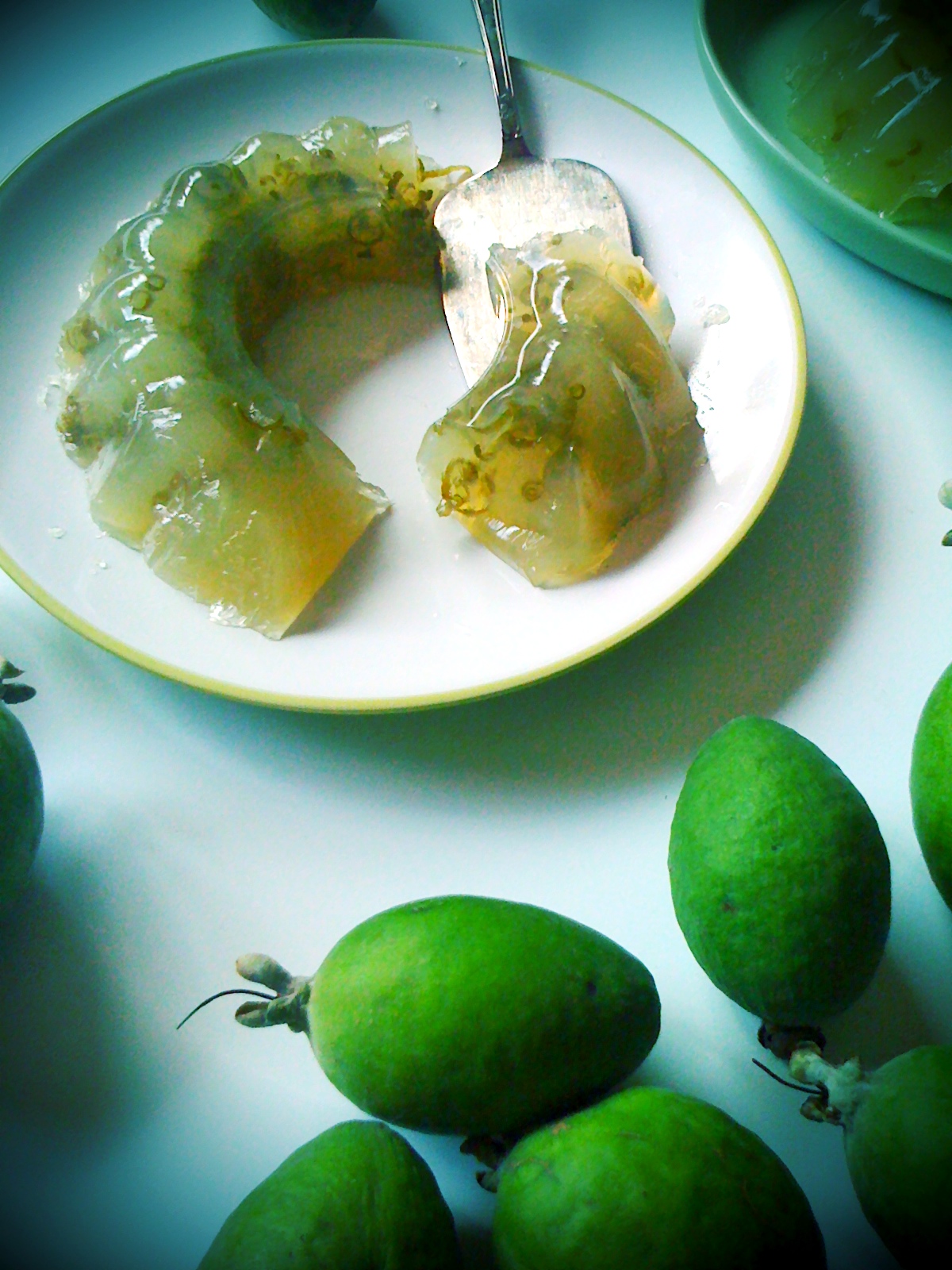
In this post you can find the recipe for the feijoa zest syrup, and from it I took about one tsp of sezt for the feijoa zest meringues. The leftover syrup (full of zest) was about 350 ml, and I decided to use it to make a little jelly with agar agar. I added a level tsp of agar agar and brought it back to the boil. The I poured it into a jelly mould and waited. It tasted great and was quite a visual treat, with all the zest floating in jelly! 

In fact I think that I will enter this one too for Sweet New Zealand, the monthly blogging event for Kiwi bloggers. Our June host is Sue, click here to enter. 

Photos and Recipes by Alessandra Zecchini ©

Tuesday, June 11, 2013

Feijoa zest meringues for Sweet New Zealand


In this post I mentioned using feijoa zest, I have use them before for this cordial, but I wanted to experiment more. Feijoa zest is bitter, that kind of bitter that makes you think that in large doses could be poison (possibly, anyone knows?) just like apricot kernels or fern fronds, but in small amounts, and occasionally, they feel safe (and I am still alive!). And they were good, possibly not as good as my favourite passion fruit meringues, but still good! 


First I put into a pot the zest of about 20 feijoas (you don't need all these, but there is another recipes coming out of this!) with 500 ml of water and 100 g of sugar, and I made a thin syrup. Then I drained about a tsp of zest and set it aside for the meringues. With the rest I made agar agar jelly (the next post). For the meringues I used 3 eggs white at room temperature and 150 g of sugar (normal white sugar). Once the egg whites and sugar were well beaten and stiff I added the zest and also one tbsp of cornflour to 'dry' the mixture (moisture from adding fruit or something moist to the meringue mixture can ruin meringues). I spooned the meringues on an oven tray and baked them at 50°C for about 4 hours. They were crunchy outside but moist inside. I tasted them first, for poison of course, and then I offered them at my Slow Food committee meeting. Nice to have foodies to experiment on!


This recipe is for Sweet New Zealand, the monthly blogging event for Kiwi bloggers. Our June host is Sue, click here to enter.


Photos and Recipes by Alessandra Zecchini ©

Sunday, June 9, 2013

The joy of free feijoas, and feijoa smoothie


Feijoa is one of those fruits that really symbolize Kiwiana for me, and in particular the joy of sharing produce in New Zealand. There is always someone ready to share feijoas in New Zealand, and this to me is like sharing joy: no matter how little fruit my plans produce (I think that this year I had 3!) in a way or another a bucket of feijoas alway reach my kitchen from another garden. This time it was a Dante member who brought in tons of feijoas at the Italian school. We gave many to the children and then there were still lots left for me to take home. We mostly eat them with a spoon, but for a big feijoa zing try a shake: for 4 smoothies I used about 10-12 feijoas and some natural apple juice: so delicious and full of vitamins!


Another thing I love about feijoas is their smell, so fresh and tropical! So I like to use the zest too, and made more recipes which I hope to publish soon (a peak preview here).


Keeping the green theme going, these small capsicums are the last thing I got our of my garden the other day. They didn't turn yellow-orange like the previous ones, but it was time to uproot the plant, and I fried them :-).


And this is Marameo, keeping me company in the kitchen (I mean, she is there just to see what she can get to eat, but still, she is company!). And she got big green eyes!

Have a lovely week everyone!


Photos and Recipe by Alessandra Zecchini ©

Saturday, April 13, 2013

Fruit and vegetable market in Montevideo, and where feijoas (guayabas) come from


There is a market on Tuesday morning, 10 minutes walk from home, and the prices are much better than the supermarket, of course, and the choice much better. It is quite similar to an Italian market, possibly with lightly less choice, but still many more varieties that you can find in NZ. This post's photos where taken by Arantxa.

Among the fruit we found some feijoas,  The name in Uruguay is guayaba (or guayabo like wikipedia says, the fruit seller told me guayaba and I will use this name), which I also take to be as a generic name for all guavas, although these are the first I have seen here (I guess it is the same season as New Zealand: Feijoa season!). Anyway, feijoas/guayabas are originally from this part of the word. Of course I bought some guayabas, and granadas (in the photos) and hongos (mushrooms, fubby enough they sell lots of Asian style mushrooms here!), and I am learning a few more names for fruit and veggies. One thing that here abound is rocket salad, probably the Italian immigrants brought it here!


The round 'zucchini' you see below are called zapatillos, they taste like a mixture between a zucchini and a cucumber and they can be eaten raw or cooked. I didn't know them, but I had a cooking class here and made something really yummy with them: Faina de Zapallitos, an original Uruguayan dish. But this will be the next post :-).


Photos  by Arantxa Zecchini Dowling ©

Saturday, December 1, 2012

Fresh As raspberries, lychees and feijoas dipped in dark chocolate


Usually every Christmas I make dried apricots, nuts and other dried fruit dipped in dark chocolate, but this year I am using Fresh As freeze dried fruit. The flavour is really intense, and the texture completely different, crispy and fresh! I used dried raspberries, dried lychees and dried feijoas. I had friends around and everything disappeared in no time. Most people preferred the raspberries, but I preferred the lychees and Max the feijoas. I did the mandarins already here, and I am pondering about the next fruit to try!


Photos and Recipes by Alessandra Zecchini ©

LinkWithin

Related Posts with Thumbnails