Showing posts with label Jam. Show all posts

Monday, September 8, 2025

Crostata di marmellata di more e lamponi


I mede a lot of jam this Italian Summer, from fruit that I foraged and also picked from the garden.
Foraged: raspberries, blueberries, blackberries.
Picked: red currants, yellow plums, cornelian cherries.

I gave away some jam because I cannot take it back to New Zealand, but also made several crostata, Italian jam tarts, and this one has two jams: half raspberry and half blackberry. 

Ingredients:
100 g butter
100g sugar
300g flour
1 tsp of baking powder
1 small glass of Sassolino 
(this is a local aniseed liqueur, you can substitute with Sambuca, or with your favourite liqueur)
2 eggs
jam to fill


Mix the butter with the sugar, then add the other ingredients in order and mix. You will get a soft sticky dough. Keep about a fifth of the dough aside for the topping, and spread the rest in a tart pan based with baking paper. You cannot roll this dough with a rolling pin, it is too soft, you must spread it on the base and borders with your fingers. It may sound strange but this way you will get a crostata base that is not dry (as it often happens!).


Add the jam (or jams, in this case)


Roll the remaining dough into thin strips and place over the tart. Because this recipe has baking powder the strips will become larger during baking, so make them thin.


Bake at 180°C fan oven for about 45 minutes. Let it cool down completely before lifting out from the baking pan.


And here another one I made with yellow plum jum!


Photos and Recipes by Alessandra Zecchini ©


Monday, April 30, 2018

Colomba Sestolese - A traditional sweet pie from my Italian village in the Apennines - step by step photos and instructions


This cake is traditionally made in Sestola on 6 December for St Nicholas' Day, so I am totally out of season here, but I have a good excuse: my friend Stefania gave me a jar of jam she made with rusticane plums, and the flavour was just right, not too sweet and a little sour... just like the plum jams they make at home, and an essential ingredient for this preparation. Please note, this is a VERY ITALIAN CAKE, not one that Kiwis may like as in this country the preference is for somewhat soft and 'moist' cakes (although my husband ate this happily, but with cream on the side!!!).


I am sure that every family has a lightly different recipe, this is mine and works pretty well. In a large bowl, or on a wooden table, measure 500 g of plain flour, 200 g sugar, 1 tsp of baking powder and 120 g of butter. Usually in Italy we use unsalted butter, so add a pinch of salt, but here in NZ I used salted butter, so no more salt is needed. Mix just a little then add 3 free range eggs and a small glass of liquor. I used Sambuca, Sassolino is best, but hard to find here, and Sambuca is a good substitute. You can also add the zest of a lemon or some citrus peels (I added citrus peels, about 1 heap tsp).


Mix well, don't worry if it feels too dry at first, you need to work on the dough and with a little patience you will get a soft dough.


Shape into a ball then cut into three pieces. Take the bigger piece and roll it (add more flour for the board/table).


Line a 20cm round cake tin with baking paper and place the rolled piece inside, building up the borders a little.


Now add about three or four tablespoons of plum jam.


Chop some almonds and chop some walnuts. You can also add pine nuts, or even hazelnuts, the important thing is always to have walnuts! 


Top the jam with the chopped almonds,


Then with walnut pieces, and sprinkle with sultanas.


Roll some more pasty and cut a circle to cover the filling, add some leftover pastry to lift the border where necessary.


Repeat! Jam, chopped almonds and walnuts, sultana...


Roll some more pastry and cut another circle to cover the filling. Always lift the border with more pastry where necessary.


And repeat for the third time: jam, nuts, sultana and one more circle of pastry. 


Use the pastry strips left over to seal well the borders with the top, I press everything down with a teaspoon for a neat look.


Make some light incisions with a fork on the top.


Sprinkle with sugar and bake at 180/200°C for about 40 minutes.


Let the pie cool down before cutting, even if the fragrance will be irresistible.


Ok, I was going to cut the cake the day after and take a great photo... but my daughter got up first and had some for breakfast.... and then it went so quickly that this is the only photo I have... anyway, you can see the three layers, and the crust is like a biscuit. It was delicious, and this is a good thing: when we make this cake in the village we have a proverb which says that if the cake is good it will be a good snowy season (mountain village you see, we need snow for skiing), and now the family hopes that this year Mt Ruapehu  will have lots of snow and a great skiing season!


 Photos and Recipes by Alessandra Zecchini ©



Saturday, April 21, 2018

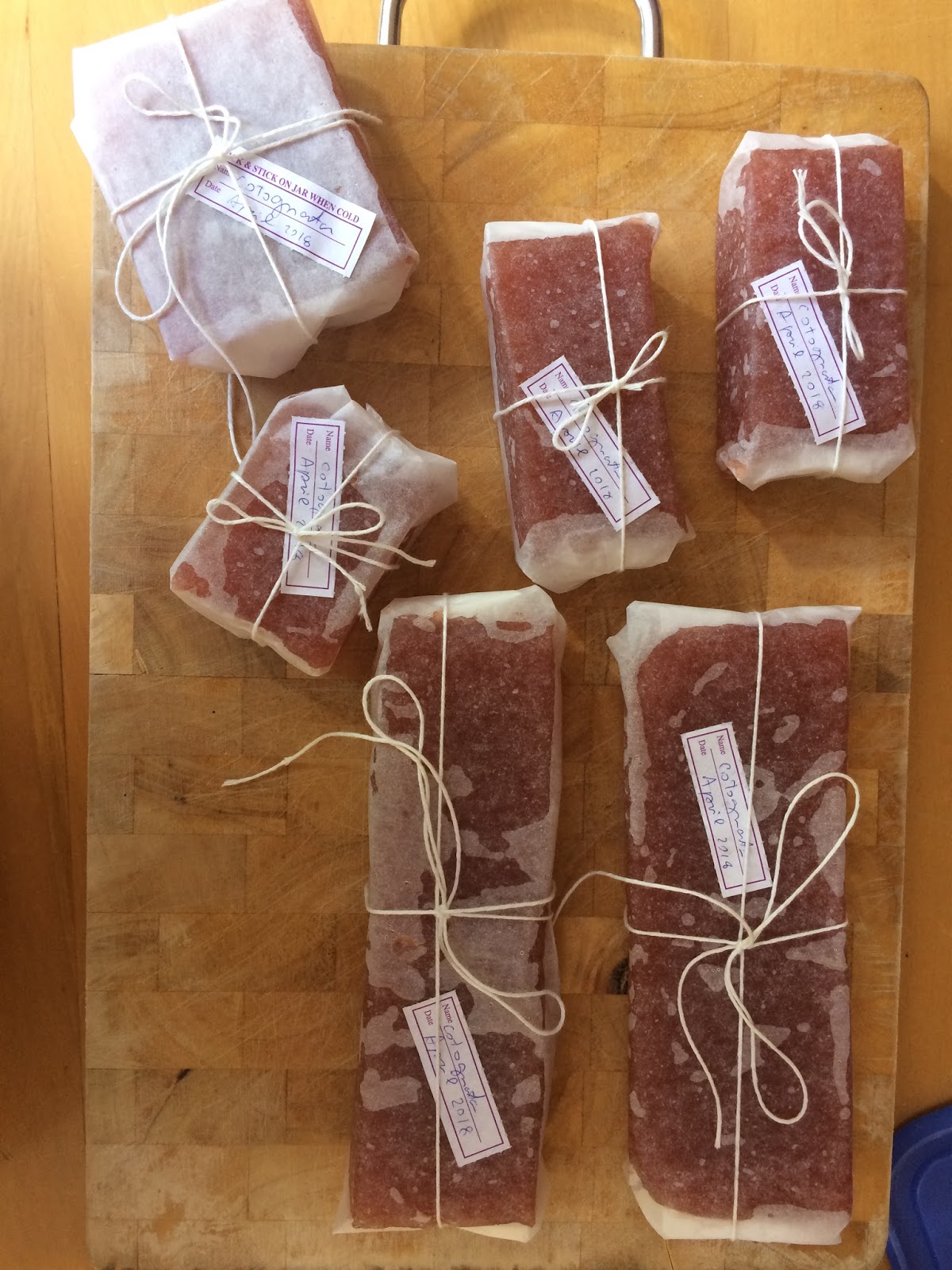
Autumn preserves: quince paste, feijoa paste and fig jam, all good with cheese!


It is Autumn and there is great produce around, in particular I like quinces, which I can find at the local orchard in Oratia (Dragicevich and Sons, in West Coast Rd). I usually make jelly (recipe here) or paste, the paste needs less sugar and you get more out of it, although the cooking process is quite long. 


Wash the quinces, quarter and then remove the centre but not the skin. Cook with a bit of water until soft then blend. Add 60% of weight in sugar and a pinch of citric acid, and then bring to the boil, and boil, boil and boil until quite thick, stirring most of the time (ideally all the time, but I took breaks away from the heat!!). Then pour into a mould or a rectangular container.


Let the paste set for a few days, then cut and wrap in baking paper.


This year I had quite a few feijoas in the garden, so I though of doing the same. In the past I made jam (recipe here) and it was so solid that I realised that it had been a mistake to put it into jars: feijoas are like guava and guava makes a paste similar to quince paste, great for cheese too!

So I followed the same steps as for the quinces, but instead of removing the core I removed the skins with a knife. If you want to use the skins for something else you can try this feijoa cordial.


 Finally, the fig trees have a few figs, not big and as soon as they ripen the birds eat them, so the only thing I can do is to pick them when they are still green, not so good for eating fresh, but good for jam. 

Boil them first for five minutes then discard the water and scum (from the white sap that comes out), cut them into two and put them back in the pot, once again with 60% sugar, and a little water. 


 The figs should mush easily while boiling, if you keep stirring them with a wooden spoon, but if you want to keep a few whole remove them from the pot before mashing the rest, and add them back during the last 5-10 minutes. This jam went into jars, it looks great, but I have the feeling that it will also be quite hard (I added some pectine - jam setting mix) and probably next year I will end up making fig paste instead of jam!


 Photos and Recipes by Alessandra Zecchini ©


Thursday, June 4, 2015

Quince jelly


I love quince jelly, lovely project for rainy days! Wash and quarter some quinces, removing the pips, then boil the lot with lemon juice and a little water until the fruit is soft and mushy. 


Put the pulp inside a jelly bag, cheaper if you just use a clean pillowcase (I have one which I use just for jellies) and hung it over a bowl (using a broom and two chairs) for a day and night.


This way the juice will drop into the bowl. As a rule if you like a clear jelly do not squeeze the bag! But I confess that I gave it a little squeeze… I wanted to get more out of it!


Measure the juice and add the same amount of sugar, then boil again.


I had lots, so I put half in a container to set, and added Fresh As Raspberry powder to the other half for a quick raspberry jelly. Delicious!


Photos and Recipes by Alessandra Zecchini ©

Thursday, February 5, 2015

Plum jam with a little brown sugar


I am back to New Zealand and it is still plum season in the Oratia orchards! But is it so hot that plums don't last long after picking, so I had about 1 kg that was far too ripe and soft for eating. I washed them and then place them in a pot with a little water and boiled them, then I strained the 'paste' to discard stones and leftover skin and tasted it. I usually add 50-60% of sugar (I don't like the 1kg fruit for 1kg sugar ratio they do in NZ), but this paste was already sweet! So I added just 2 tbsp of brown sugar and a pinch of citric acid (as a preservative) and, fearing that the jam wouldn't set, 1/3 tsp of agar agar. If I were to keep this jam longer maybe I would have added more sugar, but I only made 5 small jars and two are gone already!
It is a really delicious and sweet jam, and it is the first time (after 18 years in NZ for me) that plums seems to be so sweet when ripe (almost like in Italy), and a jam need so little sugar - I guess it is due to the dry January we had.
But I really want to try to make a jam with even less sugar (or no sugar at all) to keep, any suggestion?


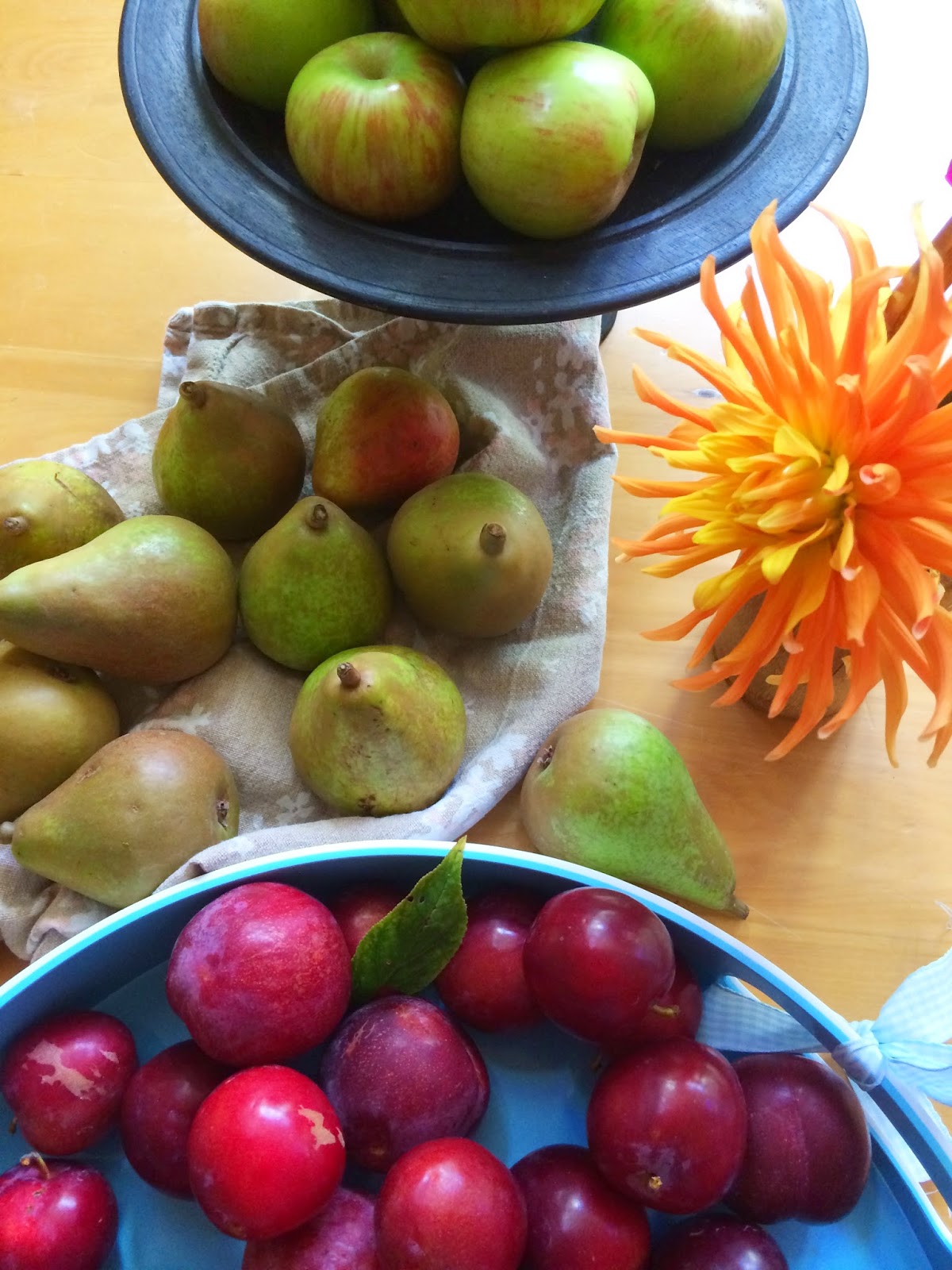
Remember that the first pears and the famous Oratia Beauty apples are also in season at the Dragicevich Orchard, 556 West Coast Rd, Oratia, Auckland. The Oratia Beauty apples are the first fruit to be added to the Slow Food Foundation for Biodiversity Ark of Taste
  
Photos and Recipes by Alessandra Zecchini ©

Monday, May 5, 2014

Feijoa jam... is like guava paste!


I made feijoa jam using my usual ratio of 60% sugar (i.e. 60g sugar for every 100g fruit - in this case you need to scoop the pulp our first, as the jam is made only with the pulps, not the skins).
Most Kiwis seem to use the same amount of sugar as the weight of the fruit (100g to 100g) which I find too much personally, but if this is also your style of jam and you are planning a feijoa jam … think again!!
Even with the 60% ratio my jam was so thick that I regretted putting it into jars! It would it been better in a mould, like quince paste.


In fact it really reminds me of the guava paste that you can buy in South America (and in some shops here too, in cans). It smells tropical and taste fantastic, sweet and thick and just perfect with a strong cheese. So next time I'll make feijoa 'paste', not jam, and I'll be sure not to put it into a jar!

Photos and Recipes by Alessandra Zecchini ©

Sweet NZ imageThis recipe is for Sweet New Zealand #34, the blogging event open to all Kiwi bloggers (living in NZ or overseas) and expats blogging from NZ. May's host is Sue from Couscous and Consciousness. I have entered another recipe already for Sweet NZ this month, but since feijoas are in season now I didn't want to wait another month. Visit Sue's blog and click here to share you sweet creations with her. Also let me know if you are keen to be a host in 2014, and book a month!


LinkWithin

Related Posts with Thumbnails