Showing posts with label Jam. Show all posts

Saturday, March 16, 2019

Autumn preserves: quince paste, feijoa paste and fig jam


It is Autumn and there is great produce around, in particular I like quinces, which I can find at the local orchard in Oratia (Dragicevich and Sons, in West Coast Rd). I usually make jelly (recipe here) or paste, the paste needs less sugar and you get more out of it, although the cooking process is quite long. 


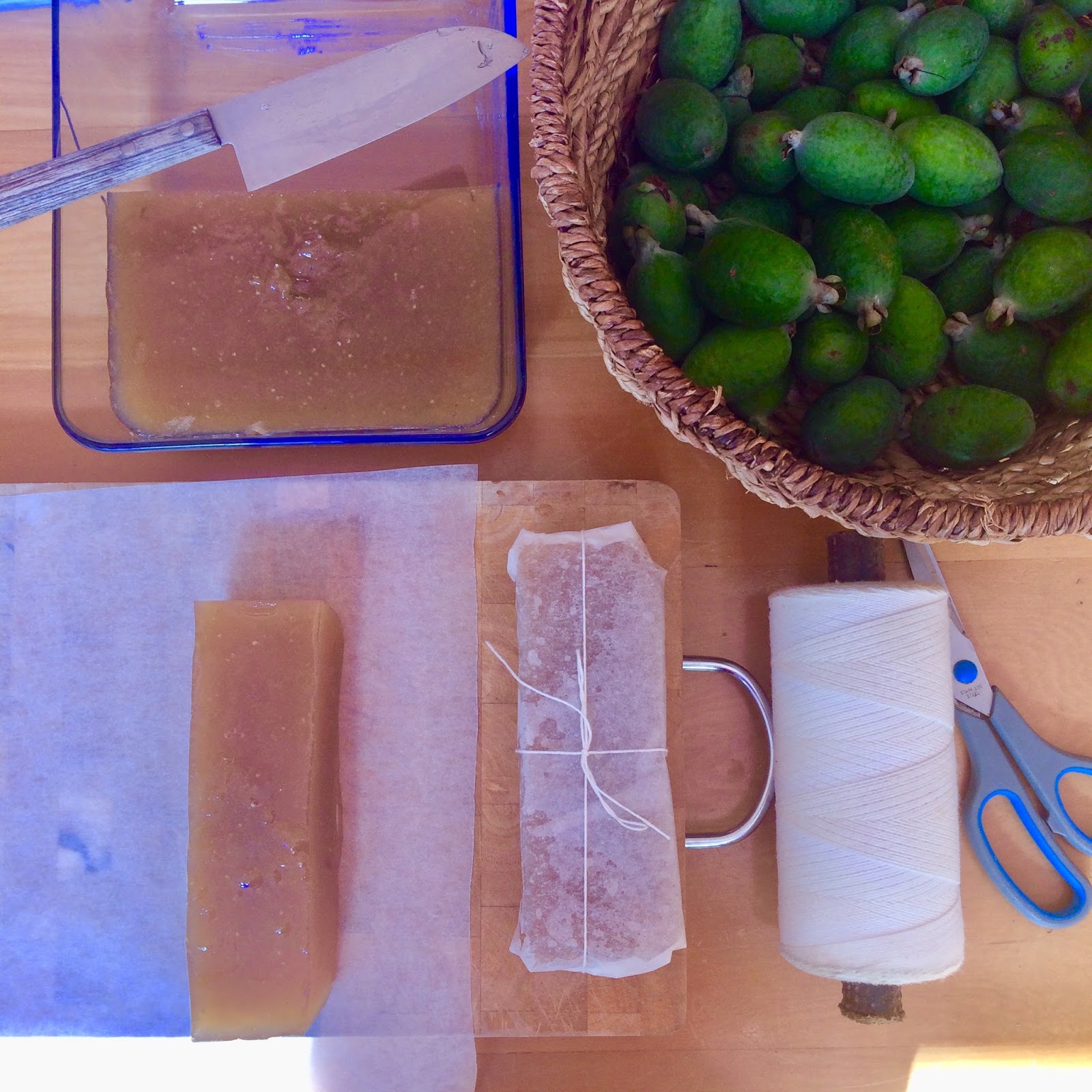
Wash the quinces, quarter and then remove the centre but not the skin. Cook with a bit of water until soft then blend. Add 60% of weight in sugar and a pinch of citric acid, and then bring to the boil, and boil, boil and boil until quite thick, stirring most of the time (ideally all the time, but I took breaks away from the heat!!). Then pour into a mould or a rectangular container.


Let the paste set for a few days, then cut and wrap in baking paper.


This year I had quite a few feijoas in the garden, so I though of doing the same. In the past I made jam (recipe here) and it was so solid that I realised that it had been a mistake to put it into jars: feijoas are like guava and guava makes a paste similar to quince paste.

So I followed the same steps as for the quinces, but instead of removing the core I removed the skins with a knife. If you want to use the skins for something else you can try this feijoa cordial.


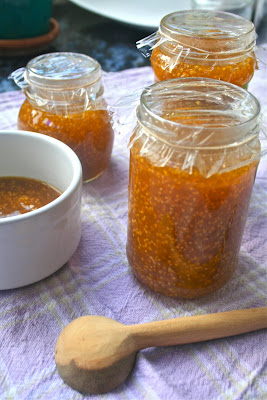
 Finally, the fig trees have a few figs, not big and as soon as they ripen the birds eat them, so the only thing I can do is to pick them when they are still green, not so good for eating fresh, but good for jam. 

Boil them first for five minutes then discard the water and scum (from the white sap that comes out), cut them into two and put them back in the pot, once again with 60% sugar, and a little water. 


 The figs should mush easily while boiling, if you keep stirring them with a wooden spoon, but if you want to keep a few whole remove them from the pot before mashing the rest, and add them back during the last 5-10 minutes. This jam went into jars, it looks great, but I have the feeling that it will also be quite hard (I added some pectine - jam setting mix) and probably next year I will end up making fig paste instead of jam!


 Photos and Recipes by Alessandra Zecchini ©


Friday, March 4, 2016

Plum jam with brown sugar


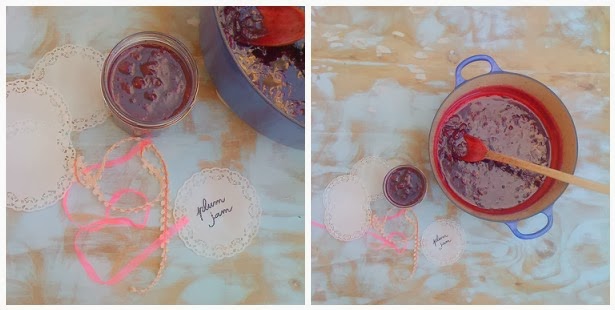
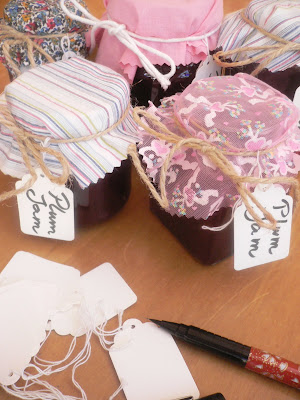
In New Zealand it is still plum season in the Oratia orchards! But is it so hot that plums don't last long after picking, so I had about 1 kg that was far too ripe and soft for eating. I washed and then put the plums in a pot with a little water and boiled them, then I strain them to discard stones and leftover skin and tasted the paste. I usually add 50-60% of sugar (I don't like the 1kg fruit for 1kg sugar ratio they do in NZ), but this paste was already sweet! So I added just 2 tbsp of brown sugar and a pinch of citric acid (as a preservative) and, fearing that the jam wouldn't set, 1/3 tsp of agar agar. If I were to keep this jam longer maybe I would have added more sugar, but I only made 5 small jars and two are gone already!


Photos and Recipes by Alessandra Zecchini ©

Thursday, March 19, 2015

Plum Jam (using much less sugar that the traditional 'Anglo' recipes)


Jam made with plums from Oratia. I removed the stone and cooked the plums with a little water and some jam setting sugar (this was a present, and I wanted to try it). The NZ jam tradition seems to be 1kg of sugar for 1 kg of fruit (or even more sugar if you make raspberry jam) for an Italian this is too much. I go for 40 to 60%, with the latter being my preference if I need to preserve the jam for a long time (it helps agains botulin). You can taste the fruit better with less sugar :-).


And our cats, Nikita (left) and Marameo (right) are also enjoying the last of the sun, sleeping outdoors all day long! Marameo is 18 now, an old lady cat 


 Photos and recipes by Alessandra Zecchini ©

Monday, June 27, 2011

Cape Gooseberry Jam


Last Summer I went on a two weeks holiday and upon my return I found that I didn't have a veggie garden but a forest of leaves and bugs! We had so much rain when I was away, and I could hardly see the tomatoes on the plants (full of leaves), the zucchini plants were rotten while pumpkins were crawling everywhere, and golly, the Cape gooseberries were out of control!


My problem is that I am not very good at 'thinning' plants. I don't have the courage of killing a seedling just because it gets to close to another one... and the result is this: a mess! I almost felt like removing all the cape gooseberry plants at once, but then I remember the Italian bloggers saying that cape gooseberries are so expensive in Europe... so I picked some and made a jam, on the same afternoon that I got home, even if I was tired from the trip.


Ingredients:

700 g cape gooseberries
Juice of half a lemon
500 g sugar (I used caster sugar simply because I just had that in the pantry, having being away so long!)
1 big apple


Wash the freshly picked fruit and place in a large saucepan with a little water and the lemon juice. Bring the fruit to a gentle boil. When the fruit is simmering add the apple, cut and cored but not peeled (the peel contain pectin, which will help your jam set) and the sugar. Stir often and cook for 30 minutes, then blend with an immersion blender. Cook for 10 more minutes, at this point the jam should start setting (check by picking up a little with a metal spoon).


Place the hot jam in sterilised jars, dried in the oven. Either seal the jars with cellophane covers (available in all supermarkets) and secure with an elastic band, or use capsule lids (I use Quattro Stagioni brand).
If using capsule lids, seal the jars well, place in a pot and cover with water. Bring to the boil and simmer for 20 to 30 minutes, depending on the size of the jars. Let the jars cool down in the pot overnight and when they are cold make sure that the capsule has popped by pressing gently on the lid. Properly sterilised jars will keep for over a year.


The jam turned out to be great, possibly one of the best jams I have made during the Summer :-)


Photos and Recipes by Alessandra Zecchini ©

Sunday, January 30, 2011

Plum Jam


Plum jam is one of my favourite, and as I live near some beautiful orchards in Oratia, west of Auckland, I like to make the most of the plentiful supply.


Plum Jam


Ingredients:


For each Kg of plums I used 600 g of sugar, (because I like my plum jam a little tart) and one teaspoon of pectin.


Wash the freshly picked fruit and place in a large saucepan with a little water. Bring the fruit to a gentle boil. When the fruit is simmering add the sugar and stir well. After 5 minutes add the pectin. Simmer the jam for about 5 more minutes and then pass through a sieve, discarding the stones.


Place the hot jam in sterilised jars, dried in the oven. At this point you can add to each jar a cinnamon stick (for dark plums) or a long pepper (for yellow plums); or you can wet the inside of the jar with a little grappa or brandy (an old Italian method). Either seal the jars with cellophane covers (available in all supermarkets) and secure with an elastic band, or use capsule lids (I use Quattro Stagioni brand).


If using capsule lids, seal the jars well, place in a pot and cover with water. Bring to the boil and simmer for 20 to 30 minutes, depending on the size of the jars. Let the jars cool down in the pot overnight and when they are cold make sure that the capsule has popped by pressing gently on the lid. Properly sterilised jars will keep for over a year.


I also made plum paste, I just used the jam that was left in the bottom of the pot and cooked it a bit longer. Then I pour it into a square container and let it set hard.


Photos and Recipes by Alessandra Zecchini ©