Showing posts with label thyme. Show all posts

Wednesday, June 12, 2019

A carrot soup that actually tastes good!


Do you want a carrot soup that taste carroty but not too much? Carrot taste can be a little 'overpowering' and I am tired of seeing so many carrot and coriander soup recipes, so here is a variation with onions and thyme.

1 kg carrots
1 large onion
olive oil
Fresh thyme
salt
vegetable stock
Salt and pepper to season
Coconut Yogurt to serve (optional)

Clean and steam the carrots. In the meantime slice the onion and cook in a frying pan with a little olive oil, salt and a few sprigs of fresh thyme until translucent. Place the steamed carrots and onion in a mixer and turn into a puree. Place into a soup pot and cover with vegetable stock. Simmer on low for 20-30 minutes (the longer the better). Add salt and pepper to taste and serve hot with a few fresh leaves of thyme and, if you like, a dollop of coconut yogurt.


Photos and Recipes by Alessandra Zecchini ©

Thursday, February 21, 2019

Baby perlas potatoes two ways: hot 'in padella', and salad with flowers


I received a few potatoes to try from Potatoes New Zealand to celebrate November Means New Potatoes, and here are my first creations.

  I started with baby perlas, which I knew already. These little new potatoes are cute and a real little treat, so they deserve special attention!
I boiled them first (no mint... just cannot bear minted potatoes, sorry Kiwis!) and then I divided them: half I used for salad, I picked the 'bigger' ones and cut them into two pieces, then I mix them with Vegan mayonnaise (recipe here), chopped onion weed bulbs and stalks, nasturtium buds and petals, and Impatiens' petals. 

Keep a few flowers aside for decorations, and onion weed flowers too, if you like. I think that a lot of people now are comfortable with eating nasturtium flowers and buds (I left some buds for decoration too, and for you to see). Buds taste a little like capers. Young tender leaves are nice too (see soup below). Not so many people would eat Impatiens though, or know about them. They taste a little like rocket, and I prefer the red ones, although I always add a few pink ones just because the colour is so pretty. My preference for red ones may be just because I observed the chickens eating all the red ones while leaving behind the other colours, but maybe they are just colour blind? Anyway, I tasted all the colours and decided that the chicken were right... Of course don't eat the flowers if you spray your garden with chemicals!


As for the smaller potatoes, I just heated it some garlic with olive oil in a skillet and then tossed the potatoes around, with an extra good pinch of salt, until hot. Then turned the heat off and added some fresh thyme, another toss, and ecco fattoPatatine novelle in padella al timo!


Photos and recipes by Alessandra Zecchini ©

Thursday, June 11, 2015

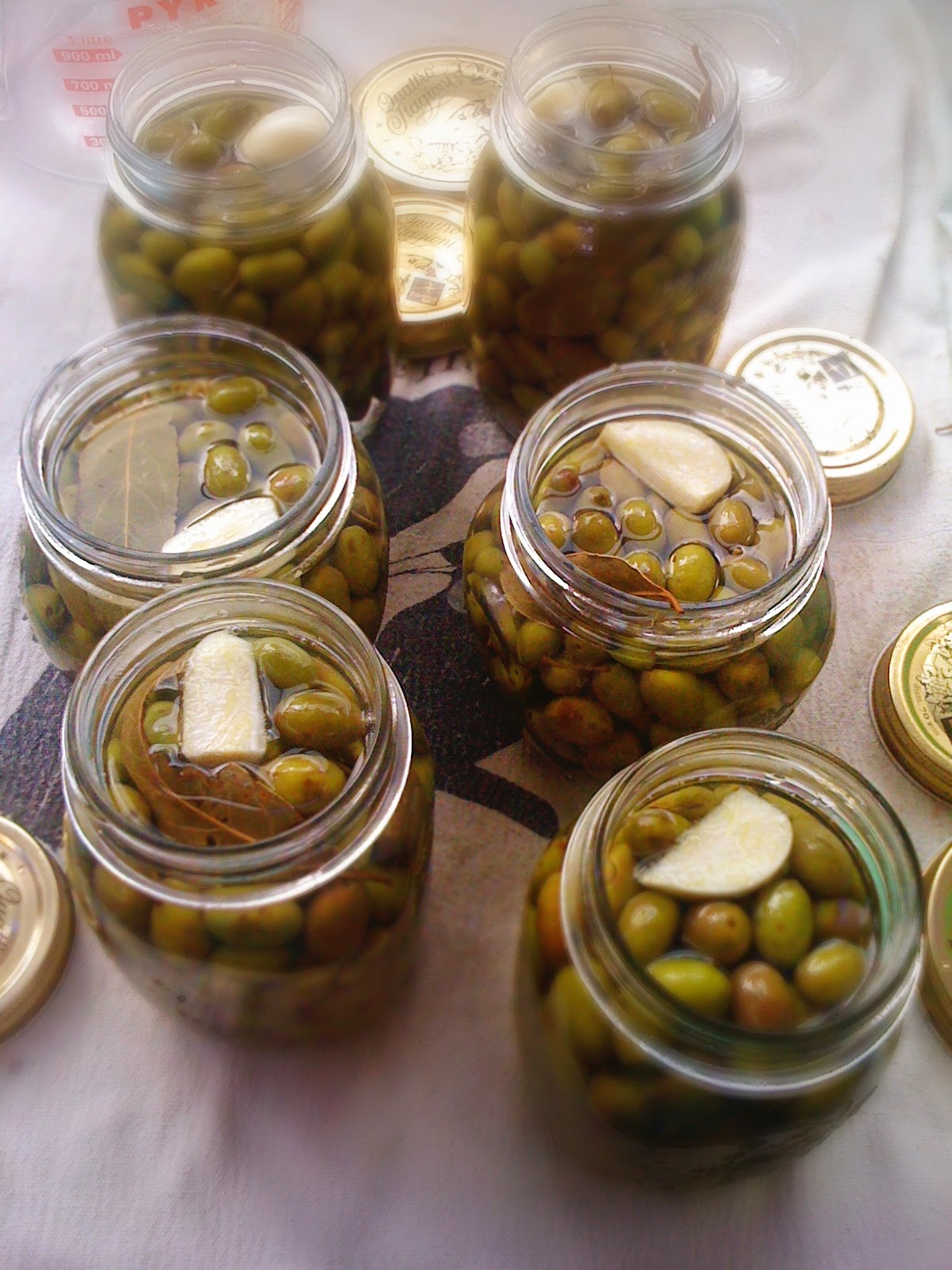
Picking, treating and preserving olives in brine, and olives marinated in olive oil and herbs


Preserving olives is a rewarding experience. If you don’t have an olive tree you may be able to forage olives from trees in community gardens and in parks.  Usually olives are ready around April-May (in New Zealand).
Pick the olives from the tree (never from the ground) and wash well in cold water. If you prefer sweet-tasting olives you can put them in a bucket of water for up to 40 days, or 20-30 days for very small olives, changing the water every 24 hours; the olives will become brownish in colour, and lose a lot of bitterness. After this period make a brine (recipe follows) and bttle your olives. If you prefer crispy green olives with a peppery taste, just wash them and soak them for a day, then preserve them in brine.

Brine for preserving olives

Before making the brine, be sure to have plenty of glass jars with lids, sterilised and completely dry.

Ingredients
Water
Salt

Prepare 10% salt brine (100 g of salt for every litre of water) by placing in a saucepan the water and salt.  Simmer until the salt is completely dissolved. Once the brine is cold place the olives into clean sterilised jars and cover completely with the brine.

To each jar add one more clove of garlic, a fresh bay leaf, a chilli pepper, or a fresh sprig of thyme.  Seal and put away in a dark place for three months. After this period the olives can be used in cooking or can be marinated with olive oil and your favourite herbs.
If you’d like to keep the olives for longer, prepare a new brine with an 8% solution (80 g of salt every for every litre of water) and put the olives into new jars with the fresh brine. Olives stored this way, and completely covered with brine, will last up to one year. Don't worry if you see white spots forming at the top of the brine, as this is natural — just remove them every time you open the jar, and always rinse the olives before using. Below is a recipe for marinating your preserved olives with olive oil and herbs, starting with your olives in brine.


Olives marinated in olive oil and herbs

I suggest you use a delicate olive oil for this recipe, like an extra virgin olive oil from the supermarket. Expensive olive oil is far too precious to marinate olives, unless you have your own press.

Ingredients
300 g olives in brine (green or dark)
1 sprig fresh thyme
1 sprig fresh oregano
1 sprig fresh rosemary
6 peppercorns
200 ml extra virgin olive oil


Drain the olives well from the brine, and give them a little rinse if necessary. Place in a large jar, add the herbs and pepper corns, and cover with the oil. Leave to rest for at least one day, and then serve. Store in a cool place and use within two weeks.

Photos and Recipes by Alessandra Zecchini ©

Thursday, June 20, 2013

Roast potatoes with red onion and thyme


Cut the potatoes in small cubes. Chop one or two red onions, and some good olive oil and mix.
Place on an oven try lined with baking paper and sprinkle with salt. Bake on high for about 30-40 minutes, shaking the potatoes from time to time (I do this by lifting the baking paper). When the potatoes are ready add a few thyme sprigs and mix well (I like to add the thyme at the end, it will smell lovely!). I also like to use thyme with red onion, but sage could be a good alternative.


Photos and Recipes by Alessandra Zecchini ©

Thursday, January 3, 2013

Pumpkin and red onion soup with thyme and rosemary flowers


Ingredients:

1 red onion
2 tbsp olive oil
2 kg pumpkin flesh
1 celery stick with leaves
2 l vegetable stock
Salt and pepper to taste
A few sprigs of thyme
A few rosemary flowers

Instructions

 Chop the red onion and sauté with olive oil. Add cut and peeled pumpkin, a celery stalk with leaves and some vegetable stock. When the vegetables are cooked blend the soup, adjust with salt and pepper and then decorate with fresh thyme and rosemary flowers (these can be eaten and will give the soup a lovely rosemary flavor without any of the woody leaves!).


Photos and Recipe by Alessandra Zecchini