Showing posts with label spring onions. Show all posts

Friday, August 16, 2019

Niue, eating vegetarian from a plantation - plant based paradise


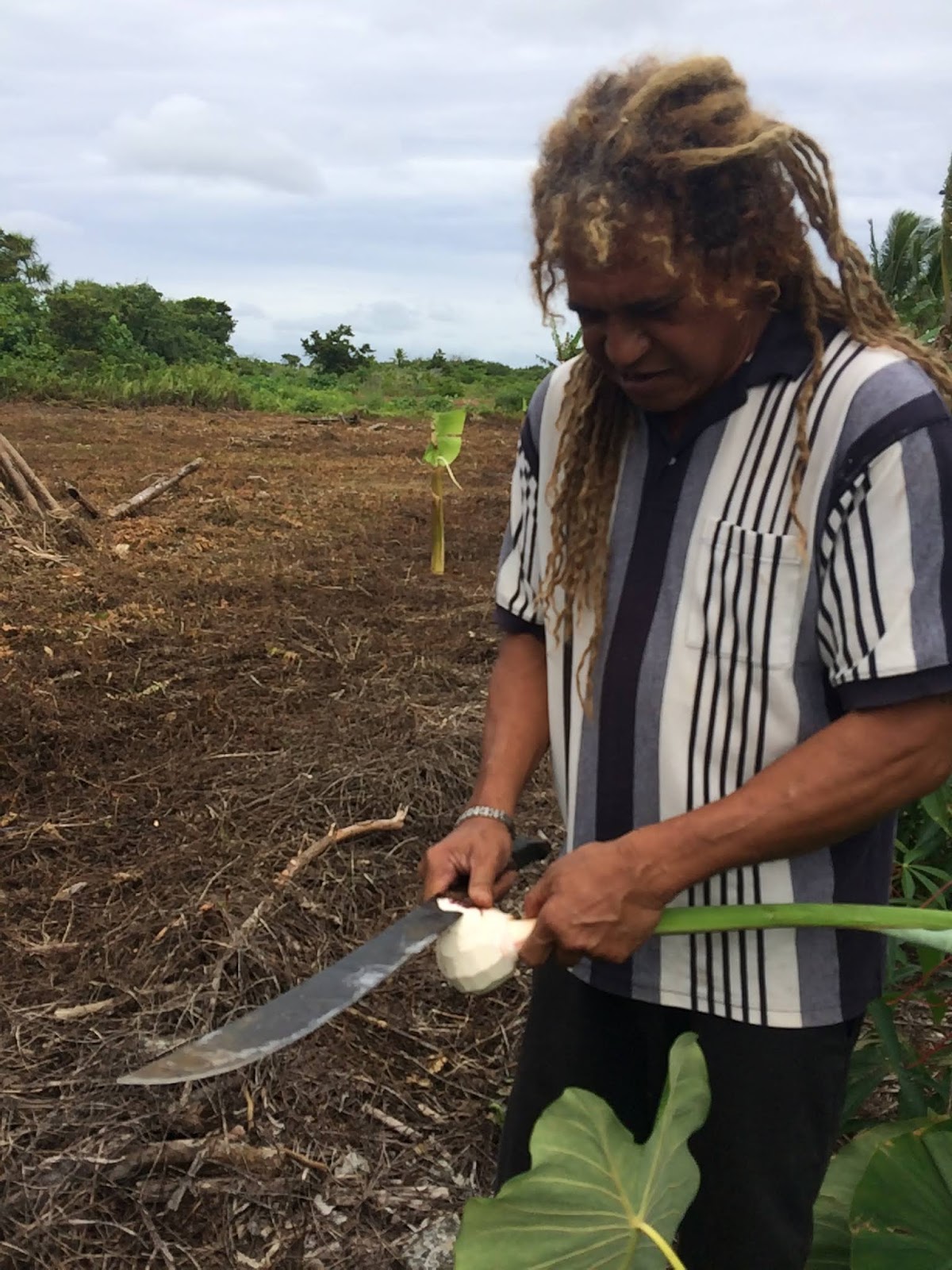
Last month we returned to Niue for a holiday, and one of the first things we did was a Plantation Tour with Tony, like seven year ago, to stock up with local produce for a plant based diet. Naturally we started with some fresh coconut to drink.


And some marshmallow coconut to eat. 


We took back quite a lot of young coconuts, from a small one I could get two big glasses of coconut water, if it was a bit bigger two and an half glasses.


After drinking we used the tender flesh, you can just eat it as it is, or use it in cooking (the best was to pan-fry it with olive oil and smoked salt and eat it as 'vegan bacon'. Then we gave the shells to the cat and it cleaned it up! Never seen a cat eating coconut!


Click here for more coconut recipes and creations in Niue.


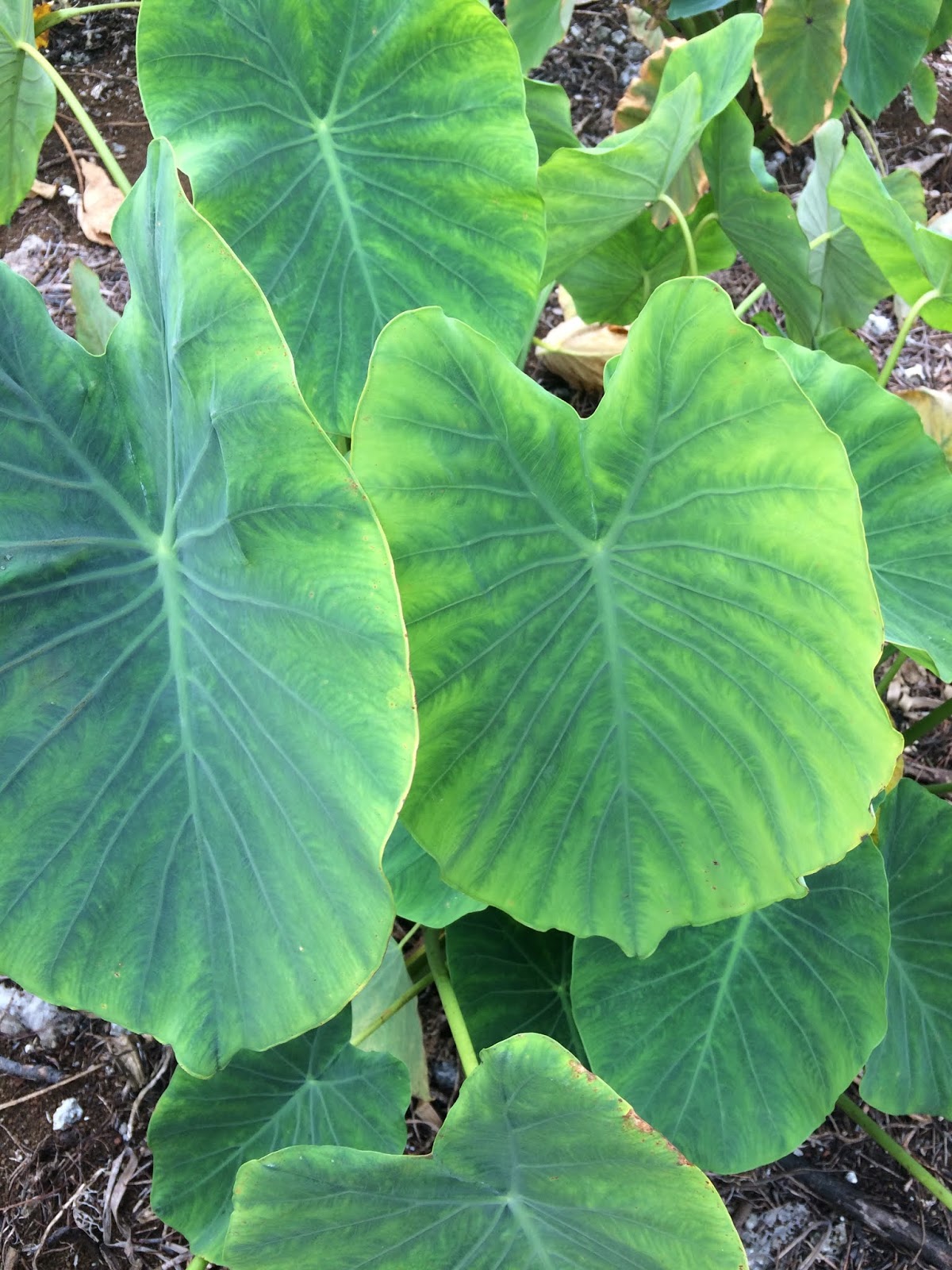
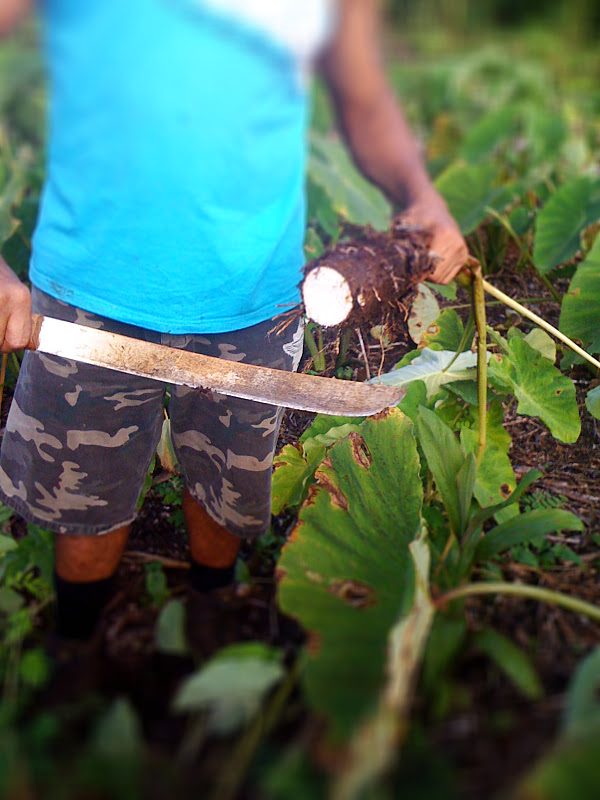
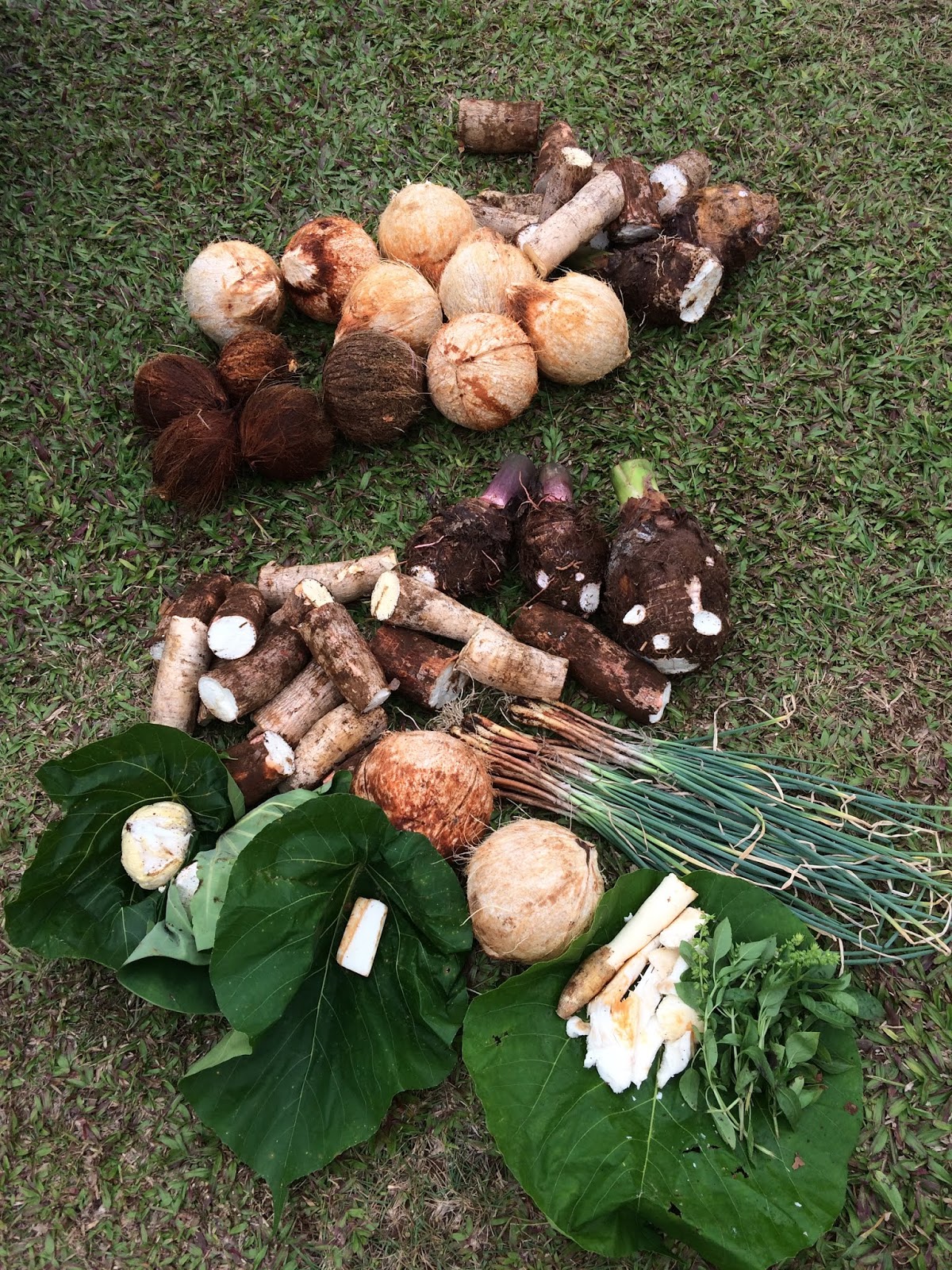
Next was taro, so much taro, white and pink!


And cassava, a white and a yellow type (I prefer the yellow).


And a type of wild spring onion, very tasty. We also got some basil.


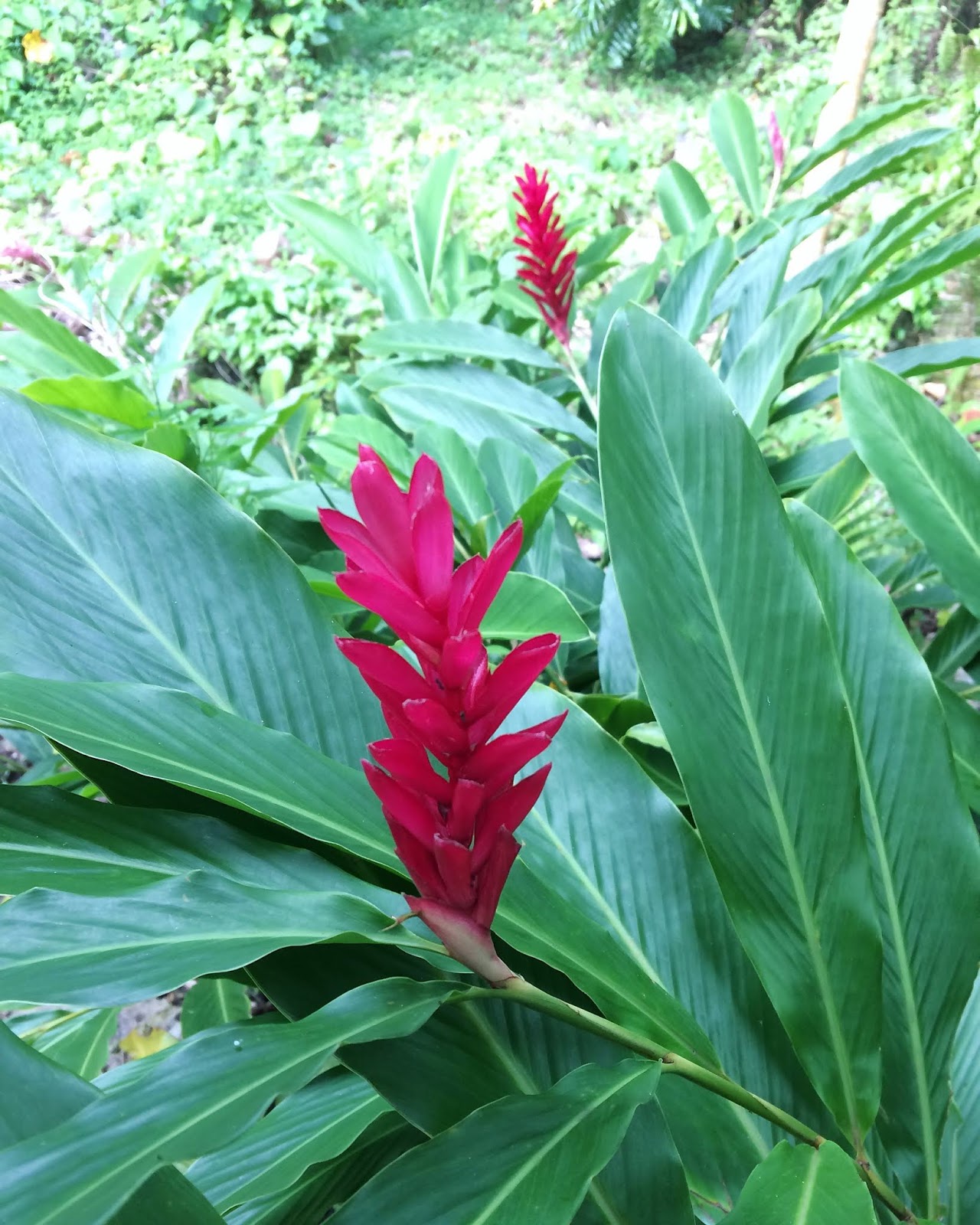
Ginger abounds too, if you are keen.

And this is our bounty!

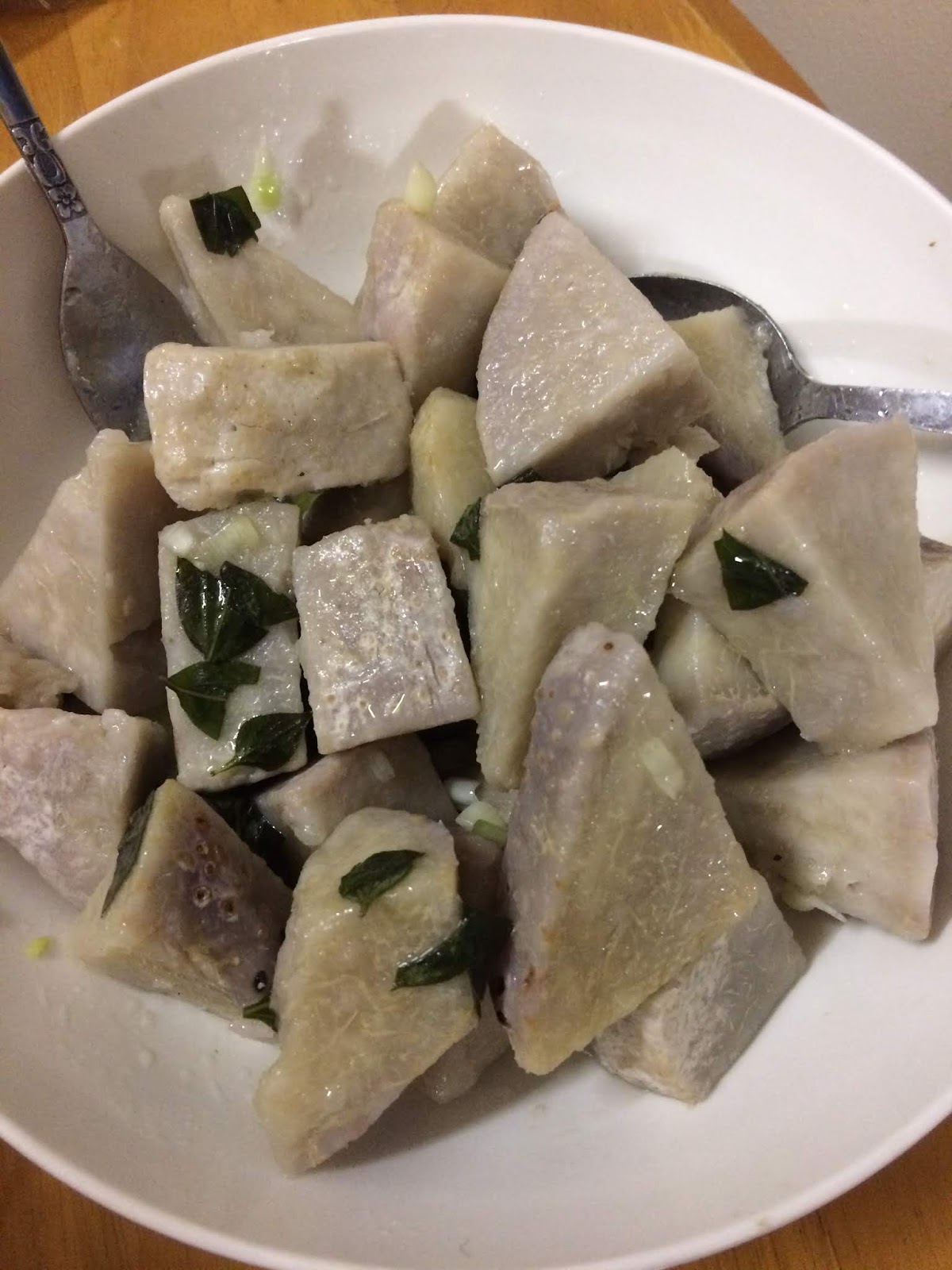
Taro is very starchy and filling, I made some salads, one with boiled taro, olive oil, salt, basil and spring onions. 

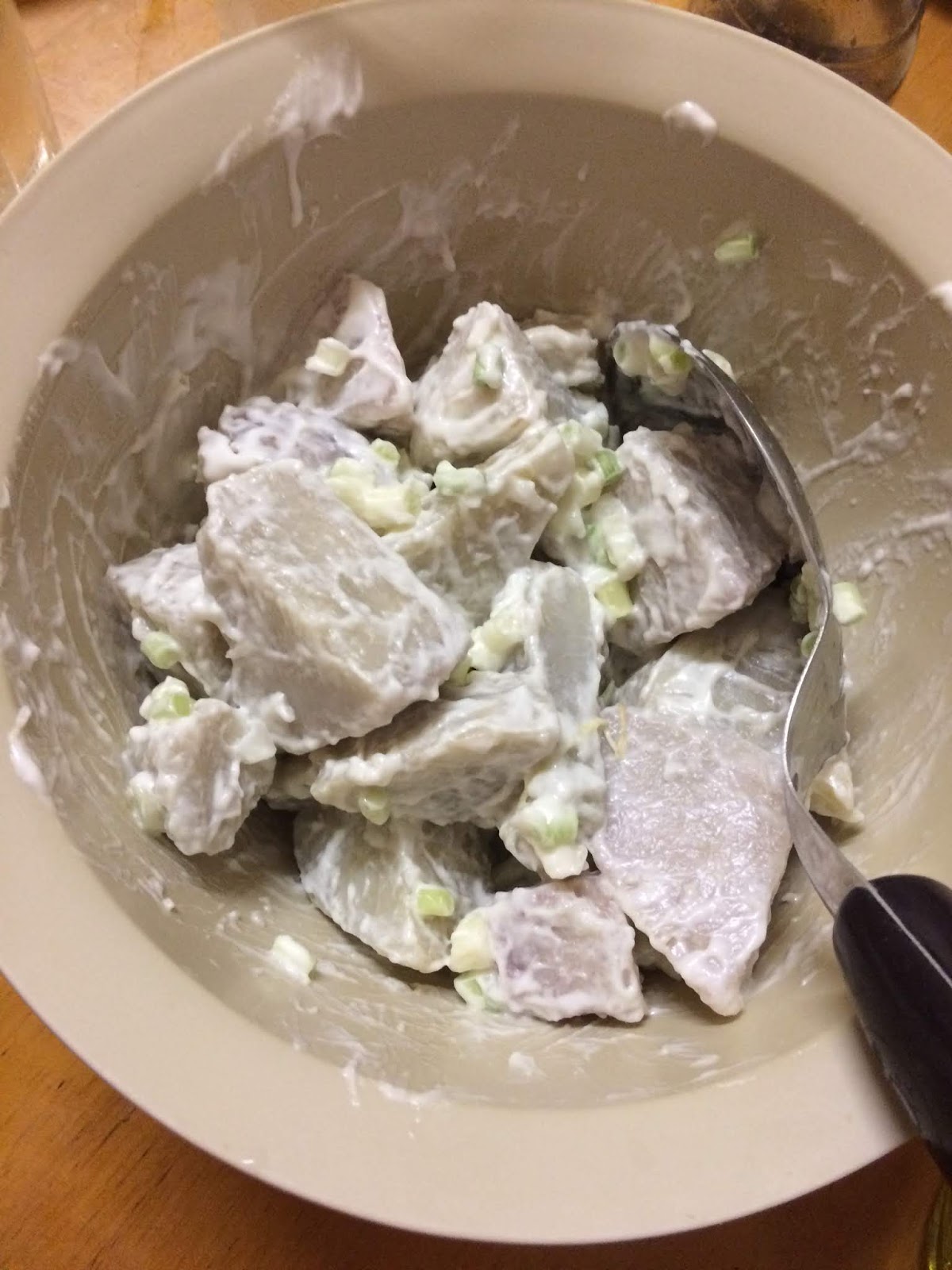
And one with boiled taro, vegan mayo and spring onions.

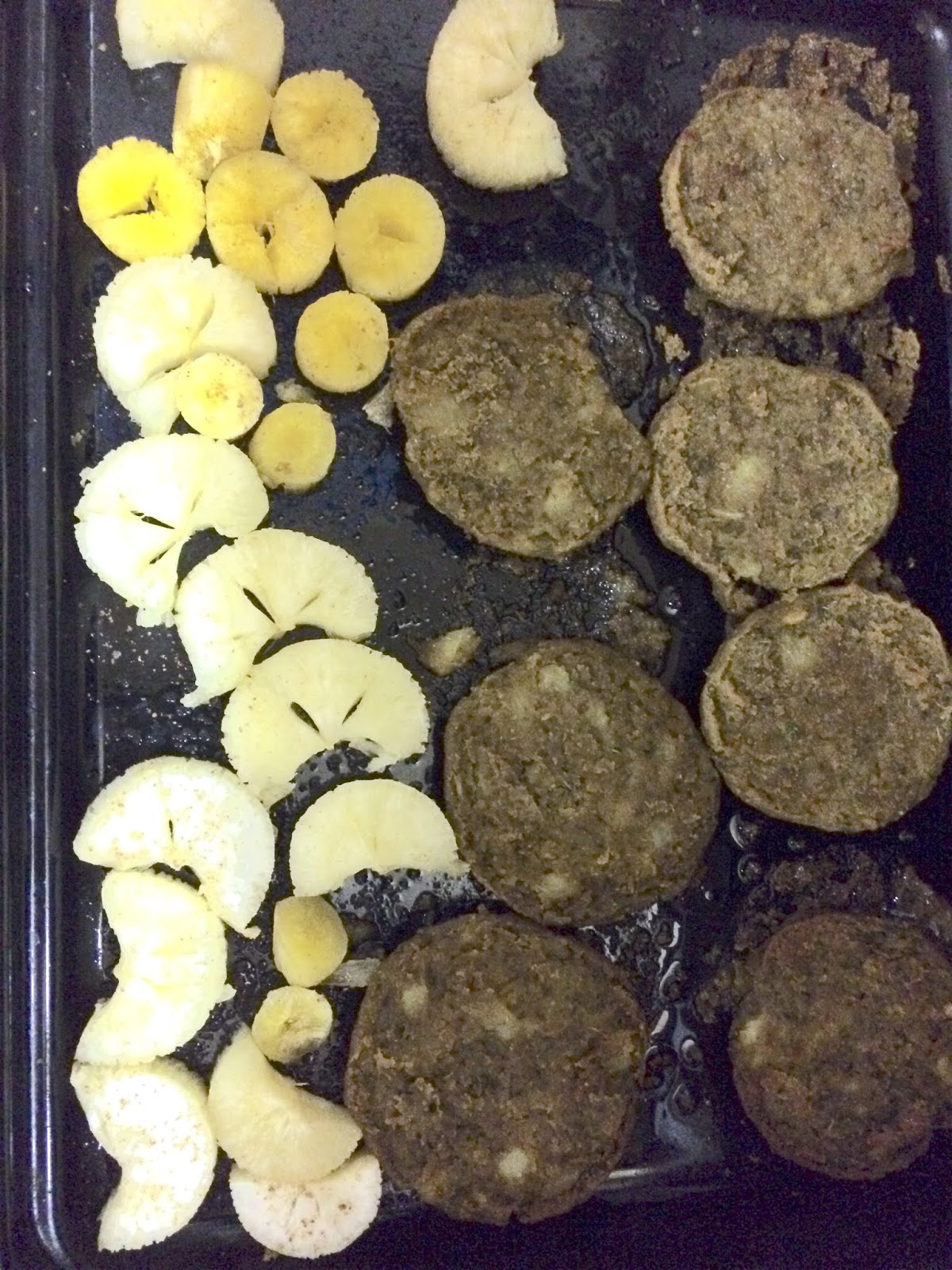
I also boiled the cassava and then roasted half with olive oil and salt, while the other half I mushed and mixed with falafel mix to make veggie burgers (ok, they don't look 'pretty' but they were pretty good). More recipes here.

No much tropical fruit around a part from bananas, papaya and coconut, but I loved the papayas with a drizzle of Niue Honey and lime or lemon juice.


And for dessert: papaya, banana and young coconut flesh fruit salad, with rum and a little sugar. 


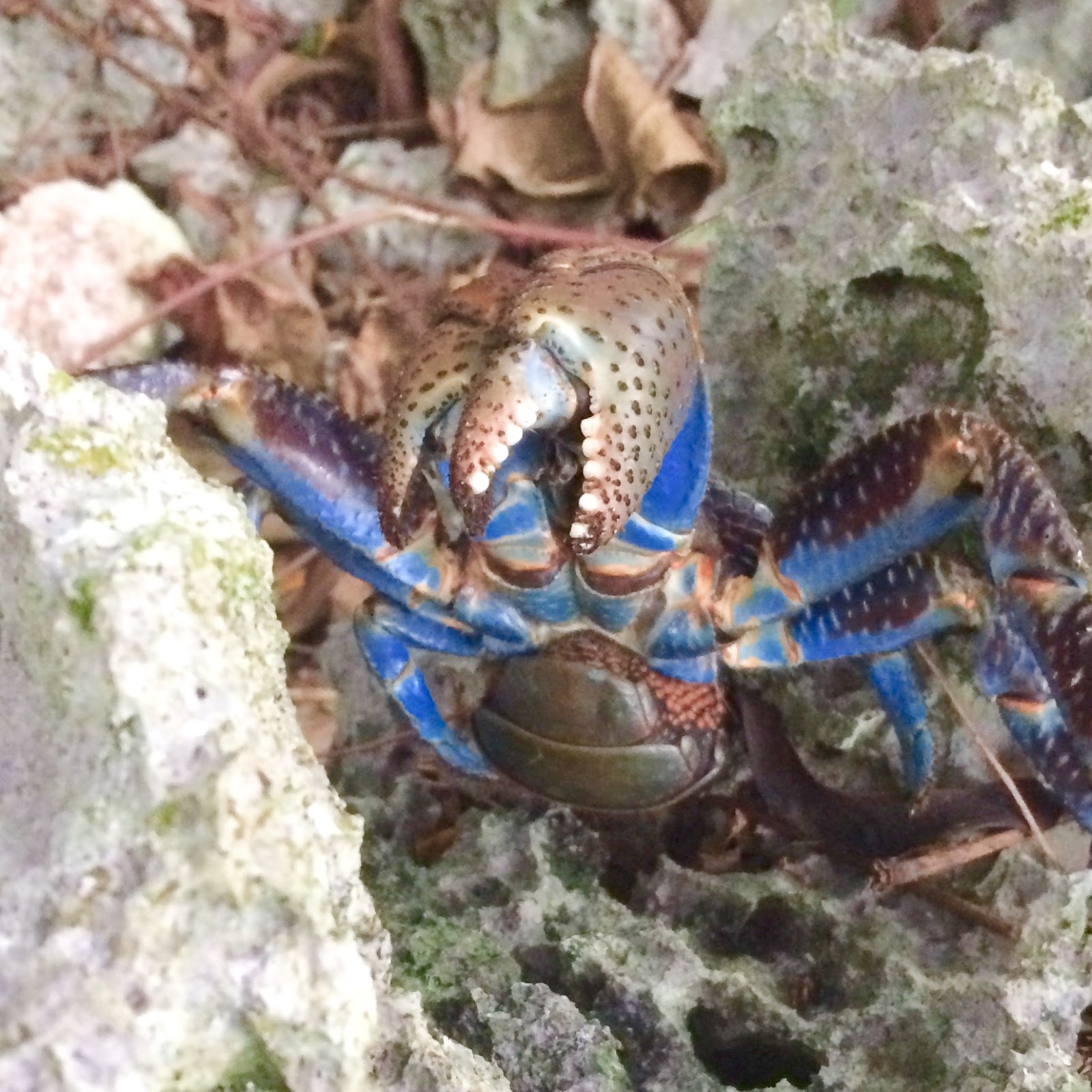
And here something we DIDN"T eat: Uga crab.

And some pretty fish!


Photos and Recipes by Alessandra Zecchini ©

Friday, August 14, 2015

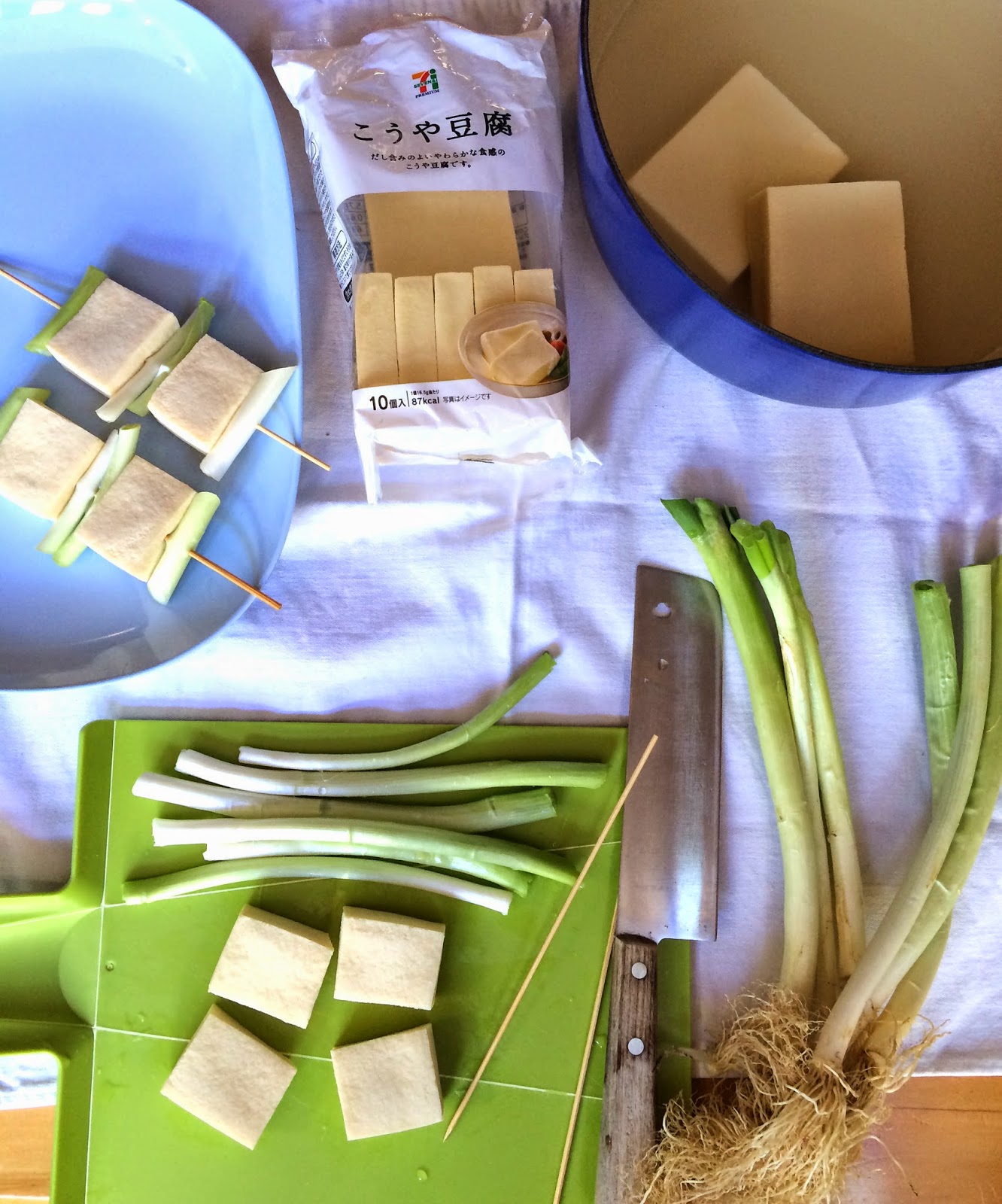
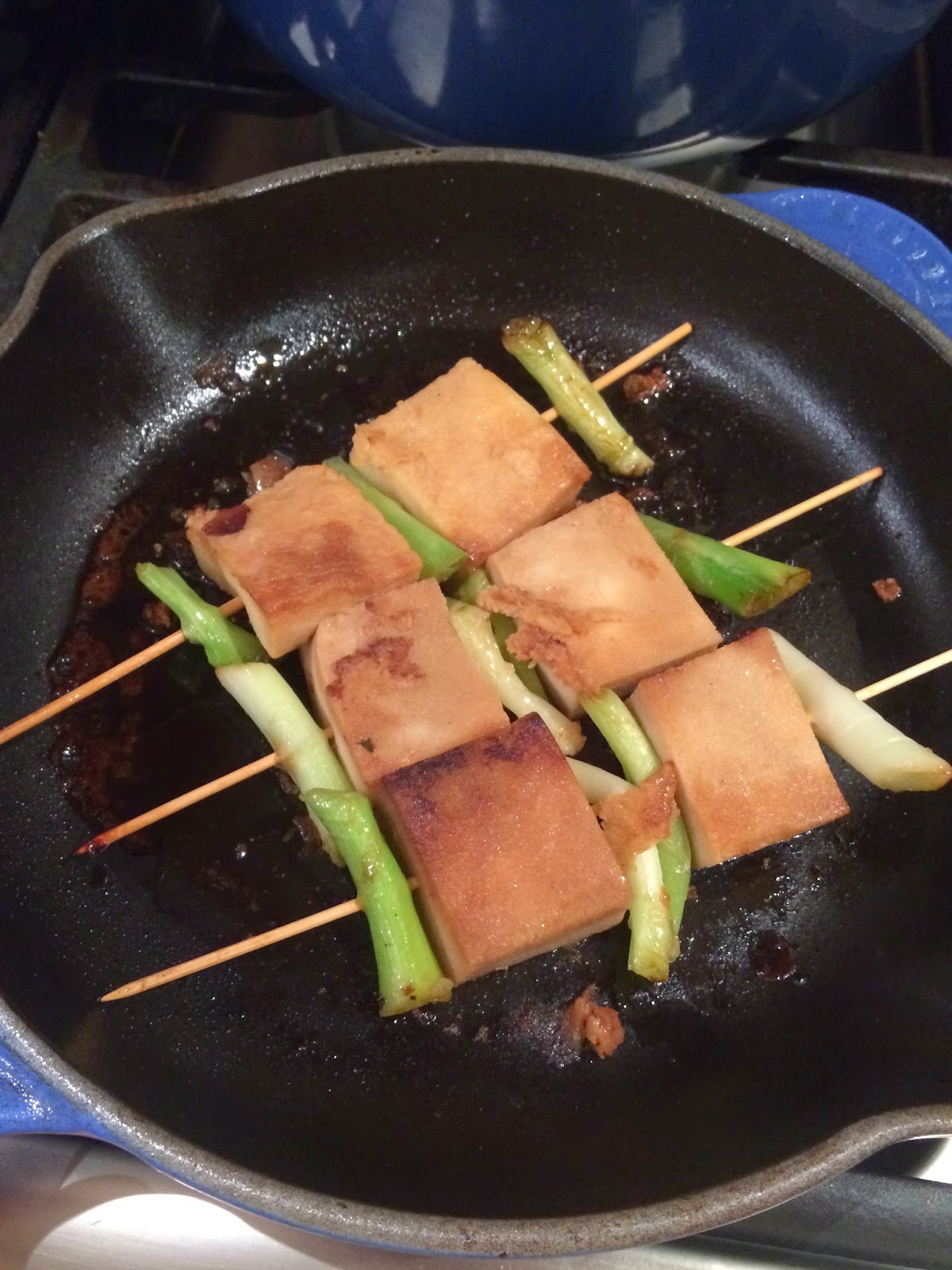
Tofu and spring onion skewers


My friends Astuko and Hideko often send me this dried tofu which I find super versatile! I just soak it in water (or stock) and then use it in a variety of dishes. This time I just soaked it in water and then cut each blog into four pieces, and put them in a skewer (soak the skewers too!) with some spring onions. 

I sautéed the skewers on both sides with a little rice bran oil to which I added a few drops of sesame oil, then I brushed the tofu and spring onions with a sauce made by simmering a teaspoon of sugar or with two tbsp of water, two of soy sauce (gluten free please use tamari) and a pinch of freshly grated ginger. I turned the skewers over one more time and then I served them, hot and yummy! The scrapings from the pan were delicious on plain rice too!


Photos and Recipes by Alessandra Zecchini ©
Friday, March 16, 2012

Spring asparagus steamed over a vegetable soup and served with flowers


Lots of people know by now that I eat flowers, but still, some think of it as a bit of a freak thing to do. But if you have a few edible flowers in your garden (absolutely organic, no sprays allowed) they just make your dishes look so pretty, and they are not merely a decoration, they can have flavour and fragrance too! I used onion weed flowers, which have a mild garlic/oniony taste, and nasturtiums, which are probably the only flowers that the general public in New Zealand seem to consder edible (some claim to use them in salads, but in all these years here I have seen more trendy talk than action, and still far too much coleslaw). My first borage flowers and a few little violets added perhaps little taste, but they are eye catching with their blue hues, and welcome on my plate anytime.


On a large plate I prepared a bed of baby spinach leaves and then I steamed some asparagus. To save time and gas I steamed the asparagus over the vegetable soup that I was cooking for dinner (so that I could make lunch and dinner at the same time). I meant to photograph the finished soup too, since all the veggies come from my garden, but I forgot. Anyway, it had my last cabbage, carrots, celery (mostly leaves), cavolo nero, broad beans (they are here, finally!) and onion weed (of course). It was a lovely soup, and I just had to add pasta and seasoning, all the rest was from my garden. Anyway, back to the asparagus salad: after steaming the asparagus I rinsed them under cold water and placed them over the spinach leaves. And then I added the flowers. For dressing I just added salt, extra virgin olive oil and Aceto Balsamico Tradizionale di Modena. I also think that a simple Japanese miso and sesame seed dressing like this one could go well. This was a light but satisfying lunch for two.


Photos and Recipes by Alessandra Zecchini ©
Saturday, February 4, 2012

Cooking Taro


Taro is the Polynesian staple, usually baked or boiled, it is quite starchy and very filling. Being Italian I like to use olive oil, so after cleaning, peeling, cutting and boiling my taro, I dressed it with olive oil, salt flakes and chopped spring onions. It was truly yum!!!


Photos and Recipes by Alessandra Zecchini ©

Friday, October 7, 2011

Zaru Soba


Day 7 of Vegan MoFo

Zaru Soba


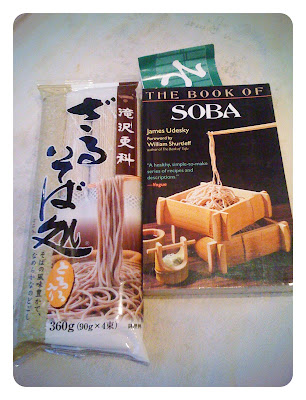
Kazuyo brought back some soba from Japan, three packs for me :-)! I love soba, the Japanese buckwheat noodles that can be eaten cold or hot.


When we were living in Japan my husband did a lot of editorial work for KodanshaInternational, and among the books he worked on there was this one: The Book of Soba by James Udesky. The book tells you how to make your fresh soba, but also how to cook the dry one, plus it has some recipes, some history and nutritional info. I like it.


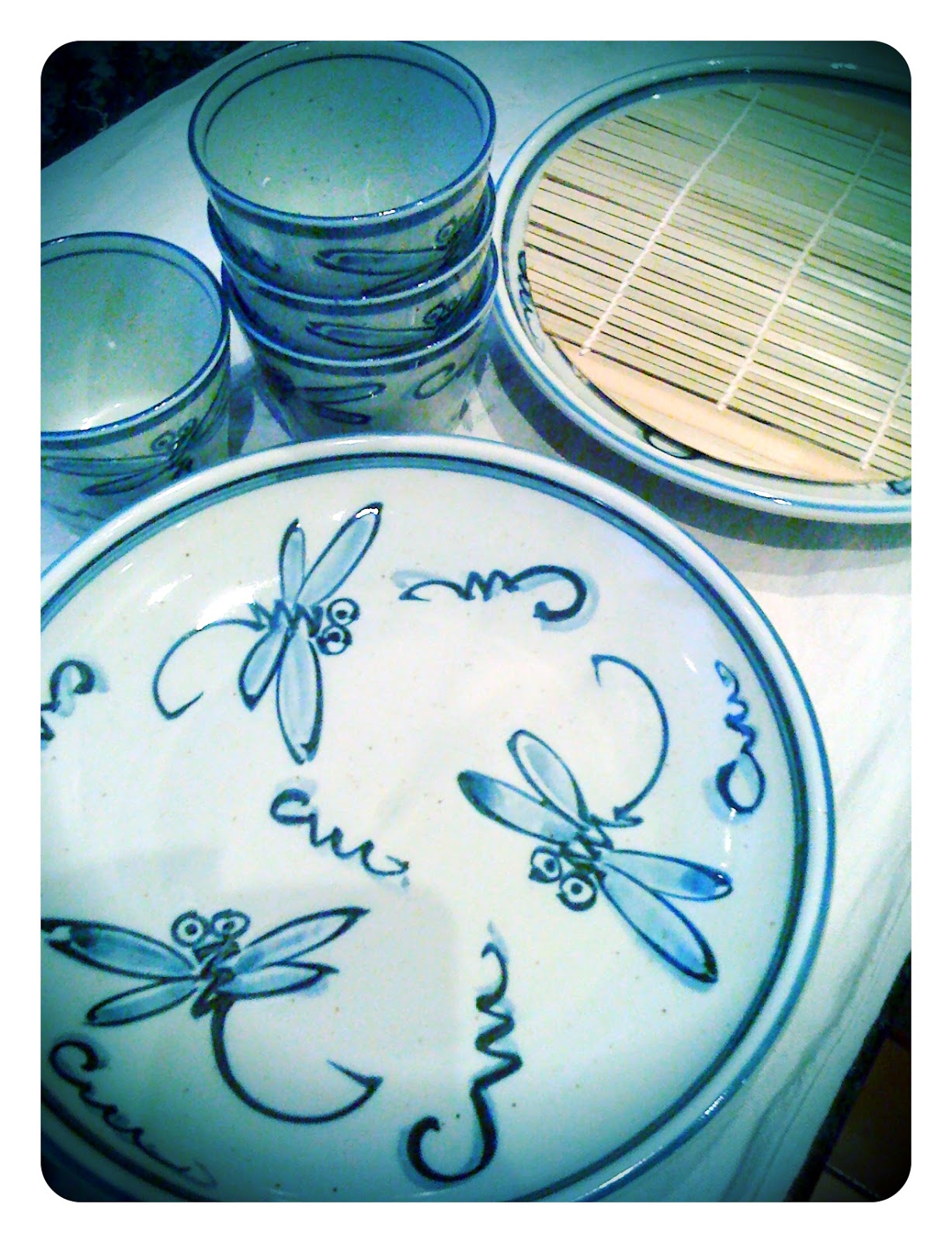
This is my soba set: plates with fitting straw mats (zaru soba is served in baskets or on mats, to keep it fresh and drained), plus some matching soba dipping bowls. I also have some tea cups with the same pattern: dragonflies!


Zaru soba is cold soba topped with nori (I cut a sheet of nori in small pieces with a pair of scissor) and served with a simple dipping sauce and garnish. One thing that I learned form The Book of Soba is that soba is not cooked like pasta. The only thing in common with pasta is that you should use the biggest pot you have and have enough water as if you were to cook spaghetti. But don't add salt!

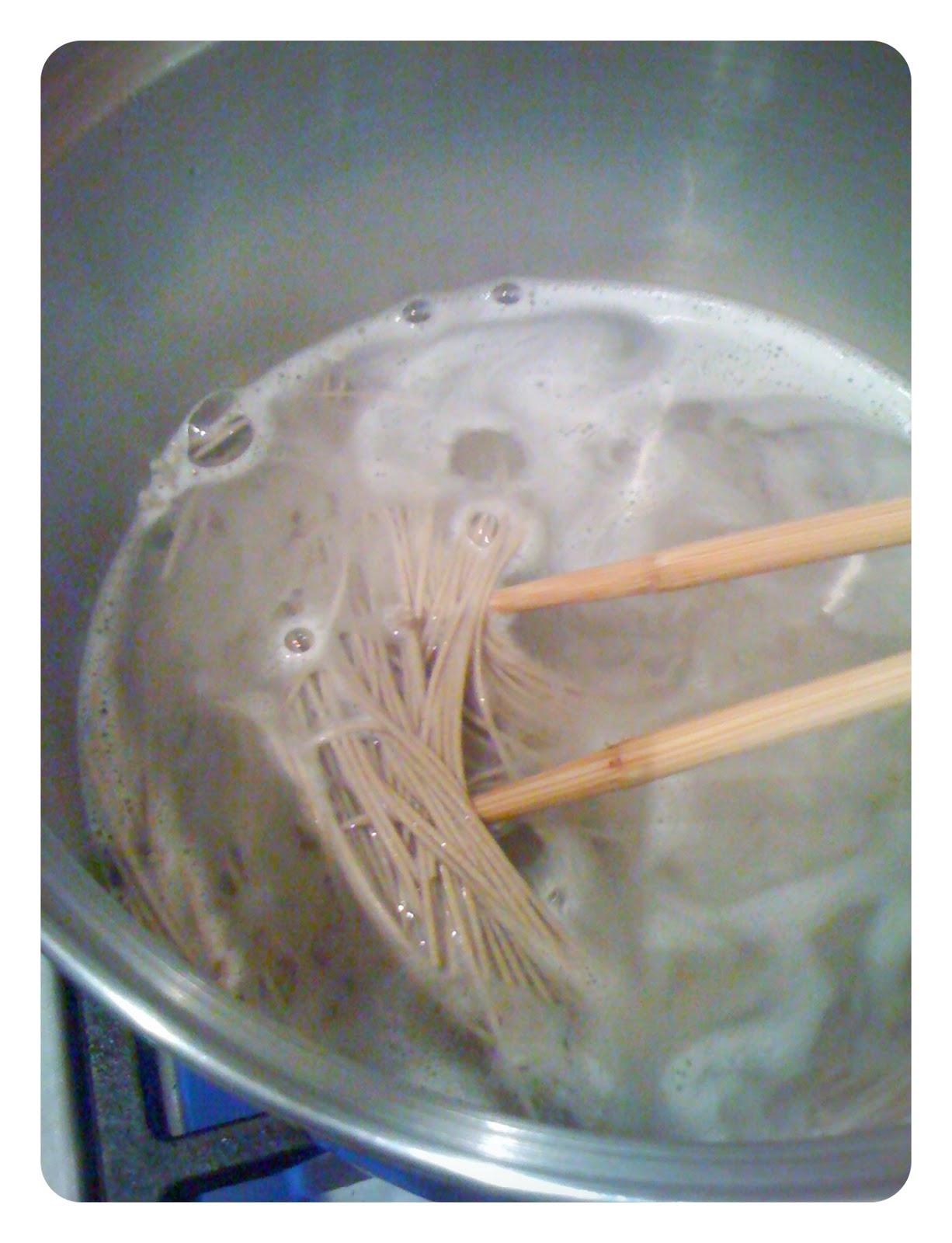
Bring the water to boil: add the soba, stir gently. When the water starts to froth add half a cup of cold water and lower the heat. Do this three times. After the third time your soba should be ready. Drain and collect the cooking water to make soup, if you like (full of starch and vitamins and minerals) and place the soba in a bowl with ice water. Or just rinse under cold water (I prefer this way, the soba may not be perfect but I cannot bear to loose anymore starch!


Place your cold and rinsed soba in a soba basket or on your soba plate (lined with the soba mat). If you don't have a soba mat use your sushi rolling mat. Top with nori. Garnish with other vegetables if you like.


For the dipping sauce I prepare a base broth by simmering a piece of kombu for 30 minutes in water, then I add a little soy sauce (most would use bonito flakes). Let the broth cool down: this is a cold dipping sauce. Before serving put a tiny bit of wasabi in each dipping bowls, and a little grated daikon or radish, and then some chopped spring onions or chives. Pour the broth over and stir. For a fancy dinner place all the garnishes in small plates and let your guests mix their own sauce. To eat pick up the soba with your chopsticks and dip into your dipping sauce, then slurp everything up. You can make a slurping noise too, but I am not good at that!

Photos and Recipes by Alessandra Zecchini ©