Showing posts with label Amber Rose.. Show all posts

17 May 2015

Hazelnuts, lemon and blueberry cake for the WBD 2015 / Bolo de avelãs, limão e mirtilos para o WBD 2015.


Today we're celebrating World Baking Day 2015 and this cake, one of my favourite cakes from one of my favourite authors, is the cake that I baked to participate on the event.
A fabulous and delicious cake, to share with all of you, family and friends.
I just realised that last year I participated in the World Baking Day with another of Amber Rose recipes which, I think, is a good sign of how much I love her recipes.

ingredients for the cake:
115g hazelnuts, toasted in the oven and skins rubbed off
260g unsalted butter, softened
225g white spelt flour, sifted
2 tsp baking powder, sifted
4 large eggs
130g honey or golden caster sugar
130g maple syrup
zest of 1 large lemon
for the filling and decoration:
350ml double cream
2 to 3 tbsp honey
2 to 3 tbsp blueberry jam (preferably sugar free)
200g fresh blueberries
edible flowers (optional)
icing sugar


method:
Preheat the oven to 180ºC. Grease and flour 2 x 20cm loose bottomed sandwich tins.
Whizz the hazelnuts in a food processor into a fine meal.
Put all the ingredients for the cake in a bowl and beat with an electric mixer until just incorporated. Don't over mix.
Divide the batter between the 2 prepared tins and smooth the tops.
Bake for 25 to 30 minutes or until the cakes are cooked through and a skewer inserted in the centre of each cake comes out clean.
Remove the cakes from the oven and allow to cool for 5 minutes in their tins, before turning them on a wire rack.
When the cakes are completely cool, lightly whip the cream until very soft peaks form.
Add the honey and whisk until incorporated.
Add the jam, one tablespoon at a time, and carefully marble it through the cream.
Transfer one of the cakes to a serving plate, spoon over 2/3 of the cream and place the second cake on top.
Spread the remaining cream over the second cake, top with the blueberries and flowers and dust with icing sugar.

__________________

Comemora-se hoje o World Baking Day 2015 e como tal, aqui vos deixo este bolinho para comemorar o evento e marcar o dia.
Fazer bolos é algo que adoro e como tal, este dia é só uma desculpa para fazer mais um bolinho e partilhá-lo convosco e com a família e amigos.
Optei por este bolo de avelãs, limão e mirtilos, por ser um dos meus bolos preferidos e por ser também (como todos já sabem), de uma das minhas autoras favoritas.
Curiosamente, e enquanto escrevia este post e procurava o link para o WBD de 2014, percebi que já o ano passado havia participado neste dia com uma receita da Amber Rose, o que, suponho, corrobora o facto de adorar esta autora e os seus livros e receitas.


ingredientes para o bolo:
115g avelãs, tostadas no forno e pele esfregada e retirada
260g manteiga sem sal, à temperatura ambiente
225g farinha de espelta branca, peneirada
2 colheres chá de fermento em pó, peneirado
4 ovos grandes (L)
130g mel ou açúcar refinado amarelo
130g maple syrup
raspa de 1 limão grande
para o recheio e decoração:
350ml natas para bater
2 a 3 colheres sopa de mel
2 a 3 colheres sopa de doce de mirtilo (de preferência sem açúcar)
200g mirtilos frescos
flores comestíveis (opcional), para decorar
açúcar em pó, para polvilhar


preparação:
Aquecer o forno a 180ºC e untar e enfarinhar duas formas de fundo amovível, com cerca de 20cm de diâmetro cada.
Processar as avelãs num robot de cozinha, até obter uma farinha fina.
Colocar todos os ingredientes do bolo na taça de uma batedeira eléctrica e bater até tudo estar bem incorporado, tendo o cuidado de não bater em demasia, a fim de obter um bolo fofo no final.
Dividir a massa pelas duas formas e alisar os topos.
Levar as formas ao forno e cozer os bolos por cerca de 25 a 30 minutos, ou até que um palito inserido no centro de cada bolo, saia limpo.
Retirar os bolos do forno e deixar arrefecer por cerca de 5 minutos nas próprias formas, antes de os desenformar sobre uma grelha de arrefecimento.
Quando os bolos estiverem completamente frios, bater as natas num Chantilly ligeiro.
Adicionar o mel e bater de novo para incorporar.
Adicionar o doce de mirtilo, uma colher de sopa de cada vez, mexendo cuidadosamente  a fim de obter um efeito marmoreado.
Colocar um dos bolos sobre um prato de serviço e cobri-lo com 2/3 das natas.
Colocar o segundo bolo em cima do primeiro e decorar com as natas restantes, os mirtilos frescos e as flores e polvilhar com açúcar em pó.

Recipe / Receita:

8 April 2015

Pomegranate and strawberry cake / Bolo de romã e morangos.


Last week (Tuesday the 31st) was my birthday and although I didn't have a party on the day, I had some friends around during the following weekend and therefore, I decided to make this cake, that was marked as my birthday cake since the day I bought this fabulous book.
Amber Rose is one of my favourite authors and all the recipes I try from her books are a stunner.
Pomegranate and strawberries are something I truly adore and that's why I marked this recipe to be THE cake to celebrate my birthday.
ingredients (serves 8 to 10):
300g unsalted buter, softened
300g white spelt flour, sifted
4 medium eggs, preferably free range
3 tsp baking powder
2 tsp rosewater (I used orange blossom water)
300g maple syrup
grated zest of 1 organic lemon
2 to 3 tbsp kefir or milk, to loosen the mix
for the filling:
250g strawberries
1 pomegranate, halved and seeds removed
squeeze of lemon juice
400ml double cream
2 tbsp maple syrup
1 tsp rosewater (I used orange blossom water)
50g natural Greek yoghurt or kefir
6 tbsp rose petal jam or sugar free strawberry jam


method:
Preheat the oven to 180ºC. Grease and flour 3 x 20cm loose bottomed tins.
Cream the butter until pale and fluffy.
Add 2 to 3 tbsp of the flour and the eggs, one at a time, and beat until you have a light and fluffy mixture.
Using a large metal spoon, fold in the rest of the flour and baking powder until combined.
Add the rosewater, maple syrup and lemon zest and fold gently.
Add a dash of milk or kefir to loosen if the mixture is too stiff.
Divide the mixture between the 3 cake tins, level the tops and bake in the oven for 20 minutes or until the centre springs back to the touch.
Remove from the oven and cool in the tins for 5 to 10 minutes before turning onto a wire rack to cool completely.
Whip the cream until it forms soft peaks. Gently stir through the maple syrup and rosewater.
Fold in the yoghurt, then carefully dot spoonfuls of jam into the cream bowl and give a gentle stir to create a marble effect.
Place one of the cakes on a serving plate and gently spoon the cream mixture over. Sprinkle with pomegranate seeds.
Repeat with the second cake and top with the third cake.
Top the cake with the strawberries, sprinkle over any remaining pomegranate seeds. Dust with a little icing sugar.
__________________


Na passada 3ª feira dia 31 de Março, foi o meu aniversário e embora não tenha feito nada de especial no dia, aproveitei que tinha amigos em casa no fim de semana seguinte e fiz este maravilhoso bolo da Amber Rose, que estava marcado para ser o MEU bolo de anos desde o dia em que comprei o livro.
Sendo eu completamente louca por frutos vermelhos e romã (aliás é uma das queixas cá em casa é que só faço sobremesas com frutos vermelhos em vez de chocolate e caramelo, lol), decidi assim que vi esta receita, que iria guardá-la para reproduzir neste dia e assim o fiz, de acordo com o planeado há meses e meses atrás.
Amber Rose é uma das minhas autoras favoritas e não há receita dela, seja doce ou salgada, que não seja uma maravilha e saia sempre uma perfeição.
ingredientes (para 8 a 10 pessoas):
300g manteiga sem sal, amolecida
300g farinha de espelta branca, peneirada
4 ovos médios, de preferência biológicos
3 colheres chá de fermento em pó
2 colheres chá de água de rosas (eu usei água de flor de laranjeira)
300g maple syrup
raspa de 1 limão biológico
2 a 3 colheres sopa de leite ou kefir, para aligeirar a mistura
para o recheio:
250g morangos
1 romã, partida ao meio e sementes removidas
umas gotas de sumo de limão
400ml natas para bater
2 colheres sopa de maple syrup
1 colher chá de água de rosas (eu usei água de flor de laranjeira)
50g iogurte grego natural ou kefir
6 colheres sopa de doce de pétalas de rosa, ou doce de morango sem açúcar


preparação:
Aquecer o forno a 180ºC. Untar e enfarinhar 3 formas de 20cm de diâmetro com fundo amovível.
Bater a manteiga até esta estar fofa e pálida.
Adicionar 2 a 3 colheres da farinha e os ovos, um de cada vez, batendo bem entre cada adição, até obter uma mistura leve e fofa.
Com a ajuda de uma colher de metal, adicionar a restante farinha e o fermento e envolver tudo muito bem, sem bater em demasia.
Adicionar a água de rosas, o maple syrup e a raspa do limão e incorporar delicadamente.
Adicionar um bocadinho de leite ou kefir, para aligeirar a mistura, caso esta esteja muito espessa.
Dividir a mistura pelas 3 formas, alisando a superfície e levar ao forno por 20 minutos, ou até os bolos estarem cozidos e um palito inserido no meio sair limpo.
Retirar os bolos do forno e deixar arrefecer nas próprias formas por 5 ou 10 minutos, antes de desenformar sobre uma grelha para completo arrefecimento.
Bater as natas até obter picos ligeiros.
Adicionar a água de rosas e o maple syrup e envolver delicadamente.
Envolver o iogurte na mistura anterior e adicionar o doce, ás colheradas, envolvendo de forma a criar um efeito marmoreado no creme.
Colocar um dos bolos num prato de serviço e cobrir com a mistura das natas. Salpicar com sementes de romã.
Repetir o processo com o segundo bolo.
Colocar o terceiro bolo em cima da segunda camada e decorar com os morangos e as restantes sementes de romã.
Polvilhar ligeiramente com açúcar em pó.

Recipe / Receita:

4 March 2015

Blood orange and rosemary tart with a spelt and rosemary pastry / Tarte de laranja sanguínea e alecrim com base de espelta e alecrim.


I wanted to make this tart last year but as the blood oranges are so difficult to get, I made this one here with the ones I could get, but I didn't have the chance to make the one I'm bringing you today.
As they are in season again now, as soon as I got my hands on a few bags of them, they went straightaway into this delicious tart.
Amber Rose wrote in her book that the combination of oranges and rosemary is magic and I can corroborate that she is totally right. It really is, indeed, a magic combination!!
If you can't find blood oranges, you can use regular oranges but you really should try this tart as it is divine either flavour or texture wise.
ingredients for the crust:
250g white spelt flour, sifted
pinch of salt
90g unsalted butter, cold and cubed
50g icing sugar
2 large egg yolks, preferably free range
2 tbsp fresh rosemary, finely chopped
method:
Put the flour, salt and butter in a food processor and pulse until you have fine breadcrumbs.
Add the icing sugar, egg yolks and rosemary and pulse again to combine or until the mixture comes together.
Remove from the bowl, shape it into a ball and wrap in clingfilm.
Refrigerate for at least 1 hour.
Preheat the oven to 180ºC.
Using a box grater, grate the pastry into a 25cm tart tin and then press it evenly into the sides and base of the tin.
Prick the base with a fork and chill again for 10 minutes.
Line the tart with scrunched baking paper and fill with baking beans.
Place in the oven and bake for 12 minutes. Remove the baking paper and beans and bake for a further 5 minutes or until the pastry is lightly golden.
Cool in its tin and reserve.


ingredients for the blood orange curd:
grated zest of 3 and juice of 5 blood oranges
2 springs of rosemary
120g maple syrup
4 large whole eggs + 6 egg yolks
200g unsalted butter, softened
method:
Put the orange juice and rosemary springs into a saucepan and bring to the boil.
Simmer for 10 to 15 minutes or until the juice has reduced by half.
Remove from the heat and set aside to cool for 10 to 15 minutes.
When cooled, discard the rosemary springs.
Add the zest, maple syrup, eggs and egg yolks to the pan and whisk until the eggs are broken up and everything has become homogenised.
Place the pan over a low heat and cook, stirring all the time, until the mixtures coats the back of a spoon.
Add the butter, whisking all the time, until the mixture becomes very thick.
Remove from the heat and place the pan on a cold surface. Continue whisking until the mixture has cooled to lukewarm.
Spoon the filling into the tart case and bake in the oven for 10 to 15 minutes, or until the top is brown.
Remove from the oven and cool on a wire rack before removing from the tin.
__________________


As laranjas sanguíneas são de estação curta e dificílimas de arranjar, o ano passado ainda consegui fazer esta tarte aqui com as que arranjei, mas já não consegui arranjar mais para fazer a tarte que hoje vos trago e que já estava marcada para fazer há séculos.
Agora, que a época das benditas laranjas (que, diga-se de passagem, são lindas, não são?), está de volta outra vez, não podia deixar passar mais um ano sem provar esta verdadeira maravilha de tarte.
A Amber Rose escreve no seu livro que a combinação laranjas/alecrim é mágica e deixem que vos diga que assino em baixo e faço minhas as palavras dela, pois é, de facto, uma combinação mágica e deliciosa!
Caso não encontrem laranjas sanguíneas, esta tarte pode ser feita com laranjas normais mas seja qual for o caso, não deixem de experimentar esta maravilha que, quer em termos de sabor, quer em termos de textura é, completamente mágica!!!
ingredientes para a massa:
250g farinha de espelta branca, peneirada (podem substituir por farinha de trigo branca)
uma pitada de sal
90g manteiga sem sal, fria e cortada em cubos
50g açúcar em pó
2 gemas de ovo grandes, de preferência caseiros
2 colheres sopa de alecrim fresco, finamente picado
preparação:
Colocar a farinha, o sal e a manteiga no copo do robot de cozinha e pulsar até obter  uma espécie de migalhas.
Adicionar o açúcar em pó, as gemas e o alecrim e pulsar de novo, até a mistura estar bem combinada e a massa descolar dos lados do copo do robot.
Retirar a massa do robot, formar uma bola e envolvê-la em película aderente e refrigerar por, no mínimo, 1 hora.
Aquecer o forno a 180ºC.
Com os lados mais grossos de um ralador, ralar a massa para cima de uma tarteira com cerca de 25cm de diâmetro.
Pressionar a massa ralada uniformemente, na base e lados da forma, por forma a que esta fique bem forradinha.
Não tentem esticar esta massa com o rolo pois será tempo perdido, já que é uma massa muito areada.
Picar a base da massa com um garfo e levar a tarteira ao frigorífico por mais 10 minutos.
Amachucar uma folha de papel vegetal e colocá-la sobre a massa da tarte. Encher com bolas de cerâmica para culinária, feijões secos ou arroz e levar ao forno por cerca de 12 minutos.
Retirar a tarteira do forno, remover o papel e as bolas de cerâmica ou o que lá tiverem posto e voltar a levar a base ao forno por mais 5 minutos, ou até a massa estar douradinha.
Retirar do forno e arrefecer dentro da própria forma.


ingredientes para o curd de laranja:
raspa de 3 e sumo de 5 laranjas sanguíneas
2 hastes de alecrim
120g maple syrup
4 ovos inteiros (L) + 6 gemas (L)
200g manteiga sem sal, amolecida
preparação:
Colocar o sumo das laranjas e o alecrim num tacho e levar ao lume até levantar fervura.
Ferver por cerca de 10 a 15 minutos, ou até o sumo ter reduzido para metade.
Retirar do lume e arrefecer por mais 10 ou 15 minutos.
Quando arrefecido, retirar e descartar as hastes de alecrim.
Ao tacho onde está o sumo, adicionar a raspa das laranjas, o maple syrup, os ovos inteiros e as gemas.
Bater bem com vara de arames, até os ovos estarem desfeitos e a mistura bem homogénea.
Colocar o tacho sobre lume brando e, mexendo sempre, cozer a mistura até que a mesma engrosse ligeiramente e cubra, sem escorregar, as costas de uma colher.
Adicionar a manteiga, mexendo sempre muito bem, até a mistura ficar bem espessa.
Retirar o tacho do lume e colocá-lo sobre uma superfície fria, continuando a mexer sempre, até que a mistura esteja morna.
Deitar a mistura sobre a base da tarte arrefecida e levar ao forno por 10 ou 15 minutos, ou até o topo da tarte estar coradinho.
Retirar do forno e arrefecer bem - na própria forma - sobre uma grelha, antes de desenformar.

Recipe / Receita:

12 December 2014

Lemon and sumac chicken, with cherry tomatoes and olives / Frango no forno com limão, sumagre, tomate cereja e azeitonas.


This is such a delicious, quick and easy way to cook chicken and the combination of flavours is just amazing and totally scrumptious!
ingredients ( serves 4 to 6):
4 free range whole chicken legs, washed and dry
handful of good quality black olives
olive oil
2 tsp sumac
large handful cherry tomatoes
1 preserved lemon, sliced into rounds
salt and freshly ground black pepper


method:
Preheat the oven to 180ºC.
Place the chicken in a roasting dish. Scatter the black olives on top and drizzle with olive oil.
Sprinkle with the sumac and some salt and black pepper.
Bake for 30 minutes and then top with the cherry tomatoes and lemon slices and return to the oven to cook for a further 20 to 30 minutes.
Serve with a salad or any side of your choice.
__________________


Esta é uma forma rápida, fácil e deliciosa de preparar frango. Num instante está na mesa e pode ser servido com uma salada, ou outro acompanhamento à escolha.
ingredientes ( para 4 a 6 pessoas):
4 pernas inteiras de frango, de boa qualidade, lavadas e secas
um punhado de azeitonas pretas, de boa qualidade
azeite, para regar
2 colheres chá sumagre
um bom punhado de tomate cereja
1 limão de conserva, cortado em rodelas
sal e pimenta preta, moída na altura
preparação:
Preheat the oven to 180ºC.
Colocar o frango num tabuleiro de ir ao forno. Salpicar com as azeitonas pretas e regar com azeite.
Polvilhar o sumagre em cima do frango e temperar de sal e pimenta.
Levar o tabuleiro ao forno por 30 minutos.
Findo esse tempo, colocar os tomates e as rodelas de limão no tabuleiro e voltar a levar ao forno por mais 20 ou 30 minutos, ou até o frango estar completamente cozido.


Recipe / Receita:

17 November 2014

Poached eggs, cauliflower toasts, kale and dukkah / Ovos escalfados com tostas de couve flor, couve e dukkah.


My friend Rogério keeps on bringing me foodie goodies each time he comes to visit.
One of the delights he brought me, along with some gorgeous yellow courgettes, were these gorgeous colourful cauliflowers.
They are so beautiful that I decided to use them on this specific recipe in order to make them shine.
ingredients ( serves 2):
1 whole cauliflower, cut across into 4 slices, 2cm thick
3 tbsp olive oil
2 tbsp dukkah
2 tbsp olive oil
1 tbsp butter
2 garlic cloves, thinly sliced
1/2 medium red chilli, finely sliced (optional)
6 to 8 large kale or cavolo nero leaves, centre stalks removed and chopped
4 organic eggs
salt
to serve:
olive oil
juice of 1/2 lemon
a few twists of pepper


method:
Preheat the oven to 200ºC and line a baking tray with baking paper.
Put the cauliflower slices on the tray, drizzle with some olive oil and sprinkle with the dukkah.
Place the tray in the oven and bake for 30 minutes, or until they start to turn golden.
Melt the oil and butter in a pan over a medium heat.
Add the garlic and chilli and stir for 30 seconds.
Add the kale, a few spoons of water and a pinch of salt. Cover the pan with the lid and braise for 10 minutes, stirring occasionally and checking if it has enough liquid.
Put a wide casserole over a high heat and fill it with boiling water. Bring the water into a light simmer and add a pinch of salt.
Crack the eggs into the water and cook them to your liking (2 minutes for soft and 4 minutes for soft to firm).
When everything is ready, divide the cauliflower slices between 2 plates, top with the eggs and place the kale alongside.
Sprinkle over a little extra dukkah and drizzle the kale with olive oil, lemon juice and a few twists of pepper.
__________________


O meu amigo Rogério passa a vida a trazer-me presentes de foodie, pois sabe à partida, que vou adorar e dar gritinhos de felicidade.
Uma das últimas vezes que cá veio, trouxe-me umas lindas courgettes amarelas (que vão aparecer numa outra receita) e estas lindas couves flor (verde e amarelas).
Esta foi a receita que escolhi para a utilização das couves flor, até porque queria que brilhassem e não queria dar-lhes uma utilização menos... graciosa!!
ingredientes ( para 2 pessoas):
1 couve flor inteira, cortada em 4 fatias verticais, com cerca de 2cm de espessura cada
3 colheres sopa de azeite
2 colheres sopa de dukkah
2 colheres sopa de azeite
1 colher sopa de manteiga
2 dentes de alho, finamente fatiados
1/2 malagueta vermelha, finamente fatiada (opcional)
6 a 8 folhas grandes de couve portuguesa ou frisada, ou cavolo nero (uma couve italiana e que foi a que usei nesta receita, talos removidos e folhas picadas grosseiramente.
4 ovos, de preferência biológicos
sal
para servir:
azeite
sumo de meio limão
pimenta preta moída na altura


preparação:
Aquecer o forno a 200ºC e forrar um tabuleiro de ir ao forno com papel vegetal.
Colocar as fatias de couve flor no tabuleiro, regar com azeite e salpicar com a dukkah.
Levar o tabuleiro ao forno durante 30 minutos, ou até a couve flor estar macia e douradinha.
Entretanto, derreter a manteiga e o azeite num tacho.
Adicionar o alho e a malagueta e cozinhar por 30 segundos.
Adicionar a couve, umas colheres de sopa de água e uma pitada de sal, cobrir o tacho com a tampa e cozinhar por 10 minutos, mexendo de vez em quando e verificando se tem líquido suficiente.
Colocar um tacho largo ao lume com água a ferver e uma pitada de sal. Baixar o lume para que a água não esteja em ebulição e partir os ovos para dentro da água.
Escalfar os ovos de acordo com o gosto pessoal (2 minutos para mal cozidos e 4 minutos para médio a bem cozidos).
Quando tudo estiver pronto, dividir as fatias de couve flor por 2 pratos. Colocar um ou dois ovos escalfados em cada prato e salpicar com mais uma pitada de dukkah. Colocar a couve no prato, ao lado da couve flor.
Regar a couve com azeite, o sumo do limão e salpicar com uma pitada de pimenta preta.

Recipe / Receita:

18 May 2014

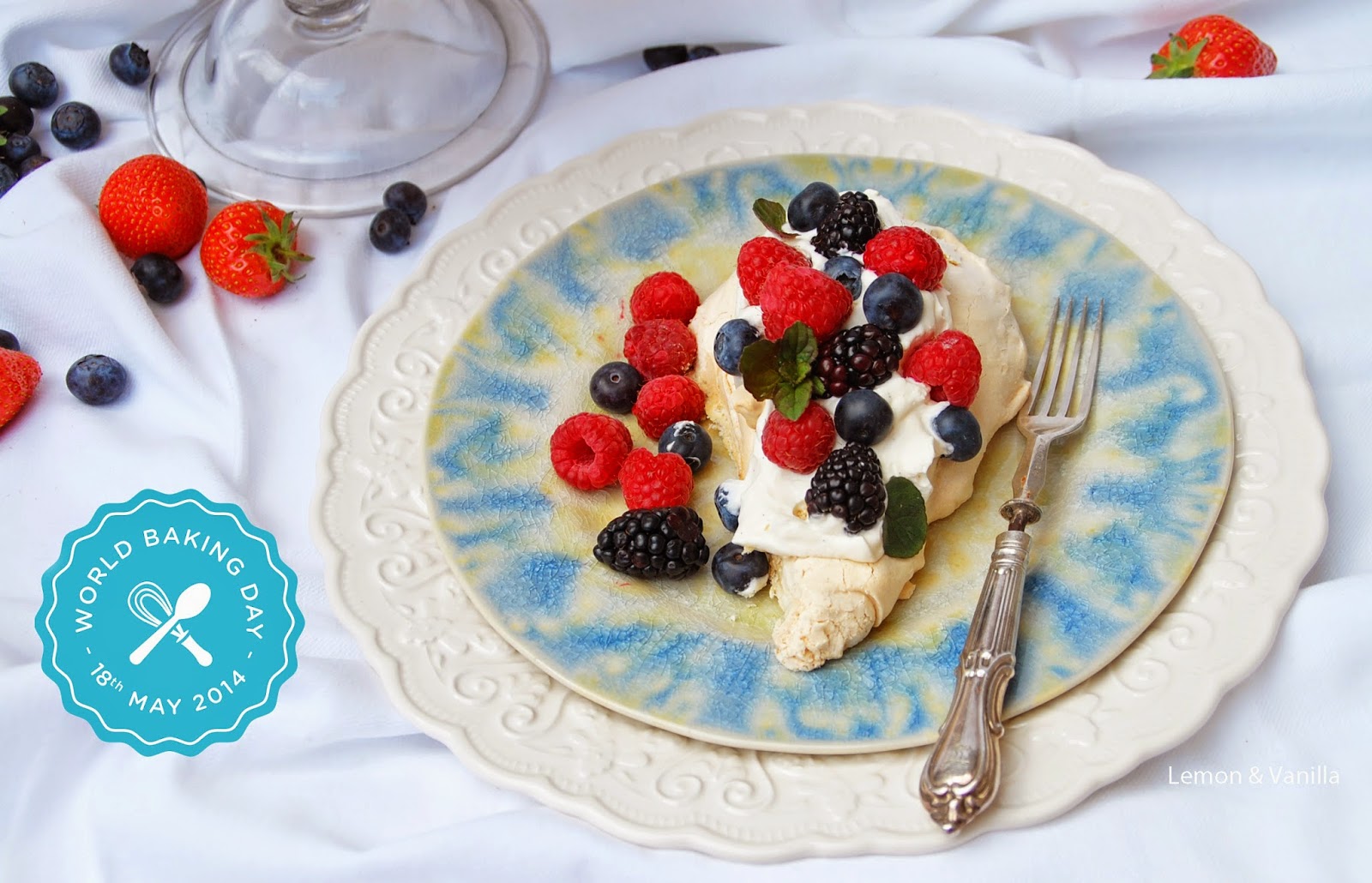
WBD - Tiered berry pavlova / Pavlova de frutos vermelhos em camadas.


The theme for this year's World Baking Day is "Who will you bake for?".
Well, I bake for my family and for the ones I love, because baking is LOVE and LOVE makes the world a better place to live!
ingredients (serves 10 to 12):
4 tsp cornflour
4 tsp cider vinegar
8 large egg whites (free range)
pinch of salt
350g golden caster sugar
2 tsp vanilla extract
600ml double cream
4 tbsp maple syrup
2 tsp vanilla extract
800g mixed berries
icing sugar, to dust


method:
Preheat the oven to 200ºC.
Line 2 baking trays with baking paper and draw 3 circles with 10cm, 18cm and 25cm diameter each on them. Set aside.
Mix the cornflour and vinegar together until combined and lump free.
In a large clean bowl, whisk the egg whites with the salt until stiff peaks form.
Add the sugar, 1 tbsp at a time, alternating with small amounts of the vinegar mixture and mix until everything is throughly combined.
Fold in the vanilla extract and using a big spoon spread the mixture onto the 3 circles.
Place the trays in the oven and and turn the temperature down to 100ºC.
Bake the meringues for 2 1/2 hours or until crisp on the outside and bottom.
When done, turn off the oven and leave the meringues cooling inside the oven with the door ajar.
Just before serving, whip the cream until soft peaks, then fold in the maple syrup and vanilla extract.
Place the largest meringue on a serving plate, spoon 2/3 of the cream on top and sprinkle with a mix of the berries.
Repeat with the remaining two meringues, cream and fruit in order to create three tiers and finish with a dust with icing sugar.
__________________


O tema do World Baking Day deste ano é "para quem cozinhas tu?".
Bom, eu cozinho para a minha família e para aqueles que amo, porque cozinhar é AMOR e AMOR faz do mundo um lugar melhor para se viver. 
ingredientes (para 10 a 12 pessoas):
4 coheres chá de Maizena
4 colheres chá de vinagre de cidra
8 claras de ovo (de preferência biológicos)
uma pitada de sal
350g açúcar refinado amarelo (ou branco)
2 colheres chá de extracto de baunilha
600ml natas para bater
4 colheres sopa de maple syrup
colheres chá de extracto de baunilha
800g mistura de frutos vermelhos frescos
açúcar em pó, para polvilhar


preparação:
Aquecer o forno a 200ºC.
Forrar 2 tabuleiros com papel vegetal e nele desenhar 3 círculos de 10, 18 e 25cm, respectivamente. Virar o papel ao contrário, para que a caneta ou lápis, não fique em contacto com a comida.
Misturar a Maizena com o vinagre, até obter uma mistura macia e lisinha.
Numa taça super limpa, bater as claras em castelo firme com uma pitada de sal.
Adicionar o açúcar, uma colher de sopa de cada vez, batendo sempre, intercalando com bocadinhos da mistura de Maizena.
Quando terminar o açúcar e a Maizena e a mistura estar brilhante e espessa, desligar a batedeira e envolver a baunilha nas claras.
Com uma colher, dividir a mistura pelos 3 círculos e levar ao forno, reduzindo imediatamente a temperatura do forno para os 100ºC.
Cozer os suspiros por cerca de 2 horas e 30 minutos, ou até que o exterior e bases estejam estaladiças.
Quando cozidos, desligar o forno e deixar os suspiros lá dentro, com a porta entreaberta.
Antes de servir, bater as natas até obter picos ligeiros e adicionar o maple syrup e a baunilha.
Colocar o suspiro maior num prato de serviço, cobrir com 2/3 das natas batidas, decorar com uma mistura de frutos vermelhos.
Repetir a operação com os restantes dois suspiros, as restantes natas e restantes frutos, por forma a obter 3 camadas e polvilhar com açúcar em pó.


Recipe / Receita:

16 April 2014

Plum tart served with orange blossom yoghurt and orange syrup / Tarte de ameixa, acompanhada por iogurte aromatizado com água de flor de laranjeira e xarope de laranja.


It is almost Easter and because I didn't have time to prepare any Easter treat, I leave you with a recipe I took from a book that I love to bits and that is packed with stunning recipes and this one, is just one of them.
And because the next few days are going to be very busy and with family around and I'm not going to have much time, I'd like to take this opportunity to wish you a very chocolaty and happy Easter.
ingredients (serves 6):
3 plums, halved and pitted
180g honey
90g unsalted butter, softened
35g white spelt flour, sifted
2 large eggs
125g ground almonds
zest of 1/2 lemon
1/2 tsp baking powder
method:
Preheat the oven to 170ºC and the grill to its highest setting. Butter a rectangular tart tin.
Place the plums on a baking tray lined with foil.
Drizzle with 60g of the honey and place under the grill for a few minutes. They are ready when they are sizzling and the edges are darker in colour. Remove the plums from the grill and set aside.
In a large mixing bowl, cream the buter for about 4 minutes.
Add 2 to 3 tbsp of the flour and beat briefely. Then add the eggs, one at a time and beat for a further minute or until you have a light and fluffy mixture.
Add the rest of the flour, the almonds, lemon zest, baking powder and remaining honey. Fold everything lightly and gently until combined.
Spoon the mixture into the tart tin, press in the plums, cut side down and bake for 30 minutes or until a skewer inserted into the tart comes out clean.
Remove from the oven and set aside to cool.
Serve the tart warm with the syrup and yoghurt.


for the orange blossom yoghurt:
400g plain Greek yoghurt
1/2 tsp orange blossom water
2 tbsp light runny honey
method:
Put all the ingredients inside a bowl and mix gently to combine.


for the orange syrup:
200ml orange juice
100g honey
1 star anise
method:
Place all the ingredients in a pan and simmer for 10 minutes or until reduced and syrupy.
__________________


Pois é, estamos quase na Páscoa e os últimos dias têm sido super ocupados e os próximos serão-no ainda mais, com família a visitar-nos e os preparativos necessários para esta celebração anual que é a Páscoa.
Como não tive tempo de preparar nenhuma receita alusiva à Páscoa, decidi deixar-vos esta receita, que já foi feita há algum tempo, mas que ainda estava em lista de espera para ser publicada e que foi retirada de um livro que adoro e que é, todo ele, recheado de receitas fabulosas!
Aproveito esta oportunidade para desejar a todos os que por aqui passam uma muito feliz e Santa Páscoa.
ingredientes (para 6 pessoas):
3 ameixas, cortadas ao meio e sem caroço
180g mel
90g manteiga sem sal, amolecida
35g farinha de espelta branca, peneirada
2 ovos grandes (L)
125g amêndoa ralada
raspa de meio limão
1/2 colher chá fermento para bolos
preparação:
Aquecer o forno a 170ºC e aquecer o grill no máximo. Untar com manteiga uma forma rectangular para tartes e reservar.
Colocar as metades de ameixa num tabuleiro forrado com papel de alumínio e regá-las com 60g do mel. Colocar o tabuleiro debaixo do grill por uns minutos. As ameixas estão prontas quando estiverem a fervilhar e os bordos tiverem escurecido.
Retirar o tabuleiro do grill e reservar.
Numa taça, bater a manteiga por uns 4 minutos.
Adicionar 2 ou 3 colheres de sopa da farinha e bater.
Adicionar os ovos, um de cada vez, batendo bem entre cada adição, até obter uma mistura fofa e macia.
Adicionar a restante farinha, a amêndoa ralada, a raspa do limão, o fermento e o restante mel e envolver tudo muito delicadamente, até estar bem incorporado.
Deitar a mistura para dentro da forma preparada e colocar as metades de ameixa - pressionando ligeiramente, corte virado para baixo, no centro e no sentido do comprimento da forma.
Levar a tarteira ao forno por cerca de 30 minutos, ou até que um palito inserido no meio do bolo saia limpo.
Retirar a tarteira do forno e deixar arrefecer.
Servir a tarte morna, acompanhada pelo iogurte perfumado e o xarope de laranja.


para o iogurte de água de flor de laranjeira:
400g iogurte grego natural
1/2 colher chá de água de flor de laranjeira
2 colheres sopa de um mel líquido e suave
preparação:
Colocar todos os ingredientes numa taça e envolver.


para o xarope de laranja:
200ml sumo de laranja natural
100g mel
1 estrela de anis
preparação:
Colocar todos os ingredientes num tacho e ferver por cerca de 10 minutos, ou até que a mistura tenha reduzido de volume e adquira uma consistência de xarope.

Recipe / Receita: