This website uses cookies, pixels, and other tracking technologies to personalize content, analyze how our site and apps are used, and create aggregated statistics.
We disclose data about site and app users to third parties so we can target our ads to you on other websites, and those third parties may use that data for their own purposes.
For more information on how we collect, use, and disclose this information, please review our
Privacy Policy.
Continued use of this site means you consent to our Privacy Policy.
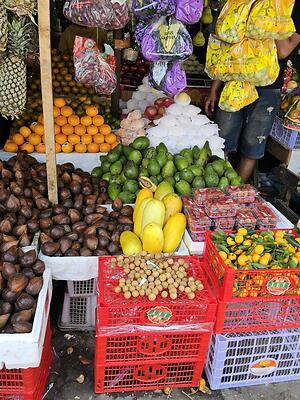
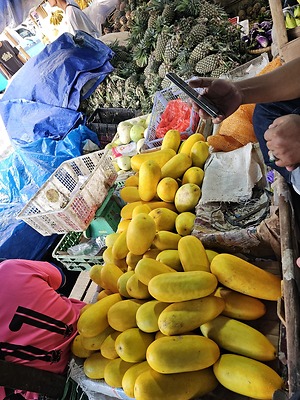
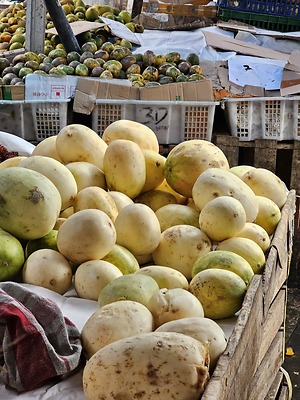
Timun Suri can widely range in size from small to large and are oval to elliptical in shape. The rind is smooth, firm, and matures from green to bright yellow, sometimes showcasing white spots or stripes. Underneath the rind, the white flesh is soft, dense, and aqueous. In the center of the fruit, there is also a semi-hollow cavity filled with many oval, cream-colored seeds. Timun Suri is highly aromatic with a tender, juicy consistency and a mild, sweet flavor.
Seasons/Availability
Timun Suri is available year-round in Indonesia, with a peak season during the holy month of Ramadan.
Current Facts
Timun Suri, botanically classified as Cucumis melo, is an elongated melon that grows on leafy, creeping vines and is a member of the Cucurbitaceae family. Though it is classified as a melon, Timun translated from Indonesian means “cucumber,” and this melon is often labeled as such for its refreshing taste and elongated shape. In Southeast Asia, Timun Suri can be grown year-round, but many farmers choose to only cultivate the melon for the religious time of Ramadan as the melon is often used to break periods of fasting.
Nutritional Value
Timun Suri contains phosphorus, vitamins A, C, and E, potassium, and magnesium.
Applications
Timun Suri is most commonly consumed raw for its fresh, sweet flavor. The flesh can be sliced and consumed by itself, or it can be tossed into green and fruit salads. It can also be used to make fruit leather or compote. The most popular use of Timun Suri is in a refreshing beverage, sometimes known as fruit ice. This beverage uses Timun Suri paired with syrups, honey, condensed milk, or lime juice for added flavor. It can also be combined with other melons or coconut for additional fruity notes. Timun Suri will keep 3-5 days when stored in a cool, dark place and when sliced, the pieces should be stored in the refrigerator.
Ethnic/Cultural Info
Timun Suri is closely associated with Ramadan, which is one of the holiest months in the Islamic religion. During this month, Muslims will engage in prayer and fast from dawn-to-dusk. When it is time to transition back into eating for the evening meal, it is customary to consume a sweet beverage or snack to help the stomach become accustomed to food again. Timun Suri is one of the most popular ingredients in these light snacks in Indonesia and is believed to help soothe the digestive system. Due to the fruit’s high demand for such a short season, many farmers only plant the melons right before the changing Ramadan schedule to sell in the market. After the Ramadan season is over, the fruits tend to disappear from the market until the following year.
Geography/History
Timun Suri is believed to be native to Indonesia and has cultivation records dating back to the 18th century. Today the fruit is found at many local markets throughout Indonesia, mainly during the time of Ramadan, and is prevalent in West Java, especially in Jakarta, and South Sumatra.
pasar pondok labu south jakarta
Timun Suri is an elongated melon that grows on leafy, creeping vines and is classified as Cucumis melo in the Cucurbitaceae family. Despite its melon classification, its name translates to “cucumber” in Indonesian due to its refreshing taste and shape. In Southeast Asia, it is often cultivated during Ramadan and used to break fasting periods. It is rich in phosphorus, vitamins A, C, and E, potassium, and magnesium.
Pasar Pondok Labu
Jalan Pondok Labu Raya Hj, Jl. H. Saleh No.62, RT.5/RW.1, Pd. Labu, Kec. Cilandak, Kota Jakarta Selatan, Daerah Khusus Ibukota Jakarta 12450, Indonesia
Timun Suri is widely enjoyed for its sweet, fresh flavor and is often consumed raw. It's perfect for salads or as a primary ingredient in a refreshing beverage known as fruit ice, which pairs it with syrups, honey, condensed milk, or lime juice for enhanced taste. Timun Suri can also be combined with melons or coconut for richer fruity notes and stays fresh for 3-5 days in a cool, dark space.
pasar anyar bogor west java
Timun Suri holds a special connection to Ramadan, as it's often used in beverages or snacks to ease digestion after fasting all day. Its popularity peaks in Indonesia during this holy month, leading farmers to time their planting so the melons are available for the season. Once Ramadan ends, Timun Suri disappears from markets until the next year, underscoring its unique seasonal significance.
pasar anyar bogor west java
timun suri just sale at Ramadhan…Timun Suri fruits are oval to elliptical in shape and have a smooth, firm rind that changes from green to bright yellow as it matures, often showcasing white spots or stripes. Their soft and juicy white flesh surrounds a semi-hollow cavity filled with cream-colored seeds. With its mild, sweet flavor and tender texture, Timun Suri is also notably aromatic, making it a refreshing and distinctive fruit enjoyed during the Ramadhan season.
GrandLucky Superstore SCBD
Kawasan Niaga Terpadu Sudirman (SCBD, Jl. Grandlucky Superstore LOT-12, Senayan, Kec. Kby. Baru, Kota Jakarta Selatan, Daerah Khusus Ibukota Jakarta 12190, Indonesia
Timun Suri, botanically known as Cucumis melo, is an elongated melon that often resembles a cucumber in both appearance and taste. It thrives on leafy, creeping vines and is part of the Cucurbitaceae family. In Southeast Asia, it is particularly popular during Ramadan, as it is commonly used to break fasting periods. Packed with nutrients, Timun Suri provides phosphorus, potassium, magnesium, and vitamins A, C, and E, making it both a refreshing and nourishing fruit.
Timun Suri is highly aromatic and features a tender, juicy texture with a mild, sweet taste. The fruit has a smooth, firm rind that changes from green to bright yellow as it matures and, in some cases, displays white spots or stripes. Inside, the white flesh is soft and dense, surrounding a semi-hollow cavity filled with numerous oval, cream-colored seeds. Its unique characteristics make it a refreshing and popular choice.
grand Lucky SCBD
jln. jenderal sudirman LOT -12 Senayan Kecamatan kebayoran baru, jakarta selatan
View on Instagram
021-5153832
Timun Suri taste like blewah and cucumber, taste sweet and just sale at Ramadhan in Indonesia. Timun Suri is most popularly used in a refreshing beverage known as fruit ice, where its sweet flavor is paired with syrups, honey, condensed milk, or lime juice. It also complements other ingredients like melons or coconut. Beyond beverages, Timun Suri can be enjoyed raw in salads, made into fruit leather, or turned into compote. It stays fresh for 3-5 days in a cool place, and sliced pieces should be kept in the refrigerator.
pasar anyar bogor jawa barat
jln. pasar anyar bogor, kecamatan bogor tengah, kota bogor jawa barat
Timun Suri holds special cultural significance during Ramadan in Indonesia. It is a staple ingredient in sweet beverages or snacks consumed after the fast, easing the stomach's transition back to food. Its popularity also shapes agricultural practices, as farmers align its planting schedule with Ramadan. Once the holy month ends, the fruit largely vanishes from markets, only reappearing the next year, underscoring its seasonal and cultural importance.
pasar anyar bogor
jln. pasar anyar bogor, kecamatan bogor tengah, kota bogor jawa barat
Timun Suri holds a unique cultural significance in Indonesia, especially during Ramadan, the holiest month for Muslims. It acts as a primary ingredient in sweet beverages or snacks consumed to gently ease the stomach back into eating after a day of fasting. This seasonal fruit is so intertwined with Ramadan that farmers time their planting to align with its demand, making it a rare delight unavailable outside this period.
Check out our QR code Library to download QR Codes that link to our fruit encyclopedia. Use on your signage and other promotions to share the knowledge!


 is easiest, three is harder.