Showing posts with label Emilia Romagna. Show all posts

Thursday, July 21, 2022

Dante in Ravenna


Ravenna is mostly famous for its stunning 5th and 6th century mosaics (many in Unesco sites around the city), but it is also considered Dante's city (Dante died in Ravenna) as much as Florence (where Dante was born) is.

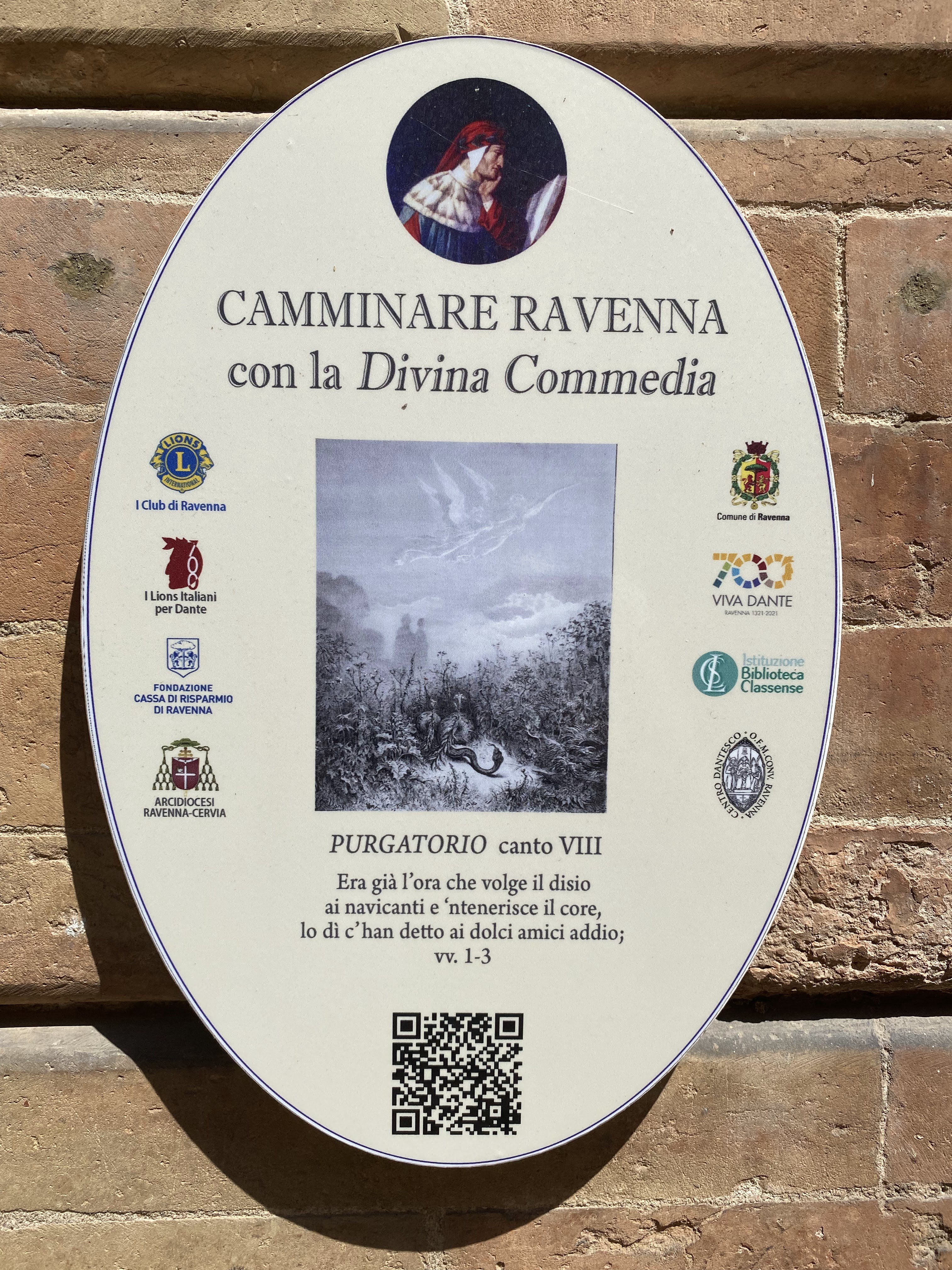
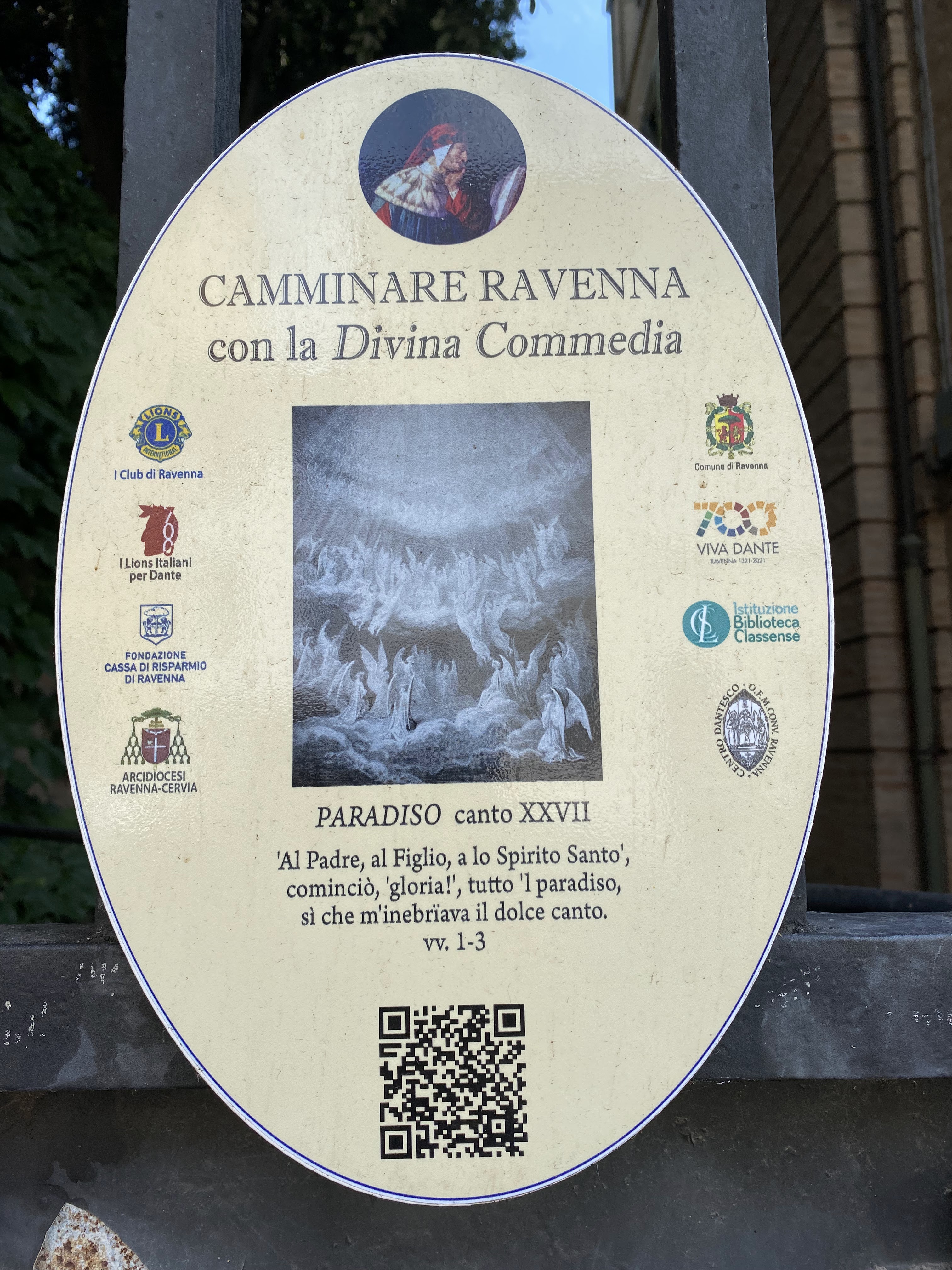
Dante is omnipresent in Ravenna, the city where he lived the last years of his life. in 2021 the city celebrated the 700th anniversary of his death with many artistic and cultural initiatives, which are still active today.  Also, along the city streets, there are several interactive tags with verses from the Divine Comedy.


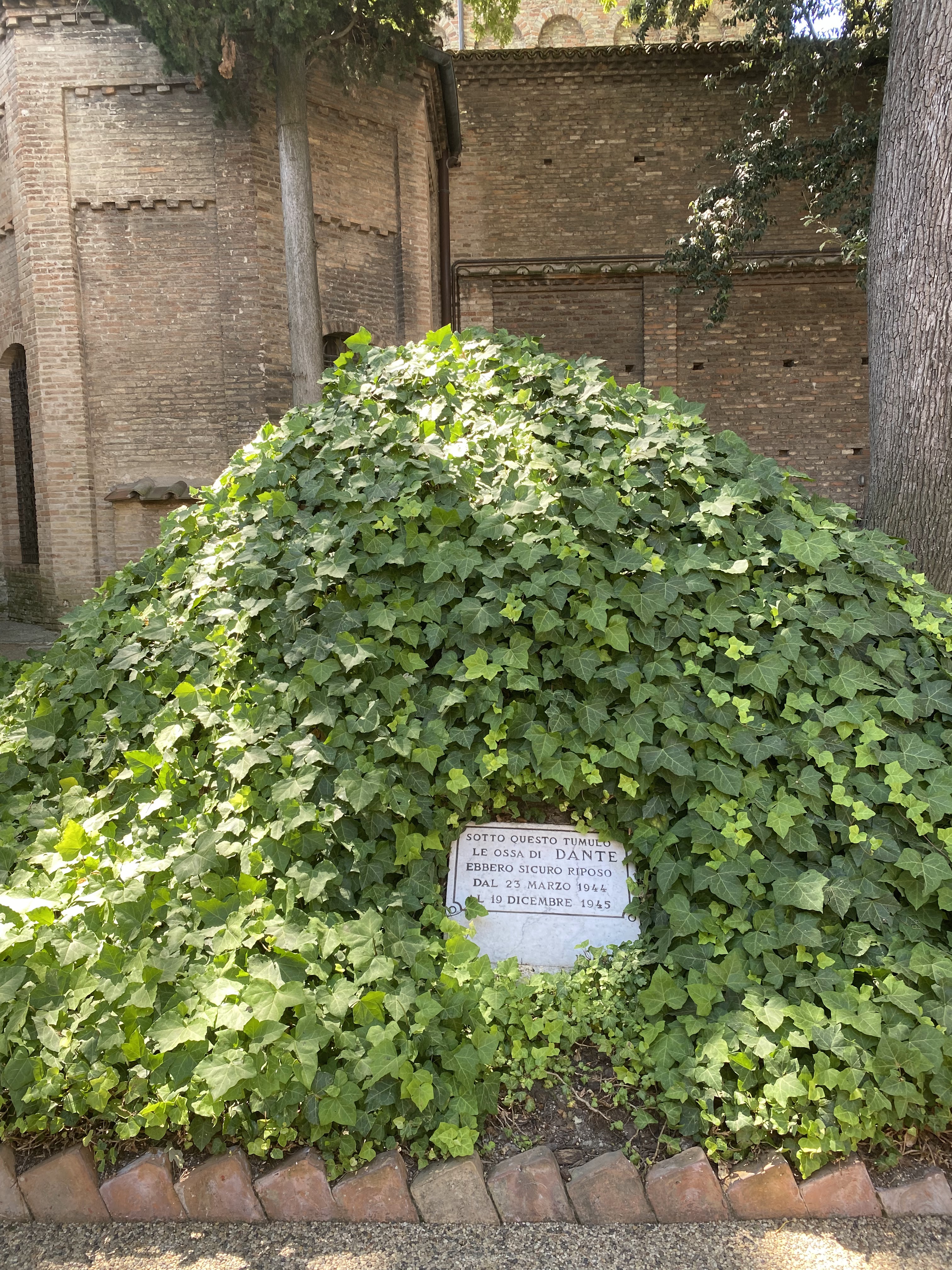
When Dante died in Ravenna, in 1321, his tomb was a simple sarcophagus just outside the Church of San Francesco. Then Guido Novello da Polenta, lord of Ravenna, asked for the construction of a chapel just for Dante's Tomb. In 1483, Bernardo Bembo, who ruled the city on account of the Republic of Venice, decided to restore the sarcophagus and commissioned the sculptor Pietro Lombardo a marble bass relief portraying Dante’s face, visible today inside Dante's Mausoleum. 

Dante's Tomb in Ravenna

Dante's spoils have been contended between Ravenna and Florence for a long time, and between the 16th and the 18th century, the remains went missing, hidden by the Franciscan friars in a small wooden chest, so that Florence couldn’t get them. 

The current mausoleum was built between 1780 and 1782. It was ordered by Cardinal Luigi Valenti Gonzaga (1725 – 1808) and designed by the Ravenna architect Camillo Morigia (1743-1795), who created a little Neoclassical temple made of simple lines and sombre decorations. The rests were recovered and placed in the new mausoleum until 1810, when Napoleon ordered the confiscation of monastic property, and the friars were forced to leave, but first they made sure to hide again the chest with the remains.
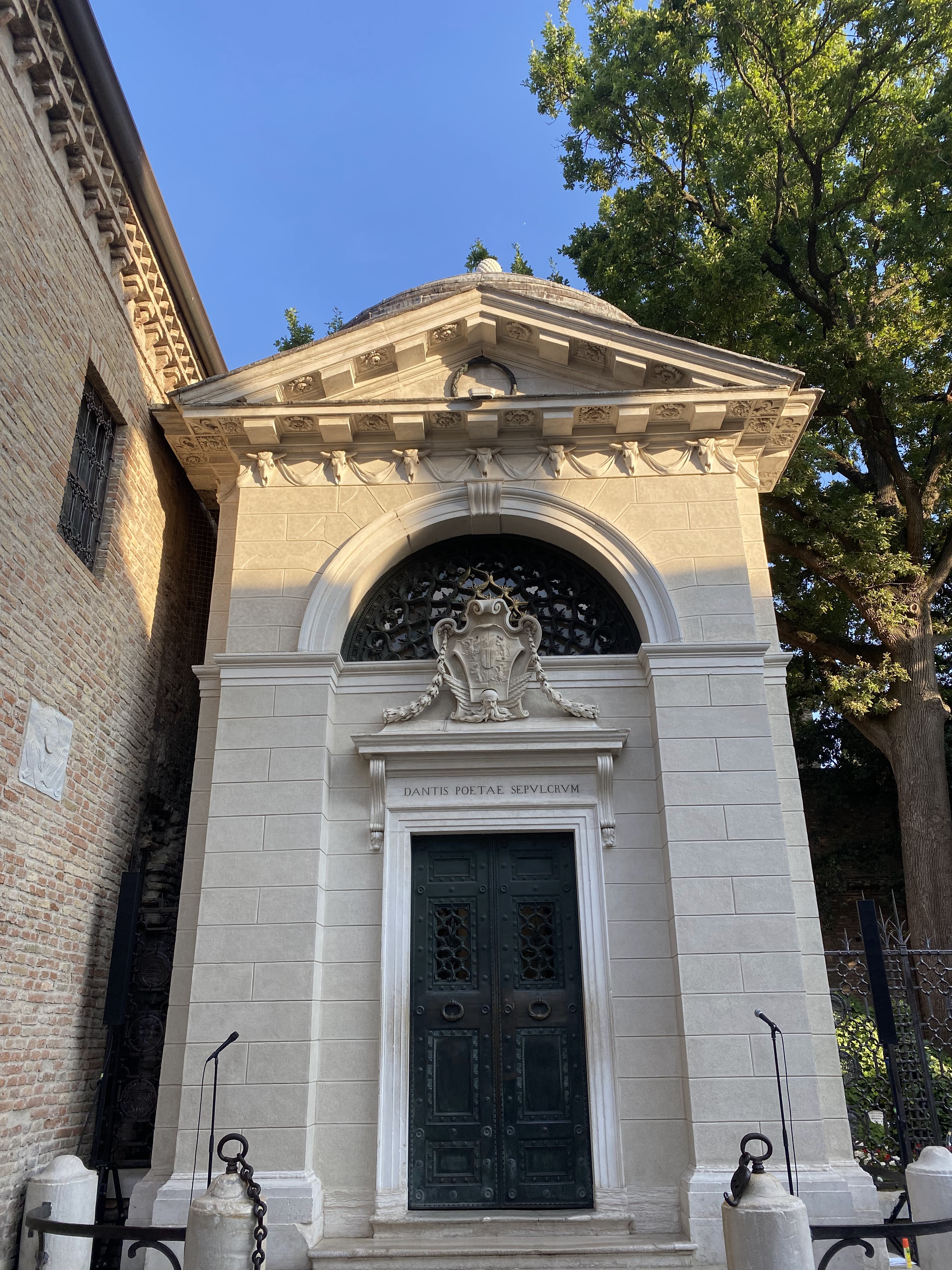
The majestic oak next to the mausoleum was planted by poet Giosuè Carducci at the beginning of the 20th century. The Mausoleum's doors close in the evening.

On May 25th 1865, during some maintenance works at the monastery beside the tomb, a bricklayer accidentally found  a wooden chest in a wall of the Quadrarco di Braccioforte. Luckily, a young student, Anastasio Matteuggi, saved the box from destruction.

The chest had a script saying “Dantis ossa a me Fra Antonio Sancti hic posita anno 1677 die 18 octobris”, which means “These bones of Dante placed by me on the date of 18 October 1677”. It was the original wooden chest where the friars kept the Poet's remains.

On that occasion, the remains were reassembled and put on display in a crystal urn for a few months. The crystal urn, without glass, is now displayed in the Dante Museum (see photo below), and so is the Franciscan friars' wooden chest.

The crystal urn, without glass, where Dante's remains were reassembled and put on display
for a few months in 1865

Since then, besides the transfers that occurred during the Second World War in order to avoid destruction, (see photo below) the spoils haven’t been moved again


Inside the mausoleum we can see the bass relief by sculptor Pietro Lombardo, on the sepulchre’s top is engraved a Latin epitaph written by poet Bernardo Canaccio in 1327.

At the centre of the little room, a votive lamp burns with the oil donated by Tuscany. Every year, on the second Sunday of September, the city of Florence sends a delegation and offers the oil to commemorate their most famous citizen, who died in exile. 


The mausoleum with open doors. 

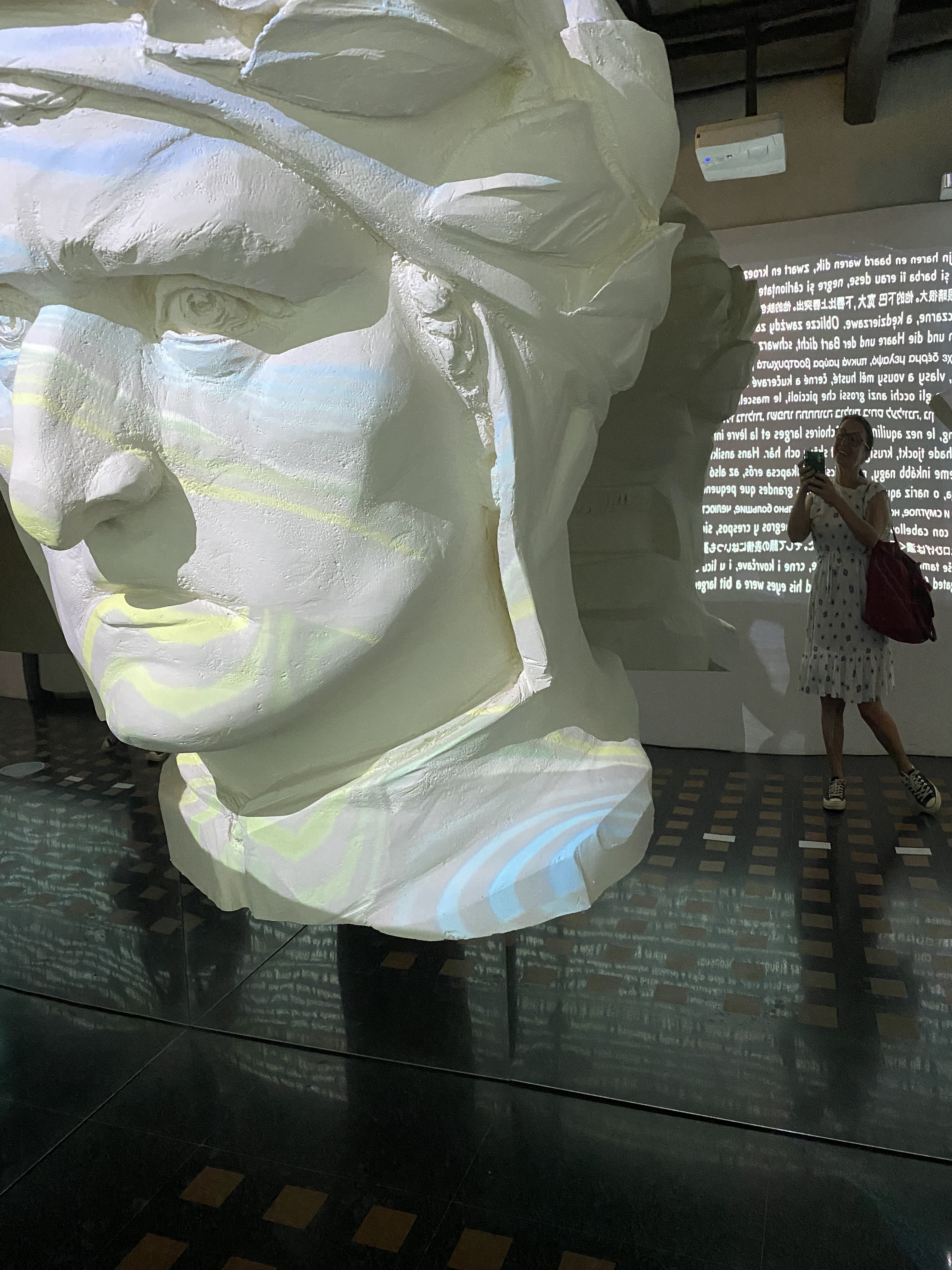
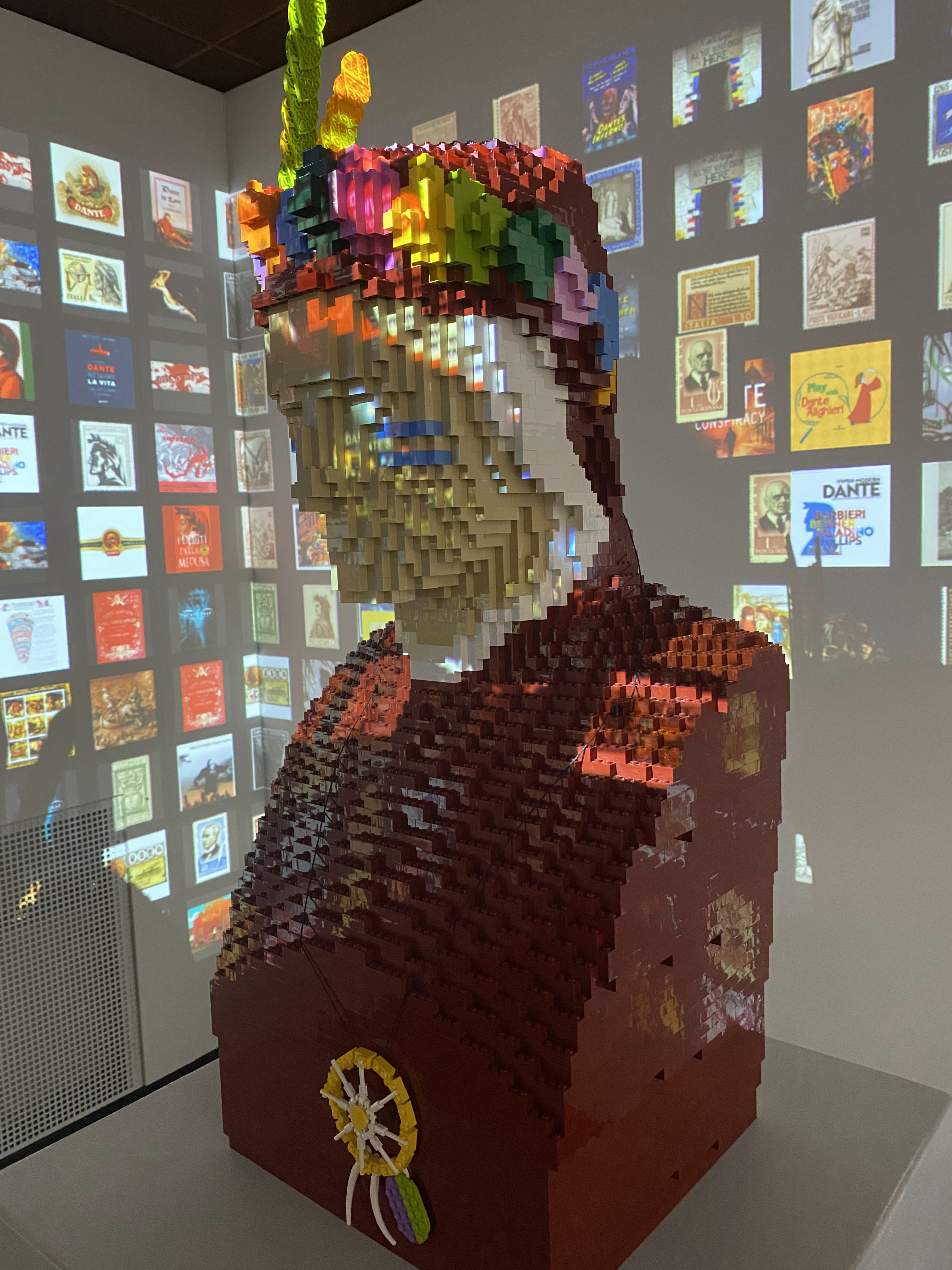
Near the Tomb there is the Dante Museum and Dante House.  The museum features several rooms with  relics and historical objects, and modern and engaging multimedia rooms about the Poet's life, legacy, and work (especially the Divine Comedy).

Our Dante Auckland member Alessandra in one of the multimedia rooms at the Dante Museum in Ravenna


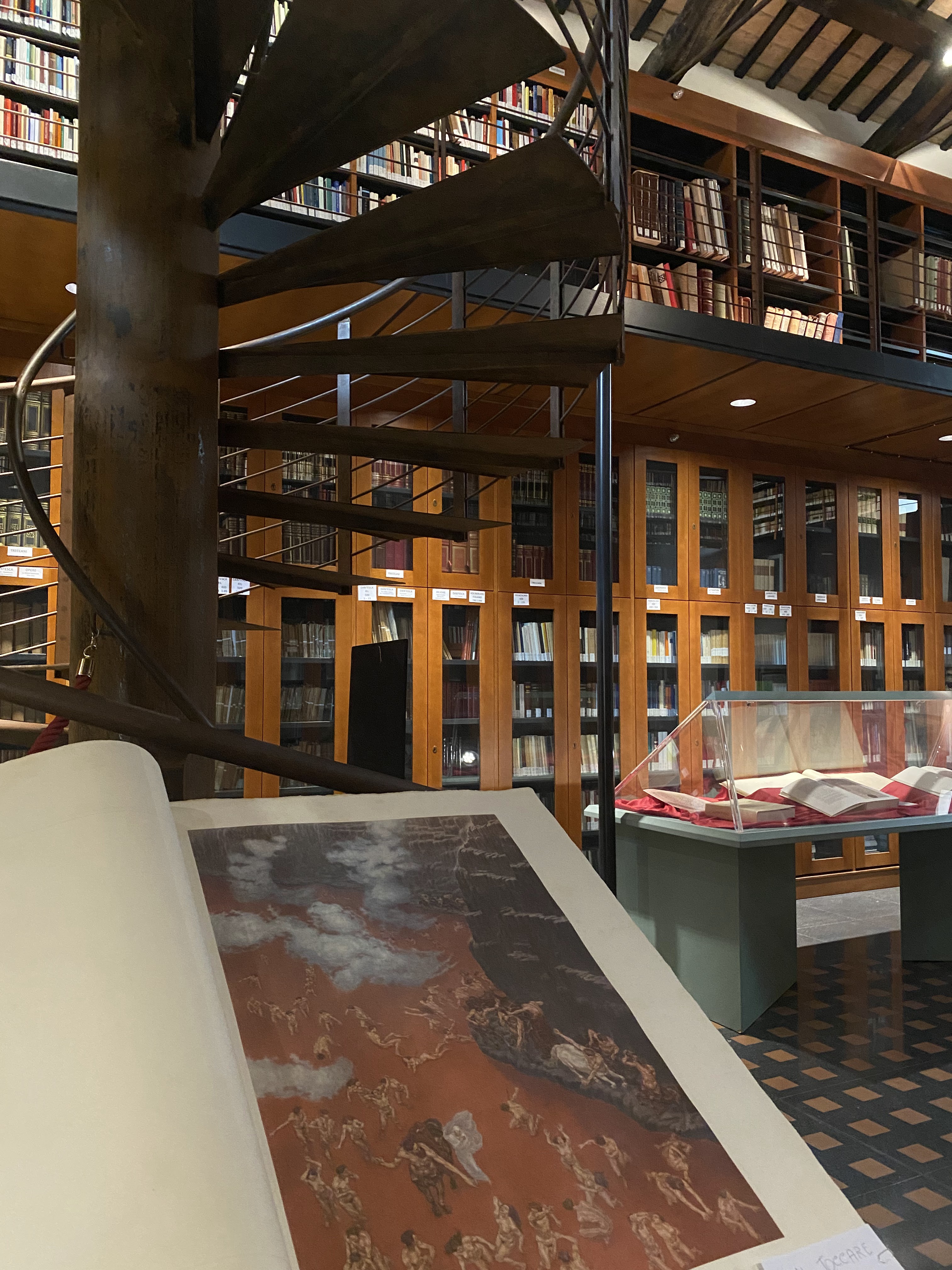
After touring the Museum you can check out the library (in the same building) which holds everything that has been written by and about Dante, including some very ancient tomes. 


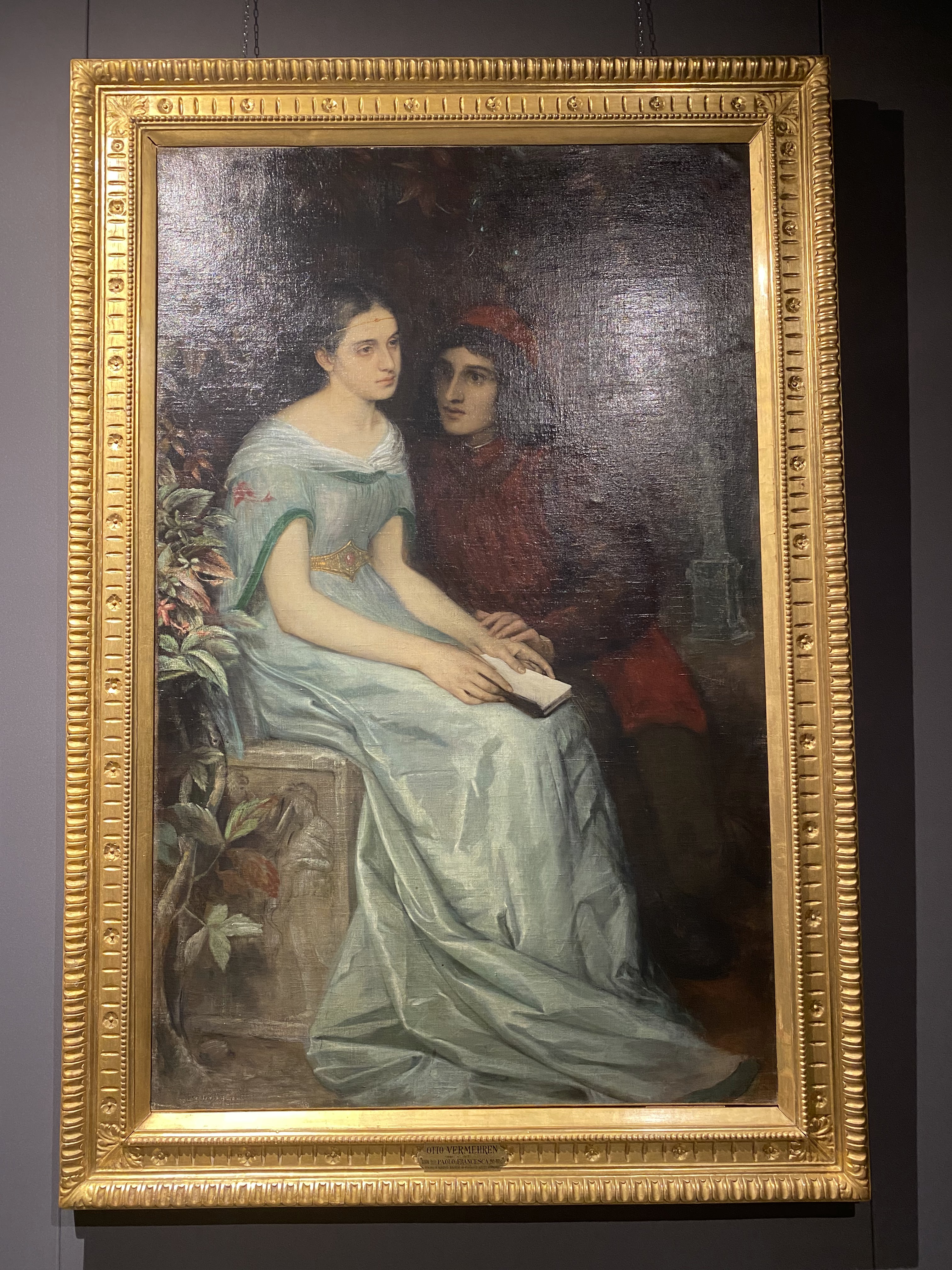
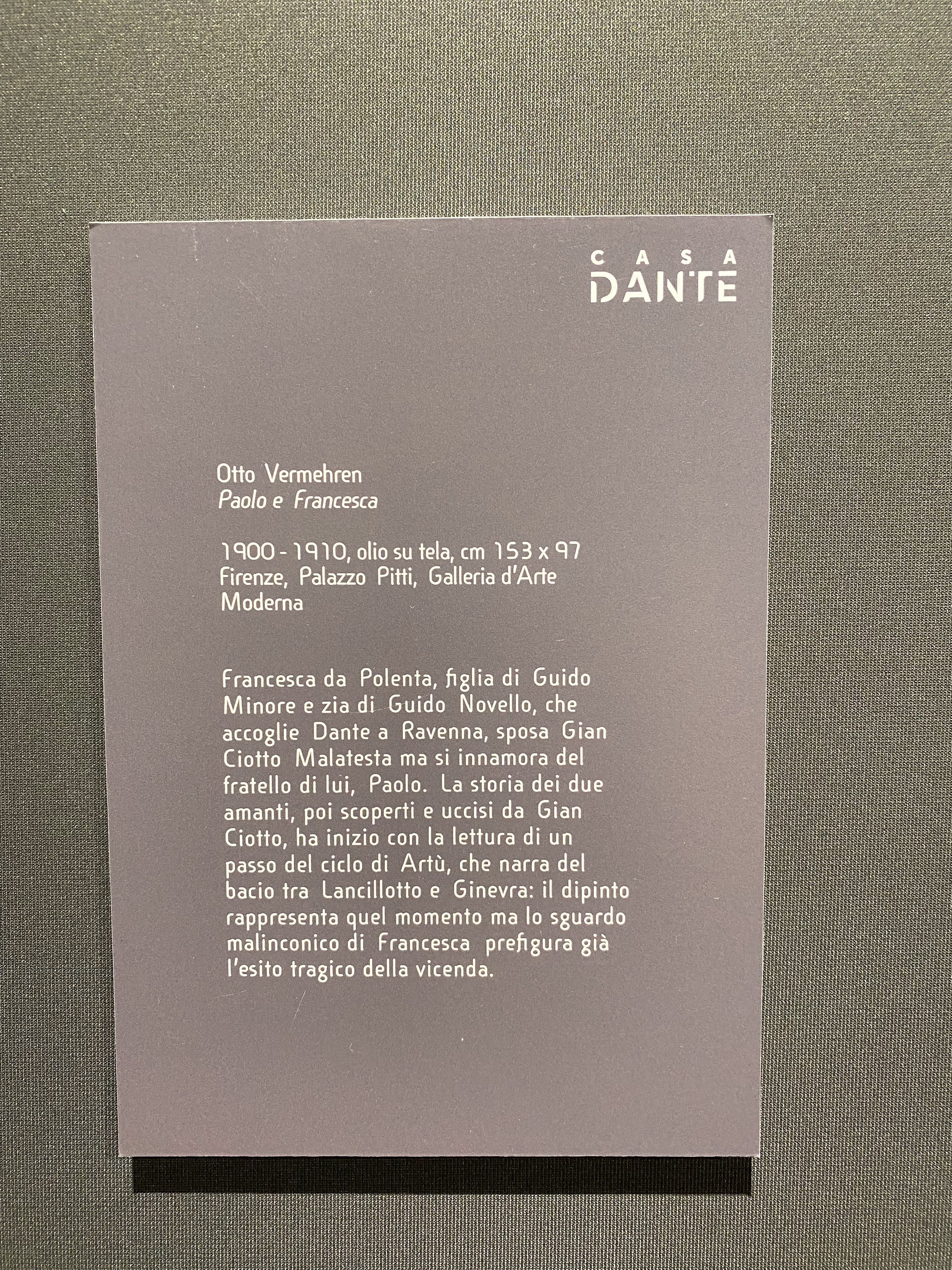
Near the Museum, and accessible with the same ticket, there is Casa Dante, hosting art pieces about Dante and the Divine Comedy. This includes a long-term exhibition with some very important works loaned by the Uffizi Galleries in Florence: check out this painting of star crossed lovers Paolo and Francesca!


For more Dante's experiences in Ravenna visit this site https://www.turismo.ra.it/en/follow-your-way/dante-alighieri/ 


Saturday, December 1, 2012

TORTELLINI BOLOGNESI - VI REGALO I MIEI TORTELLINI!!! I give you my granny's TORTELLINI recipe!


TORTELLINI BOLOGNESI
Emilia Romagna
Recipe from Cuocicucidici

Today Italian blogger Flavia from Cuocicucidici shares her Grandma's recipe for tortellini, a very Italian Christmas dish. Flavia is from Bologna but now lives in Sicily, visit her blog for some more delicious recipes, both in Italian and English.


Photos and text copyright of and kindly reproduced with permission of Cuocicucidici
 (Scroll down for the English version)


Quest'anno è l'anno che passerò il Natale con la mia mamma e il mio papà...si, ad anni alterni, con il maritozzo abbiamo optato per questa equa scelta, un anno il Natale si passa con la sua famiglia guardando lo splendido mare blu e un anno lo passiamo nei boschi in mezzo alla neve con i miei. 
Tra poche settimane carichiamo in macchina il nostro re peloso MOU (che si chiederà perchè lo svegliamo così presto!!!!) e poi carichiamo la macchina sul traghetto e mentre Mou , sconvolto, si domanderà su cosa poggiano le sue zampotte di così rumoroso ed instabile, noi prenderemo il caffè con un cornetto guardando la nostra isoletta che si allontana!!! E approdando sul "continente" ci appresteremo con grande pazienza ad affrontare la Salerno-Reggio Calabria (l'incubo di ogni viaggiatore!!!!).
Per  me il Natale è l'albero, il presepe, i decori per la casa, il profumo dei biscotti, preparare il panettone o il pandoro...ma più di tutto....per me il  pranzo di Natale sono i TORTELLINI di Bologna, quelli della mia famiglia, della mia nonna di Bologna che quando ero bambina mi inseganava a tirare la sfoglia ( a Bologna non si stende la sfoglia...si TIRA!!!) e poi mi faceva chiudere i tortellini perchè ero una bambina ed avevo le dita piccole..così avrei fatto i tortellini piccoli piccoli....e più piccoli sono e più sono pregiati!!! 
Ad anni alterni io preparo i tortellini per il pranzo di Natale qui in casa nostra.... mentre quest'anno mangerò quelli di Bologna fatti da mamma e papà..... che per me restano i più buoni al mondo!!!!, 
N.B. Ricordatevi che è buona regola cuocere i tortellini in brodo , meglio se di cappone, o comunque di carne....o anche brodo vegetale...ma assolutamente brodo e MAI acqua!!!


TORTELLINI DI BOLOGNA DELLA MIA FAMIGLIA: (con la ovvia premessa che come in ogni famiglia ognuno ha la sua ricetta!!)


per la sfoglia mia nonna calcolava (e così io!) 100 gr di farina per un uovo


per il ripieno:

x 1 uovo
150 gr parmigiano grattugiato
150gr mortadella tritata
100gr prosciutto crudo di Parma macinato
100gr petto di pollo macinato
100gr macinato di vitello
100gr macinato di maiale
sale q.b.
1 pizzico di pepe
1 "granellino" di noce moscata

Preparare e d impastare la sfoglia, poi metterla a riposare coperta a "campana" sotto una ciotola.

Intanto mescolare tutti gli ingredienti per il ripieno e mettere in frigo il tempo necessario a stendere la sfoglia sottilissima (si devono intravedere le venature del legno del tagliere!!)...tagliare la pasta a piccoli quadratini e in ognuno di questi mettere una pallina di ripieno..chiudere e fare i tortellini.


English version for my dear far friends

Next Christmas Holiday my Hubby, Mou and I are going to spend our days to my parents' house. We spend one year here with hubby's family and  one year we go to visit mine!!
They live in North Italy,  betwen Florence and Bologna, their house is in a very nice wood where you can find deers, wild boars, foxes and squirrels and where today it snowed!!! 
In Bologna  (where tortellino was "created")the traditional Christmas meal is Tortellini. My mom's mom, my granny, taught me how to make handmade tortellini, so  when I spend my Xmas here in front of the blue sea I prepare tortellini thinking when I was a child...instead this year I'm going to eat the ones prepared by my parents...and I think they're the best tortellini in the world.

Today I want to share with you my family's recipe, every family gets his own "secret" recipe.

In Bologna we use to cook tortellini in chicken or meat broth, but never cook them in water!!!

I hope you enjoy with this recipe...and trust me tortellini are very very good!!!

I prepare them even some days before Christmas and put them in freezer,  and pour them , when they're still frozen, in the hot boiling broth!!! Serve them with warm broth and a sprinkling of Parmesan cheese!!!


 MY FAMILY 'S TORTELLINI FROM BOLOGNA
for dough :

 every egg + 100 gr all porpuse flour 
(for 6 people you can use 4 eggs and 400 gr flour) 


For filling:

1egg
150 gr grated Parmesan cheese
150g chopped mortadella
100g Parma ham, ground

100g minced chicken breast
100g minced veal
100g minced pork
1 pinch pepper
1  pinch nutmeg
salt


 Prepare the dough, mix egg (or eggs) with flour ,  form a ball and cover it for half an hour it with a bowl.Meanwhile, mix all the ingredients in a bowl for the filling and refrigerate the time needed to roll out the dough very thin; cut the dough into small squares and in each of these place a  very little ball  of filling, close forming a triangle and close the tortellino. 
Buon appetito...have a very nice shopping weekend!!!

Monday, June 4, 2012

Foto della Festa della Repubblica 2012 e donazioni per il terremoto in Emilia


Festa della Repubblica
(Scroll down for English)


Il 2 di giugno la Società Dante Alighieri di Auckland ha celebrato la Festa della Repubblica. Ringraziamo tutti i presenti e l'Ambasciatore Alessandro Levi Sandri, l'addetto consolare Donato Scioscioli, ed il nostro Console Onorario Mario Magaraggia.

Durante i discorsi li Vice-presidente della Dante Dott. Bernadette Luciano ha annunciato che la Dante di Auckland farà una donazione pro-terremoto per l'Emilia. Chiunque fosse interessato ad unirsi a noi può contattare Alessandra ad alessandra@clear.net.nz per ulteriori informazioni.
È possibile anche fare donazioni dirette attraverso questi enti o la Croce Rossa Italiana.


On 2 June the Dante Alighieri Society of Auckland celebrated the Festa della Repubblica. We would like to thank all of those who attended, including our new Ambassador Alessandro Levi Sandri, Consular officer Donato Scioscioli, and Italy Honorary Consul Mario Magaraggia.

During the speeches Dante's Vice-president Bernadette Luciano announced that the Dante Auckland will make a donation for the earthquakes in Emilia. Anyone interested in contributing with us can contact Alessandra at alessandra@clear.net.nz for more information.


Photos of the speeches by Massimo:


Tuesday, April 17, 2012

Autumn in Italy as I remember it: castagne e porcini


I grew up in the Apennine mountains of Italy, here, and during Autumn and Winter I ate chestnuts almost every day. In Autumn I used to walk almost every afternoon to our family's chestnut wood, called Casturia, to pick chestnuts. It was a 3 km walk, downhill, and then back, uphill, with a bag full of castagne. Many families have a chestnut wood in my village, now that I live here in New Zealand I let some friends and relatives pick chestnuts and mushrooms in my woods, but it is always great to go back there to find the old trees and paths of my childhood. And if I go foraging with my Dad's cousin Mario, chances are that we also find a lot of porcini mushrooms (he is a very good mushroom hunter, I am not!).


Casturia, the chestnut wood in Poggioraso, Sestola.


Peeling roasted chestnuts in the evening


An old stone chestnut drying house in the woods


There are also porcini mushrooms
Tagliatelle with fresh porcini mushrooms


I am lucky enough to have a friend in Chirstchurch who also happens to be a good mushroom hunter, and he gave me some porcini (not the same as the Italian ones, but very similar), but I am looking for a place to go and pick chestnuts near Auckland, if you have any idea please let me know. For now I leave you with a recipe that calls for chestnut flour, yet another ingredient that I am still trying to find in NZ.


 La ricetta

Chestnut flour fritters


Frittelle di Castagne
Appennino Modenese
Emilia Romagna
Recipe from Alessandra Zecchini


These fritters were a staple in my family, they are easy to make and incredibly filling.


Mix 250g of chestnut flour with 400ml of water, mix well and add a tablespoon of sultana.


With a spoon drop some batter into the hot oil (I used rice bran oil) and cook on both sides; it only takes a couple of minutes.


Place the fritter on a paper towel to absorb the excess oil.


These fritters are actually better cold, just by themselves, or with a little ricotta cheese.


Photos and Recipes by Alessandra Zecchini ©

Sunday, March 18, 2012

Cucina italiana: le crescentine


Le crescentine
Appennino Modenese
Emilia Romagna
Recipe from Alessandra Zecchini


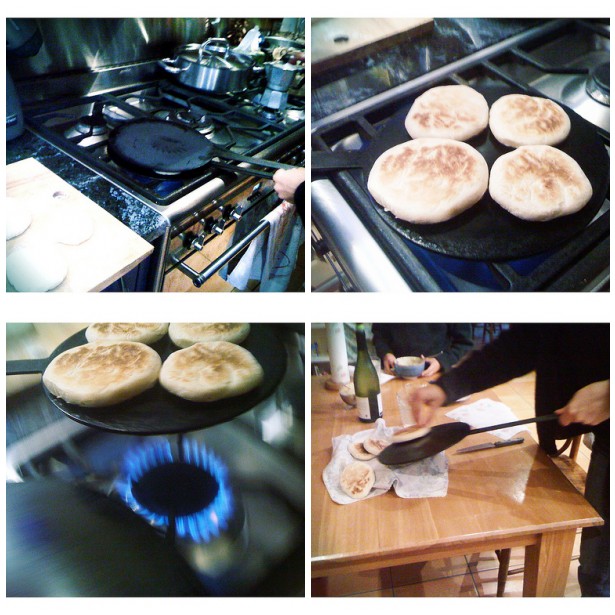
This type of bread is typical of my area of Italy, in the province of Modena. In other parts of Italy some people call them tigelle, but tigelle is the name of the terracotta disks in which they were originally baked in. Terracotta disks are still used, but today most people use large iron plates with long handles called cotte, or the more modern version, made from aluminium. Personally I still prefer the iron cotte, they are heavy and many years ago I carried them to New Zealand via Japan, almost half of my luggage allowance, but worth it.


Great food for cold nights, and the children go crazy about them! They helped, Max chopping the rosemary that goes in the filling, and Aranxta dividing the bread dough into small balls. The balls are flattened and then placed on one of the hot plates, which I greased with vegetable oil (not olive oil, I used rice bran oil, which has a high burning point and no flavour). Then you cover them with the other hot plate. So this bread 'bakes' on the stove, not in the oven!


You have to turn the hot plates a few times to make sure that you have even heat both on the top and on the bottom, and at the last turn I also turn the crescentine. Is a sort of dance really, and good excercise for the arms! The person who cooks is always standing, and eating and drinking wine while cooking, the diners help themselves cutting open the crescentine and filling them with what they like. Traditionally pancetta, salami, prosciutto or cheese are used, but mostly a kind of pesto made with lard, rosemary and garlic, then topped with grated parmesan.

Since I don't eat meat, and even if I did I could not find that particular lard outside of its restricted area of origin, let alone in NZ, I use salted butter. In NZ butter is quite rich and totally suitable, just soften it, or even melt it and let it set again, then add chopped fresh rosemary and some squeezed or finely chopped raw garlic. Put inside the hot crescentine, top with parmesan, and eat. I have never met anyone who didn't like them, they are addictive, and even if I usually have other fillings at hands, from a variety of cheeses, cooked and raw greens, mushroom and lentil sauce available, we tend to eat at least half with the garlic-rosemary butter. On the famous desert island this would be the food I would crave the most, and the second would be yet another type of bread, fried, from the same area: gnocco fritto, (click here to see it), probably my husband first choice in the island!

And what is your favourite food?


Photos by Alessandra Zecchini and Arantxa Zecchini Dowling ©