Showing posts with label interviews. Show all posts

Monday, July 10, 2017

Intervista alla scrittrice Viola Di Grado

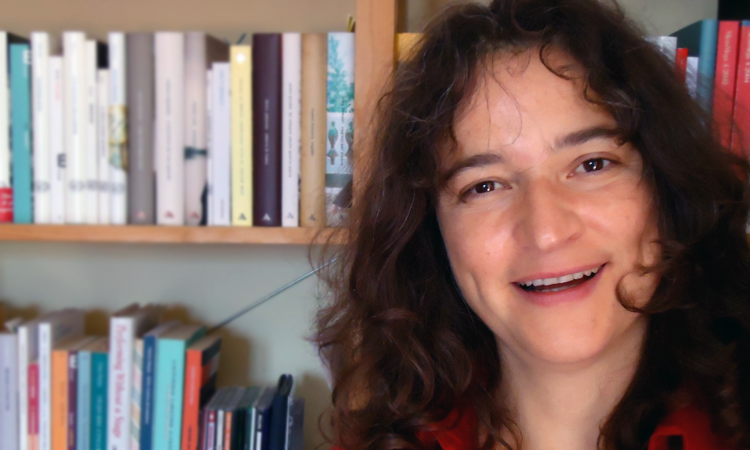
Some of you may have met young Italian writer Viola Di Grado at the Auckland Writers Festival last month, but if you missed her here is an exclusive interview with Matteo Telara for the Dante Blog.

Happy reading.


Pluripremiata autrice, non solo in Italia (con il suo primo romanzo Settanta acrilico trenta lana Ã¨ stata la più giovane vincitrice del Premio Campiello Opera Prima e la più giovane finalista del Premio Strega) ma anche all’estero (ricordiamo, tra i vari riconoscimenti, il primo posto raggiunto dal suo secondo romanzo Cuore Cavo, nella lista Goodreads del Man Booker International Prize) e accreditata orientalista (si è laureata in lingue orientali all'Università di Torino e si è specializzata in filosofie dell'Asia Orientale alla University of London), Viola Di Grado è universalmente considerata una delle scrittrici più rappresentative degli ultimi decenni, un'autrice nella quale tematiche complesse (in particolare l'incomunicabilità, l'alienazione e l'illusorietà dell'io) e ricerca linguistica (che si avvale spesso di "sottili smottamenti anaforici" e di una varietà di linguaggi simbolici quali ad esempio quello degli ideogrammi) convergono nella realizzazione di opere d'indiscussa originalità.


1) Settanta acrilico trenta lana, pubblicato quando avevi 23 anni, ha vinto il Premio Campiello Opera Prima per “l’invenzione linguistica spinta fino alla visionarietà” e ha fatto di te e la più giovane finalista del Premio Strega. Com’è nato questo romanzo? E che intenzioni avevi (se ne avevi) quando l’hai scritto?

Volevo inventare qualcosa che non c’era. Utilizzare una lingua (il cinese) come personaggio di una storia. Stabilire nuove coordinate di tempo, un tempo irregolare che segue i moti della mente, che s’inceppa con il dolore e si riattiva con la vitalità. Volevo raccontare in forma narrativa una storia che

Thursday, June 23, 2016

Matteo interviews Silvia Pareschi

Silvia Pareschi is the Italian translator of Jonathan Franzen, Shirley Jackson, Denis Johnson, Zadie Smith, Junot Dìaz, Julie Otsuka, Don De Lillo and many other english speaking authors. Here below you can find an interview Matteo did with her not long ago. (All in Italian!!!).
Enjoy!


Silvia Pareschi, traduttrice dall'inglese all'italiano di grandissimi autori - da Jonathan Frazen a Zadie Smith, da Junot Díaz a Julie Otsuka, da Nancy Mitford a Don DeLillo (e molti altri ancora) - ...... Ciao Silvia, innanzitutto complimenti per il tuo lavoro di traduttrice e per aver dato la possibilità a moltissimi italiani di conoscere le opere di alcuni dei migliori autori degli ultimi anni. Comincerei con un paio di domande alle quali hai già risposto probabilmente molte volte, ma che possono aiutarci a capire chi sei.

1) Come sei arrivata a fare la traduttrice?

Grazie a una buona dose di fortuna. Mi sono laureata in lingue con una vaga idea di voler tradurre letteratura, quella russa, però. Dopo la laurea e una serie di lavoretti per sbarcare il lunario, mi sono iscritta al master in tecniche della narrazione alla scuola Holden di Torino, sempre con una vaga idea di voler lavorare nel mondo dell’editoria. Durante il master, mentre seguivo un seminario sulla traduzione, venni notata dalla docente, Anna Nadotti, che mi segnalò alla casa editrice Einaudi. La mia prima traduzione pubblicata fu Le correzioni di Jonathan Franzen. Non potevo sperare in un esordio migliore.

2) Parliamo, appunto, dei tuoi esordi nel difficile mondo della traduzione. Te lo chiedo soprattutto a nome di quanti non conoscono certe dinamiche dell’editoria. Come funziona? Scegli tu chi tradurre? Vieni scelta? E cosa succede se non riesci a sviluppare un feeling con l’autore e col testo?

È la casa editrice che mi propone i libri da tradurre. In genere sono una traduttrice piuttosto duttile, ho tradotto molte voci, molti stili e molti generi diversi. Mi è capitato molto di rado, un paio di volte, di allontanarmi da un autore o di rifiutarlo tout court: in un caso si trattava di un autore con cui proprio non ero in sintonia, e un’altra volta di un autore che amo ma per un libro che proprio non riuscivo a farmi piacere.

3) Nominami 3 scrittori che hai particolarmente amato tradurre e altri 3 che invece vorresti tradurre

Soprattutto per quel che riguarda la prima domanda è una scelta difficile, perché ho la fortuna di tradurre diversi autori che amo particolarmente. Vediamo… oltre a Franzen, naturalmente, di cui ora sto traducendo Purity per Einaudi, citerei il compianto

Saturday, April 9, 2016

Exclusive Dante Auckland interview to Author Nicky Pellegrino

A few questions to Nicky Pellegrino

Do you have a favourite Italian word or sentence? What does it mean?
Buonanotte e sogni d’oro – which literally means goodnight and golden dreams and is what my father used to say to me every night before I went to bed when I was a child. This would be followed up early the next morning with a rousing cry of “sveglia” (wake-up)

Do you listen to Italian songs/music?
I love the old-fashioned songs. I have a CD called Nostalgia Italiana 1963 that’s full of singers like Rita Pavone, Gianni Morandi and Edoardo Vianello. It was the music my parents listened to when they were young and when I had a convertible I used to drive round Auckland blasting it out of my stereo feeling like I cut a very retro stylish figure! I also enjoy opera and have a soft spot for Neapolitan love songs and anything sung by Mario Lanza whose time in Italy I fictionalised in my novel When In Rome.

Which Italian dish do you cook more often? Any tips?
Pasta e fagioli (pasta and beans) because it’s simple, warming in winter, cheap and delicious. I use lots of celery leaves in it which horrified Auckland chef Gaetano Spinosa who tells me celery has no place in the dish. It’s the way my family has always made it though so I’m not changing.

What is your favourite Italian region and why?
I love the south…. particularly the Basilicata coastline and the hilltop town of Maratea which appears in many of my stories in the guise of Triento. I changed its name because I wanted to be free to rearrange it when necessary but really it is very much how I describe it.

Is there a part of Italy where you haven't been yet and you are keen to discover?
I’d love to go back to Sicily because I only visited a small part of it when I was researching my book The Food Of Love Cookery School and feel as if I barely scratched the surface. Also I’m desperate to go to the cave town of Matera and stay in one of the flash grotto hotels.

Can you recommend our readers one or two places to visit or itineraries in Italy?
Go to Venice but stay in Cannaregio or Santa Croce rather than the very touristy bits around Piazza San Marco. And don’t go alone like I did when I was researching One Summer In Venice because it’s not the best solo travel destination. I’d also recommend a food holiday with Katia Amore of Love Sicily in Modica. My week there was the best time I’ve ever had while researching a novel. The food was so good and we never stopped eating. Sometimes I think about the cannoli shop at the foot of the steps beside Katia’s house and regret not being able to manage more of them.

Did you ever do a house swap in Italy?
Not so far, but the house in Under Italian Skies, which I call Villa Rosa, is based on a place on the coast of Basilicata which belongs to some of my Italian family and we’ve been to stay there many times. It’s one of my favourite spots in the world.


Nicky Pellegrino’s new novel

After The Villa Girls and Summer at the Villa Rosa Nicky Pellegrino is back with a new novel, the third inspired by the beautiful pink villa in Maratea.

Under Italian Skies
Imagine swapping your house for a stay in an Italian villa and falling in love with the owner’s life…Stella has life under control and that’s the way she likes it.

For 25 years she’s been trusted assistant to a legendary fashion designer. But when her boss dies, suddenly everything she loves seems to vanish.

Stella is lost – until one day she comes across a house swap website and sees a beautiful old villa in a southern Italian village. Could she really exchange her poky London flat for that?
What was intended as just a break becomes much more as Stella finds herself trying on a stranger’s life.

Available on bookshops on 12 April.


Meet the Author!

If you want to meet the author personally come to our Colazione alla Dante on 30 April, 10 am -12pm, Nicky will be our special guest!

Other opportunities will be:

Exclusive Italian Lunch with Nicky Pellegrino
Date: Tuesday 12 April
Time: 12.15pm – 2pm
Location: The Esplanade Hotel, Devonport
Tickets: $69 includes a two course lunch, a glass of wine and a signed copy of Under Italian Skies, available from eventfinda.co.nz
An Evening with Nicky Pellegrino
Enjoy a glass of bubbles and some food while you escape to Italy
Date: Thursday 28 April
Time: 5.30pm – 7pm
Location: Paper Plus Newmarket
Free Entry, please RSVP numbers to newmarket@paperplus.co.nz


Thursday, July 9, 2015

The Antipodeans - by Greg McGee


ft
The Antipodeans -  by Greg McGee

The Antipodeans, set mainly in Venice and Friuli, has been a 30-year labour of love for author Greg McGee. The idea was first sparked when he lived in that region and became fascinated by tales of escaped Kiwi prisoners of war and their links to the Italian resistance. Greg was sure there was a story there, but took many years to work out how to tell it.
From Venice to the hinterland of the South Island of New Zealand, from the execution of a Gestapo commander in the last days of World War II to contemporary real estate shenanigans in Auckland, from political assassination in the darkest days of the Red Brigade to the vaulting cosmology of particle physics, the novel is vast in scope but indomitably human in its focus.


Four questions for Greg McGee

You lived in Italy for a period during your time as a professional rugby player. Which part of Italy was it and what are your key memories of that time?
I lived in Italy for about 18 months, from April/May 1976. I went to Perugia, did a short course in Italian at the Università per Stranieri, poi sono andato a Casale Sul Sile, un piccolo paese in vicino a Treviso, dove ho fatto giocatore/allenatore d'una squadra di rugby in Serie A. That experience was a seminal moment in my life, for many reasons: living so close to Venice (where I had friends from the team), but above all being involved in a common endeavour with the locals. I was politically naive at a time in Italy when everything was political - the June elections in 76 had produced ‘the historic compromise’ with Berlinguer, the  universities were often occupied, the Red Brigade was blowing up banks, the trains were full of soldiers and the skies full of vapour trails from Nato jets - very different!

With this novel you treat for the first time a new topic, one which is deeply anchored in the conscience of many new Zealanders, old and young. What inspired you to write a novel about NZ soldiers in Italy ?
The Antipodeans is not a war novel. There are three story strands, one from 1942 to 1951, one from 1976, but the main strand is contemporary, where a young woman tries to unravel family connections that go back three generations. It is true that the earliest inspiration came from taking my father back to the battlefields (Cassino, the Sangro, Faenza etc.) where he’d been in WWII, but I was also inspired by my time in Italy, and by what I saw as a mutual fascination between Italy and NZ for each other’s countries - which are about the same size and at the opposite ends of the earth (the antipodes of the title).
Since living in New Zealand, I have often heard people telling the stories of their grandfathers/great uncles who fought in Italy in WWII. Is your novel based on biographical material, perhaps something that happened to a family member or to someone you know or heard about?

After I’d made the tour with my father in 78, I took him back to my village and he began talking to the other men there about war experiences. One of the old men then showed me the bullet holes in his stalle from a Nazi Stormtrooper’s machine gun, which had been fired at an escaped NZ POW hiding in the hay-loft. He told me the Kiwi had escaped and had fought with the partigiani further north. This was the first I’d heard of an Italian resistance. From that moment I began researching everything I could find about the partisans and the big connections between them and Kiwi (and other) POWs who had escaped into the Veneto countryside after the Armistice of September 1943, and who became known as Il Battaglione di Lepre, because they were hunted from dawn to dusk.

What was the most difficult task during your 16-year research phase, and did you come across something that you didn’t expect and that prompted you to introduce new elements into your original plot or even give it a new direction?

The above probably answers this question too. The most difficult decision about the book was deciding who was to tell the different strands of a complex story. Once that decision was made, a structure suggested itself, and I was on my way, courtesy of the Katherine Mansfield Menton Trust, which allowed me to go back to the Veneto and Friuli and walk in the steps of my characters. The most surprising thing I found was the grand old farm-house beside the river Livenza, which had been PG 107/7, the prison from which my characters (and real POWs) had escaped. The upper windows were still bricked up. I could look at the fields they had worked and imagine them hiding all around there after the Armistice.  

                                                                                                          Interview by Stefania Perrotta

About the Author
In his early 20s, Greg McGee played rugby as a Junior All Black and became an All Black trialist. He graduated from the University of Otago with a law degree in 1972. He first came to literary attention when he wrote the iconic New Zealand play Foreskin’s Lament (1980), followed by Tooth and Claw (1983), Out in the Cold (1983), and Whitemen (1986), each drama set in the rugby world. Since then he has had a successful career writing mainly for television, but again broke into the literary consciousness as Alix Bosco, winning the 2010 Ngaio Marsh Award for Best Crime Novel. In 2012, Greg published Love & Money, his first novel under his own name, and in 2013 he was awarded the Katherine Mansfield Menton Fellowship.



Friday, September 28, 2012

Intervista a Matteo, in italiano


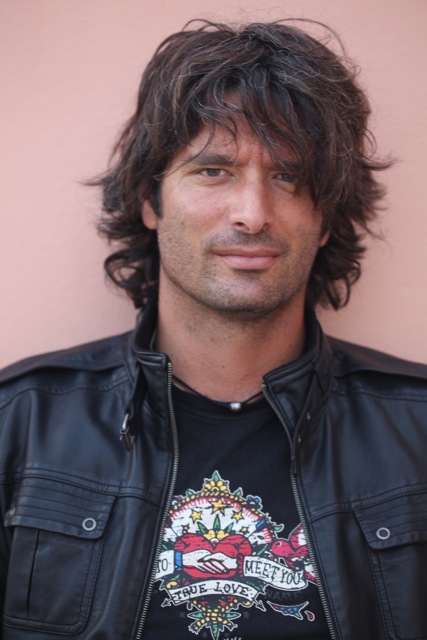
Matteo Telara è stato intervistato dalla rivista il Reportage, trimestrale cartaceo su giornalismo, scrittura, fotografia.  Cliccate qui se volete leggere l'intervista, in italiano, dove Matteo parla della sua esperienza in Nuova Zelanda. Un assaggio:

“Italiani” – Siamo ad Auckland in Nuova Zelanda – Un paese dove tutto è possibile e dove conta quello che sai fare e quanto bene lo sai fare. Il rovescio dell’Italia.


Buona lettura.