Showing posts with label Italia. Show all posts

Thursday, July 21, 2022

Dante in Ravenna


Ravenna is mostly famous for its stunning 5th and 6th century mosaics (many in Unesco sites around the city), but it is also considered Dante's city (Dante died in Ravenna) as much as Florence (where Dante was born) is.

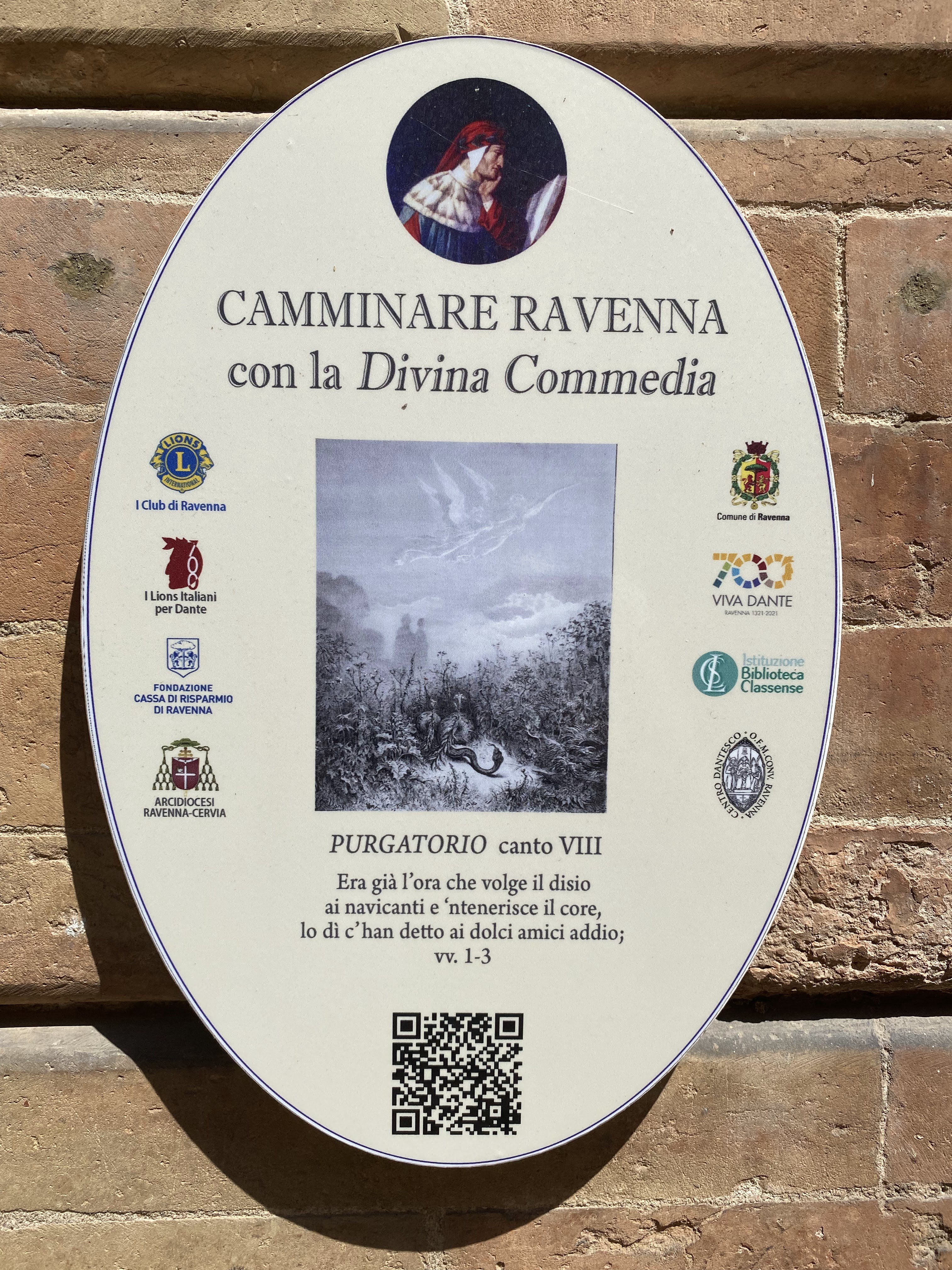
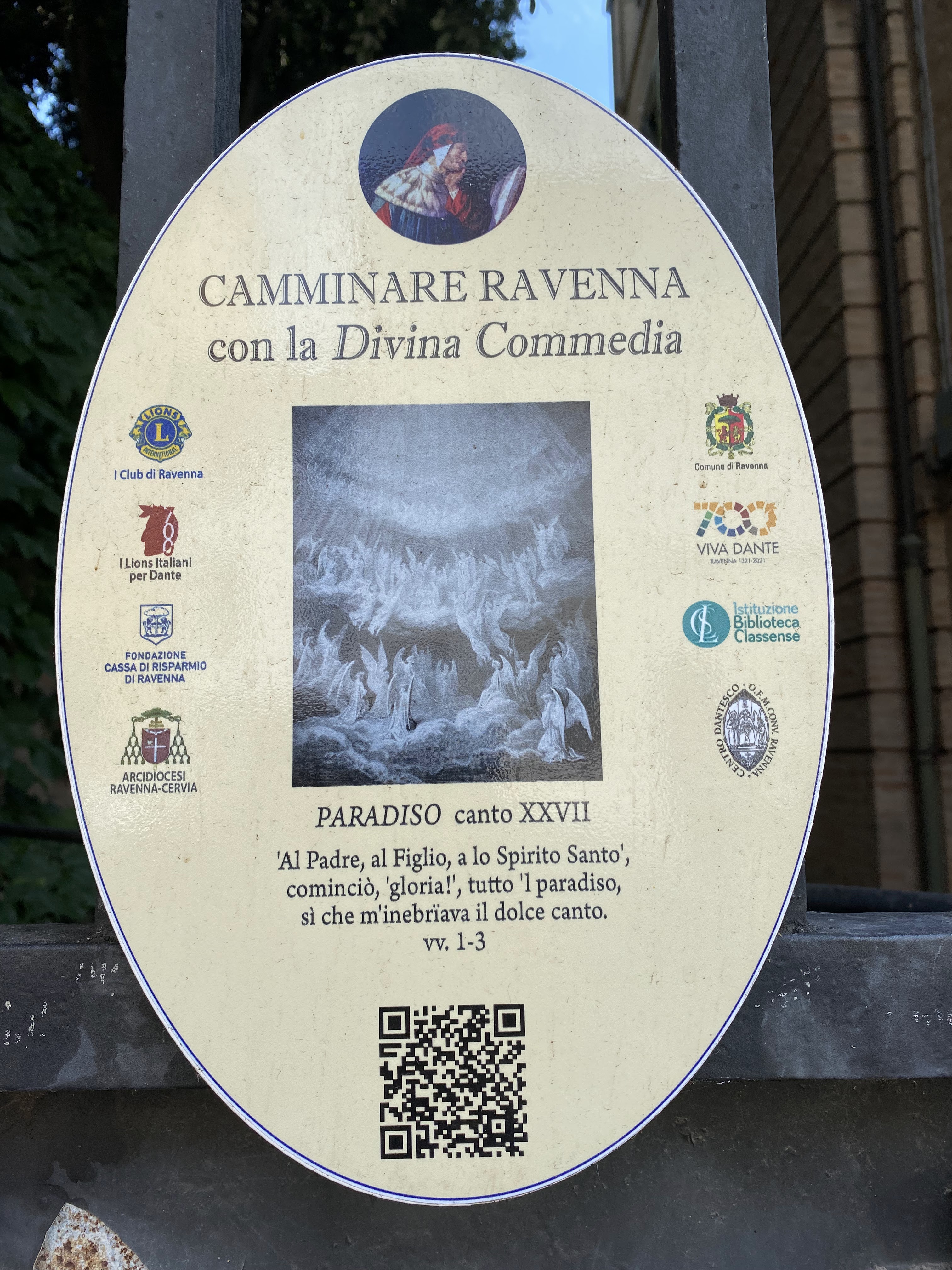
Dante is omnipresent in Ravenna, the city where he lived the last years of his life. in 2021 the city celebrated the 700th anniversary of his death with many artistic and cultural initiatives, which are still active today.  Also, along the city streets, there are several interactive tags with verses from the Divine Comedy.


When Dante died in Ravenna, in 1321, his tomb was a simple sarcophagus just outside the Church of San Francesco. Then Guido Novello da Polenta, lord of Ravenna, asked for the construction of a chapel just for Dante's Tomb. In 1483, Bernardo Bembo, who ruled the city on account of the Republic of Venice, decided to restore the sarcophagus and commissioned the sculptor Pietro Lombardo a marble bass relief portraying Dante’s face, visible today inside Dante's Mausoleum. 

Dante's Tomb in Ravenna

Dante's spoils have been contended between Ravenna and Florence for a long time, and between the 16th and the 18th century, the remains went missing, hidden by the Franciscan friars in a small wooden chest, so that Florence couldn’t get them. 

The current mausoleum was built between 1780 and 1782. It was ordered by Cardinal Luigi Valenti Gonzaga (1725 – 1808) and designed by the Ravenna architect Camillo Morigia (1743-1795), who created a little Neoclassical temple made of simple lines and sombre decorations. The rests were recovered and placed in the new mausoleum until 1810, when Napoleon ordered the confiscation of monastic property, and the friars were forced to leave, but first they made sure to hide again the chest with the remains.
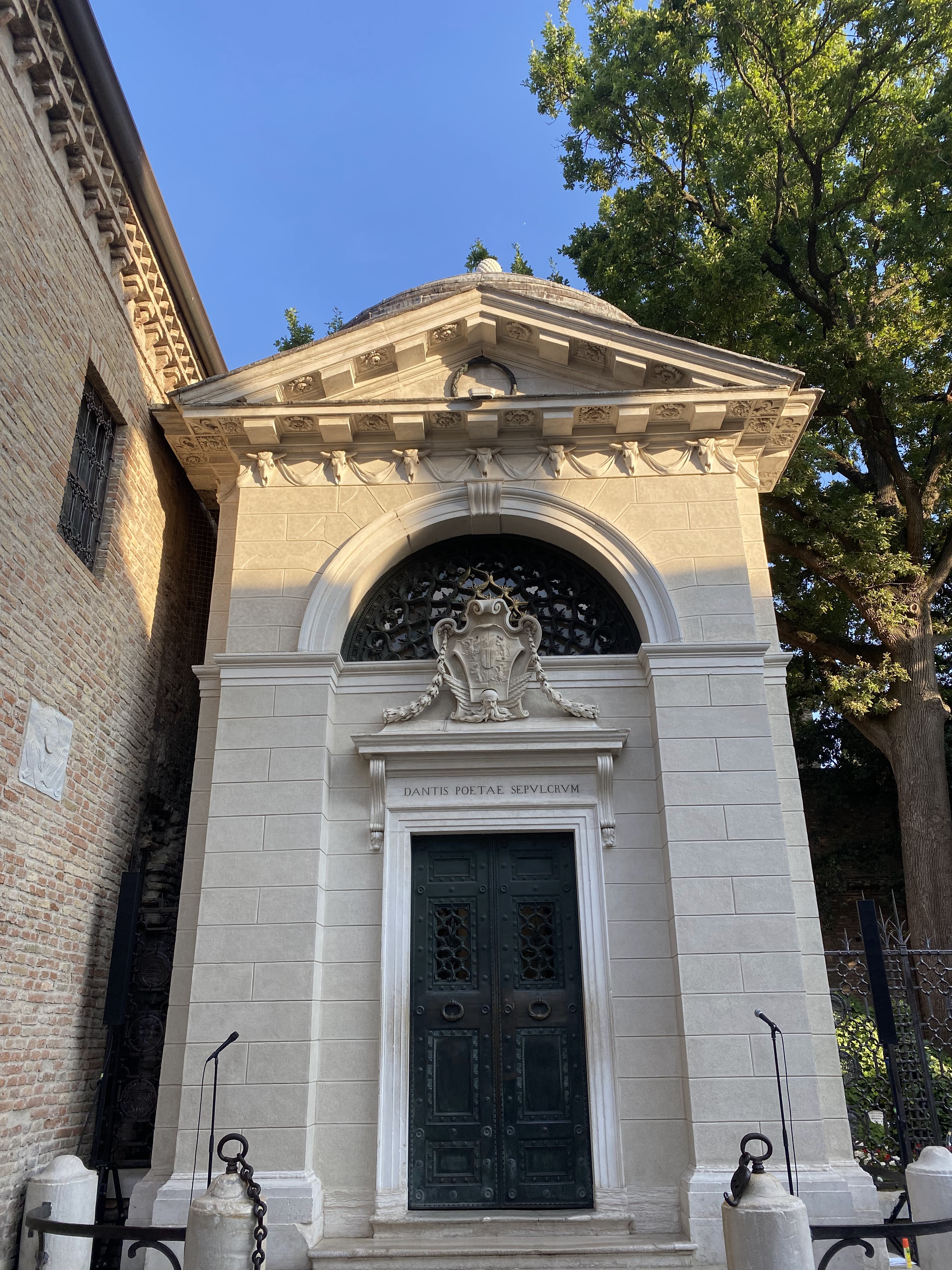
The majestic oak next to the mausoleum was planted by poet Giosuè Carducci at the beginning of the 20th century. The Mausoleum's doors close in the evening.

On May 25th 1865, during some maintenance works at the monastery beside the tomb, a bricklayer accidentally found  a wooden chest in a wall of the Quadrarco di Braccioforte. Luckily, a young student, Anastasio Matteuggi, saved the box from destruction.

The chest had a script saying “Dantis ossa a me Fra Antonio Sancti hic posita anno 1677 die 18 octobris”, which means “These bones of Dante placed by me on the date of 18 October 1677”. It was the original wooden chest where the friars kept the Poet's remains.

On that occasion, the remains were reassembled and put on display in a crystal urn for a few months. The crystal urn, without glass, is now displayed in the Dante Museum (see photo below), and so is the Franciscan friars' wooden chest.

The crystal urn, without glass, where Dante's remains were reassembled and put on display
for a few months in 1865

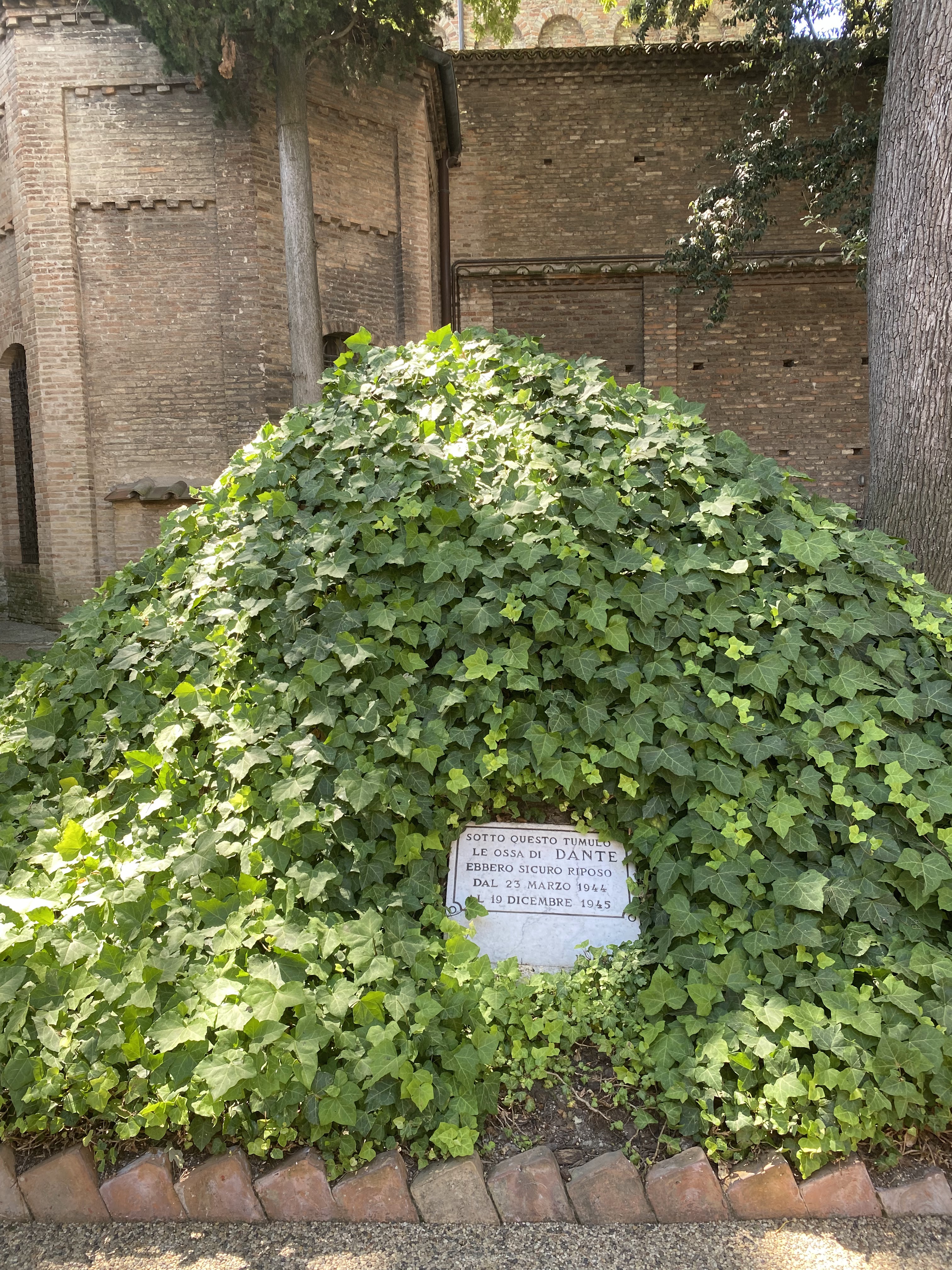
Since then, besides the transfers that occurred during the Second World War in order to avoid destruction, (see photo below) the spoils haven’t been moved again


Inside the mausoleum we can see the bass relief by sculptor Pietro Lombardo, on the sepulchre’s top is engraved a Latin epitaph written by poet Bernardo Canaccio in 1327.

At the centre of the little room, a votive lamp burns with the oil donated by Tuscany. Every year, on the second Sunday of September, the city of Florence sends a delegation and offers the oil to commemorate their most famous citizen, who died in exile. 


The mausoleum with open doors. 

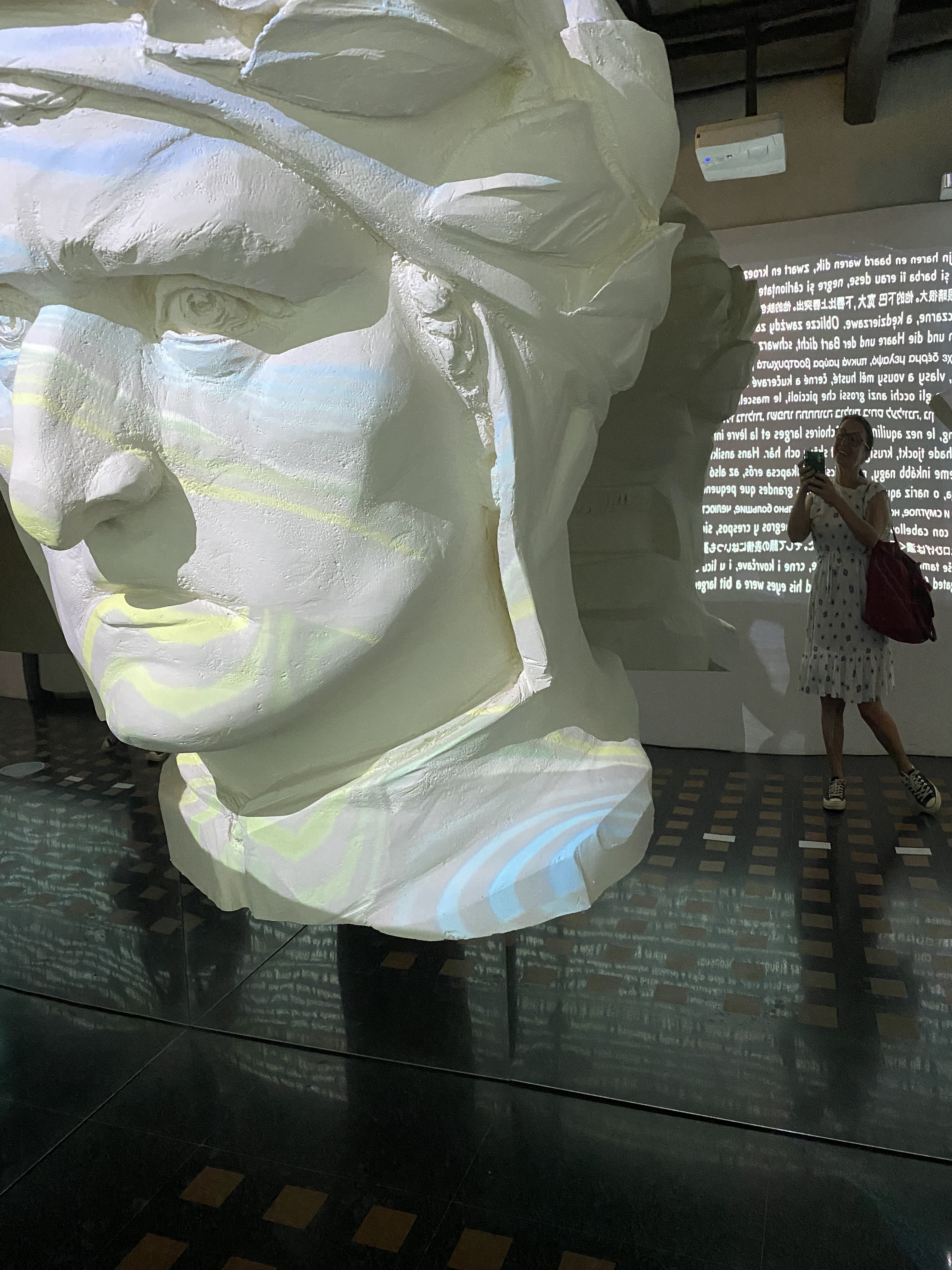
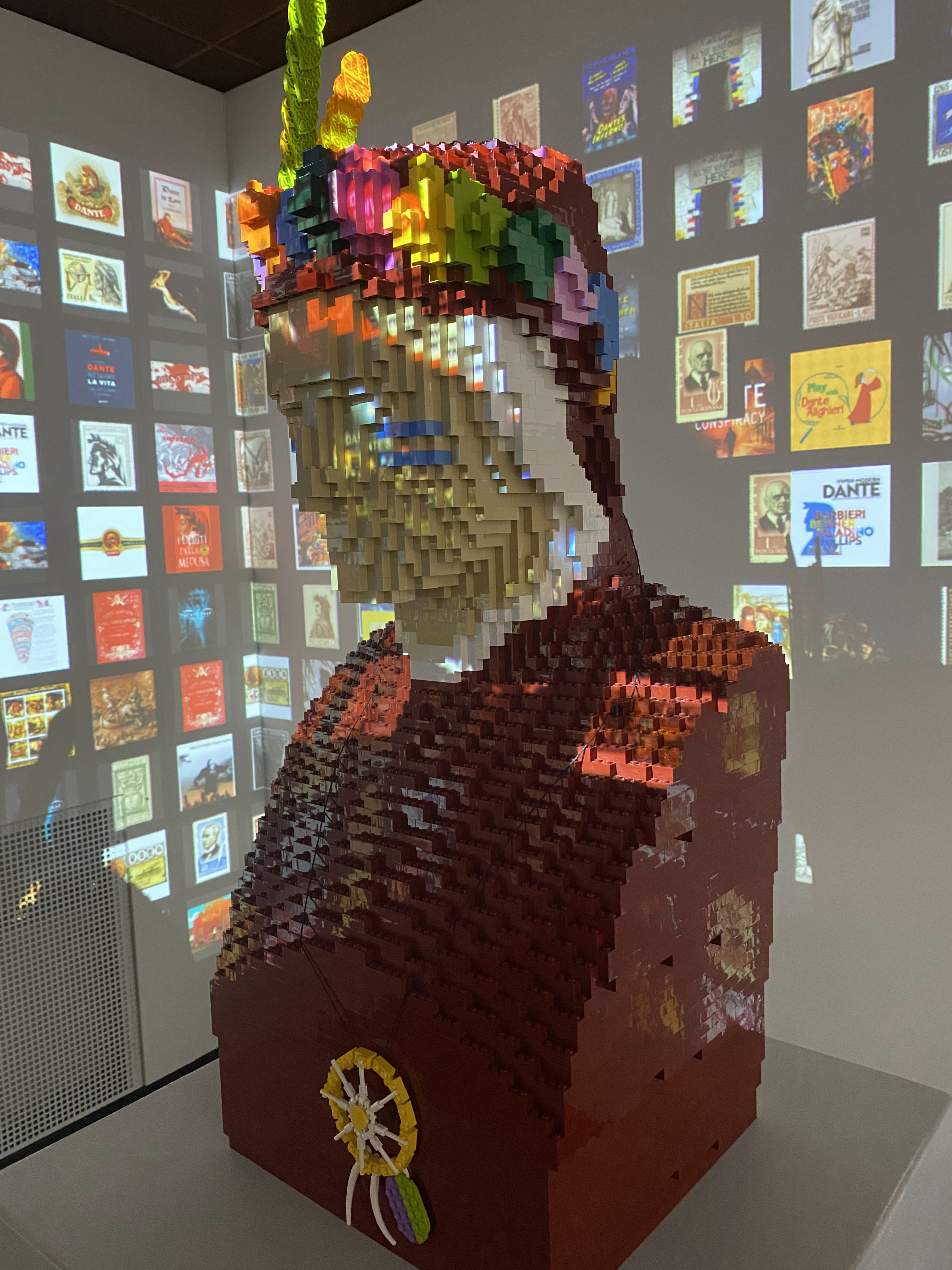
Near the Tomb there is the Dante Museum and Dante House.  The museum features several rooms with  relics and historical objects, and modern and engaging multimedia rooms about the Poet's life, legacy, and work (especially the Divine Comedy).

Our Dante Auckland member Alessandra in one of the multimedia rooms at the Dante Museum in Ravenna


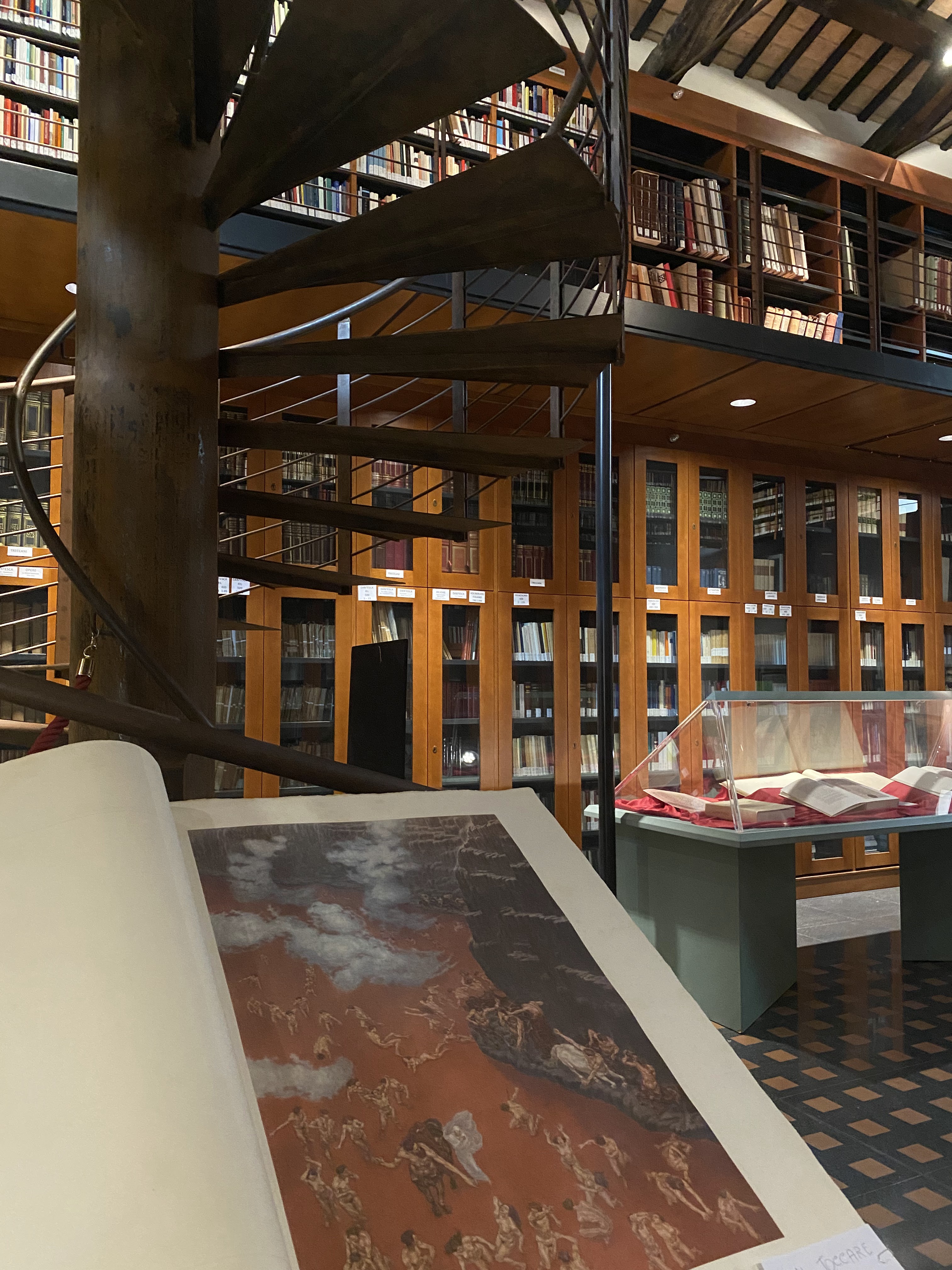
After touring the Museum you can check out the library (in the same building) which holds everything that has been written by and about Dante, including some very ancient tomes. 


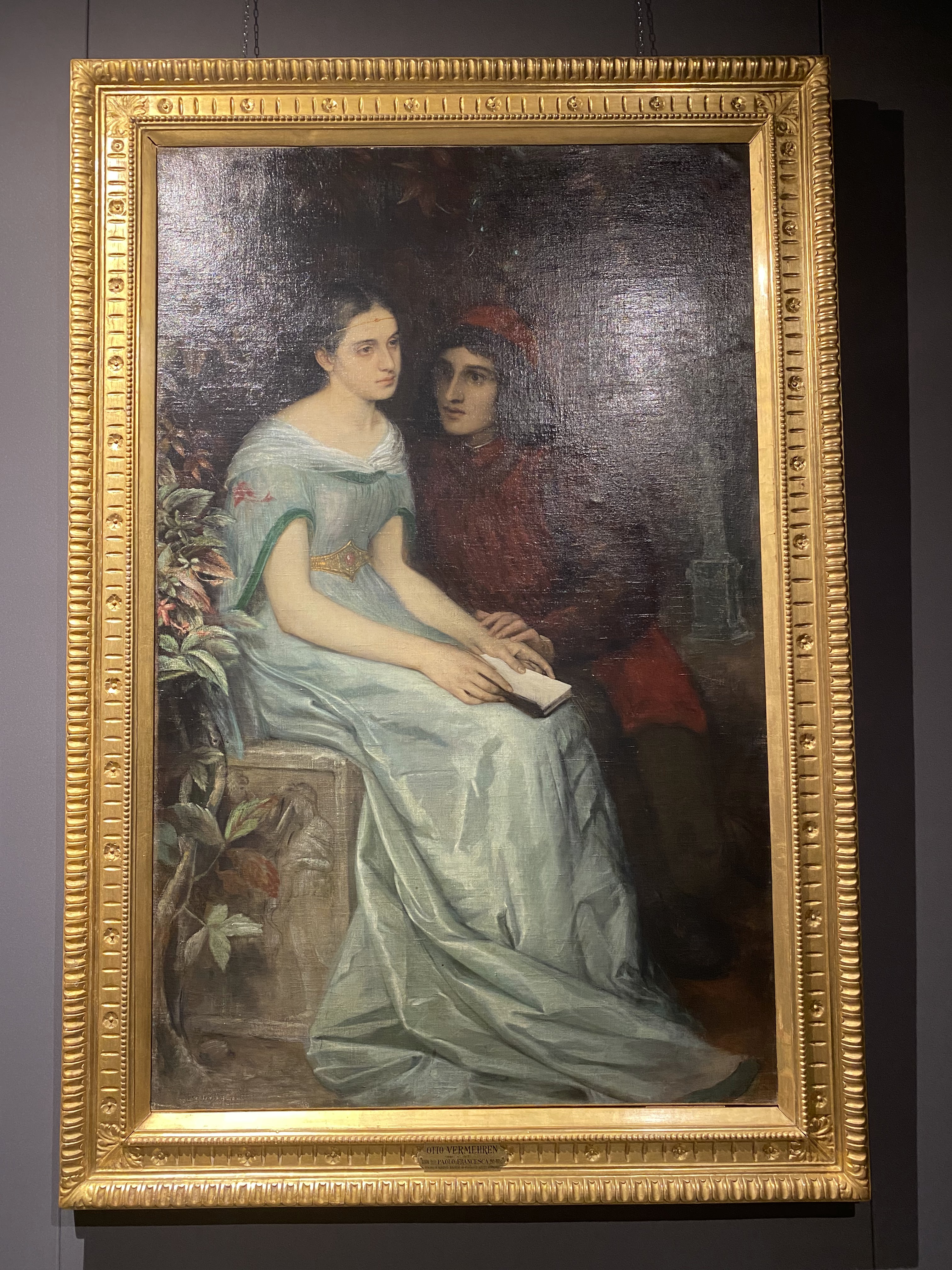
Near the Museum, and accessible with the same ticket, there is Casa Dante, hosting art pieces about Dante and the Divine Comedy. This includes a long-term exhibition with some very important works loaned by the Uffizi Galleries in Florence: check out this painting of star crossed lovers Paolo and Francesca!


For more Dante's experiences in Ravenna visit this site https://www.turismo.ra.it/en/follow-your-way/dante-alighieri/ 


Tuesday, November 19, 2019

#HelpVenice - the campaign to help Venice


If you like to send a contribution to the city of Venice, devastated by sever flooding: 

for donations via bank transfer:

Account: Comune di Venezia - Emergenza acqua altaReference: contributo emergenza acquaPer bonifici effettuati dall'Italia:IBAN: IT 24 T 03069 02117 100000 018767for bank transfers from overseas:IBAN: IT 24 T 03069 02117 100000 018767 BIC: BCITITMMFor donations with credit card


Grazie!

Friday, March 6, 2015

Italy's UNESCO World Heritage Sites


Did you know that Italy counts 50 UNESCO World Heritage Sites within its borders, the most of any country on the World Heritage List! 

Italy’s World Heritage Sites are well-known. The Dolomites; The City of Verona; Ferrara and the Po River Delta; the Historic Centers of San Gimignano, Florence and Rome; Hadrian's Villa and the Villa D’Este at Tivoli; the archaeological area of Pompeii, Herculaneum and Torre Annunziata; the Sassi (rupestrian architecture and churches) of Matera; the Amalfi Coast and the Aeolian Islands are just some among many others.

All 50 sites have been, at one time or another, travel destinations for those seeking out history, art and culture in the "Bel Paese".

Renewed efforts by the Institutes to preserve these sites include the call to everyone to get to know them better. Here, you can begin a virtual journey into some of the most fascinating among them, those that evoke an experience rich in life, passions, and dreams.

For the full list of UNESCO world heritage sites visit:http://www.visitaly.com.au/unesco-world-heritage-list
Source: Enit

Thursday, January 15, 2015

Picnic con la Befana

La befana vien di notte 
con le scarpe tutte rotte
con le toppe alla sottana:
viva, viva la Befana!

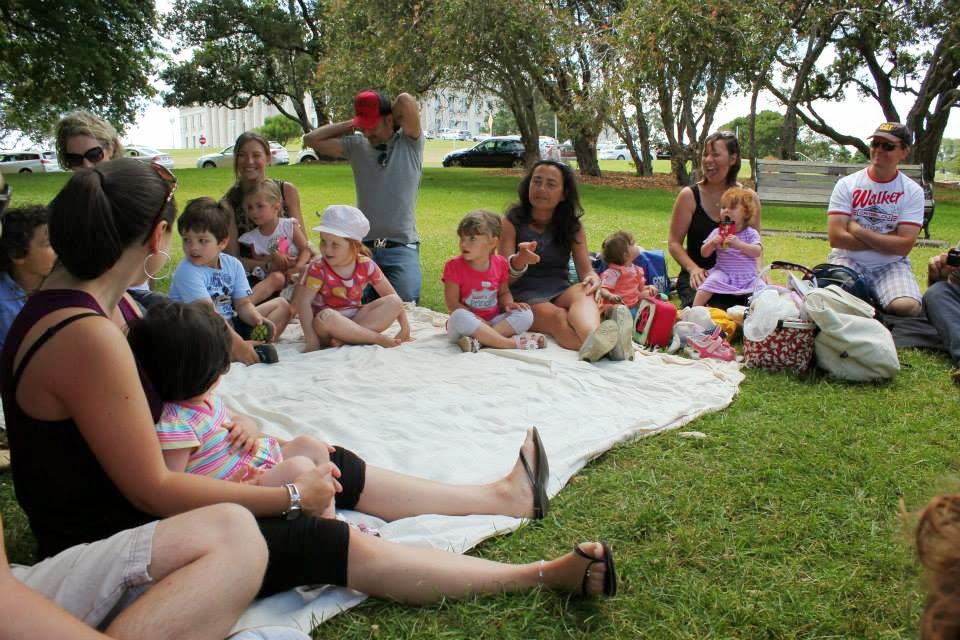
Sunday 11 January families and children met la Befana, a lovely "vecchietta" who brought gifts to the children. We had an amazing picnic celebrating the Epiphany together!


Tuesday, November 4, 2014

Scomparsa del Presidente della Società Dante Alighieri, Ambasciatore Bruno Bottai

È con immenso dolore che la Società Dante Alighieri comunica la triste notizia della scomparsa del proprio Presidente, l’Ambasciatore Bruno Bottai.

La Camera ardente sarà allestita a Roma,  in Palazzo Firenze, sede della Società Dante Alighieri in Piazza Firenze 27, domani 4 novembre dalle ore 10 alle 19, e la cerimonia funebre si svolgerà mercoledì 5 novembre, alle ore 10, nella chiesa di S. Maria in Trastevere.
L'Ambasciatore Bruno Bottai era nato a Roma il 10 luglio 1930. All’età di soli 24 anni era entrato in carriera diplomatica per concorso, rivestendo presto la carica di  Vice Console a Tunisi e Secondo Segretario alla Rappresentanza Italiana presso la nascente Comunità Europea dal 1958 al 1961; ha continuato a seguire in particolare gli sviluppi europei negli anni di servizio presso la Segreteria Generale del Ministero quale Capo del Servizio Coordinamento (1961- 66) e poi alla Presidenza del Consiglio quale Consigliere diplomatico del Presidente (1970 - 72). Gli anni ’70 lo hanno visto prima Capo Servizio Stampa della Farnesina (1972-76), poi  Ambasciatore presso la S. Sede (1979 – 81), carica rivestita una seconda volta, dal 1994 al 1997, a chiusura di carriera. Ambasciatore di grado nel maggio 1981, ebbe successivamente gli incarichi di Direttore Generale degli Affari Politici (1981 - 85), Ambasciatore a Londra (1985 - 87) e Segretario Generale della Farnesina (1987 - 94).
Dall’aprile del 1995 era Presidente della Società Dante Alighieri.
Fonte: http://ladante.it/it/rss/1000-scomparsa-del-presidente-della-societa-dante-alighieri-ambasciatore-bruno-bottai