Showing posts with label Viaggiare in Italia. Show all posts

Tuesday, June 24, 2025

Cartolina dall'Italia


Tanti saluti da tutti noi dall'Abruzzo e dalle Marche, posti indimenticabili in allegra compagnia...e pochi turisti in giro!

Impariamo a fare gli gnocchi


Friday, March 6, 2015

Italy's UNESCO World Heritage Sites


Did you know that Italy counts 50 UNESCO World Heritage Sites within its borders, the most of any country on the World Heritage List! 

Italy’s World Heritage Sites are well-known. The Dolomites; The City of Verona; Ferrara and the Po River Delta; the Historic Centers of San Gimignano, Florence and Rome; Hadrian's Villa and the Villa D’Este at Tivoli; the archaeological area of Pompeii, Herculaneum and Torre Annunziata; the Sassi (rupestrian architecture and churches) of Matera; the Amalfi Coast and the Aeolian Islands are just some among many others.

All 50 sites have been, at one time or another, travel destinations for those seeking out history, art and culture in the "Bel Paese".

Renewed efforts by the Institutes to preserve these sites include the call to everyone to get to know them better. Here, you can begin a virtual journey into some of the most fascinating among them, those that evoke an experience rich in life, passions, and dreams.

For the full list of UNESCO world heritage sites visit:http://www.visitaly.com.au/unesco-world-heritage-list
Source: Enit

Sunday, September 9, 2012

Not only in Siena: Il Palio di Feltre is charming, and very livable


Feltre è un’antica cittadina ai piedi delle Dolomiti, nella provincia di Belluno. Il centro storico è ricco di case e palazzi del 1500 e l’atmosfera è quella di molte città rinascimentali italiane: semplice e signorile al tempo stesso.

Sbandieratori


Ma la cosa forse più interessante di Feltre è proprio l’esser fuori dai percorsi turistici tradizionali dell’Italia, rimanendo quindi un piccolo gioiello tutto da scoprire.
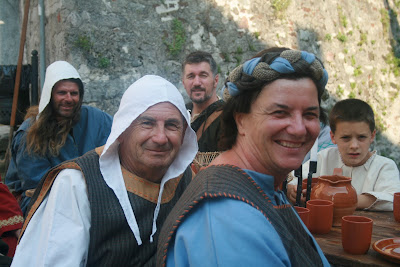
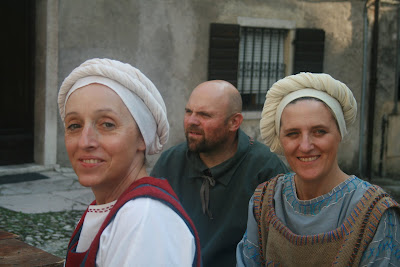
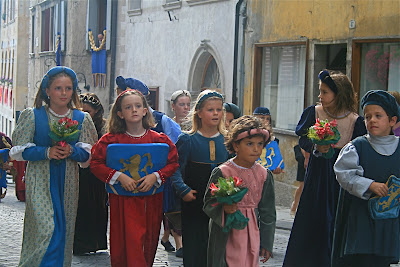
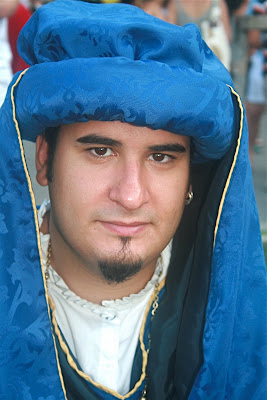
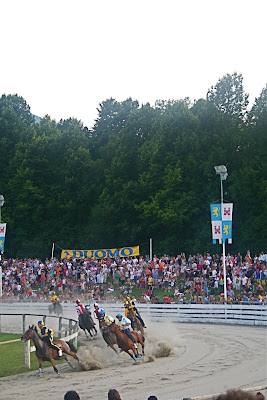
Uno dei momenti migliori per visitare la cittadina, che conta circa ventimila abitanti, è il primo fine settimana d’agosto, quando le strade del centro storico si riempono di mercatini medioevali, dame e messeri in costumi d’epoca, tamburini e sbandieratori, tutti intenti a celebrare il Palio di Feltre.


Paesani e contadini


Il Palio è nato per rievocare il momento in cui, nell’anno 1404, e dopo secoli di invasioni e guerre, Feltre decise di porsi spontaneamente sotto al protettorato della Serenissima Repubblica di Venezia.
I quattro quartieri della città che si sfidano per il Palio (un drappo dipinto ogni anno da un artista diverso e decorato con i simbolici 15 ducati d’oro dell’originale Palio quattrocentesco) sono Santo Stefano, Port’Oria, Castello e Duomo, e corrispondono alle quattro zone della città e frazioni circostanti.


Tamburini


 I tre giorni di Palio cominciano il venerdì sera con le quotatissime cene di quartiere, tutte per strada e a pochi metri l’una dall’altra, così da offrire l’occasione ai quattro quartieri di confrontarsi da subito culinariamente con arrosti su spiedi giganti, piatti locali, vino e musica fino a tardi.


La parata dei nobili e borghesi nel centro storico


Sabato le strade si riempiono di gente in costumi nobili e paesani, mangiafuoco e giocolieri, soldati medioevali e bancarelle di artigianato e prodotti locali. Sabato sera si svolgono le prime due gare: il tiro con l’arco in Piazza Maggiore, e la staffetta, nel ripido centro storico. La domenica, dopo la messa in costume (con addetta benedizione dei cavalli) e due lunghi cortei storici, c’è il tiro alla fune, ed infine la gara più affascinante, arcaica ed emozionante di tutte: la corsa dei cavalli. Tutte le gare accumulano punti, ma il risultato finale è spesso determinato da questa corsa finale, tenendo tutti i contradaioli con il fiato sospeso fino all’ultimo.


Descrivere un Palio non è semplice: chi è abituato a guardare il Palio di Siena ed altre manifestazioni simili saprà bene di cosa parlo, perché le emozioni sono sempre altissime.
Son ben felice di sapere che i cavalli sono soggetti a rigorosi controlli veterinari, e che Pra del Moro, il campo dove corrono i cavalli, sia molto più sicuro per cavalli e fantini. Gli incidenti sono rari. 

La corsa dei cavalli


Gli sbandieratori del quartiere vincente lanciano in aria
 le proprie bandiere, e faranno festa tutta la notte!


Photos and text by Alessandra Zecchini ©


The Italian text was too difficult? Just watch this short video for a taste of the Palio di Feltre, or click here to read a post in English.


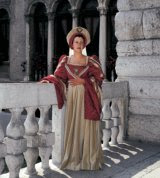
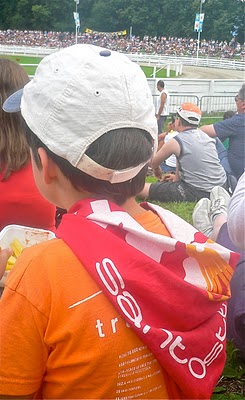
Feltre is here, let me know if you would like to visit, especially during the Palio, and I will be happy to give you some information (my Mother is from Feltre). And if you would like to know to which of the four city wards I belong, I am from Santo Stefano, represented by a golden horn on a red background (here is my son watching the horse race with the Santo Stefano's flag). Santo Stefano's costumes are often red (like the one I am wearing here). FYI, the costumes are beautiful but very heavy!


Io a Feltre con un costume rinascimentale


Tuesday, August 21, 2012

Visitare il Museo internazionale delle marionette Antonio Pasqualino a Palermo


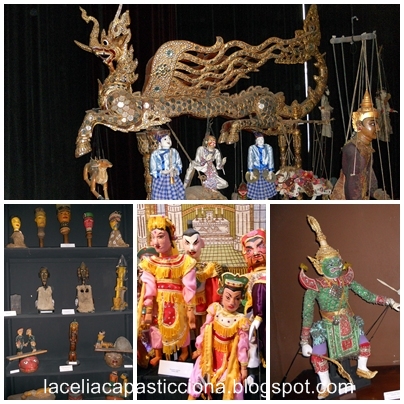
Today's travel article is offered by Italian blogger Elena form the blog La celiaca pasticciona, from Palermo. Many of you may remember Elena's wonderful cassata, a typical Sicilian cake, no food today, but we will learn something different and interesting about Sicily: the Island's love for puppets! Elena will show us the images from a museum full of puppets from around the world, but mostly I am fascinated by the Sicilian ones: the pupi. Can you guess which ones they are? 

Buona lettura


Visitare il Museo internazionale delle marionette Antonio Pasqualino


Photos and text copyright of and kindly reproduced with permission of La Celiaca Pasticciona


Museo internazionale delle marionette Antonio Pasqualino

Piazzetta Antonio Pasqualino 5 (trav di Via Butera), vicino Piazza Marina
90133 Palermo


Per un pomeriggio sono tornata bambina. E’ stato bellissimo e mi ha donato tanta serenità. Dopo il lavoro passo a prendere Gabriele, mio nipote. Dopo aver posteggiato in piazza Marina e percorrendo la strada che ci avrebbe portato all’entrata del palazzo che ospita il museo Gabriele mi domanda: “dove andiamo”?. “Una sorpresa!” rispondo io.


Incuriosito dal luogo dove stavamo passeggiando, pieno di palazzi antichi Gabriele mi chiede: “non stiamo andando  mica ad un museo”?. Io rispondo: “No, perchè”? . Con l’aria sognante mi dice: “Peccato, mi piace tanto visitare il museo”. Nascondendo il piacere che mi giungeva dal cuore dico: “Beh, sarà per un’altra volta”.
Appena arrivati davanti l’entrata del museo Gabriele mi fa un sorriso grande e felice entra mano nella mano con me.
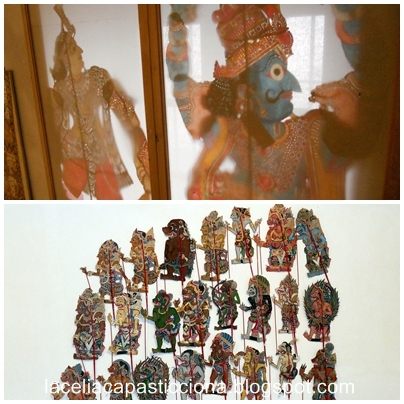
Il museo raccoglie la bellissima collezione internazionale di marionette di A. Pasqualino. La mostra si sviluppa su più piani: il primo è dedicato al mondo delle ombre, dove abbiamo potuto vedere dei pezzi arrivati da tutto il mondo: Indonesia, India, Bali, Giava, Malesia, Tailandia, Cambogia.


Salendo al secondo piano si incontrano allestimenti teatrali di tutte le dimensioni e realizzati con diversi materiali. Dalla sala centrale si aprono varie stanze e corridoi che accolgono teatrini e marionette suddivisi per nazione.


Oltre a quelle orientali, africane, europee, si incontrano anche le marionette italiane.


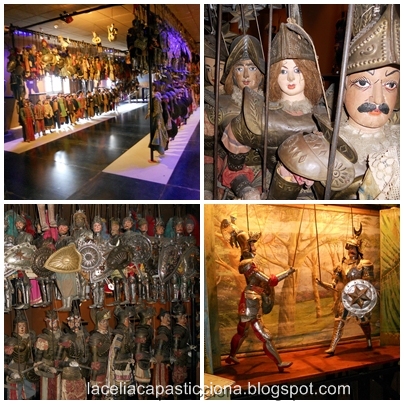
Si entra e si esce continuamente da innumerevoli mondi, ciascuno con un proprio modo di rappresentare il fantastico, l’immaginario, gioie, dolori e paure della vita terrena. E’ un susseguirsi di forti emozioni e di ammirazione per le bellissime marionette. C’è anche uno spazio dove talvolta si svolgono rappresentazioni teatrali di tradizione siciliana. La stanza più ricca di reperti e di scenografie è proprio quella dedicata alla collezione dei pupi del teatro siciliano. 


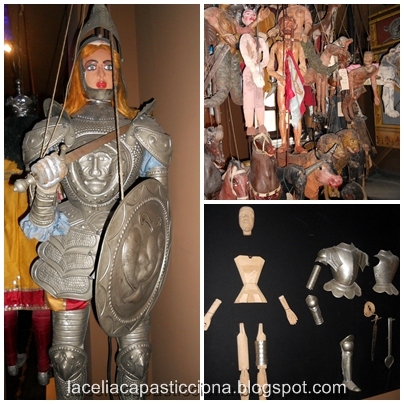
L’allestimento della stanza consiste in carrellate interminabili di pupi e paladini di tutte le dimensioni, curati nei minimi dettagli. In un pannello si mostrano le varie parti di cui una marionetta è costituita.


Attraverso le antiche rappresentazioni dell’”opera dei pupi” vengono raccontate le avventure affascinanti dei paladini di Francia ai tempi di Carlomagno: Orlando, Rinaldo, Angelica, i soldati turchi e spagnoli, re e regine sono i protagonisti delle rappresentazioni che rimangono quasi immutate nel tempo. Conservo dentro di me ancora i ricordi di una bambina spettatrice entusiasta di queste opere. Consiglio vivamente a tutti i visitatori della città di assistere ad una rappresentazione dell’opera dei pupi; non ve ne pentirete affatto.
 Io e Gabriele abbiamo rifatto tutto il percorso per ben tre volte, avidi di respirare quelle atmosfere antiche ed affascinanti. Nelle vicinanze non ricordo posti dove si possa mangiare senza glutine; meglio andare al centro.
Alla prossima avventura...


Source: http://laceliacapasticciona.blogspot.co.nz/2012/01/una-nuova-rubrica-about-palermo.html

Thursday, July 26, 2012

Padova (Padua)


Located just few kilometers from Venice, Padua is one of the liveliest cities of the Venetian area thanks to the various ad interesting aspects of its multifaced identity.
As far as tourism is concerned, the city has a huge historical and artistic heritage to offer. After 3000 years of history the visitor can enjoy many different atmospheres which arise from every little corner and alley, starting from the Roman area, to the more recent Prato della Valle, passing through the Medieval heart.
In the very centre of the town it is possible to find the Roman Arena, surrounded by the so –called park which boasts the presence of the Eremitani Museum, full of Pre-Roman finds, the Eremitani Church and the famous Scrovegni Chapel, one most important works of European painting. People who enter this little masterpiece find themselves surrounded by an amazing cycle of frescoes painted by the Tuscan painter Giotto, which illustrate the life of Mary, Jesus and the Passion, ending with a striking vision of the Last Judgement.


The Palazzo della Ragione is another well known symbol of Padua, and offers medieval paintings and a great hanging hall which is one of the biggest in the world. In this palace we can find the Pietra del Vituperio, a stone made chair which worked as a punishment for people who were judged guilty for bankruptcy. They were literally deprived of everything they were wearing and forced to sit on that freezing chair for a long time.


Padua is also an important destination for religious pilgrimages because of the presence of the Basilica of St Anthony, a sanctuary which holds the remains of St Anthony and calls millions of people every year. Close to the Basilica there is Prato della Valle, one of the biggest squares in Europe, which is a great gathering point for all those people who want to enjoy a relaxing break in a green spot right in the city centre.  Otherwise, for those people who prefer a good coffee Caffe’ Pedrocchi offers the most ancient and luxurious location in town.


The late afternoon is the moment when Padua completely changes and reveals itself as the most spirited town in the Veneto region. This is the moment when all the students who attend the University of Padua (the oldest University of Europe after Bologna) finish their lessons and go out to enjoy a good aperitivo with a typical pre-dinner drink called Spritz. 

In few hours the squares around palazzo della Ragione called Piazza delle Erbe and Piazza della Frutta are filled with people of all ages who keep hanging around for the whole evening, having a chat and a good drink under the suggestive Clocktower in Piazza dei Signori or all along the fascinating little streets of the Jewish Ghetto.


The most well known dish of the Paduan cooking tradition is the gallina padovana (Paduan hen), a particular kind of farmyard animal which is famous not just for its deliciousness but also for its funny appearances. Every restaurant in town will be able to prepare it in many different versions according to the customers’ tastes.  It can be served with the cooked radicchio which is a renowned product of the southern part of the province. 


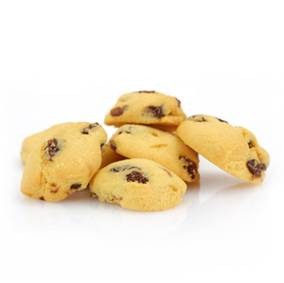
A traditional Paduan meal may end either with the Dolce del Santo or with some Zaleti, typical biscuits made of cornmeal and raisins.


Source: Italian Government Tourist Office

Tuesday, April 17, 2012

Autumn in Italy as I remember it: castagne e porcini


I grew up in the Apennine mountains of Italy, here, and during Autumn and Winter I ate chestnuts almost every day. In Autumn I used to walk almost every afternoon to our family's chestnut wood, called Casturia, to pick chestnuts. It was a 3 km walk, downhill, and then back, uphill, with a bag full of castagne. Many families have a chestnut wood in my village, now that I live here in New Zealand I let some friends and relatives pick chestnuts and mushrooms in my woods, but it is always great to go back there to find the old trees and paths of my childhood. And if I go foraging with my Dad's cousin Mario, chances are that we also find a lot of porcini mushrooms (he is a very good mushroom hunter, I am not!).


Casturia, the chestnut wood in Poggioraso, Sestola.


Peeling roasted chestnuts in the evening


An old stone chestnut drying house in the woods


There are also porcini mushrooms
Tagliatelle with fresh porcini mushrooms


I am lucky enough to have a friend in Chirstchurch who also happens to be a good mushroom hunter, and he gave me some porcini (not the same as the Italian ones, but very similar), but I am looking for a place to go and pick chestnuts near Auckland, if you have any idea please let me know. For now I leave you with a recipe that calls for chestnut flour, yet another ingredient that I am still trying to find in NZ.


 La ricetta

Chestnut flour fritters


Frittelle di Castagne
Appennino Modenese
Emilia Romagna
Recipe from Alessandra Zecchini


These fritters were a staple in my family, they are easy to make and incredibly filling.


Mix 250g of chestnut flour with 400ml of water, mix well and add a tablespoon of sultana.


With a spoon drop some batter into the hot oil (I used rice bran oil) and cook on both sides; it only takes a couple of minutes.


Place the fritter on a paper towel to absorb the excess oil.


These fritters are actually better cold, just by themselves, or with a little ricotta cheese.


Photos and Recipes by Alessandra Zecchini ©