Showing posts with label Olives. Show all posts

Wednesday, November 4, 2015

Crunchy Bean Sprout Winter Mediterranean Salad


I love beans and lentils, but I also love salads and raw food, my body feels like it needs them!
I usually mix cooked beans with raw salad vegetables, but when I remember I get some bean sprouts, and I particularly like this crunchy bean combo from Sproutman. I can just eat the sprouted beans as they are, with a drop of olive oil and lemon juice, 

Thursday, June 11, 2015

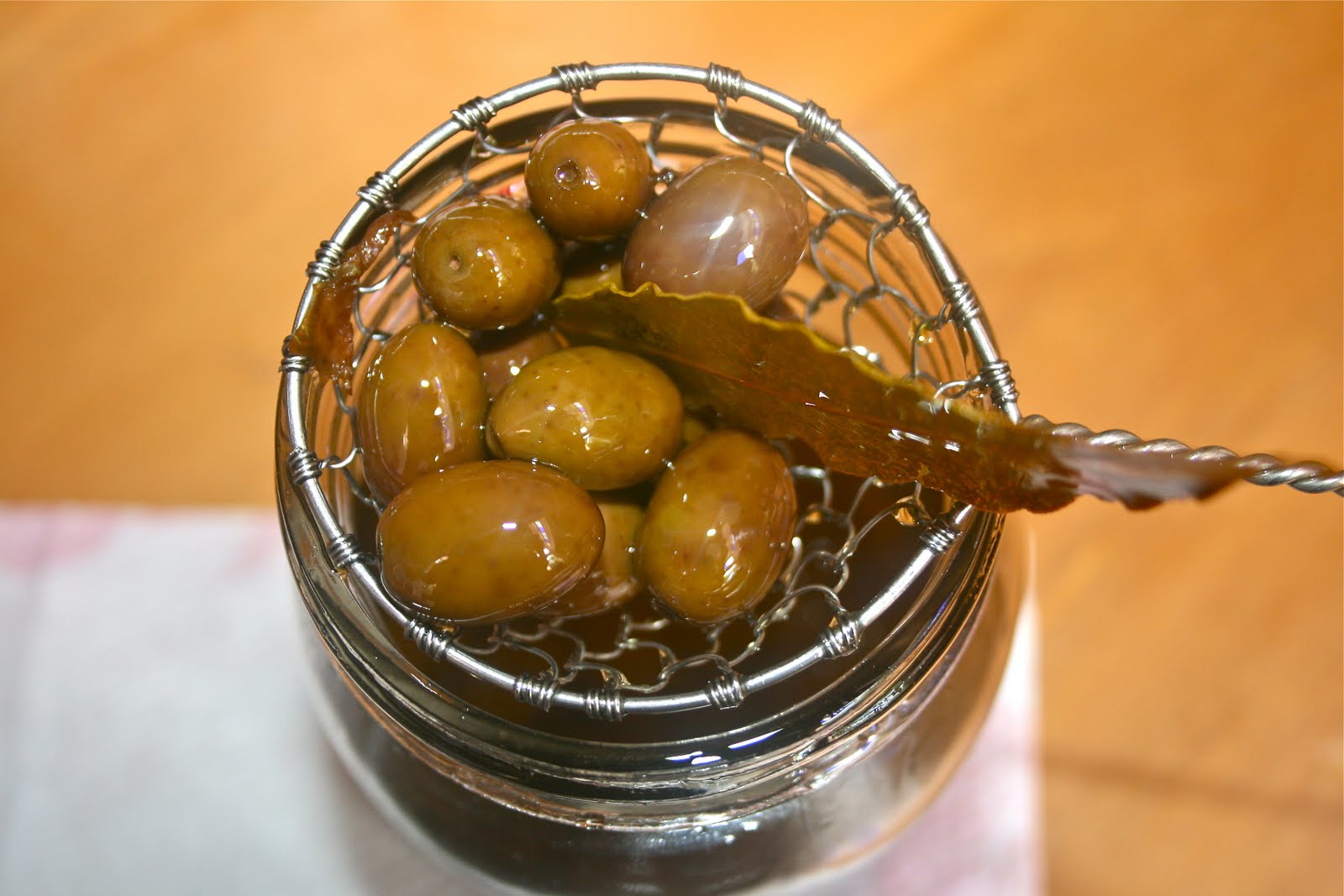
Picking, treating and preserving olives in brine, and olives marinated in olive oil and herbs


Preserving olives is a rewarding experience. If you don’t have an olive tree you may be able to forage olives from trees in community gardens and in parks.  Usually olives are ready around April-May (in New Zealand).
Pick the olives from the tree (never from the ground) and wash well in cold water. If you prefer sweet-tasting olives you can put them in a bucket of water for up to 40 days, or 20-30 days for very small olives, changing the water every 24 hours; the olives will become brownish in colour, and lose a lot of bitterness. After this period make a brine (recipe follows) and bttle your olives. If you prefer crispy green olives with a peppery taste, just wash them and soak them for a day, then preserve them in brine.

Brine for preserving olives

Before making the brine, be sure to have plenty of glass jars with lids, sterilised and completely dry.

Ingredients
Water
Salt

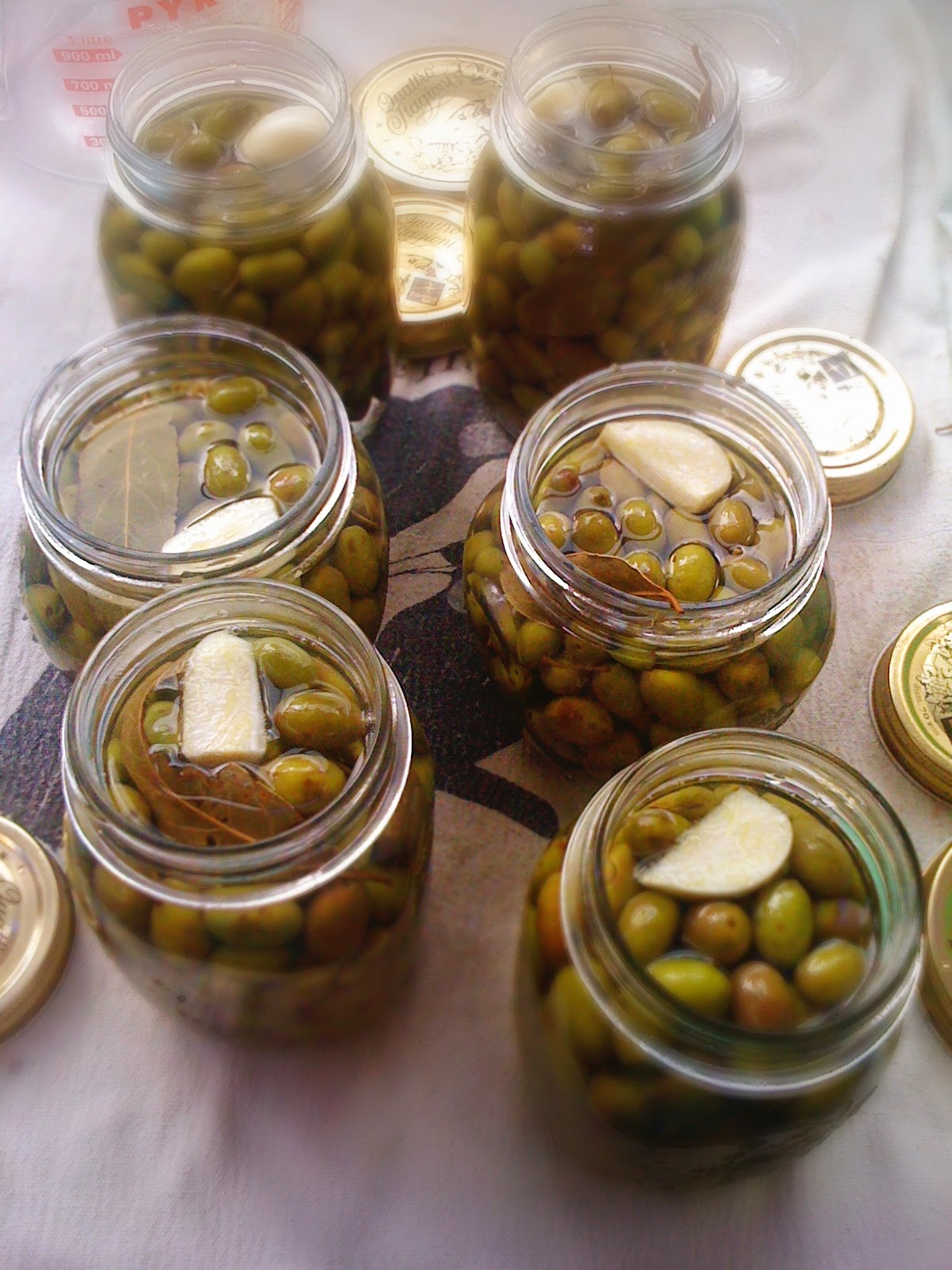
Prepare 10% salt brine (100 g of salt for every litre of water) by placing in a saucepan the water and salt.  Simmer until the salt is completely dissolved. Once the brine is cold place the olives into clean sterilised jars and cover completely with the brine.

To each jar add one more clove of garlic, a fresh bay leaf, a chilli pepper, or a fresh sprig of thyme.  Seal and put away in a dark place for three months. After this period the olives can be used in cooking or can be marinated with olive oil and your favourite herbs.
If you’d like to keep the olives for longer, prepare a new brine with an 8% solution (80 g of salt every for every litre of water) and put the olives into new jars with the fresh brine. Olives stored this way, and completely covered with brine, will last up to one year. Don't worry if you see white spots forming at the top of the brine, as this is natural — just remove them every time you open the jar, and always rinse the olives before using. Below is a recipe for marinating your preserved olives with olive oil and herbs, starting with your olives in brine.


Olives marinated in olive oil and herbs

I suggest you use a delicate olive oil for this recipe, like an extra virgin olive oil from the supermarket. Expensive olive oil is far too precious to marinate olives, unless you have your own press.

Ingredients
300 g olives in brine (green or dark)
1 sprig fresh thyme
1 sprig fresh oregano
1 sprig fresh rosemary
6 peppercorns
200 ml extra virgin olive oil


Drain the olives well from the brine, and give them a little rinse if necessary. Place in a large jar, add the herbs and pepper corns, and cover with the oil. Leave to rest for at least one day, and then serve. Store in a cool place and use within two weeks.

Photos and Recipes by Alessandra Zecchini ©

Saturday, April 14, 2012

Pasta Caponata


The sauce is a bit like a caponata, or at least, the caponata that I make! Eggplants and capsicums are more affordable now, and are among my favourite vegetables:

Ingredients:
1 eggplant,
3 capsicums (red, yellow and green)
1 stalk of celery (optional)
1 garlic clove (peeled)
2 tbsp extra virgin olive oil (plus some to drizzle)
one 
2 tbsp black olives
a few capers
salt to taste


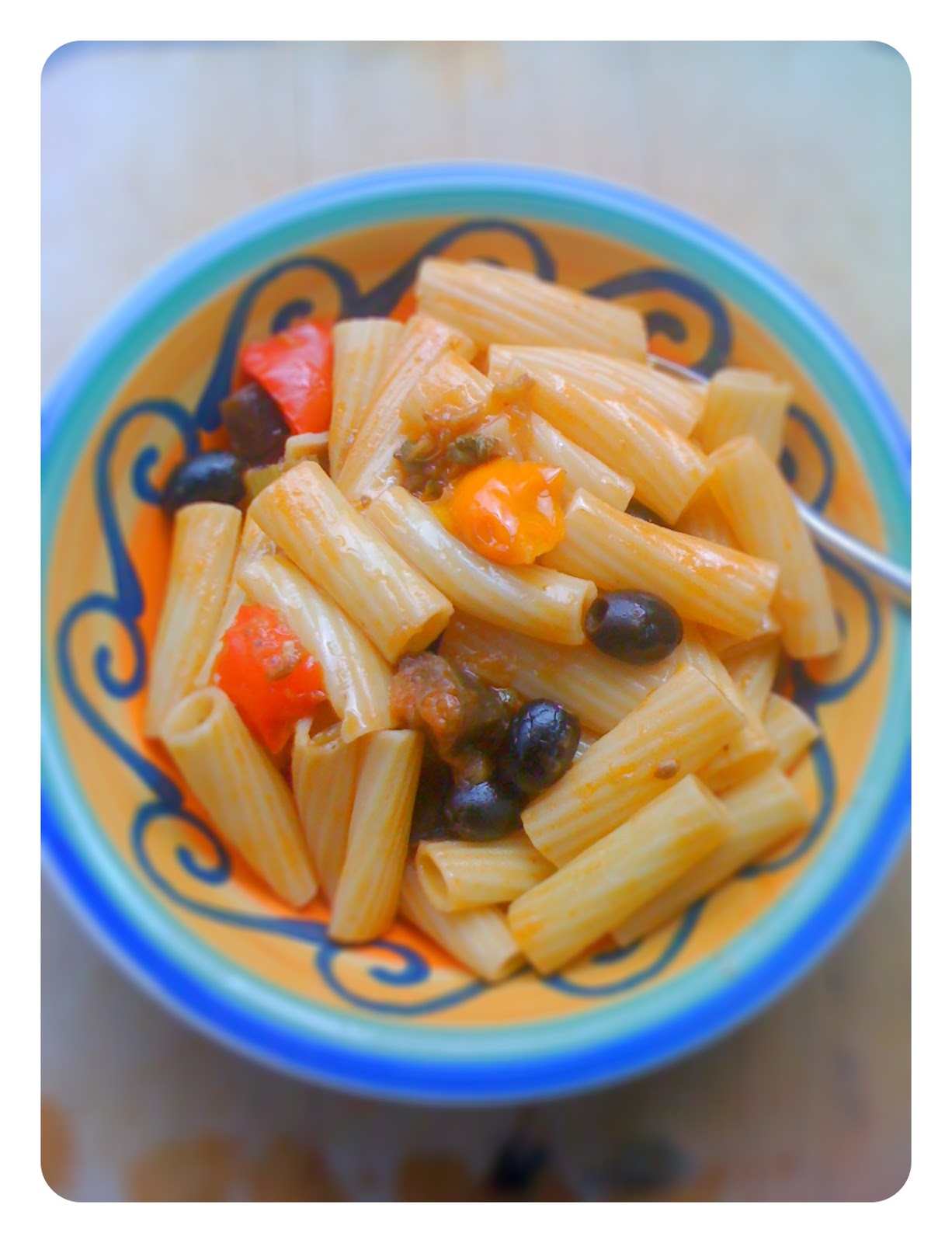
Cut the eggplant into cubes and sweat with salt for 30 minutes. Rinse well. Cut the capsicums into cubes as big as the eggplant, and the celery cut into thin slices, if using. Place all the veggies plus the garlic into a pot that can be covered with a lid, add the olive oil and sauté for a few minutes, then cover and simmer on low for about an hour, adding a little water from time to time and stirring often. I usually add the olives, capers (rinsed) and salt halfway through the cooking (actually, I add them when I remember...) and cook until the eggplants are mushy and the other vegetables really soft. Cook the pasta al dente (I used rigatoni) and dress with the vegetables, adding a little more olive oil at the end. I love this pasta :-)!

Photos and Recipes by Alessandra Zecchini ©

Thursday, March 29, 2012

Swiss Chard bruschetta


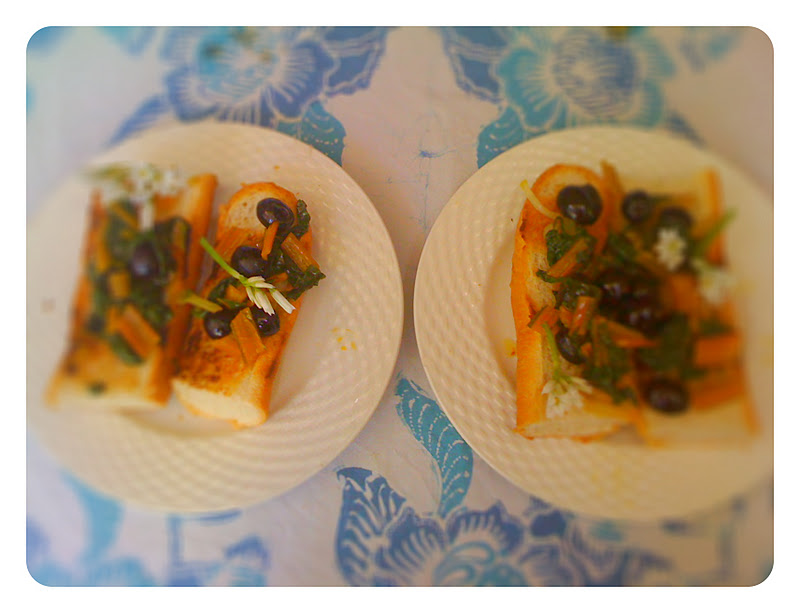
My Swiss chard/silverbeet is not big enough to be picked, but I was working in the veggie garden and I broke one entire little plant by mistake. Well, I cut it right back, and maybe it will grow again. I sauté the leaves with olive oil, some onion weed (again) and a few black olives. A pinch of salt and pepper and some grilled bread for bruschetta, and lunch for two was ready, maybe unplanned, but ready!


Photos and Recipes by Alessandra Zecchini ©

Wednesday, February 22, 2012

Two Vegan and Gluten Free recipes with onion weed: Yudofu, and Chickpea Fritters


I have been telling friends about onion weed these days, everybody seems surprised (and happy) that you can eat it, especially those who gave up growing spring onions because they seem to take so long for what you get. And onion weed is free and plentiful! I kept telling everyone to use it as a spring onion without realizing that most people here use spring onions just chopped in salad, and that'a about all! 

On the top left my nabe (pot) with simmering Yudofu, one of my favourite tofu meals for chilly evenings:
In a capable pot I put water with some dried kombu (about a large sheet broken into 3-4 pieces), and a few dried shitake mushrooms to simmer, and after 20 minutes I added some soft tofu cut into squares, salt (I have a nice Japanese unrefined salt for it) carrot sliced to look like flowers, and onion weed (bulbs, stalks and leaves cut into 'longish' pieces). I added the flower just before serving. To tell the true the tofu should be then taken out of the broth and eaten with a sauce and relishes, but as a family meal we eat the lot in bowl, broth and veggies too, except for the kombu seaweed, which I discard.

The other three photos are of chickpea flour fritters: I chopped the onion weed (the whole plant, but kept a few flowers for decoration) plus I added some finely chopped spinach, chickpea flour, salt, water and a drizzle of olive oil. When the batter was ready I remember that I have lots of pitted black olives to use, so I chopped up a few and added those too. I fried the lot and the fritters were incredibly tasty! I will make them again, in the next few days, they are incredibly easy and the kids loved them.
These meals are vegan and gluten free.


Photos and Recipes by Alessandra Zecchini ©
Sunday, January 22, 2012

So many ways to eat a coconut!


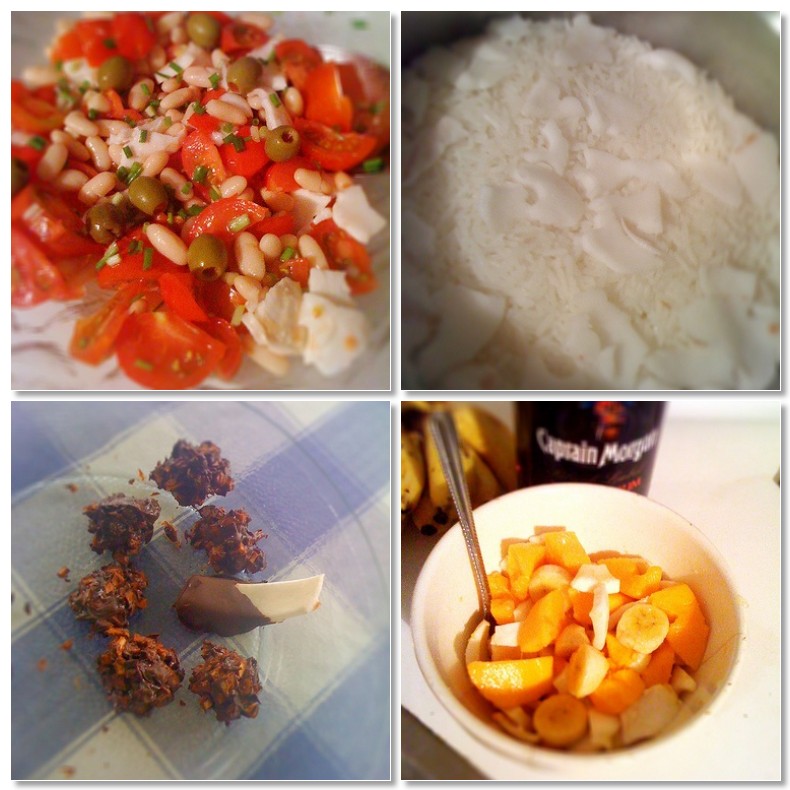
When we were in Niue Charles and Colleen came for dinner. Of course I made pasta, but I also made a variety of dishes with the fresh coconuts they brought me the day before. A tomato and coconut salad with cannellini beans, spring onions and olives, dressed with olive oil, lemon juice and sea salt flakes. Coconut rice (just boil the rice with coconut pieces in it, fantastic!), coconut chocolates: I dipped slices of coconut in melted 72% dark chocolate, and also mixed freshly shredded coconut in the remaining chocolate to make choco-coco balls. I made a big tray of these but I forgot to take a photo, se here were the leftovers... and the fruit salad with local papaya, banana, and coconut, a little brown sugar, lemon juice and rum. This I made a few times actually, it was too good! Charles and Colleen couldn't believe how many things I made out of their coconuts, they said that usually the drink the juice and then give the rest to the pigs. They have plenty of coconut. But I guess that for me this was luxury!


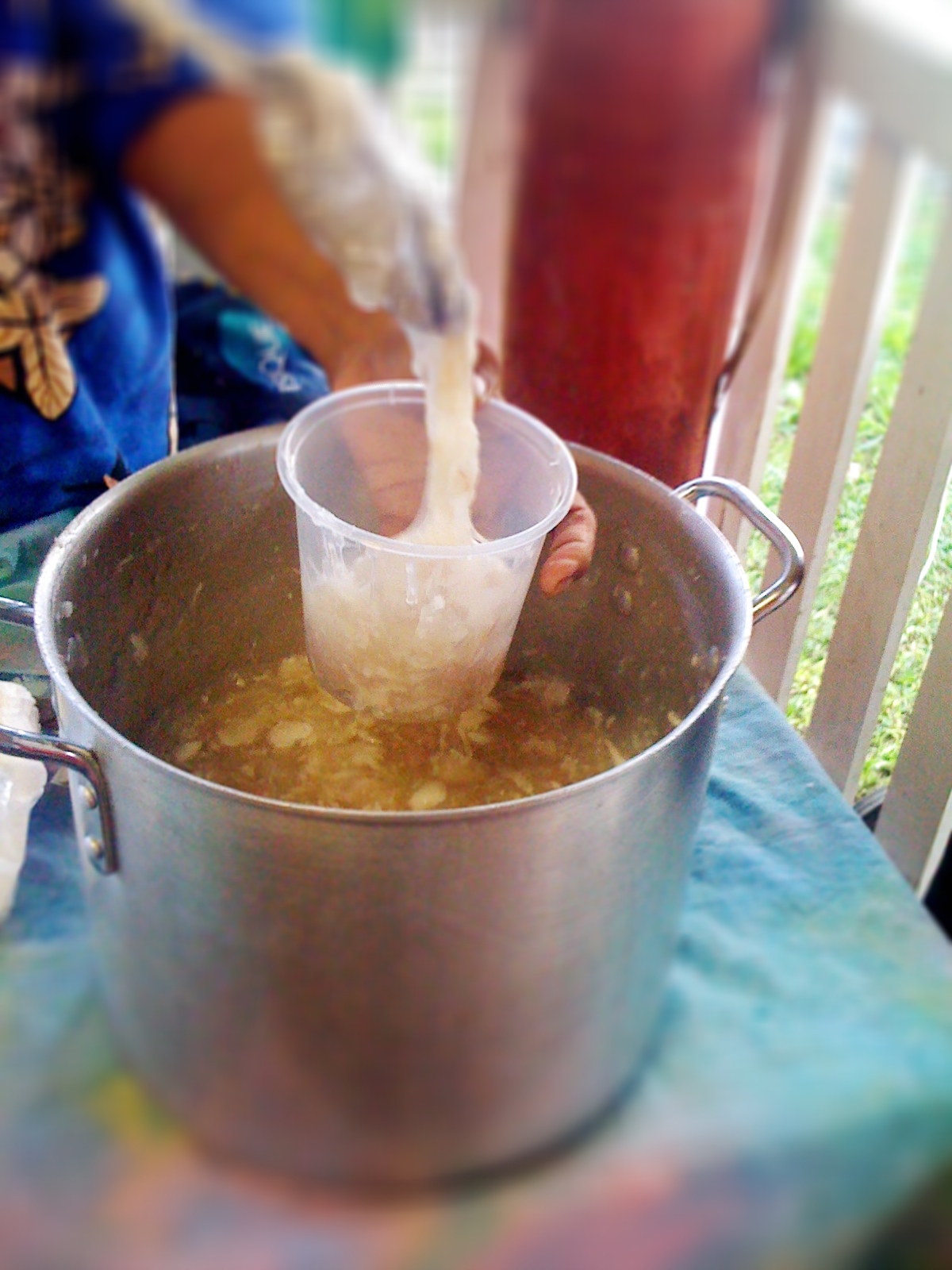
So what is a typical dish with coconut in Niue? In the market we tried the local coconut porridge, a warm mixture made with coconut, arrow root and a little sugar. It was different, not bad but not even my breakfast of choice. I preferred coconut bread, which is sold in all the bakeries.


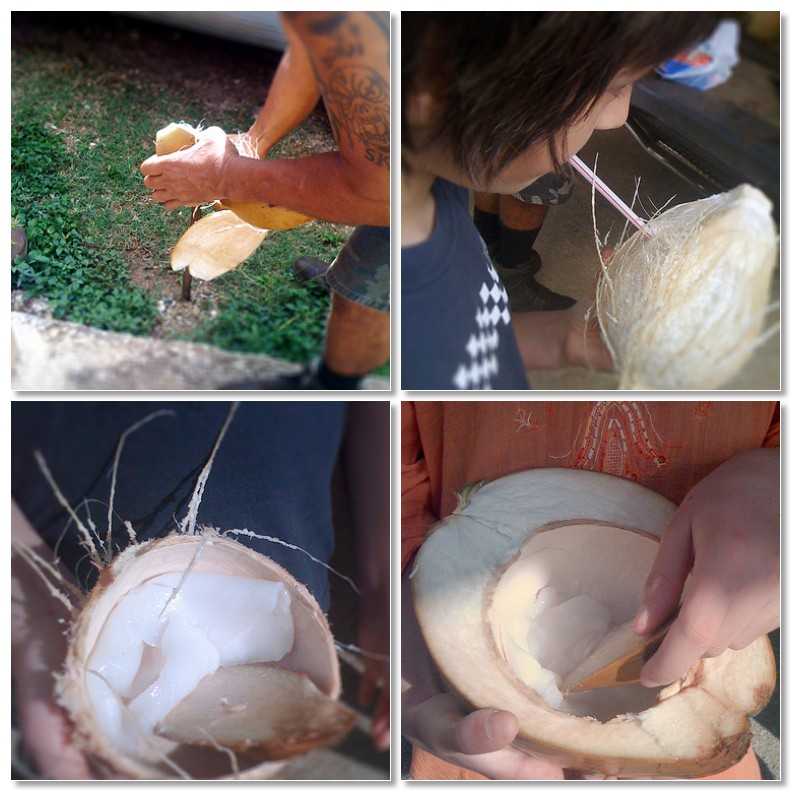
But the best experience for me was to learn how to open and eat coconut at different stages of maturity, so if one day I will be ever stranded on a desert island I will be able to survive... as long as there are coconuts around! On our plantation tour Tony firstly gave us a coconut each to drink, these were very young coconuts and the water tasted different from the one we collected from Charles' coconut. Then Tony opened up some coconuts for us and cut some spoons out of the coconut shells. The younger the coconut the softer the flesh.


I was really surprised to learn that you can also eat coconut when the leaves appear: Tony called it coconut marshmallow, and in fact it was soft (but not as soft as a marshmallow) white and spongy, with a delicate sweet taste, a bit like eating a gigantic soft macadamia nut. This was a favourite with the kids. My favourite was the the stalk of the young coconut plant: Tony peeled and passed it over, crunchy, fresh and a bit like a coconut celery. I have eaten this before, it is called heart of palm, and in Argentina I ate it in sandwiches (it is called palmito there), in Asia I ate it in a variety of dishes, and in New Zealand I went on a foraging trip with a Maori forest ranger and ate the heart of a young Nikau palm (but much smaller than this stalk of coconut!). Nikau heart too taste a little like coconut.


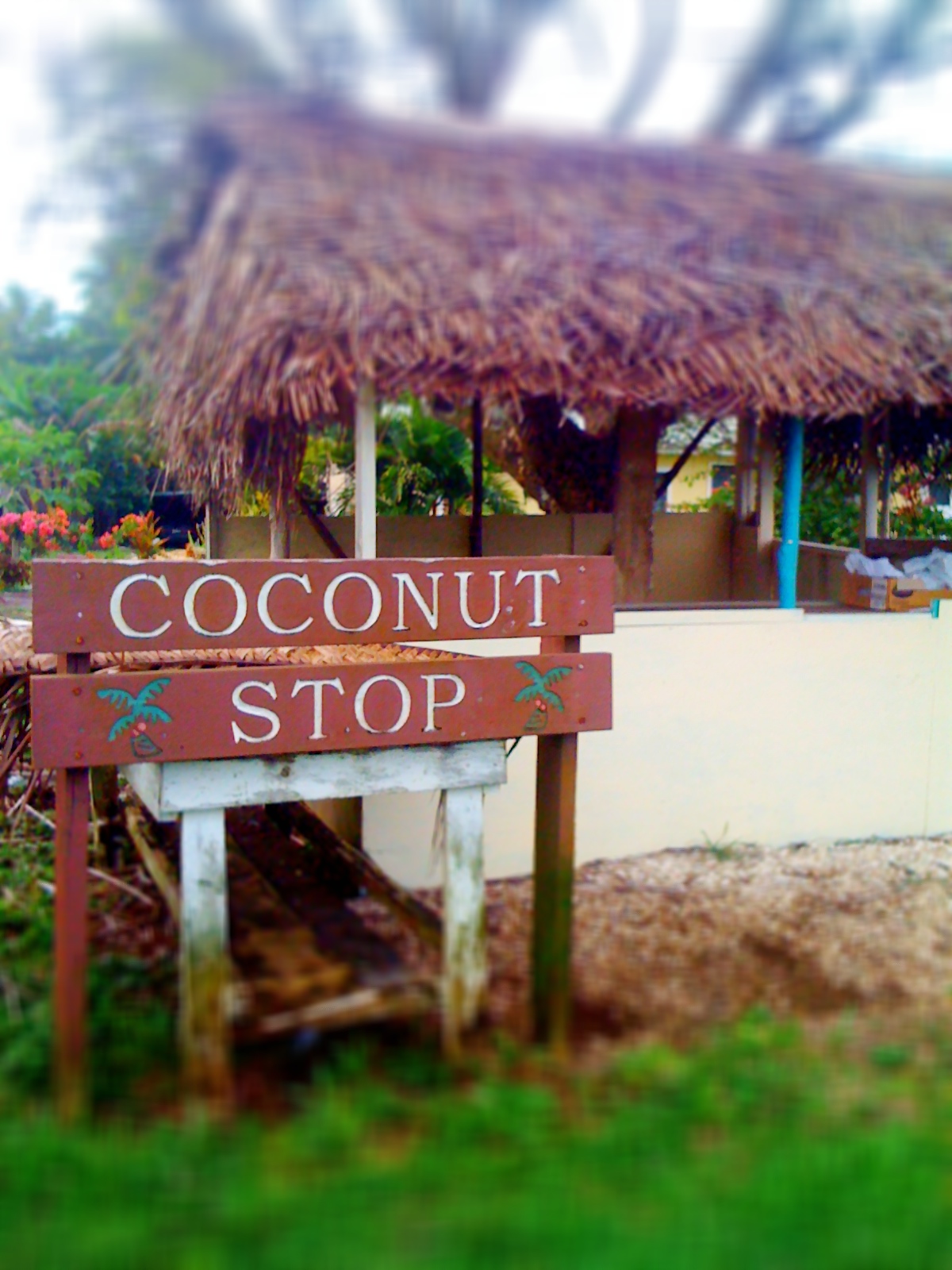
So if you visit Niue make sure that you visit a plantation, the market, or have friends with lots of coconuts, otherwise just  stop at your nearest coconut stall.


Photos and Recipes by Alessandra Zecchini ©
Friday, July 8, 2011

Easy Italian Tomato and Olive Sauce for Pasta, and 100 posts


This is post n.100, so now there are 108 recipes here.


Easy Italian Tomato and Olive Sauce for Pasta


Ingredients
2 x 400 g / 14 oz cans Italian peeled tomatoes
2 garlic cloves
salt to taste
2 tbsp olive oil
a few fresh basil leaves
Deli olives, mixed.

Place the content of the two Italian peeled tomato cans into a blender. Add two cloves of garlic, peeled, and blend until smooth. Put the “juice” into a large frying pan, and some water from rinsing the cans (optional). Bring to boil and then simmer, stirring from time to time, for at least 30 minutes, or until the sauce is so thick that when you stir it with a wooden spoon you can see the bottom of the pan (this is very important! most people undercook their tomato sauce and so it remains acidic!). 


At this point as the salt to taste, the olive oil, the fresh leaves of basil and a few olives (choose good deli olives in olive oil, not olives in vinegar. Good quality olives in brine are suitable, but rinse them well first). Cover and keep aside, warm, until needed.


Photos and Recipes by Alessandra Zecchini ©


Wednesday, May 25, 2011

Olive Focaccia


One of my kids' favourite snack when they get home from school is a nice piece of freshly baked focaccia. I don't usually measure the ingredients, but the flour/water ratio is about 500 g of flour for 300 ml of water, plus a pinch of salt and 2 tsp of dried yeast granules and a pinch of sugar (this yeast dose is good up to 1 kg of flour). I made a dough.


While the dough was rising I cleaned the pantry and found a jar of the olives I marinated last year. They were still good, small (I picked them from a friend's tree) but very tasty.


First I needed to remove the stones, which I did with a knife. At first I did this over the jar, but it was messy and I wasted too much oil, so I drained a few olives (over the jar) little by little and then I cut the flesh off the stones.


I added the olives to the risen dough and mixed.


Then I left the dough to rise for a second time (I cannot give you exact times because I was mopping the house and making this focaccia at the same time... maybe 1 hour the first time and then 45 minutes?


I rolled the dough and resumed mopping (and you can see the mop in the picture!!!!) for other 30 minutes.


Then I made some little 'craters' with my fingers and added some olive oil from the olives' jar. I sprinkled with some rock salt on top.


Baked for about 30 minutes at 200 °C, and when the kids came home they smelled it immediately!!! Yum!!!!


Photos and Recipes by Alessandra Zecchini ©