Showing posts with label salt. Show all posts

Tuesday, August 1, 2017

Kale Chips


 I finally decided to join the hordes and make kale chips!


I had to wash the leaves 7 times (that was my Mother's 'magic' number when I was little and my job was to wash the salad!) to remove all the little bugs from the curls! After spinning the leaves I placed them on a oven tray lined with baking paper, bushed them with olive oil and sprinkled them with salt. I baked them for about 10-15 minutes (until they looked crispy and dark green). They taste a little like roasted seaweed. A yummy snack!


 Photos and Recipes by Alessandra Zecchini ©

Thursday, June 11, 2015

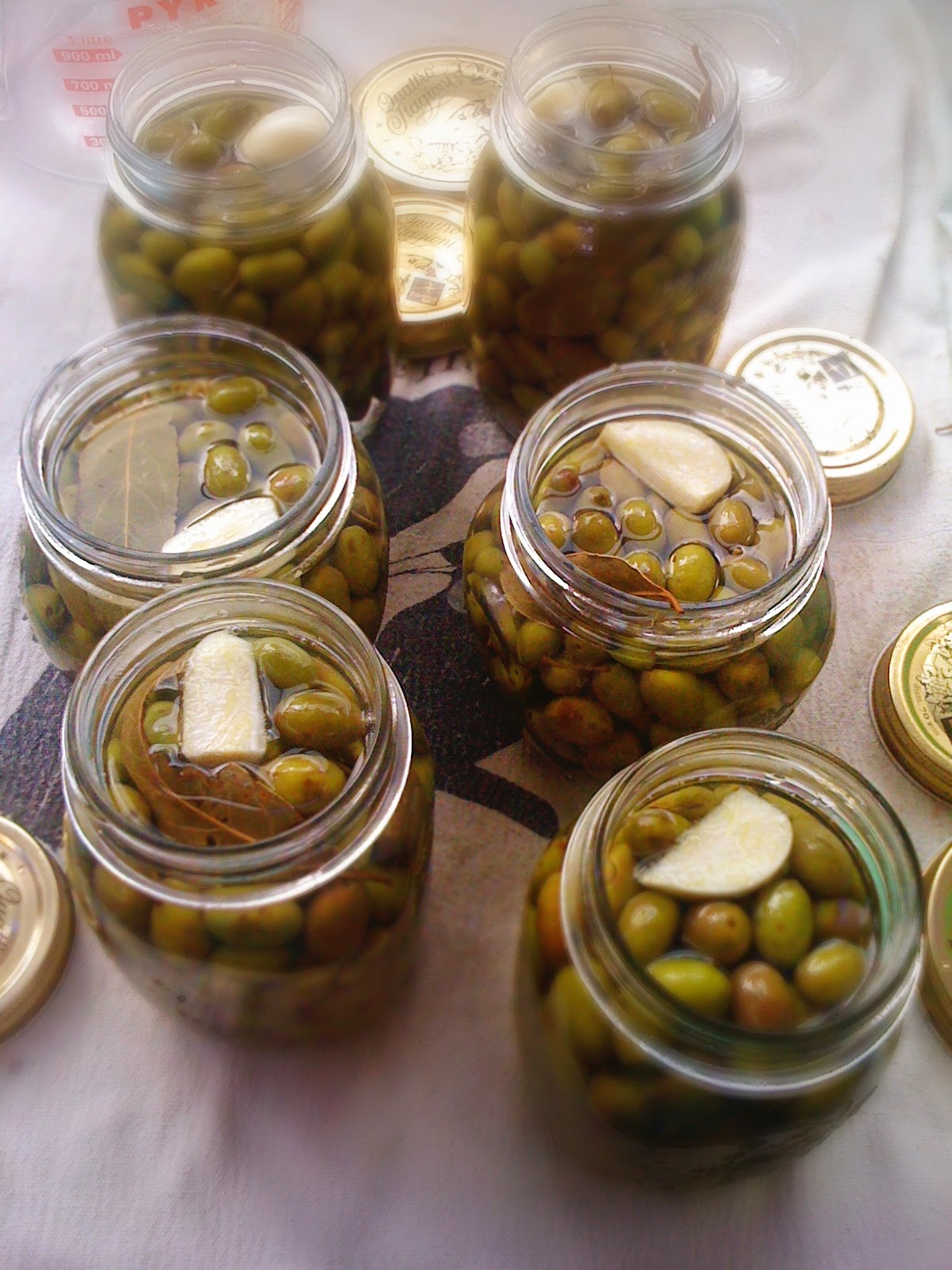
Picking, treating and preserving olives in brine, and olives marinated in olive oil and herbs


Preserving olives is a rewarding experience. If you don’t have an olive tree you may be able to forage olives from trees in community gardens and in parks.  Usually olives are ready around April-May (in New Zealand).
Pick the olives from the tree (never from the ground) and wash well in cold water. If you prefer sweet-tasting olives you can put them in a bucket of water for up to 40 days, or 20-30 days for very small olives, changing the water every 24 hours; the olives will become brownish in colour, and lose a lot of bitterness. After this period make a brine (recipe follows) and bttle your olives. If you prefer crispy green olives with a peppery taste, just wash them and soak them for a day, then preserve them in brine.

Brine for preserving olives

Before making the brine, be sure to have plenty of glass jars with lids, sterilised and completely dry.

Ingredients
Water
Salt

Prepare 10% salt brine (100 g of salt for every litre of water) by placing in a saucepan the water and salt.  Simmer until the salt is completely dissolved. Once the brine is cold place the olives into clean sterilised jars and cover completely with the brine.

To each jar add one more clove of garlic, a fresh bay leaf, a chilli pepper, or a fresh sprig of thyme.  Seal and put away in a dark place for three months. After this period the olives can be used in cooking or can be marinated with olive oil and your favourite herbs.
If you’d like to keep the olives for longer, prepare a new brine with an 8% solution (80 g of salt every for every litre of water) and put the olives into new jars with the fresh brine. Olives stored this way, and completely covered with brine, will last up to one year. Don't worry if you see white spots forming at the top of the brine, as this is natural — just remove them every time you open the jar, and always rinse the olives before using. Below is a recipe for marinating your preserved olives with olive oil and herbs, starting with your olives in brine.


Olives marinated in olive oil and herbs

I suggest you use a delicate olive oil for this recipe, like an extra virgin olive oil from the supermarket. Expensive olive oil is far too precious to marinate olives, unless you have your own press.

Ingredients
300 g olives in brine (green or dark)
1 sprig fresh thyme
1 sprig fresh oregano
1 sprig fresh rosemary
6 peppercorns
200 ml extra virgin olive oil


Drain the olives well from the brine, and give them a little rinse if necessary. Place in a large jar, add the herbs and pepper corns, and cover with the oil. Leave to rest for at least one day, and then serve. Store in a cool place and use within two weeks.

Photos and Recipes by Alessandra Zecchini ©

Thursday, June 20, 2013

Roast potatoes with red onion and thyme


Cut the potatoes in small cubes. Chop one or two red onions, and some good olive oil and mix.
Place on an oven try lined with baking paper and sprinkle with salt. Bake on high for about 30-40 minutes, shaking the potatoes from time to time (I do this by lifting the baking paper). When the potatoes are ready add a few thyme sprigs and mix well (I like to add the thyme at the end, it will smell lovely!). I also like to use thyme with red onion, but sage could be a good alternative.


Photos and Recipes by Alessandra Zecchini ©

Wednesday, January 30, 2013

Light and quick Japanese pickles


These were the side vegetable dishes of my Vegan Japanese dinner. For those of you who missed some 'episodes', the antipasto was raw avocado sashimi, and the main Fried tofu puffs simmered in vegetable broth. I wanted to have a cooked and warm side vegetable dish, and a raw one. Of course variety, colour and difference in texture were as important as taste. For the warm vegetables I used broccoli and cauliflowers with a very easy miso sauce (click here for the recipe) and some easy pickles.


Quick Japanese Cucumber and Radish Pickles

1 cucumber (possibly the short Japanese type)
A few young radishes, with leaves
Salt (best to use unrefined salt)

Wash the cucumber and cut the into slices, and then into quarters. Clean the radishes well and then cut them into halves or quarters (depending on size). Leave the young leaves whole but trim excess stalk.
Place the radishes, leaves and cucumber pieces into a bowl and add 1 tsp of salt. Cover with with something heavy to press the vegetables down (for example fit another bowl on top and then put a heavy rock on top). Leave for a few hours (preferably overnight). Before serving rinse off all the salted water, squeeze lightly and drain well. Arrange the pickles on a small side plate. 


I like to grow radishes in pots, easy to pick as I need them...


 Photos and Recipes by Alessandra Zecchini ©

Monday, August 6, 2012

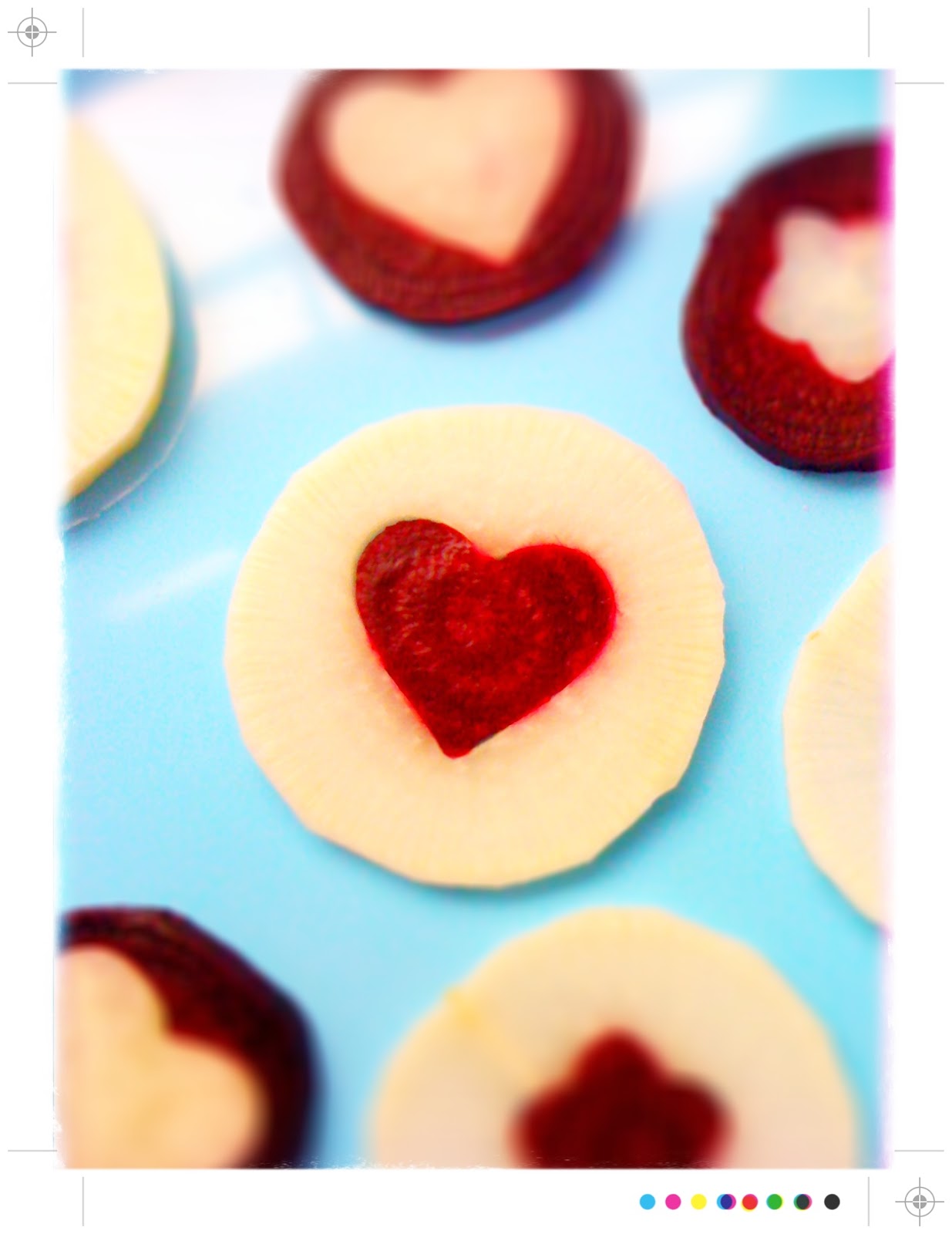
Daikon and red beetroot raw "crackers"


I used a Japanese plum flower cutter, and a small heart cutter. The daikon and beetroots can be raw of cooked, it actually works well with raw daikon and cooked beetroot, but if you are on a raw diet keep everything raw. For dressing I just added a drop of olive oil and salt before serving. 


Photos and Recipes by Alessandra Zecchini ©


Saturday, February 4, 2012

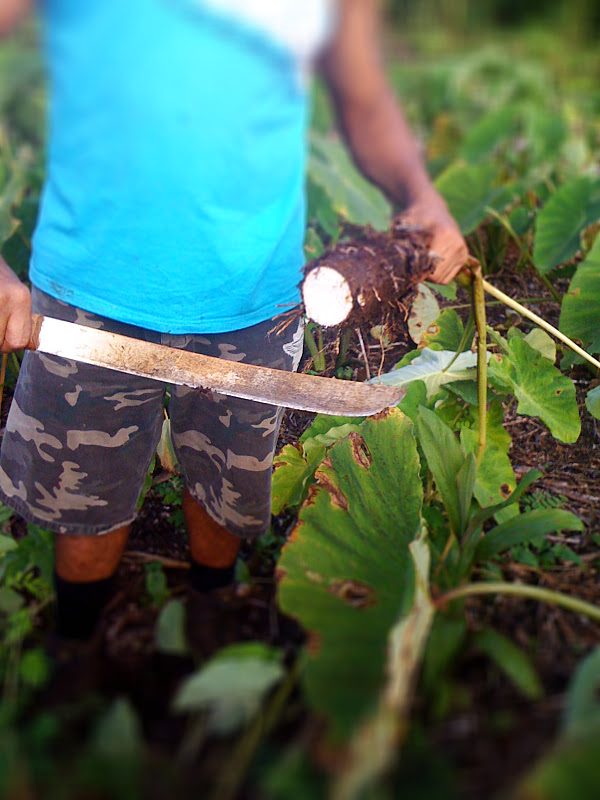
Cooking Taro


Taro is the Polynesian staple, usually baked or boiled, it is quite starchy and very filling. Being Italian I like to use olive oil, so after cleaning, peeling, cutting and boiling my taro, I dressed it with olive oil, salt flakes and chopped spring onions. It was truly yum!!!


Photos and Recipes by Alessandra Zecchini ©

Monday, January 16, 2012

Breadfruit Chips


When we were in Niue Tony took us to a plantation tour, which was amazing (I will post more about it in the next few days). We returned to our guesthouse with a good stock of locale produce and the first recipe that I am proposing is with breadfruit. I heard a lot about this fruit but never cooked it (although I ate it before and found it quite bland).
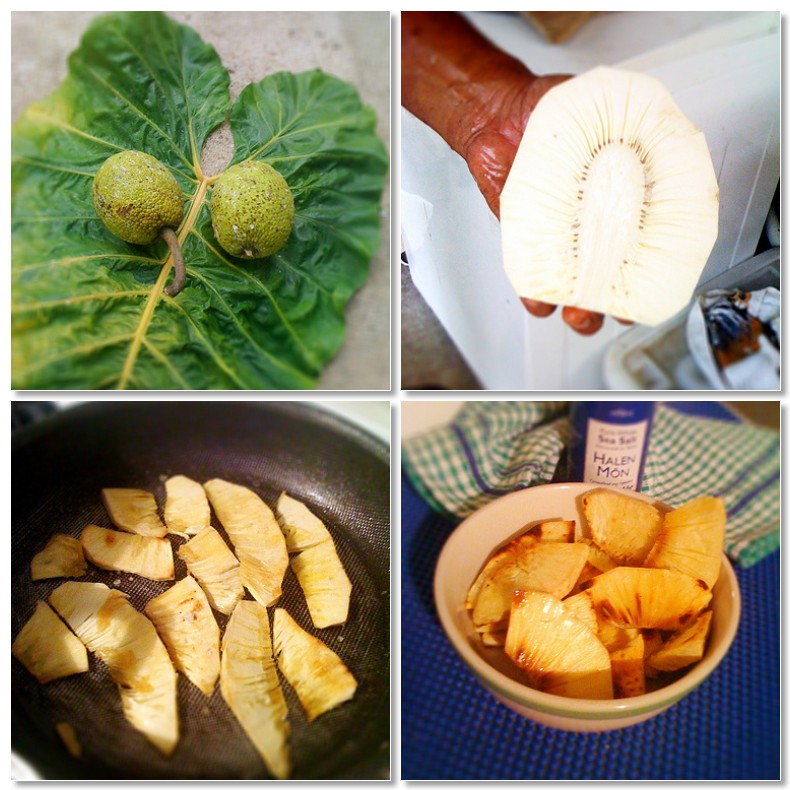
Tony told me that I could bake it, boil it or make chips, and since I travelled with olive oil and some luxury salt flakes I decided to go for chips.


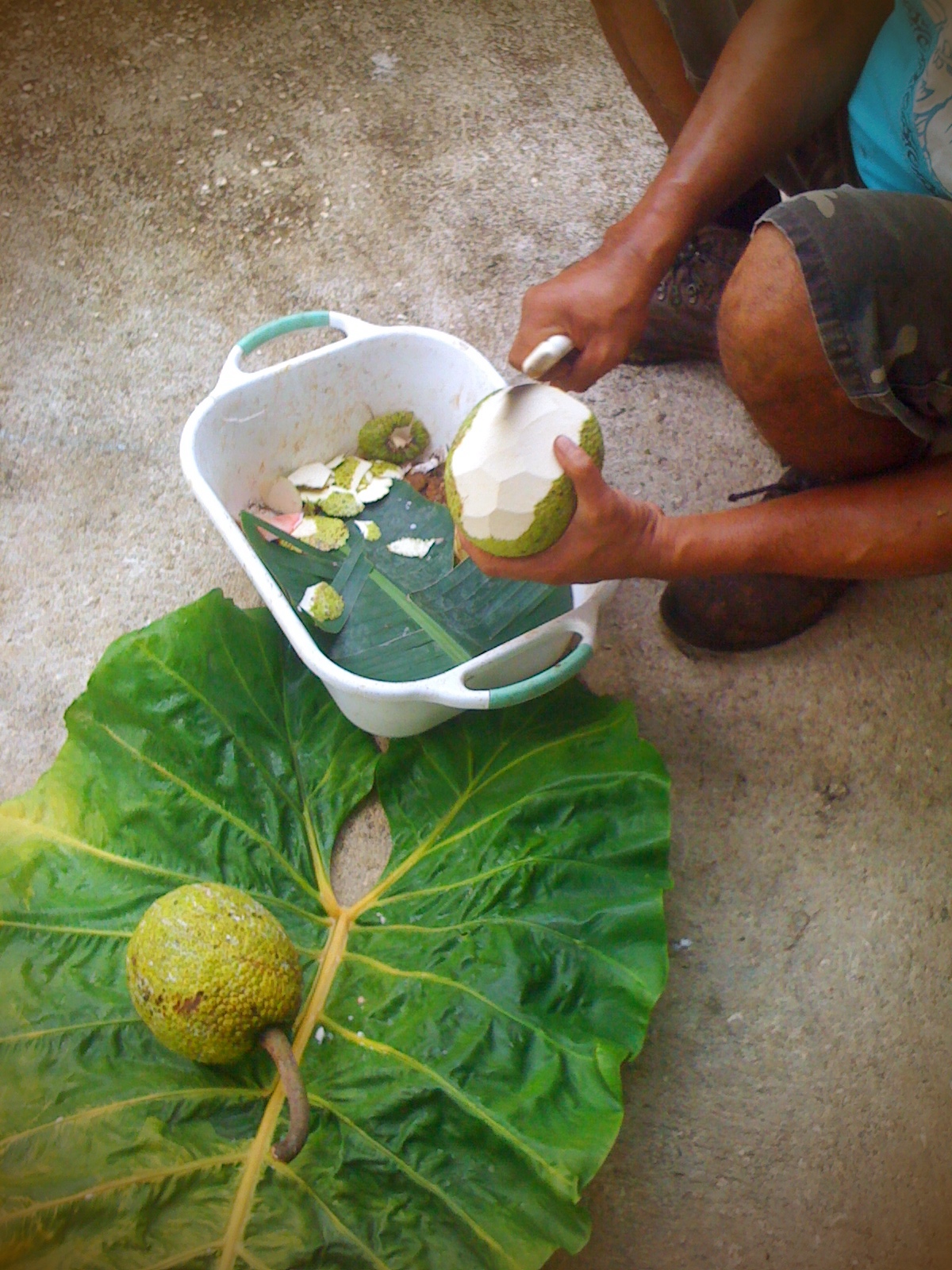
Breadfruit needs to be peeled and sliced, Tony peeled it with a machete for me. I cut it into thin slices and pan fried them with a little olive oil (not deep fried) and added some Welsh sea salt flakes. I served it as an appetizer, everybody love it so much that I made it again the evening after. First breadfruit experiment: successful!


Photos and Recipes by Alessandra Zecchini ©
Tuesday, August 23, 2011

Home made lemon detergent


No food today, but maybe you will like this:


I always use eco cleaning products, or go for the 'home remedies' like baking soda, vinegar and methylated spirit, but I always fantasized about making some myself. I found some good ideas on Galline 2nd Life, a blog that I like very very very much! I was immediately attracted by the washing up and dishwasher detergent, but for a different reason: it reminded me of a beautiful lemon salt scrub for the body that someone presented me years ago. It smelled great and was so nice to use under the shower... it even looked like the one in the picture... So I tried!


Ingredients, as given by Lo in Galline 2nd Life

3 lemons
200 g salt
400 ml water
100 ml white vinegar

Slice the lemons, keeping the peel but discarding the pips. In a food processor blend the lemons as finely as possible with the salt and a little water (taken form the 400ml). Place in a pot, add the rest of the water and the vinegar. Bring to the boil and simmer for 10 minutes. Once cold place in a jar.

I tried to use it for the dishes and it works quite well, unless the dishes are really greasy. For the dishwasher Lo suggests to put 2 tbsp in the dishwashing powder compartment, I did and tried at different temperatures, but I think that it works better if doing the dishes by hand.

Lo also says that it can be used for wooden chopping boards, and I used it for the kitchen sink and marble benches (very good, and with a nice lemony smell). Then I took it into the shower and use it on myself! This is where I liked it best: a mild exfoliant, particularly nice for the feet, especially if you are one of those New Zealanders who spend half of their life in jandals or bare-footed!

In a few words: a real multipurpose detergent! Thank you Lo!

Recipe by Lo and Photo by Alessandra Zecchini ©