Showing posts with label kombu. Show all posts

Wednesday, February 22, 2012

Two Vegan and Gluten Free recipes with onion weed: Yudofu, and Chickpea Fritters


I have been telling friends about onion weed these days, everybody seems surprised (and happy) that you can eat it, especially those who gave up growing spring onions because they seem to take so long for what you get. And onion weed is free and plentiful! I kept telling everyone to use it as a spring onion without realizing that most people here use spring onions just chopped in salad, and that'a about all! 

On the top left my nabe (pot) with simmering Yudofu, one of my favourite tofu meals for chilly evenings:
In a capable pot I put water with some dried kombu (about a large sheet broken into 3-4 pieces), and a few dried shitake mushrooms to simmer, and after 20 minutes I added some soft tofu cut into squares, salt (I have a nice Japanese unrefined salt for it) carrot sliced to look like flowers, and onion weed (bulbs, stalks and leaves cut into 'longish' pieces). I added the flower just before serving. To tell the true the tofu should be then taken out of the broth and eaten with a sauce and relishes, but as a family meal we eat the lot in bowl, broth and veggies too, except for the kombu seaweed, which I discard.

The other three photos are of chickpea flour fritters: I chopped the onion weed (the whole plant, but kept a few flowers for decoration) plus I added some finely chopped spinach, chickpea flour, salt, water and a drizzle of olive oil. When the batter was ready I remember that I have lots of pitted black olives to use, so I chopped up a few and added those too. I fried the lot and the fritters were incredibly tasty! I will make them again, in the next few days, they are incredibly easy and the kids loved them.
These meals are vegan and gluten free.


Photos and Recipes by Alessandra Zecchini ©

Friday, October 28, 2011

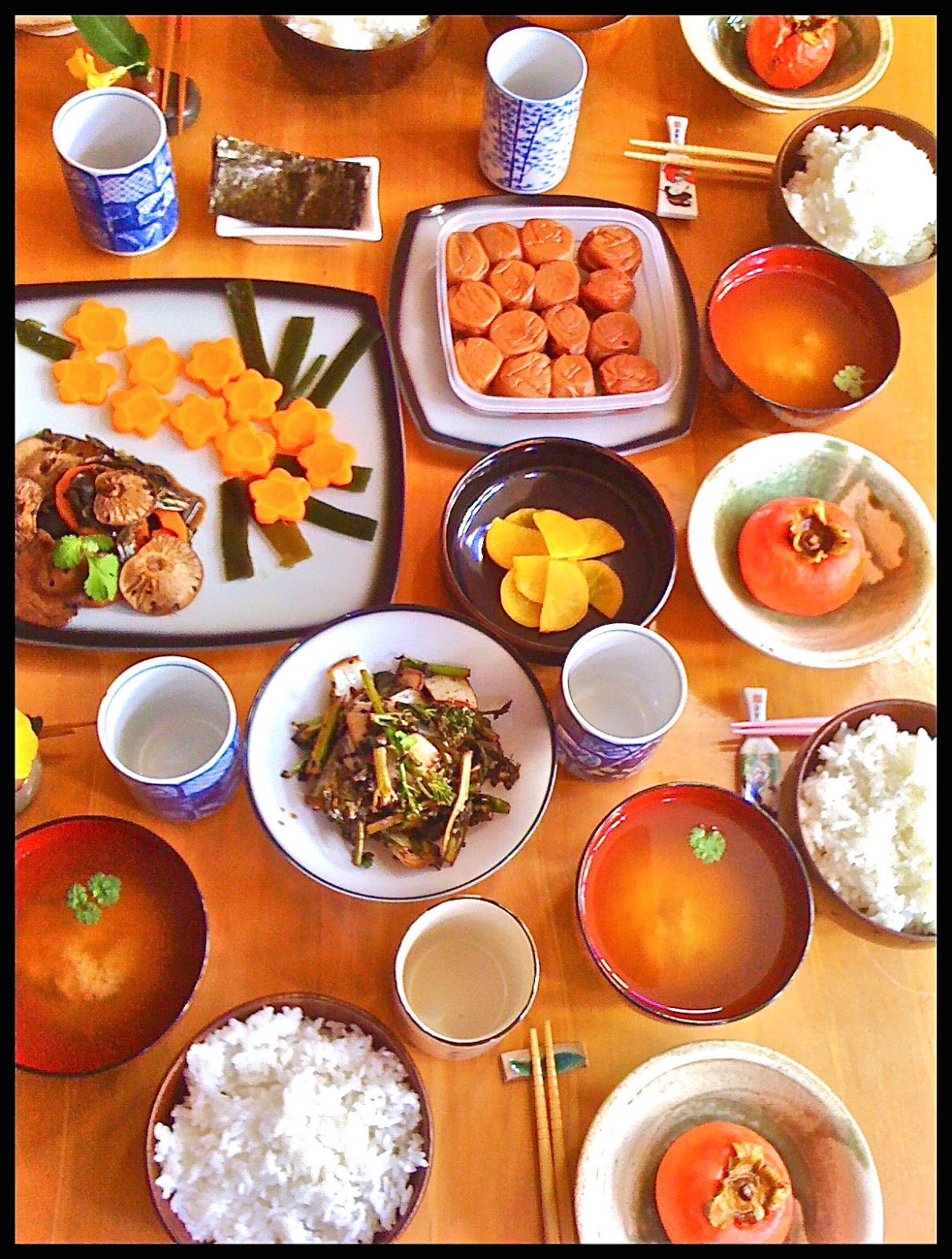
Vegan Japanese Fall/Autumn Lunch (or Dinner)


This is easy even if it looks complex. I made a stock using some dried shitake mushrooms, some seaweed (kombu strips, a softer type that can be eaten in salad) and some carrots. But (check this out) I cooked the veggies in three separate pots with just a little water, then I kept the veggies and kombu aside, I mixed the three 'broths' and added some white miso paste. This was my soup. The carrots were cut like flowers, and then arranged with some seaweed 'leaves'. I mixed the remaining carrots and kombu with the mushrooms and pass them quickly in a frying pan with a little soy sauce, lemon juice, and sesame seeds. No oil.


I used the same pan, but added a little sesame oil and a little vegetable oil, to quickly cook some broccolini and bok choy (both from my garden) and added more soy sauce and lemon juice. For the rest... the rice was just plain, to be served with umeboshi plums, plus I had some ready made Japanese pickles (takuan, pickled daikon) and some nori seaweed cut into strips.


Probably in Japan this would look more like a breakfast than a lunch, but not for me (just caffellatte for breakfast!). And dessert was persimmon, the soft type that you eat with a spoon.
All good for Autumn, or Winter.


Photos and Recipes by Alessandra Zecchini ©
Friday, October 7, 2011

Zaru Soba


Day 7 of Vegan MoFo

Zaru Soba


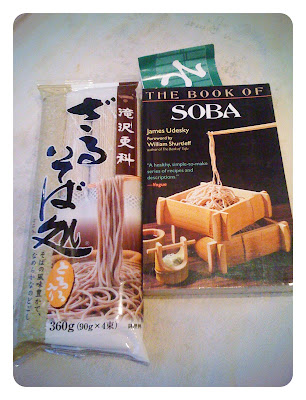
Kazuyo brought back some soba from Japan, three packs for me :-)! I love soba, the Japanese buckwheat noodles that can be eaten cold or hot.


When we were living in Japan my husband did a lot of editorial work for KodanshaInternational, and among the books he worked on there was this one: The Book of Soba by James Udesky. The book tells you how to make your fresh soba, but also how to cook the dry one, plus it has some recipes, some history and nutritional info. I like it.


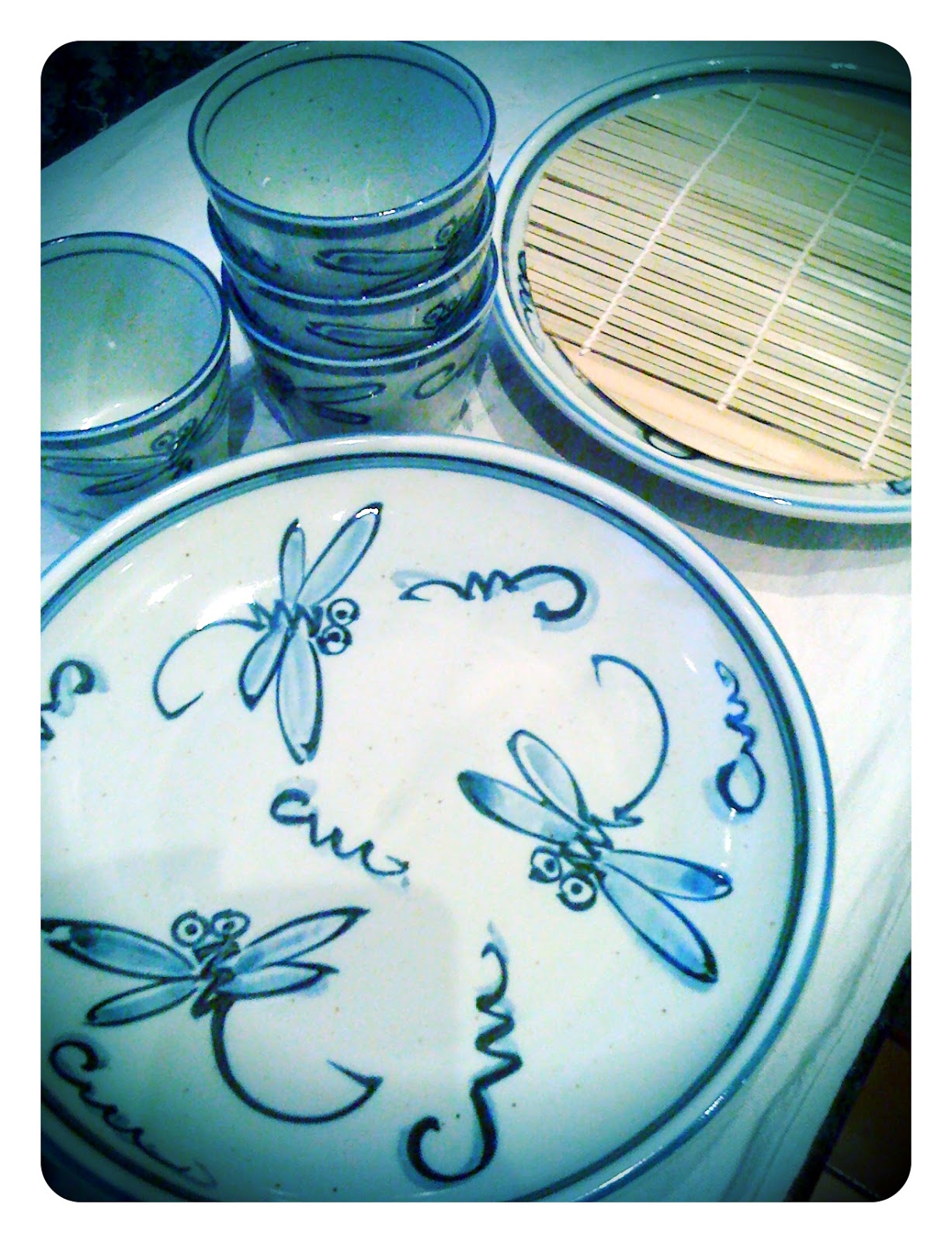
This is my soba set: plates with fitting straw mats (zaru soba is served in baskets or on mats, to keep it fresh and drained), plus some matching soba dipping bowls. I also have some tea cups with the same pattern: dragonflies!


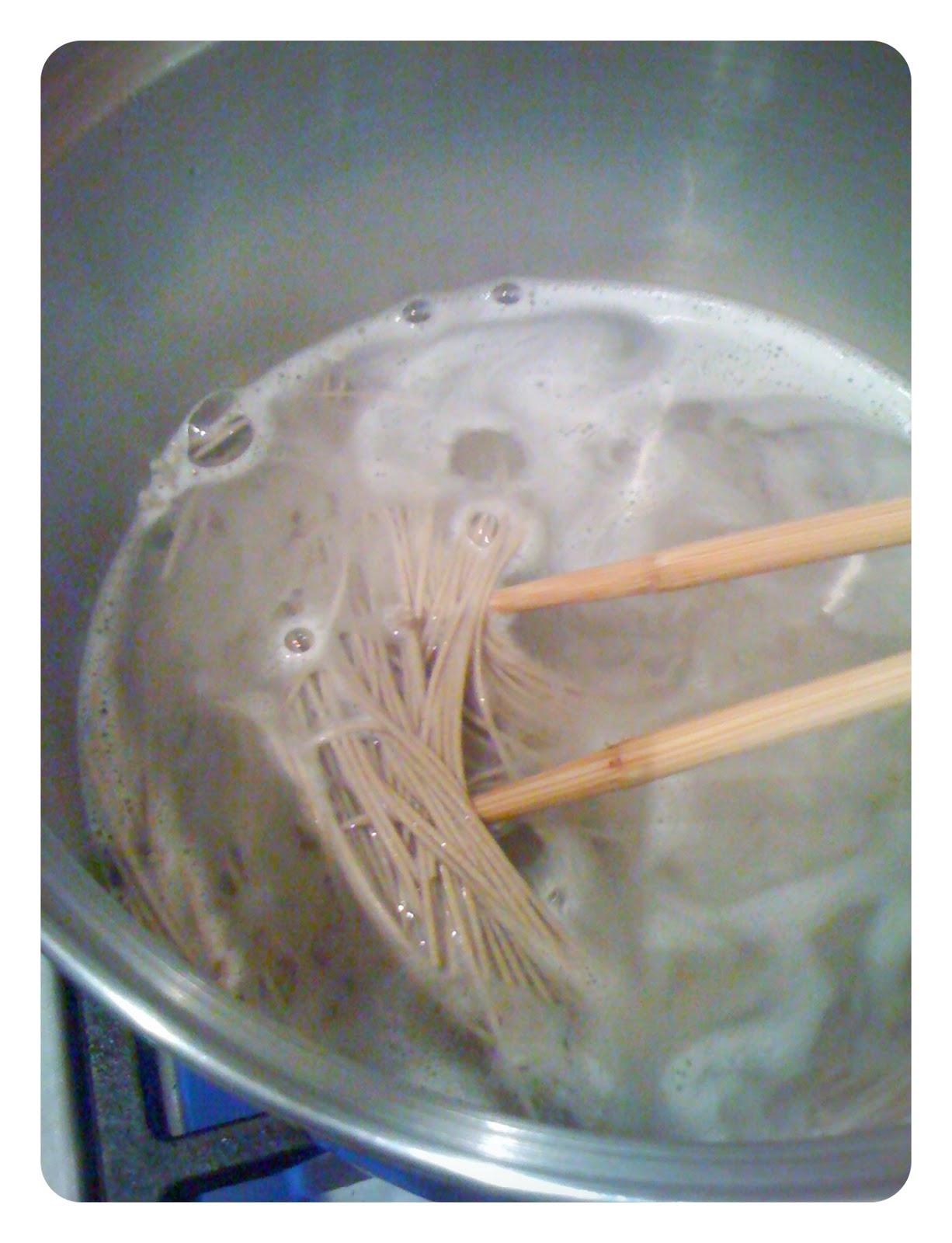
Zaru soba is cold soba topped with nori (I cut a sheet of nori in small pieces with a pair of scissor) and served with a simple dipping sauce and garnish. One thing that I learned form The Book of Soba is that soba is not cooked like pasta. The only thing in common with pasta is that you should use the biggest pot you have and have enough water as if you were to cook spaghetti. But don't add salt!

Bring the water to boil: add the soba, stir gently. When the water starts to froth add half a cup of cold water and lower the heat. Do this three times. After the third time your soba should be ready. Drain and collect the cooking water to make soup, if you like (full of starch and vitamins and minerals) and place the soba in a bowl with ice water. Or just rinse under cold water (I prefer this way, the soba may not be perfect but I cannot bear to loose anymore starch!


Place your cold and rinsed soba in a soba basket or on your soba plate (lined with the soba mat). If you don't have a soba mat use your sushi rolling mat. Top with nori. Garnish with other vegetables if you like.


For the dipping sauce I prepare a base broth by simmering a piece of kombu for 30 minutes in water, then I add a little soy sauce (most would use bonito flakes). Let the broth cool down: this is a cold dipping sauce. Before serving put a tiny bit of wasabi in each dipping bowls, and a little grated daikon or radish, and then some chopped spring onions or chives. Pour the broth over and stir. For a fancy dinner place all the garnishes in small plates and let your guests mix their own sauce. To eat pick up the soba with your chopsticks and dip into your dipping sauce, then slurp everything up. You can make a slurping noise too, but I am not good at that!

Photos and Recipes by Alessandra Zecchini ©