Showing posts with label Sushi. Show all posts

Monday, March 8, 2021

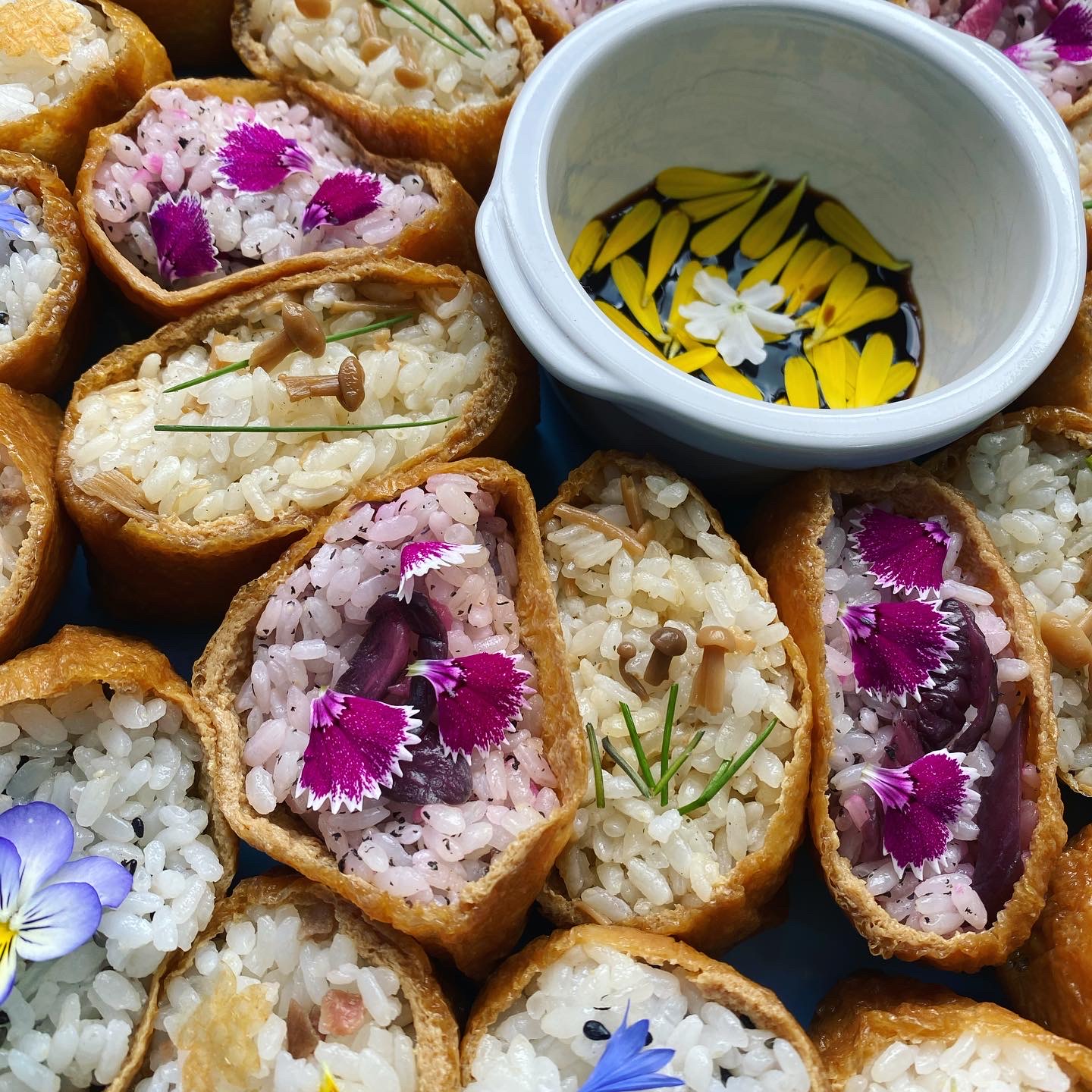
Vegan Inari-san sushi with flowers


Wash the sushi rice (or Japanese rice) several times in cold water, until the water runs clear, and then cook it by absorption. The doses are about 1 and 3/4 (three quarters) cups of sushi rice for 2 cups of water, but that depends on the type of pot. You need a pot with a good lid, or you will loose too much steam. I kind of regulate myself by ear now, since I know my pots and pans. Bring the pot to boiling point, lower the heat and simmer until all the water has been absorbed. Once the rice is ready pour it into a bowl and stir it with a wooden spatula, cooling it with a fan if you can. 

This was for a large party so I cooked 1 kg of rice. I divided the cooked rice into 4, to one I added Japanese preserved mushrooms, to the second toasted black sesame seeds and salt, to the third sakura furikake, and to the fourth shiso furikake. But you can just add sushi vinegar if you don't have furikake or other ingredients. Then I used the rice to fill inari pockets (available in Japanese and Asian store, and many supermarkets. I decorated the sushi pockets with dianthus, calendula, cornflower and violets. I also added some cutting of carrot paper (like nori sheet, but made of carrots), chives, and little mushrooms. I also added some calendula petals to the soy sauce. 


 Photos and recipes by Alessandra Zecchini ©

Saturday, November 17, 2018

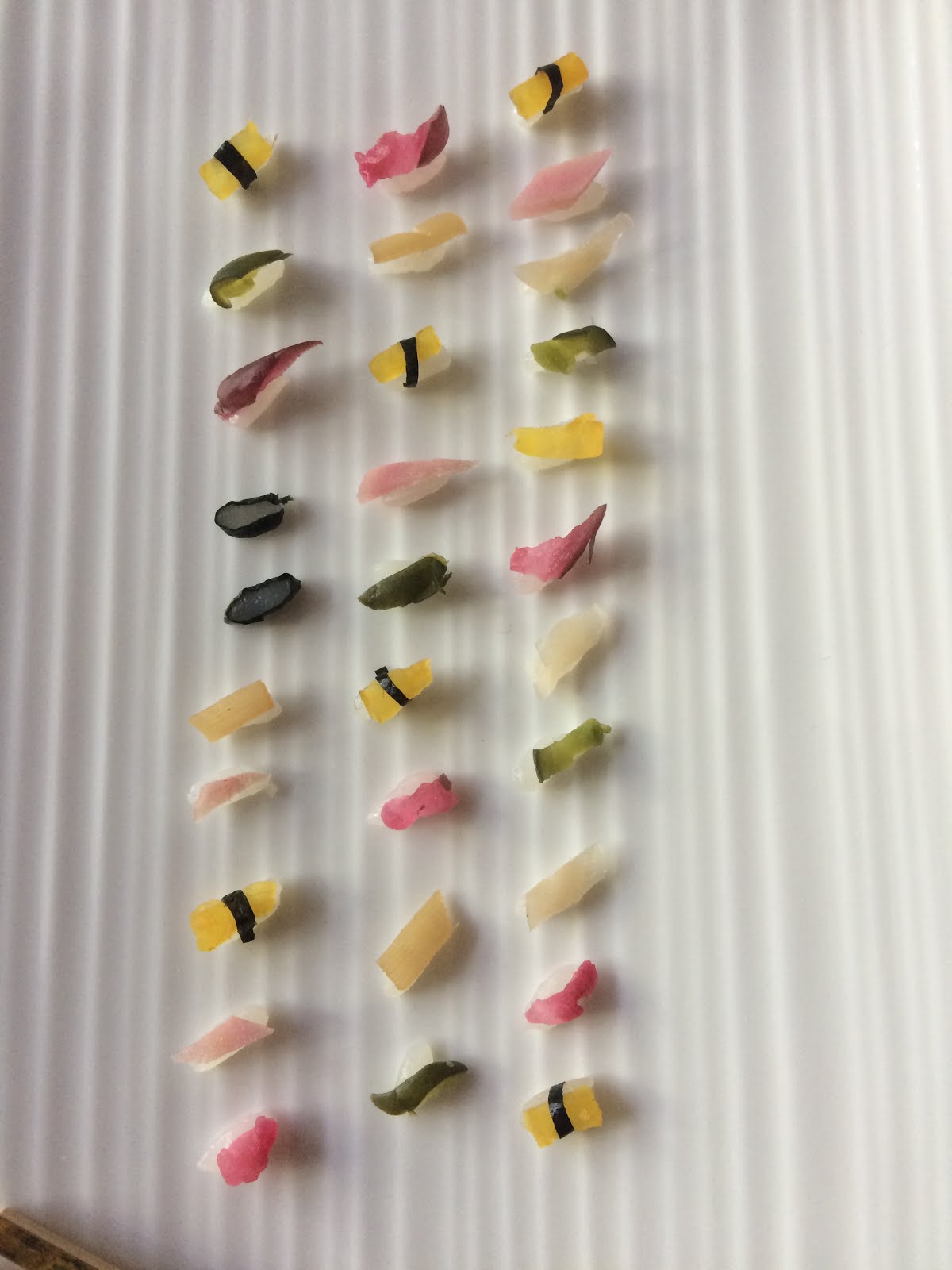
Miniature Sushi, every piece is a grain of rice


I find it very relaxing to make miniature food, and I particularly enjoyed making this. 
Could it be the smallest sushi in the world? Each piece is exactly a grain of rice! But it is easier that you may think, just check the video out.


I made the rice like regular sushi rice (recipe here) and for the toppings I just used a variety of Japanese pickles, plus nori and bamboo shoots, so this is actually a vegan sushi. It looked super cute!!


Photos and Recipes by Alessandra Zecchini ©

Monday, February 6, 2017

Sushi with flowers


Here is an idea, just for variety, instead of rolling all the norimaki with seaweed leave some without and then stick on some flower petals (find more Vegan recipes with flowers here). I used impatiens here, not many people know that you can eat them, they taste a little like rocket salad.

And if rolling the sushi in petals is too hard you can always put the flowers on the top. Below vegan norimaki with fresh borage flowers and salted sakura (cherry blossoms). 


And here a couple of pics of the lovely black sand of Te Henga (Bethells beach)


Photos and Recipes by Alessandra Zecchini ©

Tuesday, December 13, 2016

Vegan sushi without nori


There are a lot of traditional vegan sushi rolls already, like kappamaki, kampyo, takuan, inari-san, and the famous avocado rolls, but sometime is fun to make more varieties, especially since Arantxa received   kit to shape sushi rice shapes from Japan, ready to be topped! And for topping we used some carrots  slices cooked with soy sauce and mirin and topped with seaweed (vegan) caviar, and some mushrooms slices sautéed with a little vegetable oil, soy sauce (or Tamari sauce for gluten free) and lemon juice. Well, it was truly delicious!

But for even more amazing vegan sushi recipes, and how to cooke the rice, click here and here
and here and here


Photos and Recipes by Alessandra Zecchini ©

Wednesday, October 26, 2016

Halloween Vegan Sushi - just a few ideas


There are plenty of Sushi rice recipes on this blog, so I won't repeat myself, and if you never made sushi just click here and you can find all the different ways to prepare rice and create vegan sushi, norimaki and onigiri (rice balls). 

So just follow the basic or your favourite sushi recipes and just apply these cool Halloween variations! I used lots of seaweed, nori, seaweed salad and a Japanese dried seaweed that looks like the wrapping of a scary mummy. You can find everything in Japanese shops :-). The skulls and pumpkins are made with Takuan (pickled daikon), the zombi eyes with asparagus, the 'slime' with avocado and seaweed salad, and the details with cut nori.


Photos and Recipes by Alessandra Zecchini ©

Saturday, May 16, 2015

Vegan Sushi and onigiri (rice balls)


The weather has been beautiful, and it is still possible to eat outside, especially fresh things like this vegan sushi. Note that fish sushi is not traditionally eaten in summer in Japan, although thanks to refrigeration now many do, but some 'traditionalists' refuse. Vegan sushi on the other hand, like inari and norimaki (nori rolls), as well as onigiri (rice balls) are all great summer options.


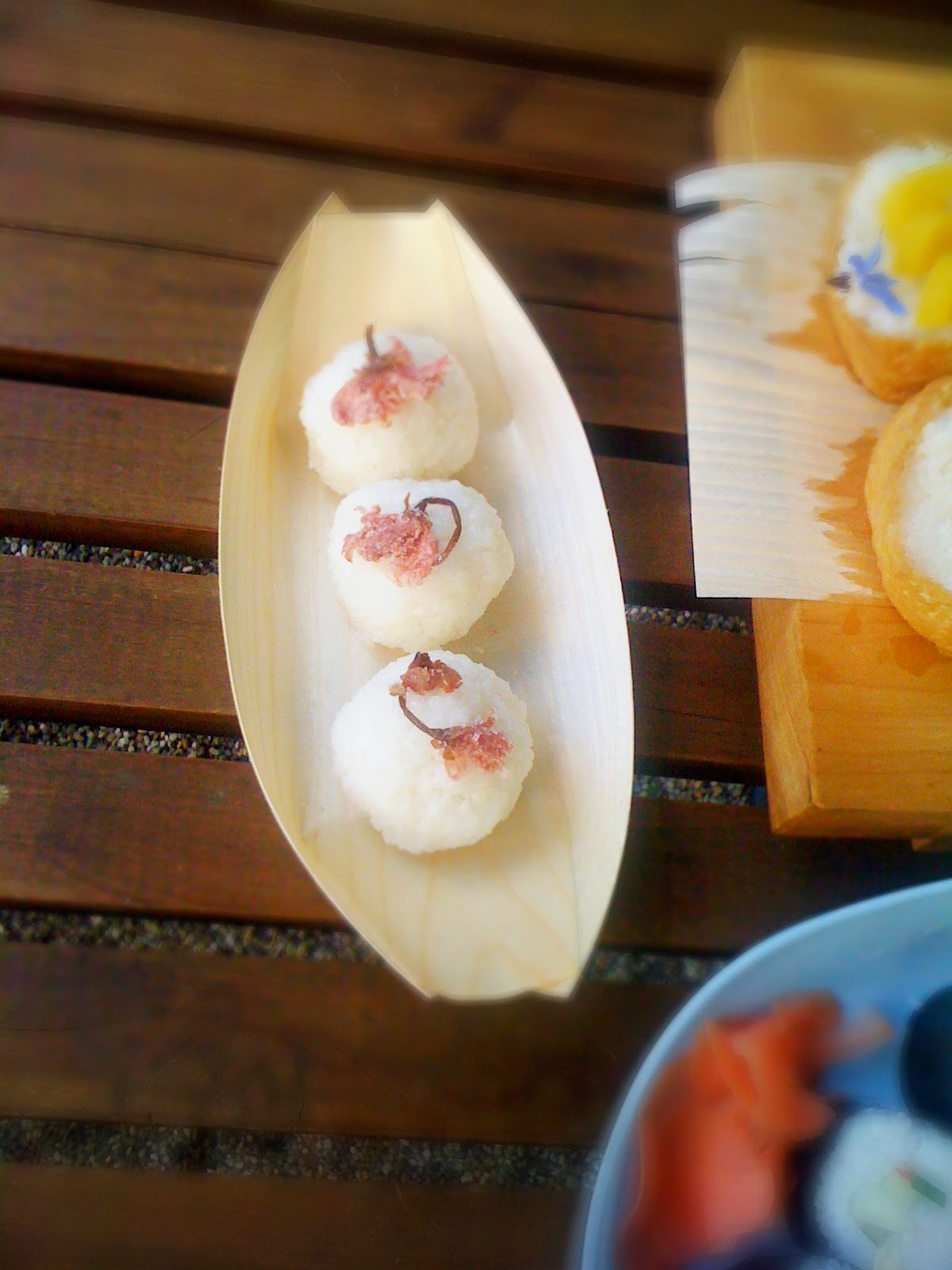
Let's start with the onigiri. Wash the sushi rice (or Japanese rice) several times in cold water, until the water runs clear, and then cook it by absorption. The doses are about 1 and 3/4 (three quarters) cups of sushi rice for 2 cups of water, but that depends on the type of pot. You need a pot with a good lid, or you will loose too much steam. I kind of regulate myself by ear now, since I know my pots and pans. Bring the pot to boiling point, lower the heat and simmer until all the water has been absorbed. Once the rice is ready pour it into a bowl and stir it with a wooden spatula, cooling it with a fan if you can. At this stage I took some rice aside to make onigiri and used the rest for sushi (see below). Rub your hands with salt and shape the rice into balls. I added some salted sakura blossoms on top to make pretty onigiri, and then I made some miniature ones (last photo) which I sprinkled with fresh chives.


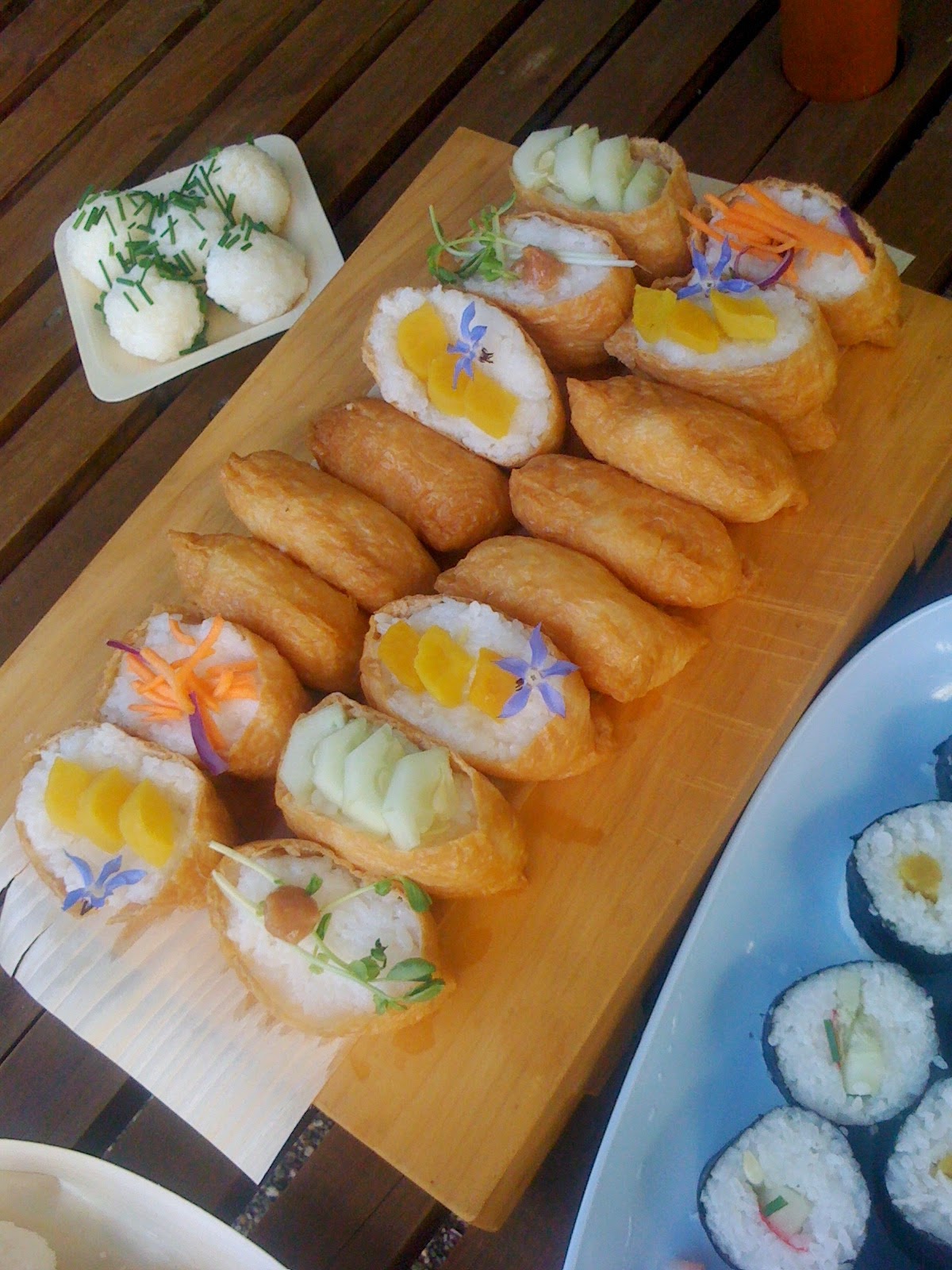
To the remaining rice I added some ready made sushi vinegar, about 2 tablespoons, but this is my personal taste. If I don't have sushi vinegar I use 2 tbsp of rice vinegar, a little sugar and a little salt (to taste, and I don't like to use too much sugar or salt!). Roll your norimaki with the filling of your choice (I used takuan, cucumber and busy lizzie flowers). Or use the rice to fill inari (tofu) sachets, and then top them with herbs, flowers, veggies and pickles. So refreshing.


Photos and Recipes by Alessandra Zecchini ©


Wednesday, February 4, 2015

Sushi in a bowl - Chirashi-zushi


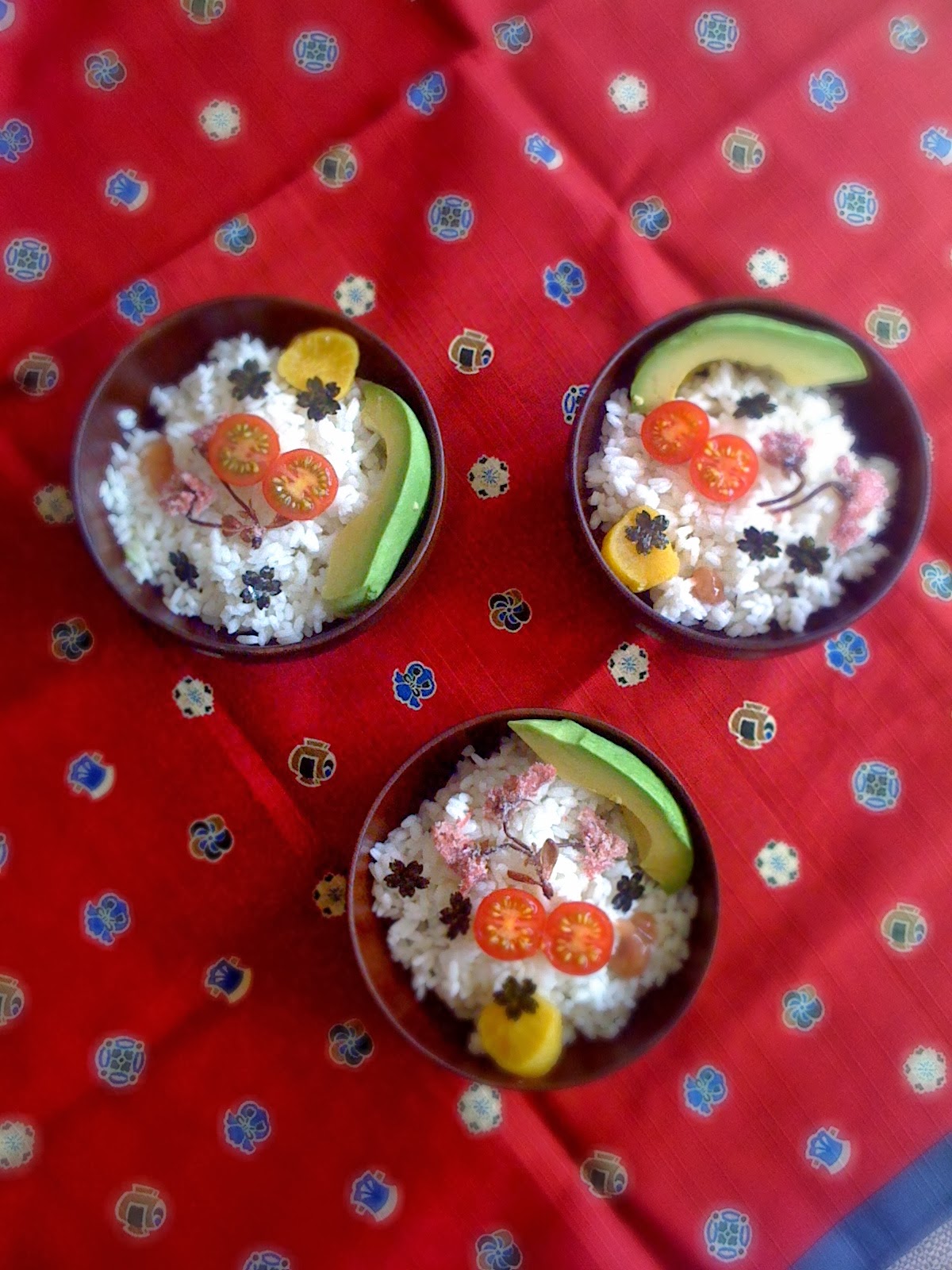
I like chirashi-zushi, sushi in a bowl, a part form the fact that you save time, it also looks pretty. For topping you can add what you fancy, here I have avocado, salted sakura (cherry blossoms), nori (cut with a craft puncher) takuan (Pickled daikon), cherry tomatoes and ume paste (I use wasabi but the kids wanted ume…). A perfect light lunch for summer!


Sushi rice

Wash the sushi rice (or Japanese rice) several times in cold water, until the water runs clear, and then cook it by absorption. The doses are about 1 and 3/4 (three quarters) cups of sushi rice for 2 cups of water, but that depends on the type of pot. You need a pot with a good lid, or you will loose too much steam. I kind of regulate myself by ear now, since I know my pots and pans. Bring the pot to boiling point, lower the heat and simmer until all the water has been absorbed. Once the rice is ready pour it into a bowl and stir it with a wooden spatula, cooling it with a fan if you can. I then add some ready made sushi vinegar, about 2 tablespoons, but this is my personal taste. If I don't have sushi vinegar I use 2 tbsp of rice vinegar, a little sugar and a little salt (to taste, and I don't like to use too much sugar or salt!). Spoon the rice in a bowl and add your topping. Serve with soy sauce and wasabi on the side, like for rolled sushi.


Photos and recipes by Alessandra Zecchini ©

Tuesday, November 27, 2012

5 Vegan school lunch boxes, mostly raw, eat your colours and 5+ a Day


Carrot and cucumber sticks, grapes, blueberries and Cape gooseberries, Olive focaccia (homemade)


When I was living in Japan I learned to present lunch boxes including a spectrum of at least 5 colours.
I try to do this with the kids' lunch boxes now, and these days the 5 + a Day is also promoting 'colours', which is a good way to make food more interesting. Of course here in NZ lunch boxes are stuffed down the school bag and tossed around, so I could never make them like real Japanese super pretty bentos, (I also wouldn't have the time in the morning or late at night!).

My problem has been trying to have 5 different colours all year round, especially for the blue! Fresh blueberries are easy, but when out of season I have to use frozen, good for smoothies and cereals and desserts, but not school lunches.


Avocado sushi, cherry tomato, banana, kiwi gold, feijoa, mandarin, grapes,  gluten free lunch box

If I don't have blueberries I try to put a few red/black grapes, is a pity that they are all imported, but so are the bananas. For the rest I always try to be seasonable and use fruit and veggies that grow in NZ, the tomato here was from my garden. Sushi only happens if there is some left over after dinner the night before: I could never get up at 5am to make it fresh!


Baguette with green salad and hummus with Dukka, banana, mandarins, kiwi gold, dried prunes

When I don't use grapes I try to add something close to purple/blue, like dried plums. Hummus is also another favourite filling, if they could my kids would have a hummus rolls every day, and they don't seem to be fussed if it smells of garlic.


Baguette with rocket salad, hummus and broad beans, orange, grapes and Cape gooseberries

Hummus again, this was just over a week ago, believe it of not I had broad beans in the garden, not enough for a meal, but enough for a couple of rolls. The Cape gooseberries too are from my garden.


Dolmas (rice wrapped in vine leaves), carrot sticks, cucumber and cherry tomatoes, banana, grapes and mandarin, gluten free lunch box

In Winter the lunch boxes are a bit repetitive: mandarins, banana, carrot sticks and grapes seem to dominate, and I occasionally buy cherry tomatoes even if they are grown in hothouses (but so are most cucumbers, I guess). The dolmas came from a can, a very occasional purchase, but it does add variety and, yes, the kids love those too!

But strawberries and blueberries and plums and colorful capsicums are coming in and the next lunch boxes will be easier to make!!


Photos and Recipes by Alessandra Zecchini ©

Friday, April 20, 2012

Aparagus Inari Parcels


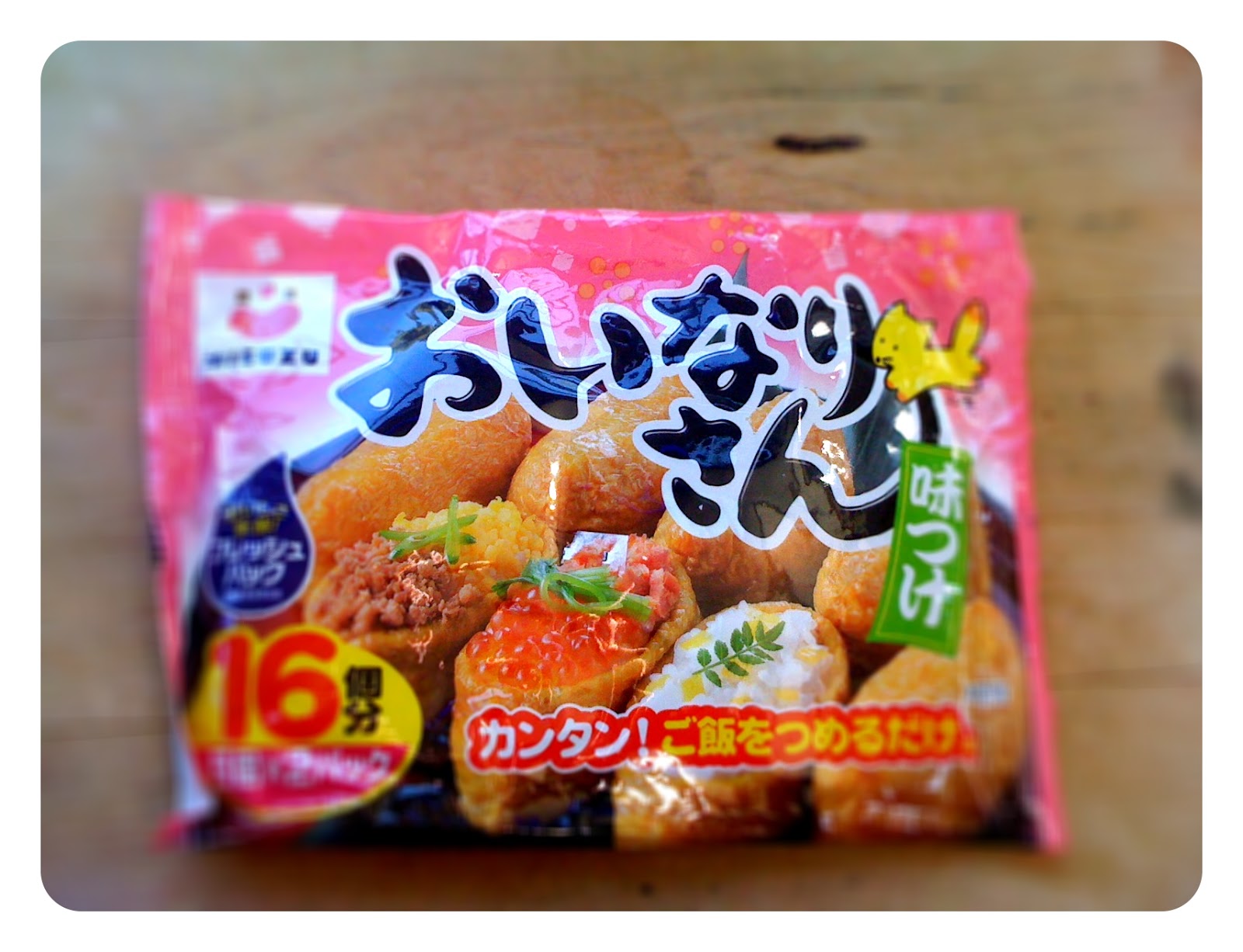
I really really like the fried tofu parcels used to make oinari-san, I wouldn't know how to make them, a Japanese friend told me ages ago, but it seemed quite involved... maybe one day, but for the time being they can be bought in Japanese/Asian stores :-). This pack contained 16 tofu parcels. 


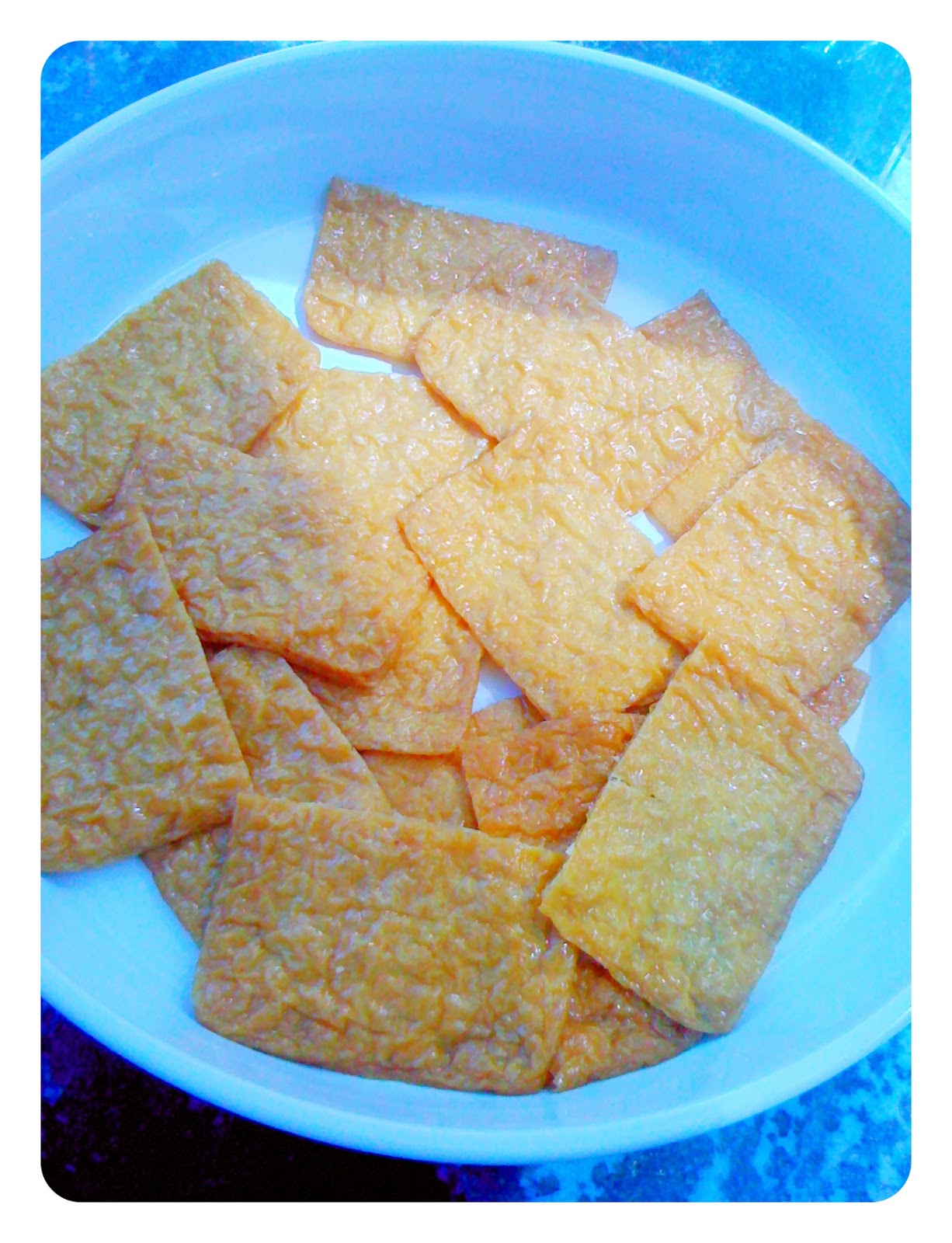
The parcels are usually filled with sushi rice, but they can also be uses as "containers" (see the image on the packet) and I really liked this brand: not a single parcel broke when I was opening it! I decided to used them with rice and asparagus. The asparagus were simply steamed, and then I cut them and placed then in a bowl with the liquid of the tofu parcels (they are sealed in an sweetish sauce which I thought was a waste to discard).


Wash the sushi rice (or Japanese rice) several times in cold water, until the water runs clear, and then cook it by absorption. The doses are about 1 and 3/4 (three quarters) cups of sushi rice for 2 cups of water, but that depends on the type of pot. You need a pot with a good lid, or you will loose too much steam. I kind of regulate myself by ear now, since I know my pots and pans. Bring the pot to boiling point, lower the heat and simmer until all the water has been absorbed. Once the rice is ready pour it into a bowl and stir it with a wooden spatula, cooling it with a fan if you can. I then add some ready made sushi vinegar, about 2 tablespoons, but this is my personal taste. If I don't have sushi vinegar I use 2 tbsp of rice vinegar, a little sugar and a little salt (to taste, and I don't like to use too much sugar or salt!).


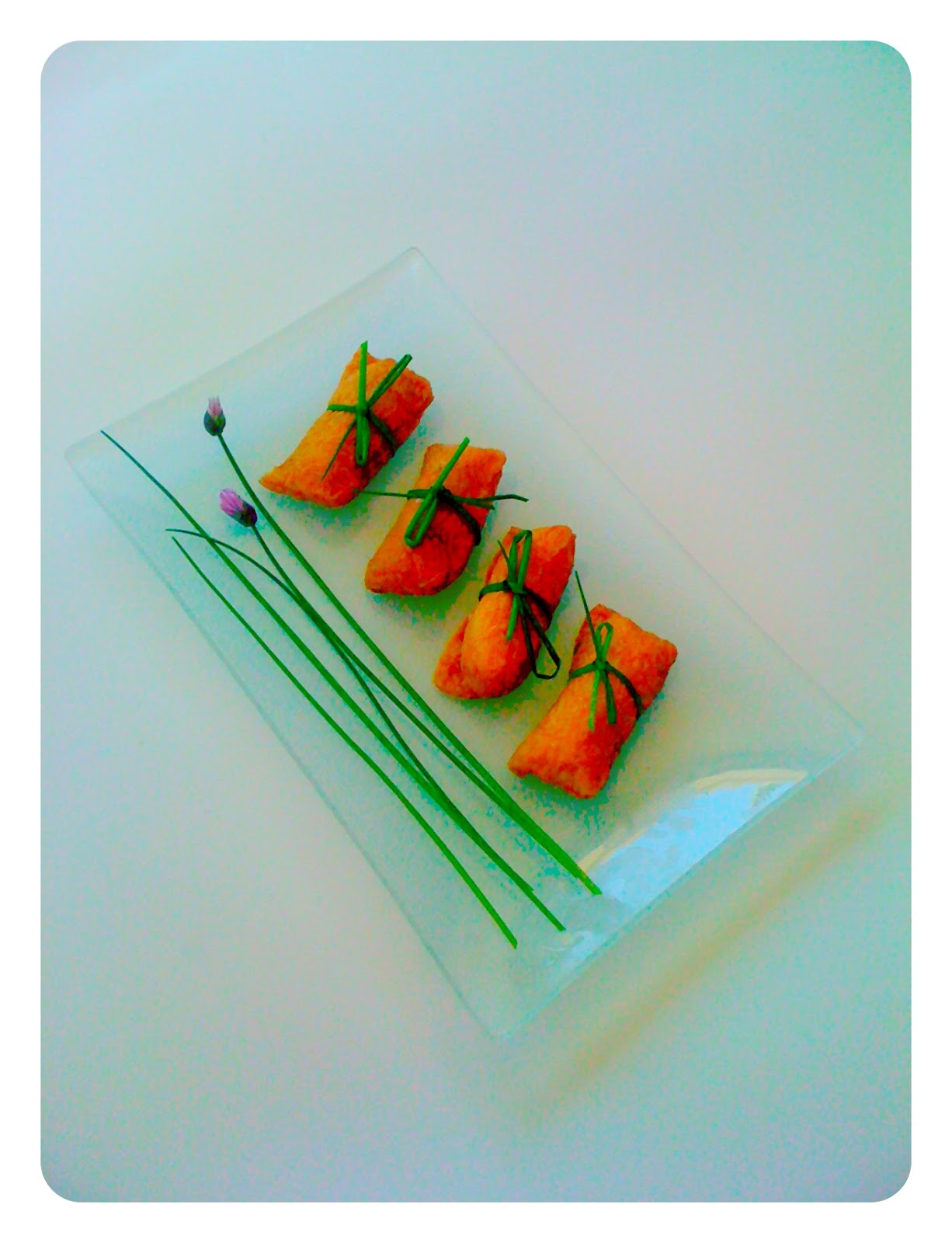
I filled the parcels with rice and asparagus and wrapped them up with a chive. 


Photos and Recipes by Alessandra Zecchini ©


Saturday, February 18, 2012

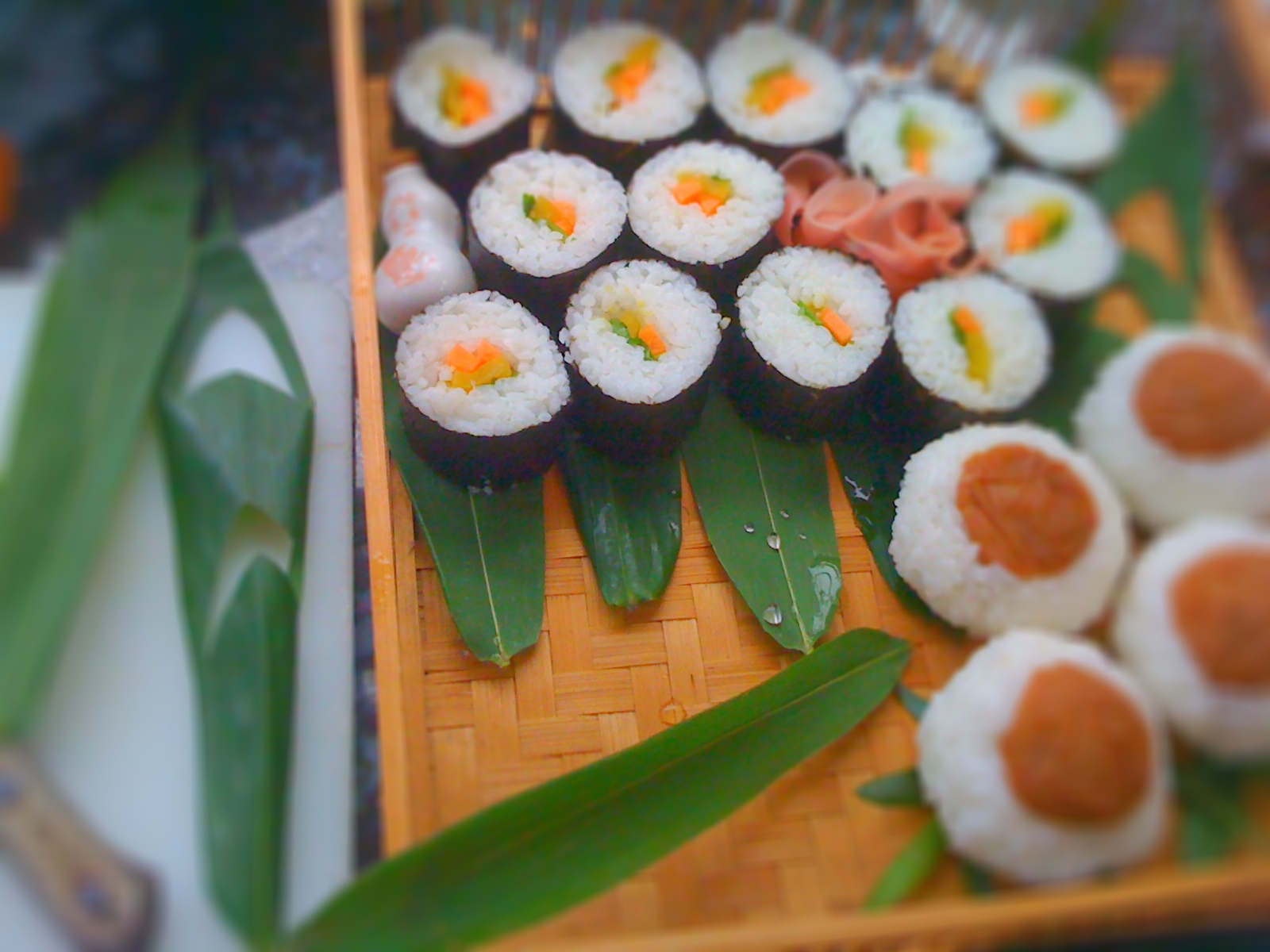
Salad Sushi rolls and Ume topped Onigiri


Salad Sushi Rolls

Wash the sushi rice (or Japanese rice) several times in cold water, until the water runs clear, and then cook it by absorption. The doses are about 1 and 3/4 (three quarters) cups of sushi rice for 2 cups of water, but that depends on the type of pot. You need a pot with a good lid, or you will loose too much steam. I kind of regulate myself by ear now, since I know my pots and pans. Bring the pot to boiling point, lower the heat and simmer until all the water has been absorbed. Once the rice is ready pour it into a bowl and stir it with a wooden spatula, cooling it with a fan if you can. I then add some ready made sushi vinegar, about 2 tablespoons, but this is my personal taste. If I don't have sushi vinegar I use 2 tbsp of rice vinegar, a little sugar and a little salt (to taste, and I don't like to use too much sugar or salt!). Roll the rice with nori seaweed and the filling of your choice: I used carrots, takuan (Japanese pickled daikon) and rocket salad.


Clockwise from top left: Salad sushi with pickled ginger, edamame beans, plates for lunch, plum sake to drink and mandarins for dessert


 Onigiri


To make the rice balls cook some Japanese (or sushi) rice as explained above but do not dress with rice vinegar, leave it plain. Start working it when it is still warm: wet your hands with water, and rub them with just a little salt, then shape the balls with your palms, sticking a whole ume (Japanese pickled plum) in the middle while you are working. This time I didn't put the ume inside but on top, for visual effect, and added a violet (edible) for decoration.


Photos and Recipes by Alessandra Zecchini ©


With this recipe I take part in the contest VegetariaMo (Ricette Vegan) hosted by


Friday, July 1, 2011

Love heart sushi rolls


I find cooking rice for sushi challenging: you need to buy proper sushi rice and then wash it several times in cold water, until the water runs clear. And then cook it by absorption. The doses are about 1 and 3/4 (three quarters) cups of sushi rice for 2 cups of water, but that depends on the type of pot. You need a pot with a good lid, or you will loose too much steam. I kind of regulate myself by ear now, since I know my pots and pans. Bring the pot to boiling point, lower the heat and simmer until all the water has been absorbed. Once the rice is ready pour it into a bowl and stir it with a wooden spatula, cooling it with a fan if you can. I then add some ready made sushi vinegar, about 2 tablespoons, but this is my personal taste. If I don't have sushi vinegar use 2 tbsp of rice vinegar, a little sugar and a little salt (to taste, and I don't like to use too much sugar or salt myself!).


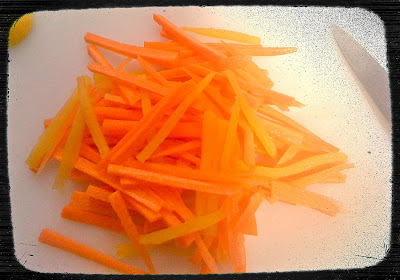
To fill this sushi I used a combinations of thin carrot sticks and takuan (Japanese pickled daikon) sticks, but you can use what you like!
Place a sheet of nori seaweed on a sushi mat, add the rice and the filling, roll and, once you have your sushi roll, pinch the edges to shape it like an heart (this takes time!!!). The most difficult part is to cut the sushi, as you may loose the heart shape, so gently re-touch your sushi pieces with your fingers.


Photos and Recipes by Alessandra Zecchini ©

Friday, April 22, 2011

Avocado Sushi


To make the sushi rice I usually follow this recipe, but this time I also added some Japanese dried herbs (the green is spinach and the purple is red shiso, or perilla) and toasted sesame seeds.

On top of each rice ball (you need to have wet hands to shape the balls) I put a slice of avocado, soaked in lemon juice. Under some avocado slices I put a little bit of wasabi, and because this may be too hot for some palates, I added a thin strip of nori seaweed to recognize which pieces had the wasabi and which didn't.

Avocado sushi is very filling, eat with a drop of Japanese soy sauce.


Photos and Recipes by Alessandra Zecchini ©

Saturday, January 1, 2011

Year of the Rabbit, Sushi Rabbits


Happy New Year


I would like to wish each and everyone of you a Happy New Year. Buon Anno!


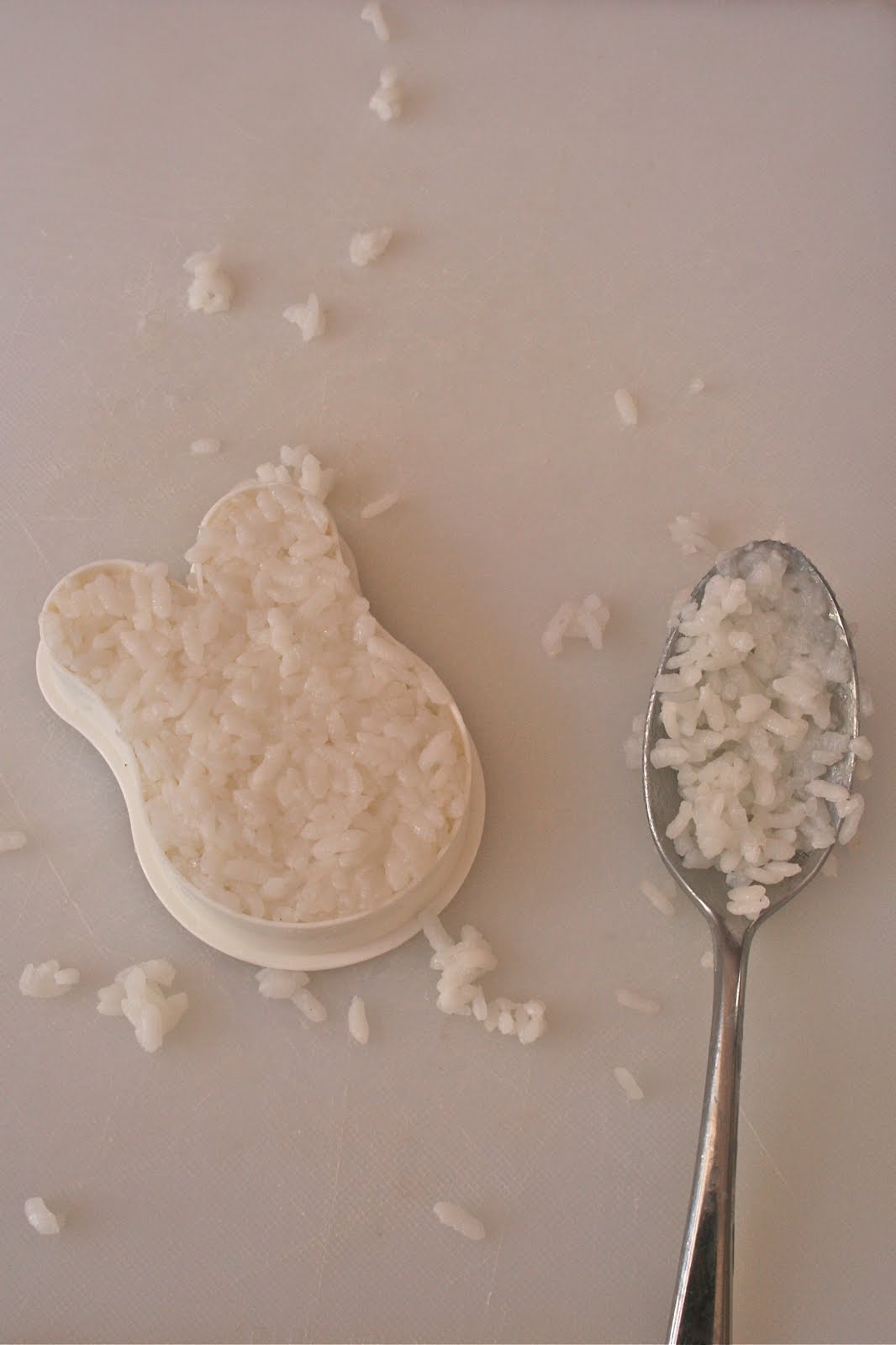
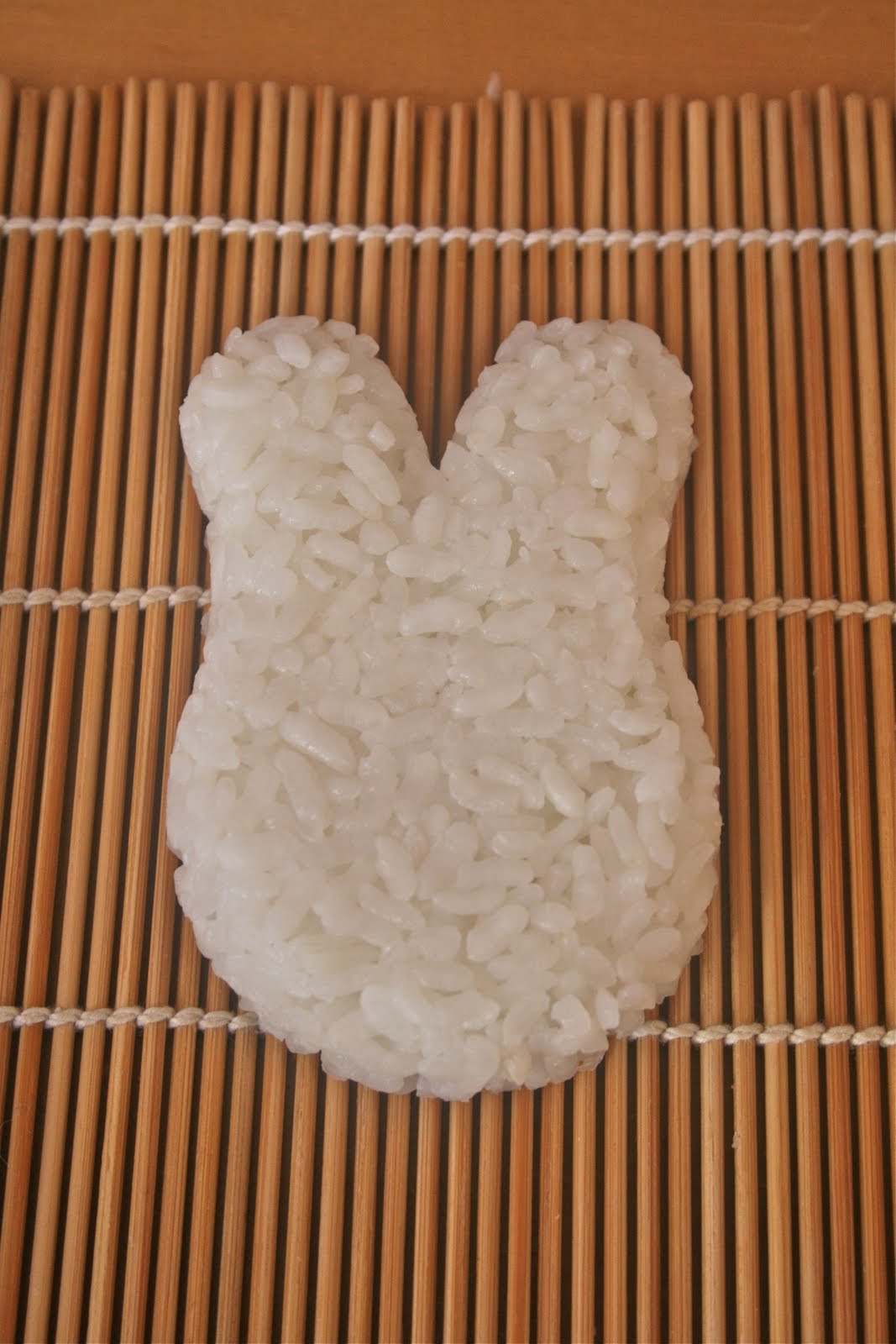
To make the sushi rice you can follow the recipe here. I have a Sushi rabbit stamp from Japan, but you can also use a cookie cutter, if you have one (maybe among your Easter's stuff?).


I have to say that the sushi rabbits looked really nice and stylish even plain! I would have them plain for a more 'formal' dinner :-). But today we have little faces: I used borage flowers, cucumber, chives, takuan, (Japanese pickled daikon), Ume (Japanese pickled plum), and black sesame seeds.


And then it was my daughter's turn, and she also used some tiny basil leaves. We had so much fun making these, and I hope that you like the idea!


Photos and Recipes by Alessandra Zecchini ©


Wednesday, November 24, 2010

Easy Vegan Japanese Dinner for 4


I love Japanese food, it is light and filling at the same time. It may take time to prepare, but it gives me great satisfaction, a sense of peace, and the whole family enjoys sitting at the low table, in our Japanese room, especially the children. This is a very simple fare really, it is just that 'Japanese' seems always more sophisticated: food has to look pretty, no matter what. Even a simple bowl of plain rice, served in the right atmosphere, would satisfy me! So, here we go:


Seaweed soup


Ingredients:
1 sheet kombu seaweed
1 l water
1 tbsp dried wakame seaweed


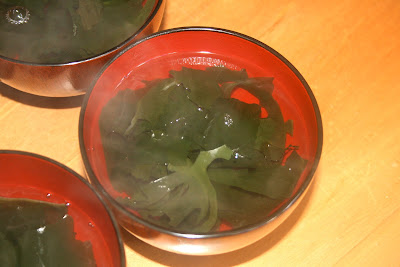
Gently scrape the kombu seaweed with the tip of a knife. Place it in a saucepan with 1 litre of water and gently simmer (simmering, not boiling) for 30 minutes. Turn the heat off and let the soup stand for 30 minutes to 1 hour (the longer the better), then remove and discard the kombu. Gently bring the soup back to a gentle simmering and add the wakame. Simmer for 5 more minutes, and serve. This soup doesn't need salt, or anything else, the broth remains clear and the taste is delicious!


Sushi rice


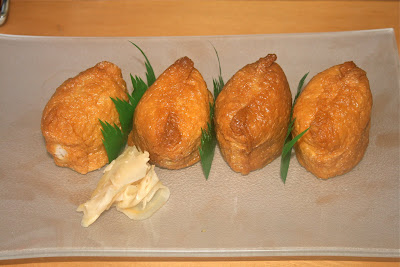
I find cooking rice for sushi challenging: you need to buy proper sushi rice and then wash it several times in cold water, until the water runs clear. And then cook it by absorption. The doses are about 1 and 3/4 (three quarters) cups of sushi rice for 2 cups of water, but that depends on the type of pot. You need a pot with a good lid, or you will loose too much steam. I kind of regulate myself by ear now, since I know my pots and pans. Bring the pot to boiling point, lower the heat and simmer until all the water has been absorbed. Once the rice is ready pour it into a bowl and stir it with a wooden spatula, cooling it with a fan if you can. I then add some ready made sushi vinegar, about 2 tablespoons, but this is my personal taste. If I don't have sushi vinegar I use 2 tbsp of rice vinegar, a little sugar and a little salt (to taste, and I don't like to use too much sugar or salt!). I used the rice to fill some inari (Japanese tofu pockets), which you can buy already made from Asian stores. This time I also put a piece of avocado inside each inari, but this is not exactly 'traditional'.


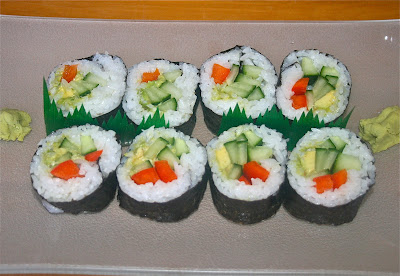
And then I made some norimaki (large rolled sushi). To be honest this is not my best rolling, but it wasn't planned either! The truth is that there were 8 inari pouches in the packet, but I broke 4 trying to open them :-P!! I made a bit of a mess, not something to photograph! The children and I ate them while we were making them. I quickly rolled the reaming rice with a sheet of nori seaweed, and fill it with avocado, cucumber and red capsicum strips. Serve with wasabi, pickled ginger and Japanese soy sauce.


Pickles


This was the easiest thing: I just bought it! Japanese pickled cucumber, crunchy and refreshing.


Seaweed salad


I found a punnet of seaweed salad in the Asian store, ready to eat. I rinsed it (just in case), and I made a dressing with:
2 tbsp Japanese rice vinegar
1 tbsp Mirin (sweet cooking sake)
1 tsp toasted sesamy seeds

and decorated the salad with calendula petals.


Zucchini and Zucchini Flower Tempura


For a Vegan tempura batter just mix a bit of flour with some chilled beer. If you don't drink beer use some chilled water (better if sparkling). Do not over-soak the vegetables in batter, just a little dip is enough, and make sure that the oil is very hot before frying. I used rice bran oil. The zucchini and flowers are from my garden, the fresher the better, I just added a sprinkle of salt before serving them. I did have some batter left and so, after taking this photo, I used it up to fry up some borage flowers as well (maybe you can see them in the first photo). They were lovely!


Dessert


Usually after a Japanese meal the only sweet thing served is seasonal fruit, so that was also easy ;-)

Photos and Recipes by Alessandra Zecchini ©