Showing posts with label Sauces. Show all posts

Wednesday, January 7, 2026

Spaghetti with chives pesto


This is as easy as it is delicious!

For the sauce you just need chives, salted cashew nuts, olive oil and cooking water from the pasta. Blend the lot and stir into the spaghetti (or any pasta). Decorate with chive flowers, if you wish.

Everyone is always amazed at the taste, and no one guesses that it is chives until I tell them. The colour is beautiful too!

 Photos and Recipes by Alessandra Zecchini ©

Friday, November 1, 2019

Stufato di verdura - vegetable stew


I love chopping colourful veggies, what a treat! 

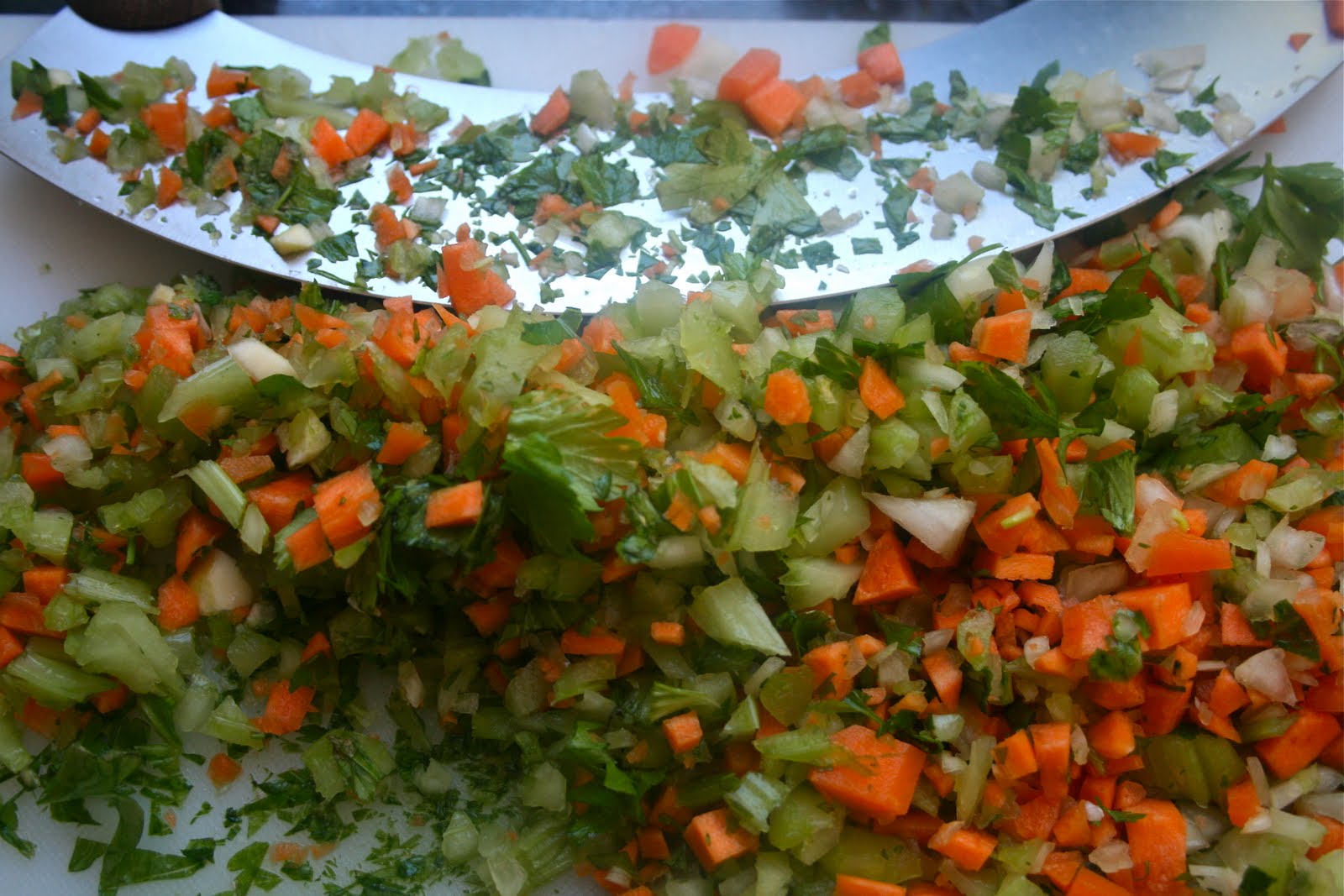
For this stufato (like a casserole) I used red onions, celery, red, green and yellow capsicums and carrots. Gently sauté the vegetables with olive oil, then add plenty of tomato passata and salt to taste (or an organic vegetable stock cube). Cover and simmer on low for a long time (the longer the better), adding a little water if needed.


A couple of minutes before turning off the heat add some fresh basil leaves and a little more olive oil, plus salt to taste. Enjoy hot or cold.


Photos and Recipes by Alessandra Zecchini ©


Saturday, March 12, 2016

Vegan mayonnaise, 4 ingredients and 2 minutes


Well, after making pavlova, meringues and pasta with aquafaba (brine from a can of chickpeas) I am convinced that it really works like eggs, so why not try mayonnaise too? This is my own recipe, it tastes great and it is easy to make!

2 tbsp aquafaba (brine from a can of chickpeas)
1 tbsp lemon juice
1 pinch salt
about half a cup vegetable oil

Place the first three ingredients in a tall thin container or glass and start blending with an immersion blender, add the oil slowly and see your mayonnaise form! It takes two minutes for half a cup of fresh lemon mayo!

For variation: add a little mustard or wasabi or capers, or garlic (my favourite!) or anything. Store in the fridge.

Photos and recipes by Alessandra Zecchini ©

Saturday, July 18, 2015

Italian tomato passata made with a sieve


After the arrabbiata post I was asked what I mean by 'putting' the tomatoes through a sieve.
Well, traditionally in Italy we put the tomatoes through a vegetable mill, but I don't have one so I use a sieve. The skins and most of the seeds are left behind (or all the seeds, depending on the mesh of your sieve), and the sauce (passata) gets through. This, to me, is the best sauce in the world! Of course you need to cook the tomatoes first (maybe with garlic?) then put the tomato 'mush' through the sieve and back into the pot to cook until thick. Then I just add salt, olive oil and basil and serve, possibly with spaghetti! It takes time, but it is worth it!


Photos and Recipes by Alessandra Zecchini ©

Saturday, July 4, 2015

Arrabbiata sauce


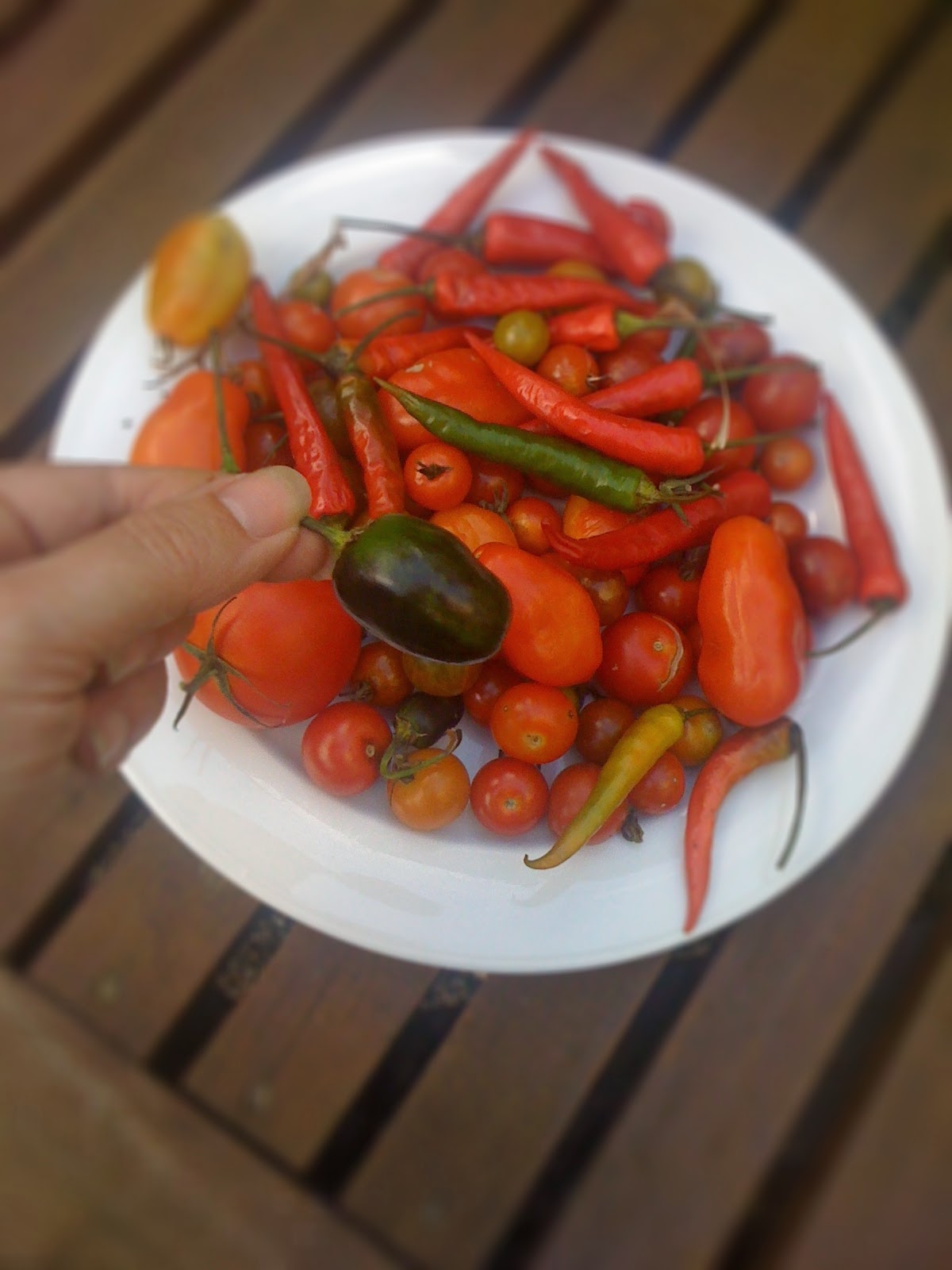
 Please note that the chilies here are not mine except for the fat black one (I had two, a couple more still on the plant, not sure if I will ever harvest them though…). 


My son Max loves arrabbiata, one of his favourite sauces, as long as it is not toooo hot. So I just used one chili and put it in the pot with the cut up tomatoes. I cooked the lot until the tomatoes where mashy (most were cherry tomatoes so it didn't take long!), then I put the tomatoes through a sieve and collected the pulp minus seeds and peels. I cooked this until thick, added olive oil and salt, and the sauce was ready. Another way would have been to cook the tomatoes first and then add the chili to the tomato pulp, but this worked well. 


Photos and Recipes by Alessandra Zecchini ©

Friday, May 2, 2014

Better than you can ever imagine: Vegan Cabbage Bolognese Sauce


This is not a quick recipe, but require slow cooking, so if you are in a rush just look at the pictures :-).

There are several vegan Bolognese sauces around, mostly using soy or fake mince, and some with lentils, but I wanted to try one with cabbage, which is not a veggie I particularly like myself, but it is highly nutritious. It came out better that I hoped!

Ingredients
Half a cabbage
1 large carrot
2 sticks of celery with leaves
1 large onion
1 garlic clove
A few Italian parsley leaves
3 tbsp extra virgin olive oil
1 glass wine (white or red)
1-2 tbsp tomato puree
1 l vegetable stock
salt and pepper to taste
more extra virgin olive oil to serve

With a food processor finely chop the vegetables, then put in a pan with the olive oil and sauté for a few minutes. Then add the wine and stir well. Add the tomato puree, cover and cook slowly, stirring from time to time and adding the vegetable stock little by little. Simmer for one to two hours, the more the better, I think I went over two hours. I started in the afternoon but by the time I took the last photos it was dark, so the images are a bit blurry, sorry!


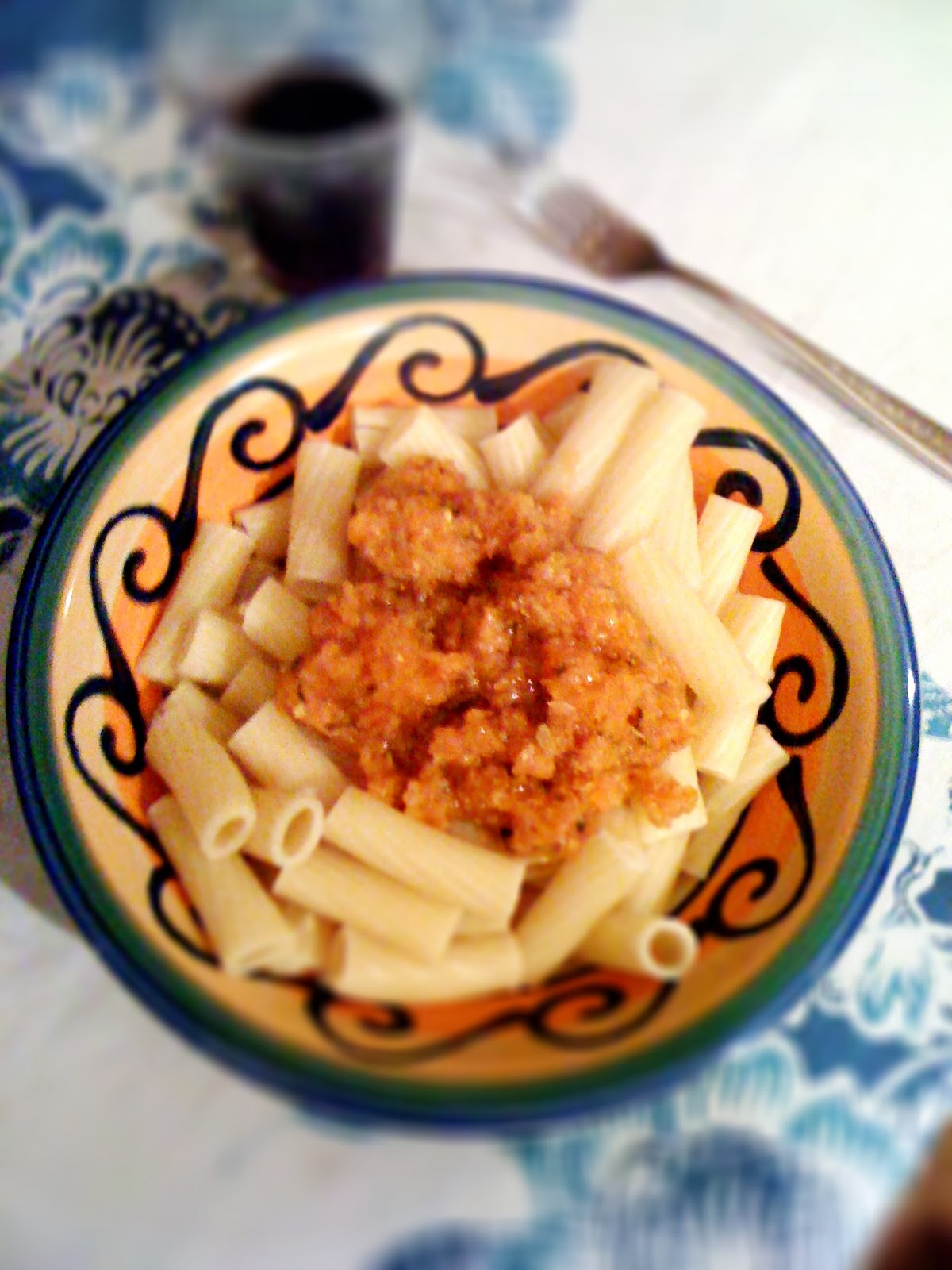
Taste and add salt and pepper to taste (I like it with quite a bit of black pepper!), then use to top your pasta, drizzling with more extra virgin olive oil. Enjoy! This can also be used to fill pies, or for a gluten free variation try it on polenta! Yummy!


Photos and recipes by Alessandra Zecchini ©

Monday, November 28, 2011

Italian style mixed mushrooms with tomato sauce


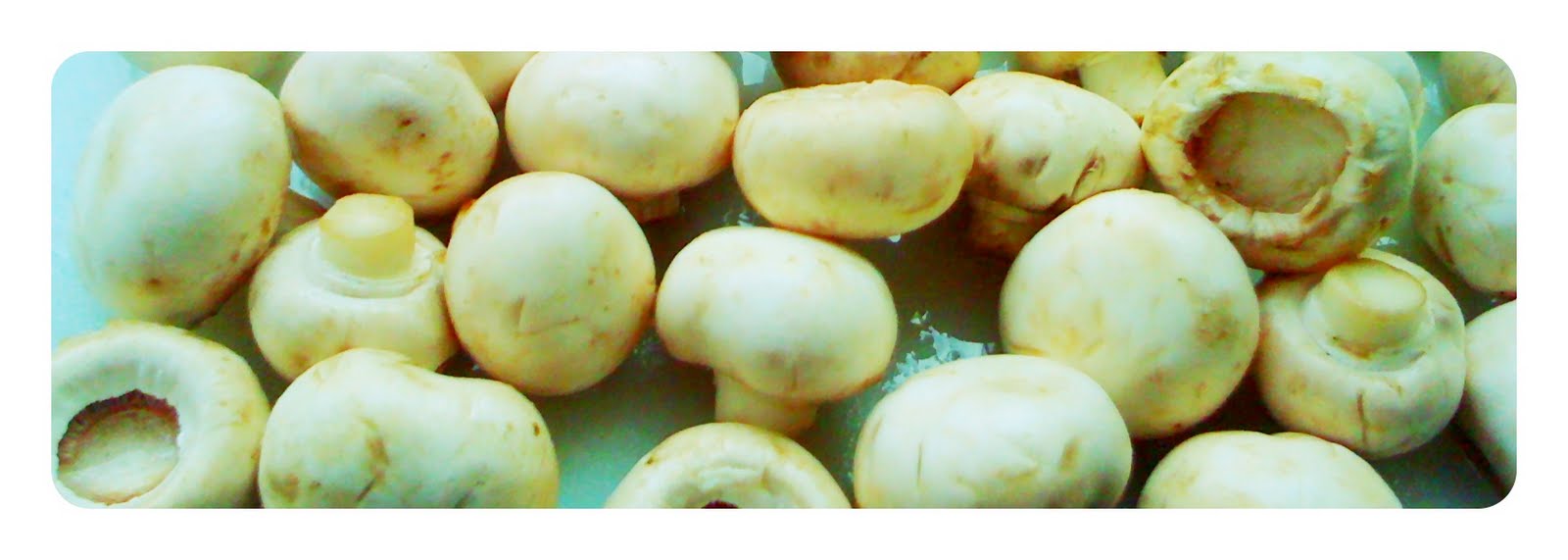
I like mushrooms but I find than champignons have very little taste. I guess that I grew up with wild mushrooms (and lots of porcini) so maybe I am a bit of a snob... still, champignons are easy to find and I tend to use them as a 'base', adding other dried mushrooms for extra flavour.

I had a handful of dried porcini and another of dried Chinese black mushrooms, and I soak them in water for 30 minutes. In the meantime I cleaned and chopped 400 g of champignons (I tend to discard the stalks of the champignons, not sure why, but I learned to do it ages ago in Italy and I keep doing it).


I heated some olive oil with a few cloves of garlic, then I added the champignons and some salt. I cooked the mushrooms until all their water was gone (abut 20 minutes) then I added the dried mushrooms and their soaking water. 


After 5 minutes I added the content of a can of finely chopped Italian tomatoes, and some more water from rinsing the can (another 400 ml).


I let the mushrooms simmer, covered, for about one hour (yes that long) until almost all the liquid was gone. It may seem like a long cooking time, but it is winter after all, and it is nice to have a pot simmering on the stove :-).


At the end I added some fresh Italian parsley chopped with a clove of garlic, (about one tbsp in all).  You can use these mushrooms with polenta, pasta, and even couscous, or as a side dish, and they are wonderful as pie filler and to make mushrooms lasagna. 


Photos and Recipes by Alessandra Zecchini ©

Friday, October 7, 2011

Zaru Soba


Day 7 of Vegan MoFo

Zaru Soba


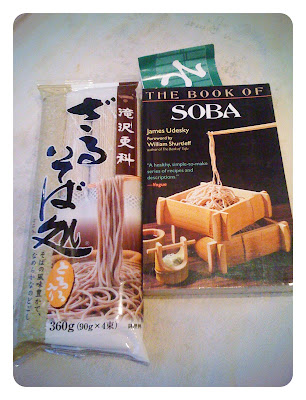
Kazuyo brought back some soba from Japan, three packs for me :-)! I love soba, the Japanese buckwheat noodles that can be eaten cold or hot.


When we were living in Japan my husband did a lot of editorial work for KodanshaInternational, and among the books he worked on there was this one: The Book of Soba by James Udesky. The book tells you how to make your fresh soba, but also how to cook the dry one, plus it has some recipes, some history and nutritional info. I like it.


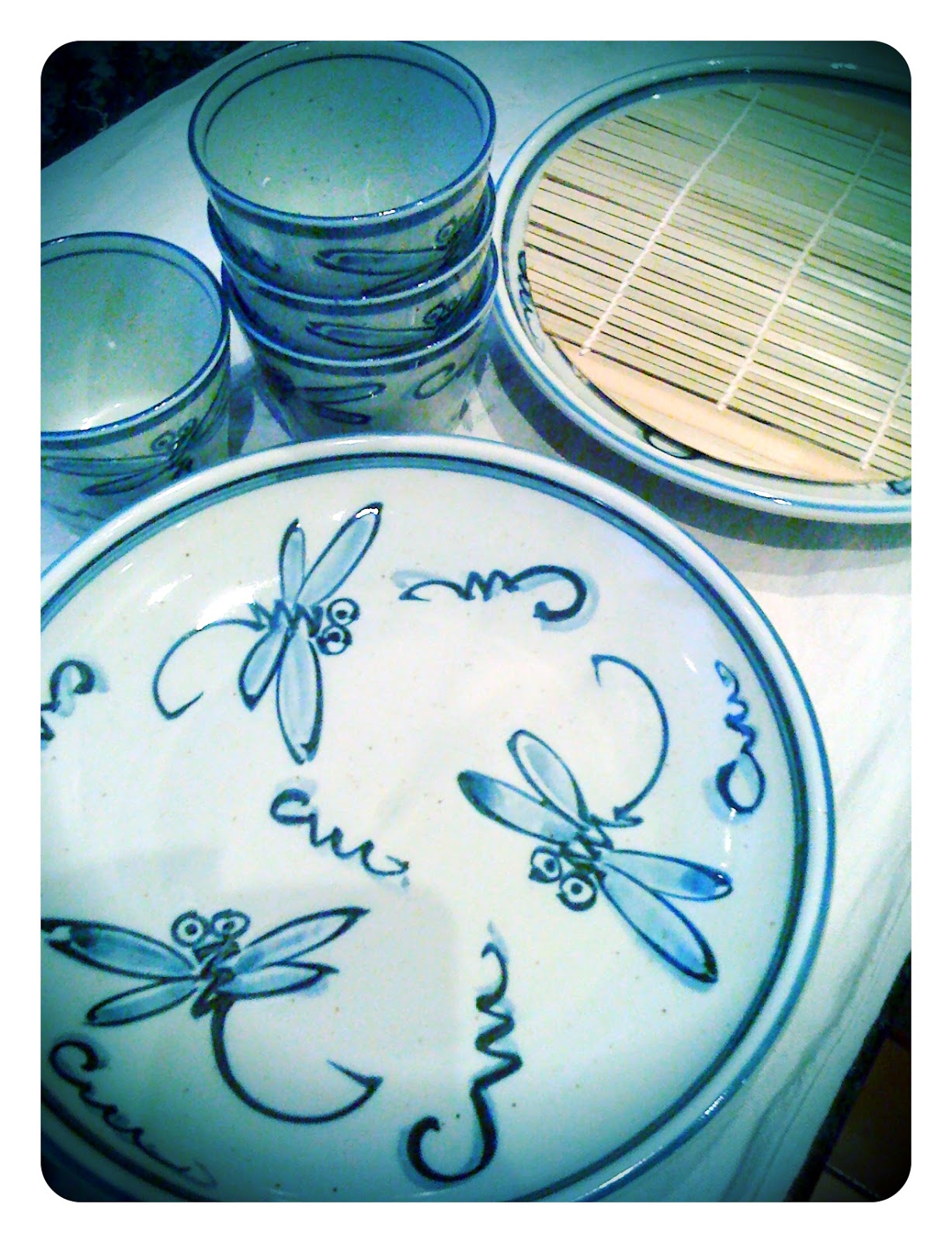
This is my soba set: plates with fitting straw mats (zaru soba is served in baskets or on mats, to keep it fresh and drained), plus some matching soba dipping bowls. I also have some tea cups with the same pattern: dragonflies!


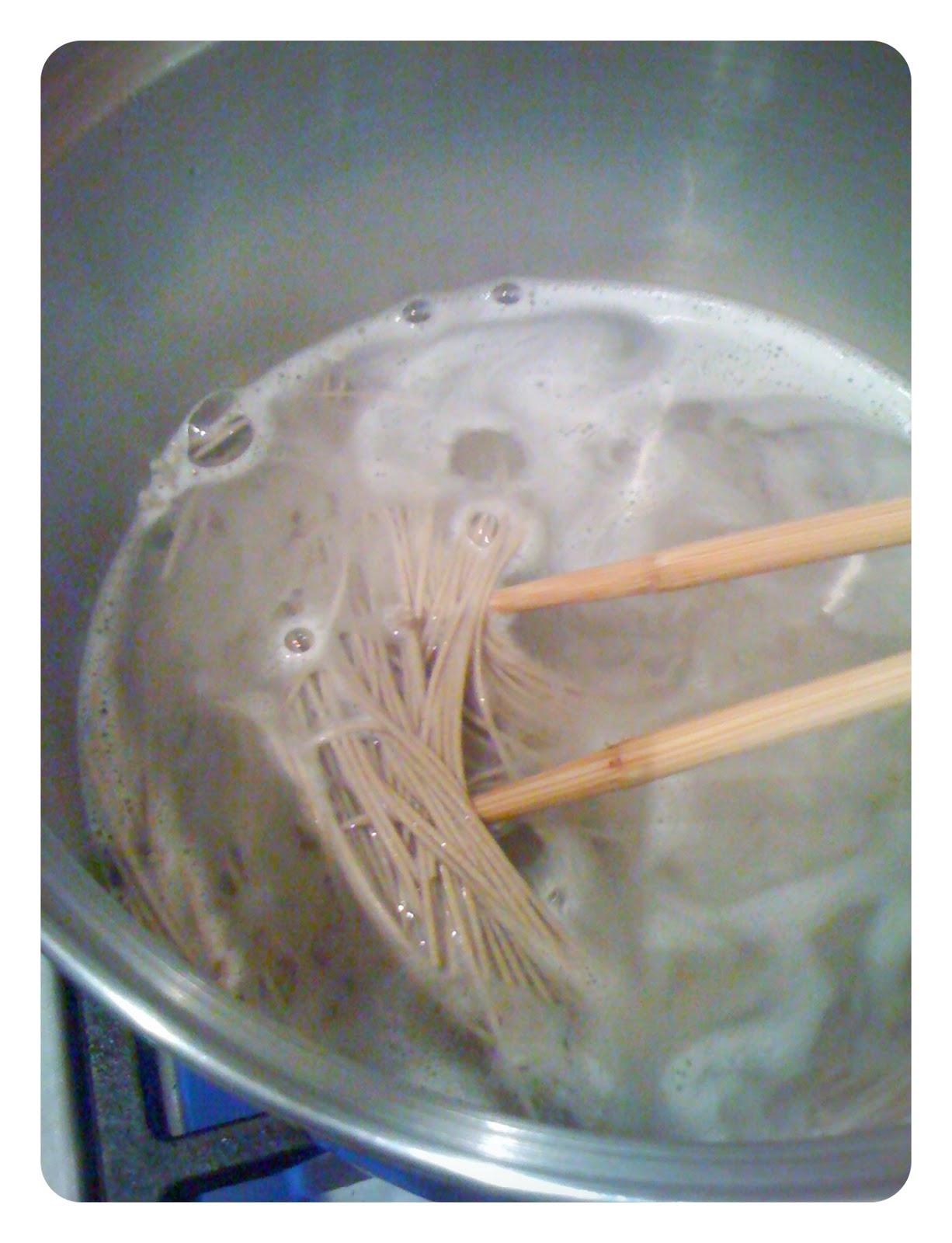
Zaru soba is cold soba topped with nori (I cut a sheet of nori in small pieces with a pair of scissor) and served with a simple dipping sauce and garnish. One thing that I learned form The Book of Soba is that soba is not cooked like pasta. The only thing in common with pasta is that you should use the biggest pot you have and have enough water as if you were to cook spaghetti. But don't add salt!

Bring the water to boil: add the soba, stir gently. When the water starts to froth add half a cup of cold water and lower the heat. Do this three times. After the third time your soba should be ready. Drain and collect the cooking water to make soup, if you like (full of starch and vitamins and minerals) and place the soba in a bowl with ice water. Or just rinse under cold water (I prefer this way, the soba may not be perfect but I cannot bear to loose anymore starch!


Place your cold and rinsed soba in a soba basket or on your soba plate (lined with the soba mat). If you don't have a soba mat use your sushi rolling mat. Top with nori. Garnish with other vegetables if you like.


For the dipping sauce I prepare a base broth by simmering a piece of kombu for 30 minutes in water, then I add a little soy sauce (most would use bonito flakes). Let the broth cool down: this is a cold dipping sauce. Before serving put a tiny bit of wasabi in each dipping bowls, and a little grated daikon or radish, and then some chopped spring onions or chives. Pour the broth over and stir. For a fancy dinner place all the garnishes in small plates and let your guests mix their own sauce. To eat pick up the soba with your chopsticks and dip into your dipping sauce, then slurp everything up. You can make a slurping noise too, but I am not good at that!

Photos and Recipes by Alessandra Zecchini ©


Saturday, July 16, 2011

Fresh corn and broccolini salad with miso dressing


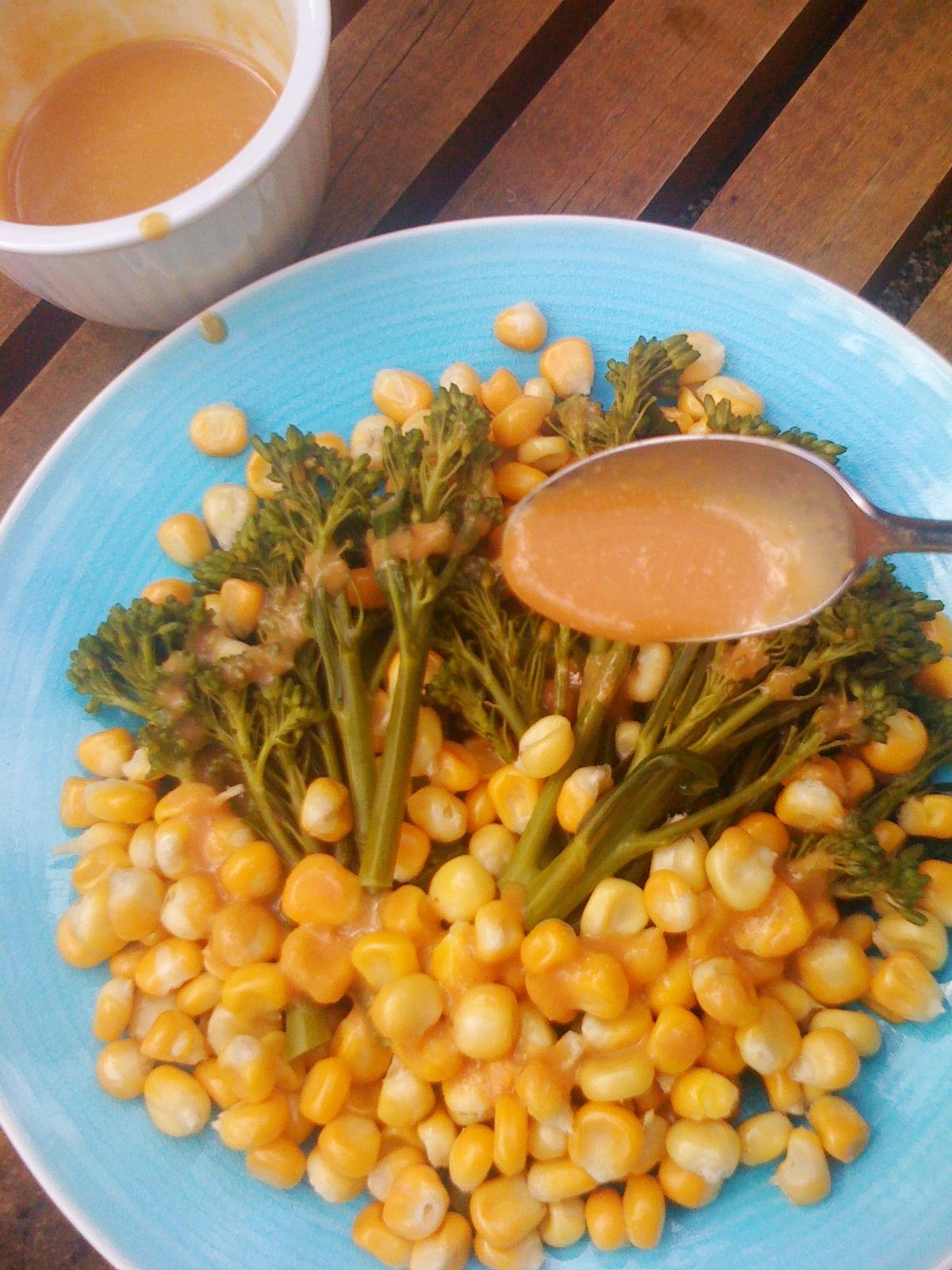
Boil the corn, cut off the kernels, add some steamed broccolini and dress the lot with a miso dressing (just white miso paste thinned down with a little hot water). Simple but delicious!  If you like to add more proteins just top this salad with a handful of sesame seeds.


Photos and Recipes by Alessandra Zecchini ©
Friday, July 8, 2011

Easy Italian Tomato and Olive Sauce for Pasta, and 100 posts


This is post n.100, so now there are 108 recipes here.


Easy Italian Tomato and Olive Sauce for Pasta


Ingredients
2 x 400 g / 14 oz cans Italian peeled tomatoes
2 garlic cloves
salt to taste
2 tbsp olive oil
a few fresh basil leaves
Deli olives, mixed.

Place the content of the two Italian peeled tomato cans into a blender. Add two cloves of garlic, peeled, and blend until smooth. Put the “juice” into a large frying pan, and some water from rinsing the cans (optional). Bring to boil and then simmer, stirring from time to time, for at least 30 minutes, or until the sauce is so thick that when you stir it with a wooden spoon you can see the bottom of the pan (this is very important! most people undercook their tomato sauce and so it remains acidic!). 


At this point as the salt to taste, the olive oil, the fresh leaves of basil and a few olives (choose good deli olives in olive oil, not olives in vinegar. Good quality olives in brine are suitable, but rinse them well first). Cover and keep aside, warm, until needed.


Photos and Recipes by Alessandra Zecchini ©


Wednesday, June 8, 2011

How to Make a Vegan Bolognese Sauce


Usually I don't use this kind of soy meat, I rather make a bolognese sauce with lentils, much easier, but I saw the packet in the supermarket, and I like to make lasagne with bolognese sauce (please do not spell it bolognaise!), so I went for it.


I soaked the textured soy with 500 ml of vegetables stock, it tripled in size.


In the meantime I cleaned one large carrot, 2 celery stalks with leaves, 2 shallots, 2 garlic cloves and some Italian parsley.


I chopped the veggies and sautéed them with olive oil,


I added the textured soy and a glass of red wine, then 1 800 ml can of Italian chopped tomatoes, and 3 tbsp of tomato puree. At this point I let the sauce simmer for a couple of hours, adding salt and black pepper from time to time, tasting it to see if it needed more. Soy protein is very low in fat, so I added more olive oil because bolognese needs a percentage of fat to taste good.


It also needed more wine, but I finished the bottle. My husband had opened a nice 10 years old Australian red, to air. I put some of it in too, even if he looked at me badly. That wine was to good to cook with!
But just a little... and it made the sauce so nice :-). In the end he agreed with me, and then the wine needed to be drunk, or used! No other herbs or spices are used in the traditional bolognese sauce, in fact the cuisine of Bologna uses very little or no herbs, so please don't add oregano, chili, etc. to a bolognese sauce: go for more red wine, black pepper, salt, and (as this is vegan) olive oil to enhance the taste. If you don't use wine add more tomato puree.


Ready!!! Just don't use it with spaghetti please: spaghetti bolognese is not right, use it for tagliatelle, lasagne, or short pasta :-). Can also be used to fill pies or with polenta.


Photos and Recipes by Alessandra Zecchini ©

Thursday, May 5, 2011

Red Walnut and Rocket (rucola) Salad, and Red Walnut Pesto


This post comes from the diary of my trip to Austria, where I stayed with Imogen and Günther, who grow walnuts. Walnuts are one of the best nuts I know, and I was surprised to see that Imogen and Günther also have a tree (not commercial) of red walnuts. I have never seen red walnuts before, the shells are normal brown, but the kernels really red! Our hosts gave us some red walnuts, but also some walnut oil. In the photo above you can see the walnut plantation (only one tree produces the red walnuts).


For an easy salad mix the walnuts with rocket, walnut oil, salt, and lemon juice. Quick, healthy and good looking!


I decided to also make a walnut pesto for pasta. Using a mortar and pestle (or food processor if you don't have a mortar and pestle) mush the walnuts (I used the red ones, but you can use normal walnuts) with a peeled garlic clove, then slowly add some walnut oil (or olive oil), and a little salt and pepper to taste.


The pesto was great! I cooked some pasta with rocket (I added the rocket leaves to the pot a few minutes before draining the pasta), and I used the pesto as a sauce. We really liked it and I'll definitely make it again!


Photos and Recipes by Alessandra Zecchini ©