Showing posts with label soba. Show all posts

Wednesday, May 7, 2025

Soba with Vegetable Tempura - and the Leftovers for the Second Night


I don't fry much these days, but I love fried food, like tempura. I made the batter quickly with just flour and beer, nothing special, it was an impromptu dinner. I fried pumpkin, red onions and nori seaweed (in that order). Nori is great to use at the end to pick up all the batter - no waste in my kitchen :-).

I add salt to the fried pieces as I take them out of the hot oil to drain on kitchen paper. Quite a bit of salt, actually, as I don't use any in the batter.

In the meantime I prepared the cold soba. One thing that I quickly learned is that soba is not cooked like pasta. The only thing in common with pasta is that you should use the biggest pot you have, and have enough water as if you were to cook spaghetti. But don't add salt!

Bring the water to boil: add the soba, stir gently. When the water starts to froth add half a cup of cold water and lower the heat. Do this three times. After the third time your soba should be ready. Drain and collect the cooking water to make soup, if you like (full of starch and vitamins and minerals) and place the soba in a bowl with ice water. Or just rinse under cold water (I prefer this way, the soba may not be perfect but I cannot bear to loose anymore starch!

For the dipping sauce, usually I make a kombu broth, but I didn't have any kombu, so I used the water from the soba, to which I add soy sauce. Then this time I used chopped chives, ground ginger, and yuzu citrus with chili paste (wasabi is an alternative). Put everything in your dipping bowl and enjoy, and if there is some sauce left at the end, just add more soba water and drink it like a soup.

The day after:


This meal is even better in my opinion. I had some soba noodles and tempura leftovers, so I just made a light vegetable broth and poured it over the noodles. I warmed up the tempura and put it on top and added fresh chives. Seasoned with soy sauce and Japanese chili.


Photos and Recipes by Alessandra Zecchini ©


Thursday, April 10, 2014

Soba with nori tagliolini, onion weed and salted sakura (cherry blossoms)

In this post you saw my idea of cutting nori with a pasta machine. So here is what I did what that cool nori 'fettuccine'.


Just cook the soba and top with the rest of the ingredients. To serve just add a drop of soy sauce.


To make the nori tagliolini … just cut the nori sheet with a pasta machine! For the onion weed... just forage it, wash and cut (you can eat the flowers, stems and bulbs... the lot!). I bought the salted sakura (cherry blossoms) in Japan, I love them, a bit like salted capers really!


 Photos and recipes by Alessandra Zecchini ©

Saturday, January 4, 2014

Fried Mochi and capsicums served with soba, seaweed salad, avocado and Japanese pickles

I really like the mochi cakes, the Japanese glutinous rice blocks that are traditionally found in the traditional New Year soup (zoni). Mochi is usually grilled before going into the soup, but I don't have a grill for it, and tend to just boil it into it for a little. I love it. My family less so. And they don't like the idea of mochi in any our miso soups. So I tried to pan-fry it, thinking that they like everything fried, and guess what? Fried mochi is a new favourite! Now I add a block of pan-fried mochi in almost every Japanese meal I make (that is, while my mochi stock last: it is not so easy to find it in New Zealand!). 

In my (short) experience one of the best ways is to pan-fry mochi is with something that will also give it a bit of flavour, like capsicums. These are the little capsicums from my garden, small but tasty! Heat the oil in the frying pan, add slices of capsicum and mochi, turn everything a few times (I like to turn the mochi blocks on all six sides) and serve hot. Here is my mochi and capsicums served with soba, seaweed salad, avocado and Japanese pickles, a quick and balanced lunch!


Photos and Recipes by Alessandra Zecchini ©

Sunday, March 11, 2012

Two Japanese inspired Vegan recipes: Onigiri and Soba with Furikake


When times are busy it is good to take out same ready make furikake. Furikake is a Japanese style seasoning, usually used to top rice, but useful for other dishes as well. I found one that I really like: Citrus Furikake from Pacific Harvest, (FYI, I have not been endorsed, payed or given free products by the company, but hey, if you have any free samples - vegetarian of course, do send them this way! :-). I love seaweed and this furikake is a mixture of 5 seaweeds: naturally flavoured kelp, karengo, sea lettuce, ao-nori, wakame, plus sesame seeds and a nice citrus touch. At home usually we sprinkle it directly on rice, or make onigiri (rice balls), or use it on noodles, vegetables, and a variety of dishes. Here are two examples.


Onigiri with furikake

To make the onigiri cook some Japanese (or sushi) rice (rinse it first until the water runs clear). When the rice is still warm wet your hands with water, rub them with just a little salt, and shape the rice balls with your palms. Sprinkle some furikake on top of each onigiri, or roll part of the onigiri onto the furikake for an even covering (but do not cover the whole rice ball with it, furikake is salty, and you just need a little bit).


Soba with Furikake

Super quick lunch: I cooked some bok choy like in here, and some soba like in here, but I didn't rinse the soba under cold water at the end: as soon as I drained the soba I mixed it with the hot bok choy, and then each diner sprinkled a bit of furikake on top. Simple, fast and the kids loved it!


Photos and Recipes by Alessandra Zecchini ©

Friday, October 7, 2011

Zaru Soba


Day 7 of Vegan MoFo

Zaru Soba


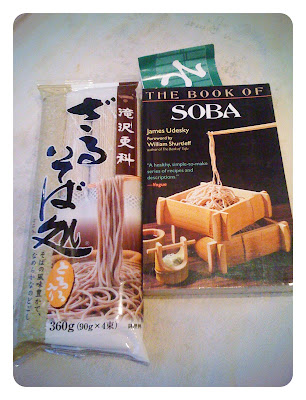
Kazuyo brought back some soba from Japan, three packs for me :-)! I love soba, the Japanese buckwheat noodles that can be eaten cold or hot.


When we were living in Japan my husband did a lot of editorial work for KodanshaInternational, and among the books he worked on there was this one: The Book of Soba by James Udesky. The book tells you how to make your fresh soba, but also how to cook the dry one, plus it has some recipes, some history and nutritional info. I like it.


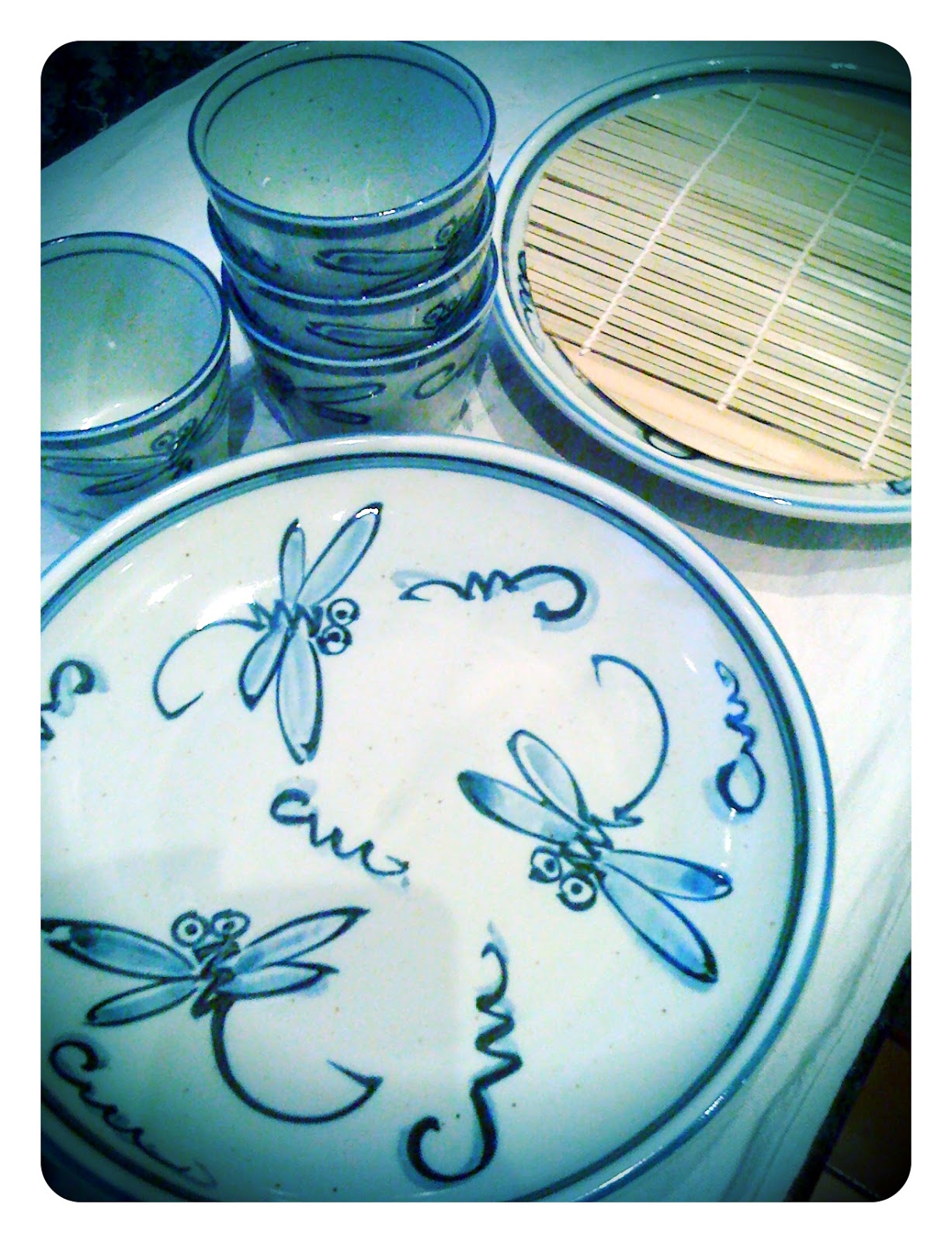
This is my soba set: plates with fitting straw mats (zaru soba is served in baskets or on mats, to keep it fresh and drained), plus some matching soba dipping bowls. I also have some tea cups with the same pattern: dragonflies!


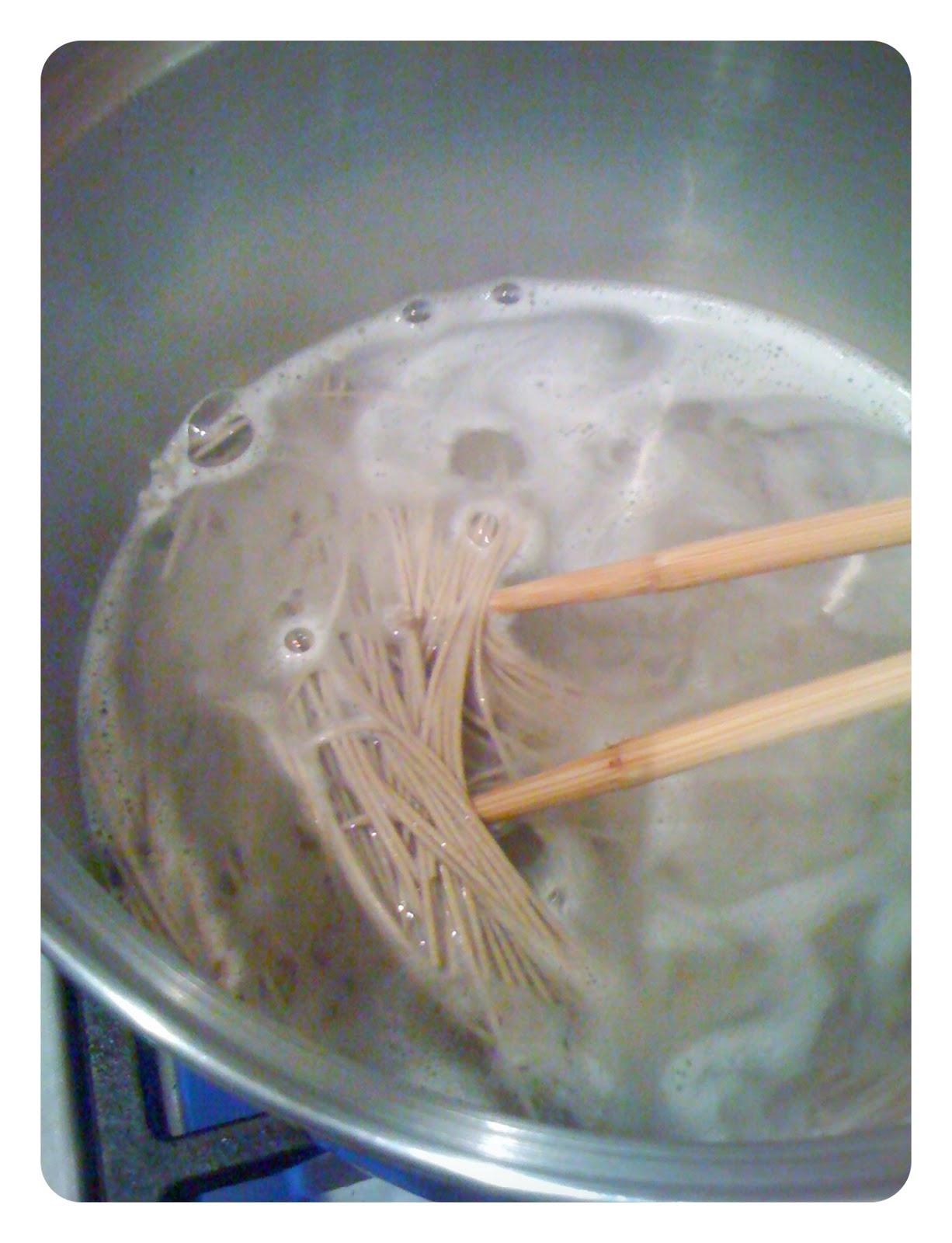
Zaru soba is cold soba topped with nori (I cut a sheet of nori in small pieces with a pair of scissor) and served with a simple dipping sauce and garnish. One thing that I learned form The Book of Soba is that soba is not cooked like pasta. The only thing in common with pasta is that you should use the biggest pot you have and have enough water as if you were to cook spaghetti. But don't add salt!

Bring the water to boil: add the soba, stir gently. When the water starts to froth add half a cup of cold water and lower the heat. Do this three times. After the third time your soba should be ready. Drain and collect the cooking water to make soup, if you like (full of starch and vitamins and minerals) and place the soba in a bowl with ice water. Or just rinse under cold water (I prefer this way, the soba may not be perfect but I cannot bear to loose anymore starch!


Place your cold and rinsed soba in a soba basket or on your soba plate (lined with the soba mat). If you don't have a soba mat use your sushi rolling mat. Top with nori. Garnish with other vegetables if you like.


For the dipping sauce I prepare a base broth by simmering a piece of kombu for 30 minutes in water, then I add a little soy sauce (most would use bonito flakes). Let the broth cool down: this is a cold dipping sauce. Before serving put a tiny bit of wasabi in each dipping bowls, and a little grated daikon or radish, and then some chopped spring onions or chives. Pour the broth over and stir. For a fancy dinner place all the garnishes in small plates and let your guests mix their own sauce. To eat pick up the soba with your chopsticks and dip into your dipping sauce, then slurp everything up. You can make a slurping noise too, but I am not good at that!

Photos and Recipes by Alessandra Zecchini ©