Showing posts with label Seaweed. Show all posts

Wednesday, October 26, 2016

Japanese Vegan bento with tofu and eggplant


Leftovers from Japanese dinner make good a bento (lunchbox). Here from the bottom right there is tofu, pan fried with vegetable oil and sesame oil, then finished with soy sauce (gluten free, use tamari) and lemon juice. The Asian eggplants had a similar treatment (minus the sesame oil): at home we just love the soy sauce + lemon juice combo! Next to it some seaweed salad, this was bought ready made, something that I would happy do more often if I didn't think that they overdo it with artificial colouring! But I love seaweed and you can use the dried types - dried wakame soaked in water will make a nice salad. Finally there is leftover rice, topped with vegetable, nori and sesame seeds furikake (Japanese seasoning for rice, look for it in Asian stores, and choose the one without fish or other animal products).

Photos and Recipes by Alessandra Zecchini ©


Halloween Vegan Sushi - just a few ideas


There are plenty of Sushi rice recipes on this blog, so I won't repeat myself, and if you never made sushi just click here and you can find all the different ways to prepare rice and create vegan sushi, norimaki and onigiri (rice balls). 

So just follow the basic or your favourite sushi recipes and just apply these cool Halloween variations! I used lots of seaweed, nori, seaweed salad and a Japanese dried seaweed that looks like the wrapping of a scary mummy. You can find everything in Japanese shops :-). The skulls and pumpkins are made with Takuan (pickled daikon), the zombi eyes with asparagus, the 'slime' with avocado and seaweed salad, and the details with cut nori.


Photos and Recipes by Alessandra Zecchini ©

Sunday, October 16, 2016

Friday, April 15, 2016

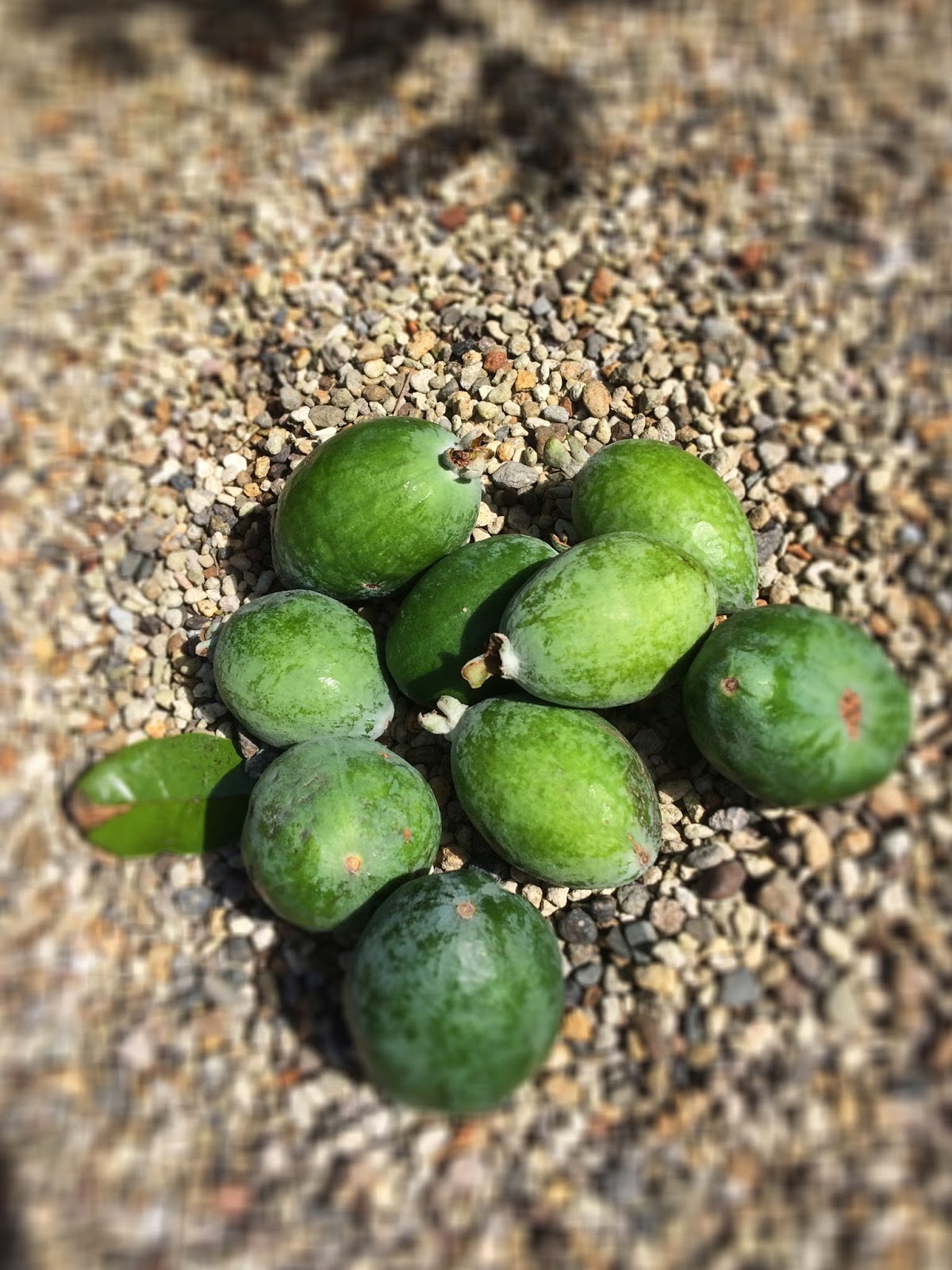
Feijoa and Spirulina smoothie


Finally I have some feijoas in the garden!


They are perfect for breakfast


For 2 smoothies I just used 6 feijoas (peeled), 400 ml natural apple juice and half a tsp of spirulina.


Photos and Recipes by Alessandra Zecchini ©

Monday, June 9, 2014

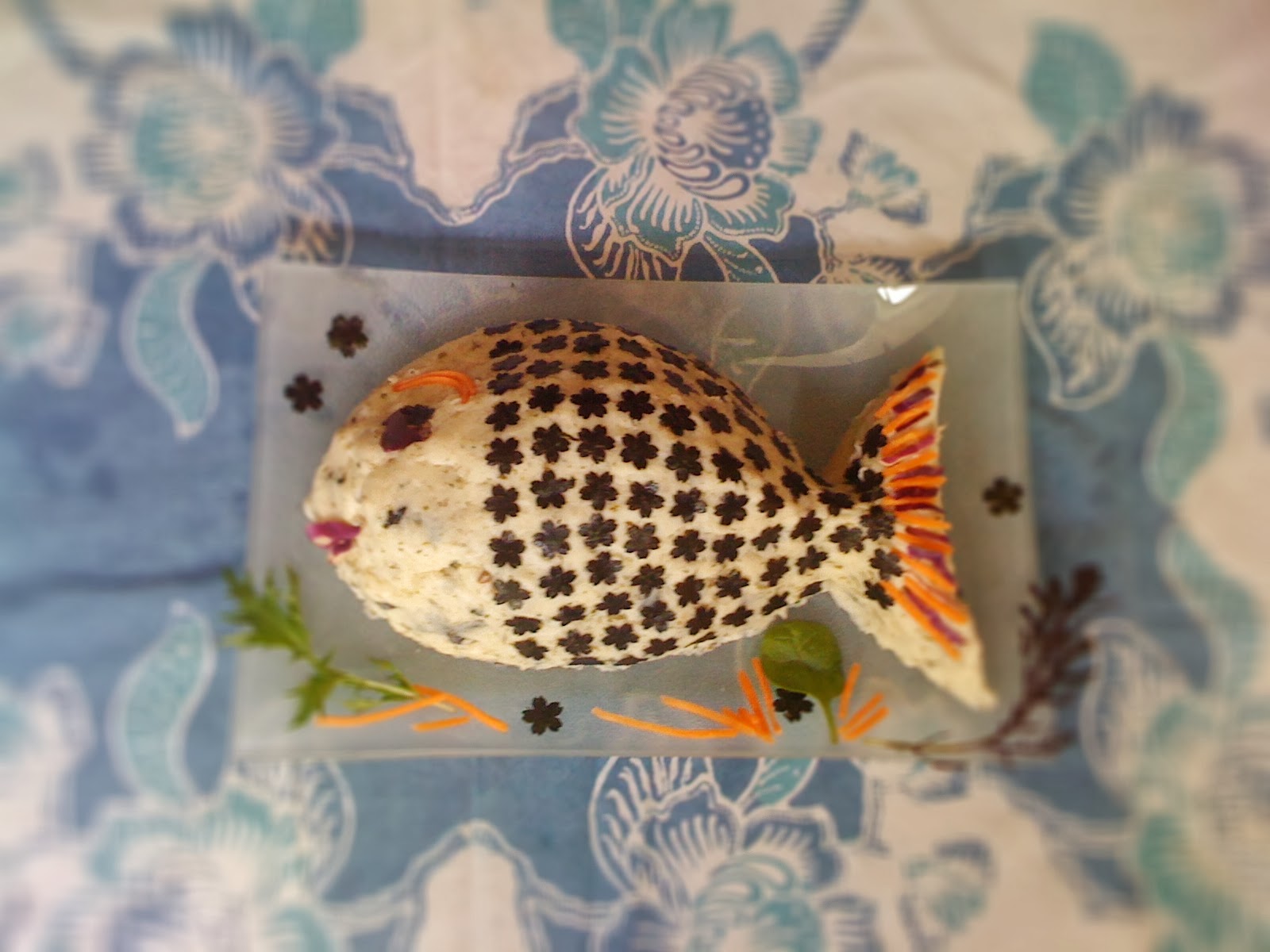
Fake Fish (made with potatoes, suitable for veg*s)


When I brought this plate to the table everybody laughed, and it is a fun recipe! Finto pesce means fake fish, the original recipe is a kind of pate made with potatoes, mayonnaise, capers and canned tuna (I think very 1960s!). My Mother made it, we lived in the mountains far from the sea, so fish was rare (and frozen or canned). Of course being a veg I don't use tuna for this recipe, but seaweed.

Brush and wash (but don't peel) 1 kg of mashing potatoes, then peel them and pass them through a potato ricer. Add a tbsp of capers, some nori seaweed, shredded, and a few tbsp of Vegan mayonnaise (to taste). Mix well. Shape into a fish and decorate with veggies and more nori ( I cut my nori with a flower cutter). Perfect for summer, and for kids!

Do you have a dish that makes everyone laugh?


Photos and Recipes by Alessandra Zecchini ©

Wednesday, April 16, 2014

Ochazuke, Japanese comfort food


When I was teaching Italian in Japan I once asked my students to tell me what was the typical Japanese dish they had for dinner, one answered ochazuke, and everybody laughed! Ochazuke meant that you lived alone, or your mum/wife was out for the night and you couldn't cook. Or that you run out of money! For homework they had to write a description of Ochazuke (in Italian) and the week after they came with their recipes and, most surprising for me, they all brought a sachet of flavoring for ochazuke, for me to try. The basic idea is to use leftover plain rice and top it with hot green tea, and then some toppings (and these where the sachets, a bit like furikake, but with green tea added, so that you just needed hot water). Most of the students in that class were young and lived by themselves, thus the need of quick comfort food, and they always had left over rice, and possibly a sachet of seasoning. I got to love ochazuke, but rather than seasoning from a sachet I use some chopped-up nori, some wasabi or ume plum, salted sakura flowers, dried shiso... anything I have at hand really, and then some green tea. 


Photos and recipes by Alessandra Zecchini ©

Thursday, April 10, 2014

Soba with nori tagliolini, onion weed and salted sakura (cherry blossoms)

In this post you saw my idea of cutting nori with a pasta machine. So here is what I did what that cool nori 'fettuccine'.


Just cook the soba and top with the rest of the ingredients. To serve just add a drop of soy sauce.


To make the nori tagliolini … just cut the nori sheet with a pasta machine! For the onion weed... just forage it, wash and cut (you can eat the flowers, stems and bulbs... the lot!). I bought the salted sakura (cherry blossoms) in Japan, I love them, a bit like salted capers really!


 Photos and recipes by Alessandra Zecchini ©

Thursday, April 3, 2014

Making nori seaweed 'fettuccine' with a pasta machine!


I had an idea! Instead of cutting nori seaweed with scissors (like I usually do) I tried with a pasta machine, with the tagliolini setting. And it works really well! Next time I'll show you how I used it, but for now I just wanted to share the idea! Anyway, great to top rice, soba, soups, salads... so pretty too!


Photos and Recipes by Alessandra Zecchini ©

Saturday, January 4, 2014

Fried Mochi and capsicums served with soba, seaweed salad, avocado and Japanese pickles

I really like the mochi cakes, the Japanese glutinous rice blocks that are traditionally found in the traditional New Year soup (zoni). Mochi is usually grilled before going into the soup, but I don't have a grill for it, and tend to just boil it into it for a little. I love it. My family less so. And they don't like the idea of mochi in any our miso soups. So I tried to pan-fry it, thinking that they like everything fried, and guess what? Fried mochi is a new favourite! Now I add a block of pan-fried mochi in almost every Japanese meal I make (that is, while my mochi stock last: it is not so easy to find it in New Zealand!). 

In my (short) experience one of the best ways is to pan-fry mochi is with something that will also give it a bit of flavour, like capsicums. These are the little capsicums from my garden, small but tasty! Heat the oil in the frying pan, add slices of capsicum and mochi, turn everything a few times (I like to turn the mochi blocks on all six sides) and serve hot. Here is my mochi and capsicums served with soba, seaweed salad, avocado and Japanese pickles, a quick and balanced lunch!


Photos and Recipes by Alessandra Zecchini ©

Sunday, March 11, 2012

Two Japanese inspired Vegan recipes: Onigiri and Soba with Furikake


When times are busy it is good to take out same ready make furikake. Furikake is a Japanese style seasoning, usually used to top rice, but useful for other dishes as well. I found one that I really like: Citrus Furikake from Pacific Harvest, (FYI, I have not been endorsed, payed or given free products by the company, but hey, if you have any free samples - vegetarian of course, do send them this way! :-). I love seaweed and this furikake is a mixture of 5 seaweeds: naturally flavoured kelp, karengo, sea lettuce, ao-nori, wakame, plus sesame seeds and a nice citrus touch. At home usually we sprinkle it directly on rice, or make onigiri (rice balls), or use it on noodles, vegetables, and a variety of dishes. Here are two examples.


Onigiri with furikake

To make the onigiri cook some Japanese (or sushi) rice (rinse it first until the water runs clear). When the rice is still warm wet your hands with water, rub them with just a little salt, and shape the rice balls with your palms. Sprinkle some furikake on top of each onigiri, or roll part of the onigiri onto the furikake for an even covering (but do not cover the whole rice ball with it, furikake is salty, and you just need a little bit).


Soba with Furikake

Super quick lunch: I cooked some bok choy like in here, and some soba like in here, but I didn't rinse the soba under cold water at the end: as soon as I drained the soba I mixed it with the hot bok choy, and then each diner sprinkled a bit of furikake on top. Simple, fast and the kids loved it!


Photos and Recipes by Alessandra Zecchini ©

Wednesday, February 22, 2012

Two Vegan and Gluten Free recipes with onion weed: Yudofu, and Chickpea Fritters


I have been telling friends about onion weed these days, everybody seems surprised (and happy) that you can eat it, especially those who gave up growing spring onions because they seem to take so long for what you get. And onion weed is free and plentiful! I kept telling everyone to use it as a spring onion without realizing that most people here use spring onions just chopped in salad, and that'a about all! 

On the top left my nabe (pot) with simmering Yudofu, one of my favourite tofu meals for chilly evenings:
In a capable pot I put water with some dried kombu (about a large sheet broken into 3-4 pieces), and a few dried shitake mushrooms to simmer, and after 20 minutes I added some soft tofu cut into squares, salt (I have a nice Japanese unrefined salt for it) carrot sliced to look like flowers, and onion weed (bulbs, stalks and leaves cut into 'longish' pieces). I added the flower just before serving. To tell the true the tofu should be then taken out of the broth and eaten with a sauce and relishes, but as a family meal we eat the lot in bowl, broth and veggies too, except for the kombu seaweed, which I discard.

The other three photos are of chickpea flour fritters: I chopped the onion weed (the whole plant, but kept a few flowers for decoration) plus I added some finely chopped spinach, chickpea flour, salt, water and a drizzle of olive oil. When the batter was ready I remember that I have lots of pitted black olives to use, so I chopped up a few and added those too. I fried the lot and the fritters were incredibly tasty! I will make them again, in the next few days, they are incredibly easy and the kids loved them.
These meals are vegan and gluten free.


Photos and Recipes by Alessandra Zecchini ©

Saturday, February 18, 2012

Salad Sushi rolls and Ume topped Onigiri


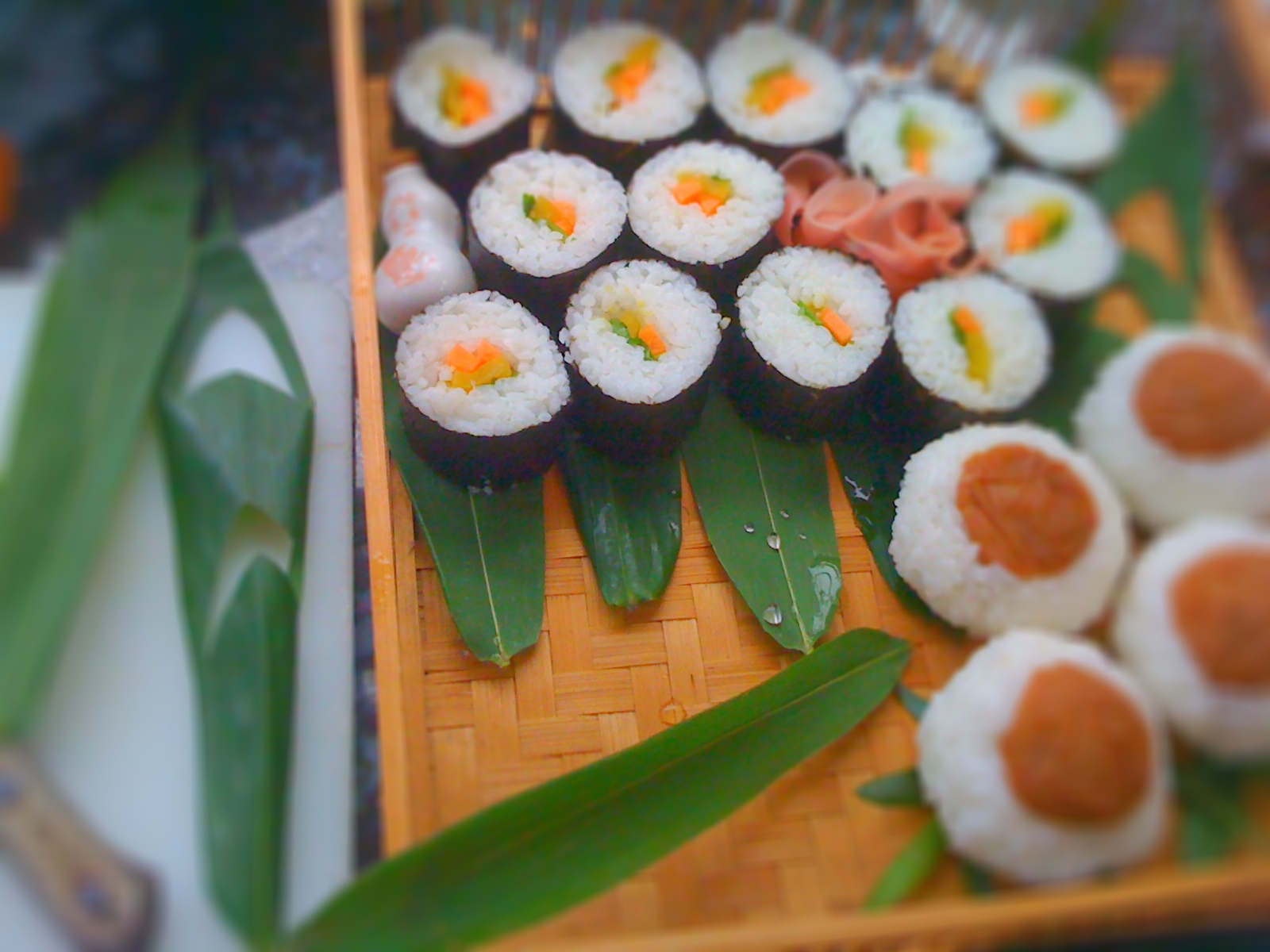
Salad Sushi Rolls

Wash the sushi rice (or Japanese rice) several times in cold water, until the water runs clear, and then cook it by absorption. The doses are about 1 and 3/4 (three quarters) cups of sushi rice for 2 cups of water, but that depends on the type of pot. You need a pot with a good lid, or you will loose too much steam. I kind of regulate myself by ear now, since I know my pots and pans. Bring the pot to boiling point, lower the heat and simmer until all the water has been absorbed. Once the rice is ready pour it into a bowl and stir it with a wooden spatula, cooling it with a fan if you can. I then add some ready made sushi vinegar, about 2 tablespoons, but this is my personal taste. If I don't have sushi vinegar I use 2 tbsp of rice vinegar, a little sugar and a little salt (to taste, and I don't like to use too much sugar or salt!). Roll the rice with nori seaweed and the filling of your choice: I used carrots, takuan (Japanese pickled daikon) and rocket salad.


Clockwise from top left: Salad sushi with pickled ginger, edamame beans, plates for lunch, plum sake to drink and mandarins for dessert


 Onigiri


To make the rice balls cook some Japanese (or sushi) rice as explained above but do not dress with rice vinegar, leave it plain. Start working it when it is still warm: wet your hands with water, and rub them with just a little salt, then shape the balls with your palms, sticking a whole ume (Japanese pickled plum) in the middle while you are working. This time I didn't put the ume inside but on top, for visual effect, and added a violet (edible) for decoration.


Photos and Recipes by Alessandra Zecchini ©


With this recipe I take part in the contest VegetariaMo (Ricette Vegan) hosted by


Friday, October 28, 2011

Vegan Japanese Fall/Autumn Lunch (or Dinner)


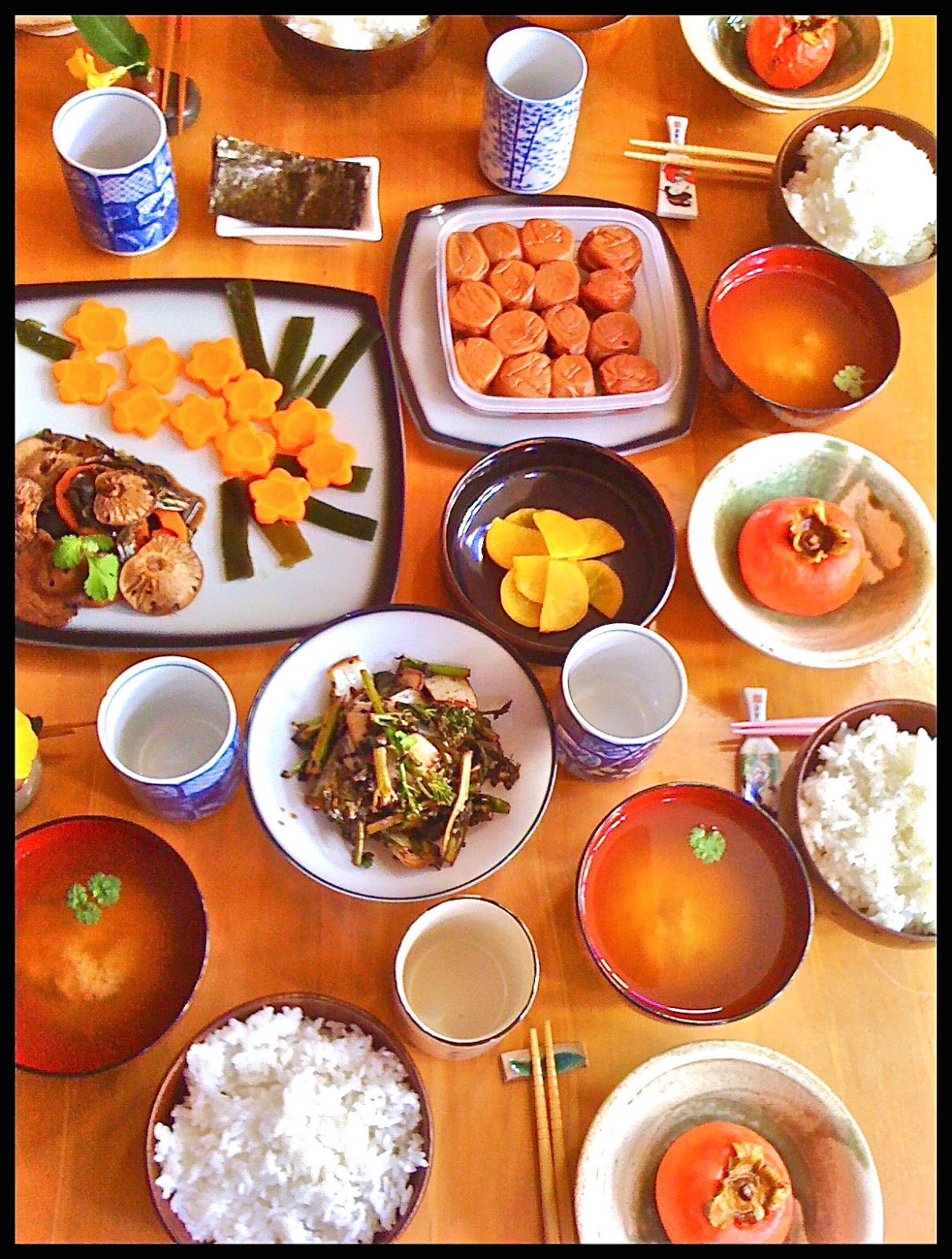
This is easy even if it looks complex. I made a stock using some dried shitake mushrooms, some seaweed (kombu strips, a softer type that can be eaten in salad) and some carrots. But (check this out) I cooked the veggies in three separate pots with just a little water, then I kept the veggies and kombu aside, I mixed the three 'broths' and added some white miso paste. This was my soup. The carrots were cut like flowers, and then arranged with some seaweed 'leaves'. I mixed the remaining carrots and kombu with the mushrooms and pass them quickly in a frying pan with a little soy sauce, lemon juice, and sesame seeds. No oil.


I used the same pan, but added a little sesame oil and a little vegetable oil, to quickly cook some broccolini and bok choy (both from my garden) and added more soy sauce and lemon juice. For the rest... the rice was just plain, to be served with umeboshi plums, plus I had some ready made Japanese pickles (takuan, pickled daikon) and some nori seaweed cut into strips.


Probably in Japan this would look more like a breakfast than a lunch, but not for me (just caffellatte for breakfast!). And dessert was persimmon, the soft type that you eat with a spoon.
All good for Autumn, or Winter.


Photos and Recipes by Alessandra Zecchini ©

Friday, October 7, 2011

Zaru Soba


Day 7 of Vegan MoFo

Zaru Soba


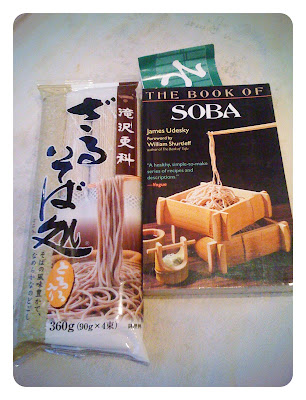
Kazuyo brought back some soba from Japan, three packs for me :-)! I love soba, the Japanese buckwheat noodles that can be eaten cold or hot.


When we were living in Japan my husband did a lot of editorial work for KodanshaInternational, and among the books he worked on there was this one: The Book of Soba by James Udesky. The book tells you how to make your fresh soba, but also how to cook the dry one, plus it has some recipes, some history and nutritional info. I like it.


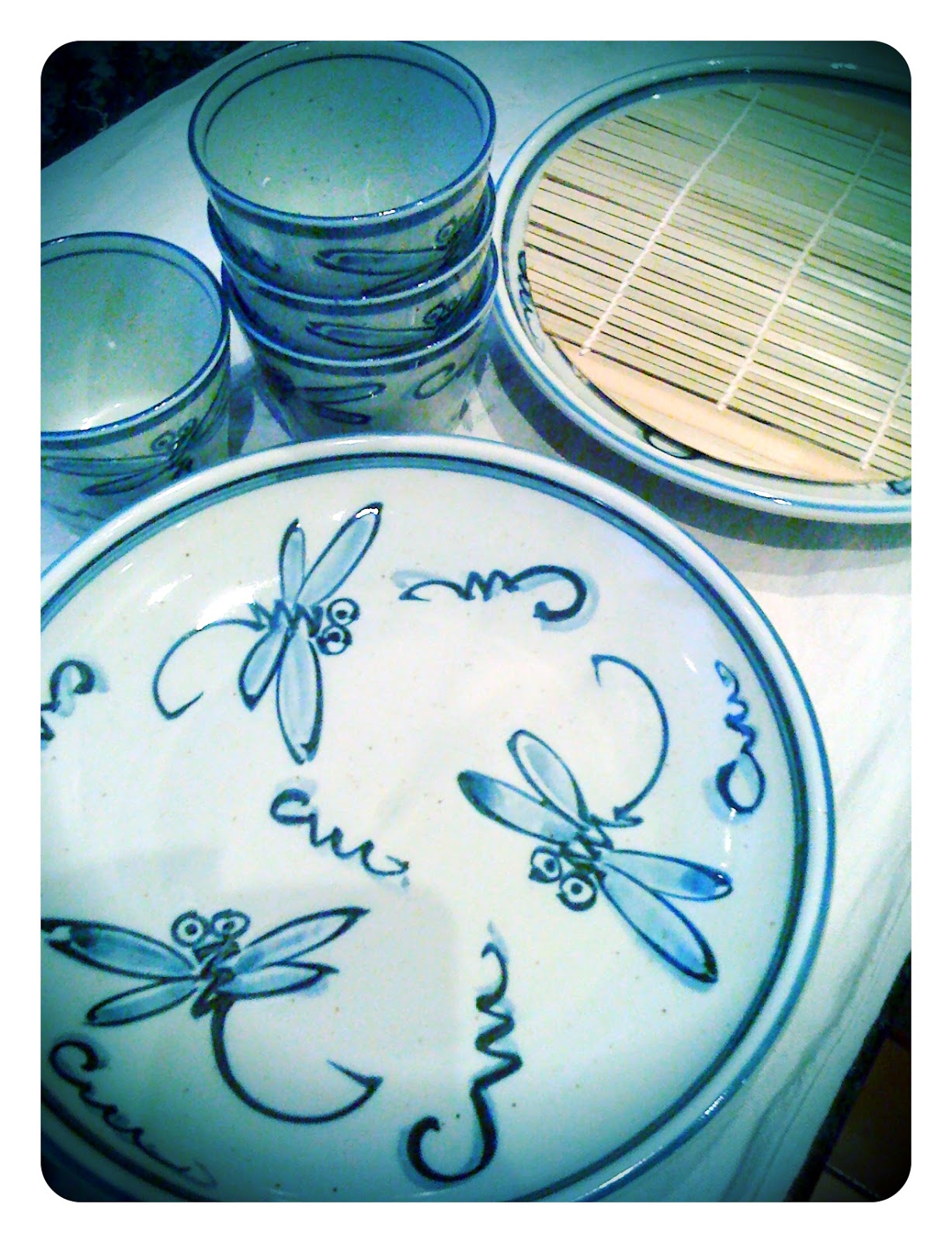
This is my soba set: plates with fitting straw mats (zaru soba is served in baskets or on mats, to keep it fresh and drained), plus some matching soba dipping bowls. I also have some tea cups with the same pattern: dragonflies!


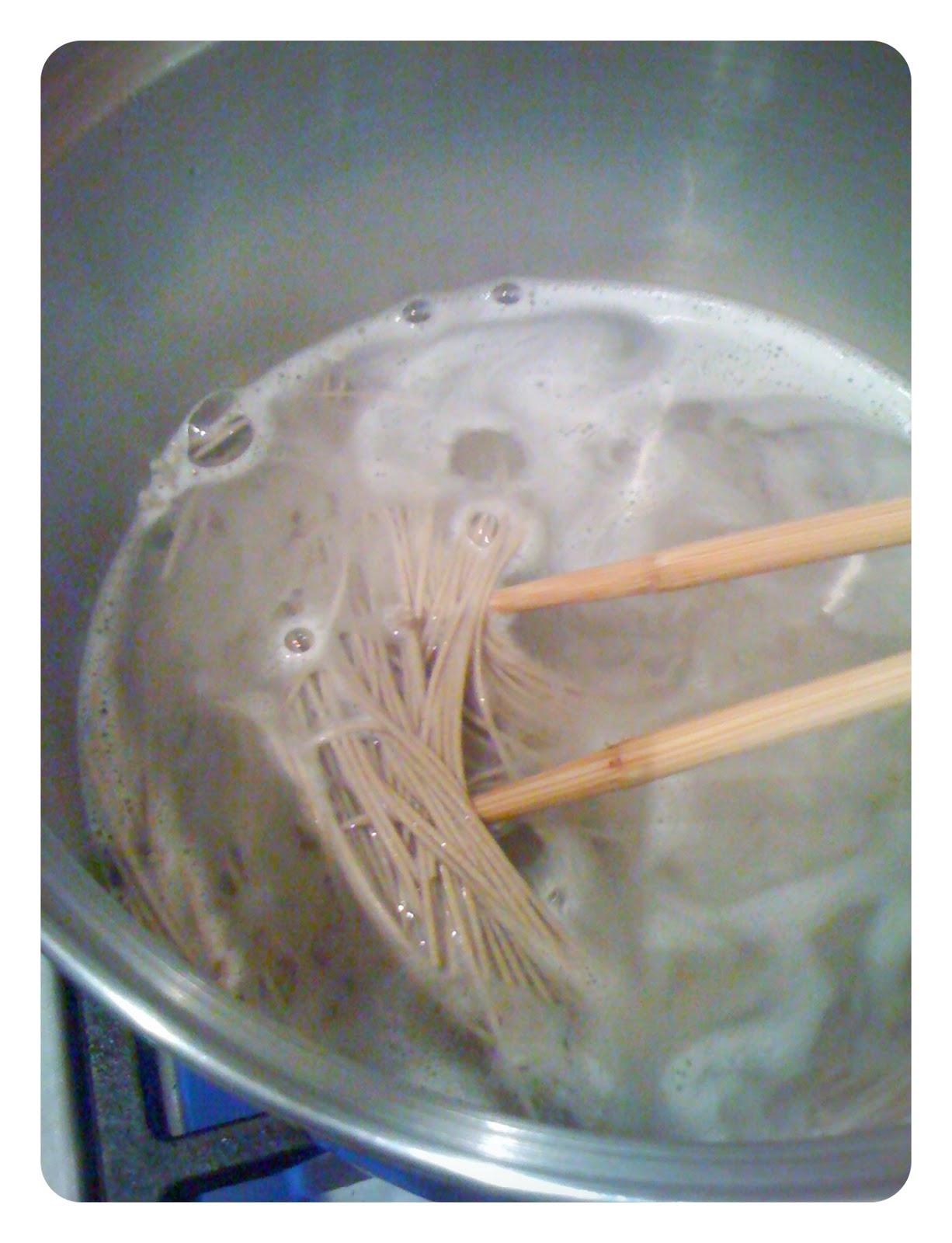
Zaru soba is cold soba topped with nori (I cut a sheet of nori in small pieces with a pair of scissor) and served with a simple dipping sauce and garnish. One thing that I learned form The Book of Soba is that soba is not cooked like pasta. The only thing in common with pasta is that you should use the biggest pot you have and have enough water as if you were to cook spaghetti. But don't add salt!

Bring the water to boil: add the soba, stir gently. When the water starts to froth add half a cup of cold water and lower the heat. Do this three times. After the third time your soba should be ready. Drain and collect the cooking water to make soup, if you like (full of starch and vitamins and minerals) and place the soba in a bowl with ice water. Or just rinse under cold water (I prefer this way, the soba may not be perfect but I cannot bear to loose anymore starch!


Place your cold and rinsed soba in a soba basket or on your soba plate (lined with the soba mat). If you don't have a soba mat use your sushi rolling mat. Top with nori. Garnish with other vegetables if you like.


For the dipping sauce I prepare a base broth by simmering a piece of kombu for 30 minutes in water, then I add a little soy sauce (most would use bonito flakes). Let the broth cool down: this is a cold dipping sauce. Before serving put a tiny bit of wasabi in each dipping bowls, and a little grated daikon or radish, and then some chopped spring onions or chives. Pour the broth over and stir. For a fancy dinner place all the garnishes in small plates and let your guests mix their own sauce. To eat pick up the soba with your chopsticks and dip into your dipping sauce, then slurp everything up. You can make a slurping noise too, but I am not good at that!

Photos and Recipes by Alessandra Zecchini ©


Friday, April 22, 2011

Avocado Sushi


To make the sushi rice I usually follow this recipe, but this time I also added some Japanese dried herbs (the green is spinach and the purple is red shiso, or perilla) and toasted sesame seeds.

On top of each rice ball (you need to have wet hands to shape the balls) I put a slice of avocado, soaked in lemon juice. Under some avocado slices I put a little bit of wasabi, and because this may be too hot for some palates, I added a thin strip of nori seaweed to recognize which pieces had the wasabi and which didn't.

Avocado sushi is very filling, eat with a drop of Japanese soy sauce.


Photos and Recipes by Alessandra Zecchini ©

Wednesday, November 24, 2010

Easy Vegan Japanese Dinner for 4


I love Japanese food, it is light and filling at the same time. It may take time to prepare, but it gives me great satisfaction, a sense of peace, and the whole family enjoys sitting at the low table, in our Japanese room, especially the children. This is a very simple fare really, it is just that 'Japanese' seems always more sophisticated: food has to look pretty, no matter what. Even a simple bowl of plain rice, served in the right atmosphere, would satisfy me! So, here we go:


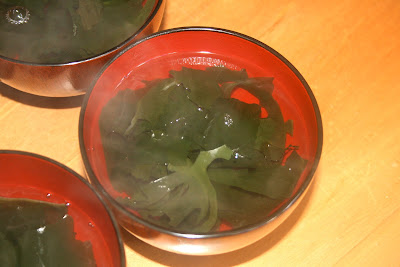
Seaweed soup


Ingredients:
1 sheet kombu seaweed
1 l water
1 tbsp dried wakame seaweed


Gently scrape the kombu seaweed with the tip of a knife. Place it in a saucepan with 1 litre of water and gently simmer (simmering, not boiling) for 30 minutes. Turn the heat off and let the soup stand for 30 minutes to 1 hour (the longer the better), then remove and discard the kombu. Gently bring the soup back to a gentle simmering and add the wakame. Simmer for 5 more minutes, and serve. This soup doesn't need salt, or anything else, the broth remains clear and the taste is delicious!


Sushi rice


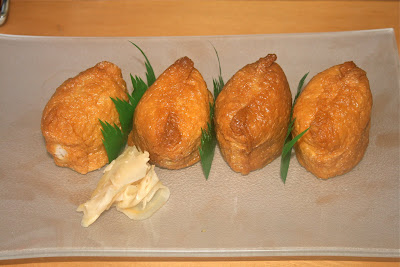
I find cooking rice for sushi challenging: you need to buy proper sushi rice and then wash it several times in cold water, until the water runs clear. And then cook it by absorption. The doses are about 1 and 3/4 (three quarters) cups of sushi rice for 2 cups of water, but that depends on the type of pot. You need a pot with a good lid, or you will loose too much steam. I kind of regulate myself by ear now, since I know my pots and pans. Bring the pot to boiling point, lower the heat and simmer until all the water has been absorbed. Once the rice is ready pour it into a bowl and stir it with a wooden spatula, cooling it with a fan if you can. I then add some ready made sushi vinegar, about 2 tablespoons, but this is my personal taste. If I don't have sushi vinegar I use 2 tbsp of rice vinegar, a little sugar and a little salt (to taste, and I don't like to use too much sugar or salt!). I used the rice to fill some inari (Japanese tofu pockets), which you can buy already made from Asian stores. This time I also put a piece of avocado inside each inari, but this is not exactly 'traditional'.


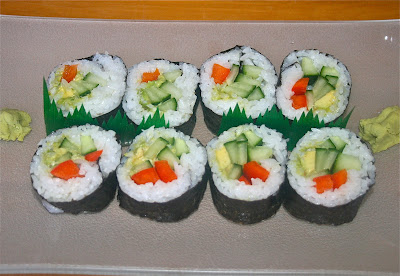
And then I made some norimaki (large rolled sushi). To be honest this is not my best rolling, but it wasn't planned either! The truth is that there were 8 inari pouches in the packet, but I broke 4 trying to open them :-P!! I made a bit of a mess, not something to photograph! The children and I ate them while we were making them. I quickly rolled the reaming rice with a sheet of nori seaweed, and fill it with avocado, cucumber and red capsicum strips. Serve with wasabi, pickled ginger and Japanese soy sauce.


Pickles


This was the easiest thing: I just bought it! Japanese pickled cucumber, crunchy and refreshing.


Seaweed salad


I found a punnet of seaweed salad in the Asian store, ready to eat. I rinsed it (just in case), and I made a dressing with:
2 tbsp Japanese rice vinegar
1 tbsp Mirin (sweet cooking sake)
1 tsp toasted sesamy seeds

and decorated the salad with calendula petals.


Zucchini and Zucchini Flower Tempura


For a Vegan tempura batter just mix a bit of flour with some chilled beer. If you don't drink beer use some chilled water (better if sparkling). Do not over-soak the vegetables in batter, just a little dip is enough, and make sure that the oil is very hot before frying. I used rice bran oil. The zucchini and flowers are from my garden, the fresher the better, I just added a sprinkle of salt before serving them. I did have some batter left and so, after taking this photo, I used it up to fry up some borage flowers as well (maybe you can see them in the first photo). They were lovely!


Dessert


Usually after a Japanese meal the only sweet thing served is seasonal fruit, so that was also easy ;-)

Photos and Recipes by Alessandra Zecchini ©