I took these photos almost 2 weeks ago and they already look so completely out of date. These zucchini are at least twice as large now, and are starting to look like they will form some buds shortly. They are from the interspecies cross that I have been mentioning off and on for a few years now. In particular, they are from 2 plants grown last year, both of which were probably f2s of the original Lebanese White Bush x Tennessee Sweet Potato squash crossed with another zucchini, in both cases probably Caserta. I thought they were the best of nearly a dozen grown out. I crossed them both with Reinau Gold last year and am looking forward with considerable excitement to see what develops this year. There are 6 batches of 3 seeds from one squash and 9 batches of 3 seeds from the second squash. At least, that's how many were planted. A few did not come up. The plant is, as they develop fruit, to remove the ones that seem the least interesting and see what is left.

This photo is actually considerably older; we dug up these leeks early in May. In spite of the fact that last year was a pretty bad year for a lot of things, and that I don't consider the leeks to have done very well, they were not that awful. Those second-best ones on the left were actually quite superb, and the middle ones were very decent. The runts on the end were usable. Of course, the very best are still in the garden, going to seed. Speaking of which, few of the ones we dug were bolting and the ones left in the garden did not start to flower at all early, meaning that my hope to be able to leave this strain in the garden over the winter for early spring use seems quite feasible.

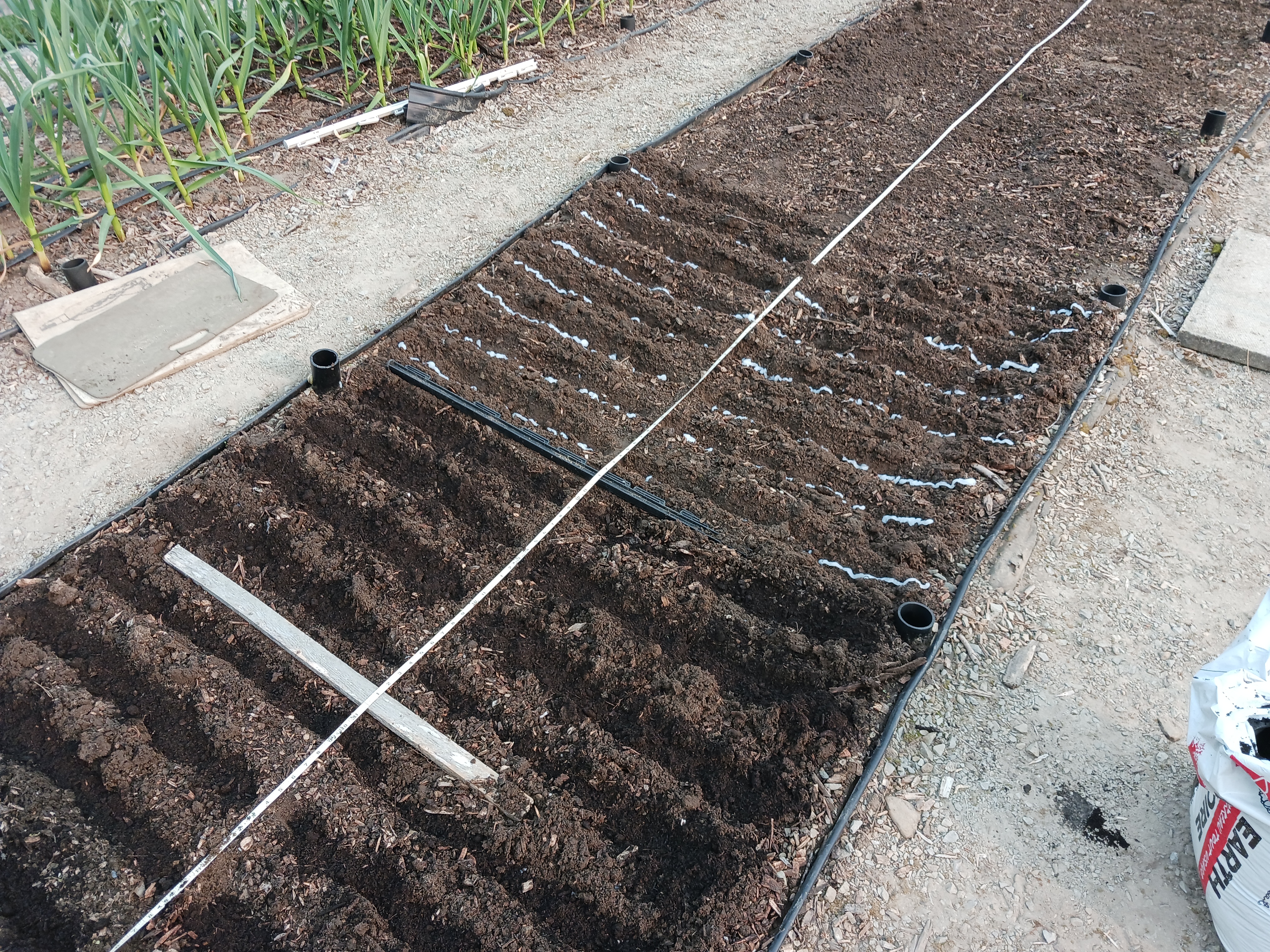
Those leeks and these are part of our experiment in growing leeks a different way. After having leek seeds from a mass cross overwinter in the garden, we are now sowing the seeds of their descendants in the fall purposefully. Those scratchy little lines of green are them. They look most unimpressive but I am quite pleased - they have grown a lot since I took this photo and are better than the ones planted in a tray for insurance. (Which to be fair have been somewhat neglected of late.) We expect to dig them up and replant them deeply at the usual time to dig up and replant leeks, without having had to plant them first, so that's good. First year of not planting any leeks started indoors.

Attempting to cross Goldana turnips with Scarlet Ono turnips. Last year did not seem to work. I planted half and half from a few of each left to hopefully cross, and got half and half, no signs of crossing. I am a little more hopeful that they might cross this year since the flowering time seemed to overlap better, but we'll see. Next year, as usual.
Brassicas behind them kept under cover as much as possible these days due to the vile Swede midge.

Tomatoes in; onions, parsley, leeks, and carrots going to seed in the middle of the bed between them. Again, looking much further along in real life. Mr. Ferdzy is currently attempting to get them strung up, and tearing out his hair over how hard it is to find decent string that will do the job, yet compost in the fall.


 Posts
Posts