Friday, 2 September 2022

Four Fine Blueberries for the Home Garden

Our blueberry harvest is slowing down; but we have been picking berries ever since the beginning of June. This year we have finally had a very respectable harvest - at least twice as much as last year, and last year was a huge leap forward over previous years. I figure we will have picked somewhere between 10 and 12 litres of berries this year by the time they are over. Two years ago we picked only about a single litre.

So, what has changed? The bushes are finally getting fairly mature, and that helps, but also three years ago we changed our growing methods, from stick 'em in the ground and hope for the best, to something more intentional.
 
Everybody knows blueberries need acidic soil. Our soil is pretty acidic, too acidic for most vegetables to be completely happy, but as it turns out not really acidic enough for blueberries. We did two things to fix the situation. Firstly, we dug up and replanted all our bushes (while they were still quite small) after amending the beds with extravagant quantities of peat moss. It doesn't need to be dug more than a foot in; blueberries are very shallow rooted. We spread it out and gave it a half-hearted stir. Side note - don't try growing strawberries or anything else under blueberries for this reason. They will not stand the competition.
 
The peat moss helped, but it was not enough. Next year, we started applying Blueberry Booster (from Whiffletree Nursery, whence came most of these blueberries).  This is sulfur humate, which will acidify the soil. Sulfur products need to be applied with some caution. It is not a straightforward process of "add acidifier, get acidic soil". The sulfur must be broken down by soil microbes which require the soil to be at least 12°C or 13°C and moist. Spring is the best time to apply it. If it is not properly broken down and absorbed it can damage the plants quite badly. However, we were observant of these requirements, and got quite amazing results, that very first year. We then got our up-'til-then best harvest, but mostly the bushes finally grew. 

The other thing that is happening now that we are getting our bushes to grow, is to notice which ones are the best. I have to admit, we rate that mostly on the volume produced. There are slight variations in flavour, but they all taste like blueberries and are delicious. 

Ripening time is something else to take into consideration. There were earlier berries than the varieties I'm about to discuss, but they produced less. If you have space for more bushes I do think they are worthwhile, but I can't suggest names for those because we have lost them. I suspect it's fair to say that early production gets traded off against high production; something has to give and that's what it is. 

Three of the varieties discussed below are modern high-bush hybrids. The exception is Jelly Bean, which is a dwarf plant, but not at all like wild or low-bush berries. Much as I love wild blueberries, even the domesticated "wild" types we have tried have not done particularly well in the garden as plants, never mind producing any significant amount of fruit. I used to think domesticated blueberries were not as good tasting as wild blueberries, but having grown them I would now say it's more that their flavour doesn't last well. They should be eaten or frozen within 2 days of picking. But if you are growing them yourself, that is easily done.

So, what are we growing? Above you see Nelson on the left, and Arlen on the right. These are probably the biggest producers in the garden. They've been pretty picked over already; the photo does not show them at their loaded best. Whiffletree lists Arlen as their latest blueberry to ripen, but for us it is, if anything, just about a week ahead of Nelson. It's not a big difference.

Blueberries start off small and greenish; as the season progresses they become larger and whiter. Then, suddenly, some of them apparently double in size and turn blue. Does that mean they are ripe? Could be, although many of them then need to sit and ripen some more for best flavour. We have discovered that the best way to pick blueberries is to pull them very, very gently - if they don't come right off, they need longer. Nelson in particular wants to sit for quite a while at the blue stage before coming off. Nelson is a sturdy bush with good, upright stems. 

Arlen is a more delicate bush. The stems tend to arch and if they are really loaded they can drag on the ground. You can see we have placed some stakes around it to help hold them up. We are willing to do this, because it is well worth the trouble. Those stems were just loaded with amazing berries. 

While neither Nelson nor Arlen were producing with the earliest berries, they both started in early August, and are still producing.

This one is Jelly Bean. (Actually, it's 2 Jelly Beans.) One is over, the other is about half-picked. We picked this one up in the parking lot of our local grocery store. It is marketed more to urban and casual gardeners than serious growers, perhaps because it is a dwarf bush, maxing out at about 2 feet tall. It's described as being just as much an ornamental plant as a source of fruit, and indeed, it's very pretty and turns red in the fall. Before then, new growth is an attractive lime shade (you can see some) and regular mature leaves are a nice bluish green. However, it produced more berries than any others that were not Nelson or Arlen and they really are extremely tasty. They started to ripen a bit earlier than Nelson or Arlen, but only by a few days.

I understand blueberries can be successfully grown in containers (the shallow roots help, I guess) and while I have not tried it, this is one that I think would work well for that.

And finally, I am recommending this one, who's name I don't remember. I suspect it's either Elliot or Aurora - I think perhaps Elliot, which sounds more familiar - but both are popular late-fruiting blueberries. We got this one at Whiffletree, but they are not carrying either of those at the moment. Whatever it is, like Jelly Bean it's a solid second tier in terms of quantity produced, but unlike Jelly bean it does not really even start ripening until the last few days of August and continues well into September. We are really reluctant to say goodbye to our daily bowl of fresh blueberries and we are so happy to have this one to keep us going a little longer. 

So there you are; four(ish) excellent blueberry varieties. I'm saying for the home garden, because they do all produce over a fairly extended period of time. I suspect this is not a great feature for commercial growers who want to go in like a swarm of locusts and strip the bushes all at once, but for the home grower it is ideal. Twenty minutes of picking every second day kept us well supplied with berries, over a good solid 3 months. I even made a batch of jam and 2 pies to freeze. That helps console us for the fact that the season is coming to an end; that and the hope that next year will be even better.

Monday, 15 August 2022

Early (Sorta) August Garden Update


It seems I lose a week every month in reviewing the garden. Oh well. It is definitely moving along, losing that mid-summer lushness and letting some of the cracks show. We've been having some insect problems, and have been spraying with a mixture of neem oil and insecticidal soap. It does seem to help, although it is certainly not a miracle cure.

I don't know how there are all these photos of Mr. Ferdzy applying it by himself. Mostly he sprays, while I come along behind carrying the bottle and pumping at the same time, or trying to anyway. Bickering ensues. I guess that's why I left the last bit of the bottle to him. 

There are very few carrots that we left for seed that survived and are forming seed, but at least 2 or 3 of them are. The cucumbers are doing reasonably well and pickles are being made. The peppers... oh, the peppers...

Also the eggplants. Both so very, very sad. I think night-time temperatures have been too low (not unusually down as low as 10°C this summer) and they just can't cope even though the daytime temperatures have been adequate. For some stupid reason we failed to cover them and, well, this is the (lack of) result.

Watermelons, on the other hand, are kind of late, but seem to be doing much better. We'll see when they ripen. They went in a bit late in addition to the coolness of this summer.

After last year's success with corn we are trying again. This variety is "Double Standard". Unlike the other it is not advertised as resistant to pests, and it isn't. We can tell when the corn was ripe because it was eaten. Squirrels, I think. We've been trapping and removing a bunch, but the are like a box of tissues. I'm not convinced there's a bottom to the box though.

Beans are doing okay. Some signs of virus and disease but nothing terrible yet. Lots of time still, of course. Squirrels seem to be leaving them alone. They don't like them as much as peas or corn. Me neither, squirrels. Me neither.

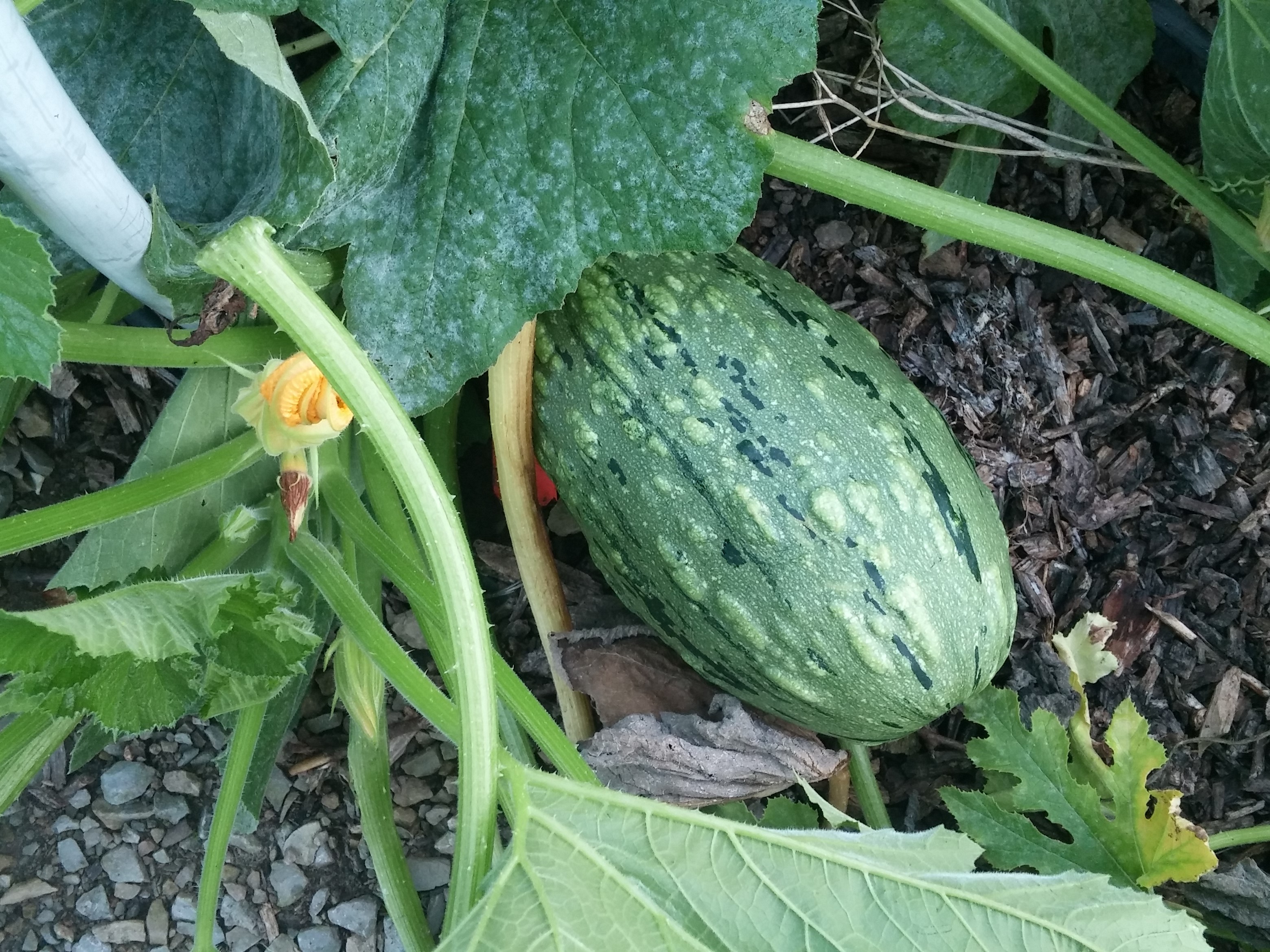
Here is a fruit from our interspecies zucchini cross. Last year's attempt to save seeds failed; the fruit fell off the vine and failed to ripen. I was very sad because it was such an excellent plant, crossed with a yellow zucchini. This one appears to have crossed with Caserta, a fairly obscure variety.

We went back to the first year of the cross for these seeds; we wanted to keep the proportion of argyrosperma to pepo as high as we can. This second hand-pollinated squash being grown  out for seed also appears to be a Caserta cross. These two were the most productive of the 8 or so plants we grew out, also healthy without being insanely massive (but large, definitely large). 

I hand pollinated them with Reinau Gold pollen. The Reinau Gold plant did very badly. At first I thought it was just a genetic dud and was a bit worried about using it, but it turned out we had covered the squash too late, and there were already vine-borers at them. They seem to like the bush zucchini the best, and perhaps the yellow in particular. I covered the pollinated flowers, but I know a few bees snuck in there during the process, so while I expect any resulting seed to be mostly half Reinau Gold, there will be a few wild cards.

On the left you can see the remaining zucchini, after we went through and pulled the badly damaged ones and performed surgery on the ones that looked like they might survive. Those very dark leaves at the furthest left are from the interspecies cross. They were far less hospitable to the vine-borers, and are generally now in much better health. Well, this is why we are growing them out and it does seem to be worth the effort so far.

In the middle, the garlic has been pulled and is curing in the garage. In fact it has been out for 2 weeks and we intend to clean it and bring it in to the house today. Lettuce seed is also picked and pulled. Onions on the right look a little tatty but are fine, and should start the process of dying down for storage soon. 

In the back you can see some Iroquois Corn Bread beans. We grew them out as part of our late-planted set for the last few years and got only a handful of seeds. This year we planted them at a more usual time, in the old strawberry bed (they are coming out on the installment plan) and have been amazed at how very huge they have gotten. Not exactly a pole bean, but not really a bush either. They are so much happier and we expect a bumper crop.

Speaking of both bumper crops and berries, our blueberries are the best they have ever been. This bush is particularly loaded, but most of them have been great. We are getting about twice or thrice the berries of last year, and last year was the first time we were able to eat berries every day for several months. I've actually made and frozen a couple of pies! If they pile up again faster than we can eat them - what a concept - I will make a little jam too.

This is the result of applying both sulphur and blueberry "inoculant" (a fertilizer/soil acidifier combo). Wow, what a difference. 

Thursday, 7 July 2022

Early July Garden Update

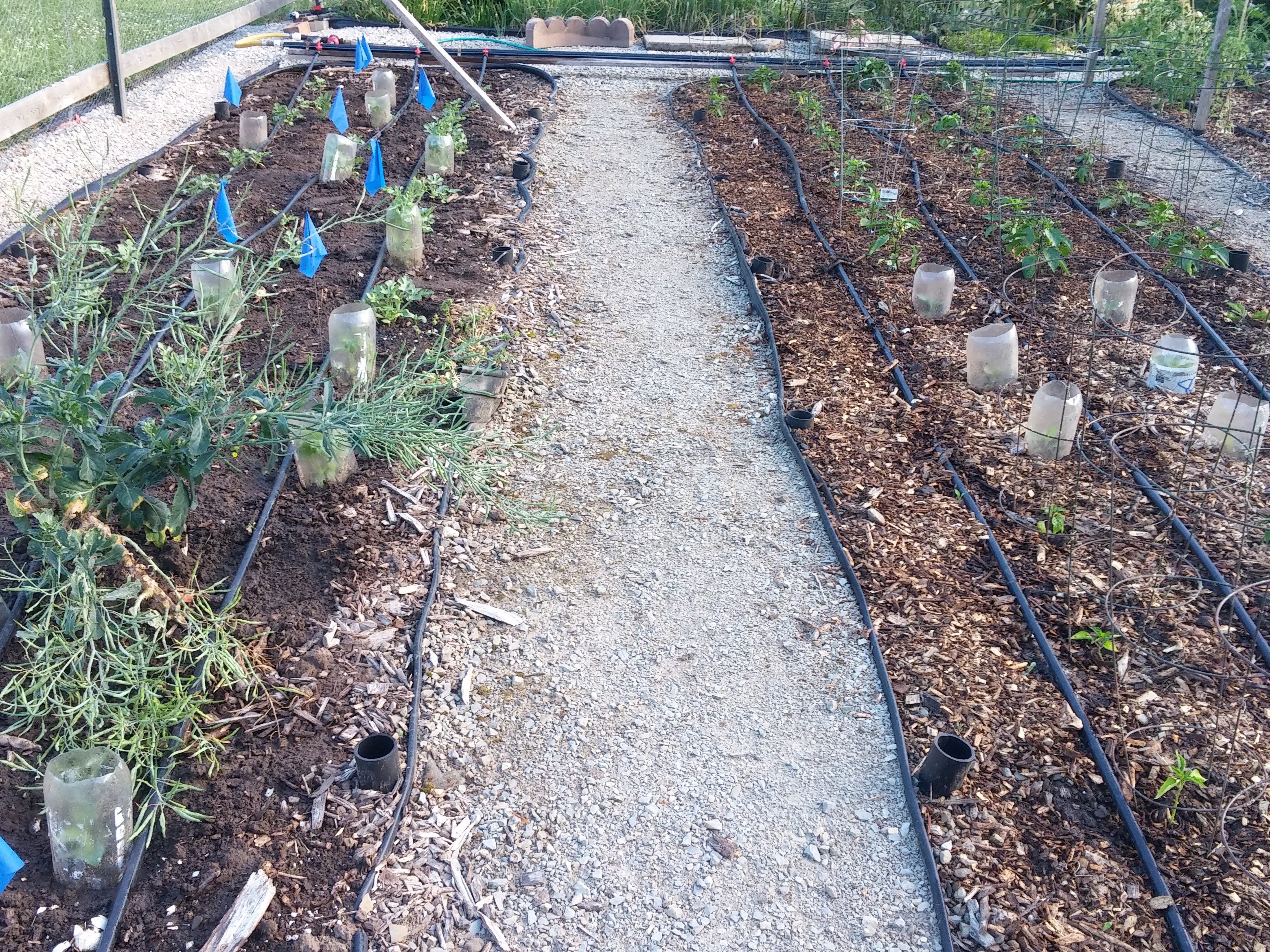
I said I would likely keep doing some garden posts, and so I am. I like to go back and see how things change. This year's big change is that Mr. Ferdzy has put up insect-proof cloth over 3 beds. These 2 beds have the cabbages, broccoli, Brussels sprouts, and cauliflowers. There are also some rutabagas, from them having gone to seed in this area last fall. They have been providing some truly excellent greens. The cloth has made a huge difference. The brassicas have never looked so good.

On the right, melons. On the left, peppers. Both looking pretty sad. The mild weather that has made the brassicas quite happy does not suit either of these sets of plants. We'll see what harvest, if any, we actually manage to get.

About 5 Brussels sprouts overwintered, but only one survived long enough to flower. There seems to be a bunch of seed forming; we'll have to wait to see how it does. 

The other bed we covered were the squash and zucchini. They too, look quite amazing. We have to open them up every second day or so and fertilize them with a paint brush, but we have already picked our first 3 zucchini. Squash have not actually started flowering yet. It may get very busy in the early morning once they do.

Garlic started to look a little ratty from the now endemic leek moth, but a dose of diatomaceous earth seems to have improved things a lot. 

As usual, random lettuce is going to seed.

Also as usual, carrots were absolute bastards to get started. Second planting took much better. We were more careful about keeping them covered with a cloth... yes, I'm detecting a theme here. Onions are looking very good.

We left some rutabagas out to go to seed; instead they have been badly damaged by Swede midges. They seem to be resprouting. This is not them in the photo above - those are kohlrabi, and they are looking very good and untouched by bugs in spite of not being covered. It is inexplicable, given that they are plainly in the garden. I know they like kohlrabi just fine because they did a number on them last year. Well, there's still plenty of time I suppose.

Potatoes have much less virus damage than last year and are growing well and flowering profusely. The bad news is that they (almost all seedlings but for a few Russet Burbanks) seem to be quite infertile. I'm not seeing any seed balls forming as the flowers finish.

There's trouble in the peas and beans. About 2/3 of the Lima beans simply did not come up. We've replanted with a couple of the quicker growing varieties of common beans, but that's annoying. It's not the worst, though. The worst is the squirrels and chipmunks. We've probably lost 1/4 of the fresh shelling peas to them so far. Traps are set and this means war.

Sweet potatoes are slow; potatoes look good. It's been oddly cool this year in spite of the occasional very hot day. I feel like things are really quite behind - I will have to look at some late June/early July posts from previous years to see if that is true.


Friday, 10 June 2022

Fifteen Years

Well. Here it is, the 10th of June. I've been thinking about this date for the last couple of months. It's the 15th anniversary of this blog. Fifteen years is a lot in blog-years. We still owned the apartment building, and we were having work done on the terrazzo staircase. I had to decide for the day - in or out? I opted for in, got bored, posted a few recipes and the rest is history. I needed a better way to organize them than in an excel spreadsheet, and I figured a few people might stumble up against the blog and the recipes could be useful to others as well. Then, I did get a few readers, and I challenged myself to post steadily, which I mostly have done with a few ups and downs.  
 
And now, I think, it's time to stop.  I may post the odd recipe if I find something I want to keep track of; that was my original aim after all. But that's happening less and less often. Really, I want to go back and make some of the things I've already made and loved but which don't get made again because I'm looking for something new. The whole point of this blog is that enough is as good as a feast, and enough is near by. 
 
I may also posts a few of my notes about the garden and my breeding projects, as this is a good way for me to keep track of them and share them with others. 

This blog has added a lot of structure to my life for the last 15 years and it will seem odd for a while to be without it. I've also made some personal connections to people through it which I will greatly miss. Thank you so much to everyone who has read and used this blog, especially those that have taken a moment to comment. Of course, it is staying up and you will still be able to use all the existing recipes. I may even go back and improve a few.


p.s. In case anyone was wondering, Mom's second eye operation, by which I mean the operation on her second eye since the first one has already had about five operations with more to come, was a success. She is healing slowly and still can't see well, but her world is brighter and it appears she will have at least one mostly functioning eye which is a big relief to all of us.

Wednesday, 8 June 2022

Strawberry Trifle with Sponge Cake Fingers

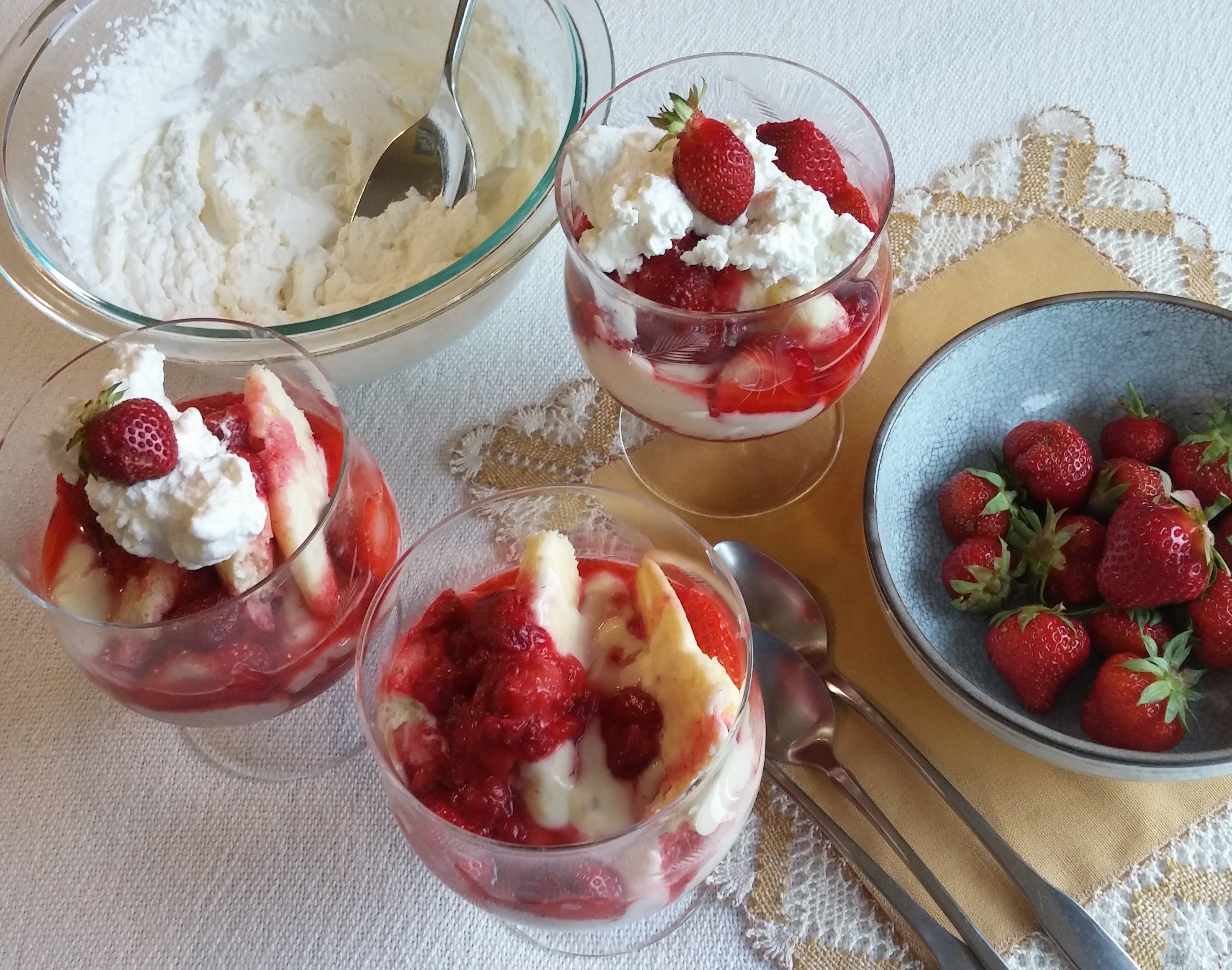
The first of the strawberries have been picked! They seem a little early to me, but in spite of some persistent cool weather there have also been some hot days where things have leapt forwards. It's exciting to see them but a little daunting to think about all the picking in my future, when the weeding is so far behind. 

Really, though, this recipe is about the sponge cake fingers, aka lady's fingers. They are designed to be okay on my "better carb" diet, and incidentally they can be gluten free as well. I may fiddle with the recipe in the future; they were not more exciting than lady's fingers usually are which is to say a bit dry and bland. Mostly useful for soaking in sherry and syrup and covering with custard, fruit and whipped cream. Actually, they would also be nice dunked in tea or sherry to moisten them. 

They also came out flatter than ideal, but they plainly need no more in the way of starch, and the texture was still light and fluffy enough. I may try baking them as a thin cake then cutting them afterwards. I took the leftovers and re-baked them in the oven at 200°F for 40ish minutes, and that made them quite dry and crisp. I suspect just baked as directed they have a shelf-life of a few days but re-baked crisp that they would keep for some time. 

While I would describe the sponge cake fingers as surprisingly quick and easy to make, this whole thing is really best suited to a special occasion - Canada Day coming up in the near future, although strawberry season is a special occasion in itself as far as I'm concerned.
 
6 servings
45 minutes - 30 minutes prep time to make the sponge fingers
15 minutes prep time to make the custard 
15 minutes prep time to assemble the trifle
 
 
Strawberry Trifle with Sponge Cake Fingers
 
Make the Sponge Cake Fingers:
 
In Bowl #1:
1/4 cup arrowroot starch
1/4 cup potato starch
2 tablespoons coconut flour

Sift these together into a small bowl.  

Line a large baking tray with parchment and preheat the oven to 350°F.
 
In Bowl #2:
3 large egg whites
1/4 teaspoon cream of tartar
2 tablespoons sugar OR sweetener OR combo 

Beat with an electric mixer until the egg whites will form stiff peaks.
 
In Bowl #3:
3 large egg yolks
the finely grated zest of 1/2 small lemon
1 tablespoon lemon juice
1 teaspoon vanilla extract
2 tablespoons sugar OR sweetener OR combo 

Measure all the ingredients into a mixing bowl. Beat with the electric mixer for 5 minutes until the mixture has thickened and become a much lighter yellow in colour. It is not necessary to wash the beaters after beating the egg whites.

Fold half the dry ingredients gently into the egg yolk mixture, then fold in half the beaten egg whites. Repeat with the remaining dry ingredients and egg whites. Gently spoon the mixture out onto the parchment, in fingers with a bit of room to spread. You should get 12 of them at about 1/4 cup batter per finger.

Bake them at 350°F for 10 minutes, then rotate the pans and bake for a further 10 minutes. Let them cool for 10 minutes in the pan before removing them to a rack to finish cooling. These can and should be made a day or 2 in advance.
 
Make the Custard:
2 tablespoons arrowroot starch
4 tablespoons sugar OR sweetener OR combo
a pinch of salt
2 large eggs
1 1/2 cups whole milk OR light cream
1 tablespoon unsalted butter
1 teaspoon vanilla extract 

Mix the arrowroot, sugar/sweetener, and salt in the top of a double boiler. Whisk in the eggs one at a time. 

Turn the heat on under the double boiler and bring it slowly up to a simmer. As it heats, whisk in the milk or cream a little at a time until it is all in. Continue whisking the mixture regularly as it heats, then more frequently as it begins to thicken. Towards the end you must whisk it constantly until it thickens. Remove it from the double boiler at once, then whisk in the butter and vanilla. Let it cool, whisking occasionally to prevent it from forming a skin on top. 

This should be done enough in advance to be cool, and can be done up to a day ahead and kept refrigerated if you wish. 
 
Finish the Trifle:
3 cups fresh ripe strawberries
1 tablespoon sugar OR sweetener OR combo
1 cup organic whipping cream
1 tablespoon sugar OR sweetener OR combo
a little sherry OR rum, optional

Set aside a nice selection of the best-looking berries for garnishes; about 1/2 cup of them. Wash and trim the remainder, and mash them with a tablespoon of sugar or sweetener.

Beat the whipping cream with an electric mixer with the remaining tablespoon of sugar or sweetener, until stiff. 
 
Put a puddle of the mashed strawberries in the bottom of each individual serving dish. Break a sponge finger into 2 or 3 pieces and set them in it, on their sides. Spoon a little custard around them on every side then spoon more mashed strawberries over them. A little sherry or rum can be drizzled in at some point during the assembly. Or, this could of course be done in one large serving dish. Something in clear glass so you can see the layers is traditional.

Finish each trifle with a dollop of the whipped cream and a few washed, stemmed strawberries for garnish.


Last year around now I was making Chinese Cucumber & Radish Salad, and Creamed Spinach Filled Buns.

Monday, 6 June 2022

Turkish Stewed Peas

Well, I'm going to confess; I made this in the winter with frozen peas and saved it for now. In a funny sort of way there are lots of things that can be made in the winter but late spring and early summer are difficult. I'm also a little ahead of things here; the peas are starting to form but are not yet ready to pick. Soon, though! And I think things are a tad later than usual this year. 
 
Snow peas will be ready before shell peas, and they would work well in this recipe. I do see snow peas used in Turkish cooking regularly, so there's that. It's hard to come up with recipes for snow peas that are better than steaming them and serving with a dab of butter, but this is lovely and would make a nice change.
 
Serve this with rice or pita; it will also go well with any kind of simply grilled fish, chicken or meat. It would also be delicious with poached eggs. 
 
2 to 4 servings
30 minutes prep time 
NOT including shelling the peas
 
Turkish Stewed Peas
 
1 medium onion
1/4 to 1/3 orange or yellow bell pepper
1 clove of garlic 
2 tablespoons olive oil
1 bay leaf
salt & freshly ground black pepper to taste
1/2 teaspoon rubbed mint
1 teaspoon sweet paprika
1/4 teaspoon Aleppo pepper (or to taste)
1 1/2 cups crushed tomatoes
2 cups shelled peas

Peel and finely dice the onion. Wash, trim, and dice the pepper into pieces just a little larger than the peas. Peel and mince the garlic. 

Heat the oil in a large skillet over medium heat, and add the onion, pepper, and bay leaf. Cook gently for about 5 minutes until softened and reduced in volume. 

Add the minced garlic and remaining seasonings and mix in well. Let it cook for a minute, then mix in the crushed tomatoes. Simmer for a further 5 to 10 minutes until thickened.

Add the peas and be sure they are all down in the liquid. Simmer for 6 to 8 minutes, until the peas are tender. (If using frozen peas, note that 4 minutes will likely be enough, and the same goes for snow peas.) 

Serve at once. 


Last year at this time I made Circassian Chicken.

Friday, 3 June 2022

End of May (*Cough, Cough*) Garden Post


Hello! It's time, more or less, for an end-of-the month look at how things have gone in the garden this May. 
 
I spent the winter watching the constant freezing and thawing with dismay. Indeed, a number of the biennials I hoped would over-winter and produce seed have not. Just to confirm it's not just that they were too tender and I was wildly optomistic about their survival, it has become clear we will have no blackberries this year, for the first time since they were planted. All the second-year canes - the ones that have the fruit - were killed over the winter. So, in the photo above, Mr. Ferdzy is removing them. 

On the other hand, my quince is flowering for the first time since it was planted. I thought it wasn't going to, but it seems it's just later to flower than apple blossoms. It would be exciting to have some quinces this  year! But we'll see how that turns out.

One of the kiwi vines if finally looking really robust and like it will be covered with blossoms in late June into July. Unfortunately, kiwi are dioicous, so until one of the much less sturdy male plants decides to do its' thing, we will continue to be kiwiless. We live in the hope. They're not dead yet.

But after all those noes and maybes on the fruit front, the main fruit beds look like they should be loaded with fruit this spring and early summer. Haskaps - excellent. Strawberries - first ones already taking on colour with masses to come. Blueberries - flowering non-stop. We are really looking forward to all of these, especially Mr. Ferdzy who is a fiend for fruit.

We have also been picking wild amounts of asparagus; up to 3 pounds a day. It is slowing down, but we probably have another week of picking. Fresh - really fresh - asparagus is the best thing ever. 

Mr. Ferdzy has been picking asparagus beetles like crazy too. Because of the odd, occasional heat-wave day that we have been having in the midst of otherwise cooler weather, the asparagus beetles have been up and active almost before the asparagus. This has concentrated them onto smaller, less mature plants than usual making them easier to spot and pick off than usual. I'm hoping we can reduce the numbers by a lot this year, by getting most of them.


Once the asparagus is gone we will have to eat salad for a couple of days and then the peas should get going. Pods are already forming and I should really be starting to check for snow peas very soon. 

The garlic, in the foreground, is having a very good year so far. It looks healthy, tall, and really magnificent.
 

If you look closely, you can see the tomato plants in the two central beds of this section. Much more obvious right now are the things we've left here to go to seed: leeks, onions, parsley, rutabaga, and turnips. There's also some mache and miner's lettuce here and there that we are leaving to their own devices. Brussels sprouts, alas, overwintered in very small numbers. We have one very healthy flowering plant; the rest are either not flowering with it or are in the process of dying. Not looking good for Brussels sprouts seeds this year. We'll have to try again next year.
 
The ladder in the background is for putting up bird netting over the blueberries, strawberries, and haskaps. This photo is now out of date; the netting is up (although I have a few small mends to make) and we are ready for fruit, any time now. It's a nuisance not being able to use the front gate to get into the garden but it is not a nuisance to not have birds eating most of the berries. 
 

And we'll finish with a look at the perennial/herb bed. That's caucasian spinach in the upper right. It got away from me before I could pick any to try, and it looks like it's going to flower so probably not this year. The rest of the bed is full of self-seeded dill, cilantro, and summer savory, with bits of lettuce and wild strawberry between them. There's also sorrel and lovage, and weeds - lots of weeds. This bed is going to require quite a lot of weeding and  thinning.
 
Fortunately, almost everything is planted. There are some re-plants - we are doing all the brassicas again, in pots this time. The pests are just too relentless on the seedlings. They come up, look good for a couple of days, then disappear. Also I planted melons and watermelons too early and only a very few came up. I'll need to reseed some beans, ditto, and Lima beans have yet to go in. Sweet potatoes are in, though; although we are covering them at night as it is still pretty cool. In short, this is probably the middle of the busiest part of the entire year, and we are busy. 
 
We are actually out for all of today as Mom is finally having her second cataract operation. In Toronto this time, by a more specialist surgeon given what a fiasco her first cataract operation was. Wish us (her) luck... it's a scary moment for all of us and the results, one way or another, will have a considerable impact on the rest of our lives.

Wednesday, 1 June 2022

Hariyali Chicken Kebabs

These were so yummy! We had no trouble (do we ever?) eating them all ourselves, with rice and peas on the side. If you were serving other Indian dishes with them, though, they would go further. Also they would go further if you are not the complete piggies that we are. You could cut the recipe in half but I suspect you could easily keep half in the fridge for cooking the next day. 

I liked the touch of red pepper, but it's not particularly traditional. Next time I might broil the peppers a bit before threading them on the skewers; they stayed pretty crisp even when the chicken was cooked.
 
2 to 4 servings
20 minutes to prepare chicken and marinade
2 to 24 hours to marinate
15 minutes to cook
 
Hariyali Chicken Kebab
 
4 to 6 cloves (1 head) garlic
2" piece of ginger
1/2 teaspoon cumin seed
1/2 teaspoon turmeric
1/2 teaspoon cinnamon
1/8 teaspoon ground cloves
1 teaspoon sweet paprika
1/4 to 1 teaspoon hot red chile powder
1/2 teaspoon salt
3/4 cup coarsely chopped cilantro
1/4 cup coarsely chopped mint leaves
2 tablespoons very thick yogurt
the juice of 1/2 large lemon
   OR 1 large lime
1 tablespoon mild vegetable oil
2 or 3 (600 grams; 1.5 pounds) skinless, boneless chicken breasts 
1/2 large red or orange bell pepper OPTIONAL

Peel and slice the garlic, and put it in the bowl of blender with the ginger, also peeled and sliced. Add the spices and salt. 

Wash and dry the cilantro and mint. Trim the stems off the cilantro, chop it coarsely, and add it. The mint leaves should be picked off the stems and the stems discarded, except for the tender tips. Add the yogurt and purée the mixture, stopping to scrape down the sides as needed. Scrape as much of it out as you can into the container in which you are going to marinate the chicken. 

Add the lemon juice to the blender and process to wash down the sides. Pour it into the rest of the marinade and add the oil. Mix well. 

Cut the chicken into bite sized pieces. Add them to the marinade and turn them to coat them in it. Cover and refrigerate for 2 hours to overnight. 

If using bamboo skewers, soak them for at least 30 minutes first; several hours is better so I try to remember to start soaking them as the chicken begins to marinate. Thread the chicken on the skewers, keeping as much marinade on them as possible. If you like, put bite-sized pieces of red or orange bell pepper in between each piece of chicken. Lay them on a broiler pan and spoon half the remaining marinade evenly over them.
 
Broil for 5 to 6 minutes per side (2 sides) until cooked through. When you turn them over, spoon the remaining marinade over them before broiling again. Serve at once with rice or naan, and the vegetable dishes of your choice. 


Last year at this time I made Pizza Crackers

Monday, 30 May 2022

Cucumber, Feta & Herb Salad

It's still greenhouse cukes, of course. We're only just planting ours today. Mint, parsley and cilantro are all up and useable by now, however. I didn't use any cilantro here, but you could. Other optional additions: a few chives and/or radishes now, melon or watermelon later in the season.
 
4 servings
20 minutes prep time
 
Cucumber, Feta & Herb Salad
 
Make the Dressing:
the juice of 1/2 lemon
3 tablespoons olive oil
a pinch of salt
freshly ground black pepper to taste
1/4 to 1/2 teaspoon Aleppo pepper
 
Mix all the ingredients in a small bowl or jam jar. 

Make the Salad:
2 or 3 small greenhouse cucumbers
100 grams (4 ounces) feta cheese
1/4 cup chopped fresh mint
1/4 cup chopped fresh parsley
2 or 3 tablespoons toasted pumpkin seeds (optional)
 
Wash, trim, and chop the cucumbers. Crumble the feta and mix it into them. Wash, dry, and chop the mint and parsley.  

Toss the salad with the dressing. This can be done up to an hour ahead to allow the flavours to blend, then sprinkle the salad with pumpkin seeds just before serving it. 


Last year at this time I made Potage Argenteil - Asparagus Soup.

Wednesday, 25 May 2022

Rhubarb Chutney

This has been a very strange year for weather, so pretty much normal, then. Normal for now, anyway. As a result of the combination of mostly rather cool days interspersed with the occasional heat-wave level stinker, my rhubarb plants have only just reached a sufficient height to pick from them, but already they wanted to send up flowering stalks, which generally signals the end of rhubarb season. I pulled the flowering stalks out and put them in the compost and generally intend to pretend that never happened. 
 
The actual rhubarb I picked was not the most tender, but it is generally useable and tastes good. Once it got simmered into this tasty melange it was just fine. 

I'm sure there are a lot of things you can serve this chutney with, but I know that I will probably eat about 90% of it with good sharp Cheddar and crackers. 

One of the things I am finding is that as I reduce the amount of sugar that I put into things, the amount of spices must also go down, or they will be out of balance.
 
5 x 100 ml
1 hour 30 minutes - 1 hour prep time 
 
Rhubarb Chutney

4 cups diced rhubarb
2 cups diced onion
1/4 cup peeled slivered fresh ginger
2 cups raisins
2 cups vinegar, apple cider or white
1/2 cup Sucanat OR dark brown sugar OR coconut sugar
1 teaspoon pickling salt
1/2 teaspoon black peppercorns
1 teaspoon allspice
1 teaspoon cinnamon
1/2 teaspoon ground ginger
1/4 teaspoon freshly grated nutmeg
1/4 teaspoon ground cloves
 
Wash and trim the rhubarb, and cut it into short pieces. Put it in a canning kettle. Peel and chop the onions, and add them. Peel and slice the ginger thinly across the grain, then into thin slivers and add them.
 
Add the raisins, vinegar, and sweetener of your choice. 
 
Grind the pepper and allspice with the salt, then add them to the kettle along with the rest of the spices. Turn the heat on and bring the mixture up to a simmer, then simmer for 45 minutes to an hour, stirring regularly, until the rhubarb has completely disintegrated and the mixture has thickened. It will be fairly thin at the start as the rhubarb begins to break up, but it will be quite thick by the end and will need more frequent stirring the thicker it gets.

As soon as the chutney has been started, place 5 or 6 canning jars in the canner (along with a half-sized jar or 2, just in case) and cover them with water to cover them by about 1". Cover and bring to a boil. Boil for 10 minutes. This will take about 45  minutes, conveniently enough. Add a ladle and funnel to sterilize as well.

While the chutney cooks and the jars sterilize, prepare the lids and rings. They need go go into boiling water to cover them for 1 minute (or according to manufacturers instructions) once you are ready to bottle the chutney. 

Remove the sterilized jars from the canner with a jar lifter, draining them well and place them on a heat-proof board. Use the sterilized funnel and ladle to fill the jars with the chutney. Wipe the rims of the jars clean with a bit of paper towel dipped in boiling water and seal with the prepared lids and rings. Return them to the canner full of boiling water and boil for 10 minutes before removing them. Let cool and check that they have sealed properly. 

Jars should last for up to 1 year, unopened, when kept in a cool, dark spot. Refrigerate once opened. Use it to give a little verve to cheese, baked chicken or fish, samosas, or whatever else you can think of. 


Last year at this time I made Lentils with Sorrel & Poached Eggs.

Monday, 23 May 2022

Early Spring Greens Bonus Plant Breeder's Garden Report

I'll be doing a longer, more general garden report at the end of the week, but I want to talk about one of the things we've been thinking about for the last few years - early spring greens. Really, we've been thinking about them since before we decided to try overwintering spinach, and that was a good few years ago. By early, I mean we want to eat them as soon as possible. March sounds nice but gooooood luck with that. Mid to late April is not completely unrealistic, though.
 
Spinach is an obvious green to overwinter. It bolts as the summer solstice approaches, if not several weeks earlier, no matter what size it is. If you can get it to overwinter, you have a fighting chance of harvesting large but tender spinach leaves any time from April through mid-May (after which the bolting causes it to rapidly diminish in quality, if not size). Our problem is that the mice quickly discovered that a bed filled with spinach and maybe lettuce and covered by an arch of plastic sheeting is a fine, fine place to spend the winter. This is a problem we have yet to solve, so we are looking at other greens to grow instead. 
 
Asparagus is the green vegetable most Ontarians associate with spring, and with some reason. Ours is doing very well; we have been picking 2 or 3 pounds every day for the last week at least and for the first time have more than we can eat. I don't regard the idea of frozen asparagus with wild enthusiasm but we are going to find out if it is good, okay, or yuck because we now have some. But really, excellent as it is, asparagus is not even quite early enough for the purposes of this post.
 
Late April through early May is the time for wild leeks (ramps) and fiddleheads, but both of these are wild foraged and have associated limitations. 

However, there are other spring greens that could be developed for a wider variety of tasty spring greens. The one I've been going on about the most here is sorrel. Like asparagus, it's a perennial and that helps give it a head-start on the things that have to sprout from a seed. Apart from cutting off the seed heads to prevent it from becoming a self-inflicted weed, it's easy to grow and quite attractive in addition to being tasty. Spring sprouting green onions are another great one, although their strong flavour means few people will want to eat them as their main veg. 

But so far none of that is about breeding. It's just setting up the situation, which is that it would be great to have a wider variety of early spring greens. Through happenstance (and some planning) we've actually been getting a wider range of spring greens from overwintering plants that weren't supposed to overwinter. They are not perennials, but usually biennials which also have the advantage of starting from already established roots rather than seeds.

The first up for consideration are turnips and rutabagas. I've gone on before about how much I like rutabaga greens, usually eaten as thinnings in mid-summer. But we have taken to not digging out the skinnier, less useable rutabagas and leaving them to overwinter, then picking greens in the spring. We also let a bunch go to seed last fall, and I was not on top of picking them, so there are now baby rutabaga plants all over. Right now they really aren't getting going as early as I would like. That's where the breeding comes in. I've selected about a dozen of the largest, earliest seedlings to save, and I'm hoping their offspring will continue in the large and early direction. 
 
Dietrichs-Wild-Broccoli-Raab

There are already a bunch of turnips selected for greens. We tried one called Deitrich's Wild Broccoli Raab, planted last year and eaten this spring. It was nice, but it definitely has a bitter tinge to it that just doesn't appeal much to anyone in this household. But it certainly makes me narrow my eyes and consider turnips for greens that much more. I should also note that while it was early enough to be in the very early range, it was not as early as described at the link. I assume our winters are still just that bit colder and harder than in New Jersey. On the plus side, it was much more tender than I expected. Definitely nice for that. We do have a few turnips that overwintered. I'm saving them for seed for the purposes of turnips, but we will consider their possibilities for greens too. 
 
Radish Greens
 
Our big surprise on the overwintering front were radishes. We had some overwinter in 2020/21, which was the first time ever for us with radishes. Indeed, it's a local organic farm practice to plant fields with radishes in the late summer to grow until they are reliably winter-killed, leaving a clear field in the spring with minerals brought up by the deep roots and composting matter from the dead radishes to improve the soil. I let them go to seed last summer as well, and as with the rutabagas I was not on top of them and quite a few fell and sprouted. These did even better at overwintering than the original batch, and although we pulled all of these out (they were not in a convenient spot) they produced bushy tender bunches of greens very early. 
 
We tried some of them, and they were tender and surprisingly mild. They had a tiny bit of radish-bite raw, but not really when cooked. They are better cooked anyway because the leaves are a bit hairy when raw. I'm actually kind of excited about these, and want to plant some later in the summer to overwinter for next spring. Again, we'll be looking for the intersection of earliness, size, flavour, and tenderness. I'd like to select these for smoother leaves but possibly that will leave them more open to insect damage. We're not selecting these for the roots at all; good thing as you can see that they are unimpressive. I think these were mostly from China Rose but with some White Icicle or possibly a white winter radish (lo bak) in there too. 

And finally, I pulled out our overwintered Swiss chard - which are beets, really; selected for their leaves - but not before we got a good crop of very nice greens. As usual, Lucullus was the best, most tender one, but Bionda di Lyon was probably a better grower, with neater, more robust leaves. Spring broccoli and cauliflower are things in milder climates than this one; we keep trying if only to get seeds but so far with very little luck there. However, there are plenty of other interesting spring greens to pursue.

Friday, 20 May 2022

Asparagus Caponata

This is a more local take on one of my all-time favourite dips; artichoke caponata. Well, not really caponata because mine never had capers in it (nobody here likes them much). 
 
I made this a couple of times; the texture without the lemon juice was better but the flavour was better with it. The take-away is that you should dry the asparagus thoroughly, even pressing it a little, to get as much excess moisture out of the dip as you can. Not tried; a couple of mushrooms cleaned and tossed in might help blot things up. Or add more juice. I don't know. Worth trying, though.
 
8 servings
20 minutes prep time
 
Asparagus Caponata
 
450 grams (1 pound) fresh asparagus
1/4 cup finely minced fresh chives
125 grams (4 ounces) Parmesan cheese
plenty of coarse, freshly ground black pepper
2 tablespoons lemon juice
3 to 4 tablespoons mayonnaise (light is fine) 
 
Wash and trim the asparagus. Cut off the tips, and cut the rest into inch-long pieces. Put the pieces into boiling water and boil for one minute. Add the tips and boil for a further 3 minutes. Immediately drain and rinse in cold water until cool. Drain very well - blot them with a tea towel until quite dry. 

Wash, trim, and mince the chives. Put them in a food processor with the grated Parmesan, the pepper, and the mayonnaise. Whiz briefly, then add the asparagus - pick out a few of the tips first to use as a garnish, if you like - and whiz briefly again. Scrape down the sides, and give the mixture a final whiz. The results should be chopped, but still retaining some texture. Transfer the caponata to a serving dish and garnish with the reserved asparagus tips. 


Last year at this time I made Roman Tomatoes.

Wednesday, 18 May 2022

Tortilla de Grelos y Jamon

Tortillas in Spain are almost always eggs and potatoes, with or without onion (and they will fight about it). I frequently see assurances that tortillas can be made with other fillings, but actual examples are very rare on the ground. 

This take is Basque in origin, and makes a very nice change. I find green vegetables a little short in supply in official Spanish cuisine, but given the number of little gardens clustering every small village, people must eat 'em. Any kind of spring green such as turnip greens or raab, or arugula maybe, could be used here. Spinach is probably most readily available here, but something a little more robust would be the best. Good Spanish ham is also ideal but hard to get. Good Canadian ham will work okay, but it too is hard to get these days - so much of it is soaked in brine and gelatine. Don't bother with that. Use a good bacon if you have to (also not soaked in brine... good luck).

2 to 4 servings
30 minutes - 15 minutes prep time
 
Spanish Tortilla with Ham & Greens
 
1 green onion OR shallot
300 grams (10 ounces) turnip greens OR spinach
150 grams dry ham or cooked bacon bits
6 large chicken eggs
salt & freshly ground black pepper to taste
2 tablespoons olive oil
 
Wash, trim, and chop the onion or shallot. Wash, trim, and chop the greens or spinach. Put them in a mixing bowl. Chop the ham and add it, or if using bacon, chop it and fry it until crisp but not browned. Drain the pieces of excess fat and add them. 
 
Break in the eggs, mixing them in one at a time. Season with salt and pepper to taste. 
 
Heat the oil (or you could use the bacon fat if you have it; but use it in a clean pan to avoid sticking) over medium heat in a large skillet. Once the pan is hot, spread the egg mixture evenly in it.  

As it sets, you can lift it up and tilt the pan to allow raw egg to flow underneath. When it is about half cooked - the top will still be not set - carefully flip it out onto a plate by placing the plate over the pan then turning them both over. Slide the tortilla back into the pan, and pour any raw egg remaining on the plate around the edges. Cook until the tortilla is set, but not dry. 

In Spain, this would be served at room temperature, cut into slices - in a sandwich, maybe - or cubes to be eaten as tapas, but you can eat it right away as you would any other omelette if you prefer.


Monday, 16 May 2022

German Cheese & Radish Salad

There are a lot of versions of this simple but substantial German salad; here's mine. You can eat it as-is, but I think it is most often eaten piled on a good sturdy slice of rye bread as it's almost as close to being a sandwich filling as it is to being a salad. I'd be happy to put it in a wrap with a leaf or 2 of lettuce and call it lunch, certainly. But one of my favourite things in the summer if I can round up a few eaters, is to have a salad buffet with a variety of salads, and this would make an excellent candidate for that. Also nice with a bowl of soup on the side.
 
4 servings
15 minutes prep time
 
German Cheese & Radish Salad
 
Make the Dressing:
1/2 teaspoon honey 
1 teaspoon Dijon mustard
1 tablespoon mayonnaise
2 teaspoons dill pickle brine OR apple cider vinegar
salt & freshly ground black pepper to taste

Mix the honey and mustard in a small jam jar or bowl. Mix in the mayonnaise, then the brine or vinegar. Season with salt and pepper, keeping in mind that other ingredients in this salad are salted - it's better to under-salt, and have to pass salt at the table than to overdo it here.
 
Make the Salad:
1 1/3 cups slivered radishes
2/3 cups slivered Gruyere, Emmentaler, Gouda or similar cheese
1 slice dill pickle
2 tablespoons minced chives OR green onion
3 tablespoons minced parsley
 
Wash, trim, and sliver the radishes. Cut the cheese into similar sized and shaped pieces. Dice the dill pickle fairly finely, and wash, dry, and mince the herbs. 
 
Mix everything together and toss with the dressing. Serve with buttered rye bread.


Last year at this time I made Baked Trout with Creamy Leek & Dill Sauce.

Friday, 13 May 2022

Stuffed Tau Pok

Last time I was in a civilized place - and apparently my definition of "civilized place" is "has a Chinese/Asian grocery store" - I stocked up on tau pok. It freezes extremely well, and I freely admit it is my favourite form of tofu. In spite of consisting of deep fried chunks, it is really not greasy and the resulting chewy/airy texture is terrific. If you think you don't much like tofu and it is the texture that puts you off, this is a good way to try it again and see.

There are a number of traditional recipes for stuffing and steaming tau pok. My take on it combines things from 2 popular versions, mostly as a matter of expedience; other than the tau pok itself these are all ingredients I can get around here. 

I found the oyster sauce added a necessary punch of saltiness to these - in spite of the fish sauce, they were not really salty in themselves. If you don't have any oyster sauce, add a bit more fish sauce or double the salt in the filling.
 
16 to 20 pieces
1 hour - 20 minutes prep time
assumes puffs are steamed in 2 batches


Fried Tofu Puffs Stuffed with Meat and Green Onions

250 grams (1/2 pound) ground pork OR chicken
2 tablespoons fish sauce
1/4 teaspoon salt
freshly ground black pepper
1 tablespoon arrowroot OR corn starch
1 tablespoon finely grated fresh ginger
2/3 to 1 cup finely chopped green onion OR chives
2 teaspoons mild vegetable oil to oil dish
1 package (185 grams; 6.5 ounces) fried tofu puffs (tau pok)
about 1/2 cup chicken stock
oyster sauce
cilantro 

Put the ground meat in a bowl with the fish sauce, salt, pepper, and arrowroot. Peel and grate the ginger, and add it. Wash, dry, trim, and chop the green onions or chives very finely and add them. Mix everything very well. 

Set up your steamer; it should hold the stuffed tofu in a dish. Mine would only hold half at a time so I set up 2 dishes to go into it. Lightly oil the dish or dishes, and turn the heat on under the steamer. If you are doing it in two rounds, be sure there is plenty of water in it, or that you can add boiling water to top it up if needed. 

Meanwhile, stuff some tofu. Cut a slit in one side (top) of each puff and put in a bit of the filling You can stuff in more than you might think and I found it useful to score off the bowl of filling to make sure it was being more-or-less evenly divided. There were 18 puffs in my package, but they are plainly hand-cut and varied a bit in size so quantity may not be exact either. Arrange them in the oiled dish(es) in a single layer, stuffing up. Place them in the steamer and pour a little chicken stock on them; just enough for them to be sitting in about 1/4" of it. Steam for 20 minutes. If you have a rack or similar thing that can go under the plate to be steamed, and which has handles to allow it to lift the plate out, that is very helpful.

If you have a second dish, check the water level, and steam it for 20 minutes with a little chicken stock in the same way. 

These will be very hot when they come out, and the spongy tofu holds some of the broth to burst out and burn you when bitten, so let them sit for a full 10 minutes before serving. Garnish them with a drizzle of oyster sauce and a sprinkle of chopped cilantro, if you like. 


Last year at this time I made Sorrel Soup.