Well so much for my plan to post regularly about our breeding projects here. However, while I still have some memory of the last season, I will try to make a few notes.
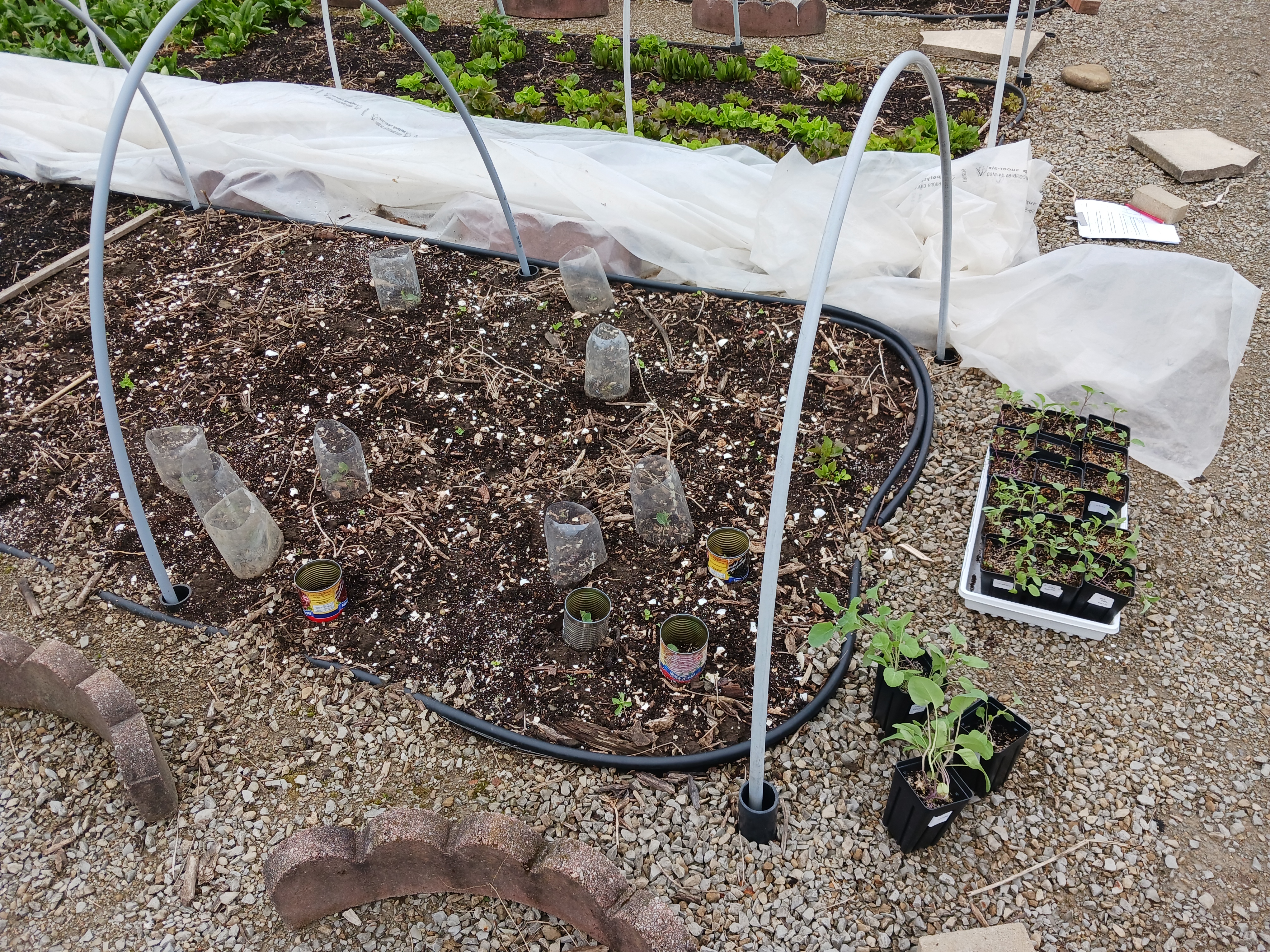
The above photo shows the cauliflower bed at the end of April. Of the 72 plants that went in in the middle of March, the dozen survivors have been collared with tin cans or plastic pop bottles to allow me to keep track of them. The second batch of seedlings went in right after I took the photo.
My plan to have them go through a "winter" after a "summer" indoors in order to stimulate bolting did not really work out. Firstly, I don't have enough light and warmth to really fool them, I don't think. And secondly, I did not expect my mini-winter to include a week of -10°C, 4" of snow, and howling wind that ripped the cloth cover we put over them to shreds. Hence the abysmal survival rate.
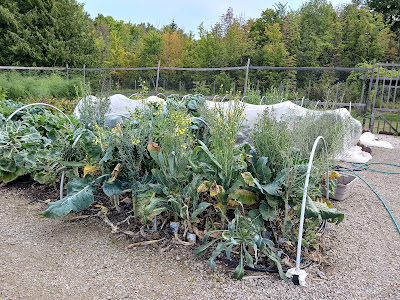
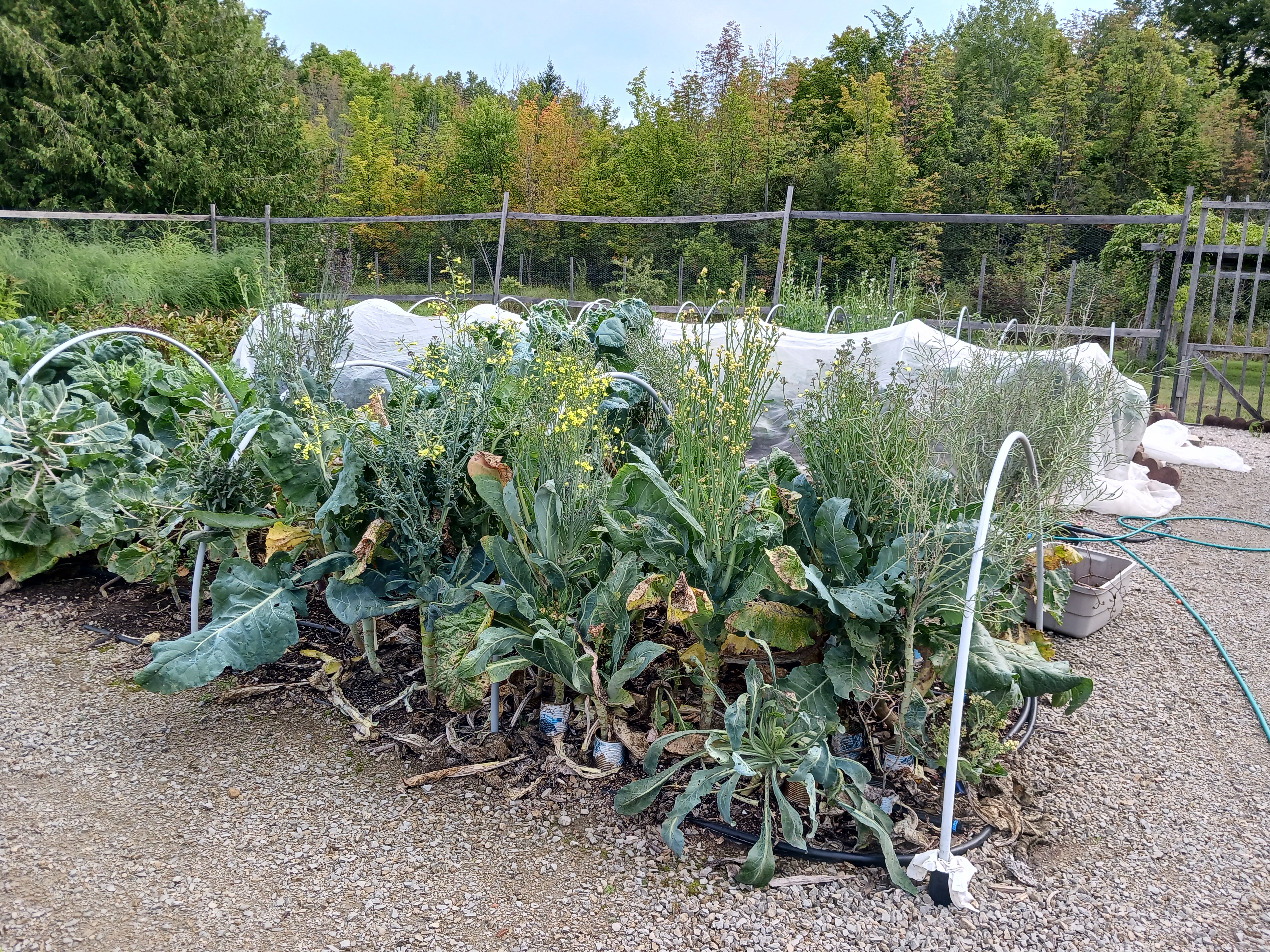
Here are the cauliflowers in mid-September. I was able to collect a decent quantity of seed from 4 plants. Three of them were winter survivors. However, I do not conclude that being a winter survivor increased the chances of producing seeds. They were all from seedlings of the variety Pusa Meghna, the only cauliflower we have previously been able to save seed from. The last plant we got seed from was neither a winter survivor nor Pusa Meghna - it was either Goodman or Early Snowball. I jammed then in so closely together in order to maximize the number of potential parents that I was unable to keep track of the rows once they started flopping around.
I say seedlings of Pusa Meghna; at least one if not two of them showed signs of being crossed with broccoli. I don't remember broccoli being in bloom when we saved that seed, but plainly there was.
There were a large number of other plants which flowered, although few of them early enough to contribute to the seeds collected. There were 4 more plants from which I collected seed pods at the end of the season, but very little of that seems mature enough to be viable. It is quite dismaying to me how very, very slow cauliflowers generally are to go through the flowering and seed maturing process. Most of these started forming heads in July and were not mature by early December.
As expected collecting cauliflower in this climate is a tough nut to crack. However, we will try again this year and have plenty of seed including more variety in our own saved seed. Quality of plants is likely to be an issue, although cauliflower and broccoli have plainly met before so I am not too worried about that aspect of things. All of this years cauliflowers have been left in the ground in the hope that some may survive the winter and flower next season, but so far that is a thing that has never happened so counts more as procrastination than an actual plan.
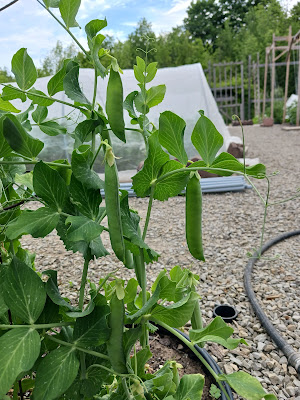
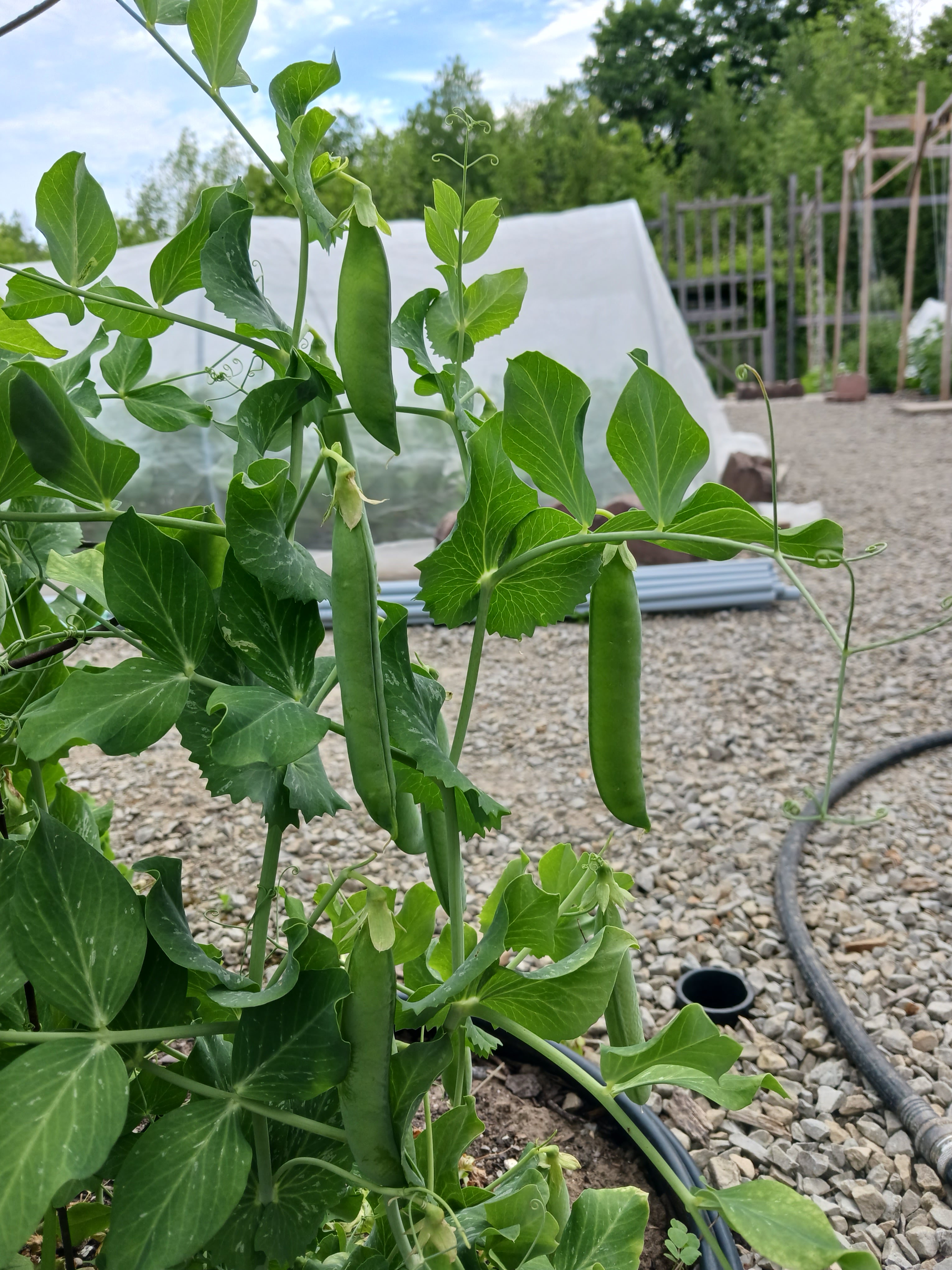
This is a cross between Knight and Strike peas, both very early fairly determinate pea varies. It resembles Knight more than Strike, but it seems even more determinate than Knight, like Strike, and possibly a few days earlier, like Strike. This is important because we want to get our determinate peas in and out of the garden as quickly as possible, so we can follow them with short-season dry bush beans. We have just long enough of a season to make this possible, although we get some bean failure many years if the season is cool or we have an early frost. Every day earlier helps, believe it or not.
We are selecting plants for best production and it may become our main early pea if it continues to do well. These early peas are frozen for use in the winter, so the more the merrier!
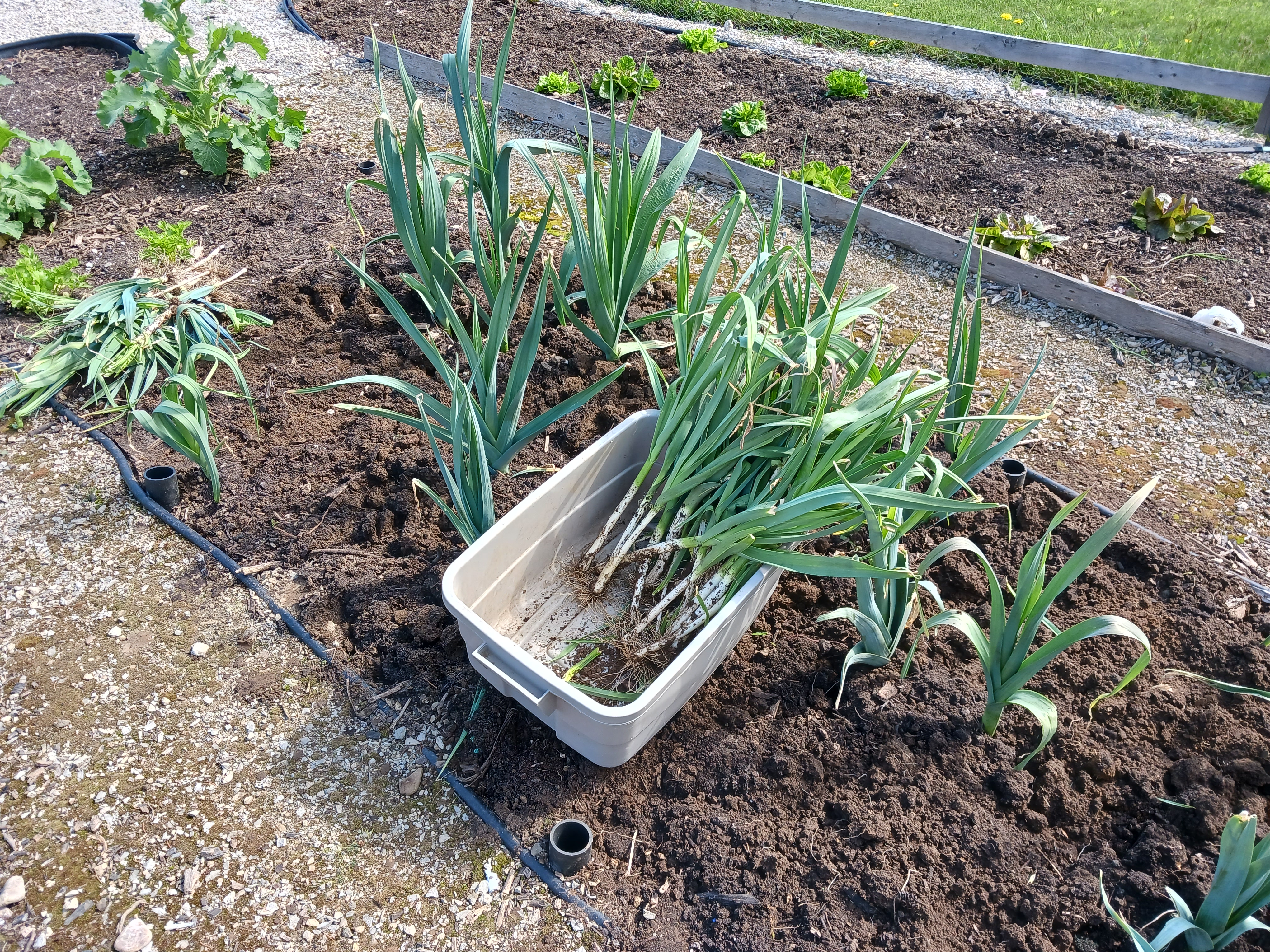
The leek project is not going so well. Here I am removing the least impressive leeks to allow the rest to go to seed. It all looks very promising right now. Things went downhill, though. We collected very little seed because the remaining leeks did not overlap well in their flowering time and at any rate I think I have cut the number going to seed down below their tolerance. I need a bigger space for this project where I can grow about 10 times as many.
To recap, these are leeks where we are planting the seed in the fall, allowing them to come up and grow at their own pace, then replanting the best deeply to produce the long white stalks that leeks are known for. Usually they are started indoors and planted out in the spring before being replanted in early July. They are quite a lot of work and our method reduces it a lot. However, we have only ever found one variety that will overwinter outside as seed, and the subsequent plants are extremely variable. We have crossed them with 3 other varieties, and are attempting to select for the largest and best overwintering plants. However we plainly need to allot them more space if we are to get the number of plants needed for good genetic stability. Leeks are very, very out-crossing.
We have older seed, and will have to go back to it. We have not allotted extra space for them this year but we will plainly need to consider it. This year is already a bust for producing seed as leek moths got into our leeks last fall and laid waste to them. They were covered and we did not check them often enough. Oops!
Watermelons are another one that have been very frustrating. We've given up on trying to breed a better yellow-when-ripe watermelon than Golden Midget. While I think we did breed a better one - larger melon, smaller seeds, thinner rind, better texture - the taste continued to be only so-so. However, the project kept throwing green melons with much better flavour. We decided to grow out the ones we had saved of those green ones (usually for exceptionally good taste) and look for a small, early watermelon with the all the qualities we wanted except the golden rind. Because the golden rind gene is recessive, we expect to be filtering that out now for a few years to come.
In mid August we had a night where it got down to 9°C overnight. We were really dismayed to see that most of the melons could not handle this. Within a week, all but a handful had wilted and died down. They were far enough along that most of the melons continued to ripen, but I don't think they were as good as they could have been. We have saved some seeds and will persevere, and of course the ones that didn't wilt and die are heavily represented in our selections for this year.
I don't think we kept seeds from this one but it gives the idea of what we are looking at. I like the ones with a tiger-striped rind better, but I think this one did not meet our flavour requirements. We'll take whatever rinds do that.
None of the beans in this photo are our crosses; I really didn't take any photos of them this year. We grew out most of our bean crosses but I don't have too much to say about them except that we continue to select them for various qualities including flavour, configuration, and disease resistance. No; this picture is about the lettuce, protected by the plastic pop bottles.
This is the f3, I believe, of our May King - Tom Thumb cross. It is settling into a few distinct phenotypes, any of which we are happy with. There is much more variability in this generation as to whether they stay sweet as they bolt, so that is plainly what we will need to be selecting for over the next few years. I continue to be quite excited about this project though, since I rarely seem to be able to pick a lettuce before it starts to bolt.We ate quite a few of these but there should be some left in the spring to allow to go to seed - providing they stay sweet and tender.
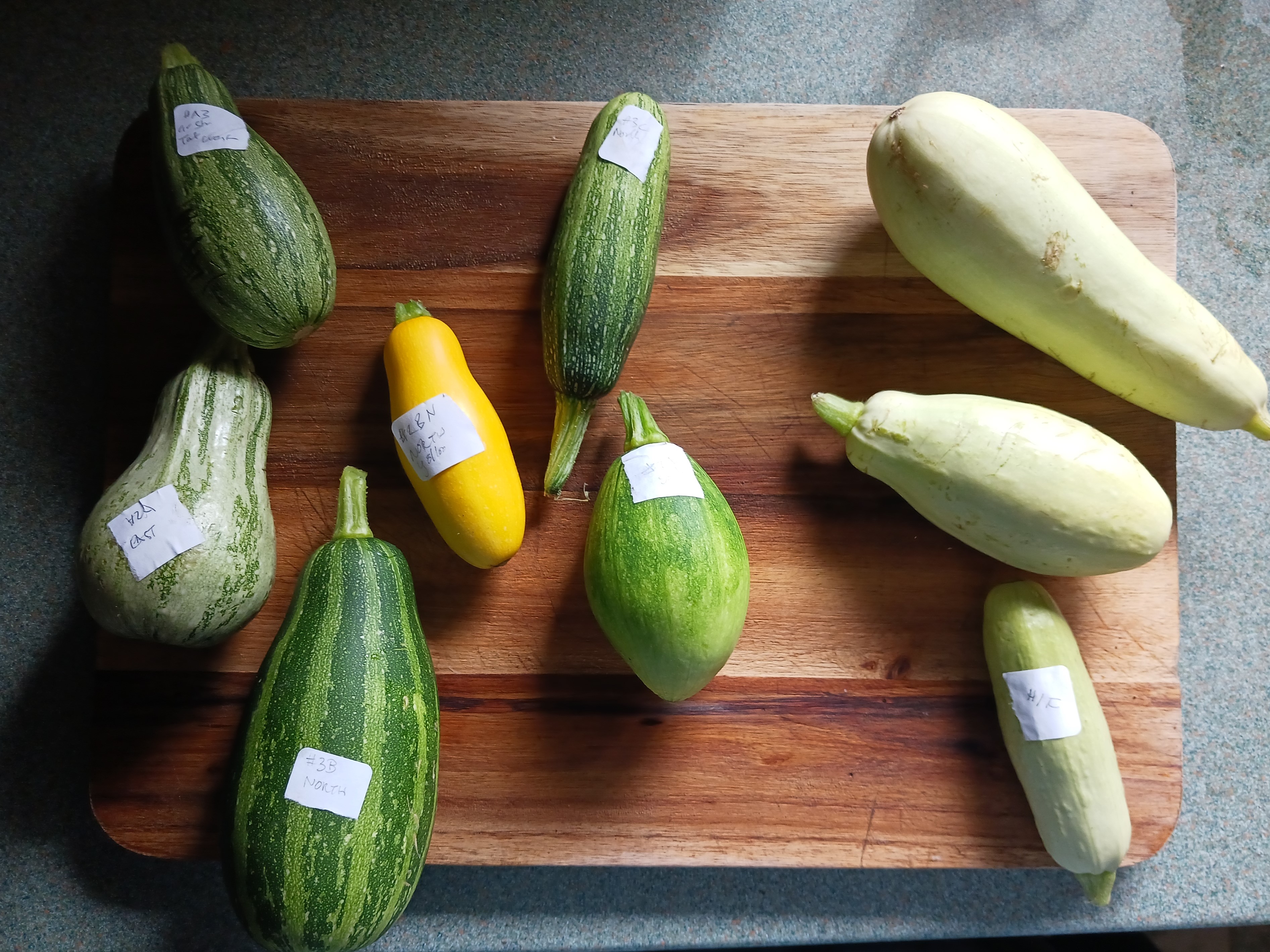
The interspecies squash project (pepo x argyrosperma) is also trundling along. Here are a number of fruits which we ate, or at least tasted, while they were green. You can see there is still a lot of variation and the Reinau Gold zucchini we crossed into it last year was not as prominently visible as I expected.
I think we want to cross one more round of straight pepo zucchini into these; the flavour is much improved but still on the mild (bland) side. They were all quite eatable though. Goldini was the open pollinated yellow zucchini I was able to get seed for, so that's what we will be adding this year.
Here's what we eventually left to ripen for seeds, minus one long, large, green-striped one which was harvested quite late. The yellow definitely shows up more strongly in the ripe fruit.
We keep the rest of our zucchini, grown just to eat, covered against vine-borers. These ones were left exposed as we want to select for resistance. Unfortunately, my observation is that the yellow zucchini are more attractive to vine borers than green ones so my desire for a yellow zucchini is at odds with my desire for insect resistance. However, while quite a lot of them eventually succumbed to vine borers, several plants did not (and their offspring have been noted). Since we didn't let them into the other zucchini I have no real comparison, but I do have a vague impression that they lasted better (longer) than other times when zucchini have been afflicted with borers. But it is absolutely something I will have continue to watch carefully.
This warty pattern has been a feature since the first plants grown from the cross. It's not as pervasive as it was, but it still showing up. I rather like it though I don't think it has any particular utility.
The sibling of this squash, seen in the group photo at mid lower left, turned out to have a vine borer that attempted to get in just below the stem. This is a thing I've only seen happen in this cross. I think it is actually a sign of their resistance to them - when they can't get in at the base of the plant, they try by the fruits. Interestingly, it didn't make it in very far there either.
So that's it for 2024; at least that I have photos for. I'm looking forward to this year with some excitement. Less than a month until we start on indoor seedlings.




%20X.jpg)

 Posts
Posts