Showing posts with label Peaches Plums and Apricots. Show all posts

Monday, 11 October 2021

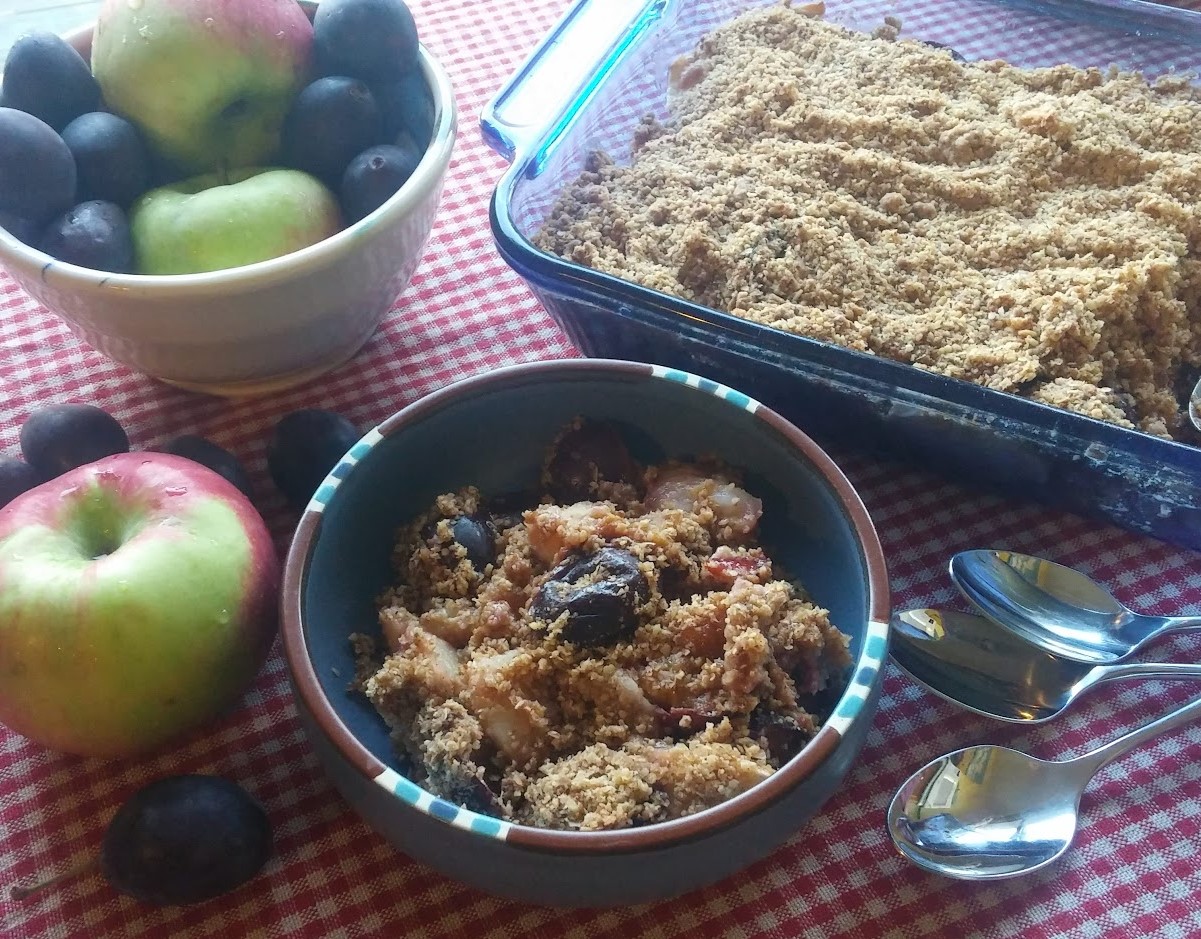
Almond, Plum, & Apple Pudding

What, apple and plum pudding again? Yes, there were leftovers, too many to just eat up in reasonable time. This take is closer to classic Apple Batter Pudding, with a Russian influence in the batter.  The yogurt and plums give it a rich, zesty tang that goes so well with the nutty cake. So good! I regret nothing, but I suppose I had better now behave myself until Christmas. 

I don't know about ice cream or whipped cream with this one; it seems a bit too much. Custard? Yes, for sure, or maybe coffee cream. But there's nothing wrong with just eating it slightly warm.
 
6 to 8 servings
1 hour 15 minutes - 30 minutes prep time
allow time to cool
 
Almond, Plum, & Apple Pudding

Mix the Dry Ingredients:
1 cup ground almonds (almond flour)
1/2 cup barley flour
1/4 teaspoon salt
1 teaspoon baking powder
3 tablespoons sugar
 
Measure the ingredients into a mixing bowl and mix well. 
 
Mix the Wet Ingredients:
1/2 cup thick yogurt 
2 large eggs
1/4 cup mild vegetable oil
1/2 teaspoon almond extract
a few good scrapes of nutmeg

Measure the yogurt into a smaller mixing bowl, and break in the eggs. Whisk them in well then mix in the oil, almond extract, and nutmeg. 

Preheat the oven to 375°F.
 
Prepare the Fruit, Finish & Bake: 
2 cups pitted, halved Italian or German purple plums
4 large apples
1/8 teaspoon finely grated nutmeg
2 to 3 tablespoons of sugar, OPTIONAL

Wash, cut, and pit the plums, and put them in an 8" x 10" shallow baking (lasagne) pan or similar. Wash and peel the apples. Slice then thinly and core them, and mix them with the plums. Scrape over the nutmeg. Sweeten them if you like. Scrape the batter over them as evenly as you can (it will be a bit skimpy). Spread it out to cover the fruit. 

Bake at 375°F for 45 minutes. Let cool to warm or room temperature before serving.

Monday, 4 October 2021

Plum & Apple Crisp with Gingerbread Topping

Ohhhh, look! It's another take on fruit crisp! Best family winter desserts ever? Or best family desserts, ever? So quick, so easy, so tasty, so adaptable to a moderate level of carbohydrates. I splashed out and used real sugar, in modest quantities. You can add more, or change it to at least partly monkfruit-erythritol blend, depending on your personal preferences.

Apples and plums are a seasonal combination that makes both of them better than they are by themselves. I first ran into them as a pair many years ago in a pie made by Michael Stadtlander and I was blown away by it, and I've been combining them in desserts ever since.
 
6 servings
1 hour 30 minutes - 30 minutes prep time
 
Plum & Apple Crisp with Gingerbread Topping

Make the Topping:
1 cup whole spelt flour 
1/2 cup oat bran
1/2 cup almond flour OR ground almonds
3 tablespoons Sucanat OR dark brown sugar
1/4 teaspoon salt
1 1/2 teaspoons ground ginger
1 teaspoon ground cinnamon
1/8 teaspoon ground cloves
a few good grates of nutmeg
1/3 cup cold unsalted butter
 
Measure all the dry ingredients into a mixing bowl, and mix them. Grate in the butter, and rub it in with your fingers until there is no dry mix left, and it forms coarse crumbs. 
 
Preheat the oven to 350°F. 

Finish the Crisp:
2 cups halved Italian (German) plums
4 or 5 medium apples
2 tablespoons sugar
 
Wash the plums, cut them in half and discard the pits. Place them in an 8" x 10" shallow baking (lasagne) pan. Peel, core, and slice the apples and mix them in with the plums, spreading them out into an even layer. Sprinkle them with the sugar. 
 
Sprinkle the topping evenly over the fruit and bake for 1 hour at 350°F, until lightly browned and bubbling. Serve warm, or at room temperature. I wouldn't say no to ice cream, whipped cream or custard. 


Last year at this time I made a Brined Roast Turkey.

Friday, 11 September 2020

Coconut Macaroon Peach Crisp

Let's go back to a summery feeling for a moment! Yes, this requires the oven to go on, and yes, the peach season doesn't have much time left to run. (Freeze some, though, and you can make this throughout the year.)

It's another one of the diabetics best dessert friends - a fruit crisp. Low sugar and a topping with lots of fat and protein from nuts and butter make it possible. You should make this one even if you can eat more sugar, because it was really delicious. I'll be using that macaroon topping on other fruits too - plums are coming along and they'd be great with this. Cherries next year? You bet. I'd use rhubarb, but it does need more sugar. Really, what fruit wouldn't a coconut macaroon topping go on?

6 servings
1 hour - 20 minutes prep time
allow time to cool

Coconut Macaroon Peach Crisp

Prepare the Fruit:
6 cups (8 to 12) peaches, peeled and stoned
2 tablespoons arrowroot starch OR tapioca starch
2 tablespoons sugar OR other sweetener

Blanch the peaches by dropping them into a pot of boiling water for 1 minute, then transfer them to a sink or large bowl filled with very cold water. Peel and pit them, leaving them in halves or quarters. Put them in a 1 1/2 to 2 litre shallow baking (lasagne) pan. If rectangular, that would be an 8" x 11" pan. Toss the peaches with the arrowroot or tapioca, and the sugar.

Preheat the oven to 375°F.

Prepare the Macaroon Topping:
2/3 cup rolled oats
1 1/3 cups coarse unsweetened dessicated coconut
2/3 cup finely ground almonds (flour)
2 to 3 tablespoons coconut (palm) sugar
1/8 teaspoon salt
1/2 teaspoon almond extract
1/3 cup cold unsalted butter

Mix the rolled oats, coconut, ground almonds, coconut sugar, and salt in a mixing bowl. Sprinkle the almond extract over them. Grate the butter over them and rub it in until the mixture is moist and crumbly.

Sprinkle the topping evenly over the prepared peaches. Bake for 40 to 50 minutes at 375°F, until the peaches are bubbling and the topping is golden-brown. Let cool to just warm or room temperature before serving.


Last year at this time I made Zaalouk - A Moroccan Eggplant Dish

Wednesday, 24 June 2020

Basic Very Low Sugar Ice Cream

I started fooling around with this recipe last summer, after reading this recipe at The Guardian. As it stood, it was of no use to me as it called for condensed milk, which is sweetened (very sweetened). I decided, though, to see what I could do with evaporated milk, which isn't. The trouble with evaporated milk is that it is much thinner, and freezes differently. How would it work if made into a custard with an egg, I wondered?

The answer is, fairly well. The chocolate version of this is really quite excellent. So far, the berry version is not quite so good, being prone to large ice crystals forming in it. It also freezes much harder than commercial ice cream and must be tempered. However, it is ice cream, and ice cream that doesn't have large amounts of sugar in it, meaning that I can eat it.

I will, no doubt, continue to play around with this - especially if the weather continues at some of the temperatures we've been seeing so far - and I will probably post specific flavours separately.

I started off using an erythritol-monkfruit artificial sweetener (available at Bulk Barn). It's supposedly an all-natural artificial sweetener, and it is not supposed to raise your insulin levels, unlike other artificial sweeteners. It gets recommended a lot because of that, but I am a little dubious about it, and it still has a slightly odd aftertaste. I also found the sweetening effect to be a bit unpredictable when used alone so I tend to either just use real sugar or other regular sweeteners, or use half sugar and half of the erythritol-monkfruit blend.

Note that The Guardian's recipe calls for adding a little alcohol to keep it soft. You can do that if you like, but be aware that alcohol is basically sugar.

8 to 12 servings
about 25 minutes total prep time
allow at least 3 hours for cooling and freezing

Low Carb Chocolate and Strawberry Ice Creams

Make the Base:
1 354 ml tin evaporated milk
1 large egg
1/8 teaspoon salt
2 to 3 tablespoons sweetener of choice
1 1/3 cup whipping cream

Open (puncture in two spots) the tin of evaporated milk and pour it all into the top of a double boiler. Whisk in the egg and salt, and sweetener of your choice, the amount and type being up to you and depending on other flavourings and ingredients to be added. Also depending on the flavour of ice cream desired, other ingredients may be added now; for instance if making chocolate ice cream the cocoa powder and chocolate should go in with the sweetener.

Heat the mixture over simmering water, whisking regularly at the beginning, moving into whisking constantly as the mixture begins to thicken. Once it has thickened - and it's a thin custard, so the effect will be fairly subtle - remove it from the heat at once and let cool to room temperature before proceeding. There are some flavourings (for example the mashed berries) which may need to be added once the base is cool.

Beat the whipping cream until very stiff, and fold it into the cooled ice cream base. Transfer the mixture to a freezable container with a lid, and freeze  until solid.

It will likely need to be tempered before it is served - leave it on the counter for 30 minutes or in the fridge for about an hour before serving. These times may vary slightly depending on other ingredients added and how cold your freezer and fridge are, so check on it regularly until you have an idea of how long it will generally take.

For Chocolate Ice Cream:
2 tablespoons cocoa powder
60 grams (2 ounces) unsweetened or very bittersweet chocolate
use sugar OR erythritol-monkfruit sweetener

While the ingredients in the double boiler are still cold, mix in the cocoa powder and chocolate, broken into small pieces. Use sugar as your sweetener, to taste, or erythrito-monkfruit sweetener, or a mixture of the two. Otherwise proceed as directed above.

For Fruit (Berry) Ice Cream:
3 cups prepared frozen fruit
1 to 2 teaspoons appropriate flavouring extract, eg. vanilla, almond, lemon, etc
use honey, sugar, OR erythritol-monkfruit sweetener

Before you begin, remove the fruit from the freezer and spread it out on a plate in a single layer to partially thaw. 

Proceed as above to make the base, using honey, sugar, or erythritol-monkfruit sweetener, or a combination. Add a teaspoon of compatible flavouring extract to the custard just as it thickens, if you like. Let it cool, as above.

When the fruit is thawed ONLY JUST enough to be mashed with a fork, do so, and fold it into the custard. Then fold in the whipped cream, and freeze immediately.

For Rum & Raisin Ice Cream:
1/4 cup raisins
1/4 cup rum
1 or 2 tablespoons honey

Before you make the ice cream, soak the raisins in the rum and honey for at least an hour. Make the custard without other sweetener added, then fold in the raisins with the soaking liquid when the custard is cool, and proceed as usual.


Last year at this time I made Sour Cream Pancakes with Strawberry Maple Syrup.

Wednesday, 25 March 2020

Beet, Prune, & Walnut Salad

This salad is all over the internet; it is in fact a traditional Russian salad although this particular iteration seems to come from a cook book called Please to the Table. Some cooks claim there are no prunes in a Russian beet salad; others confirm that that is how it was made in their family. We thought it was really delightful, and the prunes are what make it not just another beet salad, although they were surprisingly subtle.

Leftover kept quite well until the next day. I wouldn't keep it longer than that, and it wasn't any issue anyway.

4 to 8 servings
1 1/4 hours to cook the beets
30 minutes to assemble the salad

Beet, Prune, & Walnut Salad

Cook the Beets:
500 grams (1 pound; 3 large) beets

Wash the beets and wrap them in foil, and bake them at 375°F for about 1 hour 15 minutes, until soft. If you prefer, they could be put in a pot with plenty of water to cover them, and boiled for 45 minutes to an hour, until tender. Let them cool. This can be done up to a day in advance.

Make the Dressing & Salad:
125 grams (1/4 pound; 16 to 18) prunes
1 tablespoon brandy OR rum
1 or 2 cloves of garlic
2 tablespoons lemon juice
2 tablespoons sour cream OR thick yogurt
2 tablespoons mayonnaise
salt & freshly ground black pepper to taste
100 grams (3 ounces; 1 cup) walnut pieces

Cut the prunes into 6 or 8 pieces each, and soak them in a little tepid water for 10 to 15 minutes unless they are already very soft and moist. Drain (if soaked) then sprinkle them with the brandy or rum and let them sit another 10 or 15 minutes to absorb it.

Meanwhile, peel and mince the garlic. Mix it in a mixing bowl with the lemon juice, sour cream or yogurt, and mayonnaise. Season with salt and pepper.

Peel and grate the or finely dice the beets. Mix them into the dressing, along with the prunes. Chop the walnuts to a similar size as the beets and prunes, and mix most of them in - reserve a few (unchopped) for garnish if you like.

Refrigerate the salad for at least an hour to several hours, and bring it back up to room temperature before serving.


 Last year at this time I made Ater Kik Wot (Dried Pea Stew)

Monday, 2 March 2020

Pasticada

Pasticada is a traditional Croatian pot roast, served in a sauce of prunes and sweet wine. We don't have the Prošek wine which is customarily used, but a sweet alcoholic apple cider is local and worked very well, so far as I am concerned.

This does require advance planning, more than usual for roasts. The marinating time is fairly long, but besides that it is cooked, then sliced and served in the sauce. I think the ideal thing is actually to cook it the day ahead and then reheat it in the sauce; a complete cool and re-heat actually makes meat more tender. It certainly makes this an easy and impressive dish to serve to company - easy on the day, at least, and really, there is nothing complicated about this, it just needs time. I used the Instant Pot method and was quite happy with the results.  

6 to 8 servings
24 hours to marinate
2 to 2 1/2 hours to cook
30 to 40 minutes to finish and serve


Pasticada; Croatian Pot Roast with Prunes

Marinate the Roast:
4 to 6 cloves of garlic
1.5  to 2 kg (3 to 4 pound) beef short rib roast
1 to 1 1/2 cups red wine vinegar

Peel and quarter the garlic. Cut slits in the roast and insert the garlic pieces, keeping them evenly spaced.

Put the roast in a container in which it can marinate and pour the vinegar over it. Cover the dish and refrigerate for about 24 hours. Turn the roast over after 12 hours. 

Mix the Seasonings:
1 teaspoon black peppercorns
4 to 6 whole cloves
1/2 teaspoon dried rosemary
2 to 3 bay leaves
1 1/2 teaspoons salt

Mix in a small dish; set aside until needed.

Cook the Roast:
3 medium onions
2 medium carrots
3 stalks of celery
1 or 2 parsley roots
3 tablespoons bacon fat or mild vegetable oil
2/3 cup tomato sauce (half this amount if using Instant Pot)
1 1/3 cups beef stock  (half this amount if using Instant Pot)

Peel and chop the onions. Peel and dice the carrots. Wash, trim, and chop the celery. Peel and chop the parsley roots.

Remove the roast from the marinade and drain it well. Pat it dry with paper towel. 

Heat 1 tablespoon of the bacon fat or oil in a large skillet (Instant Pot) or large heavy-bottomed soup pot (for stove-top cooking) over medium heat. Cook the onions, carrots, celery, and parsley roots until softened and very slightly browned, stirring regularly.

Stove-top cooking: Remove the vegetables and set them aside. Heat the remaining bacon fat or oil. Brown the roast on both sides, then return the vegetables to the pot along with the mixed seasonings, tomato sauce and beef stock. Simmer until the roast is tender, about 90 minutes. Turn it over at the 45 minute point. You can proceed once you have let the roast rest for 15 minutes, or allow the roast to cool and reheat it later - this will actually create a more tender roast.

Instant Pot cooking: Add the vegetables to the instant pot, with the mixed seasonings. Put in the rack. Heat the remaining bacon fat or oil in the skillet. Brown the roast on both sides, then put it into the Instant Pot, on the rack. Add the tomato sauce and beef stock. Seal the pot, and cook on high pressure for 40 minutes. Allow the steam to release naturally - allow 30 minutes. You can proceed once you have let the roast rest for 15 minutes, or allow the roast to cool and reheat it later - this will actually create a more tender roast.

Finish & Serve:
1/2 cup (alcoholic) apple cider
1/4 cup sherry or port
12 to 16 pitted prunes, cut in half

Remove the roast from the sauce and slice it. (If you cooled the roast, do this while it is cool.) Purée the vegetables in their gravy, after removing the bay leaves, and the cloves and peppercorns if you can get them out.

Return the sliced roast and the sauce to the pot (or a pot, at any rate) and reheat gently. While it heats, add the cider, sherry or port, and halved prunes. Simmer gently for about 10 minutes. Serve with gnocchi or similar dumplings, pasta, rice, or potatoes.


Last year at this time I made Honey-Mustard Roast Lamb.

Monday, 14 October 2019

Pork Tenderloin with Balsamic Plum Sauce

This is a zingy, tart sauce with just a touch of sweetness to it, making it a good foil for the richness of the meat.  It's also quite a simple sauce, easily finished up while the meat rests after cooking.

I say to pit the prunes, but I was able to get some nice little damson plums, so I left the pits in as they are hard to remove. Since they are small pits they did not interfere too much with straining the sauce. If the pits are easy to take out though, it's better to do so right at the beginning.

I served it with a quinoa pilaf (without the rutabaga) and plain boiled broccoli. I've been making that quinoa pilaf quite a lot lately; it's lower carb than rice or pasta. We eat half of it hot at dinner then the rest gets made into a salad the next day.

4 servings
1 hour - 45 minutes prep time

Pork Tenderloin with Balsamic Plum Sauce

2 cups diced pitted prune or damson plums
3 to 4 shallots
2 cloves of garlic
1 teaspoon finely grated fresh ginger
2 tablespoons bacon fat OR mild vegetable oil
2 medium (about 500 grams/1 pound each) pork tenderloins
salt & freshly ground black pepper to taste
1/2 cup chicken stock
1/2 teaspoon arrowroot or cornstarch
1 tablespoon honey
1 tablespoon sherry
1 tablespoon soy sauce
3 tablespoons balsamic vinegar

Wash and chop the plums. Peel and chop the shallots. Peel and mince the garlic. Peel and grate the ginger.

Preheat the oven to 425°F. 

Heat the bacon fat or oil in a skillet or shallow casserole that can go from the stove top to the oven, over medium-high heat. Season the pork tenderloins with salt and pepper, and brown them on each side. When they are done, add the plums and shallots, and mix them in to coat them in the fat. Place the pork tenderloins on top of them, then put the pan in the oven and roast for 20 minutes.

Remove the tenderloins to a serving plate and cover them with foil. Leave to rest for about 10 minutes.

Meanwhile, put the skillet back on the stove over medium heat. Add the garlic and ginger, and mix them in well for a minute, then add the chicken stock into which the starch has been stirred until completely dissolved. Add the remaining ingredients. Cook for about 10 minutes, stirring and scraping up the bits sticking to the pan until the plums have fallen apart and the sauce is thick. Press it firmly through a strainer into a bowl, discarding any solids.

Slice the pork and arrange it on the serving plate. Drizzle about half the sauce over it, and pass the remaining sauce in small pitcher or gravy boat.


Last year at this time I made Beet & Carrot Salad with Spicy Lemon Vinaigrette

Monday, 26 August 2019

Salted Caramel Peach Sauce (to Can)

Made from our first crop of our very own home-grown peaches! Last year, of course.

We really enjoyed this over Yogurt Panna Cotta,  It would be delicious too on ice cream, vanilla pudding, rice pudding, bread pudding... all kinds of dessert applications. Just plain yogurt, for that matter.

Tasted plain, I thought this was awfully salty. As a sauce with other things it was not too much. I used the larger amount of salt. Depending how you use it, the smaller amount of salt might be better. Or make 2 batches, since this is a pretty amazing sauce. With less salt I might even be tempted just to put it on toast over cream cheese.

You don't have to can it either, if you don't want to. Just put it in really clean jars and keep it in the fridge. You had better use it up within a couple of weeks in that case though.

3 x 250ml
1 hour 30 minutes - 1 hour prep time


1 kg (2.2 pounds) fresh freestone peaches
1 cup sugar
1/3 to 1/2 cup juice from the peaches
1/8 teaspoon cream of tartar
1 to 1 1/2 teaspoons pickling salt

Put a large pot of water on to boil, and blanch the peaches in 3 or 4 batches for 1 minute at a time; remove them to a basin of cold water. When they are cool, peel them, pit them, and dice them fairly finely.  Cover them and set them aside in a cool spot.

Put the canning jars into a canner with water to cover them by at least an inch. Bring them to a boil and boil for 10 minutes. Have the lids ready in another pot of water, to be turned on and boiled for 1 minute when needed.

Meanwhile, put the sugar and any juice you can drain from the peaches into a large, heavy-bottomed pot. Add the cream of tartar and stir gently until all the sugar is moistened.

Heat the sugar to a boil, and boil steadily for 10 to 15 minutes, until caramelized. Watch it very carefully towards the end. Do not stir. As soon as it is a nice, not too dark, brown, immediately add the diced peaches and any juice with them. Do this very carefully as syrup easily spatters and the burns are nasty. Add the salt and stir well.

Let the peaches simmer for another 15 minutes, stirring regularly. The caramel may form a sticky mass, including on the spoon, but don't worry. It will dissolve as you stir and cook.

When the peaches have cooked for their 15 minutes, and the jars are ready, turn on the heat under the lids. Set the jars on a board to be filled. Transfer the sauce to a blender, and blend until fairly smooth. Pour it out into the jars. Wipe the rims with a piece of paper towel dipped in boiling water, and put on the prepared rings and lids, tightened just firmly. Return the jars to the boiling water in the canner and boil for 10 minutes.

Remove them from the boiling water bath and let cool. Check the seals and label. Can be kept in a cool, dark spot for up to a year.


Last year at this time I made Deconstructed Pesto Chicken Salad.

Wednesday, 19 September 2018

Peach Custard Pie with Coconut Crumble Topping

It's getting pretty late in peach season, but on the other hand it is getting late enough that the idea of turning on the oven and baking a pie is feasible. And this is so good it would be worth turning on the oven for even in the heat of summer. 

There are a lot of stages to this, but none of them are difficult. You could bake the pie crust and make the custard the day before if that was useful, but don't put the custard in the crust until you are ready to proceed. If you wanted to emphasize the coconut you could also replace the milk with coconut milk. 

8 servings
2 hours - 50 minutes prep time, plus time to cool

Peach Custard Pie with Coconut Crumble Topping

Make the Pastry:
1 1/3 cup soft whole wheat flour
1/2 teaspoon salt
1/3 cup unsalted butter or lard
3 to 4 tablespoons very cold water

Measure the flour into a small mixing bowl and stir in the salt. Cut in the butter or lard until the size of small peas, then stir in the water, one tablespoon at a time with a fork, until you can press the mixture together into a ball. It is better to work it a little to get it to form a ball than to add too much water, but nevertheless, work it as little as you can.

Form the dough into a ball, cover it, and let it rest for 10 to 15 minutes. Preheat the oven to 375°F.

Roll the dough out on a floured board or sheet of parchment paper to fit a 10" pie plate. Transfer it to the pie plate and neaten up the edges and prick it all over with a fork. Bake at 375°F for 12 to 15 minutes, until firm and very lightly browned.

Make the Filling:
1/4 cup unsalted butter
1 1/2 cups light cream
1/4 cup soft unbleached flour
1/3 cup sugar
1/4 teaspoon salt
3 extra-large egg yolks
500 grams (1 generous pound) fresh peaches

Put the butter and cream into a heavy-bottomed saucepan and heat gently until the butter melts and the cream begins to steam - I give the butter a small head start before I add the cream.

While the butter and cream are getting acquainted, mix the flour, sugar, and salt in the top of a double boiler. Whisk in the egg yolks until the mixture is smooth - put the whites aside in a smallish mixing bowl for now.

When the cream and butter are steaming, let them cool for a few minutes. Begin to mix them into the egg yolk and sugar, a little at a time, whisking well to keep the mixture smooth. Continue adding and mixing until they are all well combined.

Heat the mixture over boiling water, whisking frequently at the beginning and constantly as the custard begins to thicken, until it is thick. Scrape it at once into the prepared pie crust and spread it out smoothly.

Preheat the oven to 350°F. 

Peel the peaches, and cut them into 8 or 12 slices each. Arrange the slices in 2 circles pressed lightly into the custard. Bake the pie for 30 minutes.

Make the Topping:
3 extra-large egg whites
1/4 teaspoon cream of tartar
1/4 cup coconut sugar or Sucanat or dark brown sugar
1 tablespoon soft unbleached flour
1 cup fine unsweetened dessicated coconut

Meanwhile, add the cream of tartar to the egg whites, and beat them until soft peaks form. Sprinkle the coconut sugar and flour over them and beat again, until stiff. Fold in the coconut.

When the pie has baked for half an hour, remove it from the oven and immediately spread the topping evenly over it. Return it to the oven and bake for another half hour.

Let the pie cool completely before cutting it.


Last year at this time I made Chicken with Roasted Grapes.

Wednesday, 29 August 2018

Peach Flan with Caramelized Peach Sauce

I was sure this was going to be a faaaaabulous success, until I unmolded it, at which point I was sure it was a complete failure. As usual, reality fell somewhere in-between.

The flavour of this was really, really good, and I was quite satisfied with the texture. However, there is no getting around the fact that it is rather tender - that comes of replacing much of the milk in the original recipe with puréed peaches - and it will be tricky to unmold. Butter your baking pan well. Consider baking it in individual dishes and not unmolding it at all, if that's a thing you can do. But do go ahead and make it, because it is delicious.

If you have not caramelized sugar before, this recipe is a good place to start. It's aggravating enough to get that sugar to turn colour; you then normally have about 10 seconds to get it into the bottom of the baking pan and swirled to cover it. This avoids that last-moment terror, but gives you that rich caramel flavour.

You also don't even need to make the flan; you could use this recipe to make a caramelized peach sauce for ice-cream or cake. When you add the peaches to the sugar have a couple tablespoons of butter standing by, and add it too. Carefully, carefully! Caramel burns are nasty. Simmer it until slightly thickened, and voilà, you have your sauce.

6 to 8 servings
30 minutes prep time for caramel and peaches
15 minutes prep time for flan
1 hour to bake, plus time to cool

Peach Flan with Caramelized Peach Sauce

Prepare the Peaches & Caramel:
6 medium-large ripe peaches
1/4 cup water
1 cup sugar
1/4 teaspoon salt

Put a large pot of water on to boil; sufficient to cover the peaches. When it boils, drop them in for 1 minute. Transfer them to a bowl of cold water and peel them. Cut them from the pits, then chop them into dice. Set them aside in another bowl, with any accumulated juices.

Mix the water, sugar, and salt in a heavy-bottomed pot, until the sugar is dissolved. Bring the mixture up to a boil and boil, without stirring, until the mixture caramelizes by turning a medium-light brown. Watch it constantly and do not let it get too dark. It will happen very suddenly which is why you must watch. As soon as the mixture is a definite brown, add the peaches and all their juices - carefully! Don't let it splatter. Mix well and simmer for about 10 minutes, stirring regularly now, until the peaches are quite soft. Let the mixture cool.

This can be done up to a day ahead.

Finish the Flan:
6 extra-large eggs
1/4 teaspoon almond extract
2 tablespoons sherry
1 1/4 cups milk
1 teaspoon butter

Preheat the oven to 350°F.

Measure out 1 cup of the caramelized peaches and their liquid (close to half of them) and keep it aside to serve over the finished flan as a sauce.

Put the remaining caramelized peaches and their liquid into a blender or food processor (blender preferred). Break in the eggs, and process on fairly low speed until well blended but not frothy. Add the almond extract, sherry, and milk. Process again.

Use the butter to grease the bottom and sides of a 10" ring pan. Pour in the liquid flan mixture. Place the pan in a shallow tray of water and place it in the heated oven. Bake for 1 hour, until firm. Let cool completely before attempting to unmold.

Serve with the remaining caramelized peaches as a sauce. 


Last year at this time I made Broiled Tomatoes au gratin.

Friday, 20 July 2018

Apricot Panna Cotta

I love apricots, and I regret very much that they are a bit hard to find and have such a brief season.  When I get my hands on them I dry a bunch, and can some, and gorge on them fresh. And if there are still a few more, then I might make something fancy like this. Actually, this was so very, very good that I'm going to have to move it up the list.

4 to 6 servings
30 minutes prep time
3 hours to overnight to set

Apricot Panna Cotta

Cook & Purée the Apricots:

500 grams (1 generous pound; 12 medium to 18 small) fresh apricots
1 cup water
the finely grated zest of 1 lemon
2 tablespoons rum
1 teaspoon arrowroot

Wash the apricots, split them in half and remove the pit, and put the halves in a pot with the water, lemon zest, rum and arrowroot. Mix in the arrowroot to dissolve it.

Bring up to a simmer over medium-high heat. Stir frequently. When the apricots are falling apart, which should take 10 to 15 minutes, remove from the heat and let cool for just a few minutes. Run the mixture through a food processor or blender until very smoothly combined. 

Finish the Panna Cotta:
the juice of 1 small lemon (1/4 cup)
1/2 teaspoon almond extract
1 tablespoon powdered gelatine
1 cup hot apricot purée
1 1/2 cups light cream or rich yogurt, or combination

While the apricots are cooking, squeeze the lemon juice and mix in the almond extract. Sprinkle the powdered gelatine over it and let it soak.

When the apricots are puréed, measure out one cup and mix it into the lemon juice and gelatine until the gelatine is completely dissolved - this is why the apricot purée must still be hot. If it is not you should re-heat it until it is steaming hot.

Let the mixture cool for 10 or 15 minutes, then mix in the cream or yogurt. Pour the mixture into a lightly oiled mould. Refrigerate until set, probably 3 hours at least. It's best to make this a day in advance.

Unmould the panna cotta onto a serving plate. The remainder of the puréed apricots should be passed with it as a sauce. 


Last year at this time I made Devillish Egg & Broccoli Salad.

Monday, 12 March 2018

Pashka

I came across a recipe for this Russian Easter dessert in Dad's old cook books; it was given to him by a friend from England in the mid-1970s. Oddly enough it does seem to be better-known in England than here.

Essentially, this is a kind of unbaked cheesecake; really just a flavoured and molded cheese in fact. I stopped to wonder why it should be associated with Easter, but then the answer was obvious: it isn't just eggs that are starting to show up again as the days get longer, milk is reappearing again after several long months without any. Oh well, not any more, but traditionally that would have been pretty much the case. Of course the first milk of the season would have been celebrated and treated with ritual respect.

I have scaled this down considerably from the original recipe. It's quite rich and small portions are a good idea. You can really use whatever dried fruits and nuts you like to enrich it, but I like the combination below very much.

6 servings
36 hours - of which about 20 minutes are actually prep time

Pashka - a Russian Easter cheese dessert

1/4 cup dried apricots OR candied peel
1/4 cup dried cranberries
zest and juice of 1/2 lemon
2 tablespoons sherry OR rum
3 tablespoons unsalted butter
300 grams ricotta or dry cottage cheese
a pinch of salt
2 to 3 tablespoons honey
2 tablespoons sour cream OR thick yogurt
1/4 cup chopped nuts; almonds, hazelnuts OR pistachios

Chop the apricots, if using, to about the size of candied peel, and chop the cranberries a little too. Mix them - whatever combination you are using - in a small bowl. Grate in the lemon zest, and add the lemon juice. Add the sherry or rum, and cover. Soak overnight.

Cream the butter thoroughly in a small mixing bowl, and work in the ricotta or cottage cheese with a pinch of salt. Mix in the honey and sour cream or yogurt. Mix in the chopped fruit and any liquid still unabsorbed. If you like, mix in the nuts. I dislike the texture of nuts in an otherwise smooth composition, so I saved mine to sprinkle over the pashka at serving time.

Line a mesh strainer big enough to hold the mixture with a piece of cheesecloth, or an old, clean handkerchief or thin tea towel ready for a second career. Scrape the mixture into it, and fold the cloth over it to cover. Put the strainer into a bowl which will allow the strainer to stay level, and for liquid to drip into it with good clearance. Put a plate and a weight on top of the pashka, and place it in the refrigerator for 24 hours.

Discard the whey, etc, which has flowed out of the pashka. Turn it out onto a serving dish. Serve it garnished with nuts, more dried fruit, or fruit preserves. A very small dollop of thick rich sour cream might work too.


Last year at this time I made Cumberland Sauce.

Monday, 11 September 2017

Plum & Blackberry Pie

Ooo, pie! I haven't made one of those in a while. But we bought a big basket of plums, and we've frozen oodles of blackberries, and still they come.  If you want to use up fruit there is nothing like a pie. Fruit crisps can come close, and I may resort to that yet, but for now; pie.

This was new pie crust recipe for me, and I have to say I mostly approve. Mostly, because I made it with white flour and I prefer whole wheat flour in a pie crust. I'm out of it though. I tend to buy a big sack of each at the same time and as usual the whole wheat is gone long before the white flour. If I had had whole wheat flour I suspect I might have wanted to add an extra 2 tablespoons to allow for the bran in it.

I speculate that this could have been made earlier in the season using Japanese type plums, but they are softer, juicier, and more sour. I would add a bit more sugar and probably a tablespoon of arrowroot to reinforce the tapioca if I did that.

I put some of that blueberry honey in this and as usual, I definitely could tell it was there! Honey is expensive though, and I suspect it could have been replaced with sugar and worked just fine. Maybe just a hair less tapioca in that case. 

8 servings
1 hour 45 minutes - 45 minutes prep time

Plum & Blackberry Pie

Make the Pie Crust:
2 cups soft unbleached flour
1 teaspoon salt
1/4 cup unsalted butter
1/4 cup mild vegetable oil
1/4 to 1/3 cup buttermilk

Mix the flour and salt in a mixing bowl, then cut in the cold butter until the size of peas or smaller. Mix in the oil and 1/4 cup of buttermilk. Stir with a fork until well mixed then form it into a ball. If it is still too dry to form a cohesive ball, dribble in a little more buttermilk and mix again.

Wrap the dough loosely in parchment paper or a clean damp tea towel and set it aside while you make the filling.

Make the Filling & Finish:
450 grams (1 pound; 16 to 20) German or Italian purple plums
4 cups blackberries
1/4 cup minute tapioca
1/4 cup sugar
1/3 cup honey
1 tablespoon lemon, lime, or orange juice
a few scrapes of zest from the above

Wash the plums, split them in half, and remove the pits. Cut each half into quarters and put in a mixing bowl. Wash and pick over the blackberries (removing any stems or debris) and drain them very well. Add them to the plums. Add the remaining ingredients and mix gently.

Preheat the oven to 425°F.

Divide the dough into 2 pieces, about 60% and 40%. Roll out the larger piece on the parchment paper or a clean, floured board (you will need to flour the parchment paper if you use that) until evenly thin and large enough to fit your pie plate with a very slight overhang. Centre the upside-down pie plate over the crust, flip it over, and peel off the parchment paper. If you didn't use parchment, roll the crust loosely around the rolling pin to transfer it over the pie plate and then unroll it into position.

Roll out the remaining pastry to cover the pie. Transfer the filling to the lined pie plate. Top it with the pastry and seal well around the edge, pinching it closed. Cut holes for steam to escape, or just poke holes with a fork over the top of the crust. Put the pie plate onto a baking tray to catch any drips, and bake at 425°F for 15 to 20 minutes. Reduce the heat and continue baking for another 45 minutes. Pie should be lightly browned. You will probably see some leaking juices, which should be bubbling. You may want to give it another 5 minutes or so. Remove to a rack and let cool before serving.


Last year at this time I made Artichoke, Mushroom, & Spinach Soup.

Wednesday, 30 August 2017

Three Variations on Blackberry Jam (or Syrup)

Our blackberries are producing masses of berries this year. They are a decent quality in spite of the rain, if a little on the tart side compared to some years. So far, I have made a version of all of these variations. The Blackberry-Orange combo was made as jam, and the Blackberry-Honey was made as syrup. I would only suggest the Blackberry-Peach as a jam, which is what I did. 

You don't actually have to strain out the seeds, but I have to say it's nice not to have them. They are quite intrusive and as I get older they inevitably get stuck in my gums. On the other hand, the berries cook down and you will probably mill out close to 2 cups of seeds, meaning that 12 cups of blackberries are not nearly as much as you might think.

I always think each berry has an ideal citrus partner. Oranges seem to be it for blackberries; lemons go with raspberries and strawberries and blueberries love limes.

The honey I used in the syrup was blueberry honey, and I could really taste it in the syrup, at least as I canned it up. How it will hold, I don't know. I expect the blackberries to be delicious at any rate.

After this, I think any more blackberries will be frozen for smoothies. 

6 250-ml jars of jam
OR 8 250-ml jars of syrup

Blackberry Jam

Blackberry-Orange Jam or Syrup
12 cups blackberries
the zest and juice of 2 large navel oranges
1 cup water if making syrup
2 cups sugar

Blackberry-Honey Syrup or Jam
12 cups blackberries
the zest and juice of 1 large lime
1 cup water if making syrup
1 cup honey
1 cup sugar

Blackberry-Peach Jam
8 cups blackberries
900 grams (2 pounds; 6 medium-large) peaches
2 cups sugar

Rinse and pick over the blackberries; drain them very well. Put them in a large pot and add the zest and citrus juice, if using. If you are making jam, do not add water. If you are making syrup, add the 1 cup of water. Heat the berries gently over medium heat, stirring frequently, and bring them up to a steady simmer. Simmer for 15 minutes, stirring regularly, until all the berries have broken open. Let cool for 15 minutes.

Put your jars into a canner and add water to cover by at least an inch. Bring them up to a boil. I add my ladle and funnel to the top to sterilize them as well.

Meanwhile, press the berries through a food mill - I find it best to not put in more than 1 cup at a time - and strain them into a maslin pan or other large heavy bottomed pot. Discard the seeds. If you are making the Blackberry-Peach jam, blanch and peel the peaches, and chop them, discarding the pits.

Add the sugar, or sugar and honey, or sugar and peaches, to the strained berries, and bring up to a boil. Boil until a thick syrup, if making syrup, or until it runs from a spoon in a wide ribbon if making jam (probably about 20 minutes).

When the jars come to a boil, boil them for 10 minutes. Remove them from the water but keep it boiling. At this point I have taken to dropping the rings and lids into the boiling water while I fill the jars - they should boil for about 1 minute and you could also do them in their own pot of water.

Fill the jars with the jam or syrup. Dip a bit of paper towel in the boiling water and wipe the rims of the jars to make sure they are clean. Top them with the lids and rings, and tighten to be just snug. Return them to the boiling water for 5 to 10 minutes. Let cool (if you can, in the canner but otherwise remove them to a heatproof board), test the seals, label, and store in a cool dark place for up to 1 year. Keep refrigerated once open.


Last year at this time I made Corn & Tomato Salad with Feta Cheese, and also Cherry Tomato & Shallot Bruschetta.

Monday, 31 July 2017

Chicken, Corn, Peach, & Tomato Salad

This salad is rather fancy and a bit time-consuming to make, although it could be pretty quick if you just bought a rotisserie chicken for it. A good-sized one should provide enough for 2 people to eat one night and make salad with the other half the next day.

Either way, this is a lovely summer salad and makes the most of the best fruit and vegetables of high summer; the ones we wait for all year. Heirloom tomatoes if at all possible!

We served this alongside this quinoa salad and they went together very well. 

6 servings
45 minutes advance prep
30 minutes to assemble the salad

Chicken, Peach, Tomato & Corn Salad

Cook the Chicken & Corn:
2 pounds skin-on bone-in chicken pieces
2 bay leaves
1/2 teaspoon each of salt and black peppercorns
2 cobs of corn

Put the chicken into a pot with sufficient water to just cover.  Add the bay leaves, salt, and peppercorns. Bring to a boil and reduce to at once to a simmer. Simmer for 20 to 30 minutes until the chicken is cooked. Let cool and remove the chicken from the broth. Strain the broth and reserve it for some other use. (You may wish to add the skin and bones from the chicken and let it simmer for a while again first.)

Pick the chicken from the bones, discarding the skin and bones, and cut it into bite-sized pieces. Instead of cooking your own chicken you could use prepared rotisserie cooked chicken. You should have 3 to 4 cups of prepared meat for the salad.

Put a pot of water on to boil for the corn. Shuck the cobs, and boil them for 5 to 6 minutes. Rinse under cold water until cool. Cut the corn from the cobs, and mix it with the chicken.

Make the Dressing:

the juice of 1 lemon
1 tablespoon honey
3 tablespoons sunflower seed oil
1/2 teaspoon salt
freshly ground black pepper to taste
1/4 cup mayonnaise - light is fine

Mix all the ingredients in a jam jar or small bowl, and mix until blended. It may help to heat the dressing slightly (in the microwave or on the back of the stove) to help the honey to dissolve. Don't add the mayonnaise until after that is done!

Finish the Salad:
1 small sweet Spanish onion or 1/2 large sweet Spanish onion
1/4 cup finely minced fresh mint
2 tablespoons finely minced fresh basil
4 large ripe peaches
2 large beefsteak tomatoes
a few large whole lettuce leaves for serving

Peel and chop the onion. Salt it and set it aside to drain as you prepare the other ingredients.

Wash, dry, and finely mince the mint and basil and add them to the chicken and corn. If you like, you can blanch the peaches and tomatoes for 1 minute before dropping them into cold water and peeling them. Otherwise, just cut them into small bite-sized pieces and add them to the chicken and corn.

Rinse and drain the onion well and add it to the salad. Toss the salad with the dressing. If you like, serve it on a bed of lettuce leaves, washed and dried and arranged on a serving platter. I also saved out a few bits of the tomato and peaches to garnish the platter.


Last year at this time I made Tuscan White Bean Salad with Tuna.

Monday, 17 October 2016

Ginger & Dried Fruit Fruitcake

It's possible this looks quite a lot like our traditional family fruitcake that I make for Christmas, because it's possible I used that as a model. Well okay, I confess. I did! This version has a selection of lighter and perhaps more sprightly dried fruits rather than the traditional glacé fruits of the other. I also added lots of ginger and cardamom because I like them. The results are definitely more in line with modern tastes. I'm not sure I'd say I like this one better, but it's very good. If I had made them both, how would I ever choose? I couldn't. I'd have to eat both of them. It would be sad, if only for my waistline.

I am posting this now because if you want to have fruitcake for Christmas now is the time to make it. Hair-raising but true. Plum pudding ditto.

Ginger & Dried Fruit Fruitcake

Mix the Fruit: 
225 grams (1/2 pound) blanched almonds
225 grams (1/2 pound) dried apples
225 grams (1/2 pound) dried pears
225 grams (1/2 pound) dried apricots
225 grams (1/2 pound) dried cherries
225 grams (1/2 pound) golden raisins (sultanas)
1/3 cup soft unbleached flour

To blanch the almonds, drop them into boiling water to cover for one minute. Drain them, and pinch each one out of their papery skin as soon as they are cool enough to handle. Chop the apples, pears, and apricots into pieces about the size of the dried cherries. Mix all the fruit in a very large mixing bowl, then stir in the flour until the fruit is evenly coated with it.

Make the Batter: 
3 3/4 cups flour
2 teaspoons baking powder
1 teaspoon salt
1 1/2 cups unsalted butter, at room temperature
2 cups sugar
6 eggs, separated
2 teaspoons vanilla extract
1 tablespoon finely grated fresh gingerroot
1 teaspoon ground ginger
3-4 pods green cardamom pods
1/2 cup good sherry
1/4 cup buttermilk or milk
1 teaspoon cream of tartar
generous quantities more of sherry for brushing

Measure the flour, and mix in the baking powder and salt. Set aside. Butter a 10" tube pan, and line the bottom with a circle of buttered parchment paper. Dust the cake pan with flour. Preheat the oven to 275°F.

Cream the butter, and beat in the sugar and the egg yolks, one or two at a time, until quite light and fluffy. (Put the whites aside in another mixing bowl.) Mix in the vanilla and almond extracts. Mix in the sherry, then half the flour. Mix in the milk and the remaining flour.

Pour this batter over the fruit and mix them together.

Beat the egg whites, with the cream of tartar, until stiff. Fold about 1/3 of the egg whites gently into the cake, then fold in the remaining 2/3 of the egg whites.

Scoop the batter into the prepared cake pan, smoothing it out and taking care not to leave large gaps in the batter.

Bake the cake for about 2 1/2 hours, until done. You will need to cover it with foil after about an hour, when it will be mostly as brown as you would like it. I would start checking it for doneness at the 2 hour mark.

Allow the cake to cool, and remove it from the pan. Wrap it in cheesecloth, and brush it all over with sherry. Wrap it in foil and keep it in a cool, dark spot until wanted. You can take it out and brush it with more sherry whenever you feel so inclined; no-one will complain.

Friday, 15 April 2016

A Visit to Whiffletree Farm & Nursery


Well, it was a very flying visit, I'm afraid, as we were on our way to see Meeting Place Organic Film. I have to mention Whiffletree Farm though; they have become such an interesting source of unusual fruit trees, shrubs, vines, and canes in just a few years.

Above, Lowell Martin trims one of the trees we had ordered for pick-up. It's a shipova; an unlikely cross between a pear and mountain ash. I guess (hope!) we will know what they are like in about 10 years. We've never had one! Most people haven't, I would say.


While we were there, we got a Meader male kiwi (actinidea arguta) to replace one of the 2 male kiwi vines we  have in our planting. All the females are growing quite nicely, but the males are not doing much. We will replace the weaker of the two and hope that this puts the fear of yanking into the other.


Whiffletree Farm & Nursery is located north of Elmira, on 8th Line West. It looks like a pretty typical farm as you drive in, and even once you are in it doesn't look like a major nursery. It is though!


Blueberries, kiwis, and something I didn't check out - oops - sit out, enjoying the lovely spring weather. (*snort*)


I've seen this set-up before for bare-root trees, but it's always a little shocking to see all those bare sticky things.What a way to treat a plant! But ours have always done well, or if they  haven't it hasn't been the fault of the nursery. (Subsequent to planting 'orrible weather is the culprit, usually; followed by picking a spot that was too wet.)

Lowell said that they grafted 10 to 15 thousand trees last year; this year they expect to do 20 to 25 thousand. That's a lot of trees!


Ooo! It's another impulse purchase opportunity. These nice (not so) little lingonberries were $15 each; a bargain, I thought, considering how good they look. We bought two, which we will plant with our existing single lingonberry plant, but in a different location as the one we have now is plainly not too happy under a giant spruce tree. The acidity is nice, but too many roots and too much shade. We also bought some blueberry fertilizer/acidifier for our only semi-happy blueberries. Seriously; these guys have everything!


Their print catalogue is actually a little more wide-ranging than their website; and full of all sorts of marvelous things: almonds (oh damn, we swore we were not buying any more trees), apples, apricots, aronia, blackberries, blueberries, butternuts, cherries, chestnuts and chums - I'm already omitting items - cranberries, currants, elderberries, and on and on to wintergreen, yarrow, and yellowhorn. Wow, they have Ivan's Beauty mountain ash-aronia cross. Please remind me; no more trees! Waaaaah! (But that doesn't mean YOU can't have them...!)

Friday, 18 March 2016

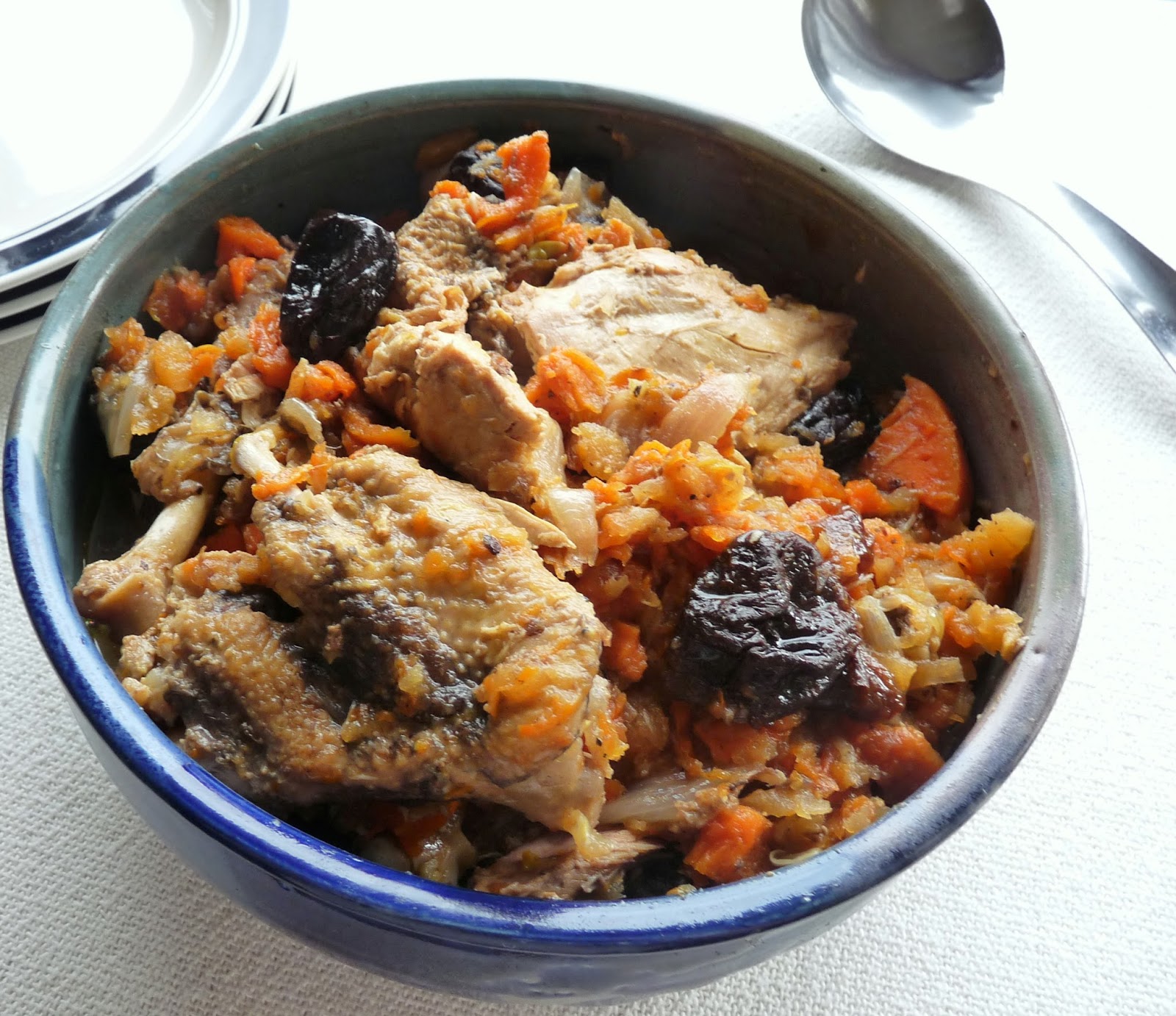
Braised Guinea Fowl with Carrots & Prunes

I can't believe I've had this blog for mumble, mumble years, and this is the first time I have cooked a Guinea fowl recipe. Okay, I'm going to have to admit it: this is the first time I have cooked a Guinea fowl! What is it they say? Tastes like chicken!

They are not the easiest things to get hold of, but I think they are becoming more available. I got mine at Cirrus Hill Farm, where I was assured they cook exactly like a chicken. So you can use Guinea fowl in any chicken recipe you like, or if you can't get Guinea fowl, you can use chicken in a Guinea fowl recipe. The meat is perhaps a little gamier than chicken. It looks quite dark when raw, but it cooked to look very much like chicken, except for some darker patches of skin. My bird was not quite as plump, especially in the breast and thighs, as I would have expected in a chicken, and on that note I would say there was a fair bit less fat too - this was a very lean bird.

This recipe is exactly what you can expect from me for winter meat cooking; with all my favourite elements of braising, vinegar, root vegetables, and - less usual - prunes and a little honey to mellow it. Serve it with polenta, mashed potatoes, pasta, rice, quinoa; whatever you like. We had ours with mashed potatoes and peas.

4 to 6 servings
3 hours - 1 hour prep time

Braised Guinea Fowl with Carrots & Prunes

1 1.5 to 2 kg (3.5 to 4 pound) guinea fowl or roasting chicken
2 medium carrots (2 cups diced)
1 cup diced celeriac, rutabaga, OR parsnip
2 medium onions OR 1 large leek
3 or 4 cloves of garlic
3 tablespoons bacon fat, chicken fat, or mild vegetable oil
1/2 cup apple cider vinegar
1/2 cup broth or water
2 or 3 bay leaves
1 teaspoon salt
freshly ground black pepper to taste
1 tablespoon honey
1/4 cup balsamic vinegar
1 cup pitted prunes

Cut the guinea fowl into pieces; remove the legs and joint them into thigh and drumstick; cut the wings off and remove the tips from them; and carve the breasts off in one piece from each side. Set these pieces aside, apart from the wing tips which should go into a 2 litre (quart) pot with the rest of the carcass, broken into 3 pieces, and along with the neck if you have it. Cover the bones with a generous litre of water, and set to simmer on the stove.

Peel and cut the carrots into small chunks. Peel and cut the celeriac, rutabaga or parsnip into small chunks. You can add some of the peelings to the broth pot if you like. Peel and coarsely chop the onions or wash, trim and chop the leek, and peel and slice the garlic.

Heat 2 tablespoons of the fat in a large skillet and brown the carrot and celeriac, rutabaga or parsnip pieces. When they begin to show brown spits, add the onion or leek. When they are all nicely browned, put the vegetables into a large stew pot, with the apple cider vinegar and the broth. You can dip it out of the pot of simmering bones. Add the bay leaves, salt, and pepper. Bring it all to a simmer.

Add another tablespoon of fat to the skillet and brown the guinea fowl pieces on each side. Add them to the stew pot with the vegetables, cover, and simmer gently for 1 hour.

Remove the pieces of fowl from the pot, along with the bay leaves. Discard the bay leaves. Mash the vegetables well, then add the fowl pieces back into the pot, along with the honey, vinegar and prunes. Simmer for another half hour, then serve.

p.s. I didn't say what to do with the pot of broth, did I? Well, when it's done, you strain it. And it's broth. Use it for something else. If you don't have an immediate use for it, it will freeze well. 


Last year at this time I made Meyer's Lemon Curd Cake Roll. This year I only have 2 lemons and they are not quite ripe yet!

Wednesday, 19 March 2014

Parsnips with Prunes & Lemon

This was a simple but very effective way to serve parsnips!

I dried the prunes myself in the summer, which is the only way you will get local ones, I'm afraid. Consequently, they were quite firm - not to say hard - and I soaked them in boiling water before I added them to the parsnips, along with the tiny amount of liquid still on them. I also used half the amount of butter I am calling for. It was adequate, I suppose, but I had to watch the parsnips very carefully to keep them from scorching. Better to use a bit more butter if you can.

Be sure to keep the heat at medium when you cook the parsnips, both with the water and after, to make sure they are cooked through by the time they are well browned. 

4 servings
20 minutes prep time

Parsnips with Prunes & Lemon

450 grams (1 pound) parsnips
2 tablespoons unsalted butter
1/2 cup water
1/2 cup quartered prunes
the juice of 1/2 lemon
salt & freshly ground black pepper to taste

Peel and trim the parsnips, and cut them into bite-sized slivers. Heat the butter in a medium-sized skillet, and when it sizzles add the parsnips and the water - pour the water in slowly and carefully so it doesn't spatter all over. Cook the parsnips over medium heat, turning occasionally, for the 5 minutes or so that it takes for the water to evaporate.

Once the water evaporates, continue cooking the parsnips for another 5 or 10 minutes, turning them occasionally so that they are evenly browned. When they are nicely browned and tender, add the prunes and the lemon juice. Sprinkle with a little salt and a grind of black pepper. Continue to cook and turn the parsnips until the lemon juice has been absorbed - just a minute or two more - then turn them into a serving dish.

Friday, 30 August 2013

Peach Upside-Down Cake

This year I didn't go for a traditional birthday cake. With all the lovely fresh peaches around, it seemed like time for Peach Upside-Down Cake, and very yummy it was too. I thought this was even better on the second day, so it can and probably should be made a day before you want to eat it. However, with the fresh peach topping it won't last long so keep that in mind too.

I used a 9" springform pan for this and that... didn't exactly work. It was fine until I got it into the oven and then the butter topping started leaking out.  So don't do that. I did put a tray under it, and it didn't leak horribly, but still, no springform pans.

8 to 12 servings
1 hour 30 minutes - 30 minutes prep time

Peach Upside-Down Cake

1 1/2 cups soft unbleached flour
2 teaspoons baking powder
1/2 teaspoon salt
6 medium peaches
1/3 cup unsalted butter
2/3 cup Sucanat OR dark brown sugar
3 large eggs
2 teaspoons vanilla extract
2 tablespoons rum
3 tablespoons melted butter
4 tablespoons Sucanat OR dark brown sugar
1/4 cup buttermilk OR thin yogurt

Butter a 9" round, deep cake pan, and line the bottom with parchment paper. Preheat the oven to 325°F.

Put a pot of water on to boil, to which at least 3 of the peaches can be added and have the water cover them. Measure the flour and mix in the baking powder and salt; set this aside in a small mixing bowl if you need the measuring cup to continue, or leave it in the cup if not. When the water boils, blanch the peaches for 1 minute, in one or two batches depending on the size of the pot. Rinse them in cold water at once to cool them, and peel them. Set them aside.

Cream the butter in a larger mixing bowl, and work in the sugar until soft and well amalgamated. Beat in the eggs one at a time. Mix in the vanilla extract and the rum.

Melt the butter and put it into the prepared pan, spreading it evenly over the bottom by tilting and turning the pan, or use a pastry brush if preferred. Sprinkle the remaining 4 tablespoons of Sucanat evenly over the butter. Cut the peeled peaches in half, discarding the pit. Place them cut side down evenly over the prepared butter and sugar.

Mix the flour into the butter and egg mixture alternately with the buttermilk or yogurt. Scrape this evenly over the peaches in the prepared pan. Bake for 50 minutes to 1 hour, until the cake tests done with a toothpick inserted in the middle.


Last year at this time I made Fresh Corn "Polenta".