Showing posts with label Beef. Show all posts

Monday, 2 May 2022

Turkish Shepherd's Pie Kebab

Classic meat and potatoes, the Turkish way! I see a lot of versions of this on Pinterest, with the meat portion and potato portion shaped in different ways, but the dish overall consisting of all the same parts. The dishes get different names, but really, it's these components in some configuration. 

The easiest way, and the most like a classic shepherd's pie, would be to press the meatloaf mixture into a shallow baking pan, and then when the time comes, pour on the sauce then spread the potatoes evenly over the top. I've seen that done. But this shaping the meat into individual cups to hold the potato topping is even more common, although the exact shape varies quite a bit. For some reason Turkish dishes often are made into a group of clearly delineated portions like this. Perhaps it's so that if you have a large family, you know the dish will make it all they way around the table without running out because the first people to be served take too much? Or maybe I'm over-thinking it. 

At any rate, these were cute, not hard to make, and a very satisfying take on the theme of meat and potatoes. I used lamb, which is always the proper meat to use in a shepherd's pie; otherwise it's technically a cottage pie although few people seem to stick to that convention these days.
 
4 to 8 servings
2 hours. This is going to take 2 hours, with 1 1/2 hours being prep time.
 
 
Mix the Spices:
1/2 teaspoon salt
1/2 teaspoon allspice berries
freshly ground black pepper to taste 
1 teaspoon sweet or smoked paprika
2 teaspoons rubbed dry mint

Grind the salt and allspice berries, then mix all the remaining spices with them in a small bowl.

Make the Meat Patties:
1 medium onion
1 small carrot
1 cup shredded cabbage
1/4 medium red pepper
2 cloves of garlic
1 tablespoon mild vegetable oil
500 grams (1 pound) ground beef OR lamb
1 large egg
 
Preheat the oven to 375°F. Lightly oil a baking pan. 
 
Peel and finely dice the onion. Peel and grate the carrot. Wash, trim, and shred the cabbage. Deseed the pepper and dice it finely. Peel and mince the garlic.

Heat the oil in a small skillet and cook the onion and carrot until softened. Mix in the little bowl of spices. Add the garlic then the cabbage, and cook, stirring until just wilted down. Transfer it all to a mixing bowl and let it cool. 

Mix in the ground meat and the egg by hand, until you have a smooth evenly blended mixture. 

Divide the mixture into 8 equal portions, and form each one into a ball. Then press in the middle and shape each ball into a shallow bowl. Place them in an oiled baking pan, that fits them snugly but in a single layer. Bake for 20 to 30 minutes (the time necessary to cook the potatoes).

Make the Potato Topping:
700 grams (1 1/2 pounds) potatoes
3 tablespoons unsalted butter
1/3 cup yogurt
1/2 teaspoon salt
freshly ground black pepper to taste

Wash, trim, and peel (if you like) the potatoes. Cut them into even chunks. Put them in a pot with water to cover them well, and bring to boil. Boil steadily until fork tender; 10 to 15 minutes. Drain them well and mash them with the butter, yogurt, salt, and pepper. 

Finish the Dish:
1/4 cup tomato sauce
1/4 cup water
125 grams (1/4 pound) Cheddar cheese 

When the potatoes are cooked and mashed, and cool enough to handle (but still fairly hot) divide them into 8 equal portions. Shape each portion into a ball, flatten slightly, and place one on each hot, partially-cooked piece of meat. 
 
Mix the tomato sauce and water, and pour it around the meat patties.

Grate the cheese and sprinkle it over the dish. Bake at 375°F for another 20 to 30 minutes, until the cheese is browned and bubbling. Let rest 10 minutes before serving.


Last year at this time I made Vietnamese Style Noodle Salad.

Monday, 18 April 2022

Danish Meatballs in Curry Sauce

Everybody knows Swedish Meatballs! And they're delicious, no question. But rich, very rich. You would expect the Danes - who make some wildly rich dishes themselves - to try to out-do them, but in fact this popular Danish meatball dish is fairly restrained, especially if you use ground chicken. Or turkey. I didn't list it but more because I was running out of room than because I don't think you could use it. So this is really more suitable for cooking on a regular basis, and it's also quicker and easier to make.

Just like any Canadian "curry" from the past, it calls for an apple to add a little sweetness. A touch of lemon then sharpens it up. It's usually served with rice, but potatoes or noodles would be good too. Just add a green salad or vegetable to finish your meal.
 
4 servings
45 minutes prep time
 
Danish Meatballs in Curry Sauce
 
Make the Meatballs:
500 grams (1 pound) ground veal, chicken, OR pork
1 small onion 
1 large egg
3 tablespoons wheat flour OR toasted barley flour
1 teaspoon salt
freshly ground black pepper to taste
the finely grated zest of 1/2 lemon, optional
a little milk if needed
2 or 3 tablespoons minced parsley, if possible
3 cups chicken or vegetable broth

Put the meat into a mixing bowl. Peel and mince the onion, and add it, along with the egg and all the seasonings. Mix well and form into 20 or 24 equal balls. 

Bring the broth to a boil in a heavy-bottomed soup pot. Gently add the meatballs and simmer for about 20 minutes. 

Make the Sauce:
1 small onion
3 tablespoons unsalted butter
1 large apple
3 tablespoons wheat flour OR toasted barley flour
2 tablespoons Madras curry powder
salt & freshly ground black pepper to taste
the juice of 1/2 lemon OR 2 tablespoons apple cider vinegar

Meanwhile, peel and mince the onion. Heat the butter in a medium skillet over medium heat. Add the onion and cook gently. While it cooks, wash and core the apple, and cut it into dice. Add it to the onion to sauté. Stir regularly. 

When the onion and apple are softened, sprinkle the curry powder and flour over them. Mix in well and let cook for another minutes until no dry powder is visible. Season with the salt and pepper. 

Scrape them into the pot of meatballs, and mix in gently but well. Add the lemon juice. Simmer for another 5 to 10 minutes, until thickened.

Serve at once over steamed rice.


Last year at this time I made Spinach Tortilla Wraps

Friday, 15 April 2022

Iraqi Lamb & Cabbage Stew

Like most stews, there's nothing complicated about this; it just needs a little advance planning. Get the split peas and lamb cooked the day before; put everything together and simmer the next day for perfect winter comfort food. Getting towards the end of the season for that, I hope, though. It looks like after a slow start spring is finally gathering some steam. 

The recipes I looked at used lamb shank and coarsely chopped cabbage so I followed suit. However, I think that this would be just as good and certainly less expensive to make with lamb stewing meat, with or without bones although bones are better if you can find it. If you are buying your lamb from a butcher you maybe able to score some soup bones. Even a little beef bone would be better than none. In fact, if lamb is not an option I would make this with beef and still expect it to be really very good.
 
My lamb shanks were the biggest I've ever seen, so I used two for the three of us, cutting off the meat and removing the bone before serving. There was enough left over for Mr. Ferdzy and I to have it for lunch the next day. So smaller pieces of lamb are better, in my opinion, and also I would chop the cabbage more finely. With those minor changes, this is one of the best stews I've had in quite a long time. 
 
This is traditionally made with dried limes, but good luck with that. I just put in a little squeeze of fresh lime juice at the end. 

You can serve it with rice, or bread on the side. It's definitely soupy/stewy, so in any case be sure to supply spoons.
 
4 to 6 servings
2 hours 45 minutes - 45 minutes prep time

Iraqi Lamb & Cabbage Stew

Advance Cooking:
1/2 cup split yellow peas
2 cups water
1/4 teaspoon salt 
1 tablespoon olive OR mild vegetable oil
2 kilograms (4 to 6; 2 pounds) small lamb shanks
OR 1 kilo bone-in stewing lamb
water
1 teaspoon salt
 
Put the split peas, water and 1/4 teaspoon salt into a rice cooker and let them cook. Alternatively, put them in a pot and simmer gently until the peas are softened. Stir regularly. 
 
Meanwhile, heat the oil in a large skillet and brown the lamb evenly. Put it into a heavy-bottomed stew-pot with 2 cups water and 1 teaspoon salt. Cover, and simmer gently for about 1 hour, until cooked through. 

OR put it in an Instant Pot with 1 cup water and 1 teaspoon salt. Cook for 30 minutes then allow it to release naturally.
 
Both of these can be done up to a day ahead. 

Mix the Spices:
1 tablespoon coriander seed 
3/4 teaspoon black peppercorns
2 teaspoons cumin seed
1 teaspoon salt
1 tablespoon Madras curry powder
2 teaspoons sweet paprika
2 or 3 bay leaves 

Grind the coriander, peppercorns, and cumin with the salt. Mix them in a small bowl with the remaining spices and set aside until needed.
 
Make the Stew:
2 medium-large onions
6 cups chopped cabbage
2 cups crushed tomatoes
the juice of 1 medium lime
chopped cilantro of parsley to garnish, if possible

Peel the onions and chop them fairly coarsely. Wash, trim, and chop the cabbage. 
 
Add the spices and cooked peas to the meat, in a large heavy-bottomed pot. Add the tomatoes. Bring to a simmer and simmer gently for half an hour, stirring regularly. Add the onion and simmer for 15 minutes, then add the cabbage and lime juice and simmer for 10 to 15 minutes, stirring regularly, until the cabbage is done. 

If you can serve it garnished with a little chopped cilantro, so much the better. 


Last year at this time I made Onion, Mustard, & Red Pepper Bulgur.

Wednesday, 30 March 2022

Ürgüp Köftesi

I've made meat patties with potato in them before, quite early in the history of this blog, in fact. Much as I liked those Gehacktes Rinderschnitzel, these are more complex and spicy and have quite a different feel (and taste!) to them. 
 
As ever, when grating potato to be cooked in a pan, it is so important to squeeze out as much liquid from them as possible. That hasn't changed. Also dredge them generously in flour - I prefer barley flour for this - to give them the distinct crispy finish.  

Eat them with rice and salad, or in a wrap with lettuce and pickles. You could make them a bit larger and put them in a bun too, I suppose; why not? 

These are Ürgüp Köftesi because they are koftas (meatballs) from Ürgüp, in Turkey.

4 to 6 servings
45 minutes prep time
 
Meat Patties from Ürgüp (Turkish)

2 tablespoons semolina OR bulgur
1 medium onion
2 to 5 cloves of garlic
500 grams (4 medium; 1 pound) potatoes
1/4 to 1/2 cup finely chopped parsley
500 grams (1 pound) ground beef or lamb, or mix
1 large egg
1 teaspoon salt
1/2 teaspoon allspice berries
freshly ground black pepper to taste
1 teaspoon sweet paprika
1/2 to 1 teaspoon Aleppo pepper
1/3 to 1/2 cup barley or wheat flour
mild vegetable oil to fry
 
If using semolina, it can go straight into the mixing bowl. But if you are using bulgur, it should be soaked in boiling water while you prepare the other ingredients, then drained. 
 
Peel the onion but leave the base plate on. Use that to hold onto while you grate the onion finely into a strainer. Peel and grate the garlic. It can go into the mixing bowl. Wash the potatoes and trim them, or peel them if you like, and grate them onto a board. Then, take them by handfuls and squeeze well over the sink to remove as much liquid as possible. Add the drained handfuls to the mixing bowl, then give the onion a final press and add it too. Wash, dry, and finely chop the parsley and add it. Add the ground meat and egg.
 
Grind the salt and allspice berries together, then add them with the remaining seasonings. Mix very well by hand. 

Spread the flour over a plate. Form the mixture into 12 to 18 equal sized balls, and flatten them to a 1" thick disk. Dredge them in the flour. 

Heat a good layer of oil in a large skillet over medium heat. Fry the köftesi for 4 to 5 minutes per side, until nicely browned. Test one to be sure the juices are running clear, then let them rest for 5 minutes before serving. 

The mixture will keep, well-sealed, for 24 hours in the fridge, so they can be made ahead or cooked in 2 batches. 


Last year at this time I made Bean, Belgian Endive, & Blue Cheese Salad.

Wednesday, 23 March 2022

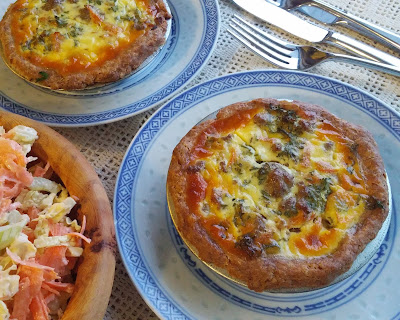
Russian Meat Pie

I'm giving instructions for making this as 1 large pie, but I actually made one medium pie (for my mother and I) and a couple of individual pies (for Mr. Ferdzy). This will all make sense when I also tell you that the medium pie was made with chopped lamb liver (could have use beef, or chicken for that matter) and the smaller ones had regular ground beef in them. The kind of meat you use in these is really very flexible; it just has to be chopped up fairly finely. 

This is another relative of the Russian pies made with some combination of yogurt/sour cream/mayonnaise, and no complaints here. It was lovely. 

As with the meat, the herbs can be changed around. If there's anything that's immutable, I'd say that lots of onions are required. 

It feels strange publishing a Russian recipe at the moment, but let's try to remember that people are not their nation's politics. I'd like to share a story I heard of a woman in our town, a friend of my mother-in-law's. She used to go around and share her history with high-school students. She came from Poland (I think), and was a teenager during WWII. When the Russians came in from the east, she was on the road as a refugee. She was seized by a band of Russian soldiers, raped, and left to die in a snow-bank. A little while later another band of Russian soldiers came along, who pulled her out and gave her medical treatment and took care of her until she could get to a better situation. 

Let's remember that every society has its smashers and its menders. Let us be on the side of the menders and support them wherever we can find them.
 
8 servings
1 hour 30 minutes - 45 minutes prep time
 
Russian Meat Pie
 
Make the Pastry:
1 1/2 cups whole spelt flour
3/4 teaspoon salt
3/4 teaspoon baking powder
1/3 cup cold unsalted butter
1/2 cup thick yogurt
 
Mix the spelt flour with the salt and baking powder in a mixing bowl. Grate in the butter, pausing to dust the flour over it every so often. Rub the butter into the flour until evenly distributed but still in little lumps. Mix in the yogurt to form a ball of stiff dough. Cover and set it aside.
 
Make the Filling:
3 medium onions
3 cloves of garlic
1 medium carrot 
1 tablespoon bacon fat or mild vegetable oi
1/4 teaspoon salt
freshly ground black pepper to taste
400 grams (scant pound) ground beef or other meat
1/3 cup chopped fresh parsley and/or dill
 
Peel and chop the onions. Peel and mince the garlic. Peel and grate the carrot. 
 
Heat the fat or oil in a large skillet and cook the onions and carrot gently over medium heat, stirring regularly, until softened and reduced. Add the garlic and seasonings. Add the ground or finely chopped meat, and cook until browned but still with a fair bit of pink showing. Remove the pan from the heat. 

Wash, dry, and chop the herbs. 

Roll out the pastry to fit your pie plate(s). Spread the filling out in it evenly, and sprinkle with the chopped fresh herbs. Preheat the oven to 350°F. 

Make the Topping:
1 cup thick yogurt
1/4 cup mayonnaise
3 large eggs
1/4 teaspoon salt
freshly ground black pepper to taste

Whisk the mayonnaise into the yogurt, then beat in the eggs one at a time. Season with the salt and pepper, and whisk again. Pour this evenly over the prepared pie(s). Shake them gently to settle the topping into the meat. 

Bake at 375°F for 45 to 50 minutes for a single pie, or for 30 to 35 minutes if you have made 6 single pies. In any case the filling should be just set in the middle, and show some brown spots. 

Let rest for 10 to 15 minutes before serving; also fine at room temperature.

Friday, 25 February 2022

Bulgarian Princesses

This traditional Bulgarian dish was commonly made when making sausages; leftover filling was spread on bread and broiled. It then went on to became a popular snack whether sausages were being made or not. You can season the meat however you like, really, although this was a pleasant combination.
 
Why are they called Princesses? No idea. It sounds a bit cannibalistic, but I hope the actual implication is that they are good enough for a princess. Not one of your sits-in-a-tower-embroidering princesses, but an I'm-also-a-general-in-the-army type princess, with a hearty appetite. 

My beef (and given the relatively small amount needed, it was only beef) is grass-fed and therefore very lean. This is a dish that needs a little fat in it, to melt into the bread and give it the perfect texture. Not too much though; I added a scant tablespoon of bacon fat to my mixture (before the egg, so I could get it well-distributed) and it worked perfectly. 

Why yes, these really are a lot like an open-faced hamburger. More fun, but I think some pickles and slice of tomato would do them nothing but good. Salad is a great accompaniment for them. I say nothing of French fries.
 
4 servings
20 minutes prep time
 
Bulgarian Princesses - Open-Faced Grilled Meat Sandwiches

3/4 teaspoon cumin seeds
1/4 teaspoon black peppercorns
1/2 teaspoon salt
1 teaspoon rubbed savory
1 teaspoon sweet smoked paprika
1 or 2 cloves of garlic
1 tablespoon minced parsley, OPTIONAL
250 grams (1/2 pound) slightly fatty ground beef
  OR beef and pork mix
1 large egg
1 medium baguette
  OR 4 crusty buns
 
Grind the cumin and pepper with the salt, then mix all the spices in a mixing bowl. Peel and mince the garlic, (and mince the parsley) and add it along with the beef. Mix well, then mix in the egg. 

Preheat the oven broiler. 

Slice the bread or buns. Toast them lightly under the broiler, then turn the oven heat to 400°F. Spread the buns with the beef mixture while the oven heats, then bake them for 8 to 10 minutes until the meat is done. If the meat is done but you think it could have a better colour, put the princesses under the broiler for a couple of minutes. Serve hot, garnished with a sprinkle of parsley, if possible.


Last year at this time I made Bachelor's Baked Hash. Huh. Do I want meaty, carby comfort food all the time at the end of February? Apparently.

Monday, 21 February 2022

Beef Adobo

I think this is particularly good with bone-in beef, but it is not required.  

It's funny how one's taste evolves over the years; I think I'm getting to the point where if I am served a meat dish with no vinegar in it I feel like something vital is missing. Well, it's not missing here. It's also interesting to me to compare this dish, the result of Asian colonization by people from the Iberian peninsula, with the other such dish I made a little while ago. It's a Spanish-Filipino fusion, rather than a Portuguese-Indian one, and while there are points of similarity it's also pretty different. I don't think I could tell you which one I like better; they're different moods but I don't think I'd ever be sorry to see one of them on the table.
 
4 servings
2 hours to overnight marinade time
20 minutes prep time
2 hours cook time
 
Beef Adobo
 
2 tablespoons finely grated fresh ginger
3 or 4 cloves of garlic
2 bay leaves
1/3 cup apple cider vinegar
2 to 3 tablespoons maple syrup
2 tablespoons soy sauce
1 tablespoon fish sauce
freshly ground black pepper to taste
500 grams (1 pound) stewing beef
OR 900 grams (2 pounds) stewing beef with bones
2 or 3 medium onions
2 tablespoons mild vegetable oil

Peel and grate the ginger; peel and grate the garlic. Put them in a container which can be covered and which will hold the beef. Mix with the remaining marinade ingredients. Marinate the beef for 2 hours to overnight in the fridge. 

Peel, trim, and cut the onions in quarters, then in slices (quarter rings).
 
Heat the oil in a large heavy-bottomed soup pot over medium heat. Cook the onions in it until soft, stirring regularly. Add the beef, with the marinade. Cook gently for 1 1/2 to 2 hours until the marinade slowly evaporates and the beef fries and browns slightly in the residual oil. It's best to get it started with a lid on it, then let the liquid reduce faster towards the end of the cooking time. Let the adobo rest 5 minutes before serving. 


Wednesday, 9 February 2022

Sauerbraten

I've made this a few times over the winter; I think it is one of my favourite pot roasts - this is one of the tastiest marinades for beef out there. Since I made it several times, I used a few different roasts. I thought the sirloin tip was noticeably the best, and the chuck roast was... chewy. Tasty, but chewy.
 
You will notice I don't brown the roast. I can't stand the smoke and spatter of doing so, and now I only brown meat that is going into the Instant Pot. Same would apply to using a slow cooker. The initial bake at 400°F is enough to make it reasonably brown on top; at least, I think so. 

I found the cooking time somewhat variable with the different roasts. This is also probably not the best roast to make if you are planning for a very specific start time for your meal, as I suspect the time may vary a bit in any case. It could be reheated in some of its own juices if made in advance and sliced, but in that case be sure to keep it a bit on the rare side in the first cooking.

6 to 8 servings
15 minutes to make marinade 
2 to 4 days to marinate
2 hours prep & finish plus N hours per pound to roast
including warm-up from fridge

Sauerbraten; sweet and sour pot roast
 
Make the Marinade:
1 medium onion 
2 or 3 cloves of garlic
2 or 3 bay leaves
2 teaspoons salt
1 teaspoon black peppercorns
1 teaspoon juniper berries
10 to 12 whole cloves
a 2" stick of cinnamon OR 1/2 teaspoon ground cinnamon
2 teaspoons ground ginger
a good grate of nutmeg
2/3 cup red wine
2/3 cup red wine vinegar
2 tablespoons apple butter 
1.5 to 2 kilos (3 to 4 pound) rump, blade, round, or cross-cut roast;
   -  sirloin tip is particularly recommended

Put everything but the roast into a pot, and bring it to a boil. Allow it to cool slightly, then immerse your roast in it. Keep refrigerated for 2 to 4 days, turning the roast a couple of times to be sure it is evenly marinated. 

I have found the best container to brine or marinate roasts and small poultry is a stainless steel compost bucket. You can keep one for the purpose, or just run the regular one through the dishwasher first.

To Cook:
2 carrots 
2 onions
2/3 cup beef or chicken stock

Bring the roast out and clean off the marinade (discard). Leave the roast out for an hour to bring it up to room temperature. This is important, or the cooking times will be off. 
 
Preheat the oven to 400°F. 

Peel and cut the carrots into small chunks. Peel and chunk the onions. Lay them in the bottom of a roasting pan, and pour the broth over them. Lay the roast over the top. 

Roast at 400°F for 30 minutes. Reduce the heat to 225°F and continue roasting for approximately 1 hour per pound. Internal temperature should be 160°F to 180°F for medium to well-done beef, which I recommend for this recipe. Cover loosely and let rest for 10 to 15 minutes before carving.
 
I used a deep roasting pot with a lid, and covered the roast during the cooler roasting time, and just left it on while it rested. 


Last year at this time I made Turkey & Wild Rice Porcupines

Friday, 28 January 2022

Beef Vindaloo

This famous Indian dish has its roots in Portuguese cooking; it comes from vinha d'alhos; meat (pork to be precise) heavily marinated in vinegar and cooked with plenty of garlic, popular throughout Portugal. There was a large Portuguese trading community in India, and the dish underwent a transformation into one that is intensely sharp and spicy. The usual meats are either pork or beef; neither one very common in most Indian cuisines. I prefer beef but you could certainly use pork.

There are quite a lot of Indian dishes that don't necessarily require a lot of heat, but this is really not one of them - it is widely agreed that Vindaloo should be hot. I have to say it is a favourite of mine, and I am looking forward to making it again soon. 

It's a funny quirk of culture that the Portuguese took to hot chiles with a fair bit of enthusiasm once exposed to them (think of Piri-piri sauce for instance) but the Spanish absolutely did not. One of the things I carried with me when we walked the Camino de Santiago was a packet of Cayenne pepper, and I was really glad to have it.
 
6 servings
20 minutes to prepare the marinade
2 hours 30 minutes to cook - 30 minutes prep time
NOT including marinating time
 
Beef Vindaloo
 
Make the Marinade Paste & Marinate:
6 cloves of garlic
1 1/2" piece of ginger
1 tablespoon coriander
2 teaspoons cumin
1/2 teaspoon black peppercorns, crushed
3 tablespoons sweet paprika
1/4 to 2 teaspoon hot red chile powder (to taste)
6 to 8 green cardamom pods
1/2 teaspoon ground cinnamon
1/2 teaspoon ground turmeric
1 tablespoon amchur powder OR tamarind paste
1 tablespoon apple butter OR 1 teaspoon sugar
1/2 cup apple cider vinegar
1 kilo (2 pounds) stewing beef (or pork) pieces
 
Peel and slice the garlic and ginger, and add them to the bowl of a food processor. If you have a smaller one, use that. Add the spices - the peppercorns should be crushed somewhat first - the apple butter or sugar, and the vinegar. Process until you have a fairly smooth paste, stopping to scrape down the sides as necessary. 

Scrape the marinade into a non-reactive container with a snug lid. Add the meat, and turn it in the marinade until evenly distributed. Seal the container, and keep refrigerated for 2 hours to overnight.

Cook the Dish:
2 medium onions
2 tablespoons mild vegetable oil
1 cup water
cilantro to garnish

Peel the onions and cut them in half lengthwise. Lay them flat and cut each half lengthwise again, then cut into slices. 

Heat the oil in a large heavy-bottomed soup pot, over medium-high heat. Cook the onions until they are softened and reduced in volume, about 5 minutes. Add the meat, with all the marinade scraped in with it. Cook, stirring regularly, for about 15 minutes until the spice mixture is fairly well fried and shows signs of separating. The meat will not brown, not that you could tell anyway. Add the water and bring up to a good simmer. Reduce the heat and simmer for 2 hours, stirring regularly, until the meat is tender and the sauce has reduced to coat it. 
 
It's best if you can make this in advance and re-heat it. Serve hot. 


Last year at this time I made Honey Braised Turnips.

Wednesday, 29 September 2021

Hawawshi - Stuffed Pitas

Apparently this dish, which is sort of the Egyptian version of fast food hamburgers, was invented in the 1970s by a butcher named Hawawshi, who sold them in Cairo from a cart. 
 
It's a simple mixture of spiced meat with some vegetables, stuffed into pita bread halves (in Egypt they use a slightly thicker but similar bread called baladi; if you can get it you should use that) and baked or grilled until the meat is cooked. 
 
Many recipes call for wrapping the mixture in a homemade bread dough, but it's at least as common just to use pre-made bread. I was perfectly happy with whole wheat pitas. I've made these a couple of times, once right on the parchment and once on a rack to keep them out of the oil that exudes as they bake. It helped, but didn't make as much difference as I expected, so if you don't have one, don't worry. Some people call for cooking these in a panini grill. I haven't tried that, but I plan to. Also, you can fill these and freeze them for later. Thaw in the fridge before cooking. 
 
Keep the vegetables as dry and well-drained as you can to keep the hawawshis from getting soggy. Be sure when you are filling them to get the meat spread right to the edges, and in a thin, even layer. For this reason, cut and open all the pitas before you start filling - it will be hard to get them open properly otherwise.   
 
4 servings
50 minutes - 20 minutes prep time 

Hawawshi - Egyptian Meat-filled Pitas
 
1 small onion
1/4 large red or orange pepper
1 medium plum (paste) tomato
1 or 2 cloves of garlic
1/4 cup chopped parsley 
1/4 cup chopped cilantro
2 tablespoons fresh chopped mint OR 1 teaspoon rubbed dry mint
3/4 teaspoon salt
freshly ground black pepper to taste
1/4 teaspoon cumin seed
1/2 teaspoon coriander seed
1/8 teaspoon ground cinnamon
1/8 to 1/2 teaspoon Aleppo pepper (to taste)
400 grams (14 ounces) ground beef OR lamb OR blend
2 large OR 3 medium pita breads
a little olive oil 

Preheat the oven to 400°F. Line a baking tray with parchment paper. If you have a rack you can put over it, it's a good idea to keep the hawawshi off the paper.
 
Peel and chop the onion finely, and put it in a mixing bowl (along with everything else, up to the pita bread). Wash, trim, and chop the pepper finely. Chop the tomato finely, and salt it - set it aside to drain. It should be quite dry when added to the bowl. Wash and dry the herbs, and chop them finely. Grind the cumin and coriander seeds and add them with all the other herbs.

Add the beef or beef and lamb mixture, and mix well by hand.

Cut the pita in half and gently be sure they are completely open. Fill each half with a proportionate quantity of the filling, pressing it right up to the edges in a thin, even layer. Brush each filled half pita lightly with olive oil and lay it gently on the rack (or parchment paper, if you haven't got one). 

Once they are all filled and on the tray in a single layer, bake them for 15 minutes at 400°F. Turn them over and bake for a further 10 to 15 minutes, until crisp and browned. Let rest for 5 minutes before serving. 


Last year at this time I made Cauliflower Fritters.

Friday, 20 August 2021

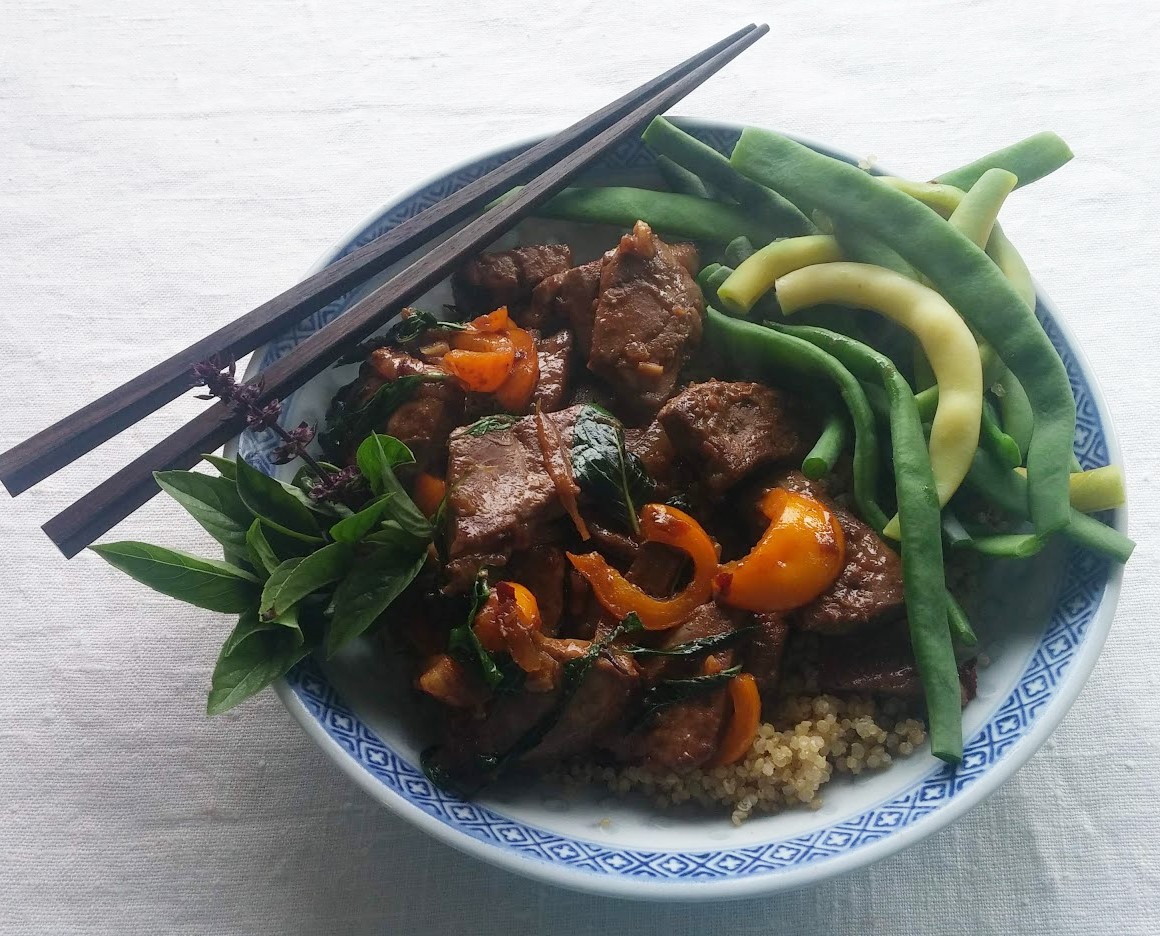
Thai Basil Stir-Fried Liver

Yes, I made Mr Ferdzy a chop. 
 
I used beef liver for this, but I tend to think lamb liver is the best liver, and I see no reason why chicken livers would not work well. I tend to avoid pork liver; it is just too intense. But if you like it, you could use it. 
 
Liver is, of course, used regularly in Thai cooking; it's just fairly unlikely to show up in North American restaurants given the lack of popularity of liver in these parts. I think the strong fragrant flavour of Thai basil goes with it extremely well. Liver in general stands up well to the kind of strong flavours in this dish, being a strong flavour itself.  

This is a pretty simple and straightforward stir-fry; as usual with stir-fries, make sure all your ingredients are prepared and ready to go before you start cooking
 
2 servings
40 minutes prep time

Prepare the Sauce:
1 tablespoon fish sauce
1 tablespoon soy sauce
1 tablespoon oyster sauce
the juice of 1/2 lime
a pinch of sugar (optional)

Mix these in a small bowl and set them aside.

Finish the Dish:

300 grams (10 ounces) beef or lamb liver
4 shallots
1 small sweet orange or red pepper 
1 cup loosely packed Thai basil leaves
3 cloves of garlic
1 or 2 small hot chiles OR dried red chile flakes to taste
2 tablespoons mild vegetable oil

Cut the liver into bite-sized pieces, discarding any tough or stringy bits. Put it in a small bowl and set it aside.

Peel and sliver the shallots. Core, de-seed, and sliver the sweet pepper. Strip the basil leaves from the stems, discarding the stems. Peel and mince the garlic, with the hot chile if you are using a fresh one.

Heat the oil in a large skillet over medium-high heat. Add the garlic and chile (or chile flakes), and let sizzle for a minute or two until the garlic just darkens a little. Add the liver, shallots, and pepper at once. Cook, stirring regularly, until the liver and vegetables are cooked - not more than 3 or 4 minutes. Add the sauce a minute or two into the cooking process; it will be absorbed and disappear about the time the meat is done.

Stir the basil leaves into the pan and turn off the heat. Keep stirring just until they are well wilted and distributed throughout, then serve at once.


Last year at this time I made Yogurt Baked Bulgur & Vegetables

Monday, 21 June 2021

Steak & Blue Cheese Salad with Horseradish Dressing

Salads with meat have become a mainstay here, as a brief look at the posts from the last month or so will show. I've even done a steak salad with lots of radishes already, although this one is a bit different; richer from the blue cheese and creamy dressing, and with a more traditional Canadian flavour profile (by which I think I mean the richness, and the horseradish). 

I'm calling for the steak to be cooked and served warm, but it would be perfectly good with cold steak, leftover from a previous meal. At this time of year if you do outdoor grilling, cooking a little extra for cold salads later is a great idea. 

And now it's the solstice. Hard to believe that from here on in (for the next 6 months, anyway) the days are getting shorter. But given the weather it seems like we've had a long summer already.
 
4 servings
45 minutes prep time 

Steak & Blue Cheese Salad with Horseradish Dressing
 
Make the Dressing:
1/4 cup mayonnaise
3 tablespoons thick yogurt or sour cream
1 tablespoon olive oil
1 tablespoon apple cider vinegar OR lemon juice
2 tablespoons prepared horseradish
salt & freshly ground black pepper to taste
 
Mix all of the above in a small bowl or jam jar. 
 
Make the Salad:
1 small red onion
8 cups mixed salad greens
1 medium carrot
8 to 16 red radishes
600 grams (1.25 pounds) sirloin OR striploin steak
1 tablespoon mild vegetable oil
125 grams (1/4 pound) blue cheese
 
Peel and sliver the onion. Put it in a colander and sprinkle it with salt. Set it aside to drain. 
 
Wash, pick over, and chop the salad greens. Rinse well again and dry them thoroughly. Divide them over 4 dinner plates. Peel and grate the carrot, and wash, trim, and chop the radishes, and distribute them over the salads. 
 
Season the steak with salt and pepper. Heat the oil in a large skillet over medium-high heat. Cook the steak for 3 to 5 minutes per side, until done to your liking. Let it rest for 5 minutes before slicing it into bite-sized pieces and distributing it over the salads. Crumble the blue cheese over the salads. Drizzle the dressing over the salads, and serve at once.  


Last year at this time I made Herby Peas & Bulgur Salad

Friday, 11 June 2021

Salpicon de Res

It's another very simple salad, with radishes, and yet fairly different from other radishy salads I've made this spring/early summer. This one is popular from southern Mexico through much of Central America.
 
You will need to have some leftover cooked beef, or else to make a trip to your local deli counter. The chewier it is, the finer you should chop it, and in general this salad is best with everything chopped fairly finely. Tomatoes will be from the greenhouse at this time of year, but they are an important part of the salad. 

Are we eating a lot of fast and easy salads at the moment? Yes, whenever possible. I am not at all impressed at how hot and dry it is already, apart from that vicious round of frost about 2 weeks ago. Salads definitely hit the spot. Also, got to eat that lettuce (and those radishes) fast - I don't think they will last well this year.
 
2 to 4 servings
30 minutes prep time
NOT including cooking or cooling the beef
 
Salpicon de Res - Central American Beef & Radish Salad

Make the Dressing:
1/2 teaspoon salt
1/2 teaspoon rubbed oregano
freshly ground black pepper to taste
1 tablespoon chopped pickled Jalapeño pepper
the juice of 2 limes OR 1 lemon
3 tablespoons olive oil
 
Mix everything in a small bowl or jam jar, and set aside until needed. 

Make the Salad:
2 cups diced cooked (roast or steak) beef
2 cups diced red radishes
1/4 cup finely chopped parsley
1/4 cup finely chopped chives OR green onion
2 tablespoons to 1/4 cup finely chopped cilantro 
2 tablespoons to 1/4 cup finely chopped fresh mint
1 or 2 large red tomatoes
1 small head lettuce 

Trim and dice the meat. Wash, trim and dice the radishes. Wash, dry, and mince all the herbs. Wash, trim, and dice the tomatoes. Mix all these in a bowl, and toss with the dressing.

Wash and separate the lettuce leaves, and dry them well. You can chop them and add them to the salad, or serve the salad over them; whichever you like. 


Last year at this time I made Balkan Yogurt Soda Flatbreads.

Friday, 21 May 2021

Chebureki - Russian Meat Hand Pies

Chebureki are a simple and straightforward Russian meat hand-pie, similar to Jamaican patties or Cornish pasties, but even simpler than those because they are made with a very basic unraised dough. What I used was not the traditional wheat flour dough, but one based on the buckwheat wraps I've been making lately. Well, it is the buckwheat wraps, with a little oil added. Much better for me, and even tastier, in my opinion. 

Here is where I have to admit I actually used rye flour instead of buckwheat. Sadly, it was okay but not something I intend to repeat. Rye has a slightly sticky quality to it, and here it came across as downright gummy, possibly because the flax meal tends that way too. Next time, it will be back to the buckwheat. But otherwise, these were really delicious and much simpler and faster to make than I would have expected.

These are often described as being fried, and some people do seem to deep fry them. Shallow frying seems to be at least as common, though, and you don't need huge amounts of oil to cook them - just enough to make the dough crispy. If you have patted the filling thin enough they will easily cook through in quite a short period of time.
 
6 to 8 chebureki (3 to 6 servings)
40 minutes prep time
 
Chebureki - Russian Thin Meat Pasties

Make the Filling:
1/2 cup finely chopped parsley
1/2 cup finely chopped green onions
up to 2 tablespoons finely chopped fresh dill, if available
1/4 to scant 1/2 teaspoon salt
freshly ground black pepper to taste
450 grams (1 pound) lean ground beef OR lamb
 
Wash, dry, and finely chop the herbs. Put them in a mixing bowl with the salt and pepper. Add the beef and mix everything very thoroughly - with your hands is best.

Make the Dough & Finish:
1 1/4 cups water
2 tablespoons mild vegetable oil
1 cup buckwheat flour
1 cup ground flax seeds
1/2 teaspoon salt
oil to fry
 
Put the water and oil in a mid-sized saucepan and bring them to a boil. Meanwhile, mix the flour, flax meal, and salt in a small bowl. 

When the water boils, turn off the heat and dump in the dry ingredients. Immediately mix well to form a dough. Transfer it to a plate or clean counter top to cool slightly. (Soak the pan.) 

Divide the dough into 6 or 8 equal portions. Dusting them with buckwheat flour to prevent sticking, roll them out into thin circles. Divide the meat filling into 6 or 8 portions to match the dough, and flatten one portion onto each circle of dough, covering half of it to within about 1/2" of the edges of the dough. You need enough dough to pinch sealed, but the meat will shrink away from the edges as it cooks, so get it as close as is reasonable. Fold the uncovered half of the dough over the meat and press it sealed with a fork. You may wish to trim the edges with a pizza cutter to make a neat half-circle. Set each aside as they are formed. 

Heat a shallow skillet or griddle over medium heat. Add enough oil to cover the bottom of the pan generously. Cook the chebureki for 3 to 4 minutes on each side. Reduce the heat if they are browning too fast. Serve at once, although you can keep them warm in a 200°F oven as they are done to allow for them all to be ready at once.


Last year at this time I made Chicken Thighs Stuffed with Sorrel & Mushrooms.

Monday, 19 April 2021

Coconut Beef & Cabbage Curry

Not a particularly authentic curry from anywhere except my pantry, which still contains a decent amount of cabbage, carrots, and onions, and it made use of can of coconut milk that had been hanging around for far too long and needed to go.  

I'm a bit impressed at how brown and meaty it looks, since it actually contains quite a lot of vegetable. Cabbage and onions do tend to cook down and fade, and since I grated the carrot they're not terribly prominent either. Still, they are definitely there, and all you need is some rice or naan to finish the meal.
 
4 servings
1 hour 30 minutes - 30 minutes prep time
 
Coconut Beef & Cabbage Curry
 
Make the Sauce:
2 teaspoons finely grated fresh ginger
2 teaspoons Madras OR Malaysian curry powder
1 teaspoon sugar
2 tablespoons fish sauce
the juice of 1/2 a large lemon OR 1 large lime
2 tablespoons barley or other flour
1 400 ml can coconut milk
 
Start this after the meat has been prepared and is simmering. 
 
Peel and grate the ginger, and mix it in a small mixing bowl with the curry powder, sugar, fish sauce, and lemon or lime juice. Mix in the flour to make a smooth paste, then stir in the coconut milk, a little at a time. Set aside. 
 
Make the Curry:
500 grams (1 pound) beef steak (round or similar)
2 tablespoons mild vegetable oil
2 cups beef OR chicken broth
3 cups finely shredded green or Savoy cabbage
1 1/2 cups (1 large carrot) grated carrot
1 large onion
 
Cut the steak into thin, bite-sized slices, and pat it dry with a bit of paper towel. Heat the oil over medium-high heat in a large skillet or heavy bottomed soup pot, and cook the steak pieces until browned on both sides. Add the broth, cover, and reduce the heat to medium-low. Simmer for 45 minutes to an hour, until tender. You can add more stock or water if the meat gets too dry, but it is okay if it reduces down in volume some. This can be done up to a day in advance.

Prepare the sauce while the meat simmers. Also wash, trim, and shred the cabbage, and peel and grate the carrots. Peel and sliver the onion. 
 
Once the meat is tender, add the vegetables to the meat and cook, stirring regularly, until they are also tender and slightly browned in spots. Stir up the sauce and add it, and simmer for a further 15 minutes or so, until thickened. Stir regularly. Serve with Naan or steamed rice.


Last year at this time I made Strawberry Whip with Custard.

Wednesday, 31 March 2021

Pizza Strata

Pizza is a pretty good way to use up some bits and pieces of this and that, and a strata is even better. One of your bits and pieces can be some fairly stale bread. You will need to be well-supplied with the cheese, eggs, and milk. This is also much easier than making a pizza from scratch. 

When I say mixed pizza toppings, I mean whatever vegetables you like to have on a pizza - for me that's onions, peppers, tomatoes, mushrooms, and green ones, too, when they are in season, which alas, they are not. But also things like the olives and anchovies, and the last of the deli meat, bacon, or pepperettes, the bottom of the jar of pesto, and so forth. If it's something you like on pizza, and you have it, put some in.
 
4 to 6 servings
1 hour 30 minutes - 30 minutes prep time
 
Pizza Strata with Salads

Soak the Bread:
8 cups diced stale bread cubes
6 large eggs
1 1/2 cups milk
salt & freshly ground black pepper to taste
2 teaspoons rubbed oregano
 
Cut the bread into cubes; something Italian seems appropriate. Whisk the eggs and milk together with the seasonings in a bowl sufficient to hold the bread, and add the bread. Let soak for about 10 minutes. 
 
Preheat the oven to 325°F. and lightly oil a 2 quart (8" x 10") shallow baking (lasagne) pan. 
 
Assemble & Bake the Strata:
250 grams (8 ounces) mozzarella cheese
2 to 3 cups prepared mixed pizza toppings, see note above
180 grams (6 ounces) ricotta cheese
1 to 1 1/4 cups tomato sauce 
 
Grate the mozzarella, and prepare your "pizza toppings". If you wish to use vegetables such as onions, mushrooms, peppers, etc, they should be cut into appropriate sizes sautéd lightly. Tomatoes should be salted and drained for a few minutes. 

Mix only half of the mozzarella in, but otherwise mix most of the prepared toppings into the soaked bread; crumble in the ricotta. 

Carefully transfer the mixture to the prepared pan and spread it out evenly. Top it with the tomato sauce. Run a wooden spoon through it to allow some of the sauce to get down into the mixture. Sprinkle the reserved toppings over the strata, and finish with the remaining grated mozzarella.
 
Bake at 325°F for 45 to 55 minutes, then let the strata rest for 10 minutes before serving.


Last year at this time I made Chicken Kerala Style

Wednesday, 24 February 2021

Bachelor's Baked Hash

This recipe turned up in a Nova Scotia cook book from 1939. Mom came over to help us eat it, and she liked it a lot - I think it reminded her of food from her childhood. We liked it, too; it's just some good, tasty comfort food. And presumably easy enough for even a bachelor to make; huh. Although the original had the ingredients put through a meat grinder, which thing most people no longer have, and I would think that cleaning it afterwards would eliminate any advantage that it would have had over just chopping and grating stuff. 

Anyway, parsley and celery aren't in season at the moment, but if you have them, put them in; they do improve it. Otherwise feel free to season it up to your taste - I put in savory and paprika, but my favourite Polish seasoning would have been good too. If you are using a regular fat ground beef put in the low amount of stock; if your meat is lean or cooked you should add more. It will be a bit of a judgement call, but the end goal is to have a hash neither soupy nor too dry.
 
4 servings
1 hour 20 minutes - 20 minutes prep time
 
Baked Beef, Carrot & Potato Hash

3 medium carrots
1 large onion
1 stalk of celery (optional)
1/3 cup finely chopped fresh parsley (optional)
1 teaspoon salt
freshly ground black pepper to taste
1 teaspoon rubbed savory OR thyme
1 teaspoon sweet Hungarian paprika
OR other seasonings to taste
500 grams (1 pound) ground beef OR chopped cooked beef
1/3 to 1 cup beef OR chicken stock
3 medium (500 grams; 1 pound) potatoes
2 cups fresh breadcrumbs
3 tablespoons butter

Wash, peel, and grate the carrots; put them in a mixing bowl. Peel and chop the onion. Wash, trim, and chop the the celery and parsley, if using. Add to the bowl, along with the seasonings. Crumble in the beef and mix by hand, until everything is evenly distributed and the mixture has a loose, crumbly texture. 

Lightly oil a 9" x 13" or similar shallow 3 litre (quart) baking (lasagne) pan. Preheat the oven to 350°F. 

Wash, trim, and dice the potatoes. Put about 60% of them over the bottom of the prepared pan. Mix the remainder into the hash, and spread it out over the potatoes evenly. Pour over the stock. 

Butter slices of stale bread well and cut it into fine crumbs, then rub the butter through them until it is evenly distributed and they are all moistened with the butter. Sprinkle the buttered crumbs evenly over the pan of hash. 

Bake at 350°F for about 1 hour, until the top is crispy and the broth is absorbed or evaporated. Let the hash rest for 5 minutes before serving. 


Friday, 12 February 2021

Kimmel Beef Stew

I found the bare bones of this recipe in an old cook book. I can't remember if it was a Jewish cook book, or if the recipe was just described as being Jewish. Unlike most beef stews of the era (Edwardian) this one looked like it had some flavour. I added the cumin and paprika, and I don't regret it. 
 
This was a delicious stew and we enjoyed it very much with some Spaetzle and green beans. As with most beef stews, it's good to make it the day before if you can, and heat it up when you want it, as this makes the meat more tender.  

I was sufficiently impressed by this spice blend that I'm mixing it up and keeping it in the cupboard to use for beef (or lamb) quite often.
 
6 to 8 servings
2 hours 20 minutes - 20 minutes prep time

Kimmel Beef Stew

Mix the Spices:
1 teaspoon cumin seed
2 teaspoons caraway seed
1/2 teaspoon allspice berries
1 teaspoon salt
1/4 teaspoon ground cloves
freshly ground black pepper to taste
1 tablespoon sweet Hungarian paprika
 
Grind the cumin, caraway, and allspice with the salt. Mix with the remaining spices and set aside. 

Cook the Beef:
6 to 8 shallots
3 or 4 cloves of garlic
900 grams (2 pounds) stewing beef
3 tablespoons mild vegetable oil
2 cups beef broth or water
1/4 cup apple cider vinegar
 
Peel and sliver the shallots. Peel and mince the garlic. 
 
Pat the beef pieces dry. Make sure they are not too big and trim off any gristle. 
 
Heat 1 tablespoon of the oil in a skillet over medium-high heat. Brown the pieces of beef on two sides then transfer them to a heavy-bottomed soup pot, with the broth or water in it. Don't crowd the beef as it browns; you will likely need to do it in 2 or 3 batches. Add more oil to the pan as needed. Begin to stew the browned pieces of beef over medium-low heat. 

Once the beef is all browned and transferred to the stew pot, reduce the heat to medium under the skillet. Cook the onions for 3 or 4 minutes, stirring regularly, with a little more oil added to the pan if needed. They should brown only slightly. Add the spices and garlic, and mix in well for a minute or 2, until completely moistened by the oil. Add these to the stew pot. Deglaze the skillet with the vinegar, and add it to the stew pot. 

Stew the beef for 1 to 2 hours, until tender. Serve with rice, noodles, gnocchi, spaetzle, or mashed potatoes, etc. Can be made in advance and re-heated.


Last year at this time I made Garlic Braised Mushrooms.

Monday, 1 February 2021

Almost Whole Stuffed Cabbage

This sort of stuffed cabbage dish is typical of southern France, and I've seen it made with a variety of meats or with salmon. It is neither cabbage rolls, nor a whole stuffed cabbage, but something in between. 
 
As many leaves as reasonably can be removed from a cabbage are blanched and re-assembled with a meat filling to form what appears to be a whole cabbage. It is actually a very simple dish to make; the only challenges involve selecting a cooperative cabbage and finding a good vessel to cook it in. I've seen it kept in a fairly convincing cabbage shape, often helped with some kitchen twine to hold it together, or pressed into a cake in a round casserole. Savoy is plainly the cabbage of choice here; their leaves are thinner, more flexible, and more tender than other cabbages. 

You should certainly feel free to use whatever meatloaf type filling you like here, and to season it to your taste, although I can report that this one worked well and was enjoyed very much.
 
6 to 8 servings
1 hour 30 minutes - 30 minutes prep time
PLUS allow 10 minutes to rest
 
Almost Whole Stuffed Cabbage
 
8 to 12 leaves from 1 large Savoy cabbage
1 medium onion
2 medium carrots
3 or 4 cloves of garlic
1 tablespoon mild vegetable oil 
900 grams (2 pounds) ground beef OR mix of beef and other meat
1 1/2 teaspoons salt
1 teaspoon rubbed thyme OR savory
1 teaspoon rubbed basil
1 teaspoon rubbed oregano
1/2 teaspoon Aleppo or similar hot pepper flakes
freshly ground black pepper to taste
2 large eggs
1 cup fine (quick cook) oatmeal
1 cup beef broth OR water
tomato sauce to serve (optional)
 
Put a large pot of water on to boil. Carefully remove 8 to 12 leaves from the cabbage, whole and undamaged. Trim the stems and shave them to be the same thickness as the rest of the leaf. When the water boils, add the cabbage leaves to it in 2 or 3 batches, and boil them for 5 minutes. Transfer them to a basin of cold water to cool as soon as they are done. Drain them well. 
 
This can be done up to a day in advance; wrap and keep cool until needed in that case. 
 
Peel and chop the onion. Peel and grate the carrots. Peel and mince the garlic. Heat the oil in a skillet over medium-high heat, and cook the onions and carrots until softened, stirring frequently (just a few minutes). Add the garlic and cook for another minute or so, then transfer the vegetables to a mixing bowl to cool. 
 
Preheat the oven to 350°F. 
 
Add the meat and seasoning to the cooled vegetables. Break in the eggs and add the oatmeal. Mix by hand until completely blended. 
 
In a fairly deep round or oval baking pan (about 2 quarts/litres) which has been lightly oiled, place the largest 2 leaves so that they slightly overlap at the bottom but otherwise look like they are growing out of the centre of your pan. Place a patty of about 1/8th of the meat mixture over them. Place another 2 or 4 leaves over it in the same way, and top with more of the meat filling. Continue until all the leaves and meat filling are placed. Fold the leaves over the filling to create the appearance of a whole cabbage. Because my baking dish was oval and not round, I ran some string under the cabbage leaves before I started and used it to tie everything into shape. 

Pour the broth over the stuffed cabbage and bake it at 350°F for 1 hour. Let rest 10 minutes before serving. If you like, serve it with hot tomato sauce poured over it. 


Last year at this time I made Perfect Fluffy Scrambled Eggs.