Showing posts with label A Festival or Fair. Show all posts

Monday, 17 October 2011

FOODSTOCK


We arrived at Foodstock at about a quarter after eleven, just after it officially started. This is where we got a parking spot. You can see more-or-less where the entrance is, off to the right of the porta-potties in the distance. We took this for a good sign.
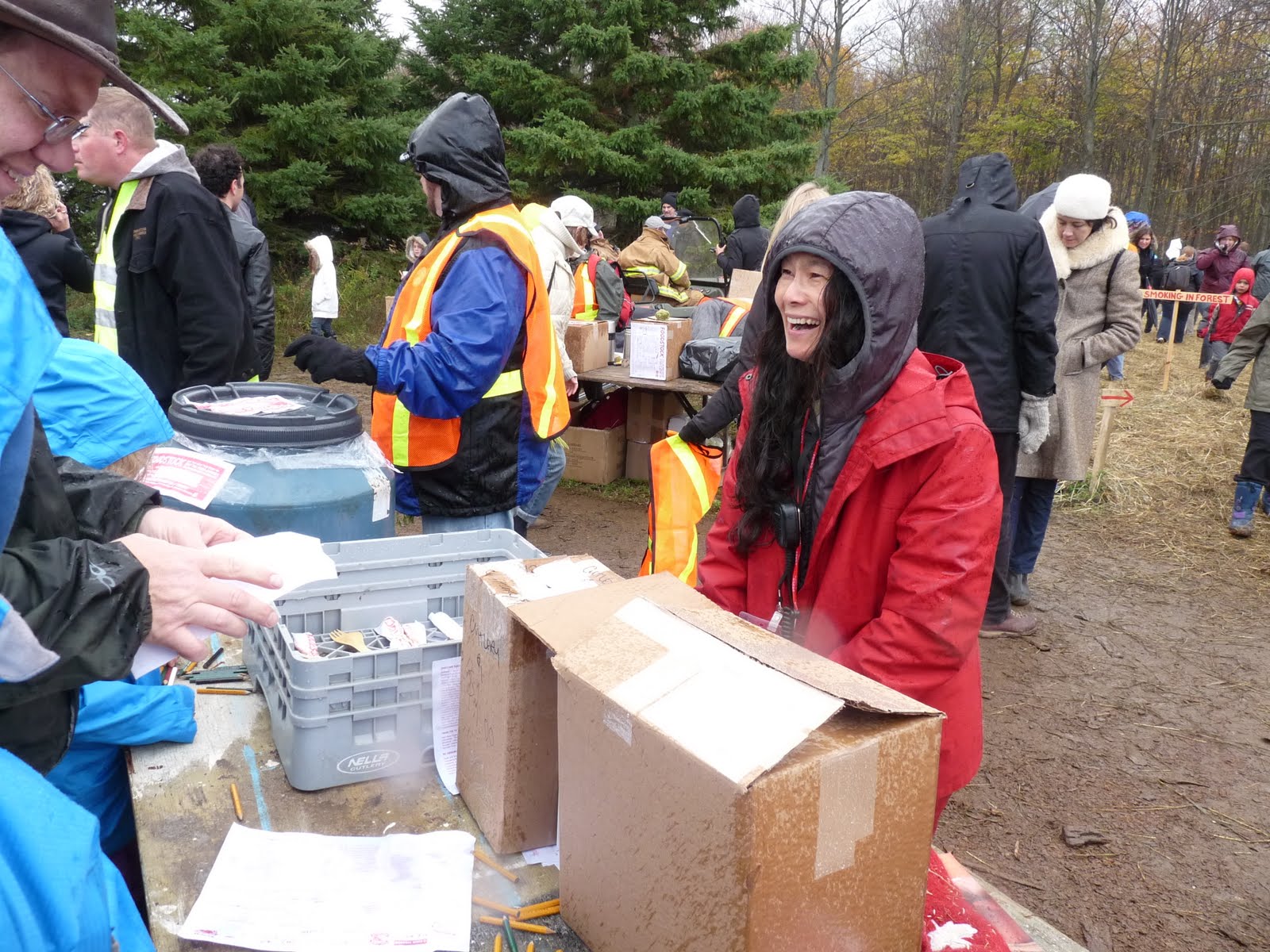

Foodstock, in case anyone has missed hearing about it, was an event put on by the Canadian Chef's Congress and the Stop the Quarry group, to raise funds to fight the proposed 2300 acre quarry in Melancthon township. They had asked for a $10 donation from attenders, and I would say they did well. I saw people passing in multiple envelopes - I think quite a few people gathered up donations from friends who couldn't come, and I heard someone comment that a number of people had come up to drop off donations without coming in.


The event itself was held in and about a large maple bush. Some straw had been put down to fight the mud - not enough, as it turned out, but it did help.


We started lining up to sample the offerings of the chefs. I'm a bad reporter; I didn't get the name of this restaurant (actually, I'm pretty sure it was a golf club) but the dish was rabbit and chicken stewed with chocolate, with cherry preserves and a profiterole. It was very rich, and very good.


On the other hand we knew these folks! They're from Simplicity Bistro in Thornbury, close to home. They made a lovely browned butter and Jerusalem artichoke soup.


The place was not too crowded yet, and so we could see that the woods was full of rather rustic and organic sculptures.


Oysters, from Oyster Boys, in Toronto.


A smoked fish paté on a kale leaf, with chips. A number of the chefs had made chips, as the threatened farmland is known for producing most of Ontario's potatoes.


Smoked fish on raw daikon, with raw garlic - much better than it sounds - from Sakura, in Toronto.


This was a welcome dish - a chopped salad from, I think, Bruce Wine Bar in Thornbury.


Janice Suarez, a pastry chef from Niagara on the Lake, served this deceptively plain looking apple-pumpkin loaf, which I thought was one of the best things I ate.
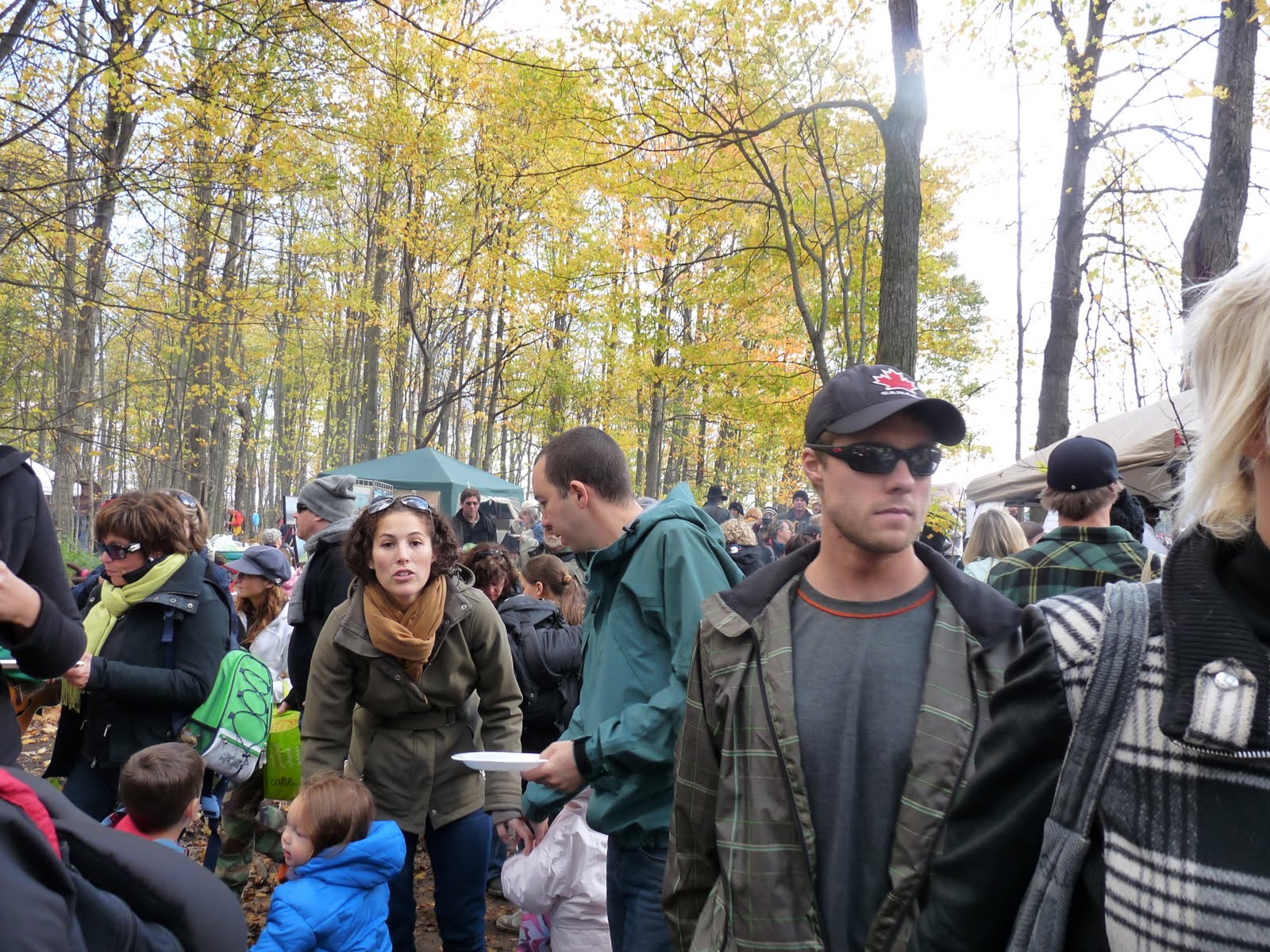

By now the place was filling up. It was a very large space, but there were plainly a lot of people there.


A display of some of the potatoes grown in the area.


A map shows the outline of the proposed quarry superimposed over a map of Toronto. Yes, it's truly huge. Worse, it's at the headwaters of 5 major southern Ontario rivers. As one of the people I chatted with in line said, this is all about the groundwater.


When we first arrived line-ups were not more than a minute or two long, but they soon got to be quite long! Fortunately most of them moved fairly briskly.


Haisai Restaurant and Bakery in Singhampton made what I thought was pizza, until I got right up to it. It turned out to be a grilled apple tart that was lovely, not too sweet and swimming in cinnamon.


Eiginsinn Farm had the next spot (they are both Michael Stadlander projects) and they were serving a vegetable soup with pickled squash on a raw cabbage leaf. I admit that so many chefs were serving rich meaty things on white bready things that I greeted that cabbage leaf with great enthusiasm. Soup wasn't half bad either.


And I believe that's chef Stadtlander there, hacking cabbage with the best of them. I also believe that Foodstock was originally his idea.


The folks from Lennox farm were there too, giving away bags of Brussels sprouts.


Another familiar face - Ruth Klahsen from Monforte Dairy.


Poutini's, serving poutine, naturally. I admit I didn't have any. I had pretty much reached the point of not being able to eat anything more at least half an hour previously.


Oh, and another familiar face! Chef Robin Pradhan from Rocky Raccoon in Owen Sound with a lovely vegetable curry that was a welcome change of pace from all the rich food.


No longer sure who this was or what they had, but the display was interesting... love the necklace.


Last call at Buca (Toronto). Like a lot of the chefs, they had brought thousands of portions, but still ran out in the face of the huge numbers of people attending.


Click on the above picture to see some of the cars parked at the sides of the roads all around, even though the space allotted to parking was huge.


Chefs and their tables filled the paths through the woods, and all around the outsides on three sides too.
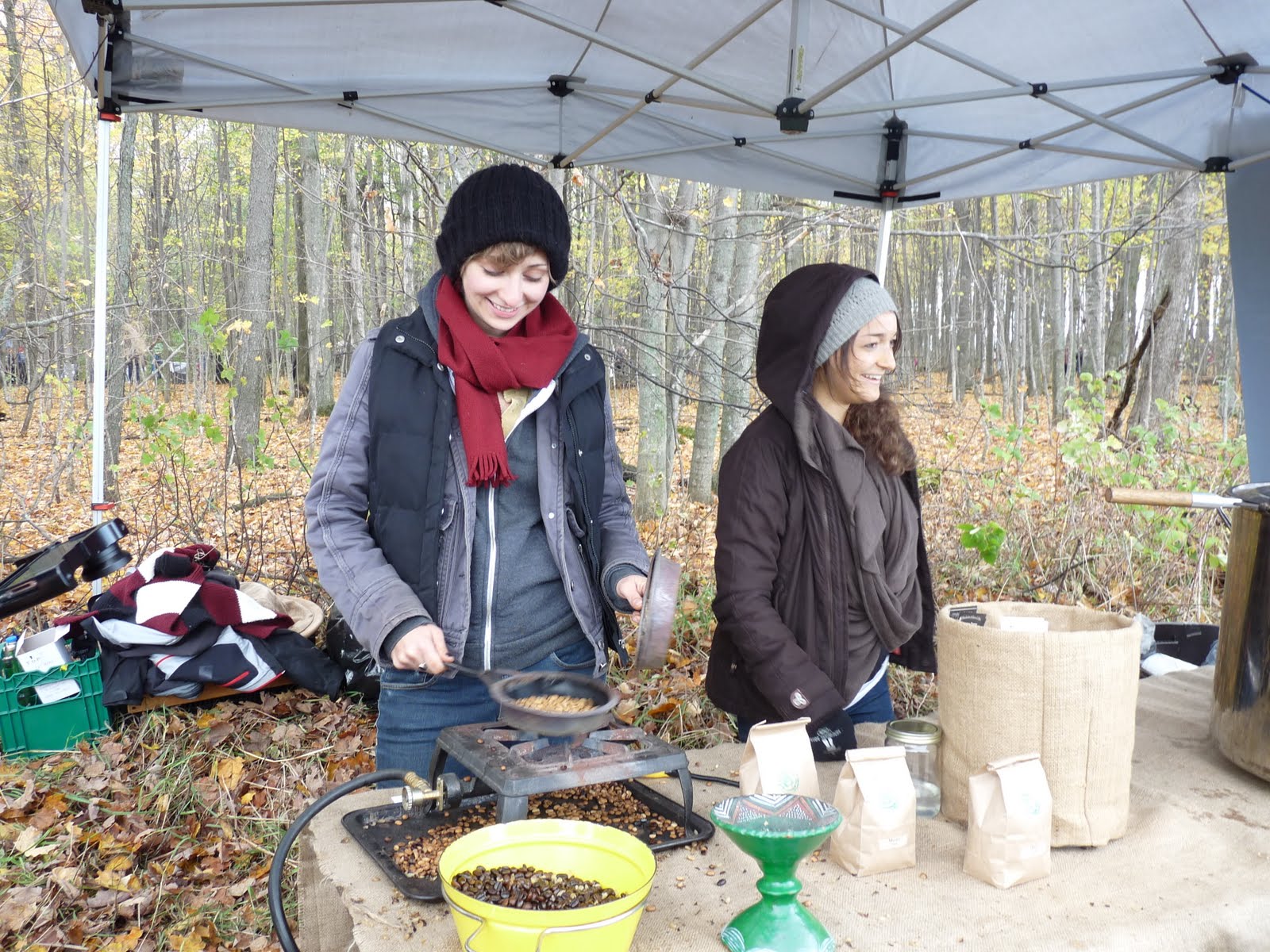

There were a few people there with coffee - and on a cool, windy afternoon (with a few showers as time went on) it was gratefully received. Was this Alternative Grounds, from Toronto? I think so.


As the afternoon went on, music started up at the stage. I have to admit I didn't stay for the music or the speeches to follow - never my favourite part of political events. Yeah, I'm bad.


There were a number of artists and musicians who had spots throughout the site as well as the chefs.
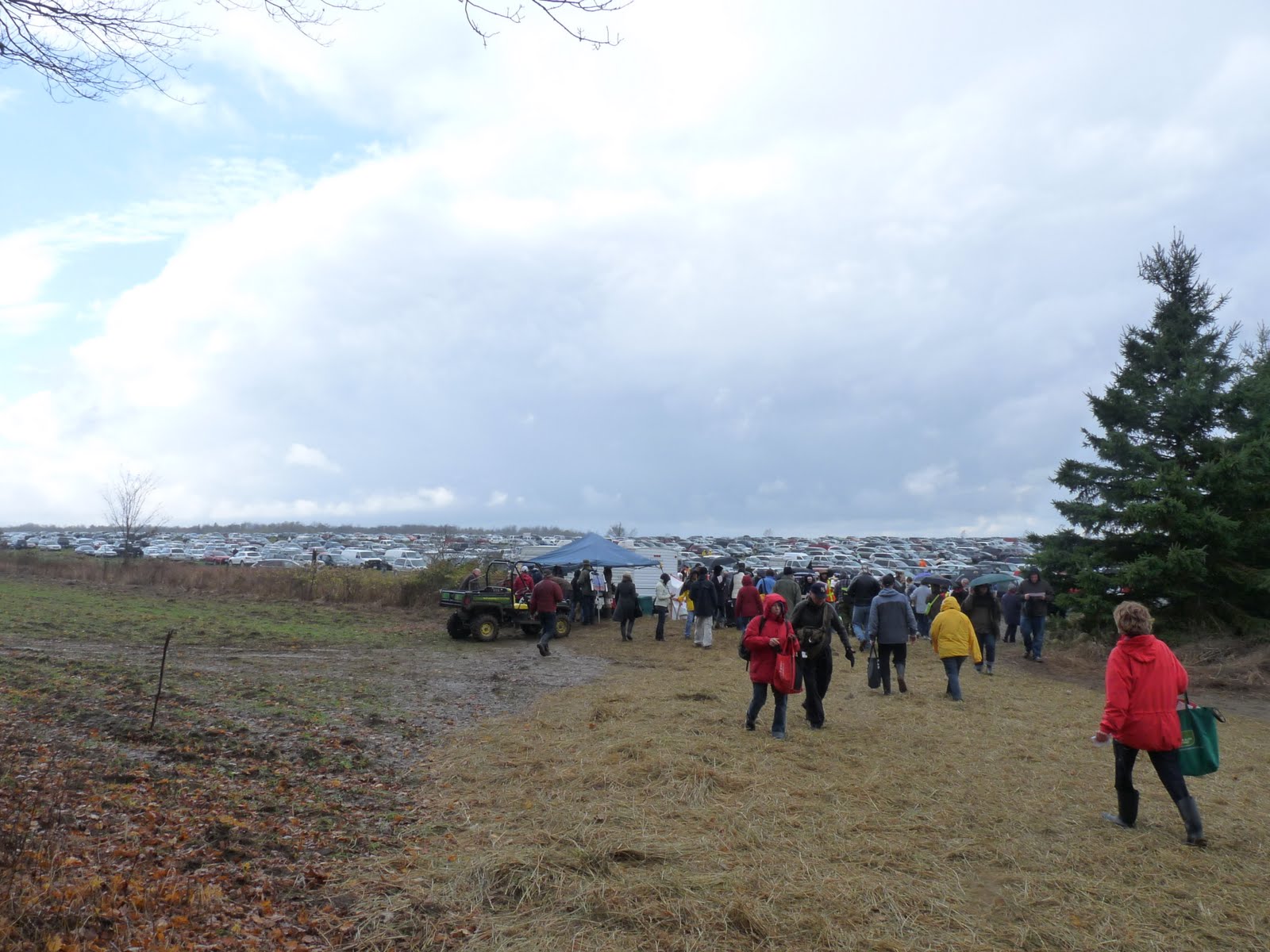

But by 2:30, we were pretty pooped. We decided to head home. A number of other people were leaving, but more were still coming in. I asked on the way out, and they told me that the last count as of 2:00 pm was that 18,000 people had been there, so I'm sure they made the expected 20,000 easily before the day was done.

I haven't seen anything about this on the CBC site, or the Globe and Mail. There were a few photos (kind of hard to find) at the Star. NOTE: and an article too, but also hard to find. On the other hand, I hope and believe that this event raised a lot of money for the fight against the mega-quarry. And it's not too late to donate. This will be a long and protracted fight, so please consider what you can do to support it. There will be more info at Stop the Quarry.

(And if I've made any errors in identifying people in this post, I'm sorry - and happy to get corrections.) EDITED TO ADD: Final count apparently a bit over 28,000 people! WOW!

Tuesday, 28 September 2010

A Visit to Alpaca Acres


Our last visit of the day was to Alpaca Acres, home of Ann & Dan Clayburn. They were the one farm not producing food, although they did say that alpaca meat can be eaten. Theirs, as almost all in North America, are sold as pets and breeding stock, along with fibre products. Currently they have 22 huacaya alpacas on the farm.


The set up is the usual one with alpacas - the males are kept apart from the females and babies, to maintain the calm good temper for which alpacas are known.


Alpacas have a very long gestation period - just a couple of weeks shy of a year. The babies (crias) are nursed for six months. They weigh about 15 to 20 pounds at birth. As adults, the females will weigh 150 to 180 pounds; males may get up to as much as 200 pounds. Babies are always born in the day time.


Dan shows us one of babies. Their wool is extremely long, thick and soft. It contains no lanolin, so it is non-allergenic. Some people use alpacas as herd protectors with sheep, but they are not generally as good at the job as llamas.


The alpacas graze 8 acres of grass in the summer and are fed hay in the winter, along with mineral supplemented pellets. Their manure is rich and does not need to be composted before being used. I was impressed that the alpacas choose a communal toilet spot, and use no other. They are friendly, sociable animals - Alpaca Acres won't sell single animals unless there are already other alpacas at their new home - and they are very tough and problem free. Vet visits are a rarity.


Some of the ribbons won by Alpaca Acres alpacas at shows and fairs are displayed in the garage along with unspun wool, spun yarn, and finished yarn products, mostly crochet although they also sell some socks made in Peru from a mixture of alpaca and synthetic fibres.


Piles of yarn, rovings and finished garments for sale.


Little amigurumi sit in a suitcase waiting to find a home.

Monday, 27 September 2010

A Visit to Erbcroft Farms


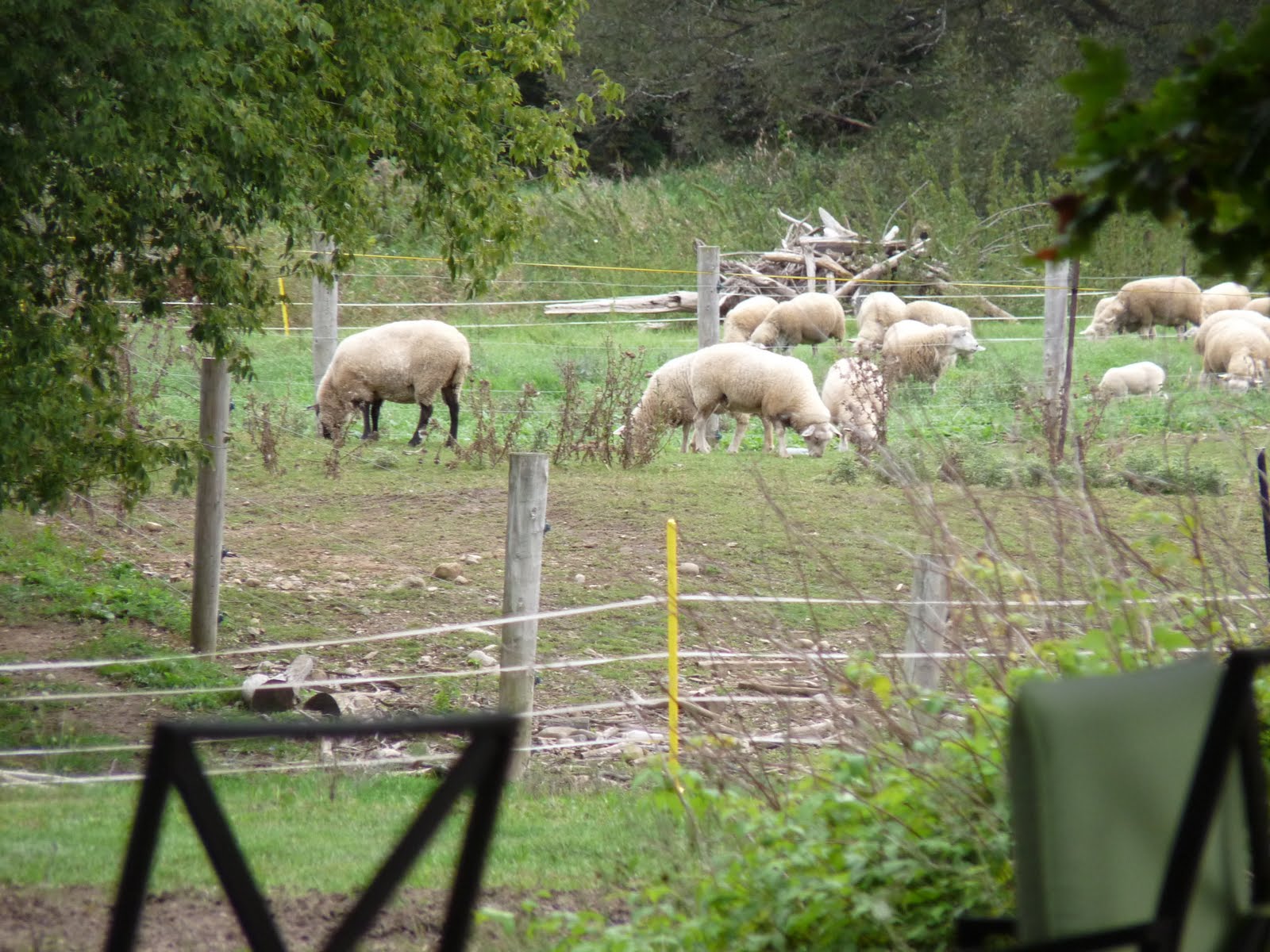
Our next stop was Erbcroft Farms, home of sheep, chickens, ducks, horses and pygmy goats. There was some mention of a llama I'm pretty sure, but we didn't see one. The sheep are fairly mixed breeding; Suffolk cross and North Country Cheviot predominating.

Erbcroft Farms has been in the family for 4 generations, but until Tim & Luann took it over it was a cash crop farm. They still grow those, but the animals have become a very important part of the farm.


Chickens roam the yard, supplementing their diet with bugs and seeds.


Two 9-day old lambs who's mother is unable to nurse them are thriving on milk from a local dairy sheep farm. The milk is in a tub outfitted with "nipples" so that the lambs can nurse when they like; a simple thing but it makes taking care of lambs that need to be hand-raised so much easier because like other babies, they need to nurse often and with no regard to anyone else's convenience.


Two kinds of ducks, Rouen and Muscovy, hang out at the creek.


When called, the sheep came thundering up to the fence. The Erbs have about 120 ewes now; eventually they would like to double the number.

Lamb can be ordered as a freezer order from the farm, or purchased at the Mitchell Farmers Market as lamb sausage. We had some samples of the sausage, with it flavoured with Luann Erbs own blend of herbs - very delicate and tasty!


It's a sad fact that there is little point in shearing the sheep if it can be avoided. The last time they sheared their sheep they paid $500 and received $189 for the wool; that's .02 cents per pound. There just isn't much of a market for wool any more.


One of the Erb children collects eggs from the chicken pen as one of the farm tourers watches.


The poultry are all trained to return to the barn at night for safety.


There are also some very charming pygmy goats on the farm.


Finally we went into the barn where the pregnant ewes are being watched. Our timing was amazing; we arrived just in time to see 2 newly born lambs still being licked clean and thinking about standing up. Unfortunately I don't have a picture as my camera chose THAT MOMENT to run out of batteries. It was definitely one of the highlights of the tour though!

Sunday, 26 September 2010

A Visit to Soiled Reputation Farm


Whew! We're not even half-way through our day. Fortunately, it's time for some food. We all gather in the garden of Soiled Reputation, where we enjoy a brown-bag lunch of ham sandwiches or veggie wraps, local apples and decadent little squares with chocolate chips and caramel, washed down with Wellesley apple cider.

While we're having a little pause here, let me say "Thanks!" to our guides, Drea and Tania, and our driver, Warren. Well done guys; it was a great day. At $25 per person for a day that lasted from 10 am to 5 pm and included lunch, it was also a screaming bargain. If you think you are going to be anywhere near Stratford for the Savour Stratford festival next year you should definitely plan to make the tour.


The garden was lovely, still full of spectacular flowering plants. I made sure to get the name of that towering cloud of yellow daisies to the right and above my head (yes; a rare sighting of the shy and elusive Ferdzy*): it's silphium terebinthinaceum, but you can call it Prairie Dock if you prefer, and you might.


Soiled Reputation is the farm of Antony John and Tina VandenHeuvel. They raise organic vegetables, especially greens, which are sold at farmers markets, to restaurants and through CSA shares. They grow over 50 vegetables in all. Antony was the eponymous star of the Manic Organic television series. He also paints, acts and creates music in his spare time. (He has spare time?!)

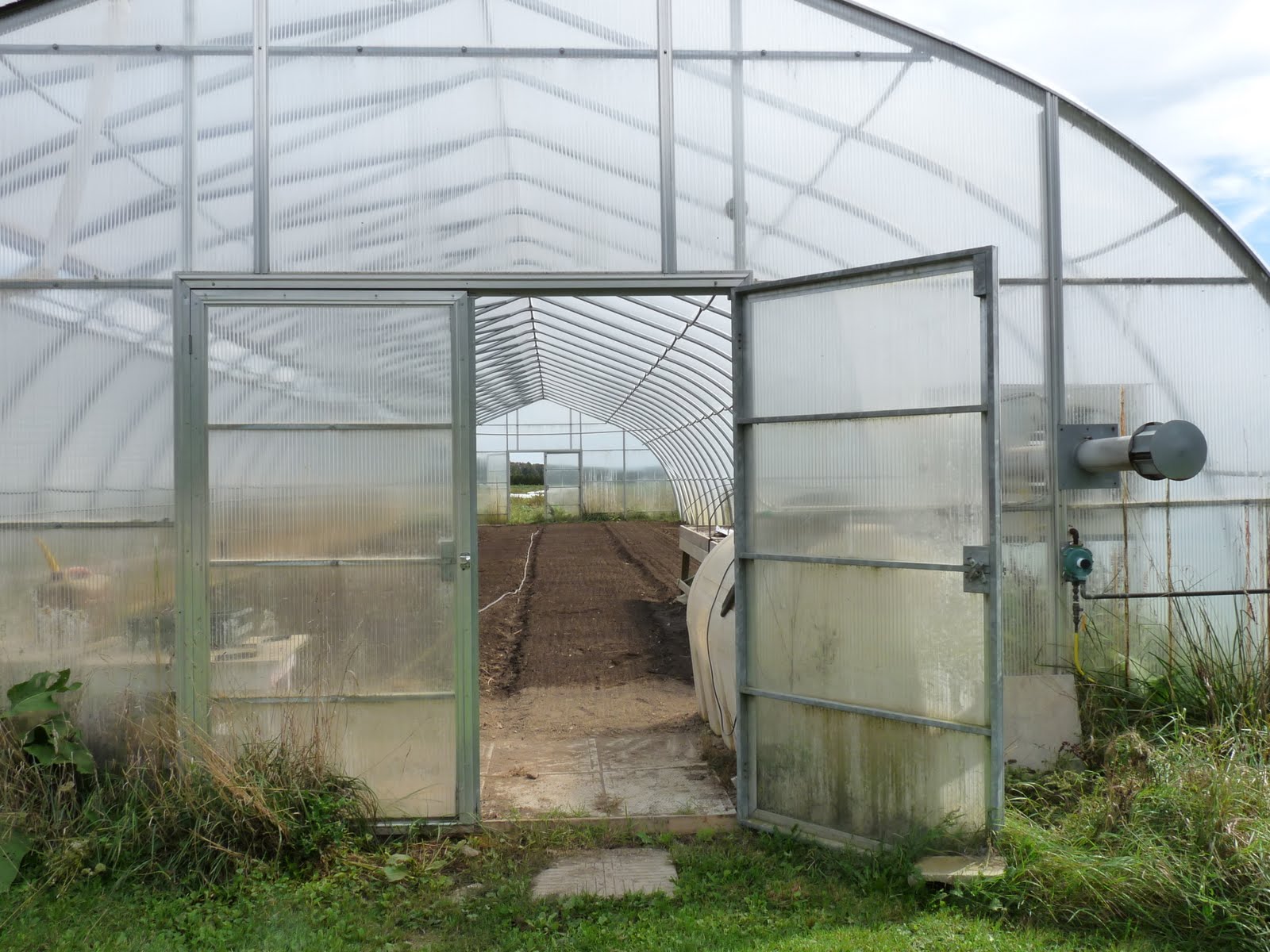
There are several greenhouses on the farm, but they have just recently been planted with late fall and winter crops, so there was little to see there besides beautifully raked and leveled earth.


There are egg-laying chickens enjoy the lovely fall weather in a pen by the barn. They are also the clean-up crew for unsaleable vegetables.


A little further along we were introduced to Jesus (Hey-soos) the burro. We were warned that he bites, but he restrained himself in exchange for skritches between the ears. I thought he was very sweet, actually.


Row covers protect late crops from flea-beetles. They also let in most of the light and all of the water. Something we want to get and use in our garden next year, for sure.


Rows of lettuce in the field. Soiled Reputation is an 80 acre farm, of which 40 are certified organic. They are blessed with excellent soil and an excellent location. The soil is Perth County clay-loan, a rich and beautifully balanced and very workable soil. The location is just sufficiently far east of Lake Huron to catch much of the rain created by weather patterns moving over it. (As someone who had 2.25 inches of rain spread over 3 months this summer I am filled with envy.)

On average, Soiled Reputation produces about 400 pounds of salad greens a week throughout the growing season.


Twenty acres are devoted to growing vegetables. Soiled Reputations fields are large and rambling. Partly this is because about a third of them are under alfalfa at any time. Alfalfa is a legume and like all legumes fixes nitrogen, a key nutrient for vegetables. Alfalfa fixes up to 140 pounds of nitrogen per acre, compared to 40 to 50 from peas. In November the alfalfa is ploughed under and the decaying leaves add organic matter to the soil over the winter. Even on top of all this, Antony adds a ton of turkey compost and homemade compost to each acre. He's taking a lot out of the soil too though; by careful planning he can get up to 4 crops out of each space in a summer; a typical cycle might be peas, lettuce, beans, and finally turnips.


Rows of succulent leeks still stand out in the fields. The bluer the leek, the better it will withstand cold. Antony lets the weeds grow up around some of them; this slows their growth down and delays the need to harvest them, thus extending the season.


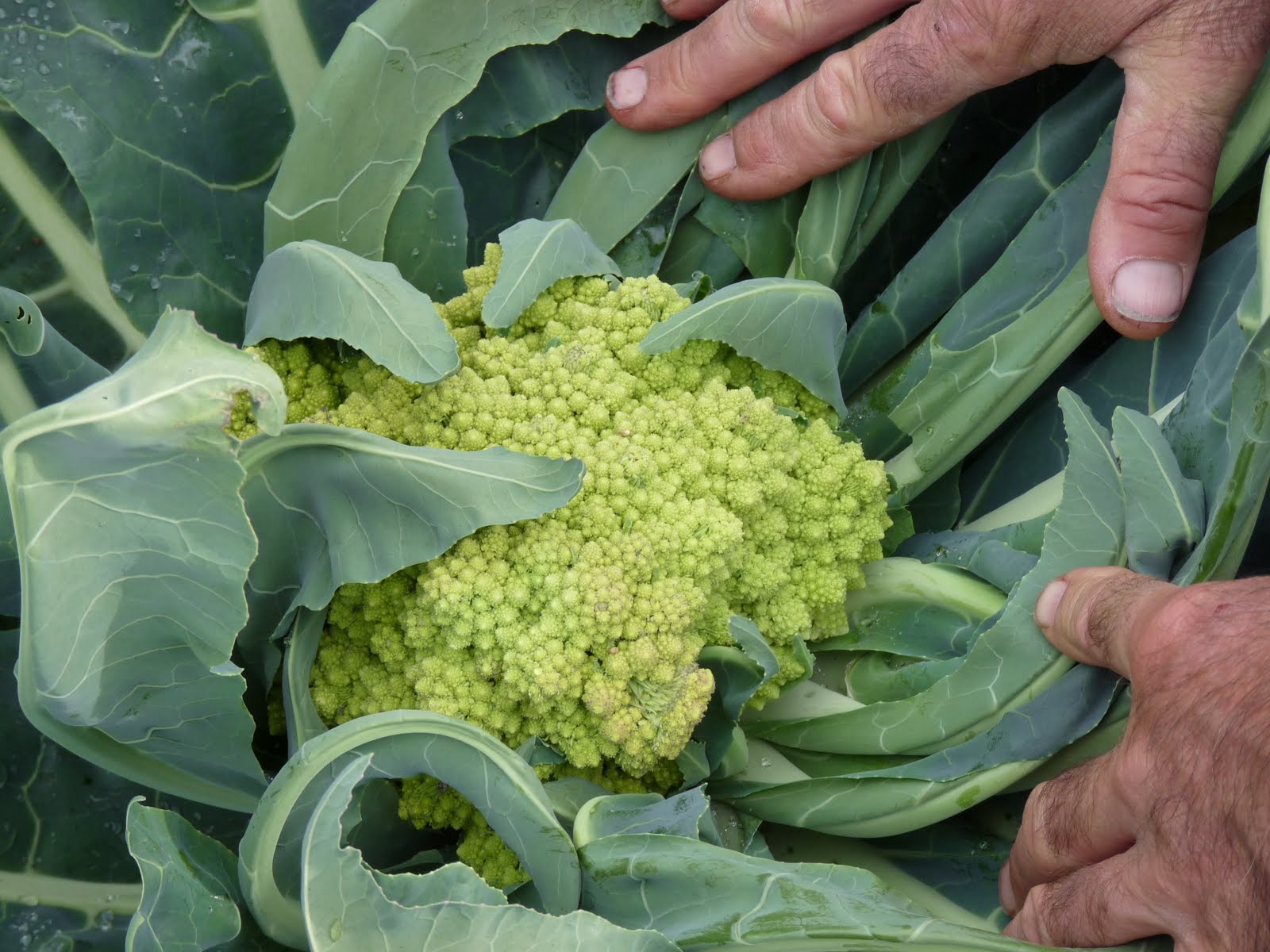
Antony shows us a beautiful green Romanesco cauliflower, famous for its' fractal pattern of florets. He talked about how it reminded him that everything is linked in chains of similarity; and how is farm is one of a set of micro environments that link Canada to Costa Rica and allow the rich diversity of migrating birds that we have to exist. (Antony is an avid birder.)


Carrots, in a rainbow of colours (it's a little hard to see but these are purple and yellow). The soil at Soiled Reputation is rich in calcium, which is vital in producing sweetness in vegetables. These were very good carrots, I must say. One trick he has for growing them is to plant them, then set up a mini-greenhouse (a pane of glass, really) over a small section. Once he sees signs of germination there, he knows the rest of the carrot seeds will not be far behind. He uses a propane flame weeder to go over the rest of the bed, and so the carrots germinate without competition. You know what Mr. Ferdzy wants to get now. I understand you can get them at Lee Valley.

And on that note, it's on to the next farm.


*Mr. Ferdzy kindly took the pictures on this trip, so that I could concentrate on taking notes. A big thank you to him, too.