Showing posts with label 00 All Year. Show all posts

Wednesday, 8 June 2022

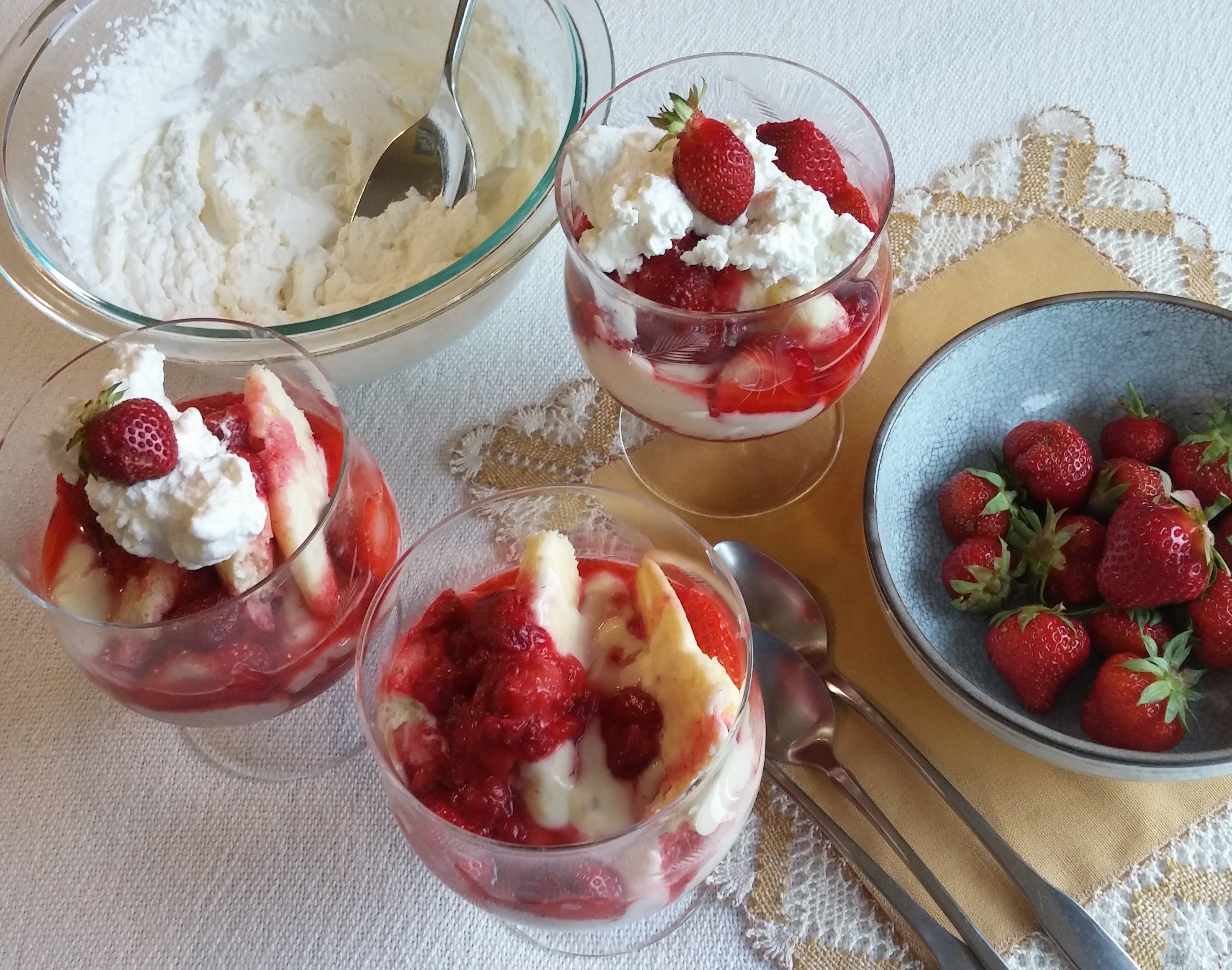
Strawberry Trifle with Sponge Cake Fingers

The first of the strawberries have been picked! They seem a little early to me, but in spite of some persistent cool weather there have also been some hot days where things have leapt forwards. It's exciting to see them but a little daunting to think about all the picking in my future, when the weeding is so far behind. 

Really, though, this recipe is about the sponge cake fingers, aka lady's fingers. They are designed to be okay on my "better carb" diet, and incidentally they can be gluten free as well. I may fiddle with the recipe in the future; they were not more exciting than lady's fingers usually are which is to say a bit dry and bland. Mostly useful for soaking in sherry and syrup and covering with custard, fruit and whipped cream. Actually, they would also be nice dunked in tea or sherry to moisten them. 

They also came out flatter than ideal, but they plainly need no more in the way of starch, and the texture was still light and fluffy enough. I may try baking them as a thin cake then cutting them afterwards. I took the leftovers and re-baked them in the oven at 200°F for 40ish minutes, and that made them quite dry and crisp. I suspect just baked as directed they have a shelf-life of a few days but re-baked crisp that they would keep for some time. 

While I would describe the sponge cake fingers as surprisingly quick and easy to make, this whole thing is really best suited to a special occasion - Canada Day coming up in the near future, although strawberry season is a special occasion in itself as far as I'm concerned.
 
6 servings
45 minutes - 30 minutes prep time to make the sponge fingers
15 minutes prep time to make the custard 
15 minutes prep time to assemble the trifle
 
 
Strawberry Trifle with Sponge Cake Fingers
 
Make the Sponge Cake Fingers:
 
In Bowl #1:
1/4 cup arrowroot starch
1/4 cup potato starch
2 tablespoons coconut flour

Sift these together into a small bowl.  

Line a large baking tray with parchment and preheat the oven to 350°F.
 
In Bowl #2:
3 large egg whites
1/4 teaspoon cream of tartar
2 tablespoons sugar OR sweetener OR combo 

Beat with an electric mixer until the egg whites will form stiff peaks.
 
In Bowl #3:
3 large egg yolks
the finely grated zest of 1/2 small lemon
1 tablespoon lemon juice
1 teaspoon vanilla extract
2 tablespoons sugar OR sweetener OR combo 

Measure all the ingredients into a mixing bowl. Beat with the electric mixer for 5 minutes until the mixture has thickened and become a much lighter yellow in colour. It is not necessary to wash the beaters after beating the egg whites.

Fold half the dry ingredients gently into the egg yolk mixture, then fold in half the beaten egg whites. Repeat with the remaining dry ingredients and egg whites. Gently spoon the mixture out onto the parchment, in fingers with a bit of room to spread. You should get 12 of them at about 1/4 cup batter per finger.

Bake them at 350°F for 10 minutes, then rotate the pans and bake for a further 10 minutes. Let them cool for 10 minutes in the pan before removing them to a rack to finish cooling. These can and should be made a day or 2 in advance.
 
Make the Custard:
2 tablespoons arrowroot starch
4 tablespoons sugar OR sweetener OR combo
a pinch of salt
2 large eggs
1 1/2 cups whole milk OR light cream
1 tablespoon unsalted butter
1 teaspoon vanilla extract 

Mix the arrowroot, sugar/sweetener, and salt in the top of a double boiler. Whisk in the eggs one at a time. 

Turn the heat on under the double boiler and bring it slowly up to a simmer. As it heats, whisk in the milk or cream a little at a time until it is all in. Continue whisking the mixture regularly as it heats, then more frequently as it begins to thicken. Towards the end you must whisk it constantly until it thickens. Remove it from the double boiler at once, then whisk in the butter and vanilla. Let it cool, whisking occasionally to prevent it from forming a skin on top. 

This should be done enough in advance to be cool, and can be done up to a day ahead and kept refrigerated if you wish. 
 
Finish the Trifle:
3 cups fresh ripe strawberries
1 tablespoon sugar OR sweetener OR combo
1 cup organic whipping cream
1 tablespoon sugar OR sweetener OR combo
a little sherry OR rum, optional

Set aside a nice selection of the best-looking berries for garnishes; about 1/2 cup of them. Wash and trim the remainder, and mash them with a tablespoon of sugar or sweetener.

Beat the whipping cream with an electric mixer with the remaining tablespoon of sugar or sweetener, until stiff. 
 
Put a puddle of the mashed strawberries in the bottom of each individual serving dish. Break a sponge finger into 2 or 3 pieces and set them in it, on their sides. Spoon a little custard around them on every side then spoon more mashed strawberries over them. A little sherry or rum can be drizzled in at some point during the assembly. Or, this could of course be done in one large serving dish. Something in clear glass so you can see the layers is traditional.

Finish each trifle with a dollop of the whipped cream and a few washed, stemmed strawberries for garnish.


Last year around now I was making Chinese Cucumber & Radish Salad, and Creamed Spinach Filled Buns.

Wednesday, 11 May 2022

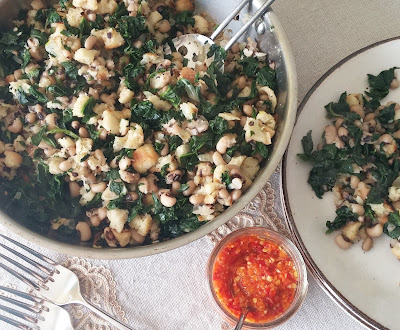
Migas with Beans & Greens

I've found myself poking around at Portuguese recipes quite a bit the last few months. It started with a (continuing) interest in Spanish recipes, and not surprisingly there is some degree of overlap. Portuguese cuisine is a bit different though, and it has some really delicious dishes. 
 
For one thing, my impression is that Portuguese bread and pastry baking is the better of the two. This dish would usually be made with corn bread - mostly wheat, in spite of the name, but with enough corn flour in it to turn it golden and give it a marvellous flavour. Alas, while you can find it at Portuguese bakeries in larger cities there is none around here. Where you find good bread, you also find recipes to use up the stale leftover bits. 
 
This is usually made with black-eyed peas, but navy beans make a good substitute. Despite the simple technique and very short list of ingredients, we thought this was really delicious. For our bread crumbs, I used two ciabatta type rolls and they were fine, although I do regret that corn bread. 

The Spanish also make a lot of "Migas" (crumbs is what it means) dishes, but I have yet to see one with beans, and while cilantro seems to be quite common in Portuguese cuisine (which for some reason surprised me) it is rarely used by the Spanish. Likewise, Piri-Piri hot sauce is a popular Portuguese condiment but the Spanish rarely apply any kind of chile to their food beyond a little very mildly hot paprika.
 
2 to 4 servings
30 minutes prep time
NOT including cooking the beans and greens
 
Migas de Broa com Grelos e Feijão - Bread Hash with Beans and Greens
 
1 cup dried navy beans OR black-eyed peas
4 cups chopped turnip or rutabaga greens, OR kale OR spinach OR rapini (raab)
200 grams (5 ounces) diced stale bread
2 or 3 cloves of garlic
1 small onion
3 tablespoons olive oil 
a little minced fresh cilantro or parsley (optional)
 
The beans should be cooked in advance in the usual way; cover in water and bring to the boil. Turn off the heat, cover, and soak for at least one hour. Drain, replace the water, add 1/2 teaspoon salt, and simmer until tender OR cook them in an Instant Pot for 5 to 7 minutes, with natural pressure release. 
 
The greens should also be cooked in advance; wash them very carefully and pick them over, then wash them again. Plunge them into boiling water or steam until just wilted, then rinse in cold water. Drain them again; in fact, squeeze them to remove excess liquid. Chop finely. 
 
It is possible and even reasonable to speed this dish up considerably by using tinned beans (one tin of the beans of your choice) and frozen greens - you will want about 300 grams or 10 ounces. This also makes it a good dish to make in the winter.
 
NOW, let's get started: peel and mince the garlic. Peel and chop the onion finely. Slice the bread, and crumble it into pieces about twice the size of a bean. 

Heat the oil in a large skillet over medium heat. Add the onion, and let it soften and get fairly translucent, then add the bread crumbs and toss well. Cook gently for several minutes, turning regularly, until they are dry and toasted in spots all over. Add the garlic and mix it in well; give it a minute to cook. 

Add the drained beans and chopped greens. Mix in well, and let everything heat through. You may wish to add a little of the cooking water from the beans or the greens. The finished texture of the dish may range from fairly dry and crisp through moist, through almost soupy - it is a matter of taste. I prefer a drier texture, and my bread was not that stale to start with, so I did not add any but you must use your own judgement - it is that kind of dish and all the proportions are also somewhat up for grabs. 

Serve it as a meal by itself for 2 people, or serve it as a side dish with grilled meat, poultry or fish for up to 4 people. A poached or fried egg on top would also go very well.


Last year at this time I made Chicken Pozharski.

Wednesday, 4 May 2022

Saag Paneer

I've made Saag Paneer a few times over the years with the idea that I would post it on this blog. All my attempts have been okay, but did not leave me feeling like it was the best Saag Paneer ever. I'm not sure this is either, although we found it very satisfactory. I suspect the best Saag Paneer ever contains more in the way of butter and cream. 
 
This is a dish that also tends to contain tomato; while it's not really in season at the moment, canned crushed tomatoes would be perfectly fine. However, so many of the Indian (inspired) dishes I make have tomatoes in them that I wish to have a few in my repertoire that don't have any, just to supply a little contrast. 
 
Garden spinach should be at its peak right now, but alas - the up-and-down weather we've had all spring (and through the winter too, really) was very hard on it and the mice have found it too. This may be it for our spinach this year. 
 
4 to 6 servings
1 hour prep time

Indian Style Spinach with Cheese

Get Started:
600 grams (20 ounces) blanched spinach OR other mild, tender greens
250 grams (1/2 pound) paneer OR halloumi cheese
1 teaspoon mild vegetable oil
1 large onion
1 tablespoon mild vegetable oil
 
Wash the spinach or other greens very well, and chop them coarsely. Put them in a colander and pour boiling water evenly over them to wilt them thoroughly. Rinse them in cold water, drain them well and squeeze them dry. Chop them finely and set them aside. 
 
Rinse and drain the paneer, and cut it into small cubes or lozenges (small bite-sized). Heat a skillet over medium heat with the oil - just enough to put a film over it - and cook the cheese on both sides until golden brown. Transfer to a dish and set aside.
 
Peel and chop the onion. Heat the oil in the skillet, and cook the onion gently over medium heat until softened and translucent. Add it to the prepared greens. 
 
Prepare the Spices:
1/4 to 1/2 teaspoon salt
1 teaspoon cumin seed
2 teaspoons coriander seed
1/8 to 1/2 teaspoon hot chile powder
1 teaspoon ground turmeric
1 tablespoon finely grated fresh ginger
3 or 4 cloves of garlic 

Grind the cumin and coriander with the salt, then mix them with the remaining spices in a small bowl. Peel and grate the ginger and garlic and add them. Set aside.
 
Finish the Dish:
2 teaspoons mild vegetable oil
2/3 to 3/4 cup thick yogurt  
1/2 lemon, cut in wedges (optional)

Heat the oil in a large heavy-bottomed pot over medium-high heat. Add the bowl of spices, and cook, stirring constantly, until fragrant. Add the blanched spinach and onion and mix in well.  Begin working in the yogurt, a scoop at a time until the mixture has reached a level of creaminess that seems right to you. Once it is hot through, add the cheese and continue to simmer until it too is hot through. Serve at once, although this re-heats quite well so it could be made in advance.


Last year at this time I made Barley with Sorrel.

Wednesday, 27 April 2022

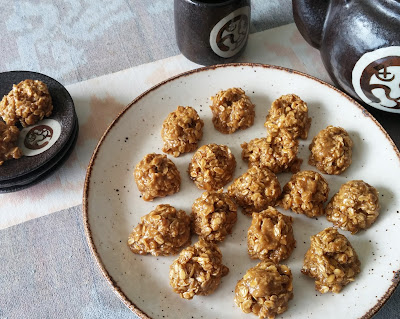
Maple-Tahini Haystacks

I was surprised to do the math on these and see that they are really not too bad for carbs. They were hauntingly delicious, and honestly? At half a cup of maple syrup I thought they were a touch too sweet. I might try them again with 1/3 of a cup of maple syrup. Of course, I have gotten used to barely-sweet treats. The other thing I would change next time is the size of oat flake I use. This time I used large flake oats, and found them a little too prominent. I think quick-cook oats would be better. But large flakes did not keep them from being scarfed down with enthusiasm. Hauntingly delicious, did I say? 

Like other dropped unbaked (stove-top) cookies these are stupidly fast and easy to make. I found they stayed a little sticky (another reason to reduce the maple syrup slightly?) so they were best kept in the fridge, with plenty of parchment paper to keep them separate, but they were eaten quickly enough it wasn't a big deal. 

I am trying not to make sweets too often, so it may take me a while, but if I change the amount of maple syrup I will update this recipe.
 
Makes 24
20 minutes prep time

Maple-Tahini Drop Cookies

1 1/4 cups rolled oats
1/4 cup oat bran
1/3 cup unsalted butter
1/2 cup maple syrup
1/4 teaspoon salt
3 tablespoons tahini
 
Measure out the oats and oat bran and set them aside mixed together. Set out a sheet of parchment.
 
Put the butter, maple syrup, and salt into a heavy-bottomed 1 litre/quart pot and bring to a boil. Boil gently but steadily for 5 minutes. Stir in the tahini and remove the pan from the heat. Stir in the oatmeal and bran. Cover and let rest for 5 minutes.

Scoop the mixture out onto the sheet of parchment with a small disher or tablespoon. Leave them until cool and set. Keep covered in a cool, dry spot.


Last year at this time I made Nem Nuong - Vietnamese Pork Loaf.

Monday, 25 April 2022

Potato Chips Spanish Tortilla

I've seen this recipe around for years; it was definitely a little fad for a while. Finally, I got around to trying it myself. The theory is that is in a real Spanish tortilla, potatoes are slowly fried to beautiful golden-brown before having the egg mixture poured onto them and being cooked into a tortilla. It's a long, slow process! Here, potato chips are "reconstituted" in the egg mixture, and then become golden-brown, soft potatoes that are then cooked into a tortilla. 

My verdict - it's not bad, it's an okay tortilla, but not worth the buzz. It's something I'd do on a camping trip maybe, because it would save on the hauling around of actual potatoes and it's something you could do over a campfire, providing you had hauled in a good heavy skillet. Huh. This is already looking kind of problematic as an idea, actually. 
 
Needless to say, if you decide to try it, you should use the best quality potato chips you can find. They should be unsalted or only very lightly salted, and adjust any salt you add to the eggs accordingly. 

If the Spanish have a second civil war, it will be over whether one puts onion into a tortilla, or not. I am a firm concebollista, yesterday, today, and forever! But if you don't want it, it is conceivably possible to leave it out. Or use onion-flavoured chips, maybe.
 
2 to 4 servings
30 minutes - 20 minutes prep time
 
Potato Chips Spanish Tortilla

1 shallot OR small onion
6 large eggs
170 grams (6 ounces) thick potato chips
a pinch of salt (maybe)
freshly ground black pepper, other herbs to taste
2 tablespoons olive oil

Peel and mince the shallot or onion. 

Break the eggs into a mixing bowl, whisking between each one. Add about 3/4 of the potato chips, pressing them gently into the eggs, and let them soak for about 15 minutes. Turn and baste them with the egg occasionally, and also season them with the salt and pepper, and any other seasonings you may wish to add. 

Heat 1 tablespoon of the oil in an 8" skillet and cook the onion gently over medium heat, stirring as needed, until softened and reduced in volume. Let it cool a minute then add it to the egg mixture. 

Wipe out the pan with a bit of paper towel, leaving as much of the oil as possible but getting up any little bits of onion which may scorch or cause the tortilla to stick. Add a bit more oil as needed to cook the tortilla. Heat the pan over medium heat - a little cooler than for most omelettes. 

Pour in the eggs and potato chips, spreading them out as evenly as possible and pressing the chips - by now they should be quite soft - down into the eggs. Cook gently over medium heat, shaking the pan occasionally to prevent sticking, until the bottom half is well set. 

Flip the tortilla onto a plate - be careful and do it over the counter because the top will still be somewhat liquid - then slide it back into the pan. Lift one corner to pour in any liquid egg etc that didn't make it back into the pan. Continue to cook and shake, until the bottom of the tortilla is set. Slide it out onto a plate - a clean one, whether you have washed and dried the first one or are using another - and let it cool to just warm or room temperature before serving. Serve it garnished with the remaining potato chips. 


Last year at this time I made Creamed Carrots & Belgian Endive.

Monday, 11 April 2022

Tortilla de Pan

Essentially, this is a fancier French toast - Spanish toast, if you like - or a kind of pancake, more than an omelette, which is what Spanish tortillas usually are. Just to get distracted for a moment, I've come to realize by going through old cook books that what we now call French toast used to be referred to as German toast at least as often, but two world wars brought that to a definite end. Really, the first one was enough to do it. 
 
This will taste mostly quite familiar, although the touch of lemon zest along with the cinnamon is distinctive. I think it is best with fruit preserves, but have it with whatever you would normally serve with French toast or pancakes. Maybe some cream cheese and a drizzle of honey. Like the traditional Spanish tortilla of eggs and potatoes, it is customarily served at room temperature, which would make it a good choice for a breakfast or brunch buffet. If you prefer it warm, though, it will certainly be just fine that way.
 
6 servings
40 minutes - 20 minutes prep time
 
Tortilla de Pan - Spanish Bread Pancake

150 grams (5 ounces) stale bread
6 tablespoons milk or light cream
1 to 3 tablespoons sugar
the zest of 1/2 lemon
1/4 teaspoon ground cinnamon
1/8 teaspoon salt
4 large eggs
1 tablespoon mild vegetable oil to cook
 
Grate or crumble the bread very finely into a mixing bowl. Drizzle the milk over the bread, and mix it in well. Let it sit for a few minutes to soak thoroughly. The bread should be moist, but not soggy - no puddles. 

In another bowl. mix the sugar, lemon zest, cinnamon, and salt. Break in one egg and whisk it in thoroughly. Whisk in the remaining eggs. 

Fold the egg mixture into the soaked bread. Let it sit again, for a few minutes. Whisk it if the bread does not seem well broken up. 

Heat the oil in a medium skillet over medium heat. Scrape in the mixture and spread it out evenly. Cook it slowly until set and slightly browned on the bottom. Slide the tortilla out onto a plate, flip the pan over it, the flip it back to right side up with the tortilla in it. Cook the second side until set and slightly browned. All of this will require a fairly low temperature; adjust it early in the process if the tortilla seems to be browning faster than it is setting. 

Serve warm, or allow the tortilla to cool to room temperature before serving. 


Last year at this time I made Barley with Vegetables.

Wednesday, 6 April 2022

Buckwheat with Leeks & Mushrooms

Our spring leeks have re-appeared, albeit they still look a bit tatty. This winter was very hard on them, what with the constant freezing and thawing, but they are at least usable. They are classic with mushrooms and both of them go really well with the rough, nutty flavour of buckwheat. The result is not a complicated dish, but it's best served with simply-cooked chicken or fish, and a green vegetable. 
 
If I wanted to have this as a vegetarian dish, I would nestle some fried tofu puffs (cut in half) into it as the liquid goes in. I can see that being really good. 
 
4 servings
1 hour prep time
 
Buckwheat with Leeks & Mushrooms
 
3/4 cup buckwheat groats
1 large leek
300 grams (10 ounces) button mushrooms 
up to 3 tablespoons unsalted butter, oil, OR chicken or bacon fat
1/2 teaspoon salt
freshly ground black pepper 
1/2 teaspoon rubbed savory OR thyme
2 cups boiling chicken OR vegetable broth

Toast the buckwheat groats in a dry skillet - one that has a lid - until slightly darker in colour, with a toasty smell. Immediately tip them out onto a plate to cool and set them aside. 

Wash and trim the leek, and slice it into rounds. Clean and trim the mushrooms and slice them. 

Heat 1 tablespoon of your chosen fat in the skillet over medium heat, and gently cook the leeks until softened and reduced in volume, but don't let them get brown. When they are ready, lift them out of the pan to another plate, pressing them against the side of the pan to squeeze out as much fat as you can before transferring them. 

Add a bit more fat, enough for the mushrooms, and add them. Mix well then let them brown on both sides, stirring occasionally. Season them with the salt and pepper, and a bit of herb. Return the leeks and mix them in, then mix in the toasted buckwheat. 

Have the chicken stock at least steaming hot if not simmering, and slowly pour it into the pan of buckwheat, etc. Mix well. Leave the pan to simmer for about 10 to 15 minutes, until much of the liquid has been absorbed. Cover the skillet with the lid and reduce the heat; continue cooking for about another 10 minutes until it is completely absorbed and the buckwheat is done. Remove the skillet from the stove, leaving the lid on, and let it rest 5 minutes before serving. 


Last year at this time I made Yellow Split Peas Loaf.

Wednesday, 30 March 2022

Ürgüp Köftesi

I've made meat patties with potato in them before, quite early in the history of this blog, in fact. Much as I liked those Gehacktes Rinderschnitzel, these are more complex and spicy and have quite a different feel (and taste!) to them. 
 
As ever, when grating potato to be cooked in a pan, it is so important to squeeze out as much liquid from them as possible. That hasn't changed. Also dredge them generously in flour - I prefer barley flour for this - to give them the distinct crispy finish.  

Eat them with rice and salad, or in a wrap with lettuce and pickles. You could make them a bit larger and put them in a bun too, I suppose; why not? 

These are Ürgüp Köftesi because they are koftas (meatballs) from Ürgüp, in Turkey.

4 to 6 servings
45 minutes prep time
 
Meat Patties from Ürgüp (Turkish)

2 tablespoons semolina OR bulgur
1 medium onion
2 to 5 cloves of garlic
500 grams (4 medium; 1 pound) potatoes
1/4 to 1/2 cup finely chopped parsley
500 grams (1 pound) ground beef or lamb, or mix
1 large egg
1 teaspoon salt
1/2 teaspoon allspice berries
freshly ground black pepper to taste
1 teaspoon sweet paprika
1/2 to 1 teaspoon Aleppo pepper
1/3 to 1/2 cup barley or wheat flour
mild vegetable oil to fry
 
If using semolina, it can go straight into the mixing bowl. But if you are using bulgur, it should be soaked in boiling water while you prepare the other ingredients, then drained. 
 
Peel the onion but leave the base plate on. Use that to hold onto while you grate the onion finely into a strainer. Peel and grate the garlic. It can go into the mixing bowl. Wash the potatoes and trim them, or peel them if you like, and grate them onto a board. Then, take them by handfuls and squeeze well over the sink to remove as much liquid as possible. Add the drained handfuls to the mixing bowl, then give the onion a final press and add it too. Wash, dry, and finely chop the parsley and add it. Add the ground meat and egg.
 
Grind the salt and allspice berries together, then add them with the remaining seasonings. Mix very well by hand. 

Spread the flour over a plate. Form the mixture into 12 to 18 equal sized balls, and flatten them to a 1" thick disk. Dredge them in the flour. 

Heat a good layer of oil in a large skillet over medium heat. Fry the köftesi for 4 to 5 minutes per side, until nicely browned. Test one to be sure the juices are running clear, then let them rest for 5 minutes before serving. 

The mixture will keep, well-sealed, for 24 hours in the fridge, so they can be made ahead or cooked in 2 batches. 


Last year at this time I made Bean, Belgian Endive, & Blue Cheese Salad.

Monday, 28 March 2022

Digestive Biscuits

Late March oaty baking goodness, right on schedule. Actually, I've been making these somewhat regularly all winter because I'm kind of addicted to them. They are barely sweet enough to count as a cookie, and their high fibre count makes them really quite virtuous. Although we won't discuss the butter, sigh. I knew there was a reason I can't keep away from them.
 
My estimate of 1 hour baking time assumes they all go into the oven at once, and of course they will need time to cool. 
 
36 biscuits (cookies)
1 hour - 30 minutes prep time
 
High-Fibre Digestive Biscuits

1 cup quick cook rolled oats
1 cup whole spelt flour
1/2 cup oat bran
1/2 cup wheat bran
1/4 cup ground flaxseed
1 teaspoon baking powder
1/2 teaspoon salt
1/4 cup Sucanat OR coconut sugar
2/3 cup cold unsalted butter
6 tablespoons light cream Or whole milk 

Mix the dry ingredients in a mixing bowl. Grate in the butter, and work the mixture with your fingers until there is no powdery, floury material left; everything should be in buttery crumbs. Mix in the milk or cream to make a firm dough. 

Roll the dough into a cylinder in parchment paper, and refrigerate for 10 minutes.
 
Preheat the oven to 350°F. Slice the cylinder of dough into 36 even slices (I find a serrated bread knife the best for this) then lay them on a parchment-lined baking tray (or two, if needed). They don't expand much but should not be overcrowded. I find it best to pat and press them down to an even thickness and shape by hand. Alternatively, you could roll the dough out with a rolling pin and cut them that way. 
 
Bake the prepared biscuits for 20 to 25 minutes at 350°F, until dry and slightly browned. Store in a dry, air-tight container for up to 2 weeks. 


Last year at this time I made Hot Cross Naan.

Friday, 18 March 2022

Polish Egg Cutlets

This is the time of year when people often find themselves with a lot of hard-boiled eggs left over, and it's always nice to have something a little different to do with them. These are quick and simple, and who doesn't like cutlets? (Yeah, I know - somebody doesn't. Not me though; I just love them.) 
 
Eat them plain or put them in a sandwich. Have them for breakfast or lunch. Add a little sautéd garlic andd/or mushrooms. Bind them with a little leftover mashed potato instead of the flour. There are lots of possibilities with these. 
 
5 or 6 cutlets - serves 2 or 3 
30 minutes prep time

Polish Egg Cutlets

4 large eggs
1 or 2 green onions or 1/4 cup minced chives
salt & freshly ground black pepper
1 tablespoon barley or wheat flour
1/4 cup grated firm cheese, optional
1 large egg
1/3 cup fine dry breadcrumbs
2 tablespoons mild vegetable  oil
 
Put the 4 eggs in a pot with water to cover and bring them to a boil. Boil for 1 minute, then cover the pot and let them sit in the hot water for 10 minutes. Rinse under cold water until they are cool. 
 
Peel and mash the eggs fairly finely. Season them with salt and pepper to taste. Add the flour, and the cheese if you are using it. Break in the raw egg, and mix to smooth mash. 

Spread the breadcrumbs on a plate. Divide the mixture into 5 or 6 equal portions, and flatten each one into a patty. Press each one into the breadcrumbs on both sides. 

Heat the oil over medium heat. Fry the patties until golden-brown on each side; about 3 minutes per side. Serve at once. 


Last year at this time I made Carrot & Sauerkraut Soup.

Wednesday, 16 March 2022

Greek Marinated Lamb Chops or Souvlaki

Yes, that's the amount of oregano. 

If you can get out and cook this on a grill, so much the better, although it wasn't half bad out of the oven. I did it as lamb chops and again as souvlaki, and I was a bit surprised that the time in cooking them was not different by more than a few minutes. I should know by now that's pretty common, but it seems I keep forgetting. Either way, this is a lovely way to have lamb with a Greek flare to it. Feel free to serve with some Tzatziki, or, while Skordalia would be more traditional, I admit I might prefer the related Toum
 
If you are making souvlaki and using bamboo skewers start soaking them in water as soon as you start marinating the lamb - the longer the better, if they are not to char quickly. 

All that oregano; seriously.
 
4 servings
45 minutes - 10 minutes prep time
PLUS marinating time

Greek Marinated Lamb Chops

1/2 teaspoon rubbed rosemary 
1/4 teaspoon cinnamon OR whole allspice
1/4 teaspoon black peppercorns
1/2 teaspoon salt 
4 tablespoons dried rubbed oregano
1/2 teaspoon rubbed mint
1/2 teaspoon dried dill
the zest of 1 large lemon
the juice of 1 large lemon
2 to 4 cloves of garlic
2 tablespoons olive oil
4 large (600 grams; 1 1/3 pounds) lamb chops 
OR lamb shoulder piece, cut in bite-size pieces
 
Grind any spices which are whole or large; generally, the rosemary, allspice, and pepper. It's easiest to grind them with the salt. Mix all the herbs and spices in a coverable container that will hold the lamb snugly in a single layer. Add the lemon zest and juice. Peel and mince the garlic, and add it with the olive oil. Add the lamb pieces, turning to coat them, then cover and refrigerate for 2 hours to overnight. If you are making souvlaki using bamboo skewers, they should be soaked in water for 2 hours as well, before the meat is threaded on them. You can expect to get 6 to 8 skewers.
 
For either lamb chops or souvlaki; roast, covered loosely with foil, at 400°F for 20 minutes. Uncover and broil on each side for 3 or 4 minutes. Rest 5 minutes before serving.  


Last year at this time I made Sesame-Ginger Chicken.

Monday, 14 March 2022

Swedish Rye Flatbread

These were fun to make and I loved the flavour of the bread spice in them. Crackers are as easy to make as cookies, and I think should be made at home more often. 
 
Having said that... I will probably continue to buy most of my Scandinavian style rye crackers. This definitely lacks the convenience factor.
 
If you want to get serious, though, there is a special rolling pin for Scandinavian crispbreads and flatbreads, which rolls in a waffle-like texture. I'd kind of like to get my hands on one, but I probably won't because of space considerations. And laziness. 
 
Traditionally these were made in large quantities and hung from the rafters using a hole cut in the middle before baking. Yay! Dusty, smoky crackers. But the good news is, these will keep very well and may even improve with sitting. (We ate ours fast enough I can't say that for sure.) For storage, though, I recommend more of a cool, dark, and air-tight environment. 

8 to 16 large crackers
40 minutes work time, broken up; includes baking
2 1/2 to 3 hours rising time

Swedish Rye Flatbread

1 cup warm water
1 teaspoon yeast
2 cups coarse whole rye flour
1 cup whole spelt flour
1/2 teaspoon salt
1 1/2 teaspoons fennel seed AND 1 1/2 teaspoons caraway seed
OR 1 tablespoon bread spice
rye or spelt flour to knead and roll out
1 teaspoon mild vegetable oil
a little coarse sea-salt 

The water should be just warm to the touch; add the yeast and let it dissolve as you mix the remaining ingredients. 

Mix the rye flour, spelt flour, salt, and spices in a large mixing bowl. Mix in the water to form a dough, then turn it out on a clean counter or board to knead. Dust it with flour as required to keep it from sticking. Knead for 5 minutes, or a little longer if necessary, to form a smooth, elastic dough. 
 
Use the oil to grease a clean mixing bowl. Turn the dough over in it to coat it, then cover it with a slightly damp tea towel and leave it to rise in a warm spot for 2 hours. 
 
Preheat the oven to 400°F. 

Divide the ball of dough into 8 to 16 evenly sized pieces. Roll them out on a clean, flour-dusted surface very thinly, one at a time. Pierce each one all over with a fork, then sprinkle with a little coarse sea salt. press it in gently, then transfer the flatbread to a pizza pan or baking pan. You can put as many as will fit on each pan; they can be crowded but should not touch. You can cut a circle out from the middle of each one if you like - lay out the circles to bake too. Let them rise again for half an hour to an hour.
 
Bake for 8 minutes, then turn them over. Bake for a further 7 to 9 minutes, until lightly browned and firm. Let cool. They can be wrapped up and stored until wanted, or hung from the rafters if you prefer. 


Last year at this time I made Two Potato & Celeriac Salads.

Friday, 11 March 2022

Creamed Peas on Toast

I'm finishing frozen vegetable week here with this delightful dish that harks to the '20s. The 1920s, that is - good gosh, that's 100 years ago! I'm not old enough to remember them, but when I first became aware of their existence, they were a mere 50 years past. I don't understand why they haven't stayed there. (Although I guess in that case I would still be 10, so no.) 
 
Anyway! These were originally a little plain and stodgy, but seasoned up to modern tastes they are excellent. Rich peas (and eggs, if you like) with a creamy sauce, soaked up by crunchy toast, and not too thick and gummy, so be sure to supply a spoon. Also be sure to use a good quality bread - French or Italian style - to get that chewy crust. You could replace the seasonings with some curry powder if you like, or more subtly, use a smoked or slightly hot paprika. 
 
 2 or 3 servings
30 minutes prep time

Creamed Peas on Toast
 
1 small onion or large shallot
1 tablespoon unsalted butter
2 cups thawed frozen peas
1/2 cup water
1 tablespoon barley or wheat flour
1/4 teaspoon salt
freshly ground black pepper to taste
1/2 teaspoon sweet Hungarian paprika
1/2 teaspoon rubbed savory
1/2 teaspoon rubbed mint
1/2 cup light cream or whole milk
2 to 4 large eggs, optional 
toast to taste
 
Peel and finely chop the onion or shallot. Heat the butter over medium heat in a fairly large skillet; one which has a lid. Gently cook the onion until softened and reduced in volume, and lightly browned. Add the thawed peas and water, cover, and bring it up to a simmer. 

Mix the flour and seasonings in a measuring cup, then slowly stir in the cream or milk. When it is smooth, stir it into the simmering peas. At this point you can cover the peas and simmer for about 5 to 7 minutes, until thickened, and serve over toast, OR you can break in the eggs. Cook them covered as well, for 6 to 10 minutes until done to your liking, before ladling them over the toast. 


Last year at this time I made Pickled Red Cabbage.

Wednesday, 9 March 2022

Greek Stewed Green Beans & Potatoes

Does this look like a make-do dish of forlorn frozen veg? No, no it doesn't. I've made essentially this before, when all the vegetables were in season, and it is extra-delightful then; no question. But frozen beans and canned tomatoes are perfectly fine, teamed with winter potatoes and alliums and gently stewed. This version was seasoned with more of a Greek twist (cinnamon) versus my original more Italian take, to which you should revert if you prefer it. 
 
I've been cooking more with whole cinnamon lately. It's definitely a little more luxurious, but it does provide different results from using the powdered. Don't forget to pick it, and the bay leaves, out before serving. Unless, as in this household, they are redeemable for prizes (generally a kiss from the cook).
 
2 to 4 servings
 
Greek Stewed Green Beans & Potatoes
 
3 medium (450 grams; 1 pound) potatoes
1 large onion
2 or 3 cloves of garlic
3 tablespoons olive oil
1" piece of cinnamon
1 or 2 bay leaves
1/2 teaspoon salt
freshly ground black pepper to taste
2 cups crushed tomatoes
1/2 cup water
2 to 3 cups frozen green beans, thawed
the juice of 1/4 lemon, optional

Wash and trim the potatoes, and cut them into chunks. Cover them with water and boil for 10 minutes. 

Meanwhile, peel and dice the onion a little coarsely. Peel and mince the garlic. 

Heat the oil in a heavy-bottomed soup pot, over medium-high heat, and cook the onion until softened and reduced. Add the cinnamon - split in half if you can -, bay leaves, salt and pepper, and garlic. Mix in and cook for another minute or so. 

When the potatoes are done, drain off all but about 1/2 cup of the cooking water, then add them with it. Add the tomatoes and simmer the stew gently until the potatoes are nearly done. Add the chopped, thawed beans and simmer until they are done to your liking (for me, that's about 5 minutes). Add the lemon juice in the last few minutes of cooking.


Last year at this time I made Red River Rye Bread

Wednesday, 2 March 2022

Yogurt Chicken

There are a lot of versions of yogurt-marinated chicken in Indian cooking; this is my own take on them. It was extremely well-received and I liked it a lot too. I can see it becoming a regular menu item. 

The flavours are less complex than in some dishes, but they are lively and almost sweet from the fennel and cinnamon. I didn't put any heat into this, other than generous quantities of pepper. I suspect that sometimes I will want to add some, and sometimes I won't. If you do want heat, simply add whatever quantity you would like with the other spices, or a finely-chopped fresh hot pepper or two if they are in season. 

The yogurt marinade will, of course, curdle as soon as it is heated. Once it thickens up again, however, all will be well. 

Do check the chicken regularly towards the end of the cooking - you will need to stir up the sauce hard to be sure it doesn't scorch. 

I used skin-on, bone-in chicken thighs but I think this would be just as well made with skinless, boneless ones.
 
4 servings
15 minutes to prepare marinade
marinating time
1 hour - 30 minutes prep time
 

Marinate the Chicken:
2 tablespoons peeled and grated fresh ginger
1 tablespoon peeled and grated garlic
1 1/2 teaspoons salt
freshly ground black pepper to taste
1 cup yogurt
1 kilo (2 pounds; 8 medium) chicken thighs

Peel and grate the ginger and garlic, and put them in a coverable container which will hold the chicken. Add the salt and pepper, and stir in the yogurt. Add the chicken pieces, coating them completely with the yogurt marinade. Cover and refrigerate for 2 hours to overnight.

Mix the Spices:
1 tablespoon fennel seeds 
2 teaspoons cumin seeds
4 teaspoons coriander seeds
2 teaspoons ground turmeric
4" to 5" piece of cinnamon bark
2 or 3 cloves of garlic

Grind the fennel, cumin, and coriander seeds. Mix them in a small bowl with the turmeric. Break the cinnamon into 1" to 2" pieces. Peel and mince the garlic and add it to the bowl.

Cook the Chicken:
2 medium onions
2 tablespoons mild vegetable oil
1/4 cup fresh cilantro, if available

Peel and chop or thinly slice the onions. Heat the oil in a large skillet over medium heat and cook them for about 5 minutes, stirring regularly, until softened and reduced in volume, and slightly browned. Add the bowl of spices including the cinnamon and garlic, and mix in well. Allow to cook for another minute or so, then add the chicken, nestling it in one piece at a time. Scrape in all the marinade. 

Cover the chicken and let it simmer for 15 minutes. Remove the lid and turn the pieces over. Simmer for a further 12 to 15 minutes, uncovered, until the sauce has reduced to a thick coating. Stir occasionally. 

Garnish with finely chopped fresh cilantro. Serve with rice or roti. 


Last year at this time I made Nutty Turnips.

Monday, 28 February 2022

Stir-Fried Tofu "Noodles"

It's a basic dish of stir fried noodles and vegetables... without any noodles. I found tofu sheets in the cooler of an Asian market last time we were in Windsor. It's a big pity I cannot get anything like it around here. The local grocery has a few slabs of basic tofu; take it or leave it, and misses out on the huge range of shapes and textures available. This particular iteration is a large, thin, and rather dense sheet that cuts nicely into strips that have about the texture of cooked noodles, hence this dish. Ideal for anyone trying to avoid carbohydrates, like (*checks notes*) me. There are also dried sheets of tofu, but that's not what you need here. The refrigerated tofu sheets freeze really well, so next time we're in Windsor or some other civilized spot I intend to stock up.

Having said that, next time I might replace half the tofu with a square of ramen noodles; I do miss them even though this was really good. Unlike real noodle dishes, it would also be quite appropriate to serve this with some rice.
 
2 to 4 servings
30 minutes prep time

Stir-Fried Tofu Noodles & Vegetables

300 grams (10 ounces) fresh tofu sheet
3 cups shredded savoy cabbage (or other cabbage or greens)
1 large carrot
1 large onion
1 or 2 stalks of celery
1 or 2 cloves of garlic
2 slices fresh ginger optional
2 tablespoons mild vegetable oil
1/4 soy sauce (light helps keep the salt down)
2 teaspoons toasted sesame oil

While the tofu sheet is folded as it came in the package, cut it into 1/8" strips. Cut them in half again across the middle. This will leave you with a pile of noodle-like tofu shreds.

Prepare the vegetables; shred the cabbage, peel and grate the carrot, peel and cut the onion into slivers, wash and thinly slice the celery, and chop the garlic and ginger fairly finely.

Heat 1 tablespoon of the oil in a large skillet or wok. Sauté the onion until it begins to soften, then add the remaining vegetables including the garlic and ginger. Drizzle a couple tablespoons of water over them, and cook at high temperature, stirring and tossing constantly until the veggies are softened and the water is evaporated. Remove the veggies from the pan and set them aside.

Heat the remaining tablespoon of oil in the skillet. Put in the tofu "noodles", and drizzle the soy sauce over them. Cook them, stirring constantly and turning until they are well mixed and heated, then add the vegetables back in. Continue to mix and toss until well blended and hot through, and all the liquid has evaporated. Drizzle with the sesame oil, mix well and serve. 


Last year at this time I made Tomato, Macaroni, & Cheese Soup.

Friday, 25 February 2022

Bulgarian Princesses

This traditional Bulgarian dish was commonly made when making sausages; leftover filling was spread on bread and broiled. It then went on to became a popular snack whether sausages were being made or not. You can season the meat however you like, really, although this was a pleasant combination.
 
Why are they called Princesses? No idea. It sounds a bit cannibalistic, but I hope the actual implication is that they are good enough for a princess. Not one of your sits-in-a-tower-embroidering princesses, but an I'm-also-a-general-in-the-army type princess, with a hearty appetite. 

My beef (and given the relatively small amount needed, it was only beef) is grass-fed and therefore very lean. This is a dish that needs a little fat in it, to melt into the bread and give it the perfect texture. Not too much though; I added a scant tablespoon of bacon fat to my mixture (before the egg, so I could get it well-distributed) and it worked perfectly. 

Why yes, these really are a lot like an open-faced hamburger. More fun, but I think some pickles and slice of tomato would do them nothing but good. Salad is a great accompaniment for them. I say nothing of French fries.
 
4 servings
20 minutes prep time
 
Bulgarian Princesses - Open-Faced Grilled Meat Sandwiches

3/4 teaspoon cumin seeds
1/4 teaspoon black peppercorns
1/2 teaspoon salt
1 teaspoon rubbed savory
1 teaspoon sweet smoked paprika
1 or 2 cloves of garlic
1 tablespoon minced parsley, OPTIONAL
250 grams (1/2 pound) slightly fatty ground beef
  OR beef and pork mix
1 large egg
1 medium baguette
  OR 4 crusty buns
 
Grind the cumin and pepper with the salt, then mix all the spices in a mixing bowl. Peel and mince the garlic, (and mince the parsley) and add it along with the beef. Mix well, then mix in the egg. 

Preheat the oven broiler. 

Slice the bread or buns. Toast them lightly under the broiler, then turn the oven heat to 400°F. Spread the buns with the beef mixture while the oven heats, then bake them for 8 to 10 minutes until the meat is done. If the meat is done but you think it could have a better colour, put the princesses under the broiler for a couple of minutes. Serve hot, garnished with a sprinkle of parsley, if possible.


Last year at this time I made Bachelor's Baked Hash. Huh. Do I want meaty, carby comfort food all the time at the end of February? Apparently.

Wednesday, 23 February 2022

Bulgur Mujadarra

Mujadarra is usually made with rice, not bulgur, but bulgur works very well too, and is a better choice for me nowadays. 
 
Mr. Ferdzy and I both grew up eating brown rice and lentils as it was a popular food with the hippie-health food crowds in which we both ran. It was healthy and very cheap and filling - still is. It wasn't until much later I discovered that the best part of the combination was the caramelized onions. Of course, unlike the base they take a fair bit of time and attention, generally lacking on the part of frazzled parents. I find I can get a lot of other things done in the kitchen while they cook, though; emptying or loading the dishwasher, wiping the counters, checking the fridge for science experiments, or if all else fails I sit at the table with a book in between the stirrings of the onions.
 
4 servings
1 hour prep time
 
Bulgur Mujadarra
 
Cook the Lentils & Bulgur:
2/3 cup green or brown lentils
2/3 cup coarse bulgur
1 or 2 bay leaves
1/2 teaspoon salt
3 cups water
 
Rinse the lentils and bulgur; drain well. Put them in a rice cooker with the bay leaves, salt, and water. Turn on and let them cook until done. If done before the onions, keep them warm. 

Cook the Onions & Finish:
3 medium-large onions
3 tablespoons mild vegetable oil
a little salt
freshly ground black pepper
1/4 to 1 teaspoon Aleppo pepper
a little parsley to garnish 

Peel the onions and cut them in half from pole to pole. Cut them in half again, if the onions are large, then slice them into half or quarter moon pieces, thin but not in shavings. 

Heat the oil in a large skillet over medium heat. Add the onions and cook, stirring regularly, until the onions soften and reduce in volume, and take on a golden colour. This cannot be hurried, and will take 30 to 40 minutes, more likely 40 minutes. If they are browning too quickly, reduce the heat. Season with a little salt early in the process to help draw out the liquid from them. Add the other seasonings close to the end. 

When the onions are ready, remove about 1/3 or 1/2 of them to a small plate. Mix the cooked lentils and bulgur into the remaining onions in the pan, and let it all heat through and get well amalgamated. Serve with the remaining onions spread over the top, and a sprinkling of chopped parsley. 


Last year at this time I made Green Beans in Savory Sauce.

Monday, 21 February 2022

Beef Adobo

I think this is particularly good with bone-in beef, but it is not required.  

It's funny how one's taste evolves over the years; I think I'm getting to the point where if I am served a meat dish with no vinegar in it I feel like something vital is missing. Well, it's not missing here. It's also interesting to me to compare this dish, the result of Asian colonization by people from the Iberian peninsula, with the other such dish I made a little while ago. It's a Spanish-Filipino fusion, rather than a Portuguese-Indian one, and while there are points of similarity it's also pretty different. I don't think I could tell you which one I like better; they're different moods but I don't think I'd ever be sorry to see one of them on the table.
 
4 servings
2 hours to overnight marinade time
20 minutes prep time
2 hours cook time
 
Beef Adobo
 
2 tablespoons finely grated fresh ginger
3 or 4 cloves of garlic
2 bay leaves
1/3 cup apple cider vinegar
2 to 3 tablespoons maple syrup
2 tablespoons soy sauce
1 tablespoon fish sauce
freshly ground black pepper to taste
500 grams (1 pound) stewing beef
OR 900 grams (2 pounds) stewing beef with bones
2 or 3 medium onions
2 tablespoons mild vegetable oil

Peel and grate the ginger; peel and grate the garlic. Put them in a container which can be covered and which will hold the beef. Mix with the remaining marinade ingredients. Marinate the beef for 2 hours to overnight in the fridge. 

Peel, trim, and cut the onions in quarters, then in slices (quarter rings).
 
Heat the oil in a large heavy-bottomed soup pot over medium heat. Cook the onions in it until soft, stirring regularly. Add the beef, with the marinade. Cook gently for 1 1/2 to 2 hours until the marinade slowly evaporates and the beef fries and browns slightly in the residual oil. It's best to get it started with a lid on it, then let the liquid reduce faster towards the end of the cooking time. Let the adobo rest 5 minutes before serving. 


Monday, 14 February 2022

Carrot Halwa

Here's a last-minute treat for Valentine's day, which you can possibly make with things already around the house, at least if you are in the habit of keeping a can or 2 of evaporated milk at hand, as I do.
 
This traditional Indian sweet is somewhere between a thick pudding and soft fudge in texture. I could probably have improved mine by grating the carrots more finely or even putting them through the food processor, but, oh well. It was still delicious. As usual I cut the sugar way back and replaced some of it with sweetener. Or, don't add sugar at all and instead of condensed (unsweetened) milk, use evaporated (sweetened) milk; that's quite a common way to make it, actually. 

I made mine thick enough to mold, but cook it to a thickness that looks good to you, keeping in mind that it will set a little more as it cools.
 
8 servings
1 hour to 1 hour 30 minutes prep time
 
Carrot Halwa

450 grams (1 pound) carrots
2 tablespoons unsalted butter 
354 ml (1 tin) condensed milk
12 pods (1/2 teaspoon) green cardamom
1/8 teaspoon salt 
1/4 cup ground almonds or other nuts
1 teaspoon chick pea flour
1/4 cup coconut sugar OR Sucanat
1/4 cup sugar OR erythritol-monkfruit sweetener
1/4 cup chopped nuts, raisins, dessicated coconut, 
   chopped dried apricots, preserved ginger, etc - OPTIONAL

Wash, peel, and grate the carrots finely. 

Heat the butter in a heavy-bottomed soup pot over medium heat and add the carrots. Cook gently, stirring regulary, until softened and reduced in volume, about 10 minutes. 

Add the evaporated milk and mix well. Let it simmer gently while you grind the cardamom pods with the salt. (Remove the green husks as they are broken.)

Add the cardamom and salt. Mix the nuts, chick pea flour, and sweeteners, and mix them in. Continue to cook gently, stirring regularly, for another 30 to 40 minutes until thickened.  Add any of the possible add-ins that appeal to you, appropriately chopped if they require it. Mix in well, and simmer for a few more minutes. 

You can serve this as a warm pudding, or press it into a mold and cut it (serve at room temperature) according to how you would like it and how thick you let it get. I am told it is very good with vanilla ice cream. I can  also picture some thin custard.


Last year at this time I made Kimmel Beef Stew.