Wednesday, 9 March 2022
Greek Stewed Green Beans & Potatoes
Monday, 7 February 2022
Potage Albert
Wednesday, 15 September 2021
Fennel & Green Beans
Monday, 30 August 2021
Confetti Potato Salad
Monday, 26 July 2021
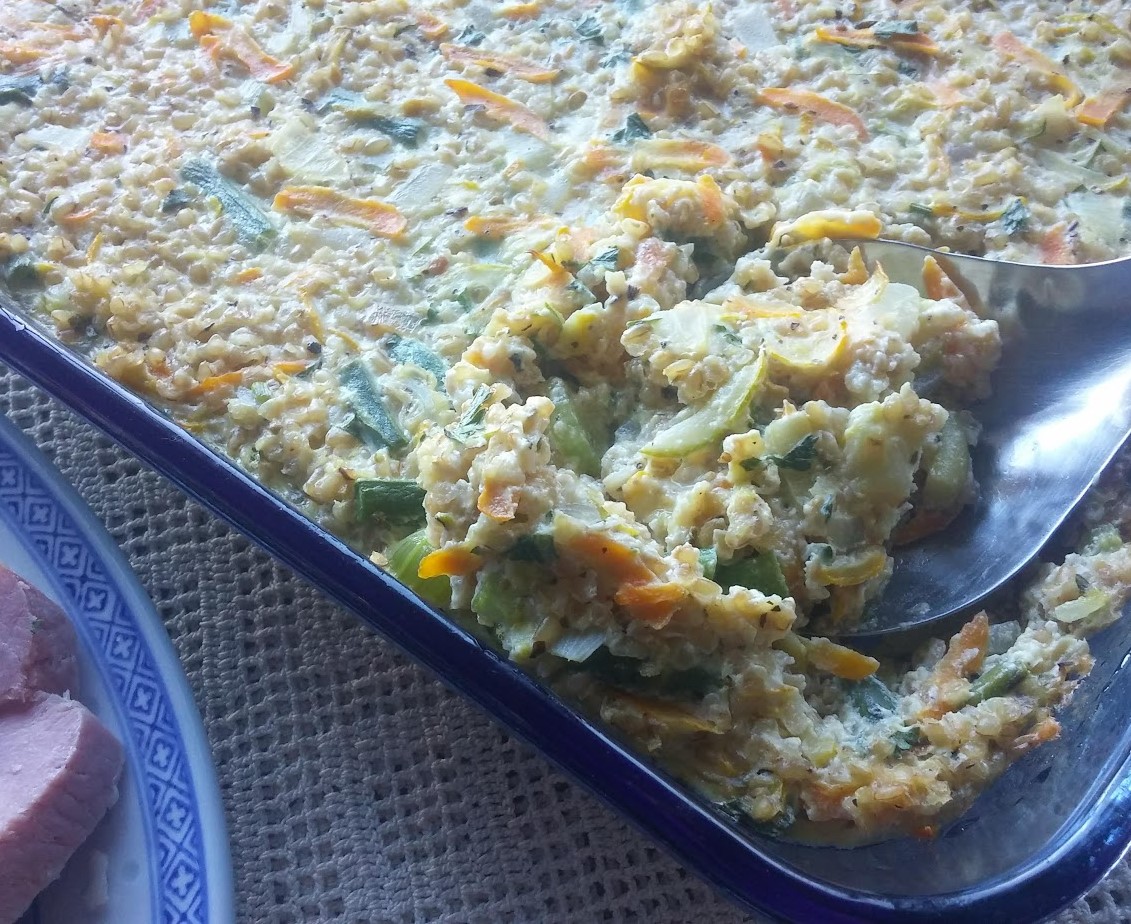
Bulgur with Feta & Vegetables
Monday, 19 July 2021
5 - Spice Green Beans
Monday, 22 February 2021
Green Beans in Savory Sauce
Friday, 9 October 2020
Garden Breeding Projects Annual Assessment
Here it is, close to the end of the garden season. (Agh, already!) It's time to assess how our breeding projects have worked out this year, both the planned and unplanned ones. To get started, here's our (cucurbita pepo x cucurbita argyrosperma) F2:
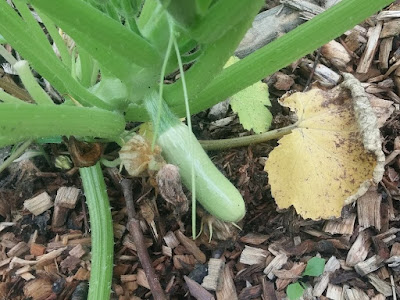
I thought I had posted about this last year, but I can't find that I did. This was an amazing cross that turned up in the garden last year from some seeds we had saved from Lebanese White Bush zucchini a few years earlier. We knew they would be crossed... we didn't know it would apparently be an interspecies cross with Tennessee Sweet Potato squash! The resulting squash were pretty horrid, frankly, but they were not bitter which has frequently been a problem on the seemingly very rare occasions when these two species (pepo and argyrosperma) cross. Argyrosperma is a squash grown mostly in the southern USA and Mexico, and freqently just for the seeds. We only grew it one year, and weren't too impressed. The flesh is bland, and the squash rapidly get a a very hard shell. If they are like the few of the cross that we tried as zucchini, they also develop their seeds very early. However, they are heat tolerant, drought tolerant, and bug and disease resistant. Getting some of those qualities into summer squash struck us as very desirable, and here we were with the means to work on that.
We planted 4 seeds, of which 3 germinated. One produced squash that appeared to have crossed again with an acorn squash; this was not a happy combination and got pulled pretty promptly. The other two plants appeared very similar, apart from the fact that one of them had a bush habit and the other was a bit more rambunctious, although I wouldn't call it a full-on vine. The fruit the produced was extremely similar, but that's a squash from the vining plant above and below.
Here it is cut open. We found the stems attaching the fruit to the plant extremely tough, and the skin hardened fairly quickly too. This is no doubt the influence of the argyrosperma. That's a bit dismaying; if the plants are resistant to bugs and disease because they are physically hard that won't make for good eating. Still, these little squash were much better than last year in terms of tastiness and edibility. I won't say they were particularly great, but there is a big improvement.
We saved one fruit from each of the remaining plants. You can see how similar they are. Obviously, we intend to save seeds and continue next year. These are going to be very hard to cut open; they are still hard when ripe like the argyrosperma squash. I did manage it last year so I presume I can do it again.
We planted a bunch of potatoes from seeds in the spring, all of which got munched by flea beetles and leap hoppers, and generally didn't make it apart from a few stragglers that got left in a pot and which we have not examined yet. However, we replanted a number of seed potatoes from seed-grown plants. Here are three of the best four; one of them seems to have disappeared. I need to check the potato boxes to see if I can find a few to plant again next year. It was a dark purple skinned one, with a nice mauve and white interior.
The others are all offspring of Pink Fir Apple. I wonder about that dark mauve skinned one; it looks like the other parent could be Purple Viking, which is known for producing some real lunkers. But maybe not; who knows what genetics are lurking beneath the surface in potatoes? The one at the top retains a hint of the waxiness of Pink Fir Apple, but the other two are quite light and fluffy in texture. They are all reasonably productive. These are the last remaining few selected from quite a few seed-grown potatoes. We discarded one I was quite interested in. It only grew about 6 or 8 inches high. It also produced about 6 very small potatoes per plant too, and that just wasn't going to cut it, unfortunately. Still! I'm pleased with the ones that remain.
Our watermelon project continues. I appear not to have posted an update last year; bad me! I feel like we've made a lot of progress, but we just aren't there yet. We planted only seeds from yellow-when-ripe watermelon this year, but we got some green skinned ones too. It's just a matter of time to sift them out, since the green skins are dominant, and once there are none, it will mean that gene is out. However, since we can't tell until the fruit ripens, they are still casting out their pollen. It sure slows us down on getting them out.
Flavour-wise, we were a little disappointed in them this year. In spite of all the heat, they were good, but not great. Very sweet, but we thought a little on the mild side. So, we will have to see what we get next year. Right now they are moderately consistent; most of them are round to slightly oval, with either solid green turning to yellow rinds, or faintly striped green turning to yellow rinds, or "tiger" stripes in two tones of green turning to yellow and yellowish-green. And the ones that don't turn at all, of course.
As for beans, I thought it was kind of an exciting year. Our project of growing out the Blue Lake - Cherokee Trail of Tears for a more anthracnose-resistant Blue Lake type bean continues. Our anthracnose is as bad as ever, I would say, but the Blue Lake seemed especially unresistant this year. They are not really any worse than they have ever been; it's that our crosses that are growing out next to them really are more resistant and it's starting to show!
I've sorted the crosses into 4 groups: the one I wanted the most was a pink-flowered, white-seeded, round (in cross-section) bean - there was exactly ONE. I have saved the seeds from that plant, up at the top right. Below it are the best from the much more common pink-flowered, black seeded, round bean. The beige seeds produce plants with purple pods; that's been the case since the cross first happened. I'd be more excited about them, because they are productive, tasty, and disease resistant, but for the fact that there are already quite a few purple-podded pole beans out there, and I don't know that mine are any improvement on them. Finally there are a lot of white-flowered, white-seeded plants and I saved seeds from the best of them. The seeds tend to be larger than those of the original Blue Lake, and the pods even more variable from round to really quite flat. There's also a lot of variability on the anthracnose resistance front, so we will be continuing to winnow out the disease-prone ones for a few years, I expect. But over all, they really are looking quite good.
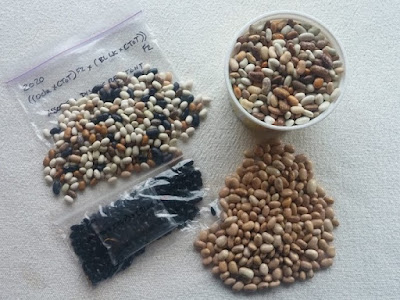
It's some other beans that have me really full of glee, though; two in particular. The two top sets are from a cross that turned up in the garden last year, and dried down to an amazing marbled mauve. It was in a patch that was a cross between Deseronto Potato and Blue Lake; I made the decision to discard that cross because it had turned out to be extremely lack-lustre but I kept the beans from the one plant. I determined that it was most likely ((Deseronto x Blue Lake) x (Anellino Yellow x Cherokee Trail of Tears)) OR ((Deseronto x Blue Lake) x (Blue Lake x Cherokee Trail of Tears)). Yes, I've mis-labelled that seed bag - must fix it.
On the top left are the seeds I'm keeping to try again, from a number of plants. These were the most disease resistant and reasonably productive ones, and they are mostly small and round like navy beans. I did keep one larger, flatter one just because it had such an unusual slate-blue colour. It looks black in the photo but it really is not. The ones in the tub were the rejects, which will be eaten this winter.
There was one bean in this set that was truly amazing. That's the taupe seeds from it in the bottom right of the photo. All those seeds come from one plant. There would have been even more, except that the deer made a bee-line for it every time they broke into the garden and ate a bunch of it. I've never seen such a large, robust, branching bean plant. It was also quite disease-resistant. It has big, fat purple pods, and the seeds are a reasonably large size in addition to being numerous. Its sole flaw is that it was rather late to dry down, but we'll see how its offspring do - because you can be very sure those seeds are getting planted.
The final bean in this set was another one that stood out as extremely productive. I wrote about spotting this one in the Octarora beans earlier this summer. The pile of seeds is about half the size of the other primo cross, but they are smaller generally and more dried down at this point. That's still an impressive amount of beans from one plant, and if the offspring are anywhere near as good as this plant was, they may actually replace the entire Blue Lake - Cherokee Trail of Tears project, even though it did so well this year, as being better. Amazing! A dark horse, so to speak. On which note, I'd like to ask how people feel about green beans with black seeds. They have not been admired in modern agriculture particularly, I know that, but they do seem to be what I am getting to some degree.
The final beans are the Lima beans. The photo is a bit of a mess, but the original seed I got for Alabama is in the packet at the top. I was trying to determine how much, if any, they have crossed with other Limas. I think the answer is; they have. Immediately below them are what I believe to be uncrossed Alabamas. They have just not darkened as much as the older ones, but they have the distinctive black eye. The ones immediately to their right, I believe to be a cross between Alabama and Potawatomi, otherwise seen in an un-crossed state in the lower left. These look like Alabama but with a pinker tint and brown to pinkish eye, and one of them had some darker mottling like Potawatomi which was what convinced me that these are a cross.
Then there are a good number that are very pale when shelled, although they dry to a standard colour, and have no eye, or only a very faint one. I have concluded that these may be a cross between King of the Garden (those green seeds in the middle bottom) and Alabama. We planted a lot of seeds from a single plant of King of the Garden this spring, that last year was the only plant of any variety that did well, which was startling because King of the Garden is usually our latest and least productive Lima bean. It was a terrible year for Lima beans generally. However, we're just not getting very many King of the Garden beans this year, and I have to conclude that it is because it was an F1 hybrid, and the subsequent plants don't resemble it particularly. None of them are that spectacularly productive, nor do they have the green colour. However, if I'm right, I'll be interested to see how they develop next year, especially if we get any back-crosses.
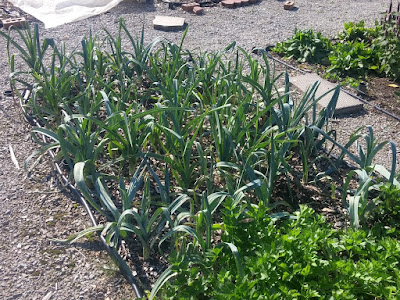
Finally, our selected line of extra-hardy leeks is doing well, apart from the leek moth which now appear to be a fixture. They still look quite variable but we have a good selection of medium to large sized leeks in the bed, so it looks like we are making progress in selecting them to size up a bit earlier. Unfortunately, I left about 8 to 10 leeks from last year to go to seed, and although I haven't cleaned it yet, it looks like there will be next to no seed. Not only is that pushing it on the number of leeks to let go to seed, they did very badly at blooming at overlapping times. However, there's lots of seed left from the year before, and this years, as said, are looking good. Onward to next year...
Wednesday, 26 August 2020
Genovese & Caserta Zucchini, & Lazy Housewife Green Beans
On the left we have Genovese zucchini, with Lazy Housewife green beans in the middle, and Caserta zucchini on the right. Three new varieties for us this summer; how did they do?
Genovese Zucchini:
This one is a perfectly nice little zucchini, as far as I can tell, with a perfectly nice little compact but open bush. We have gotten a few zucchini from it, but it has by no means been prolific. As I've noted before this has been a tough, tough summer for the cucurbits in general. This one has struggled along, not an absolute failure but not standing out for having what it takes to succeed in the face of adversity either. Looking for info on it online, I see one grower describing it as a shy bearer, so it may not just be the weather. Other people - people selling seeds, to be sure - describe it as prolific. Mm. Okay.
Supposedly this is an Italian heirloom variety. I don't doubt it originates in Italy, but I don't know how old it actually is. The small open bush habit suggests to me more modern breeding than something with more robust and rangy vines. Overall it is a bit like a smaller and more decorous version of Costata Romanesca, and I'd have to say with a still pleasant but ordinary flavour to go along with the reduced size.
We'll be giving this another try, since we still have seeds, but unless it does a bit better next year I'm not sure it's going into the regular rotation.
Lazy Housewife Green Beans:
In spite of the sparse picking I came up with for the photo op, this bean has done very well for us this year. It didn't get started quite as early as Algarve, but it's still an early bean. We got a very bountiful first few weeks from our plants, after which they slowed down but are still producing beans steadily. We have left quite a few plants to go to seed so we can grow more of them next year, so our harvest has been even more impressive when I consider how few plants are actually being picked.
The beans are long and thin and rather squared off in shape. The skin texture seems a bit rough, even though they are soft to the touch and the beans stay tender until they hit a fairly large size. The flavour is mild but good. Some listings describe them as "greasy", that is to say having a very smooth, shiny skin, but that is not the case with the ones I am growing. Some listings also described them as late, which they absolutely were not. They may be old enough as a variety that there are several fairly different strains out there. Mine came from Annapolis Seeds. I note that Burpee lists a "Lazy Housewife" that they introduced in 1885, that looks very different and is plainly a completely unrelated bean. It appears to have a much shorter, fatter pod with fewer and rounder beans.
If you fail to pick them green, they will go on to produce a good crop of dry white beans. I haven't eaten them as beans yet, but they will probably look a lot like Great Northern beans. There are going to be so many (from one little packet) that there will be plenty to save for seed and still we will be able to have a meal from the leftovers.
They are a pole bean, and will need a good sturdy trellis. Vines can get quite long.
The name comes from the fact that these were one of the first "stringless" string beans, back in the first decade of the nineteenth century. (I've seen introduction dates of both 1802 and 1810.) You probably save up to two minutes every time a batch is prepared for a meal. Wow, that's some slacking off! Don't spend your saved time all in one place. But do grow these beans; they are very rewarding.
Caserta Zucchini:
This is another zucchini from the mid 20th century (it was released by the University of Connecticut and won an All-American Award in 1949) that is modeled as better-behaved Costata Romanesca or Cocozelle type zucchini. Like Genovese, I'm not sure it quite lives up to that promise. It's managed to be a bit more productive than the Genovese (although on reflection I think we planted 1 Genovese and 2 Caserta, so they may be very similar) but still, in this admittedly difficult year, it hasn't been going gangbusters.
The plant is a similar compact bush, good for small gardens. In a side-by-side taste test with Genovese, we all (three of us) preferred the Casterta. It seemed a little sweeter and juicier, somehow; but with a very small sample size it's hard to tell if that was just the luck of the draw so far as perfect ripeness went. They were really not wildly different in flavour and were both highly reminiscent of other zucchini we have eaten.
It's a little too early to know how they deal with the inevitable powdery mildew; that will certainly have an effect on our decision to re-grow or not.
Monday, 24 August 2020
Hungarian Bean Soup
The beans need not be a mixture; use whichever you can get, although if you can get a mix it adds to the visual appeal. Yellow beans are particularly popular in Hungary, apparently.
I had ham stock which needed no more salt added - au contraire, I'm going to throw another couple of potatoes into the leftovers to tone it down a bit - so I am not quite sure how much salt should be added if you start with unsalted stock. I'd add 1/2 teaspoon and take it from there. Right after the veg go back into the pot is the time to test.
This is pretty quick to make, for soup. Which is good as it is still summer in spite of this weeks somewhat cooler temperatures. I'm thinking it will be just as good in the winter, made with some of our frozen beans. In spite of the slight tendency towards saltiness, we really enjoyed this - it hit a nice balance between being light and refreshing and yet fairly filling. The yogurt gives it a nice tang.
4 to 6 servings
40 minutes prep time
225 grams (1/2 pound) new potatoes
450 grams (1 pound) mixed green and yellow beans
3 to 4 shallots
3 to 4 cloves of garlic
salt as needed - 1/2 teaspoon?
freshly ground black pepper to taste
1/2 teaspoon sweet Hungarian paprika
1 teaspoon rubbed summer savory
2 tablespoons barley flour
3 tablespoons unsalted butter
4 cups unsalted chicken or other stock
3/4 cup thick yogurt
1 tablespoon barley flour
Wash and trim the potatoes, and cut them into dice. Put them in a heavy-bottomed soup pot and cover generously with water (the beans are about to join them) and bring them to a boil. Cook for 6 minutes.
Meanwhile, wash and trim the beans, and cut them into dice as well. Add them to the potatoes when the time is up and cook for another 6 minutes. Drain well and keep them standing by as you cook the shallots.
While the beans cook, peel and finely chop the shallots and the garlic. Put the garlic in a small bowl with the salt, pepper, paprika, savory, and the first 2 tablespoons of barley flour.
Put the butter into the drained pot once the vegetables are in the colander, and when the butter is melted and sizzling add the shallots. Cook for 5 minutes or so, until softened and reduced in volume but not browned. Add the bowl of garlic and seasonings and mix in well. Once everything is well amalgamated into the butter and the garlic fragrant, start slowly mixing in the stock to make a smooth paste. Add the rest, mix well, and return the drained vegetables to the soup.
Simmer for another 10 minutes or so, until the soup has thickened slightly. Mix the remaining barley flour into the yogurt, and slowly whisk it into the soup. Barely simmer another few minutes until hot through and thickened that little bit more, but don't let it boil. Serve it up; it's soup.
Last year at this time I made Watermelon Lime-Ginger Slushies.
Monday, 17 August 2020
Yogurt Baked Bulgur & Vegetables
You could, no doubt, switch around which vegetables you use. I would always be inclined to keep the onion, celery, and carrot, but the beans and zucchini could be swapped out with broccoli or cauliflower, for instance.
We re-heated the leftovers in the microwave, which worked just fine.
4 to 6 servings
1 hour 15 minutes - 45 minutes prep
Prepare the Bulgur & Beans:
125 grams (1/4 pound) green beans
1 cup bulgur
1/2 teaspoon salt
Wash and trim the beans, and cut them into bite-sized pieces (an inch or less in length). Put 2 cups of water in a large pot and bring it to a boil. Add the beans and cook them for 1 minute. Add the salt and the bulgur, and boil it for 1 minute more. Then, cover the pot and remove it from the heat. Let it rest for 30 minutes as you prepare the other vegetables.
Make the Casserole:
1 medium onion
1 stalk of celery
1 medium carrot
1 medium zucchini
1/4 cup minced parsley
2 tablespoons mild vegetable oil
1 teaspoon rubbed thyme OR savory
1 teaspoon rubbed basil
1 teaspoon rubbed oregano
1/2 teaspoon salt
2 large eggs
1 cup thick yogurt
Peel and chop the onion. Wash, trim, and chop the celery. Peel and grate the carrot. Wash, trim, and grate the zucchini. Wash and dry the parsley, and trim off any coarse stems. Mince well. Preheat the oven to 350°F.
Heat the oil in a large skillet. Add the onion and celery, and cook for about 5 minutes until softened and reduced in volume, stirring regularly. Add the carrot and zucchini, and cook for another 5 minutes or so, stirring regularly until they, too, are softened and reduced in volume. Sprinkle the seasonings over them for the last few minutes of cooking.
Mix the vegetables into the prepared bulgur. Add the minced parsley. Whisk the eggs, then whisk in the yogurt. Mix this into the bulgur and vegetables. Lightly oil a 9" x 13" shallow baking (lasagne) pan and spread the mixture evenly in it. Bake for 30 minutes until firm and lightly browned at the edges, and serve at once.
Last year at this time I made Tomato Egg-Drop Soup.
Wednesday, 5 August 2020
Green Beans in Ginger-Tomato Sauce
I sprinkled this with a few pumpkin seeds before serving, which I think was a mistake. We kept taking them for oddly tough pieces of bean. Next time, I would probably serve it with a dab of Turkish yogurt sauce (thick yogurt with a clove of garlic and a bit of salt) since the yogurt is already out, although they would also be just fine as they are. Rice or noodles are the obvious accompaniment to soak up that rich and tasty sauce, and some plainly grilled chicken or fish will finish the meal.
4 servings
30 minutes prep time
450 grams (1 pound) green beans
1 tablespoon fresh ginger, peeled and grated
1 clove garlic
1/4 teaspoon salt
1 teaspoon sweet Hungarian paprika
1 tablespoon unsalted butter
2/3 cup thick yogurt
2/3 cup tomato sauce
Wash and trim the green beans, and cut them into bite-sized pieces. Peel and grate the ginger and the garlic. Set the ginger and garlic aside in a small bowl with the salt and paprika.
Put a pot of water on to boil, for cooking the beans.
Heat the butter in a large skillet, over medium-high heat. When it sizzles, add the bowl of ginger, garlic, etc, and stir in well for about 1 minute. Then quickly add the yogurt and tomato sauce, and reduce the heat to medium. Let the sauce cook for 6 to 8 minutes, until thickened. Stir regularly.
Meanwhile, when the water boils, add the prepared beans and re-cover the pot. Cook for 4 or 5 minutes, until tender. Drain well and add to the sauce. Mix them in well, then let them simmer for just a few minutes, until the beans and sauce are very cosy with each other. Transfer them to a serving dish and serve at once.
Last year at this time I made Blueberry Cucumber Salad with Feta.
Monday, 20 July 2020
Green Bean & Bulgur Pilaf
This is a standard Turkish recipe. The recipes I referred to didn't call for the addition of any oniony stuff, but you could put a finely chopped shallot into the butter before adding the other ingredients. However, I suspect it's generally kept fairly plain as it's meant as a side dish to be served with other things that are expected to be more the stars of the show. As such, the seasonings are pretty plain too. If I was serving it with some not very seasoned chicken, fish, or other meat, I'd be inclined to add some more - basil, oregano, summer savory, paprika, and hot chile being possibilities that immediately occur. Not all of them at once, obviously. I served the leftovers with a good drizzle of chile-garlic sauce and was very happy.
4 to 8 servings
30 minutes - 15 minutes prep time
450 grams (1 pound) green beans
2 tablespoons unsalted butter
1 large tomato OR 2 tablespoons tomato paste
OR 1/4 cup tomato sauce
1 1/2 cups bulgur
2 1/4 cups unsalted chicken OR vegetable stock
1/4 teaspoon salt
freshly ground black pepper to taste
Wash and trim the beans, and blanch them in boiling water - you can drop them into a pot of boiling water for a minute, but it's easier to leave them in a colander in the sink and pour a kettleful over them. If you are using the fresh tomato, blanch it too, so as to be able to peel it, then chop it.
Heat the butter in a heavy-bottomed non-reactive pot until melted, and add your tomato substance. You now have a choice; you can add the beans now (traditional) or you can hold off and add them later so they stay crisper and greener. At any rate, add the bulgur, stock, and seasonings, and stir well.
Bring the bulgur up to a boil, then reduce the heat until the pot is simmering steadily. Cover and cook for 10 to 12 minutes, until the bulgur is tender and the liquid is absorbed. Stir regularly. Reduce the heat if it seems to be sticking. If you did not add the beans at the beginning, you can mix them in at any time during this process, with the expectation that quite lightly cooked beans will take about 4 minutes more of cooking.
Once the bulgur is cooked, it is a good idea to remove the covered pot from the stove and let it rest for 3 or 4 minutes before transferring it to a serving bowl and serving.
Monday, 22 June 2020
Peas in Butter Sauce
But peas are special, and when they come fresh from the garden they deserve a special treatment that doesn't overwhelm them, and now that I'm cutting way back on the carbohydrates, I am eating more in the way of fat. Butter is good for you, they now say.
You could put this sauce on all kinds of vegetables besides peas; asparagus, cauliflower, broccoli, zucchini, green beans, even cabbage or carrots. Even if you stick to peas, snap and snow peas would work very well in this sauce too. Adjust the herb and stock according to which vegetable you are using, or replace the lemon juice with a good vinegar. Use more or less of the vegetables depending on what you have, how many people you are serving, and how prominent you would like the sauce to be. It's not outstandingly assertive, in spite of all that butter. I suspect this would also work just fine in the winter, with frozen vegetables.
Classic butter sauce is made with no starch, but I'm a belt-and-suspenders kind of a cook, and took no chances of it failing to emulsify. This requires fairly precise timing but is otherwise very quick and easy to make. The butter should be cold, not at room temperature or it won't emulsify properly.
2 to 6 servings
15 minutes prep time, not including shelling the peas
3 cups shelled peas (OR use 2 to 4 cups other vegetable)
1/2 teaspoon potato starch
1/4 teaspoon salt
freshly ground black pepper to taste
1/4 to 1/2 teaspoon rubbed dry mint (OR other herb)
1/4 cup vegetable OR chicken stock
2 tablespoons 10% cream
3 tablespoons cold unsalted butter, cubed
1 tablespoon lemon juice
Have the peas shelled and ready to go. Cook the peas (or other vegetable) by steaming or boiling them in the usual way, expecting them to take 2 to 4 minutes. (Other vegerables may take up to 6 minutes.) Because vegetables cook very quickly, you should have all the sauce ingredients standing by ready before you start cooking them.
Put the starch, salt, pepper, herb, stock, and cream into a small bowl and mix. When the peas or other vegetables have about 2 minutes left to cook (which is to say you have just dropped the peas in boiling water, or put them in a steamer a minute or two ago) heat a broad, shallow pan - I used my stainless steel skillet - over medium-high heat. Add the ingredients you mixed in the little bowl and whisk steadily, until the sauce thickens - about 1 minute. Reduce the heat to low and add the butter, whisking it in until melted and amalgamated. Add the lemon juice and whisk it in.
Immediately pour the sauce over the WELL DRAINED peas in their serving dish, or you can add the well drained, did I say? peas to the pan and toss them in the sauce there before transferring it all to a serving dish. Serve at once.
Wednesday, 18 March 2020
Mustardy Curried Green Beans
This easy little bean dish was really nice, and could be served, as here, as part of an Indian-style ensemble, or as a veg in the traditional meat and two veg.
Just about every actual Indian green bean dish I saw called for coconut milk. I'm sure it's very nice with them, but since it isn't local and doesn't always agree with me, I went with stock. No reason you have to, though.
4 servings
20 minutes prep time
Mix the Spices:
1/2 teaspoon cumin seed
2 teaspoons whole mustard seed
1/4 teaspoon fenugreek seed
1/4 teaspoon fennel seed
1/4 teaspoon salt
1/2 teaspoon ground turmeric
1/2 teaspoon chick pea flour
Don't grind the seeds; I bruised them a little then just mixed everything in a small bowl.
Cook the Beans:
6 medium shallots
1 tablespoon mild vegetable oil
2 cups thawed frozen green beans in short pieces
1 tablespoon finely grated peeled fresh ginger
1/2 cup chicken stock OR coconut milk
1 tablespoon Dijon mustard
Peel the shallots and cut them into slivers.
Heat the oil in a medium skillet over medium heat, and add the shallots. Cook until softened and reduced slightly in volume, but don't let them brown much. Stir regularly. When they are well on the way, mix in the dry spices and cook, stirring often, until they brown a little and some of the mustard seeds pop.
Meanwhile, chop the beans and peel and grate the ginger. Add the ginger to the shallots and mix it in well, then follow with the beans. Add the stock or coconut milk. Reduce the heat and simmer for a few minutes until the beans are hot through and the sauce is slightly thickened. Stir regularly. Serve at once.
Last year at this time I made Berbere Spice Blend.
Monday, 16 September 2019
Vegetables Sabzi
There are a fair number of steps to making this, but they can be broken up over as long as two days, if you wish. We liked this enough that I think next time I will make a triple batch of the spice blend so that it is on hand for making it again on shorter notice. That's some enthusiasm!
The vegetables can be varied according to what is in season; I might try a more ratatouille-like combination of eggplant, zucchini, peppers, onions, and tomatoes next. In the winter I would replace the cauliflower half with cabbage and half with frozen peas, and the beans would have to be frozen too, of course. The tomatoes would be canned and the pepper from a greenhouse.
4 servings
1 hour - 30 minutes prep time
NOT including make the spice blend; allow 20 minutes for that
Make the Spice Blend:
3 pods green cardamom
1 teaspoon cumin seeds
1 teaspoon fennel seeds
1 1/2 teaspoons coriander seeds
1 or 2 bits of star anise
1/4 teaspoon black peppercorns
1 teaspoon salt
1 teaspoon ground turmeric
1/16 teaspoon ground cloves
1/8 teaspoon ground cinnamon
2 teaspoons chick pea flour
2 bay leaves
Crush the cardamom lightly and remove and discard the papery green hulls. Combine them with the cumin, fennel, coriander, star anise, and peppercorns. Heat a small skillet over medium-high heat and toast these spices until just fragrant. Turn them into a small bowl to cool, then grind them finely. I find it helpful to sift them, then regrind the bits that don't go through the sieve.
Put them back in the small bowl and add the remaining ground spices and chick pea flour to the mixture. Stir to combine. Add the bay leaves to the bowl and set aside until needed.
This can be done up to several days in advance, and the spice blend kept in a sealed container in cool dark spot until wanted.
Prepare the Vegetables:
2 medium potatoes
1 medium carrot
1 cup diced green beans
2 cups diced cauliflower
Put a pot of water on to boil sufficient to hold all the above vegetables.
Wash, trim, and cut the potatoes into bite sized pieces. Peel and dice the carrot. When the water boils, add these and boil them for 5 minutes.
Meanwhile, wash, trim, and dice the green beans and cauliflower. Add them to the pot when the timer goes off and cook for a further 5 minutes - stir occasionally. Drain well.
If you are not proceeding with the Sabzi immediately the vegetables can be rinsed in cold water until cool then drained well and kept covered and refrigerated until you are ready to continue; up to 24 hours ahead.
Finish the Sabzi:
1 medium onion
1 small orange sweet pepper (or 1/4 orange bell pepper)
3 tablespoons unsalted butter
2 cups peeled diced tomatoes
3/4 cup yogurt
Peel and finely chop the onion. Wash, core and deseed, and dice the pepper. (If you are using fresh tomatoes, they should be peeled and chopped by now as well.)
Heat the butter in a large skillet over medium-high heat until it begins to sizzle. Add the partially cooked vegetables and the onion and pepper. Spread them out evenly, and cook for about 10 minutes, stirring occasionally, until lightly browned.
Sprinkle the spice mixture over the vegetables and mix it in well. Continue cooking for 2 or 3 minutes, then add the tomatoes. Mix them in and let the mixture simmer for another 5 minutes or so, stirring regularly. Mix in the yogurt and continue cooking and stirring occasionally for another 10 to 15 minutes. The sauce should thicken slightly and seem fairly smooth. Let the dish rest for 5 minutes before serving.
Last year at this time I made Alambre de Chuleta.
Friday, 9 August 2019
Green Bean & Cauliflower Salad in Gremolata-Tahini Dressing
Even eating it twice a week, I'm not tired of it and so I decided to use regular mayonnaise and gussy it up a bit, and have it again. We were very happy with the results. The tahini and garlic make it even livelier, and the parsley, beans, and cauliflower were a very good combination.
4 servings
30 minutes prep time
Prepare the Salad:
2 cups trimmed, chopped green beans
3 cups cauliflower in small florets
1 cup finely chopped parsley
Put a pot of water on to boil the vegetables. Wash, trim, and chop the beans into bite-sized pieces. Wash the cauliflower and break it into small florets.
Add the beans to the water and set the timer for 6 minutes. Stir them well. After one minute, add the cauliflower. When they are cooked, rinse them in cold water until cool then drain them well. Put them in a salad bowl.
Wash and dry the parsley, removing any tough stems or damaged leaves. Chop it finely and add it to the salad.
Make the Dressing:
1 clove of garlic
the finely grated zest of 1/2 of a large lemon
2 tablespoons tahini
1 teaspoon Dijon mustard
1/4 teaspoon salt
freshly ground black pepper to taste
3 tablespoons mayonnaise, light is fine
the juice of 1/2 of a large lemon
Peel and finely mince the garlic. Put it in a small bowl. Add the lemon zest, tahini, mustard, salt, and pepper. Mix until well blended and lump-free.
Add the mayonnaise and work it in until the mixture is smooth. Add the lemon juice, a spoonful at a time, working the mixture well between each addition to keep it smooth. Once the dressing is liquid enough, the rest of the lemon juice can be added at once and stirred in.
Toss the salad in the dressing and serve.
Wednesday, 24 July 2019
Stir-Fried Beef with Yellow Beans & Garlic Scapes
You could put hot pepper flakes into this instead of black pepper, but I liked the pepper fine. I used lots, and ground it coarsely. We had it with steamed rice, as seems right and proper.
2 to 4 servings
30 minutes prep time
250 grams (1/2 pound) yellow wax beans
250 grams (1/2 pound) garlic scapes
375 grams (3/4 pound) round or other steak
2 tablespoons mild vegetable oil
2 tablespoons soy sauce
2 teaspoons toasted sesame oil
freshly ground black pepper, generously (but to taste)
Wash, trim, and cut the yellow wax beans in half. Wash and trim the garlic scapes, keeping only the tender stems. Cut them in pieces of about the same size as the beans. Leave them in a colander and scald them by pouring a little boiling water over them. Drain well.
Cut the beef into thin, bite-sized pieces.
Heat the oil in a wok or large, heavy skillet over high heat. Add the steak and stir until just seared. Add the beans and the garlic scapes. Stir fry until the meat is cooked and the vegetables are also cooked and starting to brown in spots. When just a minute or so prior to being done to your liking, add the soy sauce, sesame oil, and pepper, and mix in well. Serve as soon as the soy sauce has been absorbed.
Last year at this time I made Turkish Style Stuffed Zucchini.
Friday, 29 March 2019
An Ethiopian Feast - Ye'atakilt Wot (Stewed Vegetables)
I would be very willing to serve this as a side dish to some other meal altogether; some simply cooked piece of fish or chicken for example. In that case I might try to use the cabbage and the green beans both. Since I am winding up our 2 week long feast (ha! ha! no, it was gone in half an hour like every other meal) this is probably a good time to say that any of the dishes I made this week could be made in ones or twos and served with rice. I don't think it's in any way traditional but it would be really very tasty and sometimes that's the way to go, especially if you just want to give something a try.
6 to 8 servings
30 minutes prep time
Make the Spice Blend:
1 large clove garlic, minced
1 tablespoon minced fresh ginger
1/2 teaspoon ground turmeric
1/2 teaspoon salt
1/2 teaspoon ground ginger
freshly ground black pepper to taste
Peel and mince the garlic. Peel and mince the ginger. Put them aside with the remaining spices measured and ready to go.
Cook the Vegetables:
1 medium carrot
3 cups water
3 potatoes
2 cups chopped savoy cabbage OR frozen green beans
Peel and slice the carrot. Put it in a saucepan with the water and bring it up to a boil. Set the timer for 10 minutes as soon as it goes on.
Wash, trim (or peel if you like) the potatoes, and cut them into bite-sized chunks. Add them to the carrots when the timer goes off, and set the timer for 10 minutes again.
Wash, trim and chop the cabbage, if using. Add it or the beans after 10 minutes and set the timer for another 5 minutes.
Fry the Onions & Finish:
1 medium onion OR 3 medium shallots
2 tablespoons mild vegetable oil
Peel and chop the onion or shallots.
When the cabbage goes into the pot put the oil in a small skillet over medium heat. Add the onion and cook for 3 or 4 minutes, stirring regularly, until softened and translucent. Add the ginger, garlic, and spices and cook for another minutes, stirring as it cooks.
Add the seasoned onions to the pot of vegetables and mix in well. Let simmer for a further 5 or 10 minutes until well amalgamated.
This should be the right amount of water to end up with a soft, loose mixture, but if at any time during the making of this dish the water seems to have boiled away sufficiently to be insufficient, please do add some more.
Last year at this time I made Celeriac Zeytinyagli.
Wednesday, 22 August 2018
Beans & Cherry Tomatoes in Mint Vinaigrette
Blue Lake beans seem to need about 6 minutes of cooking to be perfect (by my definition) but some of the more modern bean varieties have less heft to them, and cook faster.
4 to 6 servings
30 minutes - 15 minutes prep time
300 grams (10 ounces) green beans
1/4 cup finely minced fresh mint
1 tablespoon finely minced fresh oregano
OR 1 teaspoon dry oregano
1/4 cup olive oil
1/4 cup red wine vinegar
1/2 teaspoon salt
freshly ground black pepper to taste
300 grams (10 ounces) cherry tomatoes
Put a pot of water on to boil for the beans. Wash and trim them, and cut them into bite-sized pieces. When the water boils, cook them for 4 to 6 minutes, depending on variety of bean and desired tenderness.
Meanwhile, wash and mince the mint and oregano, discarding any tough stems. Put them in a salad bowl with the oil, vinegar, salt, and pepper. Wash and de-stem the tomatoes, and cut them in halves or quarters. Keep them separate from the rest of the salad until just before serving.
When the beans are cooked, drain them very well and mix them into the dressing in the salad bowl while they are still hot. Once they have cooled to room temperature, mix in the tomatoes and serve.