Showing posts with label Peas. Show all posts

Monday, 6 June 2022

Turkish Stewed Peas

Well, I'm going to confess; I made this in the winter with frozen peas and saved it for now. In a funny sort of way there are lots of things that can be made in the winter but late spring and early summer are difficult. I'm also a little ahead of things here; the peas are starting to form but are not yet ready to pick. Soon, though! And I think things are a tad later than usual this year. 
 
Snow peas will be ready before shell peas, and they would work well in this recipe. I do see snow peas used in Turkish cooking regularly, so there's that. It's hard to come up with recipes for snow peas that are better than steaming them and serving with a dab of butter, but this is lovely and would make a nice change.
 
Serve this with rice or pita; it will also go well with any kind of simply grilled fish, chicken or meat. It would also be delicious with poached eggs. 
 
2 to 4 servings
30 minutes prep time 
NOT including shelling the peas
 
Turkish Stewed Peas
 
1 medium onion
1/4 to 1/3 orange or yellow bell pepper
1 clove of garlic 
2 tablespoons olive oil
1 bay leaf
salt & freshly ground black pepper to taste
1/2 teaspoon rubbed mint
1 teaspoon sweet paprika
1/4 teaspoon Aleppo pepper (or to taste)
1 1/2 cups crushed tomatoes
2 cups shelled peas

Peel and finely dice the onion. Wash, trim, and dice the pepper into pieces just a little larger than the peas. Peel and mince the garlic. 

Heat the oil in a large skillet over medium heat, and add the onion, pepper, and bay leaf. Cook gently for about 5 minutes until softened and reduced in volume. 

Add the minced garlic and remaining seasonings and mix in well. Let it cook for a minute, then mix in the crushed tomatoes. Simmer for a further 5 to 10 minutes until thickened.

Add the peas and be sure they are all down in the liquid. Simmer for 6 to 8 minutes, until the peas are tender. (If using frozen peas, note that 4 minutes will likely be enough, and the same goes for snow peas.) 

Serve at once. 


Last year at this time I made Circassian Chicken.

Friday, 11 March 2022

Creamed Peas on Toast

I'm finishing frozen vegetable week here with this delightful dish that harks to the '20s. The 1920s, that is - good gosh, that's 100 years ago! I'm not old enough to remember them, but when I first became aware of their existence, they were a mere 50 years past. I don't understand why they haven't stayed there. (Although I guess in that case I would still be 10, so no.) 
 
Anyway! These were originally a little plain and stodgy, but seasoned up to modern tastes they are excellent. Rich peas (and eggs, if you like) with a creamy sauce, soaked up by crunchy toast, and not too thick and gummy, so be sure to supply a spoon. Also be sure to use a good quality bread - French or Italian style - to get that chewy crust. You could replace the seasonings with some curry powder if you like, or more subtly, use a smoked or slightly hot paprika. 
 
 2 or 3 servings
30 minutes prep time

Creamed Peas on Toast
 
1 small onion or large shallot
1 tablespoon unsalted butter
2 cups thawed frozen peas
1/2 cup water
1 tablespoon barley or wheat flour
1/4 teaspoon salt
freshly ground black pepper to taste
1/2 teaspoon sweet Hungarian paprika
1/2 teaspoon rubbed savory
1/2 teaspoon rubbed mint
1/2 cup light cream or whole milk
2 to 4 large eggs, optional 
toast to taste
 
Peel and finely chop the onion or shallot. Heat the butter over medium heat in a fairly large skillet; one which has a lid. Gently cook the onion until softened and reduced in volume, and lightly browned. Add the thawed peas and water, cover, and bring it up to a simmer. 

Mix the flour and seasonings in a measuring cup, then slowly stir in the cream or milk. When it is smooth, stir it into the simmering peas. At this point you can cover the peas and simmer for about 5 to 7 minutes, until thickened, and serve over toast, OR you can break in the eggs. Cook them covered as well, for 6 to 10 minutes until done to your liking, before ladling them over the toast. 


Last year at this time I made Pickled Red Cabbage.

Wednesday, 15 December 2021

Tuna Quinoa Casserole

This is a pretty classic comfort-food tuna casserole, but for the fact that the usual pasta has been swapped out for quinoa. I always cook more quinoa than we will eat when I make it the first time; it keeps so well and is so handy to have for so many dishes. You can add this one to that list. 

It's a fairly large casserole; if you don't want leftover leftovers, you could cut in in half quite easily. I sprinkled a few tablespoons of water on the leftovers, covered it in foil, and reheated it in the oven to good success, though.
 
4 to 6 servings
1 hour 30 minutes - 45 minutes prep time
NOT including cooking the quinoa
 
Tuna Quinoa Casserole
 
Cook the Quinoa:
3/4 cup quinoa
1/4 teaspoon salt
1 1/4 cups water 

Into the rice cooker with them; turn it on; cook. Remove as soon as it is done. You could also use 2 to 2 1/2 cups leftover cooked quinoa, without or with vegetables in it; adjust the other vegetables if necessary.

Make the Casserole:
1 stalk of celery
2 medium leeks OR 1 large onion
1 medium carrot
1 or 2 cloves of garlic (optional)
125 grams (1/4 pound) button mushrooms
2 tablespoons mild vegetable oil
1/4 cup barley OR other flour
2 teaspoons rubbed savory, thyme OR other herb of choice
2 cups whole milk or light cream
2 cups frozen peas, thawed
2 133-g when drained tins of tuna (chunk)
1 cup grated old Cheddar cheese
1 cup bread crumbs
 
Wash, trim, and chop the celery. Wash and trim the leeks, and chop them, or peel and chop the onion. Peel and grate the carrot. Peel and mince the garlic. Clean, trim, and chop the mushrooms. 
 
Preheat the oven to 350°F. 
 
Heat the oil in a medium skillet, or better in a shallow casserole dish that can also be used on the stove-top. Cook the celery, leeks or onions, and carrots over medium-high heat, stirring regularly, until softened and reduces in volume. Add the garlic, flour, and other seasonings and mix in well, cooking for another minute or so until well blended and fragrant. 

Remove the pan from the heat. Stir in the milk or cream, the thawed peas, the drained tuna broken into chunks, and the quinoa. Spread it all out smoothly. 

Mix the cheese and bread crumbs, and sprinkle them evenly over the casserole. Bake at 350°F for 45 to 50 minutes until nicely browned. Let it rest for 5 minutes before serving.


Last year at this time I made Spiced Boiled Fruitcake

Friday, 9 July 2021

Eggs with Peas

This recipe is adapted from Colette's Best Recipes, a French (for English cooks) cook book from the 1920s. Like most cooking of that time, it's not exactly bursting with exotic flavours, but it made a pleasant riff on our usual breakfast of eggs on toast and also used some of the peas currently pouring into the kitchen. I am ready for something else to be ready even though I love peas. 
 
Colette wanted you to cut your bread into little stars, fry them, then use them to garnish the eggs. Uh, no. Toast is just fine, thanks. I used a mix of broth and milk as I had some of both to use up, but Colette just used water. I think a little extra flavour couldn't possibly hurt this, but obviously water will do. You could also slide a slice of cheese onto the toast before you put on the eggs and peas; I promise not to tell.

I used 3 eggs, as they were extra, extra large, being duck eggs. And yes, I am eating quite a lot of eggs these days.
 
2 to 4 servings
20 minutes prep time NOT including shelling the peas
 
Eggs with Peas
 
2 cups shelled peas
2 tablespoons flour
2 green onions OR 3 tablespoons minced chives
2 tablespoons butter
1 cup unsalted broth OR milk OR water
4 extra large eggs
1/4 teaspoon salt
freshly ground black pepper to taste
3 or 4 slices of bread, toasted
 
Boil some water and put the shelled peas in a colander. Pour the boiling water over them, and let them drain. When they are drained but still damp, toss them with the flour. 
 
Meanwhile wash, trim, and finely chop or mince the green onions or chives. Whisk the eggs in a bowl with the salt and pepper.

Heat the butter in a medium skillet over medium heat, and cook the green onions or chives just until softened. Add the broth, milk, or water. Add the peas and stir well to keep the flour from forming lumps. Bring up to a simmer and simmer until the peas are cooked close to your liking. Now is the time to start toasting the bread. 

Slowly whisk the eggs into the simmering peas. Continue whisking or stirring until the mixture thickens - ideally this is sort of a cross between a rich sauce and scrambled eggs; it should not get too curdy. Remove the pan from the heat as soon as they thicken, as they will continue to cook a little more. Keep stirring for minute or so after they are off the heat.

Serve the eggs and peas over the toast. 


Last year at this time I made White Beans with Bacon, Turnip Greens & Onion.

Monday, 5 July 2021

Turkish Egg Salad

Just like North American egg salads, this has only a few simple ingredients and goes together very quickly. It's quite different though. No goopy mayonnaise, but a zingy lemon vinaigrette. Lots of fresh and sprightly herbs instead of, uh, nothing really. Instead of a smooth finely chopped texture, lots of big tasty chunks. 

Most of the recipes I looked at didn't call for either potatoes or peas, although a number included some other vegetable. Like most really simple recipes, you do it your way, with your way having a lot to do with what's around at the time. I used potatoes this time, but I plan to use peas soon, because this is something that's likely to become a regular menu feature.
 
4 servings
15 to 30 minutes advance prep
15 minutes to finish
 
Turkish Egg Salad

Advance Preparation:
225 grams (1/2 pound) new potatoes
OR 2 cups shelled peas, snap, or snow peas, blanched 
5 large eggs

If using potatoes, choose ones of equal size. Put them in a pot with water to cover, and boil them until tender; 15 to 20 minutes. Rinse them in cold water and let them cool. 

If using peas, shell or trim them and blanch them in boiling water until tender. Rinse in cold water and drain very well. 

Put the eggs in a pot of water to cover them, and bring them to a boil. Boil them for 1 minute, then remove them from the heat. Leave them in the water, covered, for 10 minutes then transfer them to cold water and allow to cool completely.

Make the Dressing:
the juice of 1/2 large lemon
3 tablespoons olive oil 
1/4 teaspoon salt
freshly ground black pepper to taste
1/4 teaspoon ground sumac
1/4 teaspoon rubbed basil
1/4 teaspoon rubbed dried mint
Aleppo pepper to taste

Mix all the ingredients in a small bowl or jam jar and set aside until needed.

Finish the Salad:
2 or 3 green onions 
1 or 2 tablespoons finely minced fresh dill
1 cup finely chopped parsley

Wash, trim, and finely chop the onions, dill and parsley. Put them in a salad bowl. 

Peel the potatoes, if using, and cut in bite-sized chunks. Add them to the herbs, or the peas if they if they are being used instead. Peel the eggs and cut them in bite-sized chunks and add them to the salad. Mix gently and drizzle with the dressing.


Last year at this time I made Green Garlic & Sesame Fried Chicken.

Wednesday, 23 June 2021

Moo Goo Gai Pan

This classic Chinese-Canadian dish can be found on the menu of every Chinese take-out on the continent, probably. The name translates to fried chicken and mushrooms, although a generous quantity of other vegetables is usually included. You can make it at any time of year with whatever vegetables are in season, but I particularly like it now with snow or snap peas. Later on, broccoli is an excellent choice too; but asparagus, green beans, zucchini, cauliflower, Brussels sprouts or even cabbage or kohlrabi would all work. I tend to think something green but not too thin and leafy works best. I list carrot and red pepper as optional, but if you can get at least one of them they will add a very desirable pop of colour.
 
Garlic is the usual choice, but when the peas are in, so are garlic scapes, and they work very well, although like last year, I'm finding them rather tough and stringy this year from lack of water. 

As for the mushrooms, you can keep it inexpensive and easy with basic button mushrooms, or branch out with shiitake or oyster mushrooms. If using shiitake, you can reduce the amount by weight by about 1/3; you will still have about the same volume as you would with other, moister mushrooms. 

Mr. Ferdzy and my mother were quite impressed at how much this tastes like take-out Moo Goo Gai Pan... and it really does! Serve with steamed rice or fried noodles for the complete experience.
 
2 to 4 servings
45 minutes prep time, PLUS time to marinate the chicken

Stir Fried Chicken with Mushrooms - Moo Goo Gai Pan

Marinate the Chicken:
450 grams (1 pound) skinless, boneless chicken pieces
1 tablespoon mild vegetable oil
1/2 teaspoon salt
1 tablespoon soy sauce
2 tablespoons arrowroot or corn starch
 
Cut the chicken into bite-sized pieces. Toss it with the remaining ingredients in a coverable container,. Cover and refrigerate for 30 minutes to several hours. 

Make the Sauce:
1/3 cup chicken stock
1 tablespoon arrowroot or corn starch
1 tablespoon soy sauce
1 tablespoon oyster sauce
1 tablespoon sherry OR Chinese cooking wine
2 teaspoons toasted sesame oil
 
Dissolve the arrowroot in the chicken stock, then add the remaining ingredients. Cover and set aside until needed (in the fridge if done much in advance.) 
 
Prepare the Vegetables & Finish the Dish:
1 carrot (optional)
1/4 of a red pepper (optional)
225 grams (1/2 pound) mixed fresh mushrooms
2 cups snow peas
2 or 3 cloves of garlic OR garlic scapes
1 fresh onion with the greens OR 3 or 4 green onions
4 tablespoons mild vegetable oil

Peel and slice the carrot thinly, or the pepper into slivers. Clean and quarter or otherwise cut the mushrooms into bite-sized pieces. Top and tail the snow peas. Peel and mince the garlic, or trim the garlic scapes and chop them into inch-long pieces. Peel and chop the onion and the greens, keeping them separate, or trim and chop the green onions. 
 
Heat half the oil in a large skillet over high heat. Add the chicken, with the marinade, and cook until the chicken is cooked through, stirring regularly. Transfer it to another dish once it is done, leaving behind as much oil as possible. However, you will likely need to add a little more to cook the vegetables. 
 
Add the carrots or pepper to the pan and cook for just a minute or so, stirring frequently. Add the mushrooms and white parts of the onions, and continue to cook and stir. When they look partially cooked add the snow peas, garlic, and onion greens. Cook for another 2 minutes or so, until the vegetables all appear to be done but still quite crisp. Add the sauce and mix it in well. Cook for about 1 minute more, until the sauce is thickened. Serve at once with rice or noodles.


Last year at this time I made Peas in Butter Sauce

Friday, 18 June 2021

Pea & Bulgur Pilaf

We are currently up to our eyebrows in peas; apart from trying to keep things watered (egad) most of my time is being spent picking, shelling, and freezing peas; a state of affairs likely to last for at least another week. We did pause to eat a few though. 
 
This is a very simple side dish, and provides the carbs and vegetable all in one, so all you need to complete the meal is some type of protein - an excellent dish for very busy gardening days, although it does need a little time for the bulgur to soak. That'll give you time to shell the peas.
 
3 to 4 servings
1 hour - 20 minutes prep time

Pea & Bulgur Pilaf
 
1 cup bulgur
1/4 teaspoon salt
2 cups boiling water
1 fresh onion, with green top OR 3 or 4 green onions
1/4 cup finely minced fresh parsley
2 to 3 tablespoons finely minced fresh mint
2 cups shelled green peas
2 tablespoons mild vegetable oil
freshly ground black pepper to taste

Put the bulgur and salt into a bowl which will hold the heat (ceramic is best) and pour over the boiling water. Cover and let sit for 20 minutes to half an hour. 

Meanwhile, wash, trim, and chop the onion, parsley, and mint. Keep the white parts of the onion separate from the green parts. Shell the peas. 

Heat the oil in a skillet over medium-high heat. Add the white parts of the onion and cook for a minute or two, until softened. Add the bulgur, along with any remaining water in the bowl that is not yet absorbed. Simmer until the liquid is mostly absorbed, stirring occasionally. Add the peas and continue cooking and stirring until they are done (2 or 3 minutes) and the mixture looks moderately dry. Add the green onion tops and the herbs, and mix in until well wilted. Season with pepper to taste. 

Remove the skillet from the heat and cover it. Let the pilaf rest for 5 minutes before serving it. 


Last year at this time I made Haskap-Hazelnut Crunch.

Wednesday, 16 June 2021

Salmon, Snow Pea & Lentil Salad

Some advance cooking required here - although either the lentils or salmon could easily be leftovers - but this is otherwise a very simple salad. It's quite substantial for its volume - I was afraid it wouldn't be quite enough for the 3 of us, but in fact there was a little leftover, even with Mr. Ferdzy still eating like a fence-building bear. 

I've taken to cooking fish or boneless chicken for salads (or sometimes just to eat at once) in my panini press. It's quick - about 2/3 the time of broiling it - it's clean - the parchment paper is just discarded, and sometimes the panini press doesn't even need to be wiped - and it produces good quality results somewhere between poaching and grilling. The parchment paper keeps all the juices in and you get very moist results. (If you use this technique and plan to eat the fish or chicken hot, leave it wrapped and resting for 5 minutes before you open and serve it.)

I went with a Mediterranean flavour profile here, but I think it would be just as good to replace the seasonings I used with some Furikake. I'd omit the dill, in that case.
 
3 to 4 servings
1 hour to cook lentils
15 minutes to cook salmon 
20 minutes to finish the salad
 
Salmon, Snow Pea & Lentil Salad

Do the Advance Cooking:
1 cup brown or green lentils
2 1/4 cups water
1/4 teaspoon salt
400 grams skinned and boned salmon pieces
salt & freshly ground black pepper to taste
 
Rinse and pick over the lentils, and put them in a rice cooker with the water and salt. Turn on and let cook. Once they are done, remove the insert from the cooker and let the lentils cool completely. Cover. This can be done up to a day ahead, and the cooled lentils kept in the fridge. 
 
Season the salmon pieces with salt and pepper, and wrap them in parchment paper, so that there is a good sealed seam on top and then fold up the edges so the salmon won't leak as it cooks. Cook it in an electric grill (panini press) for 3 minutes, then rotate the package of salmon and cook for a further 3 to 4 minutes. Lift it out to a plate to cool, leaving it wrapped. Again, this can be done up to 24 hours ahead and kept in the fridge until needed.  You could also start with leftover cooked salmon; about 2 cups when chopped.

Make the Dressing:
1/4 teaspoon salt
1/4 to 1/2 teaspoon Aleppo pepper
1/2 teaspoon rubbed savory
the zest of 1/2 large lemon
3 tablespoons olive oil
the juice of 1 large lemon
 
Put the salt, Aleppo pepper, savory, and lemon zest into a small bowl or jam jar. Add the olive oil and stir until the salt is dissolved. Whisk or stir in the lemon juice. 
 
Make the Salad:
2 cups snow peas
2 to 3 tablespoons finely minced fresh chives
2 to 3 tablespoons finely minced fresh parsley
2 to 3 tablespoons finely minced fresh cilantro
2 to 3 tablespoons finely minced fresh dill
1 small head Bibb (Boston) lettuce
 
Wash the snow peas, and top and tail them. Put a pot of water on to boil, and boil them for 2 minutes. Rinse immediately in cold water until they cooled, then drain very well. 
 
Wash, trim, dry, and mince all the herbs. Put them in a mixing bowl with the snow peas. Add the lentils and the salmon, broken into large flakes or chunks. Toss with the salad dressing. 

Serve the salad over the washed and dried lettuce leaves, or if you prefer chop them and toss them with the salad. 


Friday, 19 February 2021

Sweet Potato Gnocchi with Peas & Paprika Cream Sauce

Gnocchi and Spaetzle continue to be my new pasta best friends. Sweet potatoes give these ones a delicate flavour that goes well with delicate sauces. A little grated Parmesan passed when you serve them does not go amiss.
 
Since this makes 4 servings, I froze half the dough. The next time, I thawed it out overnight, sprinkled on a bit more potato starch, and formed and cooked the gnocchi as usual. It worked fine.  

4 servings
45 minutes prep time
NOT including baking the sweet potato
 
Sweet Potato Gnocchi with Peas & Paprika Cream Sauce

Make the Gnocchi:
900 grams (2 pounds; 2 large) sweet potatoes
1/2 teaspoon salt
freshly ground nutmeg
1 large egg
1 3/4 cups barley flour
1/2 cup potato starch
 
Wash, trim, and bake the sweet potatoes at 375°F for 1 to 1 1/4 hours, until tender. Let cool. This can be done up to a day ahead. 
 
Peel and mash the sweet potato very smoothly. Put it in a mixing bowl and mix in the salt, nutmeg, and egg. Add the barley flour a portion at a time and work it in until you have a fairly soft and sticky but smooth dough. 

Sprinkle about 2 tablespoons of potato starch onto a clean surface (I used a bit of parchment paper) and coat 1/4 of the dough in it. Roll it out into a long snaky cylinder. Use a fork to cut off bite-sized pieces, which are then rolled into an oval and pressed with the tines of the fork. Set aside on a plate which has been lightly dusted with starch, and repeat with the remaining dough. Try not to stack them, as they will stick to each other. This can be done up to a day ahead too; cover them with a tea towel in an airtight container in the fridge.
 
Cook the Gnocchi & Make the Sauce:
2 cups thawed frozen peas
2 medium shallots
2 cloves of garlic
1 1/2 teaspoons sweet Hungarian paprika
1/4 teaspoon salt
freshly ground black pepper to taste
1 tablespoons barley flour
2 tablespoons unsalted butter
1 tablespoon sherry
1 cup 10% cream
 
Put a large pot of lightly salted (not nearly as much as for dry pasta) water on to boil. Have the gnocchi and the peas standing by. 

Peel and mince the shallots and the garlic. Put the garlic in a small bowl with the paprika, salt, pepper, and flour. 
 
Heat the butter in a large skillet over medium heat. When it is melted and sizzling, add the shallots and cook for about 5 minutes, stirring occasionally. Keep the temperature at a gentle but steady simmer. 
 
Meanwhile, when the water comes to a boil put in the gnocchi and peas, and give them a very gentle stir. Boil them until they float. (I mean the gnocchi, but the peas will too.) Drain well when done. 
 
But meanwhile again, add the spices and flour to the shallots and mix in well; let cook for about a minute. Add the sherry and mix in well, then slowly stir in the cream. Mix well, stirring frequently, until it thickens - it should take just a few minutes and it should not boil. Add the drained gnocchi and peas and gently fold into the sauce. Transfer to a serving dish or dishes, and serve. I saved a few of the peas at the bottom of the strainer to sprinkle over the top, for the colour. 


Last year at this time I made Creamy Rutabaga & Leeks.

Friday, 27 November 2020

Baked Sweet Potato Samosas

Traditional samosas are not the worst thing I could eat, since the potatoes get cooked twice, but they aren't the best thing either. They probably still are not; oh well. I love them too much to give them up entirely. They do work deliciously well with sweet potatoes instead of regular potatoes. Although, if you prefer the classic ones it's easy enough to revert to using regular potatoes. In any case, before you get started you need your potatoes of either type cooked, and the peas to have been thawed, since I assume at this time of year they will be from frozen. 

Serve them with the Apple Butter Chutney I made to go with Samosa Pie. You could replace the lime juice in the chutney with apple cider vinegar if you like; I did, since I didn't have a lime. It worked just fine. 

Note that the pastry will feel a bit too wet once the water goes in, and that's okay - it will firm up as it sits.
 
8 to 12 samosas
1 hour 20 minutes - 40 minutes prep time
NOT including time to cook potatoes OR thaw peas

Baked Sweet Potato Samosas
 
Make the Pastry:
2 cups whole spelt flour
1/4 teaspoon baking soda
1 teaspoon salt
6 tablespoons mild vegetable oil
1/2 to 2/3 cup water
1 tablespoon lemon juice 

Mix the flour with the baking soda and salt in a mixing bowl. Mix in the oil, until the mixture is crumbly and there is no dry flour remaining. Mix the lemon juice into a 1/2 cup of water, then stir them in to form a slightly soft dough - if it does not form a soft dough, add a tablespoon or 2 more of water until it does. Turn it out onto a clean surface and knead for a few strokes until it is quite smooth, but don't over-work it - it is pastry, after all. It should not be sticky. Return it to the bowl, cover, and let rest for 20 to 30 minutes. It will firm up a bit as it sits.

Mix the Spices:
1 teaspoon cumin seed
1 teaspoon coriander seed
1 teaspoon mustard seeds
1/4 teaspoon black peppercorns
1/4 teaspoon fenugreek seeds
1/2 teaspoon salt
1 teaspoon amchur powder
1/2 teaspoon ground turmeric
1/2 teaspoon ground ginger
1/8 to 1/4 teaspoon red chile flakes

Grind the cumin, coriander, mustard seed, peppercorns, fenugreek, and salt until fine. Mix in the amchur powder, turmeric, ginger, and red chile flakes to taste.

Make the Filling:
1 1/2 cups (1 large) diced cooked sweet potato
1 cup thawed frozen peas
1 medium onion
1 tablespoon mild vegetable oil
 
Peel and dice the baked sweet potato, and mix with the thawed frozen peas. 
 
Peel and chop the onion. Heat the oil in a small skillet over medium-high heat, and cook the onion until softened and translucent, but not much browned. Add the spice mixture and mix in well for another minute or so, then add it all to the vegetables and mix well. 
 
Preheat the oven to 375°F. Line a large baking tray with parchment paper. 
 
Divide the dough into 4 or 6 even pieces. Roll each one into a ball, then roll a ball into a circle, about 1/8" thick. Dust with a little flour as you roll if necessary to keep it from sticking. Cut the circle in half. 
 
Brush the straight, cut side with a little water, then overlap one half with the other half of the wet edges, and pinch them together to form a little cup. Fill this with 1/8th or 1/12th of the prepared filling. Wet the open edges of the dough, then pinch them together to seal. Put the finished samosa onto the prepared tray. Repeat with the other half of the circle, and then with the remaining pieces of dough until all the samosas are formed. 

Bake them at 375°F for 10 minutes, then turn them over. Bake for a further 10 minutes. Let cool; serve them warm or at room temperature. 


Last year at this time I made Braised Muscovy Duck

Monday, 13 July 2020

Ham & Kohlrabi Stew with Peas

It's another stew in July! But it cooks up so quickly and is really delicious. All it needs is some good crusty bread and butter to make it a complete meal.

I call for the peas last in the list of ingredients, because that is when they go into the stew, but do make sure they are shelled and ready beforehand!

I have been lucky to be able to get some really good local ham, processed at a small local butcher. If you can't get that maybe consider some good quality peameal bacon in its place. 

4  servings
30 minutes - 20 minutes prep time

Ham & Kohlrabi Stew with Peas

1 kilo (2 pounds) kohlrabi
2 medium onions
1 cup chicken OR ham stock
salt & freshly ground black pepper to taste
1 teaspoon rubbed savory OR thyme
2 bay leaves
500 grams (1 pound) smoked, raw ham steak
1 cup chicken OR ham stock (yes, another)
2 tablespoons chick pea flour
2 cups shelled fresh green peas

Peel the kohlrabi and cut it into bite-sized chunks. Put it in a large, heavy-bottomed soup pot. Peel the onions and cut them into 6 or 8 wedges. Add them to the kohlrabi. Add the first cup of chicken stock, and the seasonings. Consider how salty the ham will be when you add the salt. Cover and bring it all up to a boil, then let it simmer steadily.

Meanwhile, cut out and discard any bone and excess fat from the ham, and cut it into slightly smaller (than the kohlrabi) bite-sized pieces. Add it to the pot of kohlrabi. Simmer until the kohlrabi and ham are both done, about 15 to 20 minutes.

Meanwhile, dissolve the chick pea flour in the second cup of cold chicken stock. Mix well to be sure there are no lumps. There is no reason to add this last, as the chick pea flour needs plenty of time to cook, other than that it is important to get all the lumps out before it goes in. Add it as soon as it is lump-free and mix it in well, then let everything continue cooking until done.

Add the peas about 5 minutes before you are ready to serve the stew and let them simmer until done. If the stew is made in advance and re-heated, it would be best to keep them out until then.


Last year at this time I made Herby Feta, Quinoa, & Snow Pea Salad

Friday, 10 July 2020

Lancashire Lad Peas

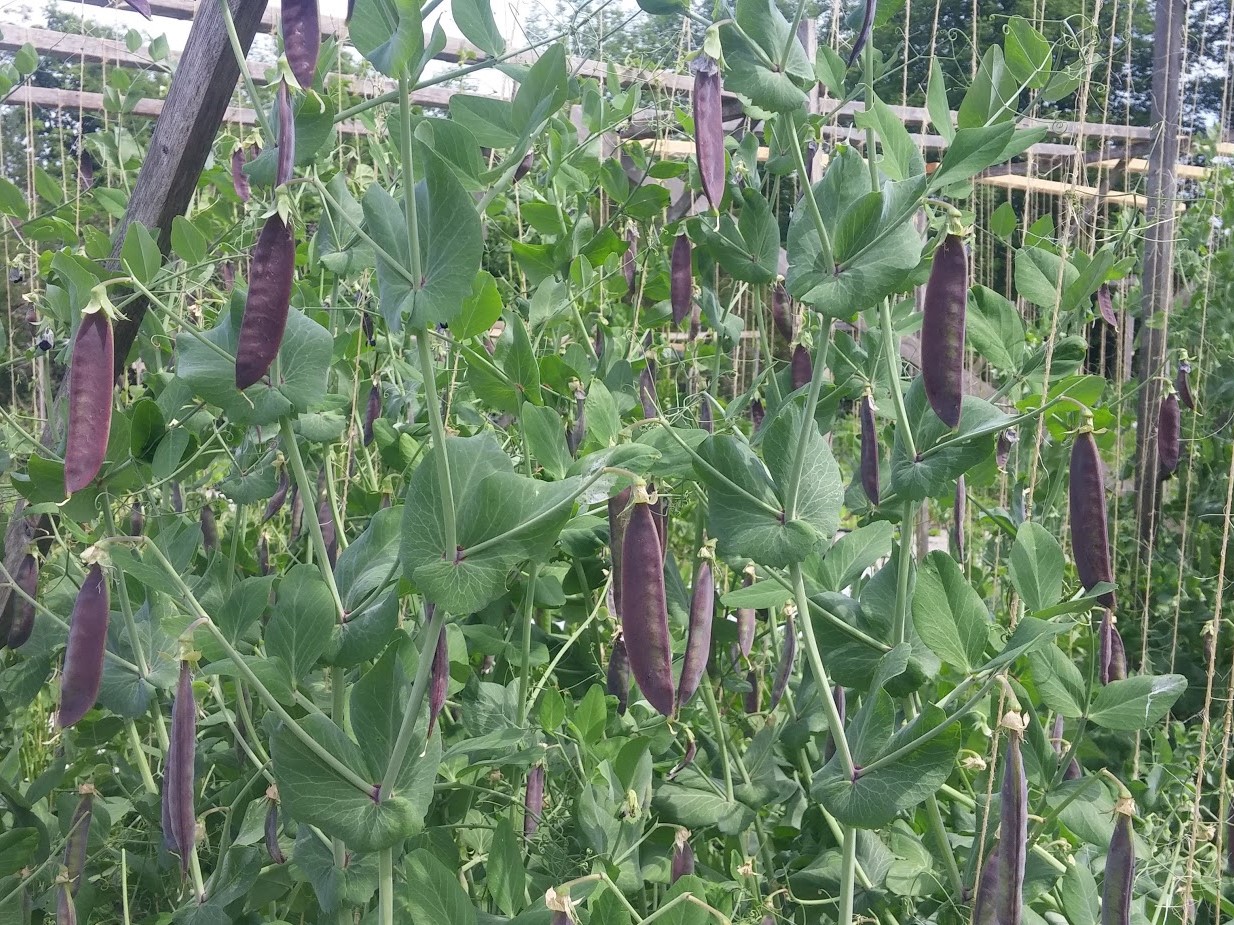
Lancashire Lad Peas Growing

Our new pea trial of the year is the very pretty Lancashire Lad. The purple flowers and pods suggest that this was selected out of field peas. The purple pods make the peas easy to find, although once open the peas are a light olive green. They are smallish, and come 6 to 9 to a pod. We got them from Annapolis Seed, who says that they are also good dried for soup, but we have been eating them fairly steadily, and won't have enough to try that way. Unlike the other purple podded peas we grew, these have only a very faint hint of bitterness to them when raw, and it disappears completely once they are cooked. Their flavour is very good, in fact. It also turns out that they are quite early for a pole pea, and they filled in for a few days when the Knight had stopped and other, later, peas had not really started. They grew to about 6' tall, which makes them a tall pea, but not the tallest by any means. It's a little hard to say what their actual potential is, as the very hot and dry weather we are having is going to make this a short (both in vine length and duration) pea season all across the board. 

We have a bit mixed feelings about these; the number of pods is high, the timing is good, they're really very charming - yes, that counts for something -, they are quite tasty, and on the down-side the pods and peas are a little on the small side. This was once a highly sought-after trait, back in Victorian times when kitchen labour was cheap. Now I don't hold even my own labour that cheap, and tend to prefer something faster to shell and accumulate a pile. Because the timing works so well with our other peas we may continue to plant a few of them just to fill that gap.  

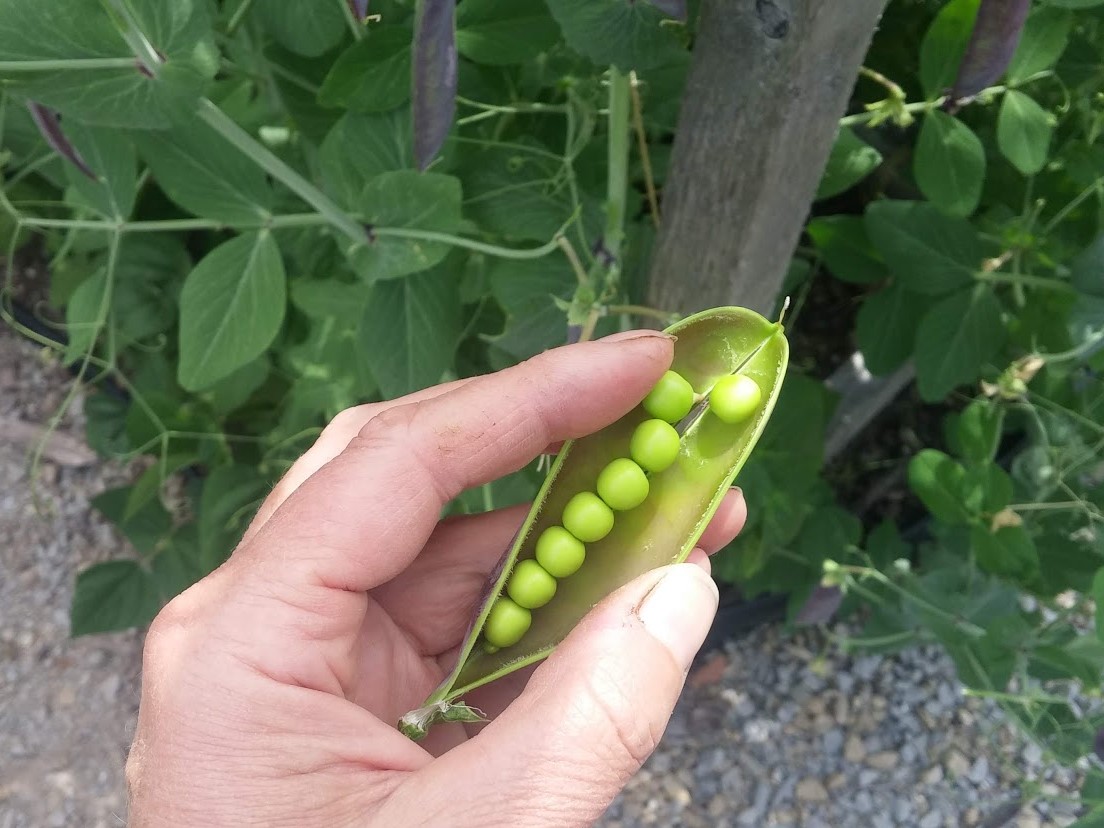
Lancashire Lad Peas Pod

This olive green colour suggests that this is a fairly old pea, as modern varieties are almost always a brighter, stronger green. Now, just to make life more complicated, when I was searching out the history of Lancashire Lad, about all I could find was references to the fact that the pea in circulation as Lancashire Lad is not, in fact, Lancashire Lad, which should be a green-podded pea. Since I don't believe anyone has found the original Lancashire Lad, this pea continues to circulate under that name, and I guess I will continue to call it that until it has another - I'm not holding my breath.

Other than that, it's a pea, and you can expect it to behave as such. Early planting, support for the long vines, plenty of water and weather under 30°C will suit it best, but I have to say for a pea of fairly unsophisticated breeding, it has held up the hot, dry weather this year quite well. Mind you, we have been watering and picking just about every day. Should you lose track of them, though, field peas were originally soup peas and I suspect the claim that they make good pea soup is quite accurate. Maybe next year we will plant enough to find out.

Monday, 6 July 2020

Eggs with Peas, Chinese Style

This is based on a dish I posted way back in the dawn of history, or at least the dawn of this blog. That was Eggs with Tomatoes, Chinese Style.  You'll never guess that I pretty much substituted peas for the tomatoes. I didn't add the sugar though, not just because I'm avoiding it, but also because peas are sweeter than tomatoes and I thought it could do without it. A little pinch could go in, though, to help balance the vinegar.

I think I like the tomato version just a bit better, but this was a really nice way to have our breakfast eggs while trying to use up some of the peas that are flooding into the kitchen at the moment. Because peas lack the acid kick of the tomatoes, it's a good idea to have a heavy hand with the pepper to balance some of the other elements in the dish. Or, next time, I might add a half teaspoon or so of finely grated ginger. Pinch of hot pepper flakes or a little chile-garlic sauce? Maybe.

Meanwhile, a slightly different take on our usual breakfast eggs. Ideally serve it with fresh steamed rice. We had it with leftover quinoa, which was actually just fine.

2 servings
15 minutes prep time

Eggs with Peas, Chinese Style

2 cups snap OR snow peas
2 green onions
salt and pepper
1 teaspoon cornstarch
1/2 teaspoon sugar (optional)
1 teaspoon toasted sesame oil
1 teaspoon water
2 teaspoons rice vinegar
4 extra-large eggs
1 tablespoon mild vegetable oil

Wash and trim the peas. Clean and trim the onions. Mince the onions, keeping the white and green parts separate.

 In a small bowl, mix the cornstarch, (sugar), sesame oil, water and vinegar. Whisk the eggs.

Heat the vegetable oil in a large skillet over medium heat, and when hot, add the whites of the onions[ cook for just a minute. Add and cook the eggs, breaking and turning them as for scrambled eggs. Remove them from the pan when they are mostly set, back into the bowl in which they were whisked.

Add the peas and green onions to the pan, with a splash of water. Cook until they change colour to a bright green; stirring and turning them to cook them quickly and evenly - the whole process won't take more than a minute. The water should be mostly gone. Give the starch-vinegar mixture a little stir and mix it into the peas. As soon as it has thickened - seconds should do it - return the eggs to the pan and mix them into the peas, but try not to break them into curds which are too small; you want the eggs a little chunky. Heat through and serve. Best, no doubt, on steamed rice but steamed quinoa isn't half bad either.

Monday, 29 June 2020

Green Pea Cutlets with a Creamy Sauce

I've actually been making these all winter. Last summer, at the exact moment that the peas were ripe and we should have been home shelling and freezing them, one of Mr. Ferdzy's cousins in Toronto was having her Bat Mitzvah, and we went down and spent an entire weekend celebrating. When we got home the state of the peas was fairly dire, and we needed to perform triage. Literally; there was about one third that was still high quality, one third that was starchy but maybe edible, and one third that we didn't even pick, and left to go to seed. Well, at least we have lots of peas for seed now.

I labelled the starchy peas "soup" when we froze them, because that was what I expected to do with them. But then I remembered this recipe for Vegetable Patties and thought they would do well in it. They did indeed, and so that's how we ate them, about once a week all winter. We've gotten quite addicted to them although I think deliberately leaving our peas to go starchy is probably not a good plan. However, it's awfully easy to end up with peas that are just a hair too ripe to be ideal, and this is a great thing to do with them.

I keep being tempted to put the patties in a bun or sandwich, but of course I'm making them in the first place in part because when I want a quick meal, sandwiches and pasta are no longer reasonable choices. But I'm sure they'd be so good that way! I don't see them with ketchup or mustard or pickles, but relish, chutney, mayonnaise, tartar sauce, etc all sound like they would work well with them. Anything you think would go well with peas. Lettuce, certainly, and maybe a slice of tomato.

We just plonk them on a plate, and eat them with a dab of the sauce, and find them very enjoyable. 

2 to 4 servings - 8 patties
30 minutes prep time

Green Pea Cutlets with a Creamy Sauce

Make the Patties:
1 cup chick pea flour
1/4 teaspoon salt
1 teaspoon dry mint OR 1 tablespoon finely minced fresh mint
1 green onion
2/3 cup water
2 cups blanched fresh shelled peas or thawed frozen peas
2 to 3 tablespoons mild vegetable oil

Measure the chick pea flour into a small bowl and add the seasonings. Wash, trim, and finely chop the green onion and add it. Mix in the water and let the mixture rest for a few minutes while you make the sauce and mash the peas.

Mash the peas rather coarsely and mix them into the batter.

Heat half of the oil in a large skillet over medium-high heat; about the usual temperature for cooking eggs or pancakes. Spoon half the batter into the pan in the form of 4 equal pancakes. Spread them out to about half an inch thick, and cook until set and lightly browned on each side; about 2 or 3 minutes per side. Transfer them to a serving plate, add the remaining oil to the pan, and cook the remaining batter in the same way. Serve at once with the sauce.

Make the Sauce:
1/2 cup mayonnaise OR thick yogurt
1 clove garlic
1/8 teaspoon salt
finely minced mint OR other herbs to taste

Measure the mayonnaise or yogurt into a small bowl. Peel and mince the garlic and add it, with the salt and a few teaspoons of finely minced herbs, if you like. Serve this with the finished patties.


Last year at this time I made Ham & Snap Pea Pasta Salad with Honey Mustard Dressing.

Monday, 22 June 2020

Peas in Butter Sauce

Well yes; just a little rich!

But peas are special, and when they come fresh from the garden they deserve a special treatment that doesn't overwhelm them, and now that I'm cutting way back on the carbohydrates, I am eating more in the way of fat. Butter is good for you, they now say.

You could put this sauce on all kinds of vegetables besides peas; asparagus, cauliflower, broccoli, zucchini, green beans, even cabbage or carrots. Even if you stick to peas, snap and snow peas would work very well in this sauce too. Adjust the herb and stock according to which vegetable you are using, or replace the lemon juice with a good vinegar. Use more or less of the vegetables depending on what you have, how many people you are serving, and how prominent you would like the sauce to be. It's not outstandingly assertive, in spite of all that butter. I suspect this would also work just fine in the winter, with frozen vegetables.

Classic butter sauce is made with no starch, but I'm a belt-and-suspenders kind of a cook, and took no chances of it failing to emulsify. This requires fairly precise timing but is otherwise very quick and easy to make. The butter should be cold, not at room temperature or it won't emulsify properly.

2 to 6 servings
15 minutes prep time, not including shelling the peas

Peas in Butter Sauce

3 cups shelled peas (OR use 2 to 4 cups other vegetable)
1/2 teaspoon potato starch
1/4 teaspoon salt
freshly ground black pepper to taste
1/4 to 1/2 teaspoon rubbed dry mint (OR other herb)
1/4 cup vegetable OR chicken stock
2 tablespoons 10% cream

3 tablespoons cold unsalted butter, cubed
1 tablespoon lemon juice

Have the peas shelled and ready to go. Cook the peas (or other vegetable) by steaming or boiling them in the usual way, expecting them to take 2 to 4 minutes. (Other vegerables may take up to 6 minutes.) Because vegetables cook very quickly, you should have all the sauce ingredients standing by ready before you start cooking them.

Put the starch, salt, pepper, herb, stock, and cream into a small bowl and mix. When the peas or other vegetables have about 2 minutes left to cook (which is to say you have just dropped the peas in boiling water, or put them in a steamer a minute or two ago) heat a broad, shallow pan - I used my stainless steel skillet - over medium-high heat. Add the ingredients you mixed in the little bowl and whisk steadily, until the sauce thickens - about 1 minute. Reduce the heat to low and add the butter, whisking it in until melted and amalgamated. Add the lemon juice and whisk it in.

Immediately pour the sauce over the WELL DRAINED peas in their serving dish, or you can add the well drained, did I say? peas to the pan and toss them in the sauce there before transferring it all to a serving dish. Serve at once.

Friday, 19 June 2020

Herby Peas & Bulgur Salad

Almost every June, when the peas first start, it seems I make some sort of salad with them, some kind of grain, and plenty of herbs. This year it was bulgur, heavy on the parsley, and I'm sorry I waited so long - it's really good. Quicker than grains that need to be cooked, too. The whole thing is delicious and yet you can somehow feel how healthy it is as you eat it; a very happy combination.

You could add feta or goat cheese to this - it's pretty close to a meal in itself now, and that would take you there - but I served it with some cold sliced ham and that was enough to round it out nicely. 

4 to 6 servings
1 hour prep time

Herby Peas & Bulgur Salad

Prepare the Peas & Bulgur:
1 1/2 cup shelled peas
1 1/2 cup snow OR snap peas
1 1/2 cups bulgur
1/4 teaspoon salt

Shell the peas, and trim the snow or snap peas, also slice them in half if they are large.

Put a pan of water on to boil. Measure the bulgur and salt into a bowl (or leave them in the measuring cup, if it is big enough). Pour boiling water over the bulgur to cover it by at least an inch and leave it to soak for 5 or 10 minutes. Meanwhile, use the remaining water in the pan to cook the peas (all of them) for 2 minutes.

Rinse the peas in cold water until cool, then drain well. Drain the bulgur well then allow to cool as well.

Make the Dressing:
the juice of 1/2 lemon
1/4 cup olive oil
1/4 teaspoon salt
freshly ground black pepper to taste

Measure it all into a small bowl or jam jar and stir or shake to combine.

Finish the Salad:
1 small head leaf lettuce
1/2 cup finely chopped parsley
1/2 cup (2) finely chopped green onions
2 to 4 tablespoons dill, mint, or cilantro, finely chopped

Wash, trim, and chop the lettuce (or use the leaves whole under the rest of the salad). Wash, trim, dry, and finely chop the remaining herbs.

Mix the peas, bulgur, herbs, lettuce (if chopped) in a salad bowl and toss with the dressing. Transfer onto a platter of the whole leaves if that is how you are serving it.


Last year at this time I made Sour Cream Pancakes with Strawberry Maple Syrup.

Wednesday, 29 April 2020

Ricotta Cheese & Barley Spaetzle

Still looking for low-carb alternatives to pasta, and this certainly works well for that. Unfortunately Mr. Ferdzy is becoming more lactose-intolerant as he gets older (and lactose-free dairy products are a bad choice for pre-diabetics) so this is not going to be something I make often. Pity. It was good.

Sadly for Mr. Ferdzy, it took three tries to get this right. I kept hoping I could use less flour than actually turned out to be required, so not quite as low-carb as ideal. Still, it was delicious, quick and easy (oh how I like that phrase) and half of it amounts to 2 out of the 5 carbohydrate "servings" I allot myself each day, which is quite proportionate for a main meal. 

Spaetzle are now officially a part of my life; I even bought a spaetzle maker. Not the traditional kind, but a simple edged circle of stainless steel with holes in it, which sits on the top of the pot so the batter can be pressed through it. I like the simple design, and it can double as a strainer and possibly, with the right lid over it, a steamer.

As ever, the two of us ate it all, and it was all there was. You could serve it as a side dish with meat and it would go further, serving up to 6 people. The amount of ricotta cheese used was exactly 1/3 of a readily-available brand's oddly-sized 475 gram container. On one occasion that I made it, I served it with Poutine Gravy and we really liked that. The cheese does make this a fairly soft spaetzle, and it's a good idea to serve it with something that brings a little crunch.

2 to 6 servings
10 minutes to mix the batter, not including rest time
15 minutes to cook, including bring the water to a boil
10 minutes to finish in the pan 

Ricotta Cheese Spaetzle with Peas, Shallots & Mushrooms

Make the Spaetzle:
160 grams (6 ounces) pressed cottage or ricotta cheese
2 large eggs
1/2 teaspoon salt
freshly ground black pepper to taste
a few scrapes of nutmeg
2 to 3 tablespoons finely minced fresh herbs
2 tablespoons finely grated Parmesan cheese
1 cup barley flour

Remove the cheese from the packaging carefully, discarding any accumulated liquid - if it seems quite moist it will not hurt to measure it a little generously then let it drain for a while. Mash it with a fork and whisk in the first egg. Add the seasonings, and the fresh herbs, finely minced. Green onion, parsley, chives, chervil, and dill will all be very appropriate. Mix in the Parmesan cheese. Beat in the remaining egg.

Stir in the flour to form a smooth, stiff batter. It should almost but not quite want to come together in a soft ball of dough. Set the batter aside to rest for 20 minutes to an hour before cooking.

To Serve:
3 or 4 medium shallots OR green onions
4 to 6 medium-large button mushrooms
3 tablespoons unsalted butter
2 cups thawed frozen peas

Put a large pot of salted water on to boil.

Meanwhile, peel and sliver the shallots, or trim and chop the green onions. Clean and slice the mushrooms. (Don't forget to have the peas thawed and standing by.)

Heat the butter in a large skillet over medium-high heat just as the water begins to bubble for the spaetzle. Add the shallots and cook, stirring once or twice, for several minutes.

Press the batter through a large-holed colander or spaetzle maker into the boiling water. Cook until they float and are firm; just 2 or 3 minutes. Drain well.

Meanwhile, add the mushrooms and peas to the shallots, and cook until the mushrooms are softened and slightly browned. Add the hot, well-drained spaetzle and continue cooking, and turning and mixing the contents of the pan gently, until well amalgamated, hot through, and perhaps the spaetzle are slightly browned in spots. Serve at once, sprinkled with a little more of the chopped herbs you used, if you like.

Monday, 8 July 2019

Herby Feta, Quinoa, & Snow Pea Salad

What I have coming out of the garden right now is lettuce, snow peas and other peas, and herbs. Lots of herbs. Oh, and garlic scapes. They all come together in a vaguely Greek or Turkish flavoured salad which is pretty much a meal in itself. Since the quinoa needs to be cooked in advance and so do the snow peas, it does take a little advance planning, but it's very simple to put together. Leftovers will keep overnight in the fridge in reasonable quality, which is nice because this is a fairly big batch of salad.

I did put in 4 garlic scapes and you could definitely tell. Garlicky! Mr. Ferdzy kept commenting on how garlicky, but he was not complaining. Still, you should adjust your scapes accordingly. I also had a very heavy hand with the black pepper and I think that is a very good plan.

If Mr. Ferdzy would eat them, I would have garnished this with some olives. A few cherry tomatoes for some colour would have been nice, but mine are all still flowers. Radishes would have made an excellent and seasonal contribution, but mine are all over-ripe, if that's the word, and might as well have been carved from wood. This is why I have mostly given up growing radishes and stick to buying the little dears. Only I didn't. If you are better organized, by all means chop up a few and toss them in.

4 to 6 servings
cook the quinoa 2 hours or more in advance
30 minutes prep time to finish the salad

Herby Feta, Quinoa, & Snow Pea Salad


Cook the Quinoa & Snow Peas:
1 cup quinoa
1 2/3 cups water
1/2 teaspoon salt
225 grams (1/2 pound) snow peas

Put the quinoa, water, and salt into a rice cooker. Turn on and cook. Once done, remove the pot from the cooker andl let the quinoa cool completely. This should be done at least an hour and up to 24 hours in advance. Keep it refrigerated once cool, if not using it right away.

Meanwhile just before continuing with making the salad, top and string the snow peas, and steam or blanch them until just tender - 2 minutes to blanch, perhaps a minute or so longer if steaming. Rinse immediately under cold water to stop them cooking any more and drain them well. 

Make the Salad:
2 to 4 garlic scapes
1/4 cup finely minced cilantro
1/4 cup finely minced parsley
2 tablespoons finely minced mint
2 tablespoons finely minced dill
150 grams (5 ounces) feta cheese
the juice of 1/2 large lemon
1/4 cup olive oil
freshly ground black pepper to taste
8 to 12 lettuce leaves

Trim and finely mince the garlic scapes. Wash, dry, and mince all the remaining herbs. Put them in a mixing bowl with the crumbled feta cheese. Add the lemon juice, olive oil, and pepper. Mix well.

Loosen and fluff up the quinoa and stir it in. Gently mix in the cooked and cooled snow peas. Serve the salad over the lettuce leaves, which should be washed and well dried first.


Last year at this time I made - oh, huh - Cheesy Pea & Pasta Salad. Apparently I really like those pea, carb, and dairy salads (and that's a true fact).

Friday, 28 June 2019

Ham & Snap Pea Pasta Salad with Honey Mustard Dressing

I do love a good pasta salad in the summer. Anytime, really, but the next month or so is the time for snap and snow peas. Quick and simple? So much the better.

2 to 4 servings
30 minutes prep time

Ham & Snap Pea Pasta Salad with Honey Mustard Dressing

Make the Dressing:
1 tablespoon honey
2 teaspoons Dijon mustard
1/2 teaspoon sweet Hungarian paprika
salt & freshly ground black pepper to taste
1/3 cup mayonnaise (light is fine)

In a small bowl, mix the honey, mustard, paprika, salt, and pepper. Mix in the mayonnaise.

Make the Salad:
166 grams (10 ounces) stubby pasta
2 cups snap peas (or snow peas)
250 grams (1/2 pound) chopped cooked ham
1 small onion, sweet would be nice
1 stalk celery
1/4 cup chopped parsley

Put a pot of salted water on to boil, and cook the pasta according to instructions, plus one minute. Meanwhile, wash the peas and string them. Drop them into the pasta water to cook for the last 4 or 5 minutes. Drain, rinse in cold water until cool, then drain well.

Chop the ham, the onion, the celery, and the parsley. Toss them into the pasta and peas with the dressing. If you like, you can chop the onion before cooking the pasta, sprinkle it with salt, and let it drain while the pasta cooks to make the flavour milder and the onion more digestible.


Last year at this time I made Green Garlic & Pea Bruschetta with Chevre

Wednesday, 8 August 2018

Gravedigger Peas


I seem to have missed the opportunity to photograph these peas close up, as I was too busy shelling them and eating them. There they are a little earlier in the season, setting pods like crazy, along with one lone and solitary Sugar Magnolia which seems to have gotten slightly lost. They are over and done long since, of course.

We grew them last year for the first time. I have wanted to try them ever since I read about them on Rebsie Fairholm's blog, so I was quite excited to see them listed by Annapolis Seeds. We planted a nice little patch last spring, and when we picked the first couple of pods to try, Mr. Ferdzy and I looked at each other in amazement and promptly agreed to eat no more - because we wanted to grow them out for seed, so we could grow masses of them this year.

Their history is not much known. They are English, and probably date back to the 19th century; no earlier. They were donated to the Heritage Seed Library who named them, as is their custom, for the furthest grower back to whom they can be traced; in this case a man who was a gravedigger by trade and pea grower by vocation. Rebsie says pretty much all that is known about them. 

We planted them a bit late this year and so they were not particularly early to produce. I think at any rate they are a mid-to-late-season pea, of a middle height. They are extremely bushy and dense, and produce heavily but somewhat slowly - a nice pea for the home gardener, since they should produce for a few weeks. I think ours were cut a bit short by the very hot dry weather this year but they still went longer than most peas. We will want to grow them in our trellised beds, I think, even though they are not the tallest. Their substance does mean they should get good support.

The pods are fat, and full. I don't think most will have more than 6 peas, but the peas are quite large. They are a lighter green than modern peas tend to be but they are so tender and flavourful. The peas tend to be a bit more ovoid than round. They are really quite distinctive and a little different than any of the other peas we have grown.

These are very obscure and rare, and I am so happy that Annapolis seeds was able to get hold of them. I can see already that these are going to be one of our must-grow favourite varieties.