Showing posts with label Tomatillos and Green Tomatoes. Show all posts

Friday, 21 September 2018

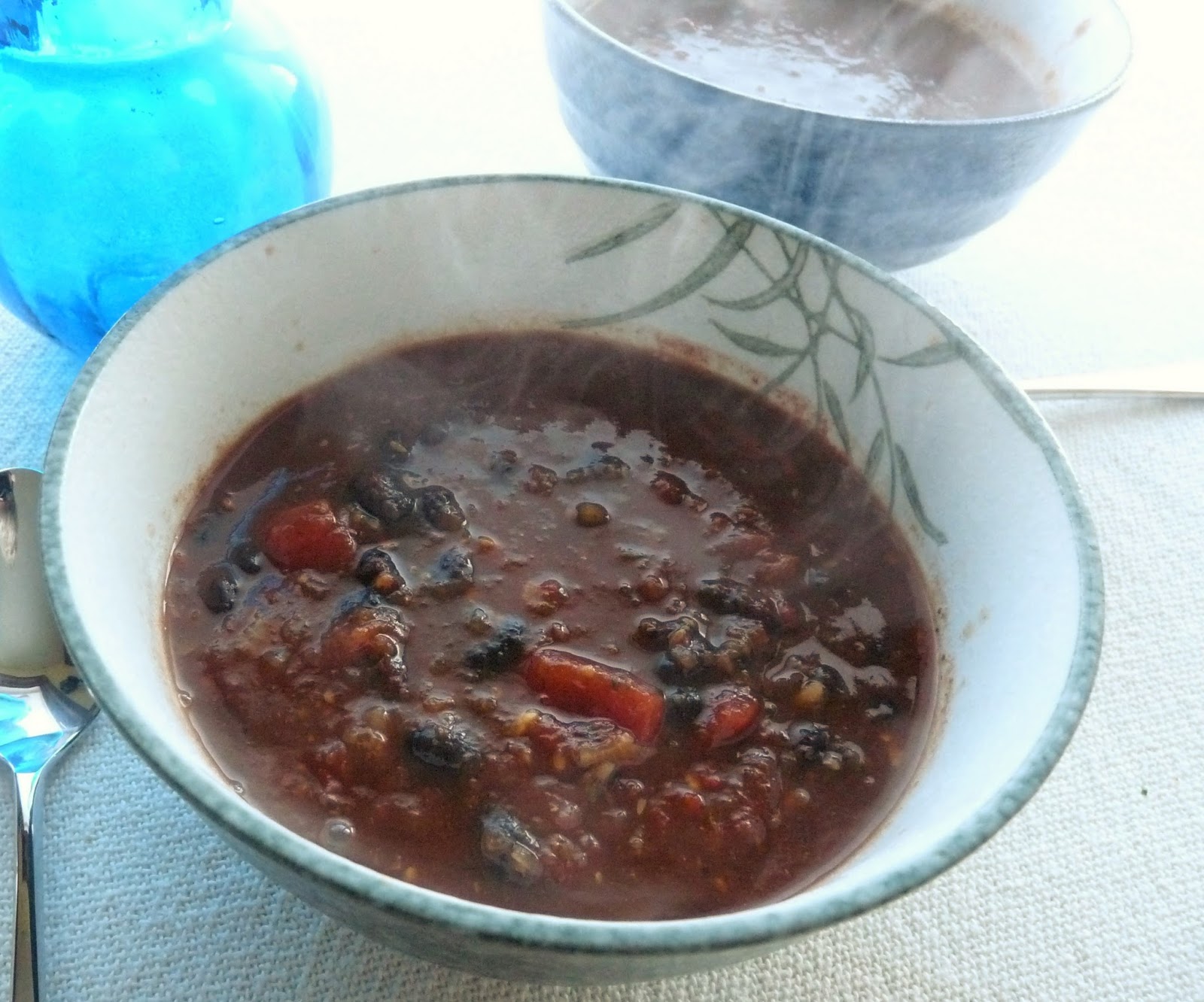
Black Bean, Corn, & Tomatillo Soup

Things seem to be taking a turn towards the Mexican around here at the moment; I guess you can thank those Poblano peppers. Tomatillos too. Mr. Ferdzy always wants to grow some and I have so few ideas of what to do with them. However, here's one, and it went over very well.

Gotta admit I just used a can o' beans. I'm going to have to get cooking on all the ones in jars in the basement at some point though. 

4 servings
45 minutes prep time not including cooking the beans or corn

Black Bean, Corn, & Tomatillo Soup

2 cups cooked black beans OR 1 540 ml (19 oz) tin black beans
1 cob of corn
1 medium onion
1 medium Poblano or other frying pepper
300 grams (10 ounces) tomatillos (8 to 16 of them)
3 cloves of garlic
2 tablespoons mild vegetable oil or bacon fat
1 teaspoon cumin seed, ground
1/4 teaspoon more or less chipotle or similar ground hot chile
salt to taste
2 cups bean cooking water, vegetables stock, or chicken stock
the juice of 1 large lime
1 ripe medium avocado to garnish
chopped cilantro to garnish
sour cream to garnish

The beans and the corn must be cooked in advance. For the beans, 3/4 cup raw beans should give the right amount when cooked. Soak them in boiling water overnight, then bring to a boil and simmer until tender, stirring frequently. The corn should be husked and cooked in boiling water for 5 to 7 minutes until tender, then cooled under cold running water. This can be done the day ahead. You can avoid most of this by using a can of black beans.

Cut the cooked corn from the cob and set aside. Peel and finely chop the onion. Core and finely chop the pepper. Remove the husks from the tomatillos and wash them, then chop them finely. Peel and mince the garlic.

Heat the oil or bacon fat in a heavy-bottomed soup pot. Grind the cumin seed and add it once the oil is hot; let it sizzle for a minute until aromatic. Add the hot chile and a bit of salt. Add the onion, pepper, and tomatillos, and cook over medium-high heat for about 10 minutes, stirring regularly, until softened and reduced in volume. Slight browning is okay. Stir in the garlic and cook for a minute more.

While they cook, mash half the beans. On a plate with a fork is the easiest way for this small quantity.

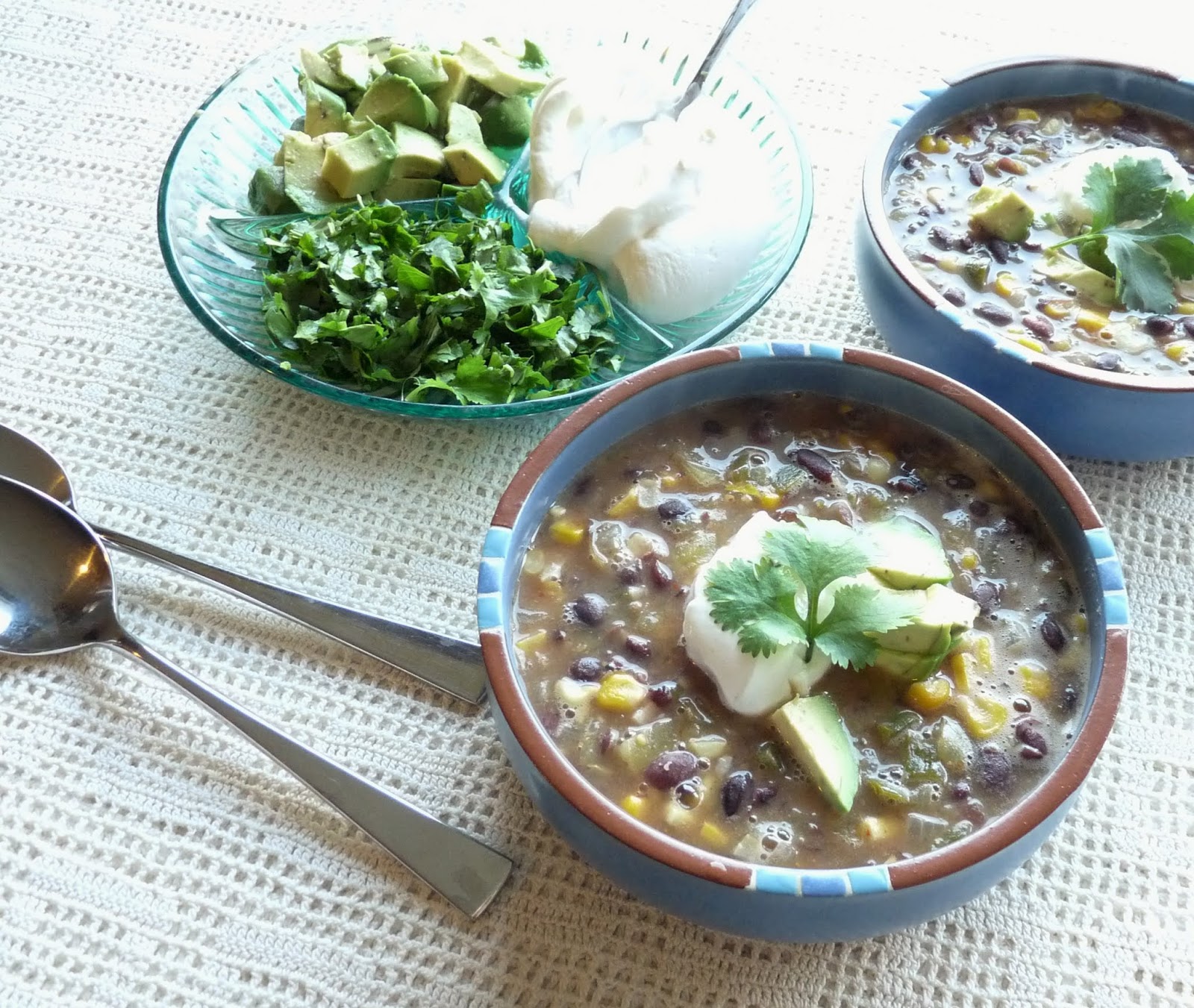
Add the cooking water or stock, as well as the beans, both mashed and unmashed, and the corn. Let the soup simmer for about 20 minutes, stirring regularly. Add the lime juice and serve it with the garnishes - peel and dice the avocado; wash, dry and chop the cilantro; the sour cream just needs a spoon.


Last year at this time I made Bread Fritters.

Wednesday, 25 October 2017

Groundcherries and Golden Berries


"We see that the vendors of this worthless thing are still at their old tricks, and with so much craftiness that they deceive the very elect. Our good friend of the Maine Farmer has listened to the humbug tale, and is so far deceived as to "recommend a general trial of it". Now, Doctor, we have had some experience with this plant - have destroyed thousands in a year as mere pests. Instead of the fruit being, as the pedler represented, "valuable for pies, puddings, and preserves, and making a good wine to boot," it is not fit to be used for any such purpose, and is not, where even the most ordinary fruits or berries can be had. The whole scheme of selling this "ground cherry" is a cheat."
                                                                  from the Boston Cultivator
                                                                  via William Woys Weaver,
                                                                  date not given


Groundcherries have been grown in Ontario for a long time; perhaps as long as 200 years. I expect they would have been brought up from the United States by Mennonite farmers. According to Mother Earth News, they were first recorded in Pennsylvania in 1837. Somehow, they have never spread too far beyond their original Mennonite and Amish roots, although there are little spurts of interest in them every few decades. That is because reviews of them are very... mixed.

Some people love them, and some people hate them. There doesn't seem to be a lot of middle ground, although I do inhabit what little there is. I confess I would have cheerfully counted myself a hater, until about 5 years ago when we purchased some dried Golden Berries from Ten Thousand Villages. Wow, tasty! I'll get back to these in a minute.

The historically grown-in-Ontario groundcherries - a term that gets applied to a number of physalis species - would be physalis pruinosa, sometimes known as physalis pubescens. Physalis longifolia and physalis heterophylla are weedy species in Ontario. Physalis heterophylla (clammy groundcherry) is edible, but I believe the fruits are fairly small and the plant is an invasive perennial. Chinese Lanterns (physalis alkekengi var. franchetii) and tomatillos (physalis ixocarpa) are relatives; both edible. Only the berries of any of these plants are edible, and only when completely ripe, a situation not uncommon in members of the solanacea family. They are not ripe until the husks turn yellow to brown and the fruits fall from the plant. They must be gathered quickly though, or rodents are likely to find them. Although they can be eaten raw when dead ripe, most people suggest that if they are to be eaten in any quantity they should be cooked.

The two best known varieties of groundcherry are Aunt Molly's and Cossack Pineapple, but there are certainly others. These are the groundcherries that would leave me in the "hate 'em" camp.  

The Golden Berries I have been growing are physalis peruviana, a tropical species not well adapted to growing in Ontario. This particular species is also known as the Cape Gooseberry or Poha, as well as Golden Berries which seems to be the marketers term du jour.

We planted a few seeds from those original dried Golden Berries, but only a couple - and I do mean 2 - of the resulting fruits ripened before frost, coming from I believe 4 plants total. We have planted them off and on since then, but have grown them most years regardless of whether we have planted them or not. Just about the time we decided to give up on them they started to volunteer.

We are definitely seeing a difference in their ability to ripen before frost. This year, in spite of a very poor growing year for anything of a tropical inclination, we expect to harvest dozens of fruits (in total from 4 or 5 plants, to be sure). On the other hand, many of them seem to be going bad, and I suspect this is because they have suffered chill damage.

These Golden Berries are a bit larger than the more traditionally grown pruinosa varieties, and dried at least I found them not to have the slightly musky aftertaste that I suspect puts many people off of them. No one ever seems to mention it; they are described as tasting of such disparate things as pineapple, citrus, mango, custard, tomato, tangerines, and strawberries. But as far as I am concerned it is definitely there, and does not appeal to me. As noted, it seemed to disappear from the dried berries. I recently found some fresh Golden Berries imported from Columbia which I bought and made into jam. The flavour improved with cooking, I thought, but it also made it apparent how very, very full of tiny hard seeds they are.They get touted as a highish protein fruit because of these seeds, but I am willing to bet that the vast majority of them pass through the digestive system fairly unchanged.

Groundcherries or Golden Berries are grown in the same way as tomatoes, peppers, or tomatillos. They can be hard to start indoors in spite of their tendency to volunteer by the score. It may be that fluctuating temperatures trigger them to sprout. Otherwise they are easy, tolerant plants to grow, if large and sprawling. They will continue to produce later than tomatoes, but frost will do them in. Apparently a lot of growers pull up the plants and store them indoors, hanging upside down, and pull off the ripe fruits into the early winter. I may try that with one this fall.

William Woys Weaver notes that there are a lot of species of physalis, and their nomenclature is a mess. Everything I have read about physalis tends to reinforce this view. According to him, some of them will cross, and some of them won't. Groundcherries and tomatillos won't cross, but there is a lack of information about other species. My impression from people who are trying is that it isn't very easy. The only other groundcherry I have grown, besides the Golden Berry, is Little Lanterns which I got from William Dam. At the time I bought seed it was given a species name which was a synonym for peruviana, but they no longer give any species name and I can't find it now. I suspect in fact they are not the same thing, which is why they have removed the species name. Certainly it has shown no signs of crossing with our Golden Berries. I have a few plants in the garden from volunteers, but they are much smaller plant with a much smaller fruit than the Golden Berries.

I'm going to persevere with the Golden Berries. A number of people have said that they are too tropical to be adapted to northern growing, but so far I am actually having pretty quick results in getting them acclimatized.
Friday, 20 January 2017

Bean & Salsa Soup

This is the world's simplest "recipe", but we have been eating it regularly this winter and enjoying it surprisingly. Surprisingly because Mr. Ferdzy and I have been on the "5-2 Diet" and this was devised to provide us with 200 reasonably filling calories for lunch, and for no other reason.

In fact though, this is really very tasty. No doubt it helps that I use our own home-made salsas, both regular tomato and tomatillo, as well as our own tomato sauce. I would think it could be made quite easily with tinned beans and purchased salsa. In that case I would probably add a little grind of cumin seed and a squeeze of lime or lemon juice to liven it up a bit, as well as a bit of minced cilantro if it was available, and the calorie count might vary slightly. If calories were no object, I might sauté a minced clove of garlic in a teaspoon of oil and add it in too. Likewise, if this was not diet food a quesadilla on the side would round it off nicely.

The beans in this batch were Cherokee Trail of Tears, but just about any bean should be fine. I've been using Arikara Yellow as well, and apart from making a less murky soup there's no big difference. I was surprised to discover that Black-Eyed Peas are a little lower in calories than most other beans, for what that's worth; but we didn't grow any.

2 servings
15 minutes prep time

Black Bean & Salsa Soup

1 1/4 cups cooked beans, with their cooking water
2 cups tomato salsa OR 2 cups tomatillo salsa
OR 1 cup tomato salsa and 1 cup tomatillo salsa
1/4 cup tomato sauce
OR 1 cup chopped tinned tomatoes
1 or 2 slices pickled Jalapeño, OPTIONAL

Put the beans, with their cooking water, into a soup pot and add the remaining ingredients. Mince the Jalapeño very finely before adding, and before that check how hot your salsa is.

Bring the mixture to a boil and simmer for 5 to 10 minutes. Serve it up. Wonder what's for lunch... No, actually it does a pretty good job of getting me to about 4:00 pm. Which is about as far as 200 calories can be reasonably expected to take you.


Last year at this time I made a Parsnip & Cheese Soufflé.

Tuesday, 11 September 2012

Tomatillo & Sausage Soup

This is a slightly streamlined version of a traditional Mexican soup. The original is made with meatballs, but sausage makes the whole procedure so much quicker and easier, and is really just as good as long as you use a good quality sausage. If you can get a Mexican chorizo so much the better, but around here it's Italian sausage or Italian sausage.

As for the Jalapeños; you must use your judgement. Whether you use one, two or none will depend on 1.) how spicy your sausage is; 2.) how spicy you want your soup to be and 3.) how spicy the Jalapeños actually are. Most of the ones you get around here are actually not that hot, unfotunately. Still, it's a bit of gamble... you never know. We put in two and liked it, but that's us.

4 servings
45 minutes prep time


500 grams (1 pound; 12 to 14 medium) tomatillos
1 medium onion
3 to 4 cloves of garlic
2 small to medium Jalapeños (but to taste)
250 grams (1/2 pound; 2 medium) fresh chorizo or hot Italian sausages
1 tablespoon mild vegetable oil (if needed)
1 1/2 teaspoons cumin seed

4 cups chicken stock
up to 1/2 teaspoon salt (if needed)
1/4 cup packed fresh cilantro
1 large lime, quartered
extra cilantro for garnish

Remove the husks from the tomatillos, and rinse them, and cut them into quarters. Peel and slice the onion. Peel the garlic, and slice it. Remove the stems and seeds from the Jalapeños, and cut them in pieces.

Cut the sausage into smallish bite-sized pieces. Fry them up in a heavy-bottomed soup pot, using the oil if it is needed to keep them from sticking. (If they are fairly fatty and you don't need the oil, start them off with about a quarter cup of water in the pan to keep them from sticking.)

Once the sausage pieces are nicely browned, remove them from the pan with a slotted spoon and set them aside. Drain off most of the fat if there is too much; the bottom of the pan should be well coated but not much more. Put the tomatillos, onion and Jalapeños into the pot and cook them for about 5 minutes, stirring frequently, until slightly browned and softened. Add the garlic and cumin seed, mix in well, and after a minute or so add the chicken stock. Add the salt, depending on how salty the chicken stock is. Half a teaspoon assumes unsalted stock.

Let the soup simmer for about 15 minutes, until the vegetables are tender. Purée the soup in a blender or food processor with the 1/4 cup of cilantro until fairly smooth, then return it to the pot. Add the sausage and any juices thereof back into the soup, and simmer for another 10 minutes or so.

Serve the soup sprinkled with extra cilantro, and pass a wedge of lime to be squeezed over it.

Tuesday, 23 August 2011

Scrambled Eggs with Tomatillos

We tried to grow tomatillos last year but we failed. A shocking statement, I know. Tomatillos are essentially weeds. However, I am sure that the virus we had in our pepper bed right next to them affected them badly, even though they didn't show the characteristic twisted leaves of the peppers. They just completely failed to thrive.

It's a completely different story this year. We planted 4 tomatillo plants, and they are currently loaded with fruit and we are up to our eyeballs in tomatillos. Good thing they keep quite well, as I will need some time to figure out what to do with them all.

In the meantime, this was a quick, easy and tasty thing to make with them. I didn't actually cook the eggs and vegetables separately, but next time I will take the few moments needed to do that. The eggs come out much more attractive that way.

2 to 3 servings
20 minutes prep time

Scrambled Eggs with Tomatillos
6 extra-large eggs
salt & pepper
1/4 red pepper
2 cups chopped tomatillos (8 to 16)
1 or 2 green onions
3 or 4 cloves of garlic
1 tablespoon mild vegetable oil, or a bit more

Break the eggs into a bowl, and beat with a fork. Season to taste with salt and pepper. Set aside.

Wash, destem and deseed the pepper, and chop it into smallish pieces. Remove the husks from the tomatillos, and cut out the stem. Cut them into slices, then chop the slices slightly. Wash, trim and chop the green onion. Peel and mince the garlic.

Heat the oil in a large skillet. Add the tomatillos and red pepper, and sauté for 4 or minutes, until noticeably softened. Add the onion, and cook for a minute or so more. Add the garlic, and cook for just another minute. Remove the vegetables from the pan, making sure it is fairly clean.

It may be necessary to add a little more oil. Reduce the heat to medium and pour in the beaten eggs. Cook until just set, stirring to break them up and prevent them from browning. When they are almost done, add the vegetables back in, and mix gently. Serve as soon as the vegetables are heated through.


Last year at this time I made Cabbage & Cheese Curds with Tomato & Tamari and also a Bacon-Cilantro -Tomato Sandwich.

Tuesday, 14 September 2010

Canning Tomatillo Salsa (Salsa Verde)

I haven't made this salsa for a few years, and I had been planning to make it this year with my own tomatillos, but alas! We had a crop failure. Yes, I know! Tomatillos! How embarrassing. They have a well-deserved reputation of being pretty nearly weeds. However, they did not take to our soil or our drought, and then they caught whatever virus has been romping through our chile plants, and in the end we got a handful or two of tomatillos before we gave up and pulled them out to make way for garlic.

However, there was a request for this recipe on the Canning Salsa comments, so here it is. I haven't made the other salsa with tomatillos, but a little research suggests that so far as acidity goes, they are interchangeable and so could be used in the other recipe in place of the tomatoes. How it would turn out, I don't know. Maybe I'll find out next year, when my tomatillos are going to grow, dammit.

Jalapenos are not the traditional pepper to use in green salsa - a serrano, Anaheim or New Mexico chile would be more traditional, but I've never seen anyone growing those commercially in Ontario. Tomatillos are also next to impossible to find, but unlike the chiles of the southwest, they grow here readily (hem, hem) and the seed is easy to find for home gardeners.

7 x 500-ml jars
1 hour 15 minutes - 1 hour prep time

Tomatillo Salsa
2 kilos (4.5 pounds) tomatillos
4 cups chopped onions
2 heads garlic
450 grams (1 pound) Jalapeño (or other) peppers
2 tablespoons pickling salt
1 cup minced cilantro
1/2 cup water
2 tablespoons lime juice PER JAR

Put the jars into a canner with water to cover. Bring to a boil and boil them for 10 minutes.

Meanwhile, peel the husks from the tomatillos and wash them. Cut any large ones in half. Peel the garlic. Remove the stems and seeds from the jalapenos. Chop all the ingredients except the water and lime juice in a food processor, 1/2 at a time, but leave some texture to them. Remove them to a large pot or canning kettle. Rinse the food processor out with the water, and add it to the salsa.

Heat the salsa to boiling in a large pot or canning kettle. Put the lime juice into the sterilized jars. Fill them with the salsa and seal. Return the jars to the boiling water for 20 minutes. Let cool, check the seals and label.

Thursday, 26 August 2010

Tricolour Tomato Soup

Tomatoes! Tomatoes! Tomatoes! We're inundated with them, about which we are mostly very pleased. The yellow tomatoes were a mixture of Banana Legs and Taxi, the reds were Stupice and the green tomatoes were Green Zebra. Green Zebra is probably the most common green (when ripe) tomato, but I suspect you can use whatever yellow or red tomatoes you can find to good effect.

This is a rather glamourous soup with a few stages to it, but not difficult. You could cook the yellow soup base in advance and just finish it before serving to make it even easier. I meant to shred a little basil into the green tomato garnish but I forgot. You could do it, though.

4 - 6 servings

Tricolour Tomato Soup
Cook the Carrot:
3/4 cup diced carrot (1 small)
2 bay leaves
1 1/2 cups water

Peel and dice the carrot, and cook it with the bay leaves in the water until just tender. Keep the cooking water.

Sauté the vegetables:
1 cup diced yellow zucchini (1 small)
1 stalk of celery, diced
1/3 cup diced shallot (2-3 medium)
1 tablespoon sunflower seed or olive oil

Prepare the vegetables and sauté them in the oil until soft and slightly browned.

Finish the Soup:
4 cups peeled, diced yellow tomatoes
1 teaspoon salt
1 tablespoon sugar
2 tablespoons verjus
OR 1 tablespoon white wine vinegar
1 tablespoon sherry (optional)

2 to 3 cups peeled, diced red tomatoes
1 cup peeled, diced green tomatoes

When the sautéd vegetables are ready, add the diced yellow tomatoes and simmer for about 10 minutes, until they are quite soft.

Lift the carrots from their cooking water with a slotted spoon, and put them in a food processor or blender. Add the yellow tomato mixture, purée until very smooth, then remove the soup to a pot. Use the water from cooking the carrots to swish out the food processor or blender, having of course discarded the bay leaves. Add this water to the soup.

Add the diced red tomatoes to the soup and simmer for about 10 minutes, stirring carefully to keep the red tomatoes as intact as possible. Serve garnished with the raw green tomatoes. We all agreed a dollop of sour cream or yogurt would also go well.


Last year at this time I made Corn Pudding.

Thursday, 22 October 2009

Green Tomato Chow Chow

Okay, I am probably done with the green tomatoes for this year. There are still a good few rather small ones left, but at this point the compost calls. Enough is enough.

Chow-chow is a very old-fashioned sort of relish, although it is still very popular on the east coast, especially in Nova Scotia. It seems to have died out to some degree in Ontario, although it was once ubiquitous here too. Old cook books are full of recipes for it. The vegetables in it varied somewhat and it went by a huge number of names; Chopped Pickle, French Pickle, East India Pickle, German Pickles, Queen of Pickles, Green Tomato Salad, Green Tomato Pickle, Spanish Pickle, Variety Pickle, Chow Chow, Jim Jam, Picalli* (sic), English Relish, Indian Relish, Queen's Relish, Bordeaux Sauce, Baltimore Sauce, Deacon Sauce, Governor Sauce, Indian Sauce, Novelty Sauce, Priscilla Sauce, Green Tomato Sauce, and Winter Sauce. I found all these recipes in the Canadian Farm Cook Book (1911) . Now, they were not all identical. Some of them called for cauliflower, cabbage or cucumbers, but if it consisted substantially of green tomatoes and onions in a turmeric and mustard based sauce, more or less spiced, I listed it above.

As you see there was no agreement on where it came from. My own suspicion is it developed out of tradition British pickling methods, with a good whack of Indian influence and a whole lot of ending the harvest with a sad but fairly substantial pile of under-ripe produce. Into the pickle it went... waste not, want not, as they used to say before we had an economy pretty much entirely based on wastage and obsolescence.

Edited Oct 9, 2011 because it needed more turmeric.

7 250-ml jars
1 1/2 hours - 1 hour prep time, does not include draining time

Chow Chow Relish
Start the Chow-Chow:
8 cups chopped green tomatoes
4 cups chopped onions (3 to 4 large)
pickling salt

Wash and chop the tomatoes, peel and chop the onion. Layer them in a strainer with salt scattered amongst them; about 2 or 3 tablespoons but don't worry about it too much, most of it will drain out. Cover and let drain for 3 or 4 hours to overnight.

Finish the Chow-Chow:
2 cups chopped celery
1 or 2 cups chopped green peppers
1 1/2 cups vinegar
1 cup sugar
2 teaspoons celery seed
4 tablespoons mustard seed
4 teaspoons ground turmeric

Wash and chop the celery. Wash, de-stem and de-seed the peppers, and chop them fairly finely. You can use whatever kind you like, although I would avoid anything too crazily hot. I used Jalapeños. Use the larger amount if your peppers are very mild, the smaller amount if use something rather hottish, like the Jalapeños.

Put the canning jars on to boil in a large canner, covered with water to at least an inch above their tops.

Put the vinegar, sugar and spices in a preserving kettle or very large pot. Bring to a boil, and add the celery and pepper, and the drained tomatoes and onions. Bring to a boil, and simmer until the jars in a canner come to a boil and boil for 10 minutes.

Fill the jars, wipe the rims with a bit of paper towel dampened in the boiling water, and seal them with lids and rings prepared as usual; boiled for 5 minutes. Back into the boiling water bath the closed jars go for 20 minutes. Let cool, check for seals, and label them.

Refrigerate once open. Traditionally served with fish, especially fish cakes, and with baked beans, but also good with chicken, eggs or pork.


Last year at this time I made Potato & Feta Cheese Bake, and Raw Beets with Sour Cream.


*Piccalilli is the more usual term.

Friday, 16 October 2009

Green Tomato Mincemeat

We continue to work our way through our heap of green tomatoes. Green tomato mincemeat sounds strange, but it is actually really very good.

Once upon a time mincemeat actually was made with meat, seasoned with sweet spices and fruit. By the 19th century the meat had been reduced to suet. And by the time my generation came along and started cooking, I was not the only one wondering why it should be added at all. Mincemeat is traditionally described as "rich". The other word traditionally associated with it is "indigestible". Leaving out the fat helps with that enormously. Cutting all those raisins with apples and tomatoes also make it less indigestibly intense. I still generally cut up a fresh apple or pear to thin it out a little more when I open a jar to make pie.

These make a nice present, provided the giftee likes to bake.

7 or 8 500 ml jars
2 hours 20 minutes - 2 hours prep time

Green Tomato Mincemeat
14 to 16 cups diced green tomatoes
8 cups peeled, cored and diced apples
1 cup preserved ginger, chopped
3 cups raisins
1 cup mixed preserved peels
1 1/2 cups Sucanat or dark brown sugar
1 1/2 tablespoons ground cinnamon
2 finely grated medium-small nutmegs
1 teaspoon ground cloves
1 teaspoon allspice berries, ground
2 teaspoons pickling salt

1/2 cup lemon juice
1/2 cup dark rum or fruit juice
3 tablespoons tapioca or arrowroot starch

Wash the tomatoes, and cut off any bad spots, as well as removing any tough cores. cut them in fairly small dice, and put them in a large canning kettle. You can use tomatoes that have a faint blush to them, but they should be quite firm.

Put the jars into the canner and add water to cover them by at least an inch. Turn them on to come to a boil. When they boil, let them boil for 10 minutes.

Peel and core the apples, and add them to the tomatoes. Chop the ginger, and add it with the remaining ingredients up to and including the salt. Bring to a boil, then simmer for about half an hour, or until the jars are ready. Stir frequently. We put the timer on and stir it every 5 minutes.

Cover the lids and rings with water and put them on to boil for 5 minutes.

Dissolve the starch in the rum and lemon juice, and mix into the mincemeat until it turns thick and glossy, just a minute or so.

Fill the jars to within a centimetre of the top, wipe the rims, and top with the rims and rings. Put them back into the canner full of boiling water, and boil for 20 minutes.

Remove and let them cool. Check seals, label, and store in a cool, dark place.

One jar will make one pie. As I mentioned, I like to add another large apple or pear, peeled, cored and chopped, when I bake the pie. (Another little slosh of rum will not go amiss either.) Put them in unbaked crusts, and bake at 350°F until they appear done, particularly the crust. The filling is essentially cooked already, after all. Time will depend, but you can expect about 45 minutes for a pie, maybe less if it is single-crust or 10 to 20 minutes for small tarts, depending on their size. If you don't use a full jar, the rest should go into the fridge.


Last year at this time I made Cauliflower & Leek Soup.

Wednesday, 14 October 2009

Green Tomato & Turkey Chili

Well, two things have happened in the last few days that made this dish feasible. One was, of course, Thanksgiving; from whence came the cooked turkey and the broth. The other was a good hard frost in the garden, which left us with about half a bushel of green tomatoes. You can expect to hear more about them, as we try to find ways to use them.

This is an adaptation of a traditional Mexican dish, usually made with pork and tomatillos. To adapt it back, replace the turkey with finely cubed stewing pork, which should be browned with the diced green chile at the start of the cooking process, and left in to continue cooking. If you have tomatillos, use an equal quantity as of the green tomatoes. They need to have the husks removed and be washed, as they are rather sticky, but otherwise the recipe is the same.

Note the emphasis on stirring. For some reason, this really wanted to stick and scorch, and I just caught it a couple of time. Keep it at a good simmer, but over medium heat. All these quantities are pretty approximate, especially once you've made the salsa; adjust them as you like.

4 servings
45 minutes prep time

Green Tomato and Turkey Chili
Make the Salsa Verde:
4 cups chopped green tomatoes (or husked tomatillos)
1 or 2 Jalapeño chiles
1 medium onion
OR 4-5 shallots
2 or 3 cloves of garlic
1/2 cup fresh cilantro
1 1/2 teaspoons salt
3/4 teaspoon rubbed oregano
1 1/2 teaspoons cumin seed, ground

Wash, core and chop the tomatoes and Jalapeños. Peel and chop the onions and garlic. These can all be chopped fairly coarsely, as they are going into the food processor.

Process everything listed above, divided in two batches lest the food processor overflow, until all the vegetables are reduced to fairly small chips.

Make the Chili:
1 or 2 mild chiles; cubanelles, banana peppers or bell peppers
2 tablespoons sunflower seed oil
3 cups cooked white beans
2 cups diced cooked turkey
1 cup turkey broth

De-stem and de-seed the mild chiles, and cut them neatly into dice. Sauté them in the oil, in a large stewing pot, until soft and lightly browned. Add the salsa verde, and simmer for 10 minutes, stirring frequently.

Add the drained, cooked beans, the diced turkey and the broth. Taste and check the seasonings. Simmer for another 10 to 15 minutes, again stirring frequently. Serve with a sprinkling of chopped raw cilantro, to liven up the colour a bit, and a dollop of sour cream or yogurt is nice too.